
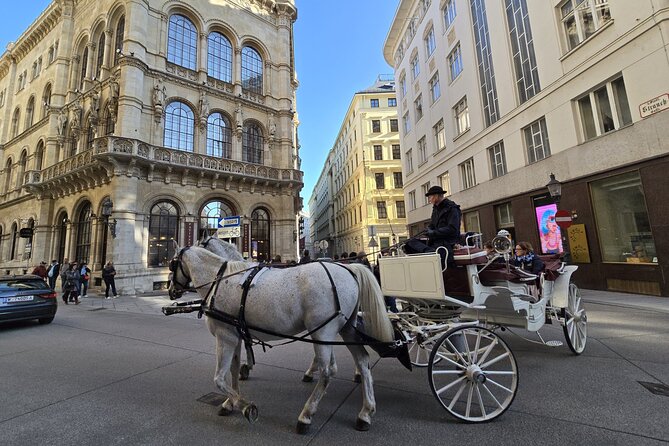
Reviewed · HISTORICAL TOURS
Highlights of Vienna in a Historical & Cultural 3h Walking Tour
Vienna’s grand center makes sense fastest on foot, and this tour connects its biggest names in one well-planned route: Mozart, the Habsburgs, coffee, cake, horses, and opera. You begin at Mozarthaus and finish outside the Vienna State Opera, with plenty of useful context along the way.
I like the small group of 4 to 18 people, which gives you a fair chance to ask questions. I also like the practical advice on museums, cafés, restaurants, and venues, especially if you take the tour near the start of your stay. The main drawback is pace: three hours covers a lot of ground, and cold weather or family breaks can make parts feel hurried.
Key points
- Mozart to the Opera: Follow a clear central-Vienna route from Mozarthaus to the Vienna State Opera.
- Habsburg focus: Learn about the Hofburg, Maria Theresa, and the imperial family without paying museum admission during the walk.
- Coffee-house break: A traditional Viennese café stop gives you time to warm up, rest, and try local specialties.
- Useful local advice: Take notes on which of the Hofburg’s 18 museums and other sights deserve your time.
- Small-group format: Groups are capped at 18, with an English-speaking guide and time for questions.
- Good first-day choice: Use the route to get your bearings before choosing museums, cafés, and evening venues.
From Mozart’s Apartment to Vienna’s Grand Ring
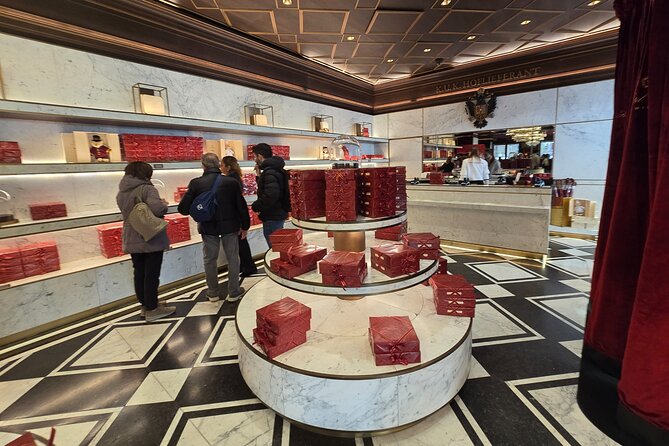
The walk begins at Mozarthaus Vienna on Domgasse, where Mozart lived during an important part of his Vienna years. The stop is brief, about 15 minutes, so you should expect an introduction rather than a full museum visit.
That distinction matters. Admission to the walking tour’s stops is listed as free, but museum entry is not included. If you want to see the apartment rooms and exhibitions in detail, plan a separate visit after the tour and allow more time than the short stop provides.
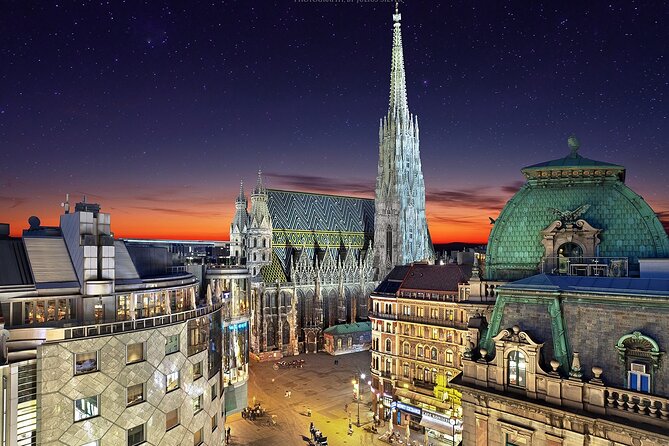
From there, the route moves to St. Stephen’s Cathedral, Vienna’s main church. Its medieval architecture gives the tour an early visual jolt after the Mozart discussion. You will hear about the cathedral’s long place in Vienna’s story, while the guide points out details that are easy to miss when you simply walk into the square for a photograph.
The cathedral stop is also about 15 minutes. That is enough for orientation and exterior appreciation, but not a full examination of the interior, towers, or catacombs. If St. Stephen’s is high on your list, treat this as a preview.
Graben, Demel, and Vienna’s Coffee-House Habit
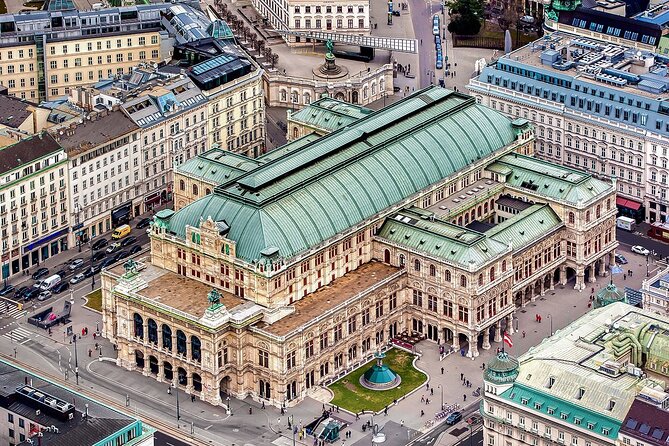
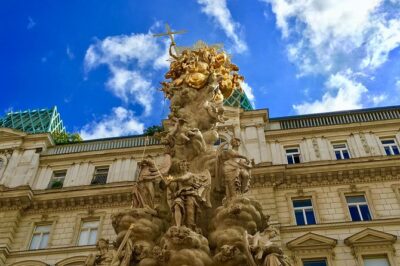
The next section takes you through Vienna’s historic center, including Saint Peter’s Church, the Plague Column, and Demel, one of the city’s best-known cake shops. This is where the walk shifts from imperial monuments to daily city life.
The Plague Column is a useful reminder that Vienna’s story is not only palaces and music. Saint Peter’s Church adds another layer of architecture and worship, while Demel introduces the city’s serious relationship with pastries and café culture.
At Julius Meinl on Graben, the guide explains how Vienna’s coffee tradition developed over more than 300 years. You are not simply being told where to buy coffee. You are getting a short explanation of why cafés became such an important part of Viennese social life.
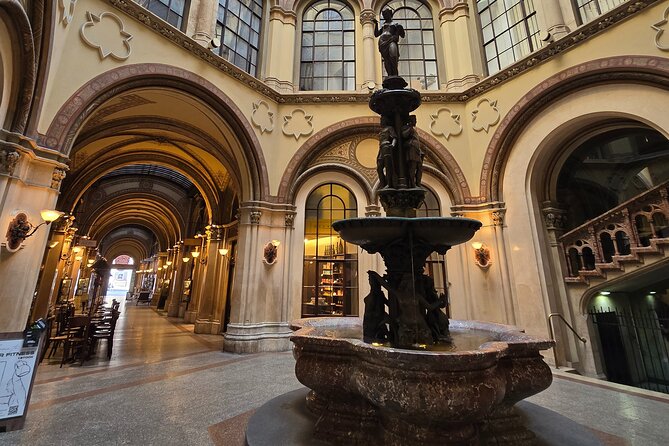
The walk then passes through Freyung Passage, described as the prettiest passage in the old center. This is a short stop, only about five minutes, but it breaks up the larger squares and formal avenues. Café Central is nearby, and the guide points it out as one of the city’s famous coffee-house addresses.
You should keep expectations in check here. The route gives you recommendations and historical context, but it does not include a meal, coffee, cake, or museum ticket in the $66.37 price. The included coffee-house break is an extra 30 minutes, and the precise café arrangement may depend on the day and conditions.
A few more Vienna trips to weigh up
- Vienna: Time Travel and Magic Vienna History Tour
★ 4.6 · 3,879 reviews - Vienna: World War II Historical Walking Tour
★ 4.8 · 1,772 reviews - Vienna Historic Center Small Group Walking Tour
★ 5.0 · 1,746 reviews
Coffee and Cake Are Part of the Lesson
The additional coffee-house pause is one of the tour’s most useful features. A walking tour can become a parade of names and dates, especially in winter. A chance to sit down with a warm drink gives you room to absorb the information and ask follow-up questions.
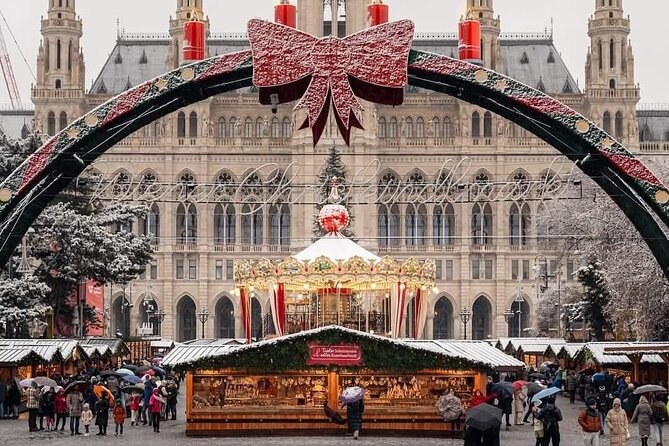
Past groups have used a break at the Rathaus Christmas market during the holiday season, with time for a snack, a hot drink, and a restroom stop. That seasonal detail may not apply on every date, but it shows how the guide can use local events to make the pause more enjoyable.
I would not book this solely as a food tour. The coffee stop supports the walking experience rather than replacing it. Still, the guide’s recommendations about Viennese cafés, desserts, and local places can save you from choosing a famous address based only on a good photograph.
If you have children, the break is especially helpful. One family described the guide taking pauses for children and allowing extra time, but you should not assume every departure will run long. The route remains a three-hour tour, approximately, and the group’s pace affects the timing.
Parliament, Rathaus, and the Imperial Theater
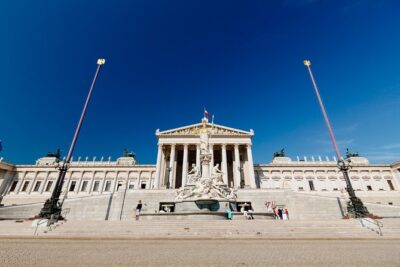
The route continues toward the Austrian Parliament, with its Greek-style design and Pallas Athene Fountain. This is a good place to see how Vienna used classical imagery for modern government buildings.
The Parliament stop lasts about five minutes, so the focus is on the exterior and its symbolism. You will not be touring the interior. The same applies to Vienna’s Rathaus, where the guide discusses the Gothic architecture of the city hall.
Rathaus can be especially appealing during seasonal events. At Christmas, the square becomes a major market, and a pause there can add warmth and color to an otherwise formal city walk. At other times, you will mainly be looking at the building, its towers, and the surrounding civic quarter.
The Burgtheater follows. The theater is linked to the reign of Maria Theresa and is presented as Vienna’s Renaissance-style royal theater. This section helps connect the city’s political power with its cultural life. Vienna’s historic center is not a collection of unrelated monuments. Palaces, theaters, churches, cafés, and government buildings grew together around the institutions that shaped the city.
The short stops here are a strength and a limitation. You see many major sites without spending your whole day at one location, but you will need to return independently if you want interiors or detailed architectural study.
The Hofburg and Its Many Museum Choices
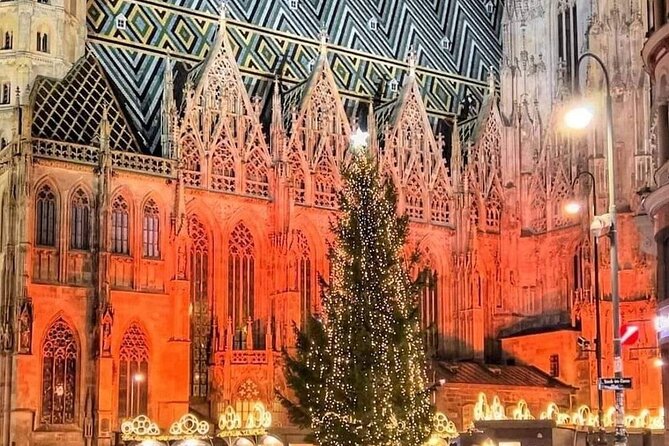
The Hofburg is the main historical centerpiece of the walk. It served as the winter palace and residence of the Habsburgs from the 13th century onward. The guide introduces important emperors and empresses and explains how the palace expanded over time.
This is not a palace tour with an included entrance. You will walk through the complex and receive an overview from outside, then decide which parts deserve a separate visit. That arrangement can be good value because the Hofburg contains many attractions, and first-time visitors often have trouble deciding where to begin.
The guide discusses the 18 museums in and around the winter palace. That information is practical rather than decorative. You might be interested in imperial apartments, court life, art, or the Austrian national story, but you do not need to pay for every museum to benefit from the orientation.
At $66.37 per person, the price makes the most sense if you use the advice afterward. A guide who simply points at the Hofburg gives you a pleasant walk. A guide who helps you choose among its many museums can shape the rest of your visit and prevent a costly, poorly planned afternoon.
The Hofburg stop is listed at about 20 minutes, one of the longer pauses. Even so, the complex is large. Expect a clear introduction, not every detail about every wing.
Same Alps, a completely different kind of day:
- Vienna: Vivaldi’s Four Seasons Concert in Karlskirche
★ 4.7 · 14,951 reviews - Vienna: Spanish Riding School Training
★ 3.9 · 9,281 reviews - Vienna: Skip-the-cashier-desk-line Giant Ferris Wheel Ride
★ 4.5 · 7,859 reviews - Vienna: Schönbrunn Palace & Gardens Skip-the-Line Tour
★ 4.7 · 7,739 reviews
Meeting the Lipizzaners at the Spanish Riding School
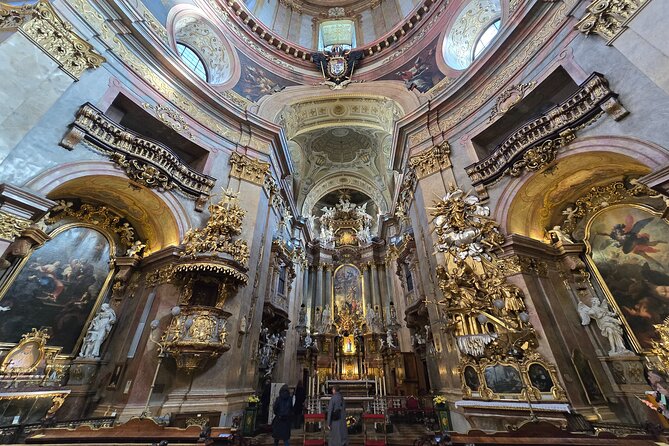
The Spanish Riding School adds a welcome change of scale and subject. The tradition began in the 15th century, and the tour visits the stables so you can see the horses.
This is an important point to understand before booking. The experience does not include a riding performance, and there is no admission to a museum or show included. You are visiting the stables as part of the walking route.
For many people, seeing the horses is more memorable than another palace façade. The stop also gives the guide a chance to explain a living tradition rather than only a completed chapter of history. If you want a performance, training session, or more extensive visit, you will need to arrange that separately.
The stop lasts about 10 minutes. That is enough to see the horses and understand why the school matters, but not enough for a full equestrian program.
Sacher Cake, Opera, and a Story About Imperial Taste
Near the end, the route reaches Hotel Sacher. Here you hear how Vienna’s most historic hotel was built and learn about Sachertorte, Austria’s famous chocolate cake.
Again, this is a story and orientation stop rather than a guaranteed tasting. The cake is not included in the tour price. If you decide to order it afterward, you will already know why the dessert is tied so closely to Vienna’s café culture and hotel tradition.
The final stop is the Wiener Staatsoper, or Vienna State Opera, on Opernring. Its exterior is one of the city’s most recognizable buildings, and the guide explains why the emperor disliked it when it was first completed, along with the consequences of his criticism.
That anecdote gives the tour a lively ending. Instead of finishing with a list of dates, you get a piece of court drama, architecture, and imperial pressure. The tour ends in front of the opera, a useful location for continuing into the old center, visiting a museum, finding dinner, or using Vienna’s public transport.
What the Guides Add to the Walk
The strongest part of this experience is the guide’s delivery. Guides named in the feedback include Nicoletta, Nikoleta, Nicolette, and Giselle. The spelling varies, so you should not assume which individual will lead your departure.
The praise is consistent about the qualities to look for: clear explanations, humor, flexibility, and a willingness to answer questions. Nicoletta and Nikoleta are especially praised for making Habsburg politics and city history easy to follow without turning the walk into a lecture.
One useful feature is the guide’s advice about what is worth your time and what may be overhyped by photographs. That kind of judgment is more helpful than another broad list of attractions. Take the printed Vienna Information Package and city map seriously, and mark the places you want to return to.
The group size, from 4 to 18 people, also matters. Eighteen is not tiny, and crowded streets can make it harder to hear. Still, the cap is more manageable than a large coach group, and the format allows questions.
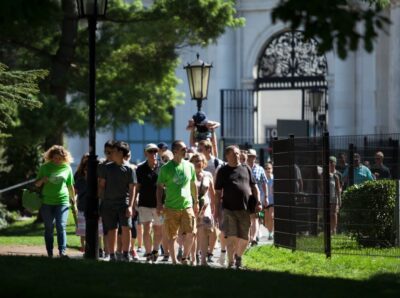
The tour is offered in English. A moderate level of physical fitness is advised, since you will be walking through the center for roughly three hours. Wear comfortable shoes and prepare for the weather. A cold day has made the walk feel hurried for some people, while a coffee or market break has helped keep the experience comfortable.
Timing, Value, and Who Should Book
At $66.37, this is not the cheapest way to see Vienna’s outside architecture. You can walk between many of these sights on your own for no admission cost. The fee pays for the guide’s explanations, the route planning, the printed material, and the chance to ask questions in a small group.
I think the value is strongest for a first visit, especially if you take it early in your stay. You get a city map, suggestions for museums and cafés, and a basic plan for the old center. The advice can help you decide how to spend the next several days.
It also suits families and mixed-age groups. The walk has enough variety to hold a child’s attention for a while: Mozart, horses, cake, palaces, churches, and a story about an unhappy emperor. The three-hour length is sensible, though younger children may need the included break and a flexible pace.
You may prefer another option if you want long interior visits, a focused Mozart tour, a dedicated food tour, or a performance at the Spanish Riding School. This experience gives you a wide first look, not an expert examination of one subject.
The tour requires good weather. If poor weather cancels it, you are offered another date or a full refund. The same applies if the minimum number of participants is not met. You can cancel for a full refund up to 24 hours before the start time, but cancellations or changes inside that window are not accepted.
Should You Book This Vienna Walking Tour?
Book it if you want a lively first orientation to central Vienna and plan to return to selected sites on your own. Mozart, St. Stephen’s Cathedral, the Hofburg, the Spanish Riding School, Sacher, and the opera form a strong route, while the coffee break keeps the three-hour walk from becoming a march.
I would especially recommend it for first-time visitors who want history told through stories rather than dates. The guide’s humor, local suggestions, and practical museum advice are the real reason to pay for the walk.
Skip it if you already know Vienna’s center well or want admission to the major buildings included. For most first visits, though, the combination of imperial landmarks, café culture, horses, and opera offers a useful and enjoyable start.
FAQ
How long is the Vienna historical and cultural walking tour?
The tour lasts approximately three hours and includes an extra 30-minute break in a traditional Viennese coffee house.
Where does the tour begin?
It begins at Mozarthaus Vienna, Mozart’s apartment at Domgasse 5, 1010 Vienna.
Where does the tour end?
The walk ends in front of the Vienna State Opera at Opernring 2.
Is the tour offered in English?
Yes. The experience is offered in English and includes an English-speaking guide.
Are museum entrance fees included?
No. Entrance fees to museums are not included. The tour provides explanations and recommendations, including information about the 18 museums in and around the Hofburg.
How large is the group?
The group can include between 4 and 18 people.
Can I cancel for a full refund?
Yes. You can cancel at least 24 hours before the start time for a full refund. Changes or cancellations made less than 24 hours before the start time are not accepted.
More 3-Hour Experiences in Vienna
- Classic Vienna: 3-Hour Guided Bike Tour
★ 4.7 · 1,846 reviews - Vienna by Bike 3-Hour All-In-One City Bike Tour in English
★ 4.7 · 438 reviews - The unknown Vienna City- a guided walking tour in 3 hours
★ 4.7 · 137 reviews - 3-Hour Walking Tour of Vienna Central Cemetery
★ 4.7 · 71 reviews
Just added around Vienna
- Ottakringer Brewery tour★ 4.0 · 6 reviews
- New Hofburg Palace Tour House of Habsburg★ 4.5 · 5 reviews
- Private Van & Walk Tour – One Perfect Day in Vienna★ 5.0 · 21 reviews
- True Crime mobile puzzle rally Vienna★ 4.0 · 3 reviews
- Vienna Naschmarket Food Tasting Tour★ 4.0 · 30 reviews
- Vienna Nightlife Experience: Food, Wine, Cocktails & Vibes★ 5.0 · 119 reviews
- Myth Mozart★ 4.0 · 80 reviews
- ( Night Tour ) With Private Guide + wine or prosecco★ 4.0 · 12 reviews
Historical Tours, compared.
Vienna Historic Center Small Group Walking Tour
Read our review →
Skip-the-Line Schonbrunn Palace Guided Tour and Vienna Historical City Tour
Read our review →
Vienna Mozart Concert in Historical Costumes at the Musikverein
Read our review →
Browse the lists this tour appears in