
Reviewed · WINE TOURS
Vienna: Wine Tasting Tour
Vienna’s wine culture gets a proper city-center introduction on this 150-minute walking tour. You move from a wine tied closely to Vienna itself to Riesling, Grüner Veltliner, and a Burgenland red, stopping at four cellar restaurants, bars, and tasting rooms along the way.
I like the mix of five wines with Austrian food, especially the ham and bread with traditional spreads. I also like that the guide, often Lukas, Luke, Hari, or Harry depending on the departure, brings both wine skill and local tips to the evening. The main drawback is simple: five glasses in two and a half hours can feel like a lot, and the tour is not suited to children under 16, pregnant women, or wheelchair users according to the activity information.
Key points to know before booking
- Five Austrian wines: Taste styles ranging from Grüner Veltliner and Riesling to a red from Burgenland.
- Four central Vienna stops: The route uses cellar restaurants, a local bar, and other atmospheric venues rather than one single tasting room.
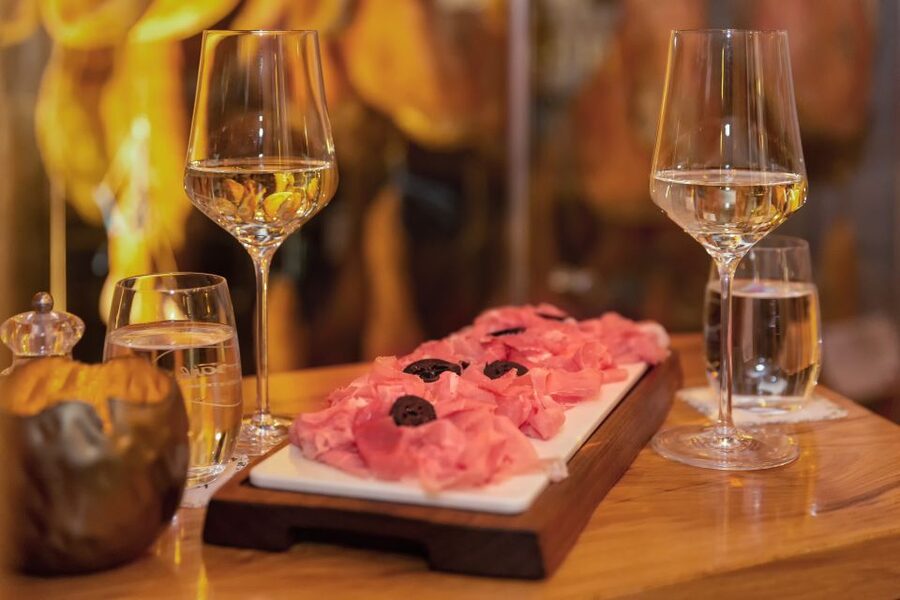
- Food is part of the experience: You receive an Austrian ham tasting, bread, and typical spreads.
- The guide shapes the evening: Lukas is praised for adjusting tastings to group preferences and explaining wine in a relaxed way.
- A short walking tour: The route begins at Lugeck 6 and finishes at Schottengasse 3, with several walks of five to eight minutes.
- Best for wine-focused adults: The minimum drinking age is 16, and the tour is designed around tasting rather than sightseeing alone.
Vienna wine in the middle of the city
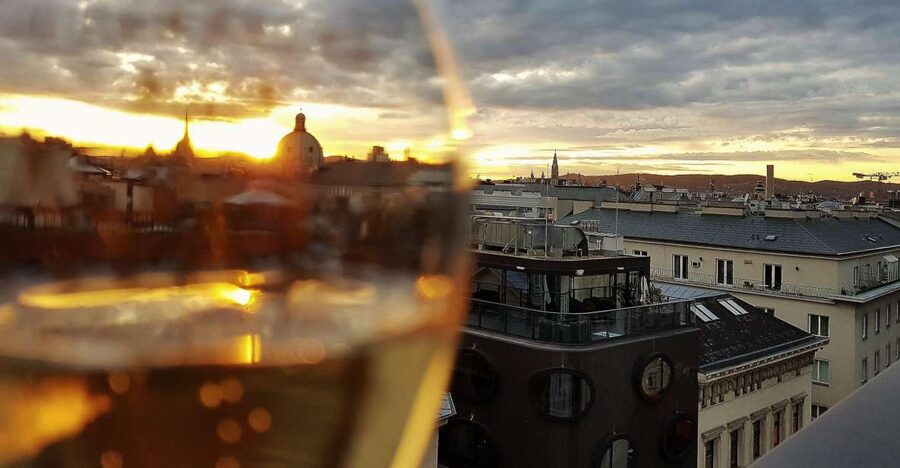
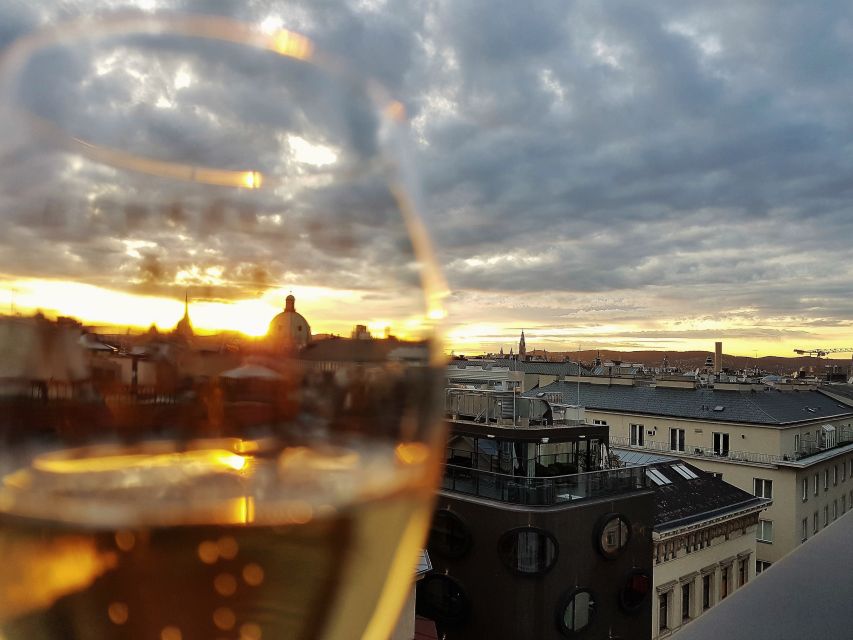
Vienna is unusual among European capitals because vineyards sit within the city’s borders. You do not need to travel out to the Wachau Valley or Burgenland to begin learning about Austrian wine. This tour keeps you in the historic center, where the streets, cellar rooms, restaurants, and old drinking places give the tasting a distinctly Viennese setting.
You meet at Lugeck 6, in front of the Johannes Gutenberg Monument. From there, the guide leads you on foot through the center. The route finishes at Schottengasse 3, so you should not expect to end where you started. That is useful if you have evening plans in the northern part of the center, but less convenient if you left belongings near the meeting point.
The walking itself is modest. The listed transfers take about 26 minutes in total, split into short stretches of five or eight minutes. You get enough movement between glasses to keep the evening from becoming one long seated tasting, though comfortable shoes still make sense on Vienna’s city streets.
A few more Vienna trips to weigh up
- Wachau Valley Wine Tasting Bike Tour from Vienna
★ 5.0 · 829 reviews - Vienna: Swarovski House Tour with Champagne and Gift
★ 4.7 · 787 reviews - Countryside Half Day Wine Tour near Vienna
★ 5.0 · 545 reviews
First glass: a wine as Viennese as the cathedral
The first tasting introduces a wine described as closely tied to Vienna as St. Stephen’s Cathedral. The point is not simply to pour a local glass, but to explain why this wine belongs to the city’s identity.
This opening gives you useful context before the tour moves into broader Austrian styles. Vienna’s wine traditions are connected to local taverns and social life, so starting with a city wine helps you understand the culture before comparing grapes and regions.
The precise venue is kept as a secret stop, which adds a little mystery but also means you cannot preview the setting in advance. Expect a 25-minute tasting here. That is long enough for the guide to explain the wine’s background and for you to ask questions, but not so long that the evening loses pace.
If you are new to Austrian wine, listen for the difference between a wine’s grape, its growing region, and the way it is served. The guide’s role is especially valuable here, since the first glass acts as a map for the rest of the tour.
A private cellar and Austrian Riesling
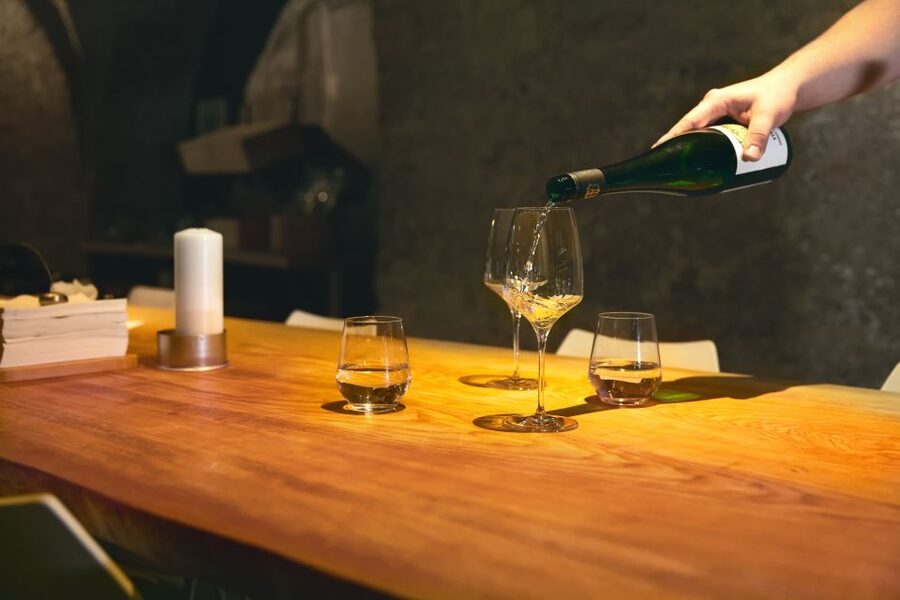
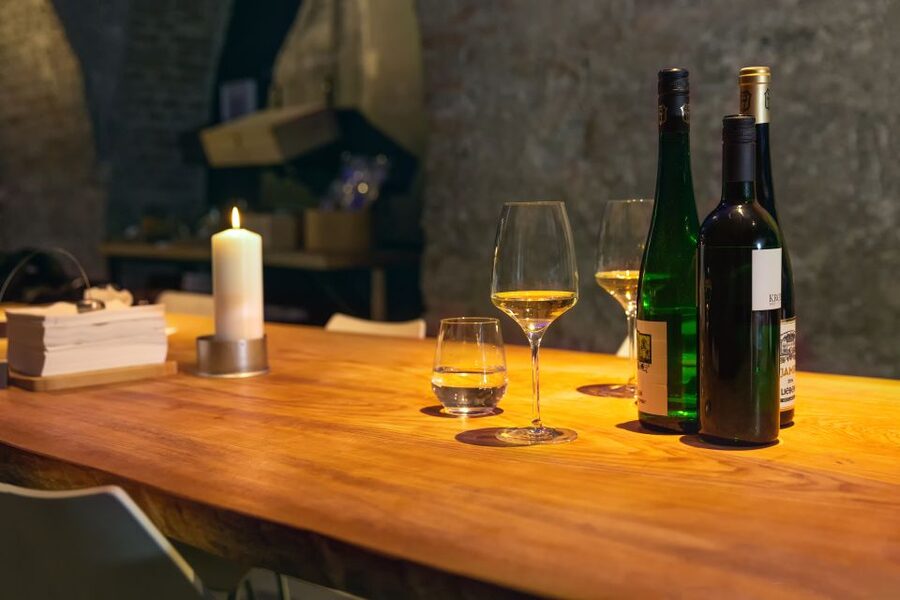
After a five-minute walk, the route reaches a local restaurant for another 25-minute tasting. This stop takes place in a private wine cellar, where you taste Austrian Riesling and discuss its character.
The cellar setting matters. Wine can feel abstract when it is presented only in a bright shop or formal classroom. A cellar restaurant gives the subject a more natural home and connects the drink with Vienna’s old dining culture.
Riesling also provides a useful contrast to the first wine. You can focus on its particular qualities, then compare it with the other white wines later in the evening. The experience is not built around five unrelated pours. It moves through Austrian varieties and regions in a way that helps you notice differences.
Past participants have singled out the guide’s explanations of wine and Austrian wine history. That is worth keeping in mind if you want more than a quick sip at several locations. The quality of the evening depends partly on who leads your departure, but the guides named in the feedback, especially Lukas, are repeatedly praised for their passion and clear explanations.
Ham, an international variety, and a local bar
An eight-minute walk brings you to a local bar for a 30-minute wine and food tasting. Here, another international variety is paired with Austrian ham.
This is a welcome change of pace. Wine talk can become overly technical, but food gives you something direct to compare. Notice how the ham changes your impression of the wine, and how the guide explains the pairing. You are not just drinking five glasses in sequence. You are seeing how wine fits into ordinary Austrian eating.
The bar stop also makes the route feel less like a formal class. You move through different types of places, each with its own mood. The information does not name the exact bar, so you should think of this as a chance to see a local drinking venue rather than a guaranteed famous address.
The 30-minute stop is among the longer tastings, and the food makes that time feel more generous. Still, anyone who prefers a light, measured tasting should pace themselves. You can take small sips, eat the ham, and ask questions rather than treating every glass as a full drink.
Same Alps, a completely different kind of day:
- Vienna: Vivaldi’s Four Seasons Concert in Karlskirche
★ 4.7 · 14,951 reviews - Vienna: Spanish Riding School Training
★ 3.9 · 9,281 reviews - Vienna: Skip-the-cashier-desk-line Giant Ferris Wheel Ride
★ 4.5 · 7,859 reviews - Vienna: Schönbrunn Palace & Gardens Skip-the-Line Tour
★ 4.7 · 7,739 reviews
Grüner Veltliner from the Wachau Valley
The final tasting venue is a local restaurant reached after another five-minute walk. This 30-minute stop focuses on Grüner Veltliner from the Wachau Valley, paired with traditional Austrian spreads and bread.
Grüner Veltliner is one of the most useful wines for understanding Austria. It is a national favorite, and the Wachau is one of the country’s best-known wine areas. You get a regional reference point rather than a vague sample labeled simply Austrian white wine.
The bread and spreads make this stop feel more substantial than a tasting with crackers. They also give you a chance to think about the way wine is enjoyed at a table. If you have already eaten dinner, the portions may be enough as a snack rather than a meal, so do not book this expecting a full supper.
One especially useful feature is the guide’s flexibility. Feedback about Lukas describes a willingness to adjust the tasting to the group’s preferences. That does not mean every request is guaranteed, but it suggests you can speak up if you prefer a certain style or want more explanation about a particular grape.
Finishing with Burgenland red wine
The evening ends with a glass of Burgenland red wine while the guide explains the region and its wines. This gives the tasting a clear finish: you move from Vienna and Austrian whites to a red from one of Austria’s major wine areas.
Blaufränkisch is highlighted among the wines you may taste, and it gives you a chance to consider Austrian red wine on its own terms. Austria is often introduced through white varieties, so the Burgenland finish broadens the picture.
The route ends at Schottengasse 3. That final location can be handy for continuing into the city center, but it is worth checking the map before booking if you need to return to Lugeck or reach a hotel elsewhere. The tour is compact and urban, not a vineyard outing, so its value comes from the combination of wine, food, stories, and venues.
What the guide adds to the tasting
The strongest part of this experience is the human element. The guide is a wine lover and sommelier, and the feedback repeatedly praises guides named Lukas, Luke, Hari, and Harry for enthusiasm, friendliness, and clear explanations.
You can expect more than technical tasting notes. The guide discusses Austrian wine-making, regional differences, and Vienna itself. One useful tip is to schedule the tour early in your stay if you can. Lukas has offered suggestions for restaurants, cafés, shopping, and other places in Vienna, giving you time to use those ideas during the rest of your visit.
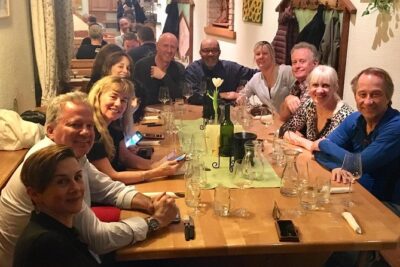
The relaxed tone is also important. You do not need to arrive with a polished vocabulary for wine. A good guide can explain what you are tasting without turning the evening into an exam. The best feedback describes the experience as feeling like sharing wine with a well-informed friend, which is a good fit for people who want conversation as much as instruction.
That said, guide quality can vary with the assigned person and the group. The available information names several guides, so do not assume Lukas will lead every departure. The activity is offered in English and German, and you should select the language that lets you ask questions comfortably.
Is $159 a fair price?
At $159 per person, this is not a bargain tasting. You are paying for five glasses, food, four locations, a live sommelier-led tour, and the time spent moving between venues in central Vienna.
The value is strongest if you care about setting and explanation. A cheaper wine flight in one bar may give you similar volume, but it will not necessarily take you into a private cellar, a local restaurant, and a bar while explaining Vienna, Wachau, and Burgenland. The four-stop format also lets you see several kinds of places instead of treating wine as a stand-alone product.
The price is less attractive if you mainly want to drink a large amount of wine or eat a full dinner. The ham, bread, and spreads are tasting foods, not a complete evening meal. You should also remember that the tour lasts 150 minutes, so the cost reflects the guide and the route as much as the wine itself.
For a first introduction to Austrian wine, I find the price defensible, especially if you would otherwise book several separate tastings. For dedicated wine collectors, the selection may feel more introductory than specialist, since the focus is on variety and regional understanding rather than rare bottles.
Who will enjoy this tour most?
I would choose this for adults who want a social evening with structure. It works well for couples, friends, and work groups, and the short walks help break up the tastings. It also suits people who want local food with their wine instead of five isolated pours.
You will get the most from it if you enjoy asking questions. The guides are praised for their wine knowledge and local recommendations, and the experience gives you room to discuss what you like. If you already know Austrian wine well, tell the guide. The tasting may be more useful when it is adjusted to your interests.
This is not the right choice for children under 16 or pregnant women. The minimum drinking age is 16. The information also says the tour is wheelchair accessible in one section but lists wheelchair users among those for whom it is not suitable. That is a direct conflict, so anyone using a wheelchair should confirm access with the provider before paying.
You should also consider the alcohol level. Five glasses over 150 minutes is a steady tasting schedule. Eat beforehand if you need a proper meal, drink water when available, and do not plan to drive afterward.
Practical details that affect your evening
The tour runs in the evening, but the exact start time depends on availability. You should check the selected date before building dinner or concert plans around it.
Wear shoes suitable for walking between venues. The route is not a long hike, but you will make several transfers through central Vienna. Since the tour ends at a different address from the meeting point, keep that in mind when planning your night.
Free cancellation is available up to 24 hours before the start for a full refund. You can also reserve now and pay later, which helps if your Vienna schedule is still changing. These policies are useful, but they do not remove the need to check the starting time, language, age rule, and accessibility details before booking.
Should you book the Vienna wine tasting tour?
Book it if you want an easy, well-organized introduction to Austrian wine without leaving Vienna. The mix of five glasses, ham, bread, spreads, four venues, and a passionate guide gives you more context than a quick tasting at a shop.
I especially recommend it early in your visit, since the guide may point you toward restaurants, cafés, and other places worth trying. Skip it if you want a full meal, a vineyard excursion, or a highly specialized tasting focused on rare wines.
For most wine-curious adults, this is a strong use of an evening in Vienna. Just pace yourself, confirm the accessibility details if relevant, and remember that the experience is about learning the city through its wine as much as about the wine itself.
FAQ
Where does the Vienna wine tasting tour begin?
The meeting point is at Lugeck 6, 1010 Vienna, in front of the Johannes Gutenberg Monument.
Where does the tour finish?
The tour finishes at Schottengasse 3 in central Vienna. It does not return to the starting point.
How long does the tour last?
The experience lasts 150 minutes, or two and a half hours.
How many wines are included?
Five glasses of wine are included. The tasting can include Grüner Veltliner, Austrian Riesling, Blaufränkisch, and other Austrian or international varieties described in the program.
Is food included?
Yes. The tour includes an Austrian ham tasting, bread, and typical Austrian spreads.
What languages are available?
The live guide offers the tour in English or German.
What is the minimum drinking age?
The minimum drinking age is 16. Children under 16 are not suitable for this activity.
Just added around Vienna
- World War II History Vienna Old Town Private Walking Tour★ 4.8 · 9 reviews
- From Krems: Wachau Valley River Cruise on the Danube★ 4.6 · 95 reviews
- Vienna: Winery and Wine Tasting Tour with a Wine Expert★ 5.0 · 5 reviews
- Vienna: Wine Tasting E-Bike Tour★ 4.9 · 46 reviews
- Vienna: Wine Tasting at Schönbrunn Palace★ 4.3 · 71 reviews
- Vienna: Wiener Schnitzel and Strudel Cooking Class★ 4.9 · 126 reviews
- Vienna Urban Art Tour: Explore a different side of Vienna!★ 3.8 · 14 reviews
- Vienna: Unforgettable Private City Tour★ 5.0 · 7 reviews
Wine Tours, compared.
Wachau Valley Wine Tasting Bike Tour from Vienna
Read our review →
Wachau Valley Small-Group Tour and Wine Tasting from Vienna
Read our review →
Grape Grazing: Wachau Valley Winery Biking Tour
Read our review →
Wine Tasting Experience in a Private Wine Cellar
Read our review →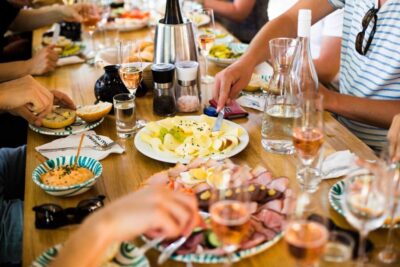
Browse the lists this tour appears in