
Reviewed · HISTORICAL TOURS
Vienna Historic Center Small Group Walking Tour
Vienna’s historic center is compact, but its story is anything but small. In about two and a half hours, this walking tour links imperial palaces, grand Ringstrasse buildings, churches, composers’ homes, coffeehouse culture, and the city’s central cathedral. I like that you get your bearings fast, and that the route finishes at St. Stephen’s Cathedral, a perfect launch point for exploring on your own.
I also like the small group limit of 15 people and the audio devices supplied for the walk. Guides including Dace, Giselle, Gabriela, Beatrice, Annelie, and Gisele are praised for clear storytelling, humor, personal tips, and the ability to answer questions. The main drawback is simple: this is mostly an outdoor sightseeing tour, so you usually look at major buildings from the street rather than going inside them.
Key points to know before you book
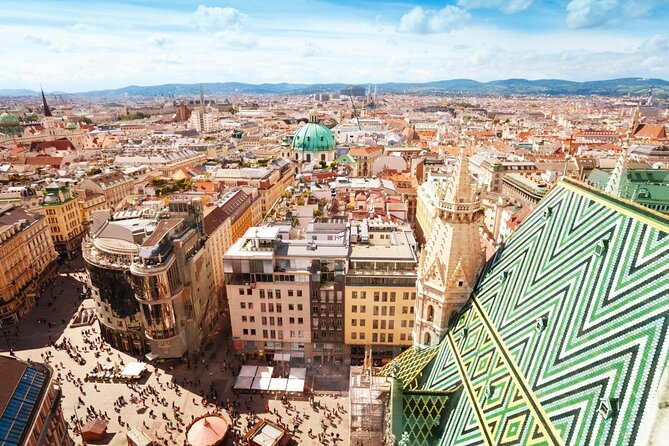
- A full central-Vienna route: See Maria-Theresien-Platz, the Ringstrasse, Hofburg Palace, Rathaus, Volksgarten, Graben, and St. Stephen’s Cathedral.
- Small group, capped at 15: You get a better chance to hear the guide and ask questions than on a large city tour.
- About 14,000 steps for some walkers: The pace is manageable, but this is still a serious walking outing. Wear good shoes.
- Strong guide-led history: Expect stories about the Habsburgs, Mozart, Beethoven, Freud, Lise Meitner, Hitler, and modern Austria.
- No museum admissions: You see the exteriors and may enter some churches or other indoor places depending on the day, but museum tickets are not part of the tour.
- Best as a first-day orientation: The food, café, restaurant, and sightseeing suggestions can help shape the rest of your Vienna stay.
Why this walk works well on a first day
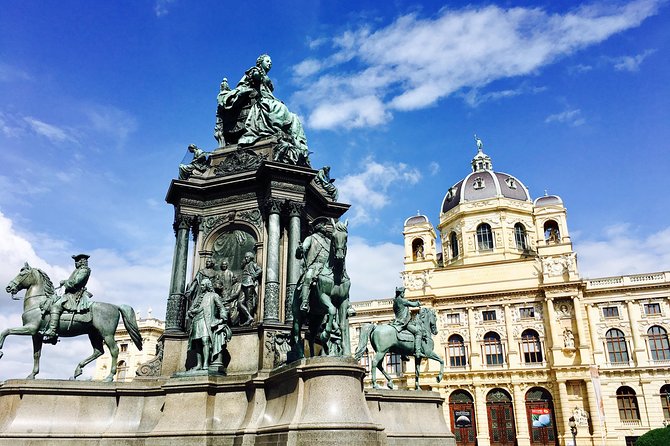
The tour starts at Maria-Theresien-Platz, between the Ringstrasse and the MuseumsQuartier. That gives you an immediate sense of Vienna’s scale. On one side is the Kunsthistorisches Museum, home to the former imperial art collection. Opposite it is the Natural History Museum.
The square is framed by these matching monumental buildings, with Maria Theresa’s large statue at the center. The stop is brief, but the guide uses it to explain the empress, the Habsburg court, and the imperial ambition behind Vienna’s public spaces.
You do not enter the museums, so this is not the right tour if you want an art-focused visit. It is a good introduction if you want to know what you are looking at before returning later with a museum ticket.
From here, the route reaches the Ringstrasse. This broad boulevard replaced Vienna’s medieval fortifications during the second half of the 19th century. The new road became a showcase for public buildings in Classical, Gothic, Renaissance, and Baroque styles.
I find this context especially useful because Vienna can otherwise feel like a parade of grand façades. Once you understand that the Ringstrasse was part of a major transformation, the buildings begin to make sense as a planned statement about imperial power, civic life, culture, and modern city government.
A few more Vienna trips to weigh up
- Vienna: Time Travel and Magic Vienna History Tour
★ 4.6 · 3,879 reviews - Vienna: World War II Historical Walking Tour
★ 4.8 · 1,772 reviews - Time Travel-Magic Vienna History Tour Ticket
★ 4.5 · 1,099 reviews
The Ringstrasse, Rathaus, and Vienna’s public face
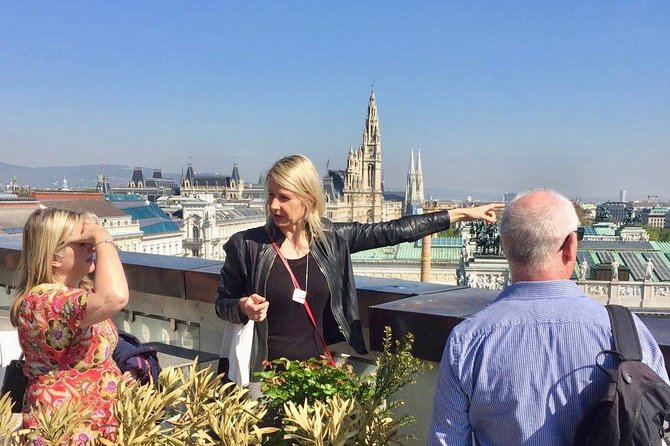
The route passes the neo-Gothic Rathaus, or City Hall, where Vienna’s government is based. Its dramatic towers and elaborate façade make it one of the easiest buildings to remember, even during a short stop.
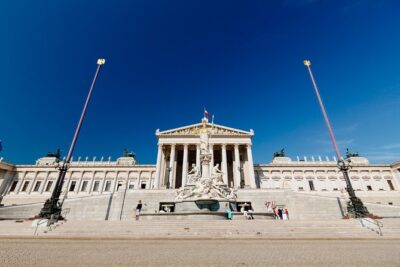
You also see the Austrian Parliament Building, the Burgtheater, the University of Vienna, and the Vienna State Opera from the outside. Each represents a different part of the city’s public life: politics, theater, scholarship, and music.
The tour does not linger long at every building. That is a benefit if your time is short, but it also means you should not expect a detailed architectural lecture on each façade. The guide’s job here is to connect the buildings into a story rather than offer a full tour of any one site.
The walk continues through the Volksgarten, a formal park beside the Hofburg. The Theseus Temple sits at its center, built as a small copy of the Hephaisteion in Athens and originally intended to display a sculpture by Antonio Canova.
The park also recalls Vienna’s musical life. The Cortisches coffee house was once associated with performances by Johann Strauss. You get only a short stop, but it is a pleasant change from the stone and traffic of the boulevard.
Hofburg Palace and the long Habsburg story
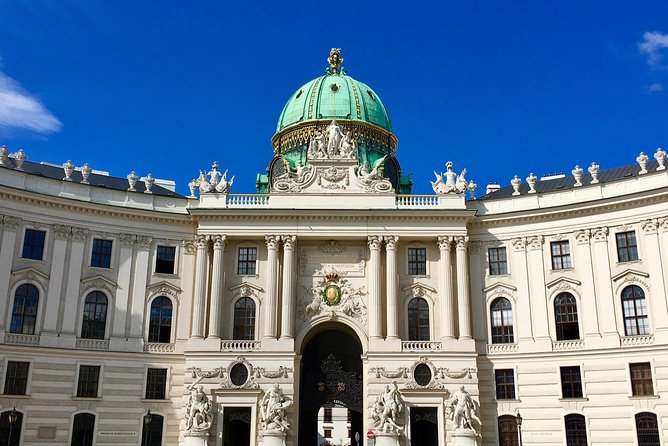
The Hofburg is the historical heart of the walk. This former Habsburg palace grew over many centuries, so it is less a single building than a large collection of courtyards, wings, gates, and façades.
At the Burgtor, a neoclassical castle gate built after the Napoleonic Wars, the guide can explain how Vienna changed after the old defensive walls lost their military purpose. The gate leads toward Heroes’ Square and the palace complex.
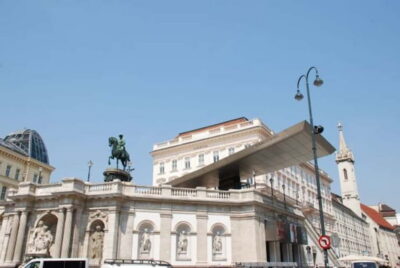
At the Hofburg, you hear about emperors, empresses, court life, and the palace’s continuing role in Austria. The New Castle houses places such as the World Museum, the Imperial Armoury, and the National Library. The Hofburg Congress Centre is also located here.
The guide also covers darker modern history. From the balcony of the New Castle, Adolf Hitler proclaimed Austria’s Anschluss into the Third Reich. That moment gives the palace a difficult 20th-century layer beyond its imperial pageantry.
Heroes’ Square, or Heldenplatz, opens in front of the Hofburg. It was formed after the old bastion beside the palace was demolished during the Napoleonic Wars. The broad open space has been used for ceremonies, political gatherings, and public events, and it carries a weight far beyond its attractive setting.
This section is one of the strongest reasons to choose a guided walk. A casual stroll shows you impressive buildings. A good guide explains why the space was built, who controlled it, and how its meaning changed over time.
Churches, court life, and a possible look indoors
The route includes St. Michael’s Church, which dates to around 1220. It is one of Vienna’s older churches and has a distinctive atmosphere that contrasts with the formal imperial spaces nearby.
The tour may also pass the Austrian National Library, one of the world’s important libraries, and the Baroque Winter Riding School. The riding school is associated with the Lipizzan horses, which perform and train there regularly.
Depending on the weekday, the guide may take you into some indoor locations, such as palaces, the university, a church, or a café. This is not guaranteed, and it is important to keep the basic format clear: museum interiors are not included.
That distinction matters at this price. You are paying for a carefully planned route, a certified local guide, commentary, and personal attention, not a bundle of admission tickets. If you want the Imperial Apartments, the Spanish Riding School performance, or museum collections, you will need to arrange those separately.
The route includes a stop linked to Empress Elisabeth, often called Sisi, whose personality and life remain central to the popular image of the Habsburg court. The guide places her life within the larger imperial story rather than treating the palace as a collection of pretty rooms.
Same Alps, a completely different kind of day:
- Vienna: Vivaldi’s Four Seasons Concert in Karlskirche
★ 4.7 · 14,951 reviews - Vienna: Spanish Riding School Training
★ 3.9 · 9,281 reviews - Vienna: Skip-the-cashier-desk-line Giant Ferris Wheel Ride
★ 4.5 · 7,859 reviews - Vienna: Schönbrunn Palace & Gardens Skip-the-Line Tour
★ 4.7 · 7,739 reviews
Rathaus, Burgtheater, and Vienna’s intellectual life
After the Hofburg, the walk includes another look at the Hofburg complex, the federal chancellor’s office, and Rathaus. Repetition may sound odd on paper, but the palace is large and appears from different approaches. Each view helps you understand how the complex fits into the center of Vienna.
The Burgtheater follows. It is regarded as one of the world’s leading theaters and is another grand Ringstrasse institution. The stop adds cultural life to the political and imperial themes that dominate the first half of the route.
At the University of Vienna, the guide connects the city’s academic tradition with figures such as Sigmund Freud and Lise Meitner. Meitner, a Jewish physicist, made important contributions to modern science, and her story adds a valuable reminder that Vienna’s intellectual life was not limited to composers and imperial family members.
The route may also pass Palais Ferstel, which once housed the Austro-Hungarian National Bank and the Stock Exchange. Stops like this help you notice the commercial and financial side of the old city, not just its palaces and churches.
Freyung is one of the oldest squares in central Vienna. Its smaller scale and picturesque feel make it a welcome contrast with Heroes’ Square and the Ringstrasse. The guide may point out how old city spaces, cafés, institutions, and newer shops overlap in this part of town.
A coffeehouse connection appears along the way, with Vienna’s famous tradition of writers, composers, architects, painters, psychoanalysts, and revolutionaries meeting over coffee, cake, and cigars. One guide-led stop at Café Demel has been especially useful for some itineraries, but you should not treat a café visit as guaranteed.
Beethoven, Graben, and the final approach
The Beethoven Pasqualatihaus recalls one of Vienna’s most important composers. It was a former residence of Ludwig van Beethoven, positioned on the ramp of the former town fortifications.
This is another short exterior-focused stop. You will not get a concert or an extended house visit as part of the standard tour, but the location helps put Beethoven into the physical city rather than leaving him as a name on a music-history timeline.
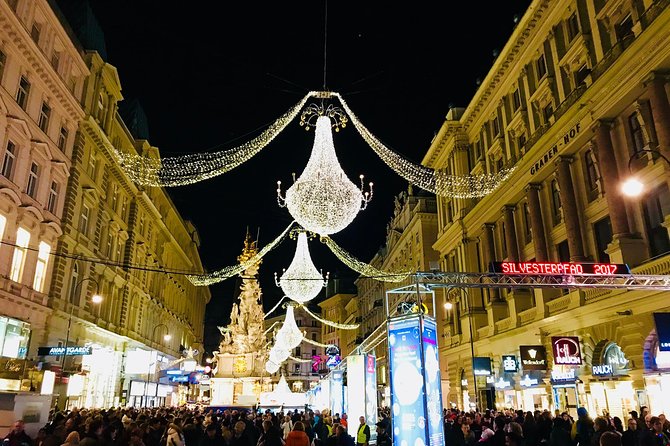
The final stretch moves through Graben and Kohlmarkt, among Vienna’s most elegant pedestrian streets. These are lively shopping areas, but the guide also connects them to the older center and the ceremonial routes around the Hofburg.
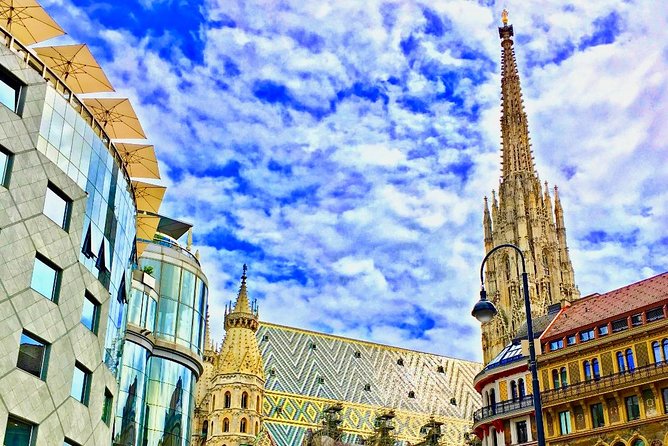
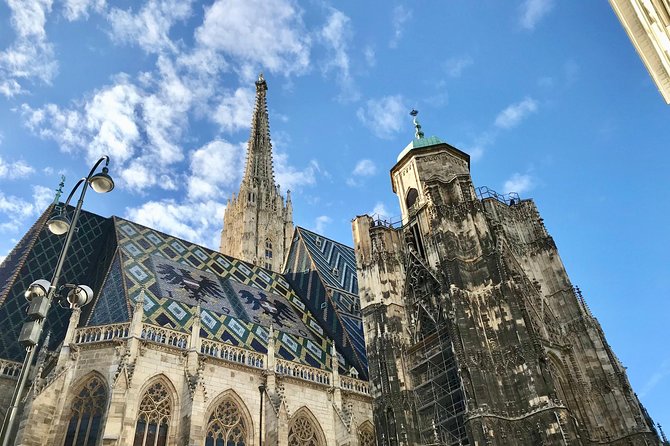
The walk ends at Stephansplatz, the central square surrounding St. Stephen’s Cathedral. This is the spiritual and geographic center of Vienna, and the cathedral is the city’s most recognizable landmark.
Ending here is practical. You can visit the cathedral on your own, continue through the old center, stop for food, or use the nearby area as a base for the rest of your day. The guide can also offer suggestions for restaurants, cafés, local food, customs, and later sightseeing.
What the pace and group size feel like
Two and a half hours may sound short for such a long route, but the tour covers a lot of ground. One account describes roughly 14,000 steps, which is a useful warning even if your total will vary with the exact route and your own movements.
You stop often, usually for a few minutes at a time. The Hofburg receives a longer explanation, while many other places get a quick orientation and a story. This format keeps the walk moving, but you should not expect much time for photographs at every stop.
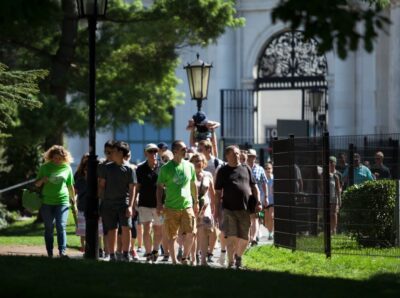
The maximum group size is 15. That is small enough for the guide to keep the group together in crowded areas and respond to questions. Individual audio devices are also supplied, which helps when you are standing near traffic or spread around a busy square.
The tour requires moderate physical fitness and is not recommended if you have walking difficulties. Wear comfortable shoes and dress for the weather. Cold days can feel particularly brisk, though guides such as Gabriela and Dace have been praised for finding chances to warm up when needed.
Several start times are offered, so you can fit the walk around a museum visit, lunch, or another reservation. It is smart to choose the tour early in your stay if you want its suggestions to shape the rest of your plans.
Is $72.56 a fair price?
At $72.56 per person, this is not a bargain street stroll. The price makes the most sense if you value a certified English-speaking guide, a small group, audio equipment, and a route that covers much of central Vienna without planning it yourself.
The value is in the explanation and organization. You can walk past Rathaus, the Hofburg, the university, and St. Stephen’s Cathedral for free, but you will not automatically understand how they connect. A strong guide can turn a series of façades into a readable story.
The price is harder to justify if your main goal is entering museums or palace rooms. There are no museum admission tickets, and the tour does not promise interior access at every stop. Budget for separate admissions if the art collections, imperial apartments, or riding school are priorities.
The guide quality also matters. The experience is built around the person leading it. Dace, Giselle, Gabriela, Beatrice, Annelie, and Gisele are all named as guides associated with particularly engaging walks, with humor, clear English, and personal recommendations frequently emphasized.
Who should book this Vienna walk?
I would choose this tour if you are visiting Vienna for the first time, have only a day or two, or want a strong historical framework before exploring alone. It also suits solo visitors and couples who prefer a social but not oversized group.
History fans will get plenty from the political stories, Habsburg figures, architecture, composers, science, and 20th-century events. You should also enjoy it if you learn best by listening while walking rather than reading long museum labels.
I would be cautious if you want hands-on activities, long interior visits, or a relaxed pace with lots of time to sit. One of the reasonable criticisms is that the experience can feel like a teaching walk, with many sites explained from outside rather than actively visited.
Free cancellation is available up to 24 hours before the start time. The tour depends on good weather and a minimum number of bookings, so a cancellation may result in another date, another experience, or a full refund.
My verdict: a strong orientation, not an admission tour
Book it if you want Vienna explained in a compact, well-organized walk. The route gives you the imperial center, the Ringstrasse, political buildings, music landmarks, cafés, churches, and St. Stephen’s Cathedral in one outing.
Skip it if you are mainly looking for entry to museums or palace rooms. For most first-time visitors who want to get their bearings fast, the small group, audio devices, humor, and practical local advice make the $72.56 worthwhile, especially when taken near the start of your visit.
FAQ
How long does the Vienna Historic Center Small Group Walking Tour last?
The tour lasts approximately 2 hours and 30 minutes.
Where does the walking tour begin?
The tour begins at Maria-Theresien-Platz in central Vienna.
Where does the tour end?
It ends at Stephansplatz, beside St. Stephen’s Cathedral.
Is St. Stephen’s Cathedral included?
The tour visits St. Stephen’s Cathedral from the outside and ends there. Admission to the cathedral is not listed as part of the tour.
Does the tour enter Vienna’s museums?
No. Museum interiors are not included. The route visits major museum buildings from outside, including the Kunsthistorisches Museum.
Is the tour offered in English?
Yes. The tour is offered in English.
How large is the group?
The tour has a maximum of 15 people.
Are audio devices provided?
Yes. Audio devices are used so everyone in the group can hear the guide.
Does the tour include food or café visits?
Personal recommendations for restaurants and cafés are included. Depending on the day, the route may include indoor locations such as a café, but food and drinks are not listed as included.
Is the walk suitable for people with walking difficulties?
The tour requires moderate physical fitness and is not recommended for people with walking disorders. Comfortable shoes are advised.
Can I cancel for a full refund?
Yes. You can cancel at least 24 hours before the start time for a full refund. Changes or cancellations made less than 24 hours before the start time are not accepted for a refund.
Just added around Vienna
- Ottakringer Brewery tour★ 4.0 · 6 reviews
- New Hofburg Palace Tour House of Habsburg★ 4.5 · 5 reviews
- Private Van & Walk Tour – One Perfect Day in Vienna★ 5.0 · 21 reviews
- True Crime mobile puzzle rally Vienna★ 4.0 · 3 reviews
- Vienna Naschmarket Food Tasting Tour★ 4.0 · 30 reviews
- Vienna Nightlife Experience: Food, Wine, Cocktails & Vibes★ 5.0 · 119 reviews
- Myth Mozart★ 4.0 · 80 reviews
- ( Night Tour ) With Private Guide + wine or prosecco★ 4.0 · 12 reviews
Historical Tours, compared.
Skip-the-Line Schonbrunn Palace Guided Tour and Vienna Historical City Tour
Read our review →
Vienna Mozart Concert in Historical Costumes at the Musikverein
Read our review →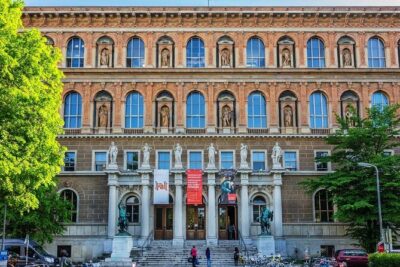
Browse the lists this tour appears in