
Reviewed · HISTORICAL TOURS
Vienna: History Highlight Walking Tour
Vienna’s grand center makes more sense once you know what happened behind the facades. This two-hour walk links Roman remains, Habsburg power, imperial ceremony, art, war, and burial customs in a compact route from Michaelerplatz to St. Stephen’s Cathedral.
I like the way the tour turns handsome but silent buildings into human stories, and I like its small-group format, which gives guides such as Herbert and Wolfgang room to answer questions. The cost is also fair at $33 per person, especially if this is your first visit and you want a clear plan for the rest of your stay.
The trade-off is that this is an outdoor orientation tour, not a museum visit. Entrance fees are not included, some stops are viewed from outside, and the walking route is not suited to people with mobility impairments or children under 12.
Key points to know before you book
- Roman Vienna begins at Michaelerplatz: Start with excavations beneath one of the city’s grandest squares and learn why this location mattered.
- Herbert and Wolfgang bring the route to life: Guides are praised for strong historical detail, humor, useful museum advice, and a personal feel in small groups.
- The Hofburg is explained as a seat of power: You do not simply look at palace walls. You learn how its vast grounds worked and which rulers shaped Vienna.
- Habsburg ceremony gets wonderfully odd: The tour covers weddings, imperial burial customs, and the groom’s surprising absence from some marriages.
- World War II is part of the city story: The Albertina and Monument Against War and Fascism provide a sober change of tone.
- The route ends with Vienna’s landmark: St. Stephen’s Cathedral gives you a strong final stop and a useful base for further exploring the center.
Why this two-hour walk works as a first look at Vienna
The route covers the historic core without trying to enter every major building. That is a sensible choice in two hours. Vienna has enough museums, palace rooms, churches, and crypts to fill several days, but first you need a map in your head.
I see the main value here in the links between places. The Austrian National Library is not treated as an isolated photo stop. The Hofburg is not just a grand palace. The State Opera, Albertina, Imperial Crypt, and St. Stephen’s Cathedral each fit into a wider story about dynastic rule, public ceremony, art, religion, war, and memory.
The guide’s style matters. Herbert is repeatedly described as warm, funny, and able to explain difficult material without making the walk feel like a lecture. Wolfgang is also named as a guide, and the tour is offered in English or German. Past groups have been as small as a handful of people, sometimes creating an almost private-tour feel.
You should still expect a serious amount of information. The walk moves through centuries of Roman, Habsburg, and modern Austrian history in a short time. If you prefer a slow stroll with long breaks, this may feel brisk. If you want a smart introduction before choosing museums and palaces, the pace makes good sense.
A few more Vienna trips to weigh up
- Vienna: Time Travel and Magic Vienna History Tour
★ 4.6 · 3,879 reviews - Vienna: World War II Historical Walking Tour
★ 4.8 · 1,772 reviews - Vienna Historic Center Small Group Walking Tour
★ 5.0 · 1,746 reviews
Michaelerplatz and the Roman remains
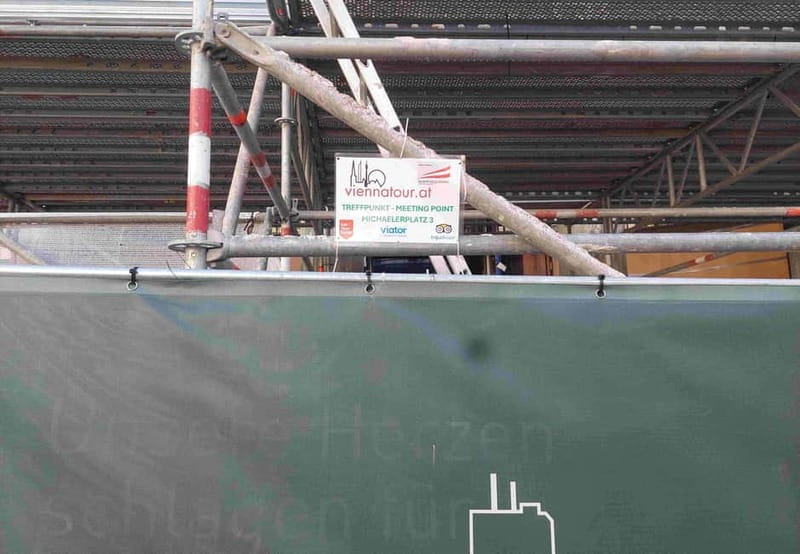
Meet in front of the Loos Haus at Michaelerplatz 3, between Kohlmarkt and Herrengasse. Look for the building with Raiffeisenbank on its facade. The meeting point is about a three-minute walk from the Herrengasse station on the U3 metro line.
The square gives the tour a strong opening because the story starts below street level. At the Michaelerplatz excavations, you see evidence of Roman Vienna and begin with the practical question of why a fortified settlement was built here.
That question is more useful than a list of dates. It helps you read Vienna as a place chosen for position, defense, trade, and control. The excavations also make an important point about the city: grand imperial Vienna was built over much older layers.
Your guide may use historical images on an iPad to show how buildings looked after World War II. That visual aid is especially useful when a modern facade hides damage, rebuilding, or changes in use.
St. Michael’s Church and the first imperial clues
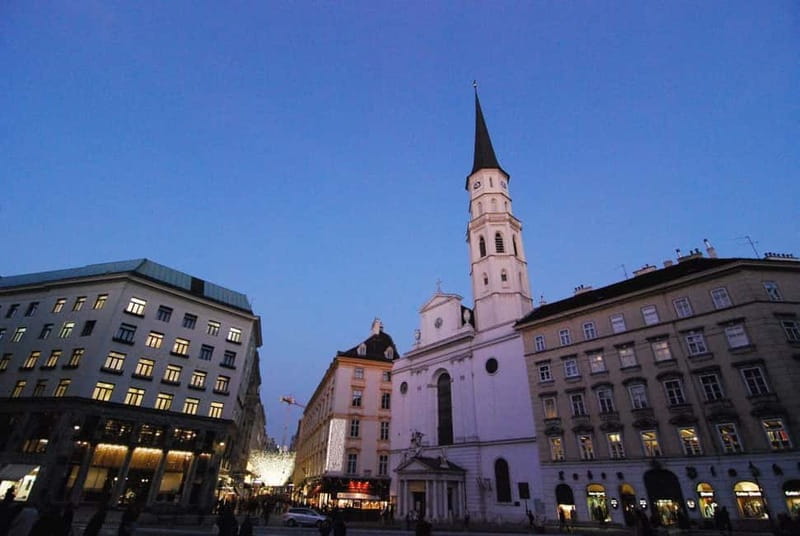
St. Michael’s Church is Vienna’s third-oldest church, and its architecture combines three different styles. You may not need to be an architecture specialist to appreciate the stop. The changing forms reveal how a building can gather additions over many generations.
This is one of the tour’s better early lessons. Vienna is not a single-period city. Medieval, Renaissance, Baroque, imperial, and modern elements often sit within a short walk of one another. A guide can point out those changes much more clearly than a quick glance at a map.
The church also helps set up the Hofburg. Its position near the palace district shows how religion, court life, and government operated close together. You get a sense of how the imperial center was organized before moving into the palace grounds.
The Hofburg and the scale of Habsburg rule
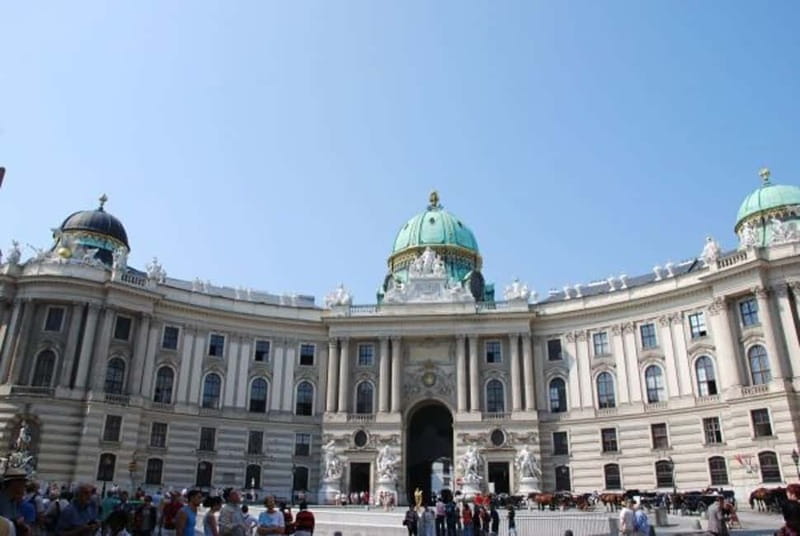
The Hofburg is the tour’s central subject. Its grounds cover about 555,000 square meters, a figure that explains why a short visit cannot cover everything. Your guide focuses on the palace as a working center of power and on the rulers connected with it.
At the Hofburg, I would pay attention to the difference between what you see and what you are told. Facades can look decorative and distant. The guide’s job is to explain who used each part of the complex, what public rituals took place there, and how the Habsburg rulers shaped the city.
The tour also points out what you can visit later, including the Imperial Treasury. That advice has real value. You can decide after the walk if royal objects, dynastic symbols, and ceremonial treasures deserve part of your schedule.
Same Alps, a completely different kind of day:
- Vienna: Vivaldi’s Four Seasons Concert in Karlskirche
★ 4.7 · 14,951 reviews - Vienna: Spanish Riding School Training
★ 3.9 · 9,281 reviews - Vienna: Skip-the-cashier-desk-line Giant Ferris Wheel Ride
★ 4.5 · 7,859 reviews - Vienna: Schönbrunn Palace & Gardens Skip-the-Line Tour
★ 4.7 · 7,739 reviews
Heroes’ Square and the spaces behind the facades
Heroes’ Square, or Heldenplatz, gives you room to appreciate the size of the imperial setting. The broad open space can look simple at first, but its scale and surrounding buildings carry political meaning.
This stop is less about entering a room and more about learning how public space was used. Your guide explains what lies behind the facades and why the square mattered to Austria’s rulers. The result is a better understanding of how architecture can project authority.
The square can also be one of the easiest places to lose your bearings in the palace district. A guide helps you connect the buildings instead of seeing them as unrelated landmarks. Take note of recommendations for later visits, since several important attractions are clustered nearby.
The Imperial Treasury and the Austrian National Library
The Imperial Treasury is discussed as one of the places worth adding to a Vienna itinerary. Entrance is not included in the $33 tour price, so you can choose to visit separately. That keeps the walking tour affordable, though it means you need to budget extra for any interiors you enter later.
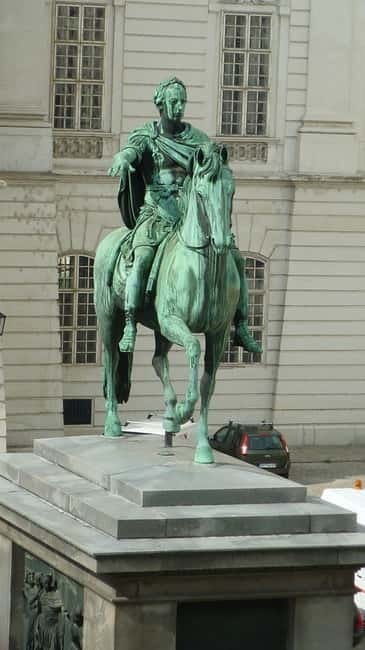
The Austrian National Library provides one of the route’s most striking exterior stops. You learn about its state room, the meaning of the symbol on the roof, and the reason the square is named after Emperor Joseph II.
Those details are exactly why a guide can be useful here. You might walk past the library, admire its formal design, and keep going. After the explanation, the roof symbol and the square’s name become clues rather than decoration.
The state room itself is not included as part of the walking tour. If you want to see interiors, check opening details and admission separately. The tour gives you context first, which can help you decide which rooms deserve your limited time.
Habsburg weddings and imperial family customs
The church associated with Habsburg weddings adds a lighter and stranger turn to the story. The guide explains why the groom was not present at some ceremonies, an unusual custom that shows how royal marriages could serve political purposes rather than personal ones.
The church is closed on Sundays and public holidays, so you should not count on seeing it open during those visits. The tour can still discuss its role, but the experience will differ depending on the day.
I like this part because it moves the Habsburg story away from portraits and dates. Royal families made decisions about marriage, succession, and alliances in ways that affected whole countries. A short anecdote can make that system easier to remember.
The Albertina and Vienna’s wartime memory
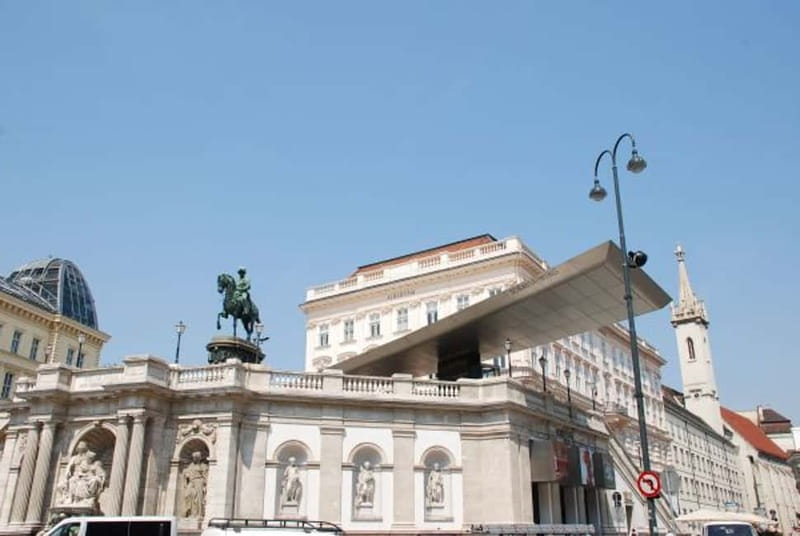
The walk continues past the Albertina Museum, known for the largest graphical collection in the world. You are not paying for museum admission during the tour, but the exterior stop helps you decide if the collection belongs on your own schedule.
Then the mood changes at the Monument Against War and Fascism. This is an important correction to any picture of Vienna as only palaces, coffeehouses, music, and polished stone. The city’s 20th-century story includes the horrors of World War II, and the monument confronts that past directly.
Guides can make this stop more useful by showing historical photographs and explaining what happened to the surrounding buildings. The subject is sober, and it should be. The route does not treat war as a decorative footnote to imperial sightseeing.
You may find this section more valuable than another quick photo stop because it gives the center moral and political depth. It also prevents the Habsburg story from becoming too tidy. Vienna changed dramatically, and parts of the city still carry the marks of those changes.
The State Opera and the lost Carinthian Gate Theatre
At the State Opera, the guide explains why the Hotel Sacher now occupies the site of the Carinthian Gate Theatre. This is a small detail, but it shows how Vienna’s buildings have changed use over time.
The stop also places you in one of the city’s best-known cultural areas. You hear about the opera’s setting and then connect it with the nearby hotel, theatre history, and urban development. Again, the point is not simply to identify a famous building. It is to understand what stood there before and why the present arrangement looks the way it does.
If you plan to attend a performance or visit the opera separately, this introduction can help you notice the surrounding streets. The walking tour does not include an opera ticket or an interior visit.
Neuer Markt, the Providentia Fountain, and the Imperial Crypt
At Neuer Markt, the Providentia Fountain becomes the setting for another anecdote. This kind of stop suits the tour’s style: a public monument that might otherwise receive only a quick glance gets a story and a place in the city’s larger picture.
The Imperial Crypt brings the Habsburg story back to ceremony and death. Your guide explains the burial ritual and the customs surrounding imperial remains. It is a revealing counterpoint to the wedding stories earlier in the walk.
The crypt is not included in the tour price. You should treat the stop as an introduction, then decide if you want to return for an interior visit. The guide’s explanation can help you understand why the site matters before you pay to enter.
This section also gives the route a human scale. The Habsburgs are often presented through enormous palaces and public monuments. Burial customs show how the dynasty handled family, religion, status, and memory at close range.
Finishing at St. Stephen’s Cathedral
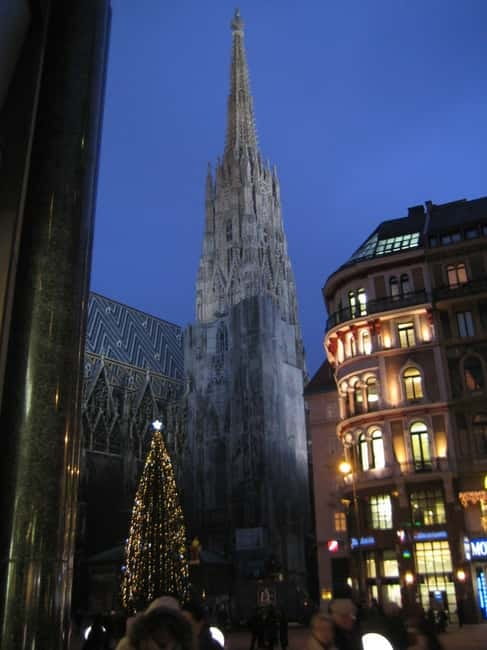
The walk finishes in the area of Stephansplatz, beside St. Stephen’s Cathedral, Vienna’s landmark. The cathedral is a fitting endpoint because it brings together the city’s religious, architectural, and wartime stories.
You hear about its partial destruction during World War II and about a popular historical claim that is not quite correct. That final correction is typical of the tour’s approach: do not accept every schoolbook version or polished city story without checking the details.
The supplied information gives Stephansplatz as the final area, while the meeting information also says the activity ends back at the meeting point. Because those details do not match perfectly, confirm the exact end point when you book. In practical terms, the route is presented as ending at St. Stephen’s Cathedral, which is a useful place to continue exploring on foot.
What $33 buys you, and what it does not
At $33 per person, this is a reasonable buy for a first visit to Vienna. You are paying for two hours with a live local guide, a small-group setting, and a connected explanation of many major sights in the historic center.
The value is strongest if you would otherwise walk past the Hofburg, National Library, Albertina, and Imperial Crypt without understanding their role. A guide can also save you time later by pointing you toward museums and attractions that fit your interests.
The price does not cover entrance fees. That is normal for a city orientation walk, but plan for extra costs if you want to enter the Imperial Treasury, National Library state room, Imperial Crypt, or Albertina.
Free cancellation is available up to 24 hours before the start time, and you can reserve now while paying later. The tour runs in all weather, so bring suitable clothing. Large bags and luggage are not allowed, and video or audio recording is prohibited.
Who will get the most from this Vienna tour
I would choose this tour early in a Vienna stay, not at the very end. Several parts of the route help you decide what to see next, and the guide can offer practical suggestions for museums and local attractions.
It suits you best if you:
- Are visiting Vienna for the first time
- Want imperial history explained in plain language
- Prefer stories and context to silent sightseeing
- Enjoy a compact route through the historic center
- Appreciate humor alongside serious historical detail
- Want recommendations for the rest of your stay
It is less suitable if you want long interior visits, a relaxed pace, or a tour designed for young children. The activity is not suitable for children under 12 or people with mobility impairments. Since it runs in all weather, comfortable shoes and weather-ready clothing are sensible.
The strongest praise goes to the guides’ mix of facts, jokes, and personal attention. Herbert is singled out for using images, adjusting explanations to the group, and offering useful advice. Wolfgang is also described as energetic and easy to understand. Guide quality can vary from one departure to another, but the tour’s format gives a strong guide room to make the experience personal.
Should you book the History Highlight Walking Tour?
Book it if you want Vienna to become readable quickly. In two hours, you cover the city’s central imperial sights, hear memorable stories about Habsburg customs, face the difficult World War II chapter, and finish at St. Stephen’s Cathedral.
I would especially recommend taking it near the start of your visit. The route is not a substitute for the Imperial Treasury, Albertina, National Library, or Imperial Crypt, but it helps you choose among them with better context.
Skip it if you dislike guided walks, need step-free access, or want a tour centered on museum interiors. For most first-time visitors who want a clear, lively introduction at a fair price, this is a strong way to begin Vienna.
FAQ
How long does the Vienna History Highlight Walking Tour last?
The tour lasts two hours. Starting times vary, so check availability for the date you want.
Where does the tour begin?
It begins in front of Loos Haus at Michaelerplatz 3, 1010 Vienna. The building is between Kohlmarkt and Herrengasse, and the facade displays the name Raiffeisenbank.
How close is the meeting point to public transportation?
The meeting point is about a three-minute walk from Herrengasse metro station on the U3 line.
Which languages are available?
The tour is offered with a live guide in English or German.
Are entrance fees included?
No. The $33 price includes the local guide, but entrance fees are not included.
Is the tour suitable for children and people with mobility impairments?
The activity is not suitable for children under 12 or for people with mobility impairments.
What happens if it rains?
The tour operates in all weather conditions. Large bags and luggage are not allowed, and video or audio recording is prohibited.
Just added around Vienna
- Ottakringer Brewery tour★ 4.0 · 6 reviews
- New Hofburg Palace Tour House of Habsburg★ 4.5 · 5 reviews
- Private Van & Walk Tour – One Perfect Day in Vienna★ 5.0 · 21 reviews
- True Crime mobile puzzle rally Vienna★ 4.0 · 3 reviews
- Vienna Naschmarket Food Tasting Tour★ 4.0 · 30 reviews
- Vienna Nightlife Experience: Food, Wine, Cocktails & Vibes★ 5.0 · 119 reviews
- Myth Mozart★ 4.0 · 80 reviews
- ( Night Tour ) With Private Guide + wine or prosecco★ 4.0 · 12 reviews
Historical Tours, compared.
Vienna Historic Center Small Group Walking Tour
Read our review →
Skip-the-Line Schonbrunn Palace Guided Tour and Vienna Historical City Tour
Read our review →
Vienna Mozart Concert in Historical Costumes at the Musikverein
Read our review →
Browse the lists this tour appears in