
Reviewed · WALKING TOURS
Walking Tour Vienna
The unusual thing here is that the experience details describe two different tours. The meeting and ending points fit a central Vienna walking tour, with the Hofburg and Heldenplatz as named stops. The longer description instead sends you by minivan to Prater, then up to Kahlenberg for downhill scooter rides reaching 39 miles per hour.
I like the promise of a strong first-day orientation and the chance to finish near St. Stephen’s Cathedral, right in the heart of Vienna. I also like the personal feel suggested by guides such as Michael and Katharina, who are praised for clear stories, useful recommendations, and keeping a two-hour tour moving.
The main drawback is the mismatch in the description. If you book expecting a calm historical walk, a high-speed scooter outing would be a surprise. If you want the scooter adventure, the listed city-center itinerary may leave you unsure what you are actually buying. Confirm the format with Prime Tours Vienna before paying.
Key points to know before booking
- The advertised experience may combine two products: The text includes both a central walking tour and a downhill scooter adventure.
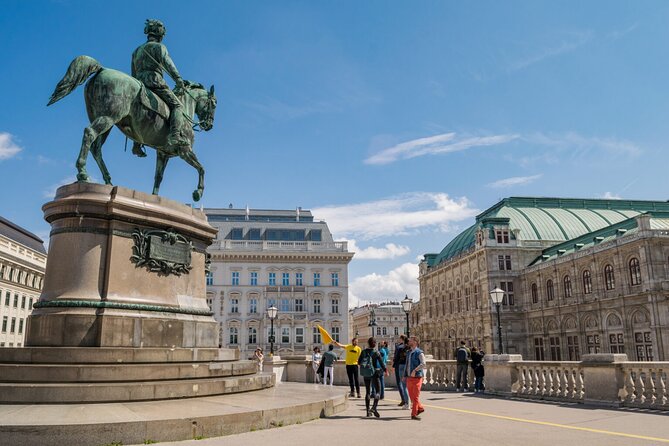
- The walking route focuses on the Hofburg and Heldenplatz: It ends near St. Stephen’s Cathedral, a useful spot for exploring more of central Vienna.
- The scooter option is genuinely active: It includes a helmet, practice riding, steep roads, sharp bends, and speeds up to 64 kph.
- Guides can shape the experience: Michael and Katharina receive praise for storytelling, history, and practical advice.
- The $22.83 price is fair for a guided orientation: It is less compelling if you expect a fully free tip-based tour or if the advertised format is unclear.
- Weather matters: The activity operates in all weather, so you need suitable clothing and footwear.
First, sort out which Vienna tour you are booking
I would not book this experience without checking one basic point: is it a walking tour of central Vienna, or a downhill cross-scooter tour from Prater and Kahlenberg?
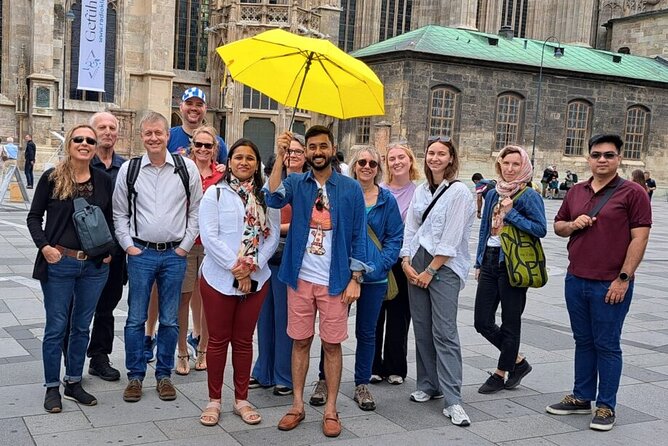
The title and itinerary point to a walking tour. You meet at Helmut-Zilk-Platz beside the Albertina, then follow a guide through the old center. The listed stops are the Hofburg and Heldenplatz, and the tour ends one or two minutes from St. Stephen’s Cathedral.
The main description tells a different story. It begins with a ride in an air-conditioned minivan to Prater amusement park. After a stroll near the giant Ferris wheel, you collect a non-motorized cross scooter, practice in the park and around the Vienna University of Economics and Business, then head toward Kahlenberg for several downhill runs.
That is not a minor wording issue. These are different kinds of outings. One is a history-led city orientation. The other is a physical thrill ride through wooded hills and vineyard country.
The safest plan is to contact Prime Tours Vienna and ask exactly what is running on your date. This matters even more because the supplied feedback describes guides discussing Vienna’s history and buildings, not the scooter equipment or downhill route. The experience may have changed, or two products may have been mixed into one page.
A few more Vienna trips to weigh up
- Vienna: Guided Walking Tour of City Center Highlights
★ 4.7 · 4,989 reviews - Vienna: Vienna Central Cemetery Guided Walking Tour
★ 4.8 · 3,307 reviews - Vienna: Guided Walking Tour of City Highlights & Hidden Gems
★ 4.9 · 2,180 reviews
The central meeting point and old-town route
The listed starting point is Helmut-Zilk-Platz, at Albertinaplatz 2-3 in Vienna’s first district. This is a practical place to begin because it sits in the historic center and is close to public transportation.
If the walking version is the one you receive, the route gives you a quick look at Vienna’s political and imperial core. In two hours, you should think of it as an introduction rather than a full survey. The value is in learning how the center fits together, then deciding what deserves more of your time later.
The tour ends near Stephansplatz, one or two minutes from St. Stephen’s Cathedral. I like this arrangement. You can continue sightseeing immediately, find a café, visit the cathedral area, or use the subway without having to cross the city to retrieve your bearings.
The group can reach up to 40 people. That is not especially small, despite the small-group wording in the highlights. A group of that size can still work on broad squares, but you may find it harder to ask questions or hear every word in a noisy street.
The Hofburg: Vienna’s imperial center
The Hofburg is listed as a 15-minute stop, with admission included because the visit is from the outside. Your guide explains the site and tells stories as you pass by, rather than leading a full interior visit.
That short stop makes sense on an orientation walk. The Hofburg is not just one palace building. It is a large imperial complex tied to the Habsburg rulers and to Vienna’s long role as a center of power. A guide can give you the basic framework quickly, helping the surrounding streets and courtyards make more sense.
The limitation is time. Fifteen minutes is enough for context and exterior views, not for the palace museums, imperial apartments, or a detailed look at every architectural section. If you want to go inside, treat this tour as a pointer and return independently.
This is also where guide quality matters most. Michael is praised for telling stories about the Habsburgs and Vienna in a way that made the two hours pass quickly. Katharina is also praised for interesting information and an engaging presentation. Those comments suggest that the tour’s strongest feature is the human explanation, not the number of sights checked off.
Heldenplatz and the weight of Vienna’s past
The second named stop is Heldenplatz, also scheduled for about 15 minutes. This grand square sits beside the Hofburg and is framed by impressive monuments and buildings.
Heldenplatz is a useful place for a guide to explain how imperial ceremony, national politics, and modern memory overlap in Vienna. The square can look like a simple open space if you only stop for photographs. A good explanation gives it more meaning.
Still, the itinerary does not promise a long architectural study. If your priority is detailed commentary on churches, façades, and individual buildings, you may find the route too general. One participant specifically felt that the guide focused more on regional history than on Vienna’s buildings and sights.
That criticism is worth taking seriously. It does not mean the guide lacks information. It means the emphasis may be historical storytelling rather than close reading of the city around you. I would book this for context and orientation, not for a specialist architecture lesson.
Same Alps, a completely different kind of day:
- Vienna: Vivaldi’s Four Seasons Concert in Karlskirche
★ 4.7 · 14,951 reviews - Vienna: Spanish Riding School Training
★ 3.9 · 9,281 reviews - Vienna: Skip-the-cashier-desk-line Giant Ferris Wheel Ride
★ 4.5 · 7,859 reviews - Vienna: Schönbrunn Palace & Gardens Skip-the-Line Tour
★ 4.7 · 7,739 reviews
St. Stephen’s Cathedral as a useful finish
Ending beside St. Stephen’s Cathedral is one of the tour’s best practical features. Stephansplatz is central, memorable, and easy to use as a base for the rest of your day.
The supplied route does not list an interior visit or admission to the cathedral. You should therefore expect to finish nearby, not to receive a guided cathedral tour.
For a first visit, this location helps you keep exploring after the guide leaves. You can build your own afternoon around the cathedral and nearby streets, though the exact next stop is up to you. The experience’s advertised flexibility is useful here because the tour gives you a starting map of central Vienna without locking you into a full-day schedule.
If your hotel is elsewhere, the nearby subway connection also makes the ending convenient. The tour is short enough to fit before lunch, after arrival, or at the beginning of a longer day in the first district.
The Prater and the cross-scooter version
The alternative format begins with transport by air-conditioned minivan to Prater. The park is famous for its giant Ferris wheel, one of Vienna’s best-known symbols, and the initial stroll gives the outing a clear change of scene from the old town.
You then collect a downhill cross scooter, described as a hi-tech, non-motorized two-wheeler. A helmet is supplied, and the program includes a practice ride through Prater and the Vienna University of Economics and Business campus.
That practice period is important. The scooter is not presented as a casual city bicycle. You need to become comfortable with balance, steering, braking, and speed control before reaching the hills. The colorful university buildings also add an unusual architectural stop that you would not get on the central walking route.
The tour description says the downhill rides can reach 39 miles per hour, or 64 kph. That is serious speed. You will also need to slow for sharp bends on roads that coil around the hillsides. I would regard this as an active adventure first and a sightseeing tour second.
The supplied information says most travelers can participate, but it does not give a detailed fitness, height, weight, or riding-skill requirement. For that reason, ask the operator about suitability if you have any concern about balance, steep roads, or fast downhill riding.
Kahlenberg, Klosterneuburg, and the city views
The scooter route continues toward Kahlenberg, a wooded hill north of Vienna. From here, the attraction is the broad view over the city, along with the chance to see Klosterneuburg Monastery.
This section offers the strongest scenic contrast in the whole experience. The walking version keeps you among imperial buildings and busy streets. The scooter version takes you into wooded slopes, open viewpoints, and roads passing through vineyard country.
After the view stop, you ride downhill. The description promises two further runs, including one in the Exelberg area, where vineyards cover the hillsides. This sounds appealing if you like active sightseeing and want to see a side of Vienna beyond the grand center.
The tradeoff is that the scenery arrives while you are managing a scooter. You may have less time to study a view or listen to a long explanation than you would on a walking tour. The pleasure comes from motion, fresh air, and changing scenery rather than from detailed historical commentary.
What the guide experience is likely to be like
The strongest comments about the walking format focus on the guides. Michael is praised for a well-paced orientation, stories about the Habsburgs, and recommendations for the rest of a Vienna stay. Katharina is praised for interesting information and an engaging style.
One guide was described as friendly, informed, and helpful with questions. Another participant enjoyed the explanations from a Portuguese guide, though the name was not remembered. These details point to a tour that can work very well when the guide connects history to the streets around you.
At the same time, guide emphasis can vary. You may receive more regional and political history than commentary on specific buildings. If you want a list of architectural details at every stop, say so early and ask questions as you go.
The experience is offered in English. Children must be accompanied by an adult, and service animals are allowed. The tour operates in all weather, so I would bring a rain layer and shoes suitable for walking. If the scooter format is confirmed, practical clothing matters even more.
Is $22.83 good value?
At $22.83 per person, the price is reasonable for a two-hour guided introduction, especially if you are new to Vienna and use the tour to plan the rest of your stay.
The value depends on what is delivered. For the walking version, you are paying for a guide, a short route through the historic center, and an efficient orientation that ends in an excellent location. That is fair if you want stories and a city framework, not museum admission or an exhaustive tour.
There is one pricing wrinkle. The guide may describe the experience as a free tour supported by tips. That can be confusing when you have already paid about $23 through a booking platform. You should not assume the tour is genuinely free in the usual tip-based sense.
Tips are not required, though they are welcome. I would decide based on the quality of the guide and the clarity of the service, not on pressure to pay again. If you book this through a platform, compare the final price with any direct option and confirm what is included.
If the scooter version is actually provided, the same price could be strong value because transport, helmet use, practice time, and several downhill rides are included. But the description does not make the format clear enough for me to say that confidently.
Who should book this experience?
I would choose the walking format if you are visiting Vienna for the first time, want a short introduction, and prefer stories about the city’s rulers, squares, and political past. It also suits you if you want a central finish and the freedom to continue exploring on your own.
I would choose the scooter format only if you specifically want an active outing and feel comfortable with fast downhill riding. Speeds up to 64 kph, sharp bends, and steep roads make this a serious physical activity, not a gentle sightseeing ride.
This is less suitable if you want an in-depth cathedral visit, a museum tour, or a detailed architectural survey. The named stops are brief, and one clear limitation is that historical explanation may receive more attention than building-by-building detail.
The maximum group size of 40 also matters. If you want a quiet, highly personal walk with plenty of individual discussion, ask about the expected group size for your date.
Cancellation and practical planning
You can cancel up to 24 hours before the start time for a full refund. Changes made within 24 hours are not accepted, and the amount paid is not refunded for a late cancellation.
The experience requires a minimum number of participants. If that minimum is not reached and the operator cancels, you are offered another date or experience, or a full refund.
Confirmation is provided when you book. The tour is near public transportation, and most people can participate. Since it operates in all weather, check the forecast and dress for conditions rather than assuming Vienna will stay dry.
I would also save the meeting point and ending point separately. The start is Helmut-Zilk-Platz beside the Albertina, while the walking route ends near St. Stephen’s Cathedral. If the operator confirms the scooter trip instead, ask where and when the minivan leaves.
Should you book Walking Tour Vienna?
Book it for a short, guide-led introduction to Vienna, especially if Michael, Katharina, or another strong storyteller is leading the walk. The Hofburg, Heldenplatz, and St. Stephen’s Cathedral give you a useful central framework, and the $22.83 price is sensible for a two-hour orientation.
Do not book until you clarify the format. The Prater and Kahlenberg scooter plan is a fast, active hill ride, while the listed meeting points and stops describe a traditional city walk. Those are very different experiences.
My advice is simple: contact Prime Tours Vienna, confirm whether your date is walking or scooter-based, ask about the expected group size, and then decide. If you want history and an easy first look at central Vienna, choose the walk. If you want speed, hills, views, and a helmet, choose the scooter outing only after confirming that is what you will receive.
FAQ
How long does the Vienna tour last?
The experience lasts approximately two hours.
Where does the walking tour start?
The listed starting point is Helmut-Zilk-Platz at Albertinaplatz 2-3 in Vienna’s first district.
Where does the walking tour end?
It ends near St. Stephen’s Cathedral at Stephansplatz, about one or two minutes from the cathedral.
Which sights are included on the walking route?
The named stops are the Hofburg and Heldenplatz. The guide passes by the Hofburg and explains its stories, then visits Heldenplatz and discusses its monuments and history.
Is the scooter activity included in the same experience?
The supplied description includes a scooter version with transport to Prater, practice riding, Kahlenberg views, and several downhill rides. Because the walking itinerary lists different stops, you should confirm the format with Prime Tours Vienna before booking.
How fast can the downhill scooter go?
The scooter rides may reach speeds of up to 39 miles per hour, or 64 kph.
Can I cancel for a full refund?
Yes. You can cancel at least 24 hours before the experience starts for a full refund. Cancellations or changes made within 24 hours are not refunded or accepted.
Just added around Vienna
- Ottakringer Brewery tour★ 4.0 · 6 reviews
- New Hofburg Palace Tour House of Habsburg★ 4.5 · 5 reviews
- Private Van & Walk Tour – One Perfect Day in Vienna★ 5.0 · 21 reviews
- True Crime mobile puzzle rally Vienna★ 4.0 · 3 reviews
- Vienna Naschmarket Food Tasting Tour★ 4.0 · 30 reviews
- Vienna Nightlife Experience: Food, Wine, Cocktails & Vibes★ 5.0 · 119 reviews
- Myth Mozart★ 4.0 · 80 reviews
- ( Night Tour ) With Private Guide + wine or prosecco★ 4.0 · 12 reviews
Walking Tours, compared.
Guided Walking Tour of City Center Highlights
Read our review →
Guided Walking Tour of City Highlights & Hidden Gems
Read our review →
Vienna Historic Center Small Group Walking Tour
Read our review →
Browse the lists this tour appears in