
Reviewed · CITY TOURS
Vienna: Guided Walking Tour of City Highlights & Hidden Gems
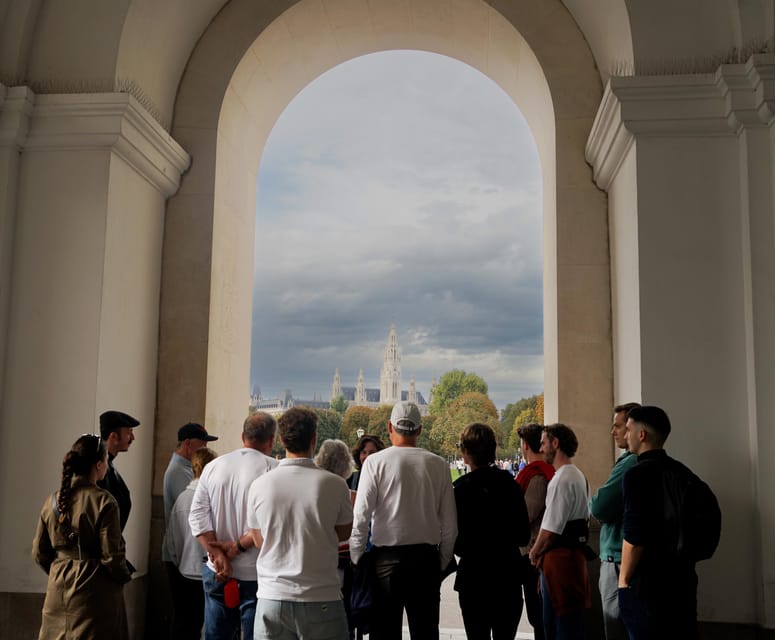
Vienna’s grand center is wonderfully compact, and this two-hour walk links its biggest sights in one clean route. You’ll see the Hofburg, Spanish Riding School, State Opera, and St. Stephen’s Cathedral without spending the day inside museums. I like the Last Supper mosaic at Minoriten Church and the practical finish at St. Stephen’s, where you can stop for food or continue exploring.
I also like the use of listening equipment on many departures. Guides such as Michael, Petra, Max, Celine, and Ivo have been praised for clear storytelling, humor, and useful advice for the rest of your stay. The tradeoff is simple: this is an exterior-only tour, and two hours covers a lot of ground, so you will not have time to linger at every stop or enter the buildings.
Key points to know before booking
- The route covers Vienna’s historic core: Walk from Minoritenplatz through the Hofburg area, Heldenplatz, the Opera, and Stephansplatz.
- You see the Last Supper mosaic: The Minoriten Church provides the tour’s most unusual visual stop.
- The tour is built around stories: Imperial customs, music, architecture, and local anecdotes give shape to the sights.
- Headsets can make a big difference: They help you hear the guide clearly in a large group or on busy streets.
- The finish is useful: St. Stephen’s Cathedral puts you near food, shops, and more central sights.
- Plan for outdoor walking: Comfortable shoes and weather-ready clothing matter, especially in cold or wet weather.
A fast, useful introduction to Vienna’s first district
I see this tour as a city orientation with substance. You are not simply marched past famous façades for photographs. The guide connects Vienna’s imperial court, Catholic churches, music tradition, and public squares, giving you a working map of the city center.
That makes it especially useful on your first full day. You can note the places you want to revisit, ask for restaurant or sightseeing suggestions, and understand how the main sights fit together before you tackle Vienna on your own. Guides have included Michael, Max, Petra, Celine, Marlene, and Ivo, and the strongest feedback points to lively delivery rather than a dry list of dates.
The pace is brisk but manageable for most people who are comfortable walking for two hours. One practical limitation is the lack of a scheduled toilet stop. You may want to use facilities before meeting the guide, since the route keeps moving and the tour ends at the cathedral.
A few more Vienna trips to weigh up
- Vienna: Guided Walking Tour of City Center Highlights
★ 4.7 · 4,989 reviews - Vienna: Vienna Central Cemetery Guided Walking Tour
★ 4.8 · 3,307 reviews - Vienna: Viennese Underworld Guided Walking Tour
★ 4.7 · 1,865 reviews
Meeting at Minoritenplatz and the Leopold-Figl statue
Your starting point is the Leopold-Figl monument in Minoritenplatz, in front of the Minoriten Church. The square is about a ten-minute walk from Stephansplatz, so it is easy to reach if you are already in central Vienna. You can also take the U3 subway to Herrengasse, then follow the signs to Minoritenplatz.
Give yourself a little extra time. The statue is the fixed landmark, and latecomers are subject to a no-show policy. Look for the guide waiting there rather than assuming the group will gather at the church entrance.
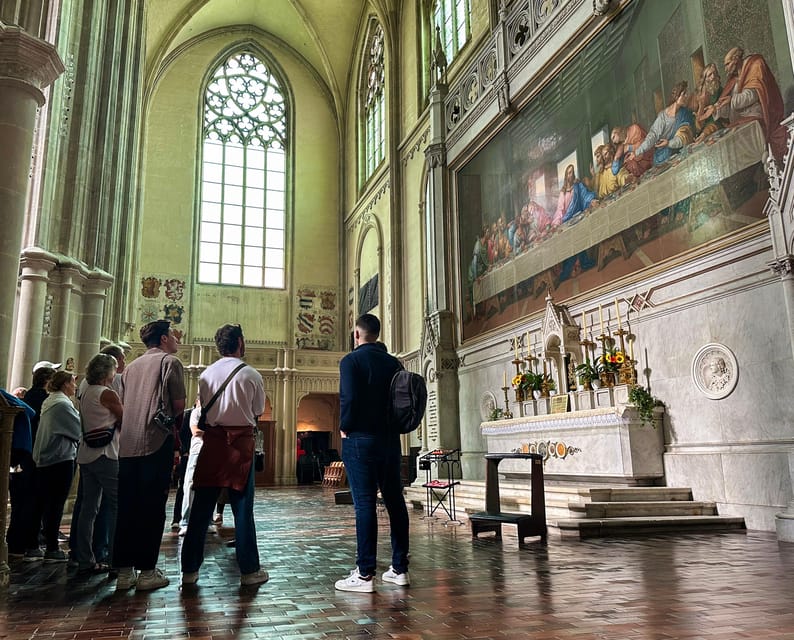
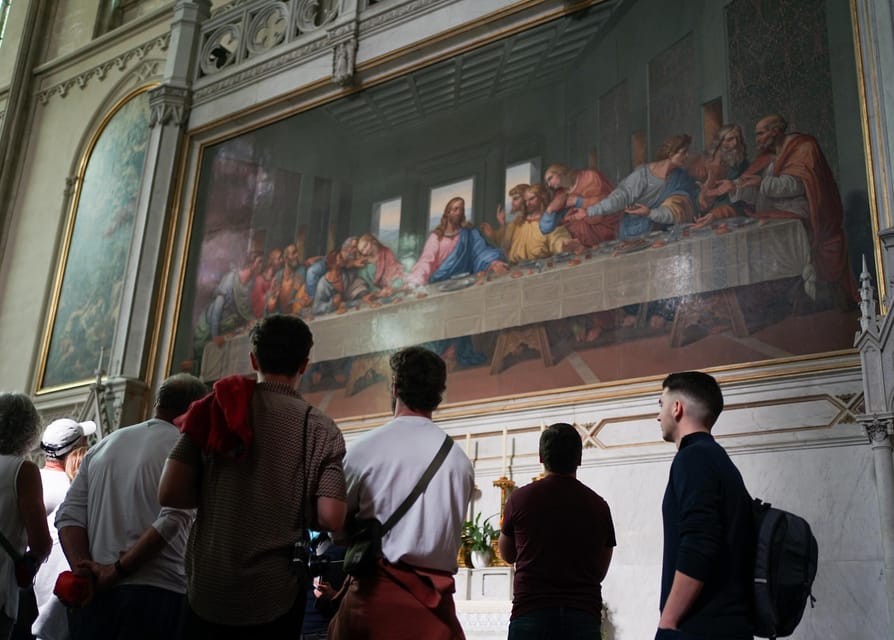
The tour begins with the Minoriten Church, also called the Church of the Minorities. Its special feature is a mosaic copy of Leonardo da Vinci’s Last Supper. This is a small but memorable stop because it breaks up the expected parade of palaces and monuments.
You should treat the church visit as conditional, not guaranteed. If Mass is taking place, entry is not possible. The walk continues in all weather, so pack a coat, rain layer, or hat according to the forecast. Vienna can feel especially cold when you are standing still in an open square.
Michaelerplatz and the Hofburg entrance
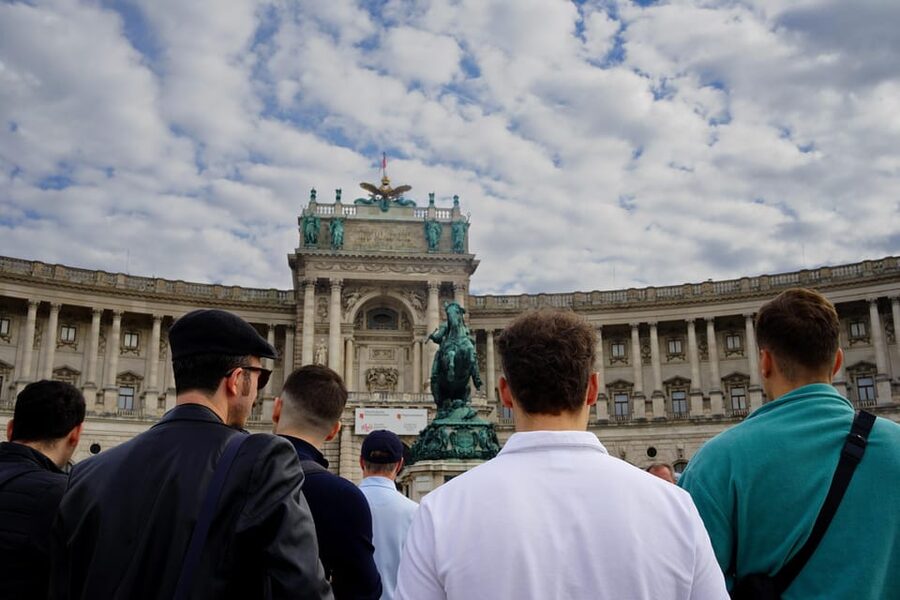
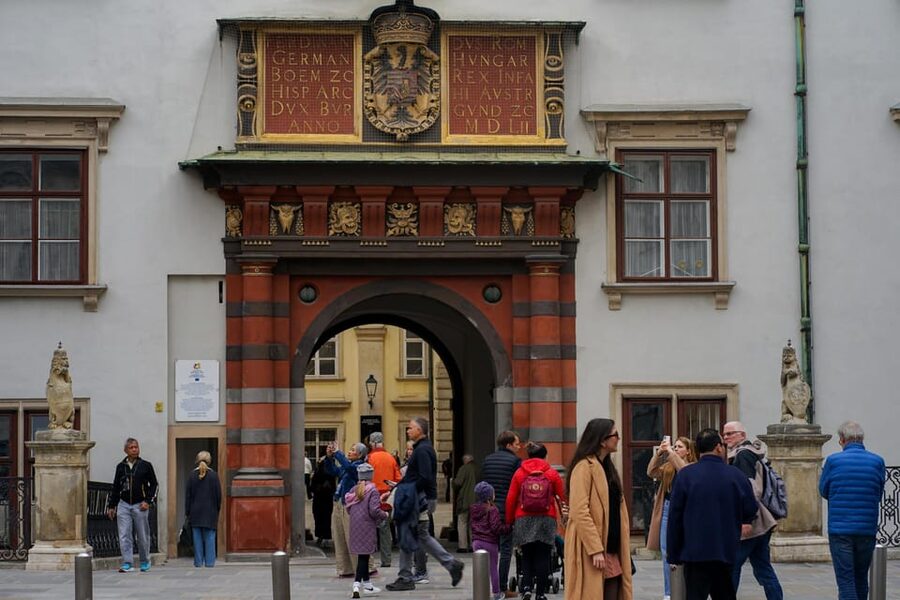
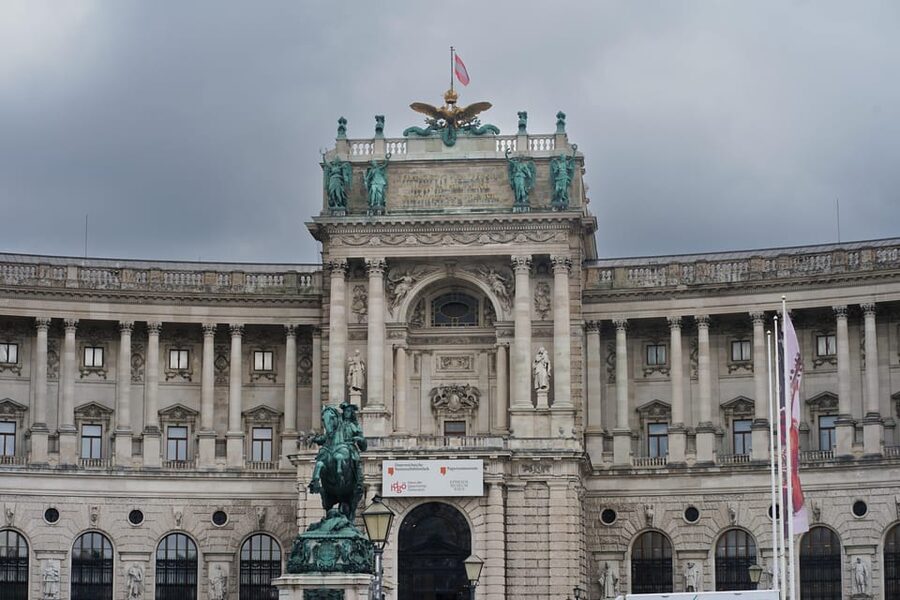
From Minoritenplatz, the route moves toward Michaelerplatz. This is one of the best places to grasp Vienna’s imperial scale. The square frames the grand entrance to the Hofburg Palace, once the center of Habsburg power and now one of the city’s major architectural complexes.
The tour focuses on the exterior. That distinction matters. You will hear about the palace and its role in Vienna’s court life, but the walking ticket does not include the Imperial Apartments, museums, or other indoor sections of the Hofburg.
Michaelerplatz is also a good example of why a guide helps. The buildings around the square belong to different periods and styles, and the huge Hofburg entrance can easily become just another impressive photograph. A clear explanation gives the façade a role in the larger story of court ceremonies, empire, and modern Vienna.
Expect some time for photographs, but not a long pause. The route has several major stops still ahead, and the guide needs to keep the group together.
Heldenplatz and the city’s imperial stage
The next section takes you through Heldenplatz, a broad ceremonial space beside the Hofburg. Its open scale contrasts with the tighter streets of the old center. This is where Vienna’s imperial image becomes especially theatrical, with monumental buildings and wide views across the former palace grounds.
A good guide can make Heldenplatz more than a place for a quick picture. The square carries political and historical associations, so the commentary here helps explain how Vienna presented power in public. You will get context rather than an interior museum lecture, which suits the short format.
Large groups can spread out in a square this size. Stay close enough to hear and keep an eye on the guide. The listening devices used on many tours are valuable here, and past departures have included groups of around 30 people. Without a headset, a city-center walk can turn into a game of catching half a sentence between traffic, pedestrians, and other tours.
Same Alps, a completely different kind of day:
- Vienna: Vivaldi’s Four Seasons Concert in Karlskirche
★ 4.7 · 14,951 reviews - Vienna: Spanish Riding School Training
★ 3.9 · 9,281 reviews - Vienna: Skip-the-cashier-desk-line Giant Ferris Wheel Ride
★ 4.5 · 7,859 reviews - Vienna: Schönbrunn Palace & Gardens Skip-the-Line Tour
★ 4.7 · 7,739 reviews
The Spanish Riding School and Vienna’s court traditions
The Spanish Riding School is one of Vienna’s best-known institutions, and the tour explains its place in the city’s imperial traditions. You will view the exterior and learn about the school, rather than attend a riding display or enter for a performance.
That is an important point when comparing this walk with a dedicated Spanish Riding School visit. If you want to see the Lipizzaners or tour the interior, you will need a separate ticket. Here, the value is in placing the school within the Hofburg district and understanding why it remains tied so closely to Vienna’s old court culture.
This stop also shows the tour’s strength. The sights are familiar, but the guide adds the human and political details that help you remember them. Michael has been singled out for warm, entertaining stories, while Max has combined historical explanation with personal memories of growing up in Vienna. Those touches can make a short walk feel less like a school lesson.
The Albertina Museum and the Vienna State Opera
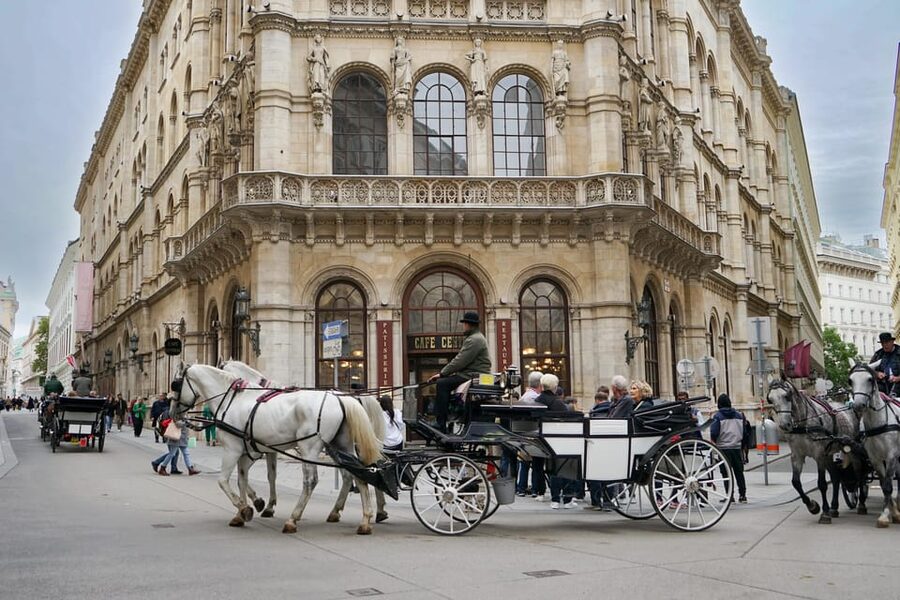
The route then passes the Albertina Museum. Again, the visit is from outside. You will learn where the museum is and see its grand exterior, but the entrance fee is not included.
I like this arrangement for a first look because it helps you build a sensible plan. If the Albertina interests you, you can return later when you have time for its art collection and exhibitions. You are not forced to spend part of the walking tour indoors while the guide waits outside.
The Vienna State Opera follows. This is a major stop for anyone interested in Vienna’s musical identity, but the same rule applies: exterior viewing only. The Opera’s façade and position on the Ringstrasse make it an easy landmark to recognize later, and the guide provides the background needed to appreciate its place in the city.
The Opera is also a useful reminder of the tour’s limits. You can learn about its history and see the architecture, but you do not get a backstage visit, auditorium tour, or performance. If music is your main reason for visiting Vienna, consider this a starting point, not a substitute for an opera ticket.
Ending at St. Stephen’s Cathedral
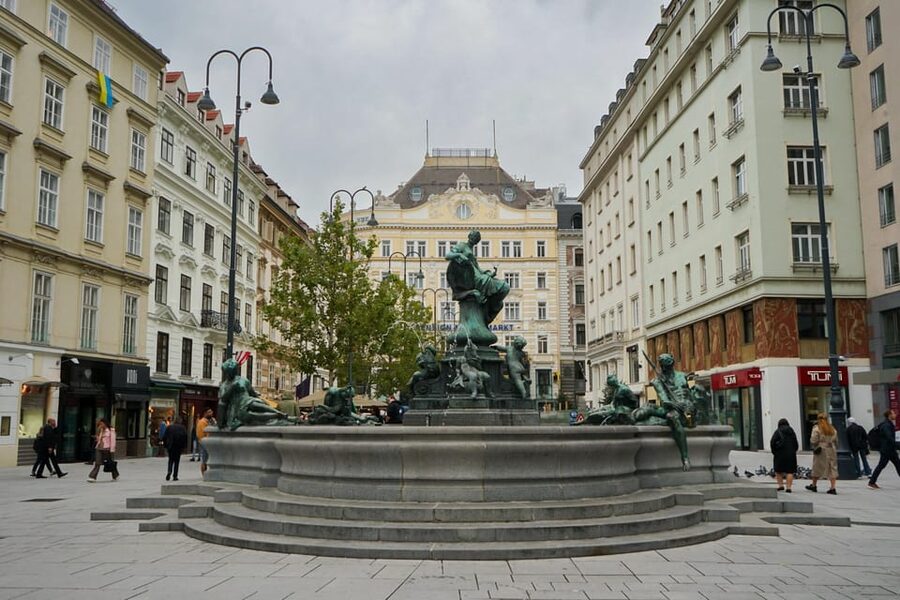
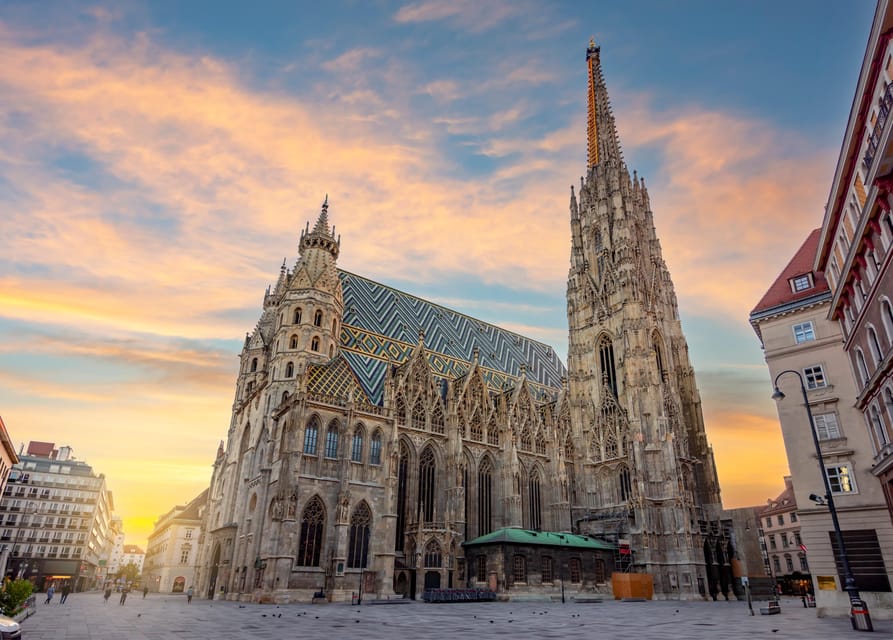
The walk ends at St. Stephen’s Cathedral, Vienna’s Gothic centerpiece. Its patterned roof and tall stone structure give you a strong final view after the imperial buildings and broad squares earlier in the route.
Finishing here works well. Stephansplatz is central, easy to recognize, and surrounded by places to eat and continue sightseeing. You can decide to enter the cathedral on your own, stop for lunch, or use the square as your next navigation point. The tour itself does not include an interior visit or cathedral admission.
The ending also gives the route a satisfying visual change. The Hofburg represents court power, the Opera represents music, and St. Stephen’s brings the focus back to medieval Vienna and the city’s religious identity. You see several versions of Vienna in a short period.
Because the tour ends at a busy landmark, make sure you know where your guide is before the group breaks up. One participant became separated near the cathedral and needed help reconnecting with the party. Stay alert during the final stop, especially if you are in a large group.
What the guide adds to the walk
The strongest part of this experience is the guide’s delivery. The route itself is valuable, but the quality of the commentary determines how much you take away. Names frequently praised for warmth, clear English, humor, and strong local knowledge include Michael, Max, Petra, Celine, Ivo, Karl, Marlene, Virginia, and Nora.
That does not mean you can request a particular guide unless the booking system allows it. It does tell you what kind of presentation to expect: historical facts mixed with anecdotes, local suggestions, and a sense of personal connection to Vienna.
The best guides appear to keep the information moving. This matters in winter, when the group may be standing in wind or cold. Several people completed the walk in freezing weather and still found the pace comfortable. A lively explanation gives you a reason to keep listening instead of watching the clock.
The headsets deserve special mention. Celine and Petra have been praised for using earpieces, and another group found that the equipment made a large tour feel closer to a private experience. It also means the guide does not need to shout, which makes the walk easier on everyone.
Group size, pace, and comfort
A private group option is available, but the standard departure may be fairly large. One group numbered about 30 people. That is not unusual for a central Vienna walking tour, but it affects how quickly you can take photographs, ask questions, and move through narrow areas.
The route is suitable for people who can walk continuously for two hours. It is not recommended for wheelchair users or people with mobility impairments. The supplied information does not promise step-free access, seating, or adapted pacing, so you should contact the provider before booking if those features matter to you.
Wear comfortable shoes. The tour includes several central squares and streets, with stops at outdoor landmarks rather than long indoor breaks. Bring a camera, dress for the weather, and avoid smoking during the activity.
You will not receive transportation to the meeting point or back from the finish. That is rarely a problem here because the route begins and ends in the central district, but it is worth factoring into your plans if you are staying outside the center.
Is $27 a fair price for two hours?
At $27 per person, this is a fair buy if you want a guided introduction to Vienna’s historic center. You are paying for a professional guide, a tightly organized route, and two hours of explanation at several major landmarks. The cost is modest compared with booking separate admissions to museums or palace interiors.
The value is strongest when you use the walk as a first-day framework. A good guide can point out where to return, explain which buildings require separate tickets, and help you spend the rest of your visit with fewer wrong turns. Several guides also provide suggestions for places to visit later.
It is less useful if you already know the center well or want extended time at one attraction. The tour does not include food, drinks, transportation, museum tickets, or indoor access. Someone hoping for a full Hofburg visit, an Albertina collection, an Opera tour, or a cathedral interior experience will need to add those separately.
Free cancellation up to 24 hours before the start gives you some planning room, and the reserve-now, pay-later option can help if your schedule is still shifting. Check the available start times when you book because the exact departure schedule is not fixed here.
Who should book this Vienna walking tour?
I would choose this tour for a first visit, a short stay, or a morning when you want an efficient introduction before exploring alone. It suits curious adults, couples, solo visitors, and families with older children who can keep up with a steady two-hour walk.
It is also a good fit if you like history delivered in plain language rather than a formal lecture. The guides use anecdotes and humor alongside the main facts, and the available languages are English, German, and Italian.
I would be more cautious if you have limited mobility, dislike outdoor tours in poor weather, or want to enter the sights listed on the route. In those cases, a private arrangement or a series of indoor visits may serve you better.
Final call: a strong first look, not a complete Vienna visit
Book it if you want to get your bearings fast, see the main imperial-center landmarks, and learn the stories behind them for $27. The Last Supper mosaic gives the route a distinctive opening, the Hofburg and Spanish Riding School supply the imperial drama, and St. Stephen’s Cathedral provides a useful finish.
Skip it if you expect museum admissions or long, detailed visits inside each attraction. This is a brisk outdoor introduction. With a strong guide, good audio equipment, and sensible shoes, it offers a lot for two hours and leaves you with a clearer plan for the rest of Vienna.
FAQ
Where does the tour start?
The meeting point is in front of the Leopold-Figl statue at Minoritenplatz, beside the Minoriten Church.
How can I reach Minoritenplatz by public transport?
You can walk from Stephansplatz in about ten minutes or take the U3 subway to Herrengasse station and follow the signs to Minoritenplatz.
Where does the walking tour finish?
The tour finishes at St. Stephen’s Cathedral in central Vienna.
Are museum or landmark interiors included?
No. The experience is an exterior-only walking tour. Museum entrance fees and indoor visits are not included.
Can I enter the Minoriten Church?
The tour includes a visit to see the Last Supper mosaic, but entry is not possible if Mass is taking place.
Which languages are available?
The tour is offered in English, German, and Italian.
What should I bring?
Bring comfortable shoes, a camera, and clothing suited to the weather. The tour runs in all weather conditions.
Just added around Vienna
- Ottakringer Brewery tour★ 4.0 · 6 reviews
- New Hofburg Palace Tour House of Habsburg★ 4.5 · 5 reviews
- Private Van & Walk Tour – One Perfect Day in Vienna★ 5.0 · 21 reviews
- True Crime mobile puzzle rally Vienna★ 4.0 · 3 reviews
- Vienna Naschmarket Food Tasting Tour★ 4.0 · 30 reviews
- Vienna Nightlife Experience: Food, Wine, Cocktails & Vibes★ 5.0 · 119 reviews
- Myth Mozart★ 4.0 · 80 reviews
- ( Night Tour ) With Private Guide + wine or prosecco★ 4.0 · 12 reviews
City Tours, compared.
Guided Walking Tour of City Center Highlights
Read our review →
Skip-the-Line Schonbrunn Palace Guided Tour and Vienna Historical City Tour
Read our review →
Browse the lists this tour appears in