
Reviewed · WALKING TOURS
Vienna: Walking Tour of the MuseumsQuartier with Guide
MuseumsQuartier Wien is more than a cluster of museums. It is a huge public room in the center of Vienna, where former imperial stables meet black stone, glass, outdoor art, cafés, and everyday city life. This one-hour walk explains the district’s clever details, including mumok’s tap-responsive basalt slabs and the shimmering surface of MQ Libelle.
I like the price, just $10, and the fact that the tour gives you useful context before you decide which museums to enter. I also like the short format, since it fits neatly into a Vienna sightseeing day. The main drawback is simple: museum admission is not included, so this is an outdoor orientation rather than a full art tour, and poor weather may affect how long you want to linger.
Key points to know before you book
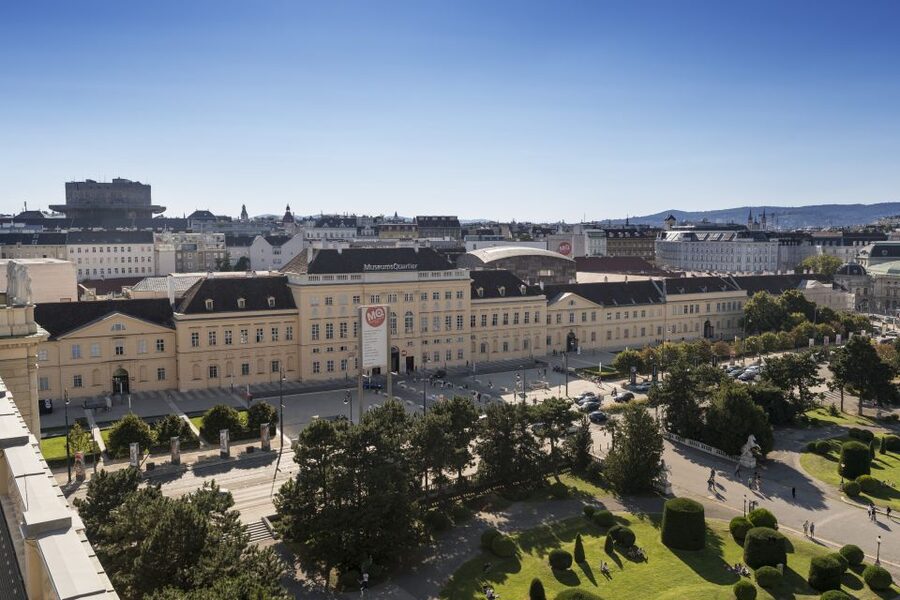
- MQ Libelle’s glass surface has more than 2.35 million white dots, creating a mesh-like effect that looks different as you move around it.
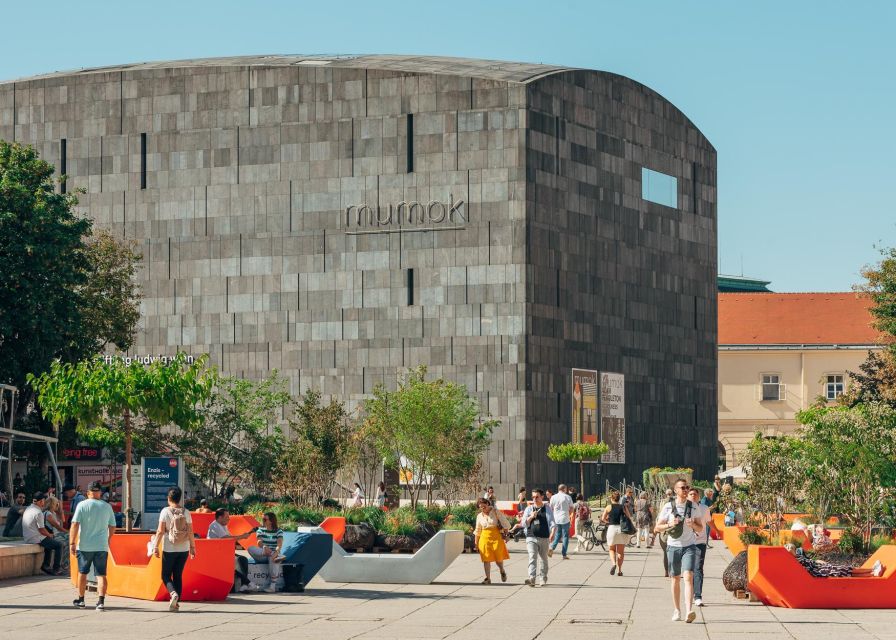
- The basalt slabs on mumok can produce a sound when tapped, one of the district’s small details you could easily miss alone.
- The tour lasts one hour, making it a good introduction before museum visits, lunch, or another central Vienna sight.
- English and German tours are available, with a live guide rather than an audio system.
- Rain does not cancel the walk, and umbrellas are provided free of charge.
- The $10 fee is strong value if you want the story of the district, but it does not cover entry to any museum.
Why MuseumsQuartier deserves a closer look
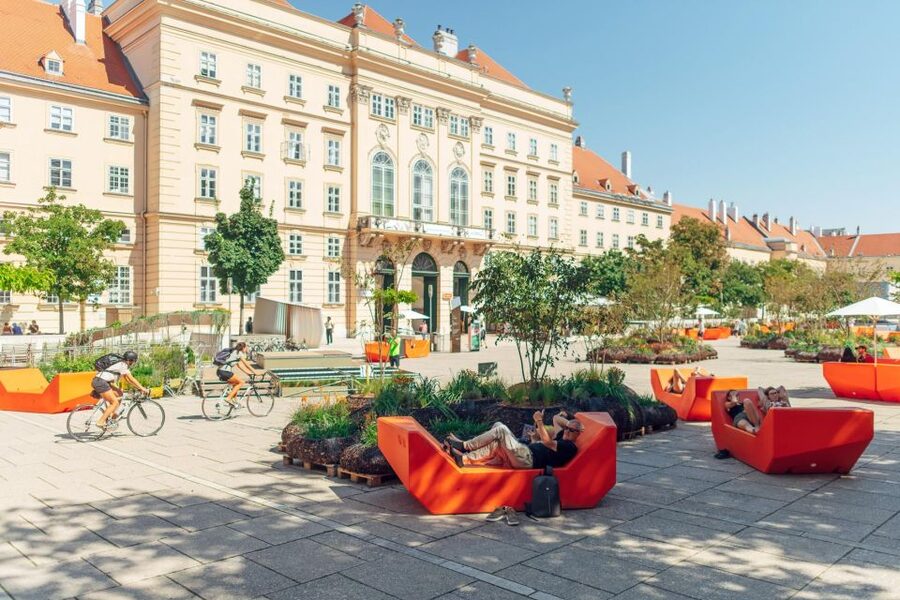
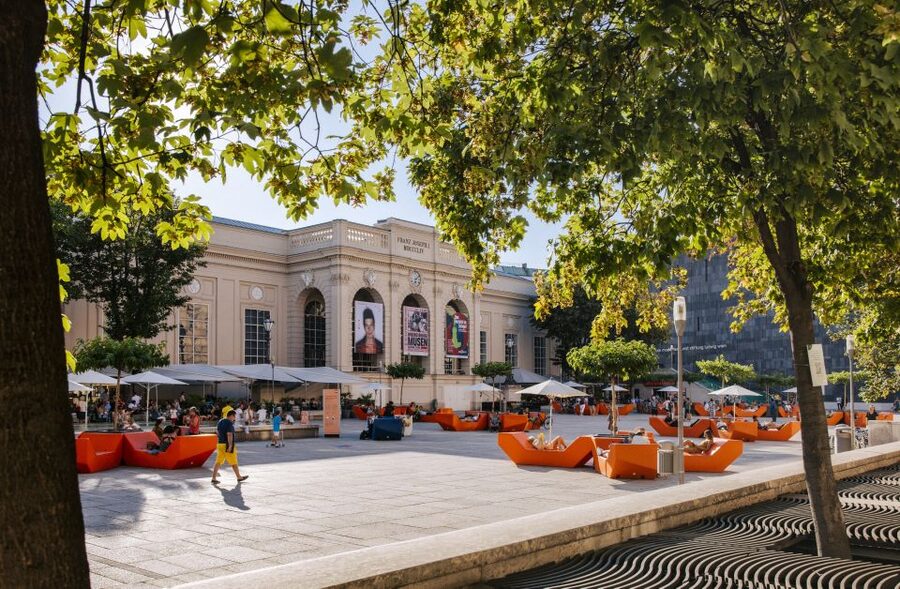
MuseumsQuartier sits in a former imperial stable complex, but its present life is firmly modern. The appeal comes from the contrast: grand baroque structures frame hard-edged contemporary additions, while the open courtyards invite people to sit, meet, eat, and pass through without buying a museum ticket.
I like this because the district works even if you are not an art specialist. You can come for the architecture, the public space, the city views, or simply a break from Vienna’s more formal palaces. The guide helps turn those impressions into a clear story about how the area changed from a practical imperial site into a major cultural center.
The tour presents MuseumsQuartier as Vienna’s largest living room. That phrase makes sense once you see how the space is used. It is not only a gateway to galleries. It is also a place for conversation, public events, casual stops, and a mix of local and international culture.
You should expect an explanation of the district’s past and its current role, not a lecture packed with dates. The focus is on how the buildings and open spaces work together, and why this part of Vienna remains important as a place for exchange and new ideas.
A few more Vienna trips to weigh up
- Vienna: Guided Walking Tour of City Center Highlights
★ 4.7 · 4,989 reviews - Vienna: Vienna Central Cemetery Guided Walking Tour
★ 4.8 · 3,307 reviews - Vienna: Guided Walking Tour of City Highlights & Hidden Gems
★ 4.9 · 2,180 reviews
Starting at MQ Point
The walk begins at MQ Point. Look for the ground sticker marked Meeting Point in front of the MQ Point building. This is a useful detail, since MuseumsQuartier has several courtyards, entrances, and cultural venues, and a first-time visitor could otherwise waste time searching.
Arrive with enough time to find the marker without rushing. The activity lasts only one hour, so a late start could cut into the explanation of the first section. You do not need to prepare for a long trek, but comfortable shoes still make sense on hard urban surfaces.
The meeting area also puts you in the right frame of mind. Rather than beginning with a museum collection, the guide starts with the district itself. You learn how the spaces connect and why the old and new buildings were brought together.
The tour is led in English or German. The supplied information does not promise a fixed guide for every departure, but Tina is one guide named in the feedback, and another booking received a private walk with a guide who offered useful Vienna suggestions. That means the exact feel can vary by departure, group size, and guide.
Baroque buildings beside modern cultural design
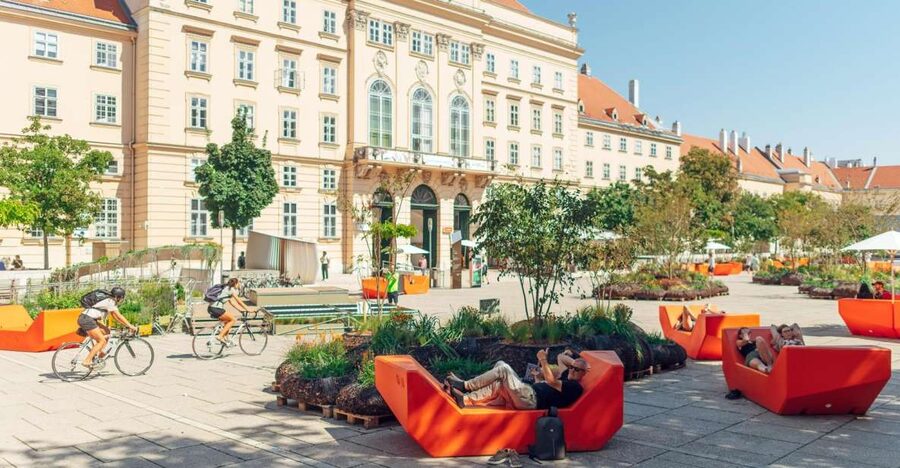
The strongest part of the walk is the architectural contrast. The baroque buildings carry the formal look associated with Vienna’s imperial past. Beside them, modern cultural structures use dark stone, glass, sharp lines, and open terraces.
A guide can point out details that do not register when you simply cross the courtyard. The purpose is not to declare one style better than the other. It is to show how MuseumsQuartier uses both periods to create a place that feels connected to Vienna’s past without being trapped in it.
That balance is valuable for you as a visitor. Vienna has plenty of grand historic buildings, and it is easy to see the city as a museum of its own past. MuseumsQuartier offers a different picture. It shows a city willing to reuse old structures while making room for contemporary art, design, and public life.
The walk also gives you a better sense of scale. MuseumsQuartier is described as one of the world’s largest cultural districts, but its importance is not just a matter of size. Its courtyards and passages create several different moods within a compact area. You can move from formal stonework to a more relaxed public terrace in a short distance.
The mumok façade and its unexpected sound
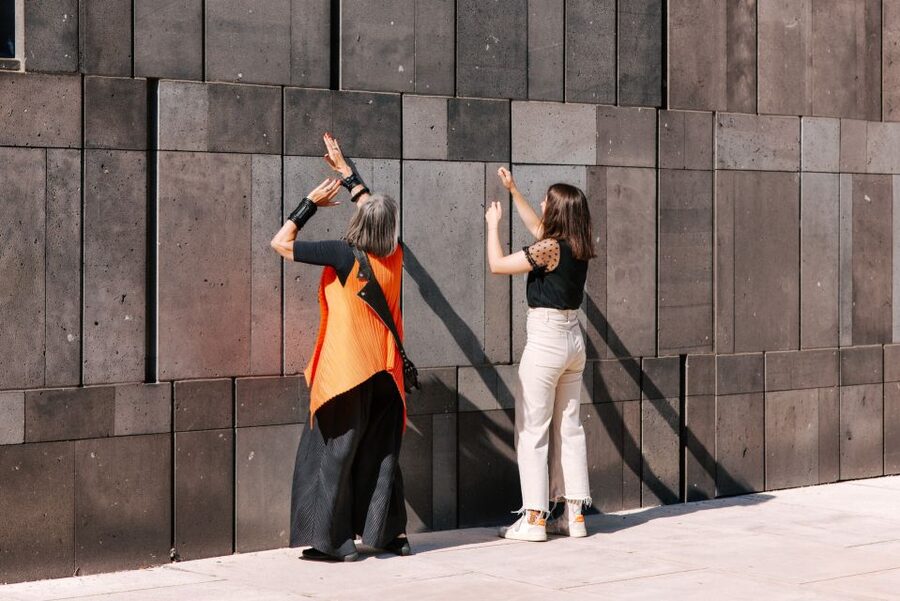
One of the best small discoveries is the façade of mumok, the Museum moderner Kunst Stiftung Ludwig Wien. Its basalt slabs are not just a dark covering for the building. When you tap on them, they produce a distinctive sound.
This is exactly the kind of fact a guide earns their fee with. You could walk past the building and notice its color and rough surface, but you might not think to test the material. The detail gives you a more active way to read the architecture.
It also explains why a guided walk can be worthwhile even if you plan to visit MuseumsQuartier on your own later. A map can show you where mumok is. It cannot easily tell you which part of the façade responds to a tap or why that detail matters to the building’s character.
Do not expect this section to replace a visit inside the museum. Admission is not part of the walk, and the tour does not function as an art exhibition tour. Instead, it gives you a stronger first look at the building and helps you decide if mumok belongs on your Vienna museum list.
Same Alps, a completely different kind of day:
- Vienna: Vivaldi’s Four Seasons Concert in Karlskirche
★ 4.7 · 14,951 reviews - Vienna: Spanish Riding School Training
★ 3.9 · 9,281 reviews - Vienna: Skip-the-cashier-desk-line Giant Ferris Wheel Ride
★ 4.5 · 7,859 reviews - Vienna: Schönbrunn Palace & Gardens Skip-the-Line Tour
★ 4.7 · 7,739 reviews
MQ Libelle and the cultural terrace
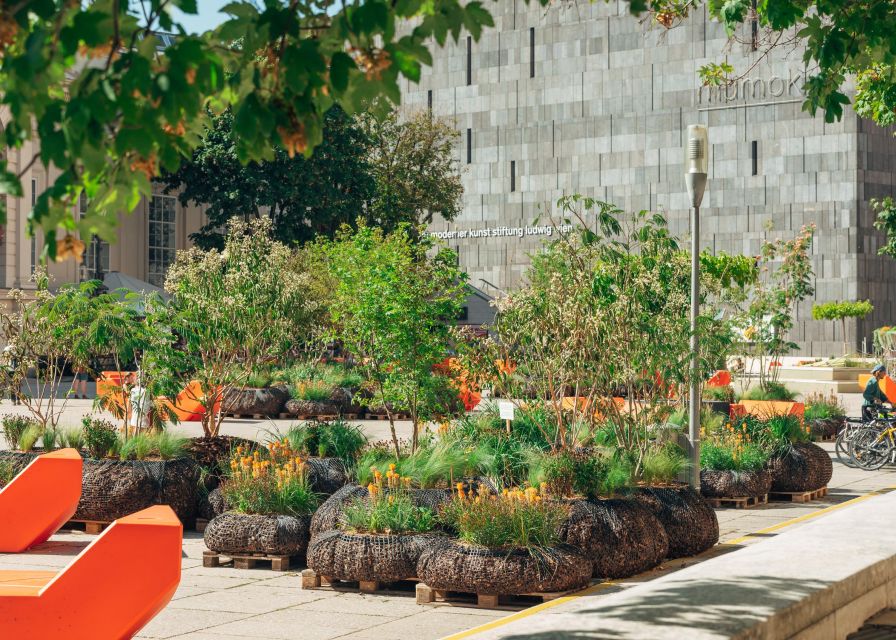
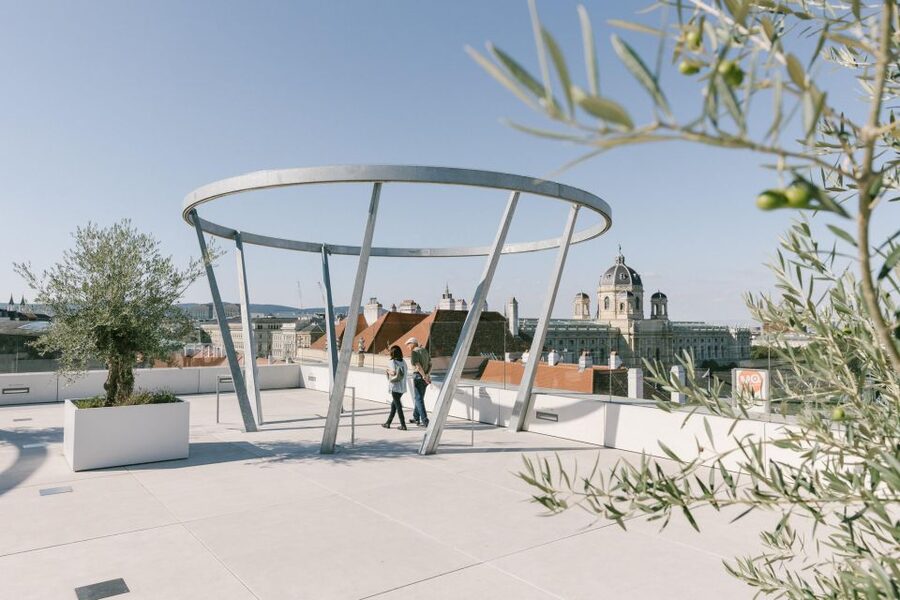
MQ Libelle is the tour’s main architectural payoff. Set above the MuseumsQuartier complex, it is a cultural terrace and a striking modern addition to the district. The name refers to a dragonfly, and the light structure gives the space a delicate quality compared with the heavy baroque buildings below.
The glass surface contains more than 2.35 million white dots. From a distance, they form a shimmering mesh. Up close, the pattern becomes a reminder that the building’s appearance comes from many small repeated elements rather than a plain sheet of glass.
I like this stop because it makes you look twice. The structure is not simply a platform for a view. Its surface, position, and relationship to the older buildings are part of the lesson. The guide can explain how MQ Libelle adds a contemporary layer without erasing the older complex.
The cultural terrace also helps you understand MuseumsQuartier as public space. You are not being led from one ticket counter to another. You are shown how art and architecture spill into the open air, giving you room to pause even when you are not entering a museum.
Specific viewing details are not guaranteed in the tour description, so do not book this walk solely for a particular panorama. Its value lies in the explanation of MQ Libelle and its place in the district. Weather may also affect how long you want to stay outside.
A closer look at Vienna’s modern public room
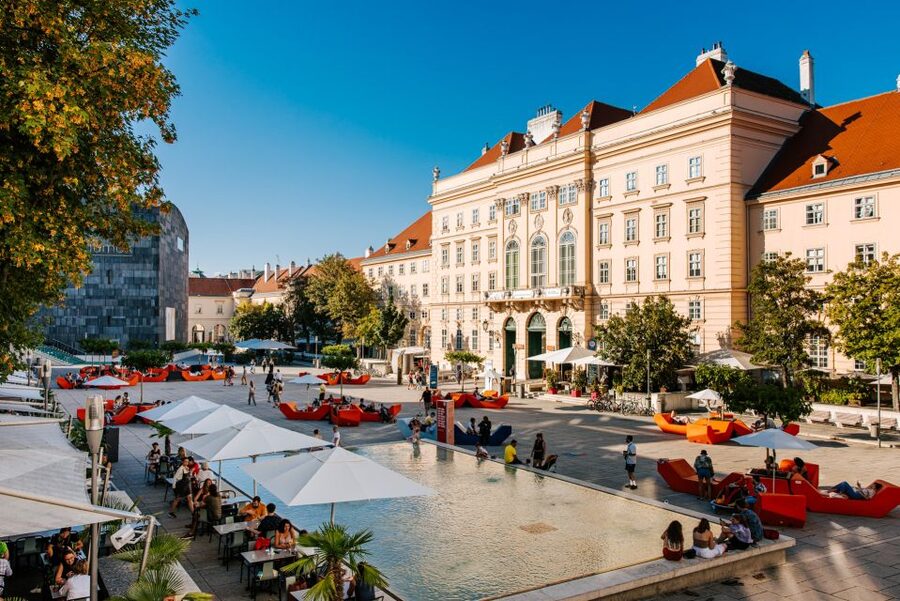
The guide’s larger theme is the way MuseumsQuartier brings together art, architecture, and daily city life. The area is presented as a place of encounter and diversity, not as a silent monument. That distinction matters.
I find the idea useful because it changes the way you move through the complex. Instead of treating the courtyards as empty space between museums, you begin to see them as part of the cultural program. The open areas let people gather, talk, rest, and take part in the district without paying for an exhibition.
This is also where a good guide can make the hour feel personal. One German-language booking described a friendly Viennese guide who made the subject clear for people without a specialist background. Another booking had a guide adjust the walk to poor weather while keeping it interesting. Those details suggest that the best experience depends partly on how well the guide reads the group and the conditions.
You should still keep your expectations realistic. A one-hour walk cannot explain every museum, building, event, and design decision in the complex. It gives you a framework, a few memorable details, and a better sense of where to return.
What the one-hour length means for your day
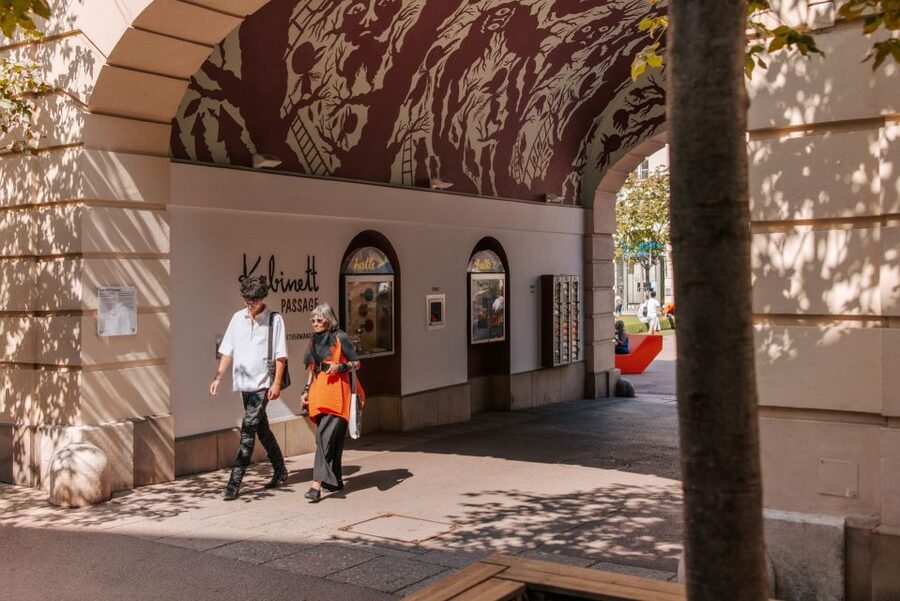
One hour is enough time to get an introduction without giving up half a day. I would place this tour near the start of a MuseumsQuartier visit, especially if you are unsure which museums or buildings deserve your attention.
After the walk, you can choose whether to enter one of the museums. Since admission is separate, you pay only for the collection you actually want to see. That makes the $10 tour fee a modest add-on rather than a forced bundle.
The short duration also suits a packed Vienna schedule. You might pair it with other central sightseeing, then return to a museum later. The activity does not promise an extended stop inside any collection, so you remain free to shape the rest of your day.
The trade-off is that the tour may feel brief if you want a deep architectural study. You will get an overview and selected details, not a slow examination of every courtyard. For most people, that is a fair exchange at this price.
Weather, language, and access
The walk operates rain or shine. Free umbrellas are provided, which is a practical help in Vienna’s changeable weather. Still, wear shoes and clothing suited to an outdoor hour, since the experience remains a walking tour rather than an indoor museum visit.
You can book an English or German departure. The tour has a live guide, which is helpful when you want to ask about a building or clarify a point on the spot. The tone may differ by guide, but Tina was specifically praised for being personable and well informed.
The activity is wheelchair accessible. That makes it easier to include in a Vienna plan, though the information provided does not give detailed route notes about every surface or access point. If you need precise mobility details, confirm them before booking.
Cancellation is flexible: you can cancel up to 24 hours before the start for a full refund. You can also reserve now and pay later, which helps if you are still arranging your Vienna schedule.
Who gets the best value from this walk
I would recommend this experience most strongly to first-time visitors, architecture fans, and anyone planning to visit one or more MuseumsQuartier museums. The guide gives you context that makes the district easier to read, and the hour leaves plenty of time for your own plans.
It also suits people who prefer a focused introduction instead of a large city tour. You are not covering all of Vienna. You are spending one hour on one cultural district and learning why it matters.
Families and casual sightseers may like the physical details, especially the sound-making basalt slabs and the dotted MQ Libelle façade. These details give the walk something to look at and discuss, even if modern architecture is not normally your main interest.
Art experts may find the overview too short if they want detailed collection notes or a serious discussion of individual artists. The same is true if your main goal is indoor museum time. Since museum entry is not included, this walk should be treated as an introduction, not a substitute for visiting the galleries.
Is the $10 price worth it?
At $10, the tour offers good value if you want a human guide to explain the district. The price is low enough that you are mainly paying for orientation, interpretation, and access to details you might otherwise miss.
The value is strongest when you use the walk to plan the rest of your visit. You can learn which buildings interest you, understand the layout, and then decide where to spend money on admission. You also avoid paying for a broad package when all you want is an hour of focused information.
The price is less compelling if you are content to stroll through MuseumsQuartier without background. The courtyards are open public spaces, and you can see the major buildings independently. The tour earns its cost through explanation, not exclusive entry or a long list of included attractions.
With a 4.7 rating from 16 bookings, the experience has a strong record, though the small number means you should not treat the score as a guarantee. The most consistent praise is for guides who are friendly, clear, and able to adjust to weather or the needs of the group.
Should you book the MuseumsQuartier walk?
Book it if you want a short, affordable explanation of Vienna’s most important modern cultural district. I especially recommend it before visiting mumok or another MQ museum, since you will arrive with a better understanding of the buildings and public spaces.
Skip it if you want a full indoor art tour, a long architectural lecture, or museum admission included in the price. You can still walk through the area for free, but you will miss the small touches, such as the sound of the basalt and the fine dot pattern on MQ Libelle.
For most visitors with one free hour, this is an easy choice. The $10 fee is modest, the English and German options are useful, and umbrellas soften the risk of Vienna weather. Go for the context, the clever details, and a clearer sense of how old Vienna and new Vienna share the same courtyard.
FAQ
Where does the MuseumsQuartier walking tour begin?
The tour starts at MQ Point. Look for the ground sticker marked Meeting Point in front of MQ Point.
How long does the tour last?
The guided walk lasts one hour.
What languages are available?
The live tour guide speaks either German or English, depending on the departure you select.
Is museum admission included?
No. Admission to the MuseumsQuartier museums is not included in the tour price.
Does the tour include a guide?
Yes. A live guide leads the walking tour.
Is the tour wheelchair accessible?
Yes. The activity is listed as wheelchair accessible.
Does the tour run in bad weather?
Yes. The tour takes place rain or shine. Free umbrellas are provided.
What is the tour price?
The listed price is $10 per person.
Can I cancel the booking?
Yes. You can cancel up to 24 hours before the tour for a full refund.
Can I reserve the tour without paying immediately?
Yes. The reserve now and pay later option lets you hold a place without paying at the time of booking.
Just added around Vienna
- World War II History Vienna Old Town Private Walking Tour★ 4.8 · 9 reviews
- From Krems: Wachau Valley River Cruise on the Danube★ 4.6 · 95 reviews
- Vienna: Winery and Wine Tasting Tour with a Wine Expert★ 5.0 · 5 reviews
- Vienna: Wine Tasting E-Bike Tour★ 4.9 · 46 reviews
- Vienna: Wine Tasting at Schönbrunn Palace★ 4.3 · 71 reviews
- Vienna: Wine Tasting Tour★ 4.8 · 61 reviews
- Vienna: Wiener Schnitzel and Strudel Cooking Class★ 4.9 · 126 reviews
- Vienna: Unforgettable Private City Tour★ 5.0 · 7 reviews
Walking Tours, compared.
Guided Walking Tour of City Center Highlights
Read our review →
Guided Walking Tour of City Highlights & Hidden Gems
Read our review →
Vienna Historic Center Small Group Walking Tour
Read our review →
Browse the lists this tour appears in