
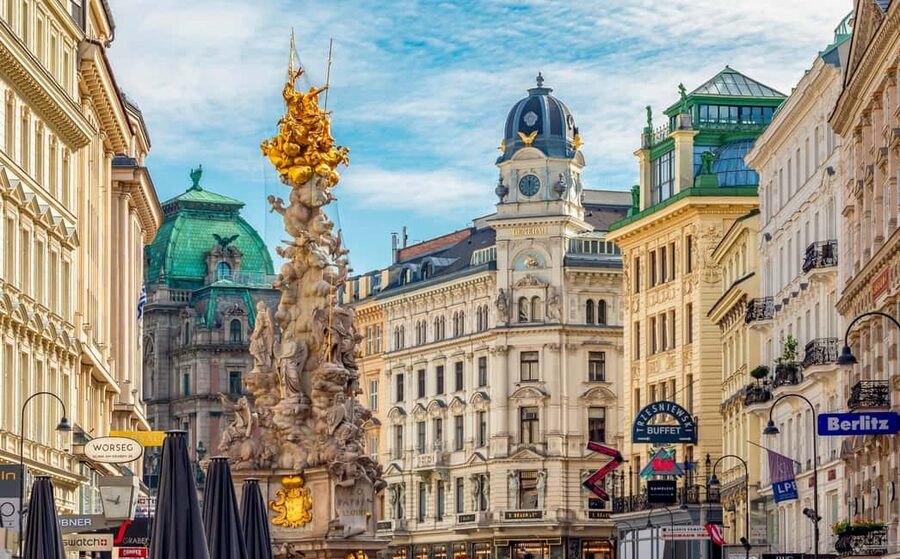
Reviewed · HISTORICAL TOURS
Vienna: Private Walking Tour of the Historic Center
Vienna’s old center works best on foot, and this private walk gives you the city’s grandest sights along with the tucked-away corners you could easily miss. Maria leads the route through the Hofburg, past the State Opera, and toward St. Stephen’s Cathedral while adding stories about Habsburg court life, Empress Sisi, Mozart, Beethoven, and Johann Strauss. I especially like the small private format and the chance to ask for a coffeehouse stop. The use of pictures and maps should also help you follow the story instead of simply watching the guide point at buildings.
I like that the tour combines major landmarks with less obvious courtyards and streets, rather than treating Vienna as a parade of famous facades. I also like the flexibility of English, German, or Italian guiding and the option to request a tailor-made stop. The main drawback is that this is an exterior-only walk, so entrance tickets and indoor visits are not part of the two hours, and the cobblestones, stairs, and weather may be hard for some people.
Key points at a glance
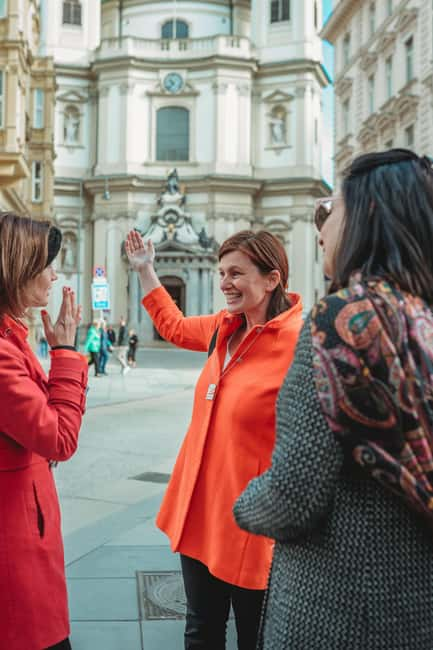
- Meet beneath the Helvetia sign: Find the Anker Clock at Hoher Markt, where the guide holds an orange folder.
- A private group of up to six: You get direct access to Maria and can shape parts of the walk around your interests.
- Vienna’s essential sights: The route features Hofburg Palace, Vienna State Opera, and St. Stephen’s Cathedral.
- Stories beyond the facades: Expect royal drama, Empress Sisi, coffeehouse customs, and tales linked to Mozart, Beethoven, and Johann Strauss.
- A coffeehouse request is possible: Ask Maria about adding a traditional Viennese café stop, though food and drinks cost extra.
- Bring sound shoes: The walk operates in rain and includes steps, stairs, and cobbled streets.
Starting beneath Vienna’s Anker Clock
The tour begins at Hoher Markt, one of the old center’s useful orientation points. Look for the Anker Clock, or Ankeruhr, at Hoher Markt 10 to 11. Your guide meets you directly beneath the Helvetia sign and carries an orange folder.
That clear meeting instruction matters in central Vienna, where grand streets, arcades, and similar-looking entrances can make a first meeting less simple than expected. I would arrive a little early, locate the clock, and look for the orange folder rather than waiting in the middle of the square.
From here, you are already in the oldest part of central Vienna. The walk can get to the city’s major sights without transport, which keeps the focus on street views, details in the buildings, and the guide’s storytelling. You are not being moved from one attraction to another in a vehicle. You are seeing how the center fits together block by block.
The tour lasts two hours. That is enough time for a useful first look, but not enough for long interior visits or a slow stop at every landmark. Think of it as a strong orientation walk with historical context, not a full museum tour.
A few more Vienna trips to weigh up
- Vienna: Time Travel and Magic Vienna History Tour
★ 4.6 · 3,879 reviews - Vienna: World War II Historical Walking Tour
★ 4.8 · 1,772 reviews - Vienna Historic Center Small Group Walking Tour
★ 5.0 · 1,746 reviews
Hofburg Palace and the Habsburg court
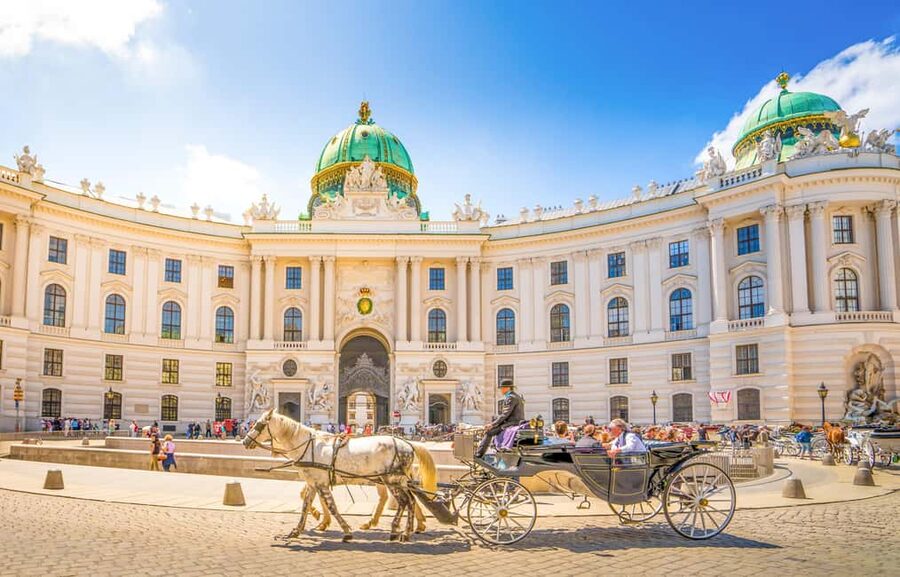
The Hofburg is one of Vienna’s defining sights and a natural stop on a city-center walk. Its importance is not only architectural. It represents centuries of Habsburg power and the court world that shaped Vienna’s politics, ceremonies, and public image.
With Maria, the palace becomes a setting for royal stories rather than just a large complex to photograph. Empress Sisi receives particular attention. Her public image, court life, and place in Vienna’s royal drama give the tour a human thread. You get a sense of the personalities behind the official buildings.
Because the tour stays outside, do not expect access to palace rooms or museum collections. That limitation is worth keeping in mind if your main goal is the imperial apartments or other indoor exhibits. The benefit is pace: you can spend the walk connecting the palace to nearby streets and landmarks instead of using most of the time inside one attraction.
I find that useful early in a Vienna visit. After hearing how the court shaped the center, you can decide which palace interiors deserve a separate ticket and more time.
Vienna State Opera and the city’s music story
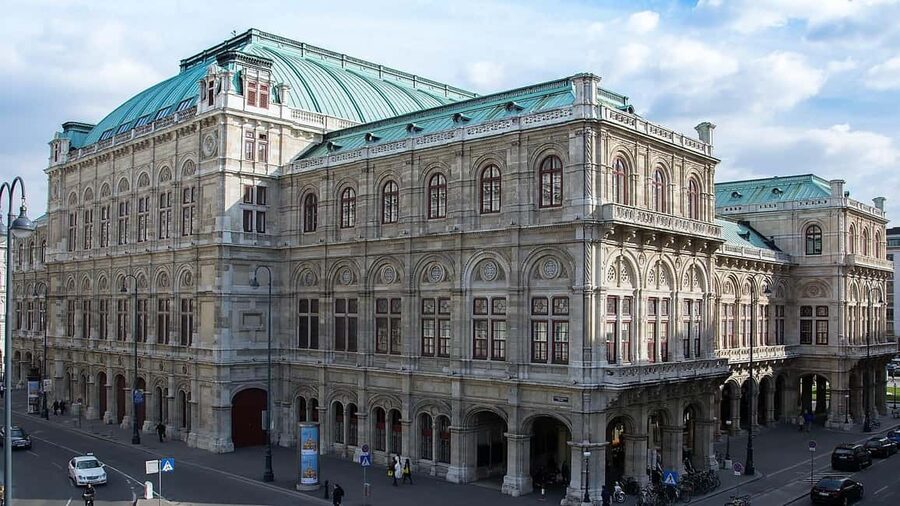
The Vienna State Opera brings another part of the city’s identity into the walk. The building is one of the best-known landmarks in the center, and the stop helps explain why Vienna is so closely tied to classical music.
The storytelling also reaches Mozart, Beethoven, and Johann Strauss. The details provided for the tour do not promise a visit inside the opera house or a concert connection, so keep your expectations focused on the exterior and the wider musical story of Vienna. You will hear about the people and period that helped make the city a major center for classical music.
This is a good place to ask questions. In a large group, a guide often needs to keep moving and follow a set script. Here, the private format gives you room to ask about a composer, a building, or a subject that catches your attention.
The end point is described as the Vienna State Opera House in one part of the tour information, while another description places the conclusion near St. Stephen’s Cathedral and the meeting details say the activity returns to the meeting point. Since those details do not match perfectly, confirm the final drop-off point when booking. All three locations are central, so the difference should not disrupt a day of sightseeing, but it is worth knowing before you plan your next appointment.
St. Stephen’s Cathedral and the old center

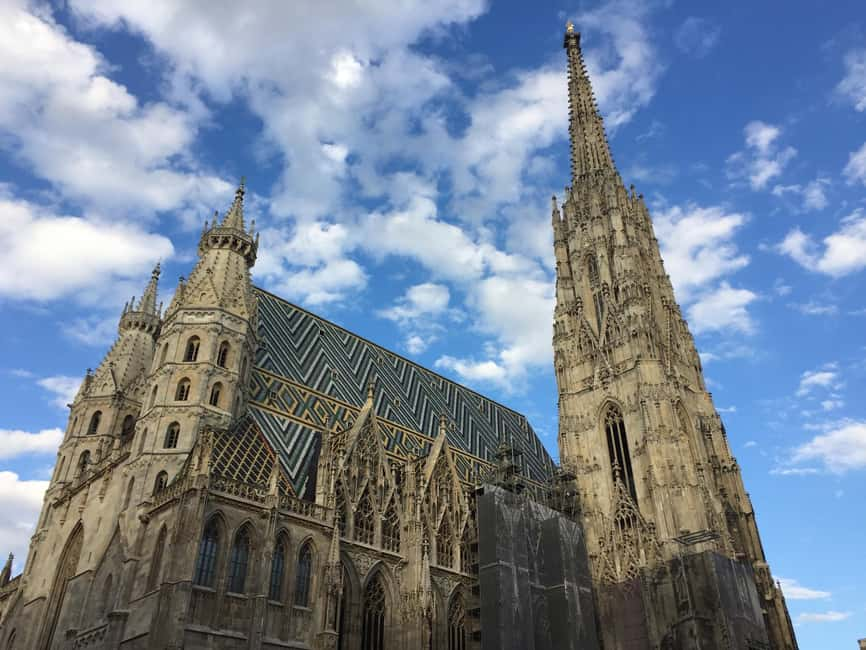
St. Stephen’s Cathedral is the tour’s other major landmark and a useful place to finish or continue exploring. Its tall roof and prominent position make it one of Vienna’s easiest meeting points, but the value of seeing it with a guide comes from the surrounding streets and stories.
The walk is not limited to a straight line between famous buildings. You can expect a look at old lanes, courtyards, and less obvious corners of the center. These places often give you a better feel for how Vienna works at street level than a grand palace does. They show the small spaces between the official sights.
The cathedral itself is an exterior stop on this activity. Entrance fees are not included, and the tour does not take you inside. If you want interior time, plan that separately and avoid assuming the two-hour walk covers it.
A finish near St. Stephen’s Cathedral is practical. You can continue around the center, follow Maria’s recommendations, or use the cathedral area as a base for the rest of your day. If the final point is instead the State Opera or the Anker Clock, these are still close enough to fit into a central Vienna walking plan.
Same Alps, a completely different kind of day:
- Vienna: Vivaldi’s Four Seasons Concert in Karlskirche
★ 4.7 · 14,951 reviews - Vienna: Spanish Riding School Training
★ 3.9 · 9,281 reviews - Vienna: Skip-the-cashier-desk-line Giant Ferris Wheel Ride
★ 4.5 · 7,859 reviews - Vienna: Schönbrunn Palace & Gardens Skip-the-Line Tour
★ 4.7 · 7,739 reviews
Courtyards, corners, and coffeehouse culture
The less obvious parts of the walk may be its most useful feature. Major sights are easy to find on a map. Courtyards and small passages are harder to spot, and a local guide can show you why a plain-looking entrance or side street matters.
I would pay close attention during these sections. The famous buildings tell you about Vienna’s public face. The smaller spaces help you understand daily life in the old center, including how people moved through the city and how grand buildings connect with ordinary streets.
Coffeehouse culture is another strong thread. Café Central is specifically included in the story of Vienna’s café tradition. The tour does not include a meal or drinks, and a café visit is not guaranteed as part of the standard route. Still, Maria can be contacted about a tailor-made request for a traditional Viennese coffeehouse stop.
That option makes the tour more personal, but it also needs a little planning. A seated coffee break uses part of a two-hour walk, and any food or drink is extra. If coffeehouse culture matters to you, ask about the stop before the tour rather than hoping it will appear on the day.
What private guiding changes
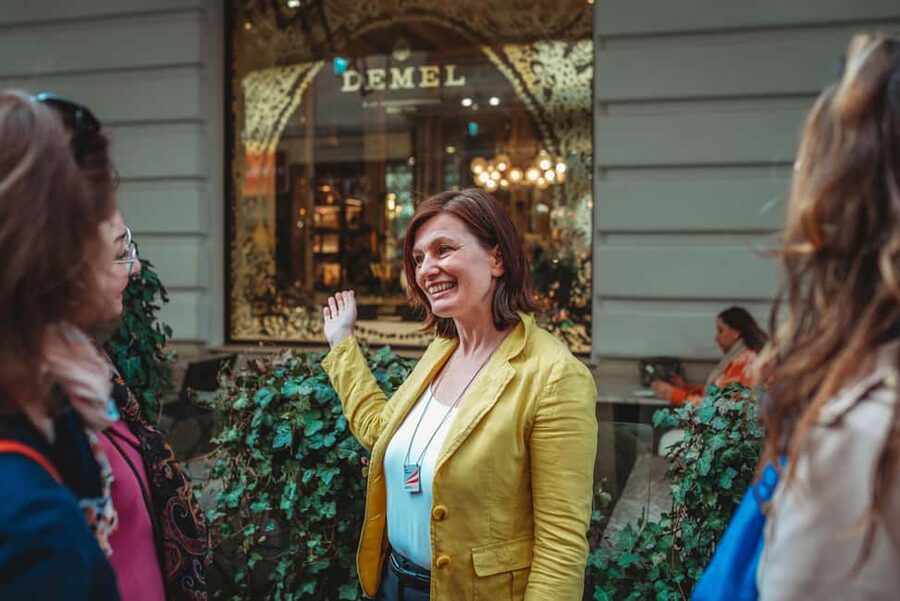
The booking is for a private group of up to six people. That is small enough for a conversational walk and large enough for a family or a few friends to share the cost. You are not placed into a large crowd, and the guide can respond to your questions as they arise.
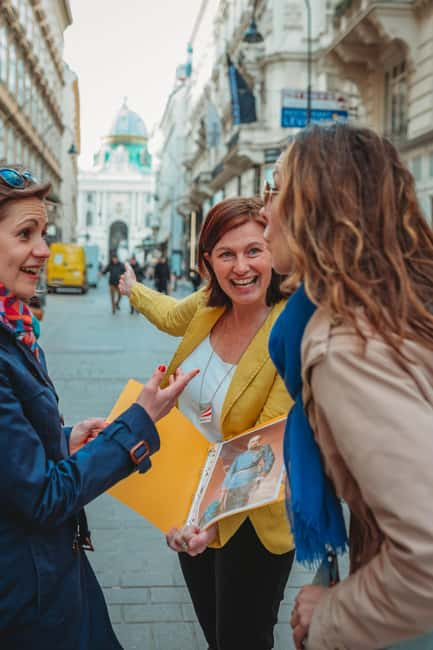
The guide, Maria, is described as a registered, licensed, self-employed local guide. Her role is not just to identify buildings. The tour is built around stories, visual aids, and personal interaction. Pictures and maps are used during the walk, which can be especially helpful when the story covers several centuries or when a modern street no longer looks like the place being discussed.
The language choices are English, German, and Italian. If you are traveling with people who prefer different languages, check the booking details carefully so the guiding language suits your group.
A private tour also lets you set priorities. You can ask for more royal history, more music, or a coffeehouse focus. Tailor-made requests are possible, but they should not be taken to mean that every change is included or that the guide can add indoor admissions without extra cost.
Is $56 per person good value?
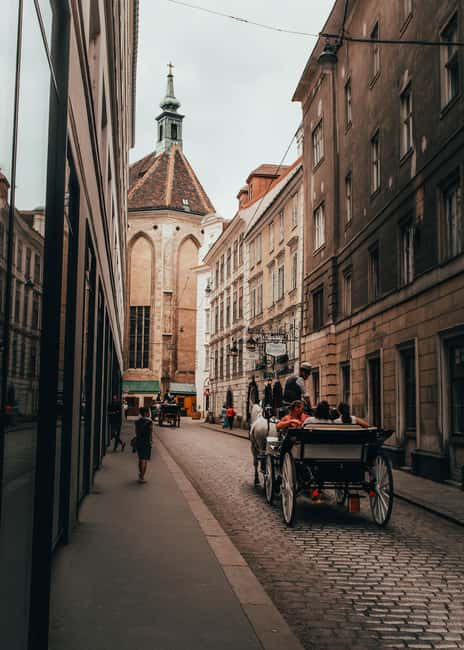
At $56 per person, the price is reasonable if you value private attention and a local guide. The value improves when the booking is shared by several people, particularly because the group can include up to six participants and the rate is listed per person.
You are paying for two hours of guiding, not admission to the Hofburg, State Opera, or cathedral. There are no included meals or drinks. That keeps the upfront cost clear, but you should budget separately for any interiors you want to visit and for a coffeehouse stop.
Compared with a large group orientation, the private format gives you more control and a better chance to ask questions. Compared with a full-day tour, it covers less ground and offers less time at each major site. I see it as good value for a first morning or first afternoon in Vienna, especially if you want help getting your bearings without committing to a long program.
If you are already familiar with the center and mainly want museum interiors, this may not be the best use of $56. You would get more from it if you care about context, local stories, and finding places you might not notice alone.
Weather, streets, and practical comfort
The tour runs in all weather, so dress for the forecast. Rain will not cancel the walk, and Vienna’s old streets can feel slippery or awkward in poor weather. Comfortable shoes are more important than stylish ones here.
You should expect steps, stairs, and cobblestone streets. The activity is not suitable for wheelchair users, people with mobility impairments, or people with heart problems. Electric wheelchairs, baby strollers, and baby carriages are not allowed. It is also not suitable for people with hearing impairments, and audio recording is not allowed.
These restrictions are not minor details. A two-hour walk on uneven streets can be tiring, especially in rain or cold. If anyone in your party has trouble with stairs or uneven surfaces, choose a different way to see the center.
Hotel pickup is possible, but the stated meeting point is the Anker Clock at Hoher Markt. Confirm pickup arrangements in advance if you need them. Late arrivals are subject to a no-show policy, so allow time to reach the square.
Free cancellation is available up to 24 hours before the tour for a full refund. You can also reserve and pay later, which helps if your Vienna schedule is still changing.
Who will get the most from this walk?
I would recommend this tour to first-time visitors who want a clear introduction to central Vienna without a large group. It also suits families or friend groups who want to ask their own questions and adjust the emphasis.
History fans should enjoy the Habsburg and Sisi material. Music lovers will appreciate the links to Mozart, Beethoven, and Johann Strauss. Coffee enthusiasts should ask Maria about adding a traditional café stop.
The tour is less suitable for anyone seeking extensive indoor sightseeing. It is also a poor match for visitors who dislike walking on cobbles, need step-free access, or want a fully fixed schedule with no discussion of personal interests.
Should you book Maria Tours Live?
Book it if you want a personal two-hour introduction to Vienna’s center, with the major landmarks tied together by royal drama, music stories, coffeehouse culture, and lesser-known streets. The private group format, three language options, and Maria’s ability to handle tailor-made requests are the strongest reasons to choose it.
Skip it if your priority is entering the Hofburg, State Opera, or St. Stephen’s Cathedral during the tour. In that case, use this walk only if you also want outdoor context, then plan separate admissions. Before paying, confirm the exact ending point, especially if you need to reach a reservation after the walk.
For most able-bodied first-time visitors, $56 buys a useful orientation and a more personal look at Vienna than a standard large-group stroll. Just wear good shoes, bring rain protection, and treat the tour as a street-level introduction rather than a museum visit.
FAQ
How long is the Vienna private walking tour?
The tour lasts two hours. Starting times depend on availability when you book.
Where does the tour begin?
Meet at the Anker Clock, also called Ankeruhr, at Hoher Markt 10 to 11. The guide meets you beneath the Helvetia sign and carries an orange folder.
Where does the tour end?
The tour information gives more than one ending description. It refers to the area near St. Stephen’s Cathedral, the Vienna State Opera House, and the original meeting point. Confirm the final ending location when booking.
What languages are available?
The live guide can conduct the tour in English, German, or Italian.
How many people can join the private tour?
The private booking can include up to six participants.
Are entrance fees included?
No. This is an exterior-only walking tour, and entrance fees are not included.
Are food and drinks included?
No. Meals and drinks are not included. You can contact Maria about requesting a stop at a traditional Viennese coffeehouse.
Does the tour run in bad weather?
Yes. The tour operates in all weather conditions, so dress appropriately for rain, cold, or other conditions.
Is the tour suitable for wheelchair users?
No. The activity is not suitable for wheelchair users or people with mobility impairments. The route includes steps, stairs, and cobbled streets.
Can I cancel the booking?
You can cancel up to 24 hours in advance for a full refund. Reserve-now-and-pay-later booking is also available.
Just added around Vienna
- World War II History Vienna Old Town Private Walking Tour★ 4.8 · 9 reviews
- From Krems: Wachau Valley River Cruise on the Danube★ 4.6 · 95 reviews
- Vienna: Winery and Wine Tasting Tour with a Wine Expert★ 5.0 · 5 reviews
- Vienna: Wine Tasting E-Bike Tour★ 4.9 · 46 reviews
- Vienna: Wine Tasting at Schönbrunn Palace★ 4.3 · 71 reviews
- Vienna: Wine Tasting Tour★ 4.8 · 61 reviews
- Vienna: Wiener Schnitzel and Strudel Cooking Class★ 4.9 · 126 reviews
- Vienna Urban Art Tour: Explore a different side of Vienna!★ 3.8 · 14 reviews
Historical Tours, compared.
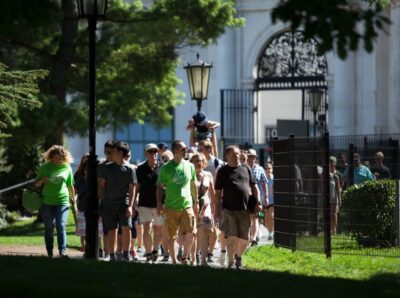
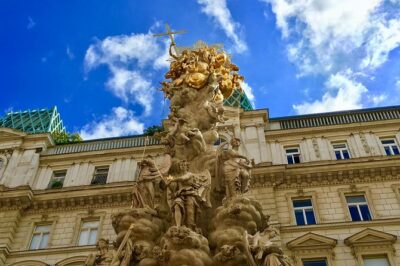
Vienna Historic Center Small Group Walking Tour
Read our review →

Skip-the-Line Schonbrunn Palace Guided Tour and Vienna Historical City Tour
Read our review →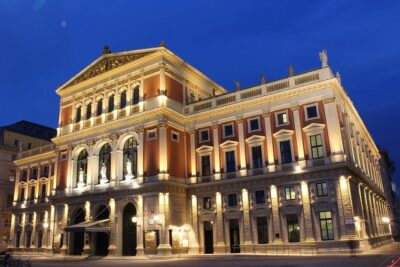
Vienna Mozart Concert in Historical Costumes at the Musikverein
Read our review →
Browse the lists this tour appears in