
Reviewed · WALKING TOURS
Vienna Private Walking Tour including State Opera
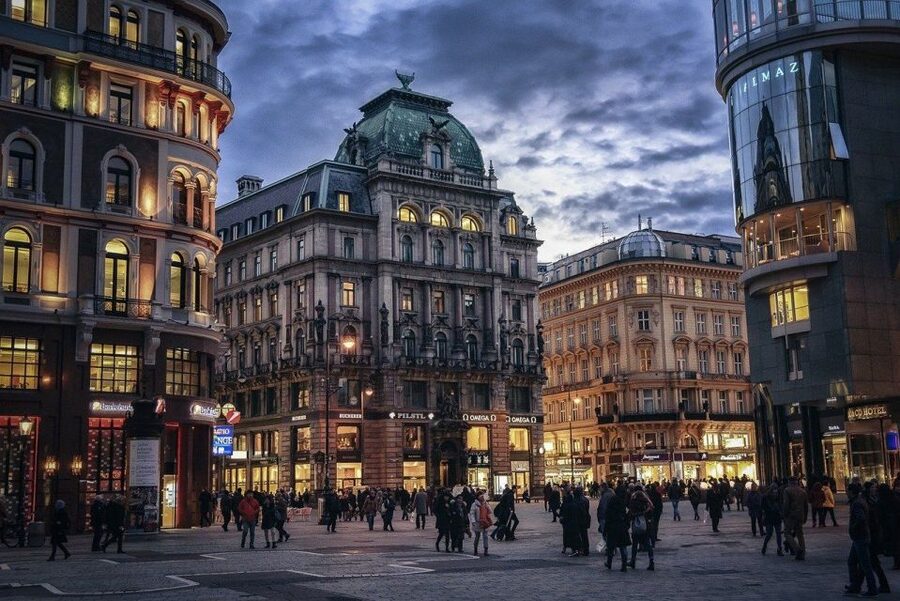
Vienna’s grand story unfolds on foot here, from Roman Vindobona and medieval walls to the Habsburg court and the musical world of Mozart, Beethoven, Strauss, and Mahler. The tour begins at the State Opera, then moves through the Hofburg, Graben, and Stephansplatz with a private guide for your group.
I like the broad sweep of the route, which links imperial power, war, religion, art, and music instead of treating Vienna as a string of pretty buildings. I also like the private format and the $323 group price, which can work well for a large party. The main concern is the opera visit: the description promises more than the experience may deliver, and entrance fees may cost extra.
Key points at a glance
- The State Opera begins the story, with links to the Vienna Court Opera, Gustav Mahler, Herbert von Karajan, and Claudio Abbado.
- The route covers major central sights, including the Hofburg, Michaelerkirche, Graben, Peterskirche, and Stephansdom.
- Roman and medieval Vienna appear along the way, including ruins in the Hofburg area and traces of the old Burg Theatre.
- The private group format suits families and larger parties, since the $323 price covers up to 15 people.
- The opera portion needs careful checking, since the visit may mean only the lobby, and a separate guided opera tour may require another payment.
- The tour has a mixed record, with strong praise for one guide’s clear explanations and serious concerns about another reported experience.
What this three-hour Vienna walk is really about
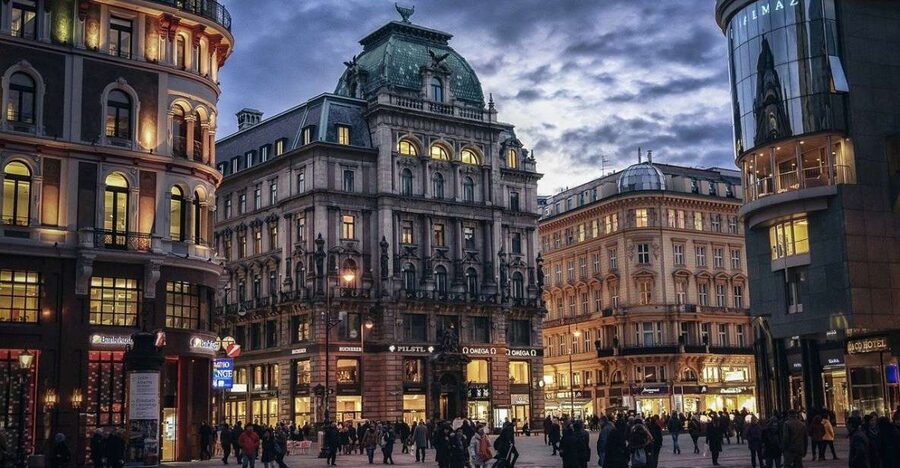
This is best understood as a compact introduction to central Vienna, not a full museum tour or a dedicated opera experience. In three hours, you move through the city’s main historic core while your guide connects buildings to the Roman settlement, the Holy Roman Empire, the Habsburg monarchy, the Austro-Hungarian Empire, the World Wars, and the creation of the Second Republic.
That wide time span is the tour’s greatest strength. Vienna can feel like a collection of grand facades until someone explains how Roman military settlement, imperial government, Catholic ceremony, Jewish life, war, music, and modern politics overlap in the same few streets.
You receive a private English or German-speaking guide, so the pace and questions can be shaped around your group. The price is $323 for up to 15 people. For two people, that is a costly walking tour. For 10 to 15 people, the math becomes much better, at roughly $21 to $32 per person before any entrance fees.
The activity has an average rating of 3.2 from seven published ratings, so I would book it with realistic expectations and confirm the opera arrangements in writing.
A few more Vienna trips to weigh up
- Vienna: Guided Walking Tour of City Center Highlights
★ 4.7 · 4,989 reviews - Vienna: Vienna Central Cemetery Guided Walking Tour
★ 4.8 · 3,307 reviews - Vienna: Guided Walking Tour of City Highlights & Hidden Gems
★ 4.9 · 2,180 reviews
Starting at the State Opera
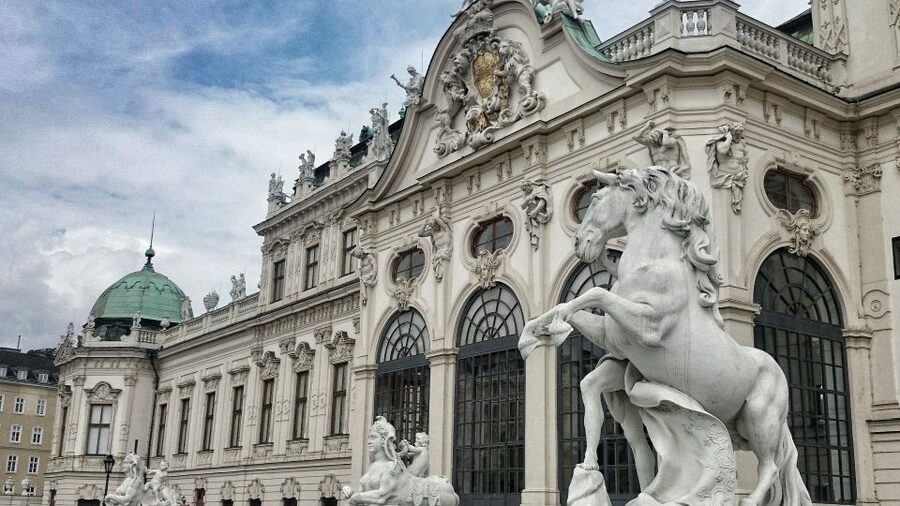
The State Opera gives the tour a fitting opening. Its history reaches back to the 1860s, when it was known as the Vienna Court Opera. In 1920, as the early Austrian Republic took shape, the Habsburg name was changed.
The building is tied to major works such as La Traviata, La Clemenza di Tito, and Verdi’s Don Carlo. It has also been associated with directors including Gustav Mahler, Herbert von Karajan, and Claudio Abbado. For anyone interested in classical music, these names help explain why Vienna’s opera tradition is more than decorative wallpaper for the city’s imperial image.
The important practical point is that visit the State Opera does not necessarily mean a full behind-the-scenes tour or a seat inside the auditorium. One account describes the State Opera visit as only a look at the lobby. Another says a separate opera tour had to be booked and paid for, despite the activity title suggesting that it was included.
That is the biggest booking question. Ask two direct questions before paying:
- Does the $323 price include a formal guided tour of the State Opera?
- Are admission charges included, or will you pay separately?
If you mainly want to see the opera interior, do not assume this walking tour provides that access. The supplied details list entrance fees as not included, and the actual opera component appears to vary.
Mozart, the Hofburg, and the Habsburg center
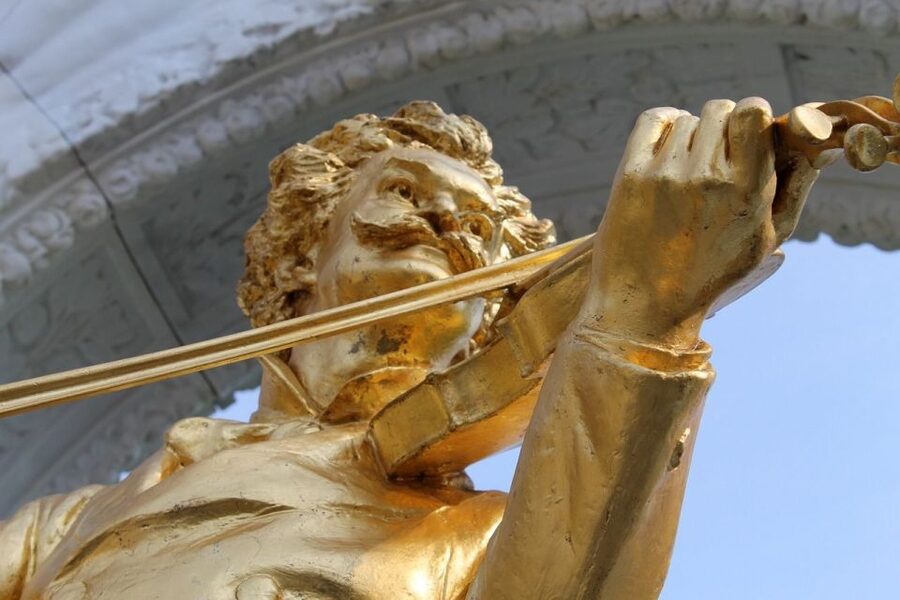
From the opera, the route reaches the Mozart Monument and then the grand facades of the Art History Museum and the Hofburg. Even if you never enter the museums or palace rooms, this section gives useful context for Vienna’s imperial scale.
The Habsburgs ruled for centuries, and the Hofburg was their main city residence. The tour presents that power within the larger story of the Holy Roman Empire and later the Austro-Hungarian Empire. That matters because Vienna’s buildings were not designed merely to look impressive. They were tools of ceremony, administration, religion, and dynastic control.
The Art History Museum represents another side of that power. Its facade signals the money and artistic ambition gathered by the imperial court. The route does not include museum admission, so you should think of this as an exterior introduction rather than a substitute for visiting the galleries.
A private guide can make this part more useful than a quick photo stop. You can ask how the Habsburg state functioned, why the monarchy mattered across central Europe, or how the imperial city changed after the First World War. The tour’s broad historical plan gives you room to connect those questions to the streets around you.
Michaelerkirche and the old city beneath your feet
The Michaelerkirche, or Church of St. Michael, sits by the Michaelerplatz and was officially connected with the emperors for many years. Passing through the Michaeler gate brings you into one of Vienna’s most layered urban spaces.
Ancient Roman remains appear in the center of the square, along with sections of medieval walls and remnants of the old Burg Theatre. These fragments are valuable because they interrupt the imperial grandeur. Vienna was not created all at once in the nineteenth century. Older settlements and defenses remain under and beside the ceremonial city.
The Roman connection reaches back to Vindobona, the settlement that occupied this area during the Roman period. The route also points out that Graben Street follows a line with Roman roots. The city’s current streets therefore preserve the shape of earlier Vienna, even when the buildings around them belong to a later age.
This is a good place to slow down and listen. The remains are not as visually dominant as the Hofburg or cathedral, and you might miss them without a guide. At the same time, the walk is still mostly an outdoor city tour, so anyone expecting extended indoor visits should adjust their plans.
Same Alps, a completely different kind of day:
- Vienna: Vivaldi’s Four Seasons Concert in Karlskirche
★ 4.7 · 14,951 reviews - Vienna: Spanish Riding School Training
★ 3.9 · 9,281 reviews - Vienna: Skip-the-cashier-desk-line Giant Ferris Wheel Ride
★ 4.5 · 7,859 reviews - Vienna: Schönbrunn Palace & Gardens Skip-the-Line Tour
★ 4.7 · 7,739 reviews
Graben Street and the long route into Stephansplatz
Graben, or Der Graben, is one of central Vienna’s best-known streets. Its history reaches back to the Roman era, and it was later linked with Richard the Lionheart’s entry into the city.
That detail adds a little medieval drama to a very polished modern shopping street. It also shows how Vienna’s central routes changed purpose over time. A Roman-era line can become a medieval approach, an imperial ceremonial space, and a busy city street without losing its historical importance.
The route continues to Peterskirche, or St. Peter’s Church, which is described as having been present since the fourth century. The current church gives the walk another architectural shift, from palace facades and urban squares to a major religious setting.
You should bring comfortable shoes. The tour lasts three hours, and the route includes several historic streets and public squares. The activity is specifically not considered suitable for people with mobility impairments, so anyone who has difficulty walking should choose with care.
Stephansdom, Vienna’s great finishing point
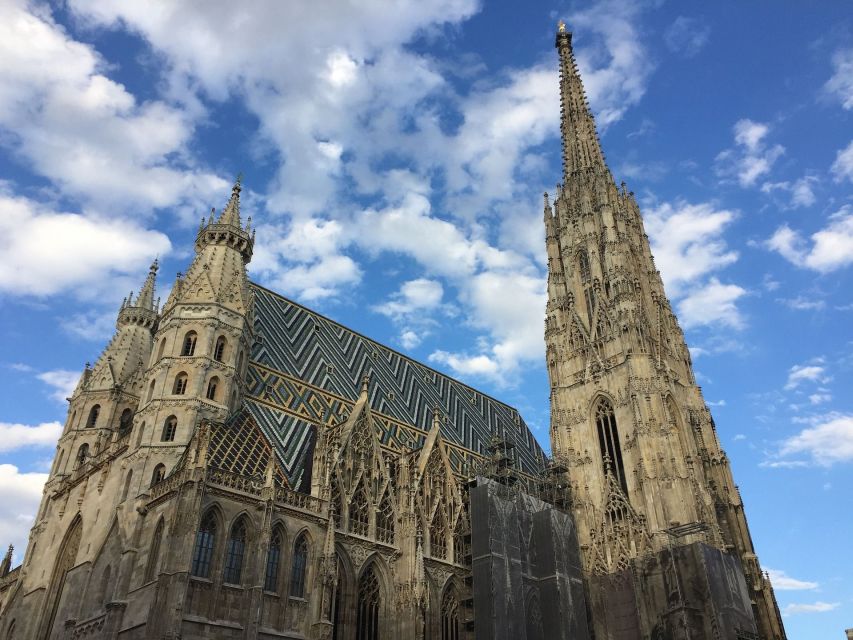
The walk reaches Stephansplatz and Stephansdom, Vienna’s cathedral. Stephansdom is described as one of the tallest churches in the world and a major Roman-Gothic masterpiece.
It is an effective final stop because the cathedral gathers several themes in one place. You see religious authority, medieval construction, the importance of the city center, and the continuing role of Vienna as a political and cultural capital.
The tour description does not include cathedral admission, so treat this as an exterior stop unless your guide tells you otherwise. Entrance fees are not included generally, and that wording matters. The walk may give you the setting and explanation, but paid access to interiors should not be assumed.
I like ending at Stephansplatz because it leaves you well placed for your own plans. You can continue exploring central Vienna, return to a museum, or use the cathedral area as a landmark for the rest of the day. The route gives you a useful mental map of the old city.
The music story beyond the opera
Vienna’s musical reputation is much larger than the State Opera. The tour refers to Wolfgang Amadeus Mozart, Josef Haydn, Ludwig van Beethoven, Franz Schubert, Johann Strauss the elder and younger, Johannes Brahms, and Gustav Mahler.
That list covers several periods and styles. Mozart and Haydn connect with the classical era and the Habsburg court. Beethoven and Schubert show Vienna’s role in the development of major nineteenth-century music. The Strauss family brings the waltz and the public musical culture associated with imperial Vienna. Brahms and Mahler point toward the later nineteenth and early twentieth centuries.
The route does not promise concerts or performances, so you should not book it as a music event. Its value is historical framing. You learn why opera, court patronage, composers, directors, and grand public buildings became so closely linked in Vienna.
If music is your main reason for visiting, this walk can serve as an orientation. You may then decide which concert, museum, composer residence, or formal opera visit deserves your time and money.
The twentieth century and a necessary question about guiding
The itinerary also covers World War history and the birth of Austria’s Second Republic. That is important. Vienna’s imperial buildings can make the city seem frozen in the nineteenth century, but the twentieth century changed Austria’s borders, government, public identity, and relationship with its past.
The stated route includes the Jewish quarter, and one account describes a guide using language about Jewish people being murdered and people who died in concentration camps. The account objected, rightly, to wording that softened the reality of systematic murder. This is sensitive material, and the quality and care of the explanation matter as much as the facts.
A separate account reported political comments about immigrants, the city’s mayor, and social housing, along with language that made the group uncomfortable. I cannot verify the full context of that report, but it is serious enough to consider before booking. You are entitled to expect a guide to handle genocide, prejudice, and current politics with accuracy and respect.
One guide named in the published feedback is Franziska Pfisker. Another guide was praised for being competent, keeping the three hours lively, and allowing time to look around. Since the guide can shape the entire experience, ask who is assigned to your group and request a guide whose approach matches your expectations.
How the $323 price works for your group
The flat group price is the central value question. At the maximum group size of 15, the cost is reasonable for a private three-hour tour. You are paying for a guide reserved for your party rather than joining a large public group.
For two people, the price is much harder to justify unless personal attention is especially important to you. A family or reunion group can spread the cost and use the private format to ask questions about specific interests, such as imperial architecture, music, Jewish Vienna, or twentieth-century politics.
The price does not appear to cover entrance fees. That affects the final cost, especially if a formal State Opera tour requires a separate ticket. One published account specifically says the opera tour had to be booked and paid for separately, while another describes only the lobby as part of the visit.
So the price is potentially good, but only after you clarify the inclusions. Ask for the exact meeting plan, opera access, and any additional tickets before you commit.
Who should book this walk
I would consider this experience for a first visit to Vienna, especially if you want a fast orientation to the old center. It also suits a private family group or a party of friends that wants one guide and one shared route.
It is a good fit if you enjoy connecting architecture to politics and music. The itinerary covers enough ground to help you understand why the Hofburg, opera, churches, Roman ruins, and cathedral all matter together.
I would be more cautious if you want extensive interior access, a specialist opera tour, or a gentle, accessible route. The activity is not suitable for people with mobility impairments, and the three-hour walk can feel full if you need frequent rests.
I would also take care with the guide issue. Vienna’s difficult twentieth-century subjects deserve precise language and a respectful tone. Confirm the guide’s name and approach if that matters to your group.
Practical details before you reserve
The meeting point is Stephansplatz 8A, 1010 Vienna. The tour lasts three hours, with starting times based on availability.
English and German are offered. It is a private group, with a maximum of 15 people. Wear comfortable shoes, since the experience is a walking tour through central streets and squares.
Free cancellation is available up to 24 hours before the start for a full refund. You can also reserve now and pay later, which gives you some flexibility while arranging your Vienna schedule.
The most important practical step is still confirming the State Opera portion. The wording says the opera is included, but the details indicate that the actual access may be limited to the lobby or may require a separate paid tour.
Should you book the Vienna private walking tour?
Book it if you are in a larger group, want a broad introduction to Vienna, and value a private guide who can explain the links between Roman Vindobona, the Habsburgs, classical music, religion, and modern Austria.
Think twice if you are a couple watching your budget, need guaranteed opera admission, or want a specialist guide focused only on music. The mixed 3.2 rating and the conflicting opera details call for a few questions before payment.
My advice is simple: reserve only after confirming the guide, the exact State Opera access, and all extra entrance fees. With those points settled, this can be a useful central Vienna orientation. Without that clarification, the title promises more than the three-hour walk may provide.
FAQ
How long does the Vienna private walking tour last?
The tour lasts three hours.
Where does the tour meet?
The meeting point is Stephansplatz 8A, 1010 Vienna, Austria.
What languages are available?
The tour is offered in English and German.
Is the tour private?
Yes. It is a private group experience for up to 15 people.
Is a visit to the State Opera included?
The activity includes a visit to the State Opera, but the exact access should be confirmed. Available information indicates that it may be limited to the lobby, while a formal guided opera tour may require separate booking and payment.
Are entrance fees included in the price?
No. Entrance fees are listed as not included.
Is the tour suitable for people with mobility impairments?
No. The activity is specifically marked as unsuitable for people with mobility impairments. Comfortable shoes are recommended.
Just added around Vienna
- World War II History Vienna Old Town Private Walking Tour★ 4.8 · 9 reviews
- From Krems: Wachau Valley River Cruise on the Danube★ 4.6 · 95 reviews
- Vienna: Winery and Wine Tasting Tour with a Wine Expert★ 5.0 · 5 reviews
- Vienna: Wine Tasting E-Bike Tour★ 4.9 · 46 reviews
- Vienna: Wine Tasting at Schönbrunn Palace★ 4.3 · 71 reviews
- Vienna: Wine Tasting Tour★ 4.8 · 61 reviews
- Vienna: Wiener Schnitzel and Strudel Cooking Class★ 4.9 · 126 reviews
- Vienna Urban Art Tour: Explore a different side of Vienna!★ 3.8 · 14 reviews
Walking Tours, compared.
Guided Walking Tour of City Center Highlights
Read our review →
Guided Walking Tour of City Highlights & Hidden Gems
Read our review →
Vienna Historic Center Small Group Walking Tour
Read our review →
Browse the lists this tour appears in