
Reviewed · WALKING TOURS
Vienna: Private Guided Walking Tour
Vienna’s grand center is best understood on foot, and this private tour links its biggest sights with the stories tucked between them. You’ll move from St. Stephen’s Cathedral and the Graben to the Hofburg, Heldenplatz, the Albertina, Hotel Sacher, and the Imperial Crypt, with room to shape the walk around your interests.
I like the private format, which lets you ask questions and spend more time on the Habsburgs, architecture, Jewish Vienna, pastry, or everyday city life. I also like the smaller, less polished details, including old courtyards, Blutgasse, Franziskanerplatz, and Vienna’s narrow lanes. The main drawback is that entrance fees are not included, and the walking route is not suited to people with mobility impairments.
Key points to know
- A private route for up to 10 people: The $270 group price works out well for a full group, but is costly for one or two people.
- Central Vienna in one connected walk: The route covers St. Stephen’s Cathedral, Graben, Kohlmarkt, the Hofburg, Heldenplatz, the Albertina, and the Imperial Crypt.
- Choose your focus: You can ask for more history, architecture, culture, Habsburg stories, Jewish Vienna, or local anecdotes.
- English or German only: A state-licensed local guide leads the tour.
- Good guide reports: Herbert Stojaspal is praised for excellent English, strong pacing, humor, and useful personal touches.
- All-weather walking: Wear suitable clothing and leave large bags, luggage, skateboards, and skates behind.
A private walk through Vienna’s imperial center
This experience gives you a personal introduction to Vienna rather than a fixed group lecture. The advertised duration is 2 to 4 hours, with shorter or alternative starting times possible by arrangement, so you should decide before booking whether you want a brisk orientation or a longer historical walk.
The route begins at St. Stephen’s Square, the natural heart of central Vienna. If your hotel is in postal zone 1010, hotel pickup is available. Otherwise, meet at Stephansplatz 8A, near the Lindt Chocolate Store and the corner of Jasomirgottstrasse. The square is easy to reach by the U1 or U3 subway lines.
I would use the private setting to tell your guide what interests you most at the start. If you are fascinated by Empress Sisi, Habsburg ceremonies, and palace life, the Hofburg section can take priority. If you prefer city stories, old neighborhoods, churches, food, and unusual local details, the route can lean that way instead.
The guide speaks English or German. Herbert Stojaspal is one guide specifically praised for fluent English, a friendly manner, useful humor, and a well-paced three-hour walk. One particularly personal touch involved showing a guest a historic photograph of the building where they were staying, along with its former use as a brothel. That kind of preparation is not guaranteed on every departure, but it shows the sort of local detail this private format can allow.
A few more Vienna trips to weigh up
- Vienna: Guided Walking Tour of City Center Highlights
★ 4.7 · 4,989 reviews - Vienna: Vienna Central Cemetery Guided Walking Tour
★ 4.8 · 3,307 reviews - Vienna: Guided Walking Tour of City Highlights & Hidden Gems
★ 4.9 · 2,180 reviews
St. Stephen’s Cathedral and the stories of the old city
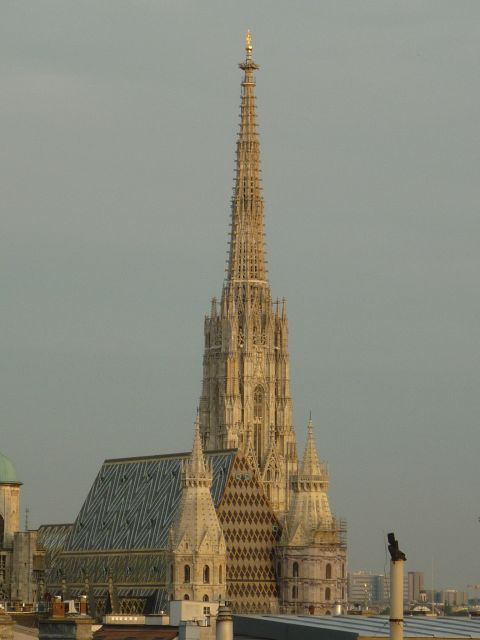
Starting at St. Stephen’s Square puts you beside Vienna’s most recognizable church and one of the city’s key reference points. The tour includes a look at St. Stephen’s Cathedral and stories about its legends, giving you a useful anchor before the walk heads into the surrounding streets.
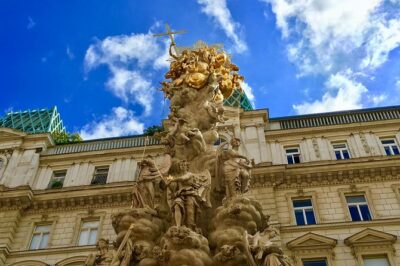
From there, the route reaches the Graben, one of Vienna’s grand ceremonial streets. The Baroque Pestsäule, or Plague Column, provides the main visual stop here. Your guide also connects the area with King Richard the Lionheart, adding a medieval strand to a setting that otherwise feels strongly tied to imperial Vienna.
This is a good early section for orientation. You see how the old center is arranged, while the guide explains why certain squares and streets mattered. The walk is not just a parade of facades. Its value comes from linking a monument to a story, then placing that story within the city’s long political and religious past.
Kohlmarkt follows, with the Demel pastry shop as a key landmark. Vienna’s coffeehouse and pastry culture is part of the city’s identity, and this stop helps connect royal Vienna with the everyday pleasure of cakes and coffee. The tour also discusses Sachertorte and the nearby Hotel Sacher, including where the dessert was invented and what previously occupied the hotel site.
You should not expect a pastry tasting or a restaurant reservation as part of the tour. Food is discussed, not included. That is useful if you want a quick introduction before choosing where to stop later on your own.
Michaelerplatz and the Hofburg’s many layers
Michaelerplatz is one of the most rewarding places on the walk because several periods of Vienna appear in one view. Roman and medieval excavations can be seen here, while the square also opens toward the Hofburg and the Spanish Riding School.
The tour may include the interior of St. Michael’s Church, although entrance arrangements and fees are not included. Photography inside is not allowed, so bring your eyes and your questions rather than planning to document every room.
At the Spanish Riding School, your guide explains the institution’s place in Vienna’s imperial story. The itinerary calls for a guided sightseeing stop rather than a performance, so do not book this walk expecting to see the Lipizzaners perform. You’ll get context from outside and around the complex instead.
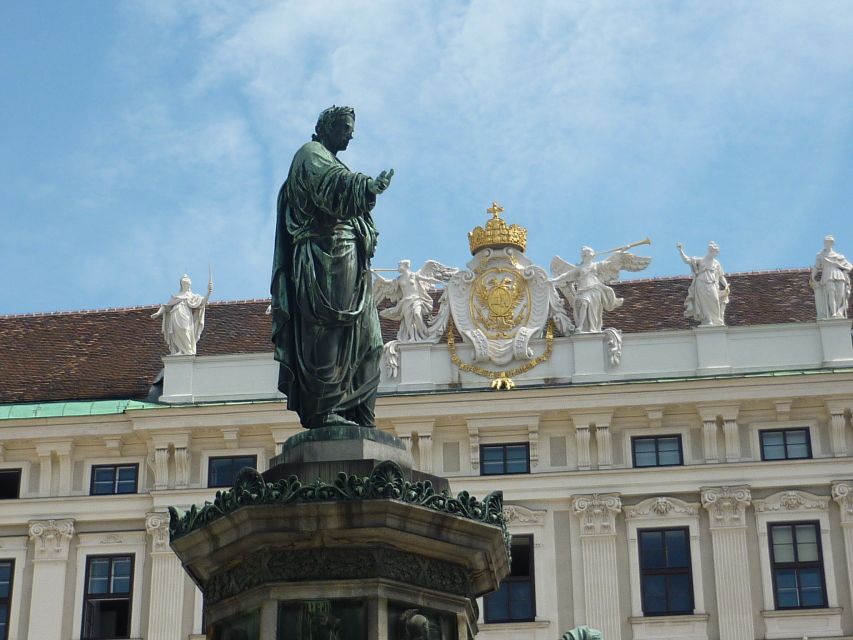
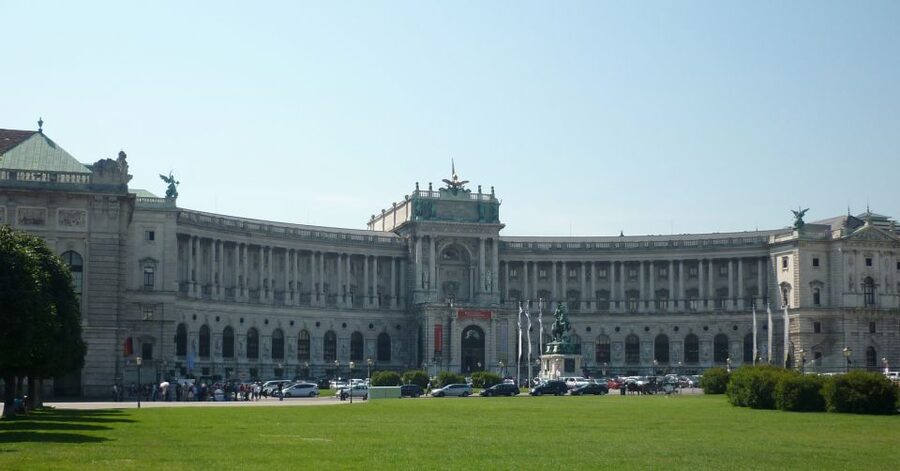
The Hofburg Palace is the core of the imperial section. Here, stories about the Habsburgs and Empress Sisi help turn a very large palace complex into something easier to understand. The setting can feel formal and imposing, but personal anecdotes give it a human scale.
I like this part of the tour for first-time visitors who are trying to sort out Vienna’s many imperial buildings. The Hofburg is not one simple palace with one clear entrance. It is a large collection of wings, institutions, courtyards, and ceremonial spaces, and a guide helps you see how the pieces fit together.
Do note that the tour does not include palace entrance fees. If you want to visit interior collections or rooms after the walk, budget separately and allow additional time.
Heldenplatz, Josefsplatz, and Habsburg power
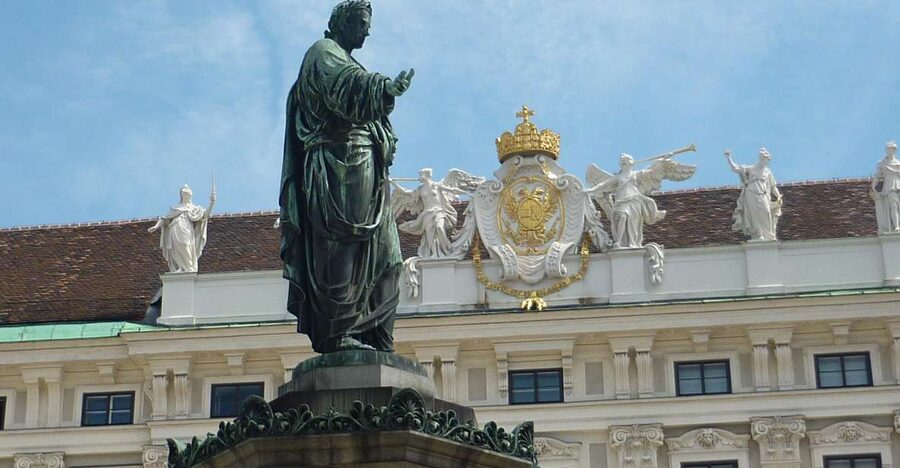
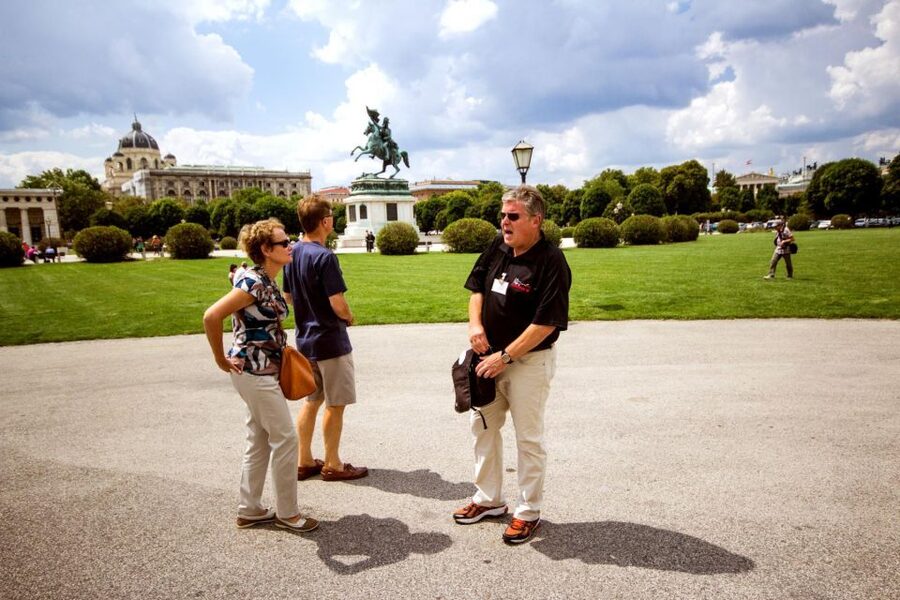
From the Hofburg, the route reaches Heldenplatz, a broad open square shaped by Austria’s imperial ambitions. The tour uses the space to tell stories about Austrian heroes and the political meaning of the surrounding buildings.
Josefsplatz offers a different angle. Here, you hear about Emperor Joseph II and learn about the National Library, the Augustinian Church, the Spanish Riding School, and the Habsburg family. The square is quieter than the Graben and works well as a place to discuss ideas of reform, court life, and royal authority.
The National Library is admired from the route, but admission is not included. If you want to see its famous interior, treat this walking tour as an introduction and plan a separate visit. The same principle applies to the Albertina later in the walk.
This section is especially useful if you want more than dates and names. A private guide can pause when a particular Habsburg figure catches your interest, or move along if palace politics is not your main concern. That flexibility is one of the clearest reasons to choose a private tour over a standard group route.
Same Alps, a completely different kind of day:
- Vienna: Vivaldi’s Four Seasons Concert in Karlskirche
★ 4.7 · 14,951 reviews - Vienna: Spanish Riding School Training
★ 3.9 · 9,281 reviews - Vienna: Skip-the-cashier-desk-line Giant Ferris Wheel Ride
★ 4.5 · 7,859 reviews - Vienna: Schönbrunn Palace & Gardens Skip-the-Line Tour
★ 4.7 · 7,739 reviews
Albertina, the State Opera, and Vienna’s darker memorials
The walk continues past the Albertina Museum, known for its large graphic art collection. The tour does not include museum admission, but the building itself is part of Vienna’s imperial and artistic center, and your guide can explain its place among the surrounding landmarks.
Nearby, the Monument Against War and Fascism brings a more difficult subject into the route. This is an important change of tone. Vienna is not presented only as a city of palaces, music, and cake. The memorial asks you to consider war, fascism, and the suffering connected with the city’s recent past.
The State Opera also appears along the walk. Your guide tells the unusual story of why its architect committed suicide. It is a striking reminder that Vienna’s grand architecture has human stories behind it, including ambition, public criticism, and personal tragedy.
The itinerary describes these places as photo stops and guided sightseeing points. You can take pictures outdoors, but photography inside buildings is not allowed. The route works best if you are comfortable listening while walking rather than expecting long interior visits at every stop.
Hotel Sacher follows with more food history and city lore. The Sachertorte story gives you a pleasant break from imperial politics, while the discussion of what stood on the hotel grounds before it adds another small piece to Vienna’s changing urban story.
Neuer Markt and the Imperial Crypt
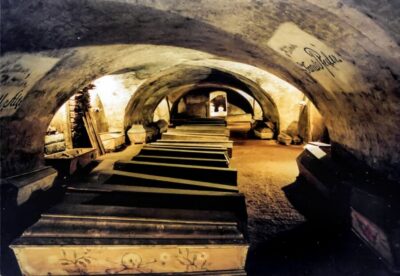
Neuer Markt is the setting for one of the tour’s more unusual subjects: Habsburg burial customs. The Imperial Crypt, or Kapuzinergruft, is connected with the strange and formal rituals used for imperial burials, and this story offers a memorable look at how the dynasty handled death and remembrance.
The route also tells you where Mozart died. That detail is useful because Vienna’s music history is often presented in grand, general terms. A precise location and a personal story make the composer’s connection to the city easier to picture.
Again, the walk does not include entrance fees. The Imperial Crypt is an interior attraction, so confirm current access and admission arrangements separately if you want to go inside after the guided portion. The no-photography rule applies inside buildings.
This part of the tour suits you if you like the less polished side of royal history. Palace life is only half the story. Burial rituals, illness, death, and memory reveal how the Habsburgs saw themselves and how they wanted to be remembered.
Blutgasse, Franziskanerplatz, and ordinary Vienna
One of the best reasons to book a private route is the chance to leave the main ceremonial streets for smaller corners. The walk explores Franziskanerplatz and the narrow lanes of Blutgasse, where the guide discusses how ordinary people in Vienna once lived and how the area functions today.
The route also explains the importance of a house at Franziskanerplatz. The available details do not specify exactly which building or story will receive the most attention, so ask your guide to pause there if local housing and neighborhood life interest you.
The old university district adds another layer. You’ll see the Baroque Jesuit church and hear about the former academic quarter, then continue toward the Greek quarter. These areas show that Vienna was not shaped only by the court. Students, religious orders, merchants, immigrants, and minority communities also helped form the center.
St. Rupert’s Church is another highlight. It is described as Vienna’s oldest church, and the surrounding discussion reaches back to the Romans and forward to the history of Jewish life in Vienna. This is a valuable counterweight to the imperial route because it broadens the city story beyond palaces and rulers.
The private format matters most here. On a large group walk, narrow lanes and small courtyards can be hard places to stop. With your own group of up to 10, you can ask about details you might otherwise pass by, including architecture, old homes, religious history, and how central Vienna has changed.
How the timing and price work
The price is $270 for a private group of up to 10 people. For a full group, that is $27 per person, which makes the tour a solid value if you are traveling with family, friends, or colleagues. For two people, the same price becomes $135 per person, so a regular group tour may be cheaper if cost is your main concern.
The private price buys flexibility, not admission. Entrance fees, personal expenses, and gratuity are extra. You are paying for a licensed local guide, a route tailored to your interests, and the chance to ask questions without competing with a large crowd.
A 2-hour version is best for a quick first look at the old center. A 3-hour walk gives you time for the main imperial sights plus some side streets. A 4-hour version is the better choice if you want both the famous buildings and the Roman, Jewish, university, food, and neighborhood stories.
Wear weather-appropriate clothing because the tour runs in all weather. Comfortable shoes matter, even though the route remains in central Vienna. Large bags and luggage are not allowed, and the activity is not suitable for people with mobility impairments.
You can cancel up to 24 hours before the start for a full refund, and reserve now while paying later. That flexibility helps if your Vienna schedule is still changing.
Who should book this Vienna walking tour
I would recommend this tour to first-time visitors who want a strong introduction to central Vienna without being locked into a fixed group route. It also suits repeat visitors who have seen the Hofburg and St. Stephen’s but want more local stories, courtyards, side streets, and neighborhood history.
Families and friend groups get good value when they fill several places. A private guide can adjust the pace, explain unfamiliar subjects, and keep the walk focused on what your group actually cares about.
History lovers will appreciate the range, from Roman remains and medieval legends to Habsburg burial customs, fascism, Jewish Vienna, and the old university quarter. Food-minded visitors also get useful context on Sachertorte, Demel, Hotel Sacher, and Wiener Schnitzel at Figlmüller, although food and drinks are not included.
I would think twice if you want extensive interior sightseeing. This is mainly an outdoor walking experience with guided explanations and photo stops. It is also a poor fit if walking is difficult or if you need a tour in a language other than English or German.
Should you book it?
Book this private Vienna tour if you want the city explained through stories rather than simply photographed from the pavement. The strongest reasons are the flexible route, the broad range of subjects, and the chance to move from imperial landmarks into less formal streets and neighborhoods.
For the best value, bring a group of several people and choose at least three hours. Ask in advance to emphasize your priorities, especially if you want extra time around the Hofburg, Jewish Vienna, architecture, food history, or the old lanes.
Skip it if you mainly want included museum admissions, a performance at the Spanish Riding School, or a low-cost group outing. Otherwise, this is a practical way to get your bearings and understand why Vienna feels like several cities layered together.
FAQ
Where does the Vienna private walking tour begin?
The standard meeting point is St. Stephen’s Square, at 1010 Vienna, St. Stephan’s Square 8A, near the corner of Jasomirgottstrasse and next to the Lindt Chocolate Store. The U1 and U3 subway lines stop at Stephansplatz.
Is hotel pickup available?
Hotel pickup is available only when your hotel is in postal code zone 1010. If it is outside that zone, you meet the guide at St. Stephen’s Square.
How long does the tour last?
The activity details list a duration of 2 to 4 hours. The tour can also be booked at other times, so you should provide an alternative preferred time when booking if needed.
What languages are offered?
The tour is available in English or German. Other languages are not listed as available.
Are entrance fees included?
No. Entrance fees, personal expenses, and gratuity are not included in the $270 group price.
Is the tour suitable for people with mobility impairments?
No. The activity is listed as unsuitable for people with mobility impairments.
What should I bring?
Bring weather-appropriate clothing. Smoking, large bags, luggage, skateboards, skates, and audio recording are not allowed. Photography inside buildings is also not allowed.
Just added around Vienna
- World War II History Vienna Old Town Private Walking Tour★ 4.8 · 9 reviews
- From Krems: Wachau Valley River Cruise on the Danube★ 4.6 · 95 reviews
- Vienna: Winery and Wine Tasting Tour with a Wine Expert★ 5.0 · 5 reviews
- Vienna: Wine Tasting E-Bike Tour★ 4.9 · 46 reviews
- Vienna: Wine Tasting at Schönbrunn Palace★ 4.3 · 71 reviews
- Vienna: Wine Tasting Tour★ 4.8 · 61 reviews
- Vienna: Wiener Schnitzel and Strudel Cooking Class★ 4.9 · 126 reviews
- Vienna Urban Art Tour: Explore a different side of Vienna!★ 3.8 · 14 reviews
Walking Tours, compared.
Guided Walking Tour of City Center Highlights
Read our review →
Guided Walking Tour of City Highlights & Hidden Gems
Read our review →
Vienna Historic Center Small Group Walking Tour
Read our review →
Browse the lists this tour appears in