
Reviewed · WALKING TOURS
Vienna: Courtyards & Hidden Places Walking Tour
Vienna’s most revealing corners are often behind an unassuming doorway. This two-hour small-group walk leads you from St. Stephen’s Cathedral into quiet courtyards, narrow lanes, old monastic grounds, and places tied to Mozart and traditional Viennese food. It is less about checking off grand facades and more about seeing how the old city works from the inside.
I like the mix of famous sights and tucked-away spaces, especially the courtyards around Blutgasse and the old university district. I also like the guide’s use of stories, including the less polished truth about Mozart and the odd tale behind the house known as Where the cow plays on the board.
The main consideration is pace and access. You will walk on old-city streets and enter places that may be difficult for people with mobility limitations, and the tour is not suitable for children under 12 or wheelchair users. If you want a long, detailed visit inside St. Stephen’s Cathedral, this is not that tour. The cathedral is part of a wider walk.
Key points at a glance
- Courtyards beyond the grand boulevards: See quieter spaces and hear the legends attached to Vienna’s old homes.
- Mozart without the usual sugar coating: Visit the composer’s final residence and hear more about his actual life.
- A broad old-city route: Connect St. Stephen’s Cathedral, Ballgasse, Blutgasse, the Franciscan Church, and the Jesuit Church.
- Food and daily life: Learn about traditional Viennese cuisine alongside architecture and local stories.
- Small group, two-hour format: The compact length works well for a first look at central Vienna.
- Weather-ready walking: The tour operates in all weather, so comfortable shoes and a rain layer matter.
Why Vienna’s courtyards tell a better story
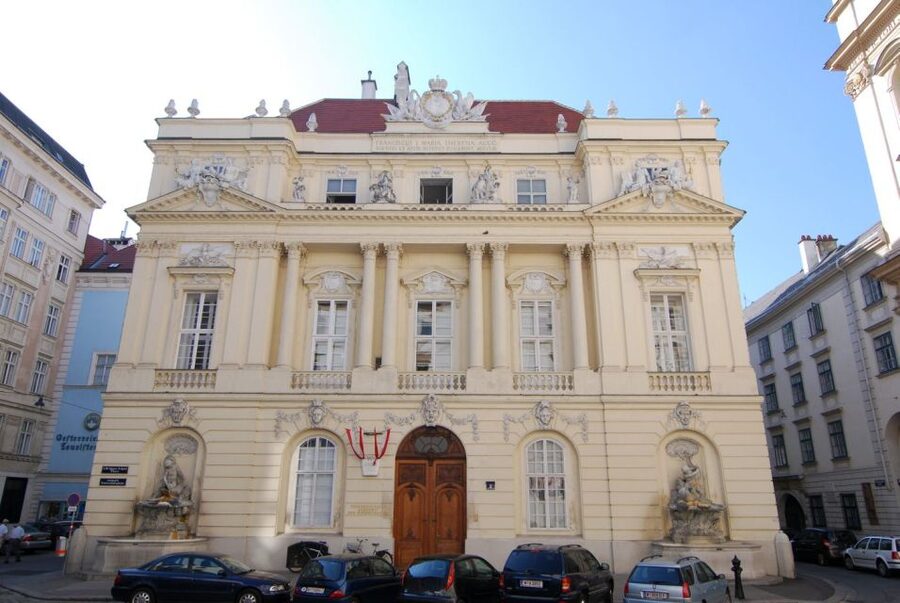
The historic center can feel like a parade of grand buildings. You see the cathedral, palaces, churches, and formal squares, then move on. This walk slows down at the thresholds, passages, and courtyards that explain how people actually lived behind those polished fronts.
A courtyard might reveal a former monastery, a service entrance, an old apartment arrangement, or a space where several parts of city life once met. The tour connects these places with stories and legends rather than treating them as silent architecture. That gives you a more useful sense of Vienna than a string of dates alone.
The route also helps you notice contrasts. The center contains imperial grandeur, religious institutions, student life, commerce, domestic buildings, and reminders of war. Some of the most memorable stops may be modest. That is the point. The walk asks you to look past the main facade.
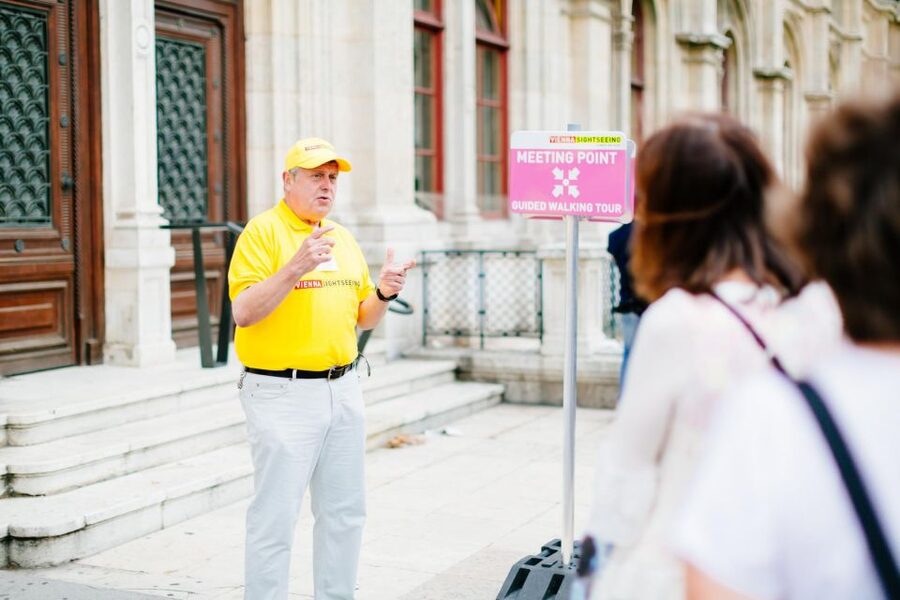
The small-group format suits this kind of tour. A guide can point out a doorway or architectural detail without trying to hold the attention of a large crowd across a busy square. The published experience is offered in German and English, with a certified local guide.
A few more Vienna trips to weigh up
- Vienna: Guided Walking Tour of City Center Highlights
★ 4.7 · 4,989 reviews - Vienna: Vienna Central Cemetery Guided Walking Tour
★ 4.8 · 3,307 reviews - Vienna: Guided Walking Tour of City Highlights & Hidden Gems
★ 4.9 · 2,180 reviews
Starting at St. Stephen’s Cathedral
The walk begins at one of Vienna’s unavoidable landmarks, St. Stephen’s Cathedral. Its setting at Stephansplatz gives you an immediate sense of the old city’s scale and importance, but the cathedral is used as a starting point rather than the entire subject of the tour.
Expect guided explanation about the cathedral and its place in Vienna. You will learn how the building fits into the city center before moving toward the smaller streets nearby. This is useful if you have just arrived and want a quick orientation, especially since many later stops are only meaningful once you understand how tightly packed the central district is.
Do not book this experience expecting a full cathedral visit. One useful piece of feedback about the route is that it spends more time in courtyards than on St. Stephen’s Cathedral itself. I see that as a strength if you have already seen the cathedral from the square, but a limitation if the building is your main reason for booking.
From Stephansplatz, the tour turns away from the broad public space and into the lanes that make this part of Vienna feel older and more intimate.
Narrow lanes around Domgasse and Ballgasse
Domgasse and Ballgasse help shift the mood from major landmark to close-up city walk. These streets are part of the old center, where buildings crowd the route and small changes in facade, doorway, and pavement become part of the story.
Ballgasse is linked with the everyday side of central Vienna. Rather than only focusing on rulers and composers, the guide brings in food traditions and the ways people used these streets. That makes the walk more grounded. You are not just looking at old walls. You are learning how the city’s social and culinary habits fit into its built spaces.
Traditional Viennese cuisine is one of the tour’s welcome additions. Food history can make an architecture walk easier to remember, especially when it connects a building or street with ordinary city life. The description does not promise a tasting, so do not arrive expecting a meal or included snack. Treat this as food background that may help you make better choices later at a Viennese restaurant.
The stories are also meant to keep the pace light. Several recent comments describe the explanations as entertaining, informative, and easy to follow, with friendly storytelling rather than a dry lecture. That matters on a two-hour walk, when too many facts can blur together.
Mozart’s final residence, with the legend trimmed away
Mozart’s final residence is a major stop, but the value here is the context around it. Vienna sells Mozart in many forms, and it is easy to leave with a polished image of the composer that says little about the person. This walk uses his last home to discuss the less tidy truth of his life.
You should not assume the tour includes an interior museum visit. The experience specifically takes you to the residence and explains its connection to Mozart. If you want to tour the rooms inside, you would need to arrange that separately.
For me, this is one of the route’s strongest stops because it links a famous name with a real address in the old city. The guide’s broader approach also includes stories about famous personalities, not just architectural labels. That gives the stop more life than simply pointing at a plaque.
The Mozart section is especially useful for visitors who already know a little about him but want a better sense of how his Vienna years fit together. It also keeps the tour from becoming a standard greatest-hits walk. You see the landmark, then hear the human complications around it.
Same Alps, a completely different kind of day:
- Vienna: Vivaldi’s Four Seasons Concert in Karlskirche
★ 4.7 · 14,951 reviews - Vienna: Spanish Riding School Training
★ 3.9 · 9,281 reviews - Vienna: Skip-the-cashier-desk-line Giant Ferris Wheel Ride
★ 4.5 · 7,859 reviews - Vienna: Schönbrunn Palace & Gardens Skip-the-Line Tour
★ 4.7 · 7,739 reviews
Blutgasse and the quiet art of looking inward
Blutgasse is one of the clearest examples of what makes this tour different from a standard central Vienna stroll. The lane leads you away from the grand public spaces and toward old courtyards and quieter architectural details.
The exact atmosphere of a courtyard can depend on access and conditions on the day, but the tour is built around seeing several of these interior spaces. You might find enclosed passages, calm residential corners, and traces of older uses that are easy to miss when you are walking alone.
This is where the guide’s storytelling earns its keep. Courtyards rarely explain themselves. A local guide can add the legends, names, and social details that make an otherwise plain doorway worth remembering. The route also includes Palais Neupauer-Breuner and the Deutsches Haus, giving you more than one type of historic building to compare.
The balance is important. You will not spend the entire two hours in secret passages. The walk still includes major landmarks and public streets. But the quieter sections are the reason to choose this experience over a basic overview of Vienna.
The Franciscan Church and Monastery
The Franciscan Church and Monastery adds a religious and architectural layer to the route. Vienna’s center is not only imperial and musical. Religious orders helped shape its streets, institutions, and daily routines.
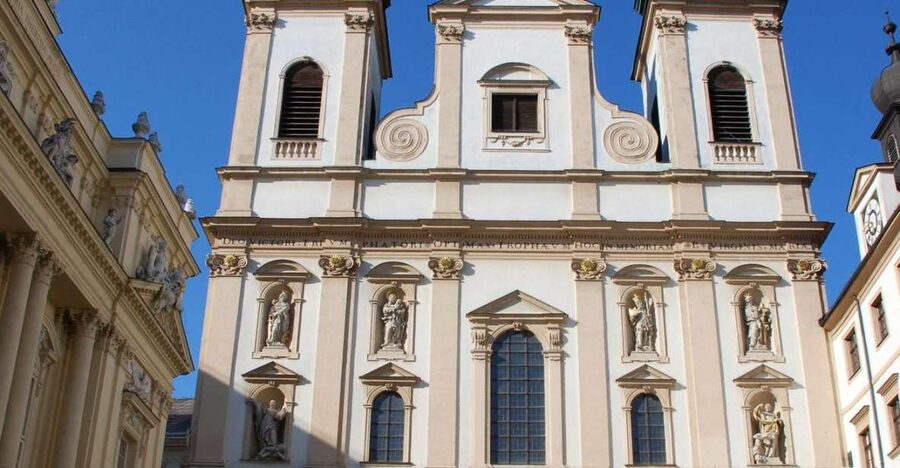
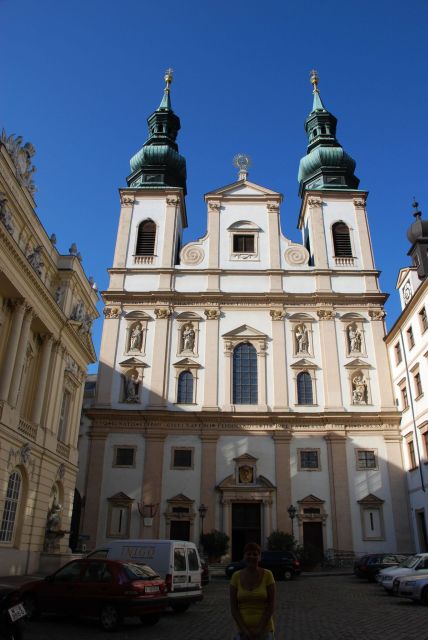
The Franciscan stop works well beside the Jesuit Church later in the walk because you can compare different religious settings within a compact area. The guide can explain what you are seeing and connect it to the old city around it. As with the cathedral and Mozart’s residence, the information provided promises a guided look and explanation, not an included extended interior visit.
I would pay attention to how the church sits within the surrounding streets. One benefit of a walking tour is that you see the relationship between a building and its neighbors. On your own, you might photograph the facade and move on. With the route’s focus on courtyards and old lanes, the church becomes part of a larger picture of Vienna’s urban life.
The old university district and Jesuit Church
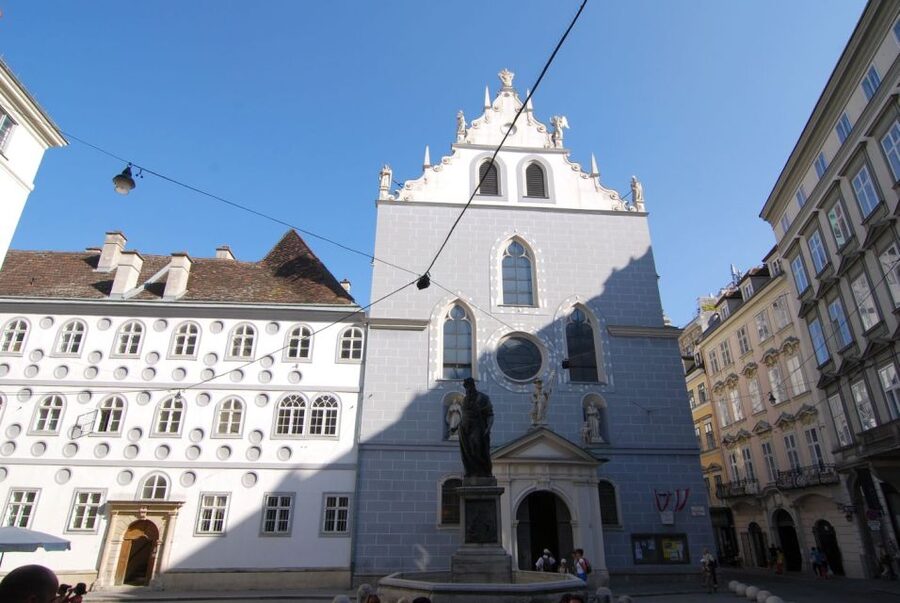
The tour continues toward the old university district and the Jesuit Church. This section gives the walk a different feel from the Mozart and cathedral stops. Instead of focusing on one famous person or single landmark, it explores institutions that helped shape Vienna’s intellectual and religious life.
The route also includes the old city wall. That is a useful reminder that the historic center was once a defended, enclosed settlement rather than simply a collection of handsome buildings. You can better understand why the streets feel so compact and why large public spaces are set apart from tight lanes.
The University of Vienna is listed as a guided stop, but the experience should not be confused with a full campus tour. The value lies in placing the old university district within the walk’s larger story. You move through places connected to education, faith, commerce, residence, and defense, all within a short distance.
This is a good final stretch because it broadens the tour. You finish with a sense that Vienna’s center was made by many groups, not only emperors and artists.
The stories behind food, odd houses, and old city life
One of the more unusual details on the route is the house called Where the cow plays on the board. The name alone makes it a memorable reference point, and it fits the tour’s interest in local legends and strange fragments of city life.
I like these odd details because they give you something to look for after the guide has gone. You may forget a date, but a peculiar house name can stick in your mind as you continue walking around Vienna. It also breaks up the more formal material about palaces, churches, and famous residents.
The food discussion serves a similar purpose. Traditional Viennese cuisine is treated as part of the city’s culture, not a separate restaurant topic. You get background that may help you recognize why certain dishes and dining customs matter when you order later.
Again, this is not a food tour. No food tasting is included, and there is no promise of a restaurant stop. Book it for the combination of food lore, architecture, and stories, not for lunch.
Is two hours enough for this route?
Two hours is enough for a lively introduction, but not enough for long stops inside every building. The tour covers several parts of the center, so expect a steady walking pace and explanations while moving between sites.
That short duration is a real advantage if you are fitting Vienna around museum visits, a concert, or a first-day orientation. It also leaves you time to return to the places that catch your interest. You can revisit the cathedral, explore Mozart’s residence independently, or seek out a cafe after the walk.
The tradeoff is depth. You will not receive the full treatment of every palace, church, and historic personality. The tour works by creating connections between many places. If you prefer one subject studied at length, choose a specialist museum or a dedicated Mozart or cathedral visit instead.
The route ends around Dr.-Karl-Lueger-Platz 3 in the first district. Pickup and drop-off service is not included, so you should plan to reach the meeting point yourself and continue from the ending area on foot or by public transport.
Price, group size, and practical fit
At $34 per person, this is a sensible price for a certified guide and two hours of focused walking in central Vienna. You are paying for interpretation and access to places that are easy to overlook, not transportation, meals, or entry tickets.
The value improves if this is your first or second day in Vienna. The route gives you a map in your head, introduces several districts and landmarks, and helps you decide which places deserve a longer return visit. It is also a good choice if you have already seen the headline sights and want a different angle.
The experience continues from a first tour by the same operator, but you do not need to have taken Part 1. That makes this walk easy to book on its own. Still, if you have already done the earlier tour, check the route details when choosing your time so you know what kind of continuation to expect.
The meeting point can vary with the option booked, and the starting information refers to a Bankomat location. Read your booking confirmation carefully so you do not go to the wrong place.
Bring comfortable walking shoes and clothing for changing weather. The tour runs in all weather, and large bags or luggage are not allowed. Audio recording is also not permitted. The route is not suitable for children under 12, people with mobility impairments, or wheelchair users.
Who should book the Courtyards and Hidden Places walk?
I would choose this tour if you like architecture with a story attached. It suits you if you want to see St. Stephen’s Cathedral but would rather spend the rest of your morning or afternoon in lanes, courtyards, churches, and old institutional districts.
It is also a good match for visitors who prefer a guide who explains famous people in human terms. The Mozart stop is not presented as a simple shrine, and the stories about old Vienna add warmth to the walk. The high published score, 4.8 from 189 ratings, fits the tour’s clear strengths: friendly delivery, strong explanations, and a route with plenty of variety.
I would be cautious if your priority is a full interior sightseeing program. You will not get a long cathedral visit, a formal palace tour, or a food tasting. You should also skip it if walking on historic streets is difficult or if you are bringing luggage.
Should you book it?
Book this Vienna walk if you want the old center explained through its back doors, side lanes, courtyards, churches, food traditions, and local legends. The $34 price is fair, the two-hour length is easy to fit into a busy visit, and the route offers more texture than a basic landmark checklist.
Skip it if Mozart’s residence or St. Stephen’s Cathedral is your only priority and you want extended time inside either site. For most visitors who want a compact, story-led introduction to central Vienna, this is a practical choice, especially early in your stay.
FAQ
How long does the Vienna Courtyards and Hidden Places Walking Tour last?
The tour lasts two hours.
What languages are offered?
The live guide conducts the tour in German or English.
Is the tour suitable for children?
No. The tour is not suitable for children under 12 years old.
Is the walking tour wheelchair accessible?
No. It is not suitable for wheelchair users or people with mobility impairments.
Does the tour operate in bad weather?
Yes. The tour takes place in all weather conditions, so dress for the forecast and wear comfortable shoes.
Are hotel pickup and drop-off included?
No. Pickup and drop-off are not included. The meeting point may vary according to the option you book, and the listed ending point is Dr.-Karl-Lueger-Platz 3 in Vienna’s first district.
Just added around Vienna
- Ottakringer Brewery tour★ 4.0 · 6 reviews
- New Hofburg Palace Tour House of Habsburg★ 4.5 · 5 reviews
- Private Van & Walk Tour – One Perfect Day in Vienna★ 5.0 · 21 reviews
- True Crime mobile puzzle rally Vienna★ 4.0 · 3 reviews
- Vienna Naschmarket Food Tasting Tour★ 4.0 · 30 reviews
- Vienna Nightlife Experience: Food, Wine, Cocktails & Vibes★ 5.0 · 119 reviews
- Myth Mozart★ 4.0 · 80 reviews
- ( Night Tour ) With Private Guide + wine or prosecco★ 4.0 · 12 reviews
Walking Tours, compared.
Guided Walking Tour of City Center Highlights
Read our review →
Guided Walking Tour of City Highlights & Hidden Gems
Read our review →
Vienna Historic Center Small Group Walking Tour
Read our review →
Browse the lists this tour appears in