
Reviewed · WALKING TOURS
Vienna Art Nouveau Walking Tour
Vienna’s underground railway is more than a way to get across town. In the hands of architect Otto Wagner, it became a citywide design statement, with elegant stations that announced Vienna as a modern European capital. This Art Nouveau walking tour connects those stations with Secession House, Wagner apartment buildings, and imperial architecture.
I like the way the tour links transport, politics, and design rather than treating Art Nouveau as a collection of pretty facades. I also like the small-group format, which gives guides such as Wolfgang, Peter, and Guissepina room to answer questions and adjust the walk to your interests. The main consideration is the $176 price, especially since admissions and some transport costs are not included.
Key points at a glance
- Otto Wagner’s metro design: See how Vienna’s first modern railway system used architecture to shape the city’s identity.
- Karlsplatz and Stadtpark stations: Visit two surviving Wagner stations, including Stadtpark, the best-preserved original station still in use.
- Secession House and Klimt: Add the €9.50 adult admission to see Gustav Klimt’s Beethoven Frieze from Tuesday through Sunday.
- Imperial railway architecture: See the former imperial station built outside Schönbrunn for the emperor’s private use.
- Small-group attention: Private and small-group options make it easier to ask about architecture, Austrian history, and city planning.
- A walking tour with real mileage: Wear comfortable shoes. One participant reported walking several miles.
Why Vienna’s metro became an Art Nouveau project
In the late 19th century, Vienna was growing fast. People were moving into the city and its expanding suburbs, and the old roads and horse-drawn transport could not handle the pressure. City leaders needed a railway that would connect outlying districts with the center and the grand Ringstrasse.
They turned to Otto Wagner, one of Vienna’s most important architects. Wagner understood that a metro system was not only an engineering job. Its stations would be seen by thousands of people every day, so they needed to be practical, recognizable, and worthy of a modern capital.
His answer was Art Nouveau, known in Vienna as Jugendstil. The style favored flowing lines, geometric patterns, floral references, polished materials, and a willingness to make ordinary buildings more artistic. Wagner used those ideas for railway stations, where they had to work under pressure from crowds, weather, and daily use.
That is what makes this tour useful. You are not simply looking at decorative details. You are learning how architecture helped Vienna present itself as cosmopolitan, modern, and confident.
The guide also explains the ideas behind the style. You will consider why Art Nouveau artists preferred particular shapes and materials, and how the movement pushed back against older academic design. If you enjoy architecture but want more than dates and names, this context gives the buildings a purpose.
A few more Vienna trips to weigh up
- Vienna: Guided Walking Tour of City Center Highlights
★ 4.7 · 4,989 reviews - Vienna: Vienna Central Cemetery Guided Walking Tour
★ 4.8 · 3,307 reviews - Vienna: Guided Walking Tour of City Highlights & Hidden Gems
★ 4.9 · 2,180 reviews
Meeting at Café Museum
The tour begins at Café Museum on Operngasse 7, in Vienna’s first district. The meeting point is practical for a walking tour because it places you near several important central buildings and close to the Karlsplatz area.
The opening portion may include a guided look at Café Museum itself. This is a good way to begin because Viennese Art Nouveau is not limited to metro stations. It also appears in cafés, apartment buildings, public institutions, and cultural spaces.
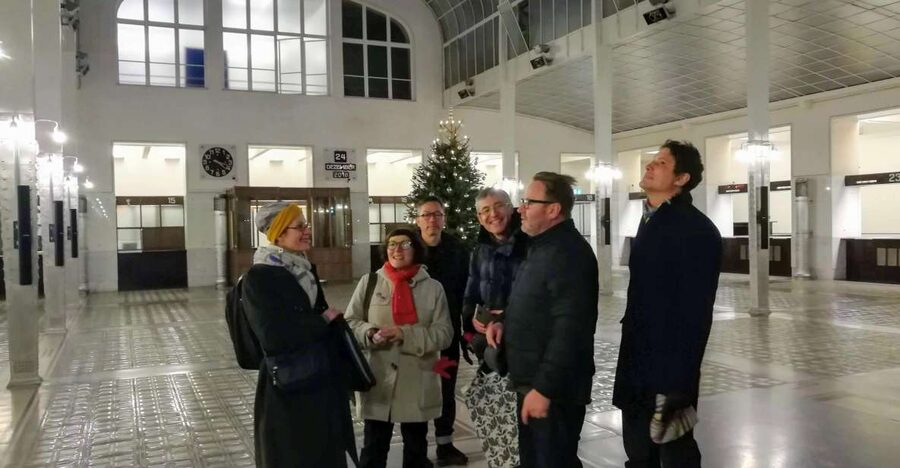
Your English-speaking historian guide sets the pace. The experience is offered privately or in a small group, so the character of the tour can change depending on your booking. With only two people, Wolfgang tailored the route and discussion closely to their interests. Peter handled a wide range of questions about Austrian history, architecture, and less obvious religious buildings in Vienna.
Those details matter if you are deciding between a large sightseeing walk and this more focused outing. You are paying for interpretation and conversation, not just a route between landmarks.
Karlsplatz and the small Wagner museum
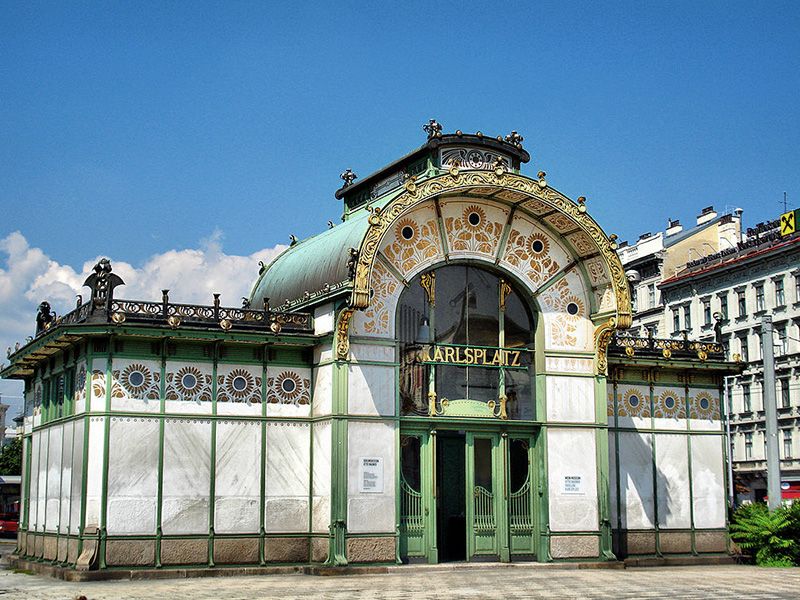
The first major stop is the Otto Wagner pavilion at Karlsplatz. Its pale structure, curved roof, and decorative details make it one of the clearest introductions to Wagner’s metro architecture.
The pavilion also houses a small Wagner museum. Admission is not included, so you should allow for that extra cost. The museum is modest rather than a full-scale architectural collection, but it helps put the station design into context before you continue on foot.
At Karlsplatz, your guide can explain how Wagner aimed to make the metro system easy to recognize. The stations had to function as entrances to a railway, but they also had to fit the image of a capital that wanted to be seen as forward-looking.
This is one of the most valuable parts of the tour for first-time students of Art Nouveau. You learn to look for the relationship between structure and ornament. The decorations are not added at random. They help identify the station and give a public service a clear visual language.
Stadtpark station and Art Nouveau in daily use
From Karlsplatz, the tour continues toward Stadtpark station. This is the best-preserved original metro station still in use, which gives you a rare chance to see Wagner’s design in its intended setting rather than only in a museum.
A working station is different from a preserved palace room. People pass through it as part of ordinary city life, and that contrast is part of the appeal. You can study the curves, metalwork, and decorative surfaces while watching the building perform its original job.
Your guide will connect the station to Vienna’s wider urban changes. The railway made it easier to link suburbs with the central city, while the design gave that infrastructure a public face. The result was both functional and symbolic.
The practical issue is time. This is a three-hour tour, and the route includes several stops and walking between them. If you like to linger over every facade, you may need to accept a quicker look at some places. The walk is best for someone who prefers a flowing architectural story rather than a long indoor visit at each stop.
Same Alps, a completely different kind of day:
- Vienna: Vivaldi’s Four Seasons Concert in Karlskirche
★ 4.7 · 14,951 reviews - Vienna: Spanish Riding School Training
★ 3.9 · 9,281 reviews - Vienna: Skip-the-cashier-desk-line Giant Ferris Wheel Ride
★ 4.5 · 7,859 reviews - Vienna: Schönbrunn Palace & Gardens Skip-the-Line Tour
★ 4.7 · 7,739 reviews
Secession House and Klimt’s Beethoven Frieze
The route then heads toward the Secession Building, Vienna’s most famous Jugendstil landmark. Its white exterior, clean geometric form, and distinctive dome of gilded laurel leaves make it easy to recognize.
Secession House was created as a home for artists who broke from Vienna’s traditional art establishment. That rebellious background helps explain the building’s force. It was not designed to blend quietly into the city. It announced a new artistic direction.
From Tuesday through Sunday, the tour includes the chance to see Gustav Klimt’s Beethoven Frieze inside. The adult admission is €9.50, while students and seniors pay €6. The ticket is not part of the tour price, but your guide helps with the payment.
If you care about Klimt, this admission is an important part of the experience rather than a minor add-on. The Beethoven Frieze gives you a direct look at the symbolic, decorative side of Viennese Art Nouveau. Your guide can help explain the imagery and connect it to the broader ideas of the Secession movement.
The building is closed for this portion on Mondays, so check your date carefully. If seeing the frieze is a priority, choose a Tuesday through Sunday departure.
Wagner’s apartment buildings and the look of private Vienna
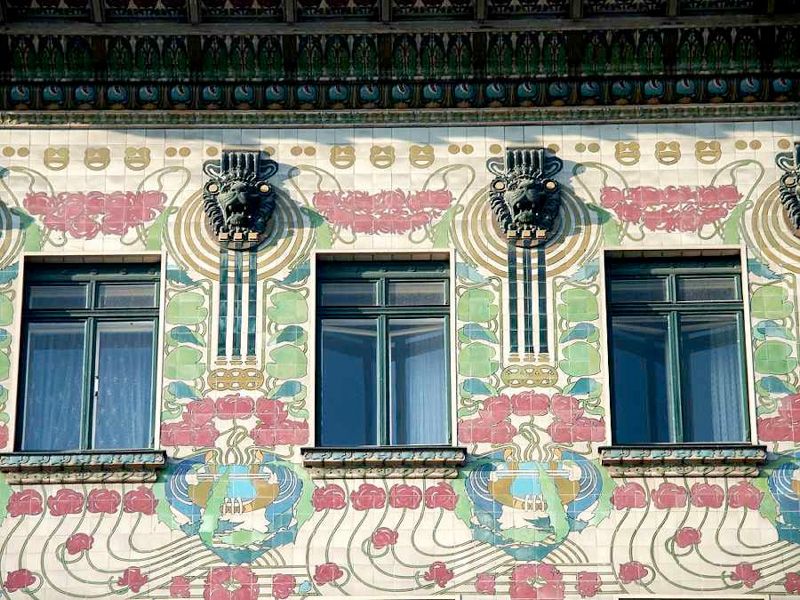
The walk also includes two apartment houses designed by Otto Wagner. These stops are useful because they show how Art Nouveau worked in everyday residential architecture, not only in major public monuments.
Apartment buildings reveal a different side of Wagner’s work. The scale is more intimate, and the decorative choices must live alongside windows, entrances, shops, and ordinary city traffic. Look for the way pattern and materials frame the facade rather than simply cover it.
Your guide will discuss the symbols favored by Art Nouveau designers and the materials used to create their effect. This helps you compare public transport architecture with private housing. The same movement could look official at a railway station, personal at an apartment entrance, and theatrical at Secession House.
Peter’s ability to answer questions about hidden houses of worship, including Jewish synagogues, shows the wider value of asking your guide to move beyond the headline buildings. The tour is centered on Art Nouveau, but it can also open a broader conversation about Vienna’s urban and cultural past.
Kettenbrücke and the final metro ride
Kettenbrücke station is another surviving part of Wagner’s metro work. It gives you a second point of comparison after Karlsplatz and Stadtpark.
Seeing more than one station matters. You can compare how Wagner repeated a recognizable design language while adapting it to different locations. A single building might leave you with an attractive impression. Several stations help you understand the system.
From Kettenbrücke, you take the metro for the final part of the tour. That short ride is fitting because it lets you experience the railway as transport, not just as an architectural subject. The system that once helped reshape Vienna is still part of the city’s daily movement.
The supplied tour details describe the main guided portion as three hours, while the narrative also refers to a two-and-a-half-hour guided tour. Plan for roughly three hours and confirm the exact timing when you book. The route includes substantial walking, so comfortable shoes are a sensible choice.
The imperial station outside Schönbrunn
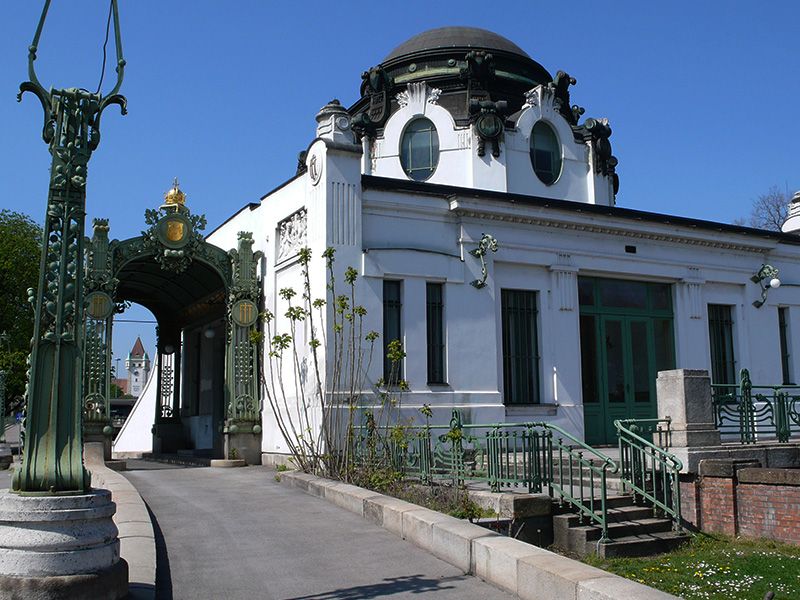
The final stop is Otto Wagner’s imperial station at Hietzing, near Schönbrunn. This station was built solely for the emperor and was not intended as an ordinary public stop.
That purpose gives the building a special political meaning. Critics of Vienna’s metro system could see it as a disruptive modern project. By building an ornate station for imperial use, Wagner showed that the emperor supported the railway.
The station also demonstrates how a generally bourgeois Art Nouveau style could be adapted for imperial display. The design had to communicate rank, ceremony, and authority while remaining part of the same modern transport system.
This is a strong ending because it brings together the tour’s main subjects: technology, art, politics, and social class. Earlier stations served the public. This one served the emperor and used architecture to make a statement about the future of Vienna.
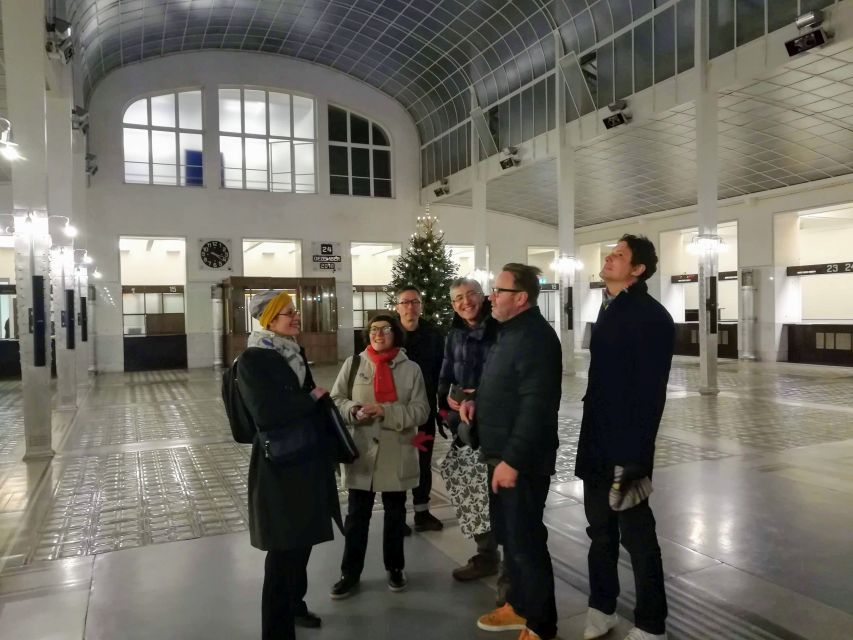
The itinerary also lists the Österreichische Postsparkasse, or Austrian Postal Savings Bank, as a guided stop. It is another important Wagner building and helps broaden the picture beyond the railway. The tour therefore moves through several types of architecture: café, station, apartment house, cultural building, imperial pavilion, and public institution.
What the $176 price buys you
At $176 per person, this is not a budget walking tour. The price makes the most sense if you choose a private or small-group option and want a specialist guide rather than a general introduction to Vienna.
The included historian guide is the central value. You are getting an explanation of why the buildings look as they do, how the metro changed the city, and what Art Nouveau meant to the people who created it. For architecture fans, that context can be worth more than a longer list of sights.
You should budget extra for the Otto Wagner pavilion and Secession House. Secession admission is €9.50 for adults and €6 for students and seniors. The tour details do not include admission to the pavilion, so ask about its current fee when booking.
The price is harder to justify if you only want exterior photographs or a quick look at metro stations. You can see some of the buildings from the outside without a guide. The tour earns its cost through access to interpretation, questions, and a route that connects places you might otherwise see as unrelated.
The free cancellation policy, with cancellation up to 24 hours before the tour for a full refund, and the reserve-now-pay-later option reduce the risk of booking. They do not lower the price, but they help if your Vienna plans are still shifting.
Who will enjoy this walk most
I would choose this tour if you have a real interest in architecture, urban planning, design, or Vienna around 1900. It also suits visitors who have already seen the main imperial sights and want to understand the city’s modern side.
It is a good match for couples and small groups who prefer asking questions as they go. The experience with Wolfgang shows how much a tiny group can gain from a tailored route. Peter’s broad command of Austrian history also suggests that the discussion can extend beyond Art Nouveau when your questions take you there.
You should be comfortable walking for several miles and moving between outdoor sites. This is not a seated museum visit. Some stops are active transport stations, and the tour includes a metro ride.
Families with older children may enjoy the contrast between royal architecture and public infrastructure. Very young children may find the long architectural discussion less engaging, especially if they are not interested in buildings.
Practical advice before you book
Choose Tuesday through Sunday if you want to see Klimt’s Beethoven Frieze. Add the €9.50 adult admission, or €6 if you qualify for the student or senior rate.
Wear shoes suitable for a long city walk. The route covers several districts and includes metro travel, so do not plan a tight appointment immediately afterward.
Ask for the exact start time and confirm which admissions are expected on your date. The meeting point is Café Museum, Operngasse 7, A-1010 Vienna, but the selected option may affect the starting arrangement.
The tour is offered in English. Private and small-group formats are available, and the guide can respond to questions about both Art Nouveau and wider Viennese history.
Should you book the Vienna Art Nouveau Walking Tour?
Book it if you want to understand how Vienna’s metro system, art world, housing, and imperial politics fit together. The combination of Otto Wagner stations, Secession House, Klimt’s Beethoven Frieze, and the emperor’s private pavilion gives you a clear story rather than a loose collection of sights.
Skip it if you are watching every euro, dislike long walks, or mainly want a quick photo stop. At $176 per person, the value depends on using the guide’s expertise and taking advantage of the small-group discussion.
For the right visitor, this is a focused and thoughtful way to see Vienna beyond palaces and grand boulevards. Just budget for the extra admissions, choose the right day for Secession House, and arrive ready to walk.
FAQ
How long does the Vienna Art Nouveau Walking Tour last?
The activity is advertised as a three-hour tour. The detailed tour description also refers to a two-and-a-half-hour guided tour, so you should allow about three hours and confirm the exact timing when booking.
What language is the tour conducted in?
The live guide language is English.
Where does the tour meet?
The listed meeting point is Café Museum, Operngasse 7, A-1010 Vienna. The exact starting arrangement can depend on the selected option.
Is admission to Secession House included?
No. From Tuesday through Sunday, you can visit Secession House to see Gustav Klimt’s Beethoven Frieze, but admission costs €9.50 for adults and €6 for students and seniors. Your guide helps you pay.
Is admission to the Otto Wagner pavilion included?
No. Admission to the Otto Wagner pavilion is not included in the tour price.
Does the tour include a metro ride?
Yes. The route includes a metro ride from Kettenbrücke station to the final imperial station visit.
Can I book a private or small-group tour?
Yes. Private and small-group options are available.
Just added around Vienna
- World War II History Vienna Old Town Private Walking Tour★ 4.8 · 9 reviews
- From Krems: Wachau Valley River Cruise on the Danube★ 4.6 · 95 reviews
- Vienna: Winery and Wine Tasting Tour with a Wine Expert★ 5.0 · 5 reviews
- Vienna: Wine Tasting Tour★ 4.8 · 61 reviews
- Vienna: Wine Tasting E-Bike Tour★ 4.9 · 46 reviews
- Vienna: Wine Tasting at Schönbrunn Palace★ 4.3 · 71 reviews
- Vienna: Wiener Schnitzel and Strudel Cooking Class★ 4.9 · 126 reviews
- Vienna Urban Art Tour: Explore a different side of Vienna!★ 3.8 · 14 reviews
Walking Tours, compared.
Guided Walking Tour of City Center Highlights
Read our review →
Guided Walking Tour of City Highlights & Hidden Gems
Read our review →
Vienna Historic Center Small Group Walking Tour
Read our review →
Browse the lists this tour appears in