
Reviewed · WALKING TOURS
Vienna: 2 Hours Sightseeing Walking Tour
Vienna’s grand center comes together quickly on this two-hour walking tour. You move from the Baroque curves of Michaelerplatz past the Hofburg, Josefplatz, the State Opera, Albertina, Neuer Markt, and finally toward St. Stephen’s Cathedral. It is a brisk orientation to the old Habsburg city, with enough history to make the buildings speak.
I like the small-group format, which makes it easier to ask questions, and I like that the guides do more than point at palaces. Herbert, Wolfgang, and Dorothea are praised for clear English, humor, local stories, and useful advice about what to see next. The tradeoff is simple: this is an outdoor walk in all weather, and it is not suitable for children under 12, wheelchair users, or people with mobility impairments.
Key points at a glance
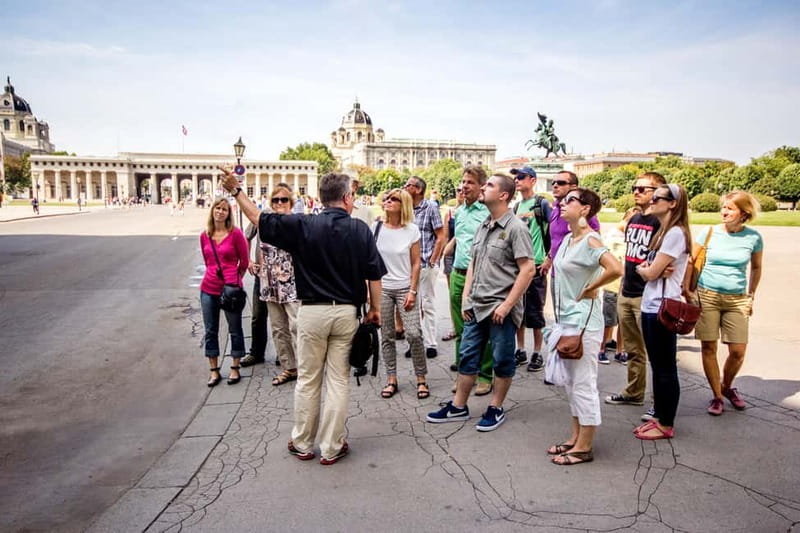
- Michaelerplatz sets the scene: Begin beside Loos Haus and step straight into Vienna’s imperial center.
- The route covers major sights efficiently: Hofburg Palace, Josefplatz, the State Opera, Albertina, Neuer Markt, and St. Stephen’s Cathedral all fit into two hours.
- Local guides add the value: Herbert and Wolfgang are especially noted for historical storytelling, humor, and practical recommendations.
- Small groups improve the experience: The format allows questions and can feel almost private in quieter periods.
- You see more than the postcard stops: Guides may lead you through courtyards and less obvious corners that you could easily miss alone.
- Plan for outdoor conditions: Wear comfortable shoes, leave large bags behind, and expect the walk to continue in rain or cold.
Why this is a smart first look at Vienna
Vienna can feel confusing on a first day. Its center is full of grand facades, old streets, royal buildings, churches, museums, and plaques. Without context, you may see a beautiful square but miss why it matters.
This tour gives you a working map of central Vienna. You learn how the Habsburg rulers shaped the city, how the Hofburg grew over time, and where the main sights sit in relation to one another. Afterward, you can return to the places that caught your interest without relying so heavily on a map.
The tour is also useful because it connects past and present Vienna. The old imperial capital is not preserved behind glass. It remains a busy city center, with shops, offices, cafés, transport links, and ordinary daily life around the monuments.
The strongest part is the guide’s storytelling. Herbert is praised for making generations of Habsburg rulers easier to follow without burying you in dates. Wolfgang is noted for his command of the city’s past, his humor, and his habit of pointing out places that many people would walk past. Dorothea is described as attentive and clear, particularly when leading a very small group.
That matters in Vienna. A guide who can explain a political story in plain language gives you more than a list of construction dates. You begin to understand why the Hofburg is such a large, irregular complex and why the center feels like several centuries placed side by side.
A few more Vienna trips to weigh up
- Vienna: Guided Walking Tour of City Center Highlights
★ 4.7 · 4,989 reviews - Vienna: Vienna Central Cemetery Guided Walking Tour
★ 4.8 · 3,307 reviews - Vienna: Guided Walking Tour of City Highlights & Hidden Gems
★ 4.9 · 2,180 reviews
Starting at Michaelerplatz and Loos Haus
The meeting point is in front of Loos Haus at Michaelerplatz 3, in the 1010 district. It is about a three-minute walk from Herrengasse station on the U3 metro line. Look for the building between Kohlmarkt and Herrengasse, with Raiffeisenbank on the facade.
This detail is worth taking seriously. Michaelerplatz is a busy central location, and the guide may not be immediately obvious among pedestrians and nearby buildings. Arrive a little early, use the facade details to orient yourself, and keep the operator’s contact information handy in case you need help finding the group.
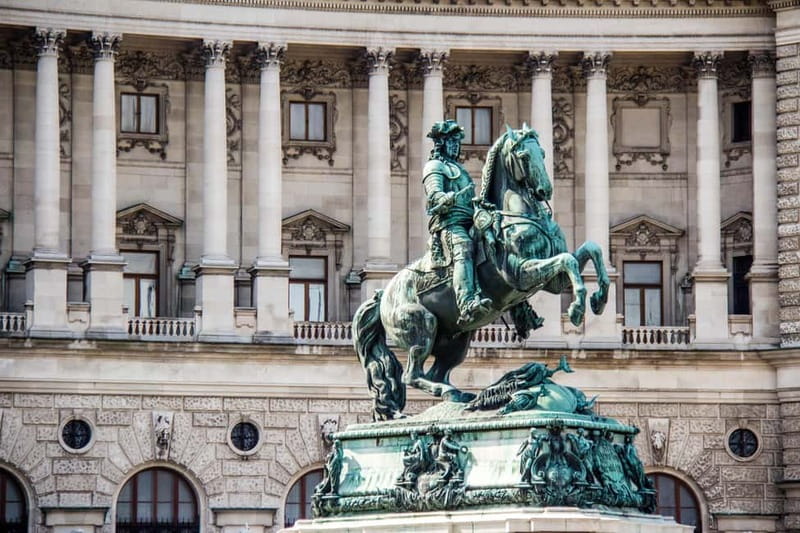
Michaelerplatz is a fine place to begin because it compresses Vienna’s character into one view. Its star-shaped Baroque design gives the space a formal imperial feel, while the buildings around it show how the city kept changing. The contrast between old palace architecture and Loos Haus is part of the point.
You will not spend the whole two hours standing in one place. The guide uses the square as an opening chapter, then moves you into the surrounding streets and courtyards. That keeps the walk active and helps you build a mental picture of the city.
Hofburg Palace and the long Habsburg story
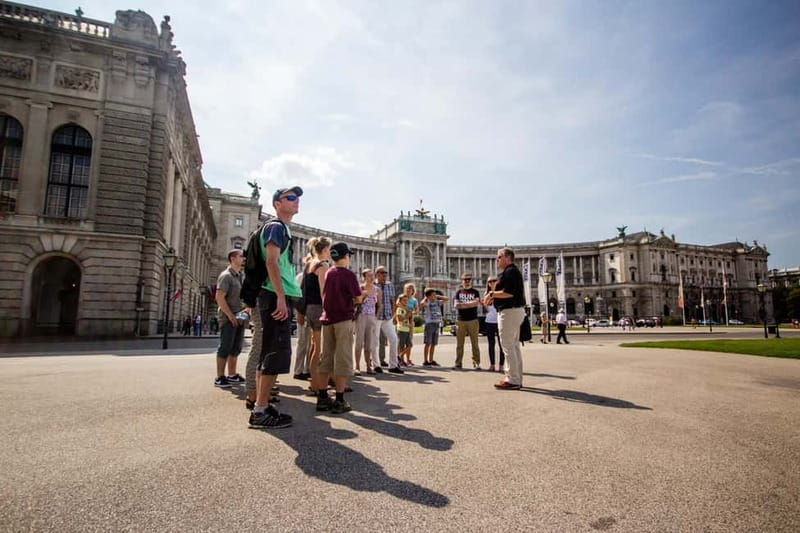
The Hofburg is not one tidy palace built at one time. It was repeatedly extended, rebuilt, and adapted as the Habsburg rulers gained power and needed more space. That makes it an ideal stop for a guide who can explain change over time.
From outside, you see a collection of grand wings and formal spaces rather than a single palace facade. The guide helps connect those parts to the old capital of the Habsburg monarchy and to the wider story of the Holy Roman Empire.
I would pay close attention here, even if you plan to visit a palace interior later. The walk gives you a useful framework before you decide how much time to devote to museums, ceremonial rooms, or other imperial attractions. It also helps explain why Vienna’s center feels so large and official.
The guides do not appear to rely only on dates. Their style, based on the strongest accounts of the tour, mixes political history with personal stories and lighter comments. That approach suits a two-hour orientation. You get enough detail to remember the main players without turning the walk into a lecture.
Josefplatz and Vienna’s imperial stage
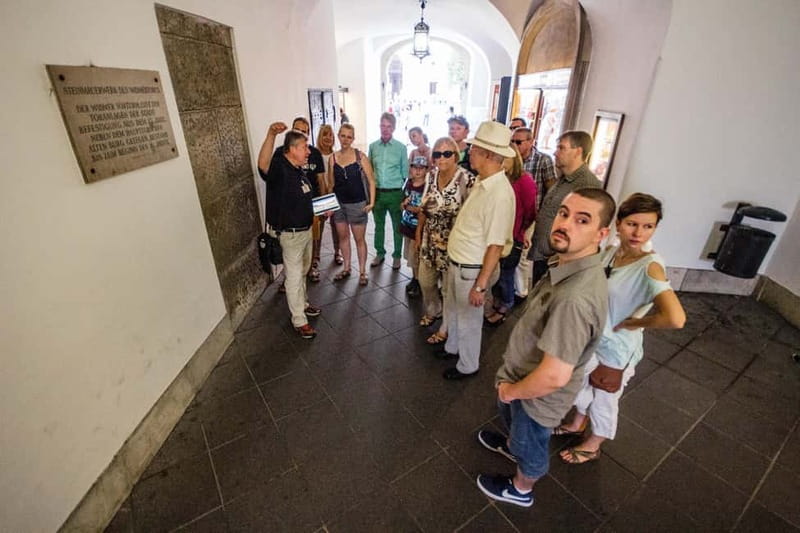
Josefplatz offers another look at the city’s formal side. Here, the guide continues the story of the Habsburgs and the institutions tied to imperial Vienna.
This is one of the places where a good explanation changes what you notice. A square can look merely elegant until you understand who used it, what role it played, and how it fits into the palace complex nearby. The tour aims to supply that missing layer.
Expect a balance of walking, stopping, and talking. One especially useful description of the tour praised its pace, with enough movement to cover ground but enough pauses to absorb the information. That balance is important in a city center where the most interesting details may be above eye level or tucked into a side passage.
Same Alps, a completely different kind of day:
- Vienna: Vivaldi’s Four Seasons Concert in Karlskirche
★ 4.7 · 14,951 reviews - Vienna: Spanish Riding School Training
★ 3.9 · 9,281 reviews - Vienna: Skip-the-cashier-desk-line Giant Ferris Wheel Ride
★ 4.5 · 7,859 reviews - Vienna: Schönbrunn Palace & Gardens Skip-the-Line Tour
★ 4.7 · 7,739 reviews
The State Opera and Albertina Museum
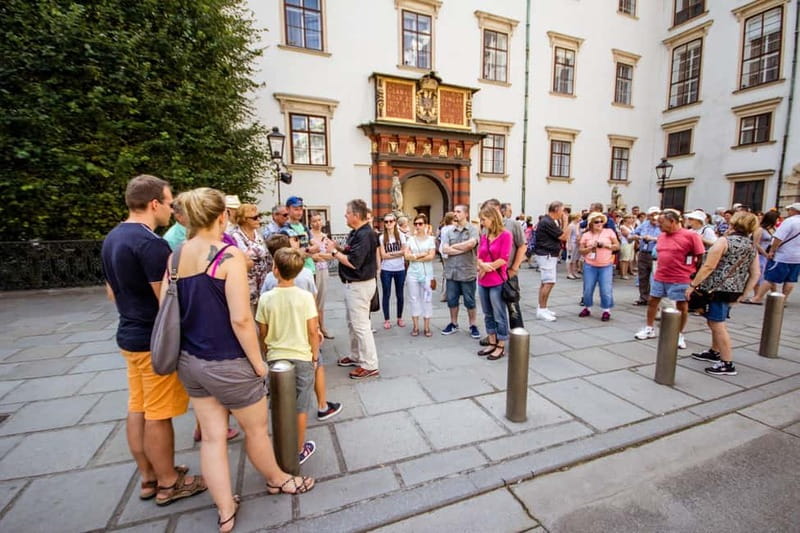
The Vienna State Opera is one of the route’s major public landmarks. You pause for an explanation of the building and its place in the city’s cultural life. The stop adds a different note after the imperial focus of the Hofburg and Josefplatz.
The route also takes in the Albertina Art Museum. The museum is home to one of the world’s important print collections, but this walking tour does not include entrance fees. You see the building from the outside and receive an introduction, then you can decide if the collection deserves a separate visit.
That separation is useful. A two-hour walking tour cannot do justice to a major museum interior, and it is better to know that before you book. Think of the Albertina stop as a prompt for later planning, not a museum visit included in the price.
The route also includes a reference to the diamond stars associated with Sisi. This adds a personal and memorable detail to the imperial story. Instead of hearing only about palaces and rulers, you get a glimpse of the objects, personalities, and popular fascination tied to Vienna’s royal past.
Neuer Markt and the quieter corners
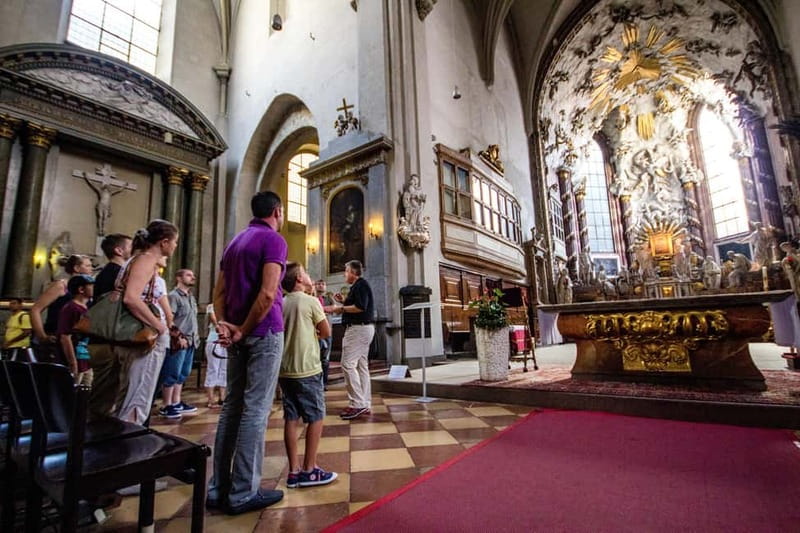
Neuer Markt gives the walk another urban viewpoint. By this point, you have seen the grand palace district and major cultural buildings, so the square helps broaden your sense of central Vienna.
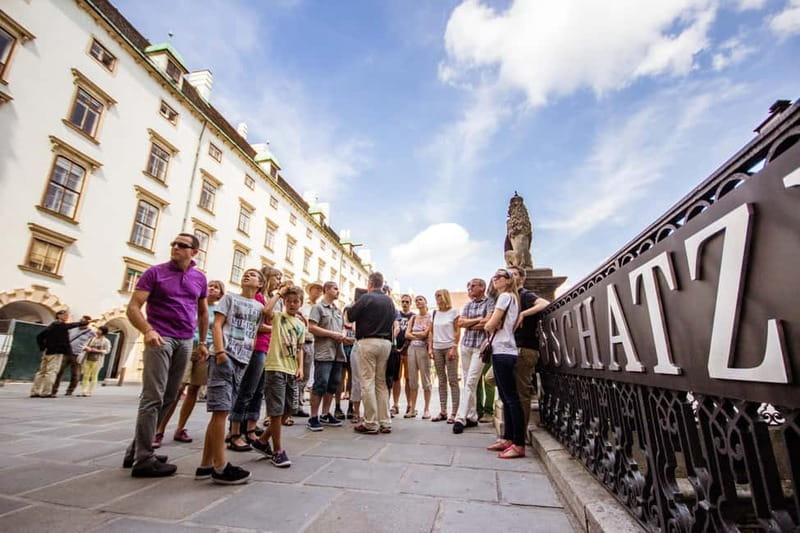
One of the tour’s better features is the chance to see courtyards, alleyways, or less obvious corners that you might not find on your own. These are not guaranteed as a fixed separate stop, but the guides are praised for taking groups into interesting areas away from the standard photo points.
That is where a local guide can earn the fee. You can find the State Opera and St. Stephen’s Cathedral with a map. It is harder to know which entrance, courtyard, or side street is worth a closer look. A guide who adds those details gives you a more complete feel for the center without adding another half-day commitment.
Ending near St. Stephen’s Cathedral
The walk heads toward Stephansplatz and the impressive St. Stephen’s Cathedral. The cathedral is one of Vienna’s defining sights, and it makes a strong finish because you can easily recognize it later as a central reference point.
The published route gives Stephansplatz 8A as a drop-off location, while the meeting information says the activity ends back at the starting point. Since those details do not fully match, confirm the exact finish when booking. Either way, the route keeps you in central Vienna, close to major sights and transport.
The cathedral itself is presented as a major exterior highlight rather than an included interior visit. Entrance fees are not included in the tour price. If you want to go inside, climb a tower, or explore more of the cathedral, plan that separately.
Ending in this area also makes the tour practical for the rest of your day. You can continue sightseeing, return to a favorite stop, or use the guide’s suggestions for places to eat and areas worth exploring further.
What the guides add to the two hours
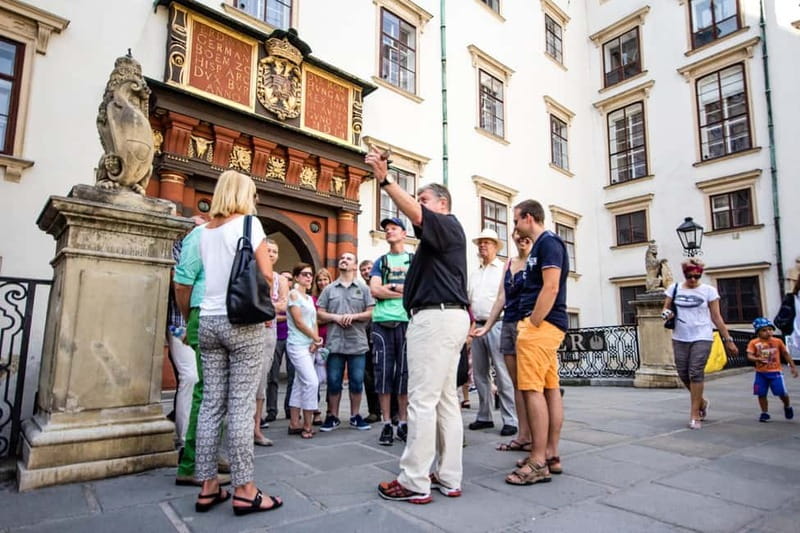
The most highly praised feature is not the route itself. It is the quality of the guiding.
Herbert is repeatedly described as funny, engaging, and strong on Habsburg history. His English is said to be excellent, and his delivery keeps a large amount of information from feeling heavy. Wolfgang is praised for his local familiarity, calm professionalism, humor, and willingness to answer questions. Dorothea is described as especially informative and attentive in a very small group.
You should not assume you can request a particular guide unless the operator confirms it. Still, those names help set a realistic expectation: this experience depends heavily on the individual guide, and the available evidence points to a personal, story-led style rather than a routine march between landmarks.
The guides also tend to stay at the end to offer suggestions. That can be very useful. Ask which sights deserve a longer visit, which stops are easy to skip, and where to focus your limited time. One strong practical benefit is learning not only what to see, but what may not be worth your time.
Price, group size, and walking conditions
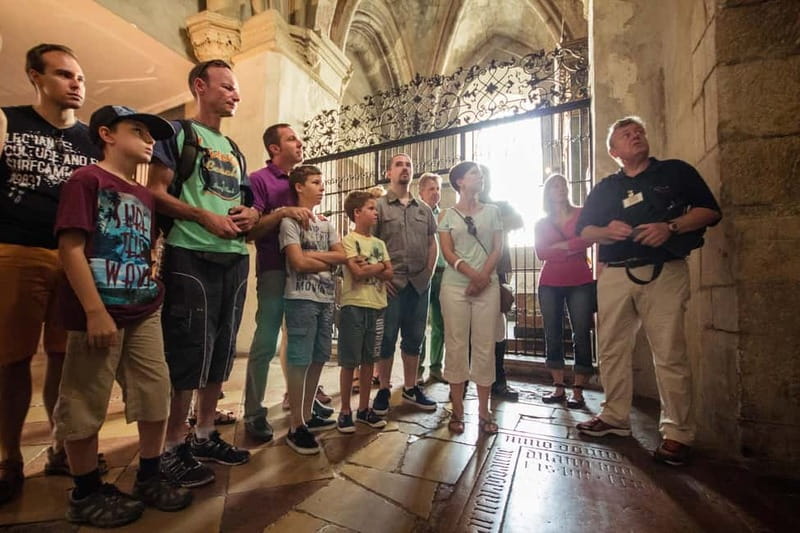
At $33 per person, this is not the cheapest way to look at Vienna’s center, but the price is reasonable if you use it as an orientation. You are paying for a certified local guide, a native speaker, historical interpretation, and advice tailored to the city.
The value is strongest when you schedule it early in your stay. The route introduces the central sights before you tackle them alone. You can then spend later days inside the museums or palaces that interest you most instead of using precious time simply finding your way around.
Small groups are another part of the value. The tour is not designed as a large crowd experience, and groups may be as small as a handful of people. That gives you more room to ask about architecture, history, food, or practical sightseeing.
You need to be ready for a true walking tour. Large bags and luggage are not allowed, audio recording is not allowed, and tours operate in rain or other weather. Wear shoes you can walk in for two hours and bring weather protection. The tour is not suitable for children under 12, wheelchair users, or people with mobility impairments.
There are no entrance fees included, so the price covers guiding and orientation rather than access to the Albertina, Hofburg interiors, State Opera, or cathedral interior. That is not a flaw, but you should budget separately if those sites are on your list.
Who should book this walk
I would choose this tour if you are visiting Vienna for the first time, want a clear introduction to the center, or prefer history explained through stories rather than read from a guidebook. It also suits you if you like small groups and want to ask questions as you go.
It is a good fit for a first morning or afternoon. The two-hour length leaves room for a museum, coffee, lunch, or an independent return to the places that interested you most.
I would think twice if you dislike walking in poor weather, need step-free access, are traveling with a child under 12, or want long interior visits. This is an outdoor overview, not a palace tour or museum admission package.
For the best experience, arrive early at Loos Haus, avoid bringing a large bag, and use the final minutes to ask for recommendations. The tour’s practical strength is that it can shape the rest of your Vienna visit.
Should you book the Vienna walking tour?
Book it if you want a compact, story-filled introduction to Vienna’s old center and value a local guide who can connect the Habsburg past with the city you see today. The route covers the essential landmarks, but the courtyards, side streets, anecdotes, and personal suggestions give it more character than a simple checklist walk.
Skip it if you need accessibility accommodations, dislike outdoor sightseeing in uncertain weather, or plan to spend your time inside museums. For most first-time visitors who can walk comfortably, $33 is a fair price for getting your bearings fast and making the rest of your stay more rewarding.
FAQ
How long is the Vienna sightseeing walking tour?
The tour lasts two hours. Starting times vary, so check availability when booking.
Where does the tour start?
It starts in front of Loos Haus at Michaelerplatz 3, 1010 Vienna.
How do I find the meeting point?
Loos Haus is about a three-minute walk from Herrengasse metro station on the U3 line. The building is between Kohlmarkt and Herrengasse, and Raiffeisenbank appears on the facade.
Which languages are available?
The live tour guide speaks English or German.
What sights are included in the route?
The route includes Michaelerplatz, Hofburg Palace, Josefplatz, Vienna State Opera, Albertina Museum Vienna, Neuer Markt, and St. Stephen’s Cathedral.
Are entrance fees included?
No. Entrance fees are not included in the tour price.
Is the tour suitable for children?
The tour is not suitable for children under 12.
Is the tour wheelchair accessible?
No. It is not suitable for wheelchair users or people with mobility impairments.
Does the tour operate in bad weather?
Yes. Tours take place regardless of weather, so bring suitable clothing and shoes.
Can I cancel the booking?
You can cancel up to 24 hours in advance for a full refund. A reserve-now, pay-later option is also available.
Just added around Vienna
- Ottakringer Brewery tour★ 4.0 · 6 reviews
- New Hofburg Palace Tour House of Habsburg★ 4.5 · 5 reviews
- Private Van & Walk Tour – One Perfect Day in Vienna★ 5.0 · 21 reviews
- True Crime mobile puzzle rally Vienna★ 4.0 · 3 reviews
- Vienna Naschmarket Food Tasting Tour★ 4.0 · 30 reviews
- Vienna Nightlife Experience: Food, Wine, Cocktails & Vibes★ 5.0 · 119 reviews
- Naschmarkt Food Tour★ 4.0 · 14 reviews
- Myth Mozart★ 4.0 · 80 reviews
Walking Tours, compared.
Guided Walking Tour of City Center Highlights
Read our review →
Guided Walking Tour of City Highlights & Hidden Gems
Read our review →
Vienna Historic Center Small Group Walking Tour
Read our review →
Browse the lists this tour appears in