
Reviewed · HISTORICAL TOURS
The Cultural Heritage of Jewish Vienna walking tour
Vienna’s Jewish story is written into the city center, but you can easily walk past its clues without noticing them. This small-group tour of up to 10 people connects the Old Jewish Quarter, the Jewish Museum, Vienna’s oldest synagogue, and the Holocaust memorial with the lives of thinkers such as Sigmund Freud and Gustav Mahler.
I like the personal scale and the chance to ask questions rather than simply follow a script. I also like the historical range, from Jewish life in the 18th and 19th centuries to the Holocaust and modern politics. The main drawback is serious: several people report waiting at the meeting point while the guide failed to arrive, sometimes after a last-minute illness and poor communication.
Key points at a glance
- A central route: Begin at St. Stephen’s Cathedral and finish near Schwedenplatz, a handy point for public transport.
- Jewish Vienna beyond museums: The walk links streets, buildings, meeting places, and memorials with the people who shaped the city.
- Strong guide-led storytelling: Lisa Marie, Ann Marie, and Barbi receive especially warm praise for clear explanations and thoughtful answers.
- A small group matters: With a maximum of 10 people, you should have a better chance to hear clearly and ask questions.
- Museum admission costs extra: The Jewish Museum is part of the route, but the admission ticket is not included.
- Check your confirmation carefully: The tour starts at 3 p.m., lasts about 2 hours 30 minutes overall, and has a troubling record of no-show complaints.
Following Jewish Vienna from St. Stephen’s Cathedral
The meeting point is Saint Stephen’s Cathedral, or Stephansdom, in the heart of Vienna’s first district. This is an easy place to find, but it is also one of the city’s busiest meeting areas, so arrive early and look for the guide rather than assuming a group will be obvious.
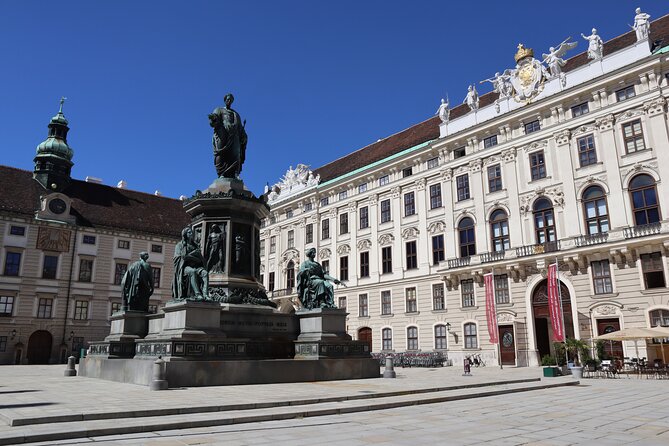
From here, the walk moves toward the Old Jewish Quarter. That short change of scenery is useful. You begin amid Vienna’s grand imperial center, then shift into streets where Jewish life, commerce, worship, scholarship, and persecution shaped the city in less obvious ways.
I like this starting point because it gives you a clear sense of scale. Jewish Vienna is not some far-off suburb reached by a special bus. Much of the story unfolds within the historic center, close to places you may already plan to see.
The guide points out sites connected with the Jewish community and explains how the area changed over several centuries. The emphasis is not only on famous buildings. You should expect attention to the lives of ordinary residents, the way Jewish communities were treated by authorities, and the political forces that altered daily life.
A few more Vienna trips to weigh up
- Vienna: Time Travel and Magic Vienna History Tour
★ 4.6 · 3,879 reviews - Vienna: World War II Historical Walking Tour
★ 4.8 · 1,772 reviews - Vienna Historic Center Small Group Walking Tour
★ 5.0 · 1,746 reviews
The Old Jewish Quarter and Vienna’s oldest synagogue
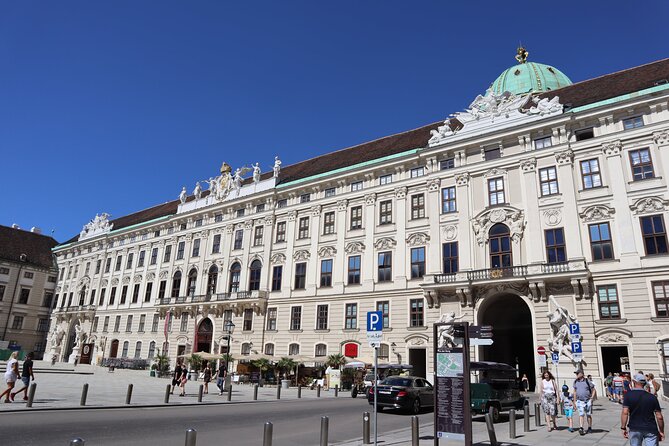
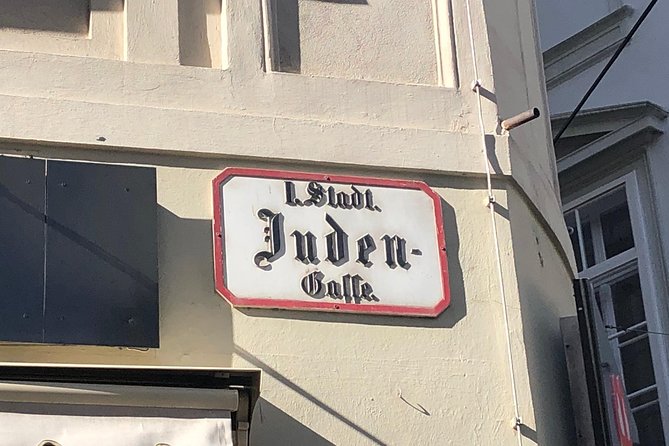
The Old Jewish Quarter is the heart of the walk. Here, streets and buildings become prompts for a wider discussion of Jewish life in Vienna, especially during the 18th and 19th centuries.
The exact amount of time spent at each location depends on the guide and the questions raised by the group. That flexibility is one of the tour’s strengths. Lisa Marie is praised for checking that people understand the subject, while Ann Marie is described as someone who links events across hundreds of years rather than presenting disconnected dates.
You will also see Vienna’s oldest synagogue. The synagogue is an important stop because it shifts the story from public monuments to religious and communal life. Ask questions here if you are curious about how Jewish worship and community institutions functioned in the city. The supplied information does not confirm interior access, so do not book this walk expecting a guaranteed synagogue visit inside.
The route also includes the Jewish Museum area. Admission is not included, which matters when you compare the total cost with a standard sightseeing walk. The museum can add useful context, but this experience is not simply a museum tour. Much of the value comes from hearing how the sites connect to one another while you walk.
Freud, Mahler, and the city’s Jewish intellectual life
One of the more appealing parts of the experience is its attention to Jewish writers, composers, scientists, and thinkers. Sigmund Freud and Gustav Mahler are specifically included, along with places where influential minds met and exchanged ideas.
That focus keeps the tour from becoming only a sequence of tragedies. Jewish Vienna was also a place of music, science, literature, debate, and social change. You hear about people who helped shape the city’s intellectual life, then consider the forces that later excluded, persecuted, and murdered members of that same community.
The balance is important. A tour about Jewish Vienna needs to address antisemitism and the Holocaust directly, but it should not reduce Jewish life to suffering alone. The strongest guide accounts appear to connect cultural achievement with the restrictions and prejudices that surrounded it.
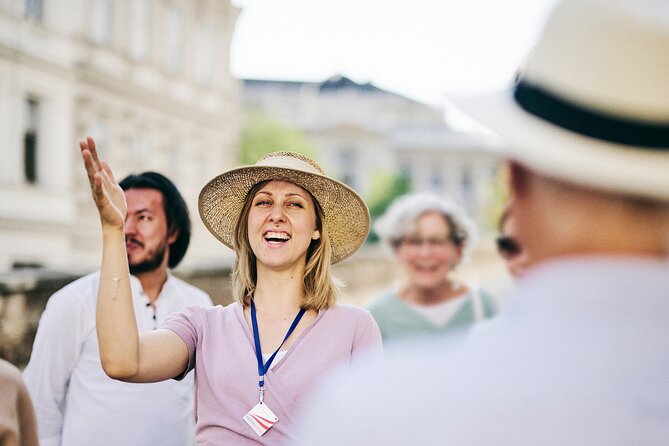
Lisa Marie is repeatedly praised for her storytelling, patience, and ability to answer questions in detail. Barbi is also praised for a kind and responsive approach. The named guides appear to have different styles, but the common thread is a serious command of the subject and a willingness to adapt the discussion to the group.
The Holocaust memorial and the weight of the final stop
The Holocaust memorial is one of the most important stops on the route. It gives the historical discussion a physical focus and brings the tour into the 20th century, when Vienna’s Jewish population suffered catastrophic persecution.
This part may feel solemn, and it should. The guide’s job is not merely to point at the memorial, but to explain how earlier attitudes, laws, and political decisions helped create the conditions for persecution. The information provided does not promise a particular memorial program or ceremony, so expect interpretation rather than a formal presentation.
Some people specifically wanted more discussion of recent history. That is a fair consideration. The tour appears strongest on the 18th and 19th centuries, with the Holocaust and modern politics included but not always given equal weight. If your main interest is postwar Jewish Vienna, ask the guide early in the walk how much time will be devoted to that period.
The route ends on Seitenstettengasse, close to Schwedenplatz. That is practical. You can continue exploring the center, find a café, or use nearby public transport without retracing the entire route.
Same Alps, a completely different kind of day:
- Vienna: Vivaldi’s Four Seasons Concert in Karlskirche
★ 4.7 · 14,951 reviews - Vienna: Spanish Riding School Training
★ 3.9 · 9,281 reviews - Vienna: Skip-the-cashier-desk-line Giant Ferris Wheel Ride
★ 4.5 · 7,859 reviews - Vienna: Schönbrunn Palace & Gardens Skip-the-Line Tour
★ 4.7 · 7,739 reviews
Why a small group improves this kind of walk
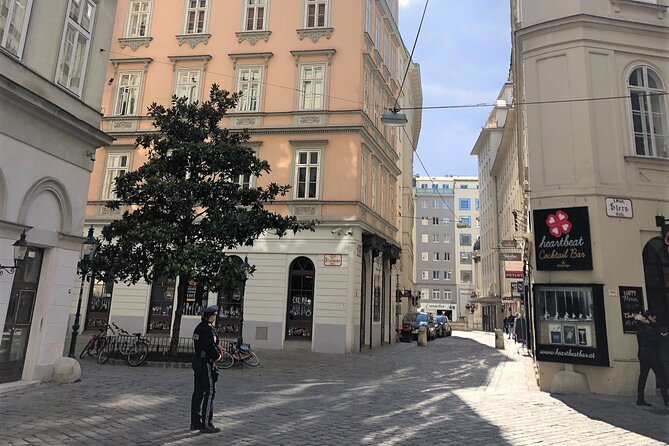
A maximum of 10 people is a good fit for a subject that depends on conversation. In a large group, a guide may need to keep moving and simplify difficult points. With fewer people, you have more room to ask about family history, religious customs, Austrian politics, or a particular person mentioned along the way.
I would especially value the small size at the memorial and synagogue. These are places where a quiet explanation works better than a loud group lecture. It also makes it easier for the guide to check whether everyone is following the story.
The tradeoff is that a small-group product depends heavily on the guide actually turning up. A group of three or four can feel wonderfully personal when everything works. If one person is sick and the communication system fails, the same small scale can leave you standing alone at the cathedral with no clear answer.
The biggest concern: repeated no-show problems
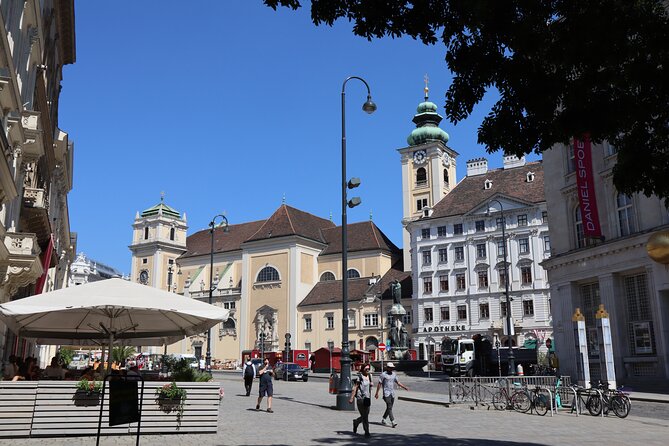
I would not ignore the operational problems attached to this experience. Several people report that the guide did not appear, even after waiting 15 to 30 minutes. In some cases, phone calls and messages went unanswered. The provider explained that a guide became ill at the last minute and that communication problems prevented every booking party from being contacted.
That explanation may be genuine, but it does not erase the inconvenience. You are giving up a fixed afternoon in Vienna, and a missed walking tour can disrupt museum plans, meals, and transport.
If you book, take a few sensible precautions:
- Confirm the starting time and location on the day of the walk.
- Arrive at Saint Stephen’s Cathedral a little before 3 p.m.
- Keep the contact number from your booking confirmation available.
- If the guide is absent, document your arrival and attempts to make contact.
- Do not wait indefinitely without contacting the booking platform or provider.
This is not a minor complaint appearing once in an otherwise smooth record. The tour also has a mixed overall score of 3.9 from 30 ratings, largely because the no-show incidents pull down an otherwise very positive set of comments about the guiding itself.
Is $52.93 a fair price?
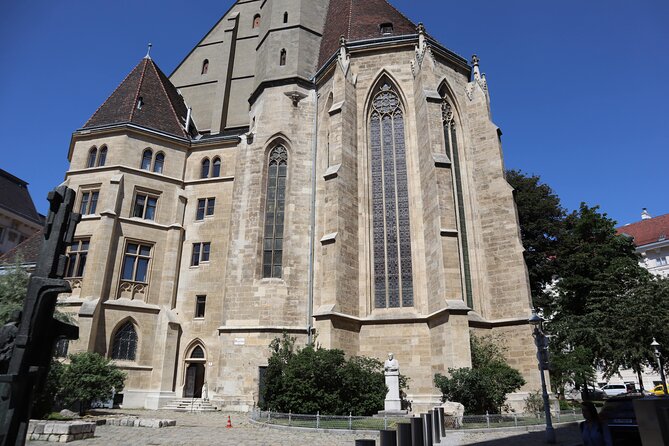
At $52.93 per person, this is not the cheapest way to walk around central Vienna. You are paying for a licensed guide, a focused subject, a small group, and roughly two to two and a half hours of explanation.
For me, the price can make sense if you care about context. A self-guided walk may show you the same streets and memorial, but it will not necessarily explain how Jewish life developed across centuries or how Freud, Mahler, and other figures fit into the city’s social world.
The value is weaker if you mainly want entrance access. Museum admission is not included, and the information does not confirm entry into the synagogue. In that case, you are paying chiefly for the guide and the route, not for bundled tickets.
The duration also deserves attention. The experience is described as approximately 2 hours 30 minutes, while the route details refer to a two-hour walking segment. Allow some flexibility, especially if the group asks many questions. One guide reportedly continued well beyond the expected finish because the discussion was so active, but you should not build a tight appointment immediately afterward.
Who will get the most from this tour?
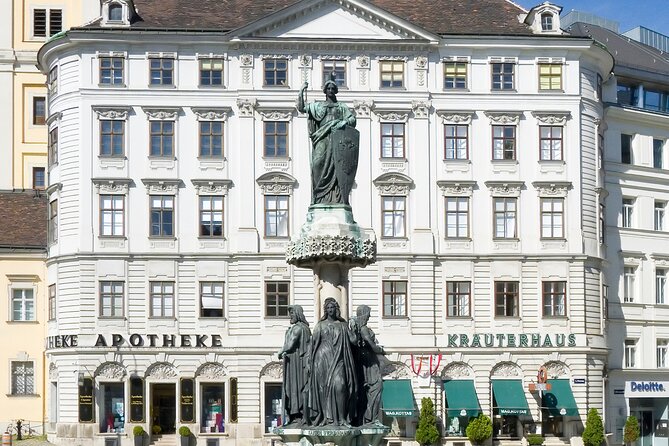
I would recommend this walk to anyone who wants more than Vienna’s palaces, cafés, and classical music branding. You do not need to be Jewish. The subject is presented as part of Vienna’s wider cultural and political story, and the guides are praised for filling in background without assuming prior knowledge.
It should suit you particularly well if you enjoy:
- Social and cultural history rather than only famous sights
- Guided discussion and time for questions
- Walking through central Vienna at an unhurried pace
- Learning about the links between Jewish life, music, science, and literature
- A serious treatment of antisemitism, persecution, and memory
It may be less suitable if you want a fast photo stop at several landmarks, guaranteed interior access, or a tour focused mainly on the period after 1945. It is also not ideal for an afternoon with no room for delay, given the reported communication failures and uncertain finish time.
The activity is offered in English. Service animals are allowed, the route is near public transportation, and the information says most people can participate. No detailed accessibility notes are provided, so if you have specific mobility needs, ask before booking rather than relying on the general statement.
What the best guide can add
The guide is the deciding factor here. The most praised hosts are Lisa Marie, Ann Marie, and Barbi, with Lisa Marie named most often. Descriptions of Lisa Marie emphasize strong preparation, passion, patience, and an ability to answer every question in detail. Ann Marie is praised for explaining how events developed over long periods, while Barbi is described as warm and attentive.
That matters because Jewish Viennese history is not a simple timeline. The guide must explain changes in law, social status, religious life, political power, cultural achievement, and persecution without turning the walk into a list of names.
You should expect a teaching-style tour rather than a theatrical performance. Audiovisual material may be used, and the guide may pause for questions or show images that help explain the sites. The strongest version of the tour seems to come alive when the group engages.
Booking and cancellation details
The walk begins at 3 p.m. at Saint Stephen’s Cathedral in Vienna’s 1010 district and ends on Seitenstettengasse near Schwedenplatz. It is offered in English with a mobile ticket, and confirmation is sent when you book.
You can cancel for a full refund up to 24 hours before the start time. Changes or cancellations made less than 24 hours before the experience are not accepted for a refund, and the cut-off uses Vienna local time.
I would book this only after checking the current date, meeting point, and contact details. The historical content appears worthwhile, but the provider needs to deliver the basic service reliably.
Should you book the Cultural Heritage of Jewish Vienna walk?
Book it if you want a focused, thoughtful introduction to Jewish Vienna and value a guide who can connect streets and buildings with culture, politics, and personal stories. The small group, central route, and strong praise for Lisa Marie, Ann Marie, and Barbi make this a potentially rewarding afternoon.
I would skip it if you need a guaranteed, tightly timed activity or if museum entry and synagogue access are your main goals. The no-show record is the serious caution here. For the best chance of a good experience, keep your schedule flexible, verify the tour before setting out, and treat the guide-led interpretation as the main product.
FAQ
Where does the Cultural Heritage of Jewish Vienna tour begin?
The tour begins at Saint Stephen’s Cathedral, Dom zu St. Stephan, in Vienna’s 1010 district.
Where does the tour end?
The walk ends on Seitenstettengasse, very close to public transportation at Schwedenplatz.
What time does the tour start?
The stated start time is 3 p.m.
How long does the tour last?
The experience lasts approximately 2 hours 30 minutes. The route details describe about two hours of walking, so allow extra time for questions and discussion.
Is admission to the Jewish Museum included?
No. Admission to the Jewish Museum is not included in the tour price.
How many people can join the tour?
The group has a maximum of 10 participants.
Just added around Vienna
- Ottakringer Brewery tour★ 4.0 · 6 reviews
- New Hofburg Palace Tour House of Habsburg★ 4.5 · 5 reviews
- Private Van & Walk Tour – One Perfect Day in Vienna★ 5.0 · 21 reviews
- True Crime mobile puzzle rally Vienna★ 4.0 · 3 reviews
- Vienna Naschmarket Food Tasting Tour★ 4.0 · 30 reviews
- Vienna Nightlife Experience: Food, Wine, Cocktails & Vibes★ 5.0 · 119 reviews
- Myth Mozart★ 4.0 · 80 reviews
- ( Night Tour ) With Private Guide + wine or prosecco★ 4.0 · 12 reviews
Historical Tours, compared.
Vienna Historic Center Small Group Walking Tour
Read our review →
Skip-the-Line Schonbrunn Palace Guided Tour and Vienna Historical City Tour
Read our review →
Vienna Mozart Concert in Historical Costumes at the Musikverein
Read our review →
Browse the lists this tour appears in