
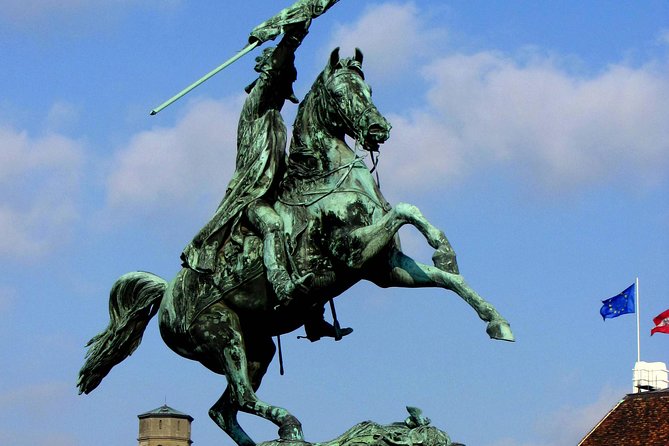
Reviewed · HISTORICAL TOURS
Private Vienna Highlights History Walk — WWII and Post War Vienna
Vienna’s grandest sights tell a darker story on this private walk. From the Belvedere terrace, where the 1955 State Treaty restored Austrian sovereignty, to Heldenplatz, where Hitler announced the Anschluss in 1938, you follow the city’s shift from empire to dictatorship, occupation, and republic. The WWII and postwar focus gives familiar monuments a sharper meaning.
I like the private format, which lets your guide adjust the pace and answer your questions instead of marching a large group from one photo stop to the next. I also like the practical hotel pickup and the chance to learn Vienna’s trams and subway with a local guide. The main consideration is that three hours is a brisk introduction, and public transport costs, meals, and hotel drop-off are not included.
Key points at a glance
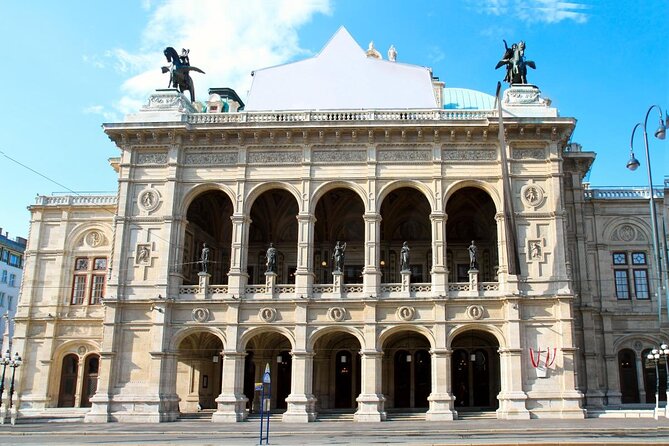
- Belvedere begins the story: See the palace terrace connected with Austria’s return to independence in 1955.
- A serious WWII focus: Visit the Soviet War Memorial, Heldenplatz, the Flak tower near MuseumsQuartier, and Vienna’s wartime scars.
- Private and adjustable: Your guide can shape the walk around your interests and previous sightseeing.
- Major sights without entry fees: The route includes the exteriors and public spaces around Belvedere, the Hofburg, Judenplatz, and St. Stephen’s Cathedral.
- Public transport is part of the experience: A short tram ride helps link the southern center with the imperial core.
- Best for a first visit or short stay: You get a wide city orientation in about three hours, but not a full museum visit.
Why this Vienna walk has a clear point of view
Many city walks gather around imperial façades, Mozart statues, and coffeehouse legends. This one asks a more useful question: what happened to Vienna when the empire disappeared, the Nazis took power, the city was bombed, and the Allies divided it after 1945?
That theme links places that can otherwise feel disconnected. The Belvedere is not simply a pretty palace. Heldenplatz is not just a broad ceremonial square. The Soviet memorial is not only a monument for photographs. Each stop shows how Vienna uses public spaces to remember power, defeat, liberation, guilt, and renewal.
Your guide is licensed and the tour is private for your group, with a maximum of 10 people. The company’s guides include Walter Schindl, Brigitte, Alex, Andrea, Hannes, and Alexander Stollhof. Specific guide assignment can vary, but the strongest praise centers on guides who combine clear historical explanation with local advice and an easy conversational manner.
Walter is especially useful if you want help understanding Vienna’s transport system. He has been described as a local who can handle the subway, trams, and trains while adjusting the route to what you have already seen. Brigitte is noted for thoughtful local help, including restaurant suggestions and practical assistance with getting back to a hotel. Those are small touches, but they matter on a short visit.
A few more Vienna trips to weigh up
- Vienna: Time Travel and Magic Vienna History Tour
★ 4.6 · 3,879 reviews - Vienna: World War II Historical Walking Tour
★ 4.8 · 1,772 reviews - Vienna Historic Center Small Group Walking Tour
★ 5.0 · 1,746 reviews
Belvedere: from Prince Eugene to the Second Republic
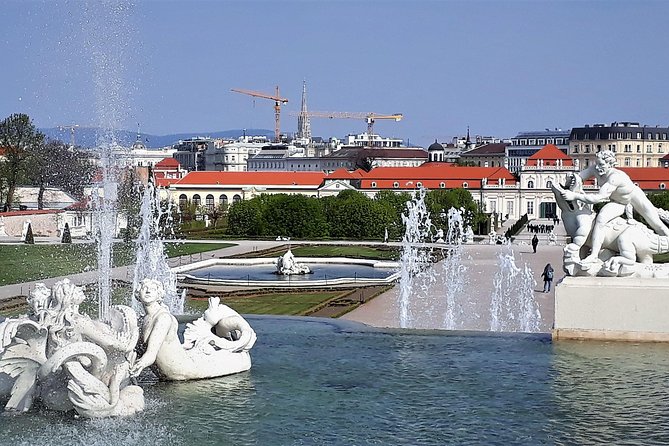
The tour starts at the Upper Belvedere, where you get one of the best broad views across Vienna. Prince Eugene of Savoy built the palace complex as a display of military success and aristocratic power. He never ruled Austria, but his residence projects the confidence of an age when commanders, emperors, and court ceremony shaped the city.
Your guide uses this opening view to explain a later turning point. In 1955, the Austrian State Treaty was signed at the Belvedere, ending the Allied occupation and restoring Austria’s independence. The location gives the story a satisfying visual beginning: a palace built for imperial ambition becomes linked with the birth of the Second Republic.
Allow about 20 minutes here. The stop is free, but this walk does not include entry to the Upper Belvedere museum. If you want to see its art collection, including the famous Klimt works, plan a separate visit. That is an important distinction. This experience uses the palace as a historical setting, not as a full museum tour.
The descent through the Belvedere Gardens adds another layer. The Baroque axis, with its ordered paths and formal design, was meant to express rank and control. Your guide can read the gardens as political theater, showing how architecture and planting once communicated who had power and who did not.
Schwarzenbergplatz and the difficult meaning of liberation
A short move brings you to Schwarzenbergplatz and the Soviet War Memorial. The monument honors Red Army soldiers who died in the 1945 battle for Vienna, when Soviet forces helped end Nazi rule in the city.
This is one of the tour’s most useful stops because the memory is not simple. Soviet troops liberated Vienna from the Nazis, but the postwar Soviet presence also meant occupation and political pressure. The monument therefore carries two meanings at once: gratitude for military defeat of the Nazi regime and unease about what followed.
The nearby Hochstrahlbrunnen and French Embassy provide a change of tone. The fountain celebrates Vienna’s alpine water supply, while the embassy supplies an elegant architectural counterpoint. The guide uses the area to point out how Allied powers left very different marks on the city.
This part also helps explain why the tour is not a strict walk from door to door. A short tram ride along the Ringstraße connects the southern part of central Vienna with the imperial center. The tram is practical, saves time, and lets you see the grand 19th-century boulevard as it was intended, a showcase for the monarchy’s institutions and culture.
Burggarten and the story behind a famous footnote
At Burggarten, Mozart’s statue provides the familiar Vienna image. The garden once belonged to the imperial court, and its location near the Hofburg makes the old relationship between music, monarchy, and public ceremony easy to picture.
Just nearby is the Academy of Fine Arts, associated with the rejection of a young Adolf Hitler. Your guide can place that fact in proportion. It is an intriguing footnote, but it should not be mistaken for a simple explanation of the crimes that followed. The tour works best when it uses such details to open discussion rather than turn them into sensational trivia.
You have only about five minutes at this stop, so expect a quick orientation and a photograph rather than a long visit. That short timing reflects the tour’s overall purpose: it gives you a connected view of Vienna instead of spending half the morning at one location.
Same Alps, a completely different kind of day:
- Vienna: Vivaldi’s Four Seasons Concert in Karlskirche
★ 4.7 · 14,951 reviews - Vienna: Spanish Riding School Training
★ 3.9 · 9,281 reviews - Vienna: Skip-the-cashier-desk-line Giant Ferris Wheel Ride
★ 4.5 · 7,859 reviews - Vienna: Schönbrunn Palace & Gardens Skip-the-Line Tour
★ 4.7 · 7,739 reviews
MuseumsQuartier and the concrete Flak tower
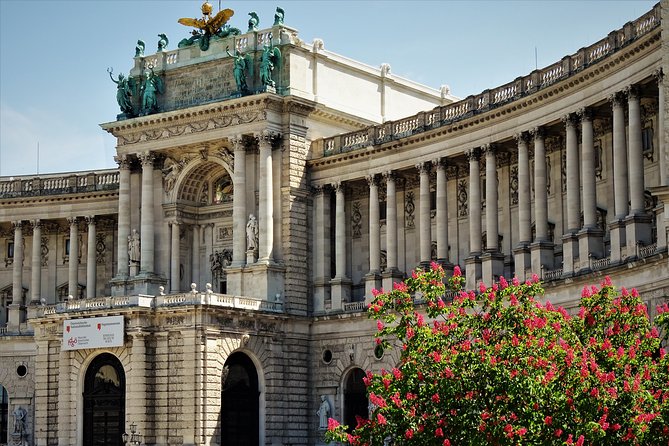
Maria Theresa’s monument dominates the square between the twin museums. The setting is one of Vienna’s grandest examples of imperial planning, with culture and state power arranged on a monumental scale.
Then look upward and around the edges of the district for one of Vienna’s Flak towers. These enormous concrete anti-aircraft towers were built during the Nazi period and remain difficult to remove. They are blunt, heavy reminders of the city’s militarized final years.
The contrast is striking. Maria Theresa’s monument represents dynastic authority and 18th-century statecraft. The Flak tower represents total war and the Nazi regime’s fear of air attack. Together, they show how different eras can occupy the same few city blocks.
The stop takes about 10 minutes. It is mainly an outdoor explanation, so you will not be entering a museum here. If you care especially about wartime architecture, ask your guide to give this stop a little more time, since the private format allows some adjustment.
Heldenplatz and Vienna’s most charged public square
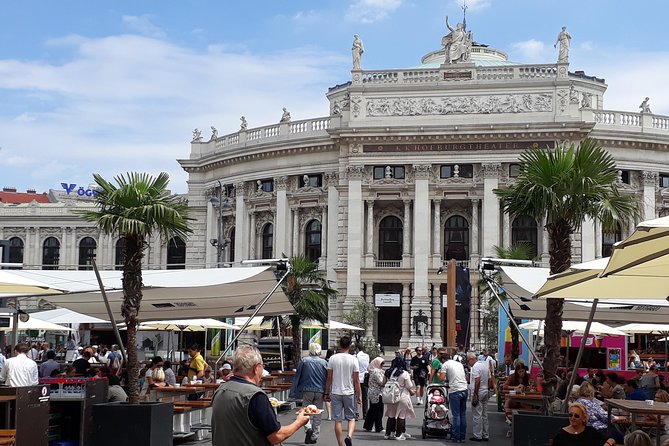
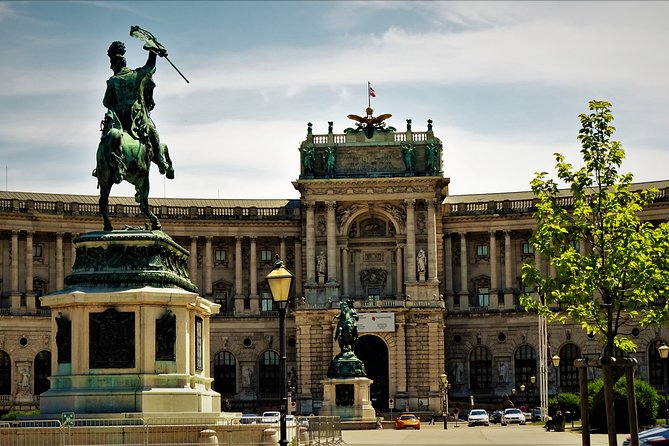
Heldenplatz is the emotional center of the route. It was designed for imperial ceremony and military display, but in March 1938 it became the setting for Hitler’s speech announcing the Anschluss, Nazi Germany’s annexation of Austria.
The broad open space makes the event easier to grasp. This was not an obscure indoor meeting. It was a public performance of power, staged before an enormous crowd and framed by the Hofburg’s imperial architecture.
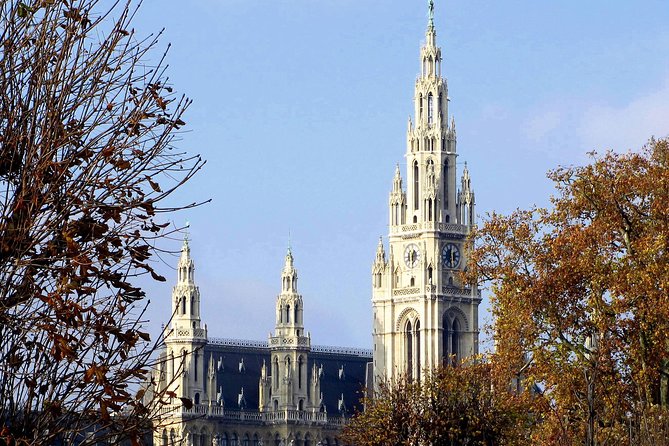
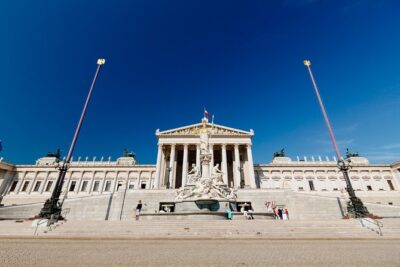
Today, the surrounding buildings create a wide view of Austrian public life: the parliament, city hall, museums, and Burgtheater are all part of the city’s civic and cultural center. The guide can help you compare the square’s imperial symbolism with its later use by the Nazi regime and its present role in a democratic capital.
Plan on about 15 minutes here. I would not rush this stop. It is one of the places where a guide’s ability to explain context matters more than simply naming buildings.
The Hofburg and the long road from emperor to president
The Hofburg is less a single palace than a city of courtyards, wings, and institutions built over roughly seven centuries. It served dukes, emperors, and the Habsburg court before becoming part of the modern Austrian state.
The tour uses the complex to trace the change from monarchy to republic. The same setting that once concentrated imperial authority now includes the office of Austria’s federal president. That change is easy to miss if you only photograph the grand entrance and move on.
You will spend about 15 minutes here, usually outdoors. The walk does not include admission to the Imperial Apartments, the Sisi Museum, or the Spanish Riding School. If one of those is high on your list, arrange a separate visit and use this tour to understand the wider setting first.
As you continue, imperial façades meet churches, shops, and everyday city life. That mix is part of Vienna’s appeal. Ceremony, religion, commerce, music, and government remain close together, often within the same few minutes on foot.
Judenplatz and the Nameless Library
Judenplatz is the quietest and most essential stop. The square occupies the site of Vienna’s medieval Jewish community, which was destroyed in 1421. The later memorial, known as the Nameless Library, commemorates the 65,000 Austrian Jews murdered during the Holocaust.
The memorial’s closed library form suggests shelves of books turned outward, with no readable titles or final volume. It is a restrained design, and the lack of spectacle makes the stop more powerful. Your guide can connect the medieval destruction with the Nazi-era persecution without treating the two events as interchangeable.
You have about 15 minutes here. Give the memorial your attention, and expect a sober pause rather than a light sightseeing moment. This is also a place where a private guide is useful because you can ask questions discreetly and spend a little longer if the subject matters to you.
The Plague Column and the final approach to St. Stephen’s
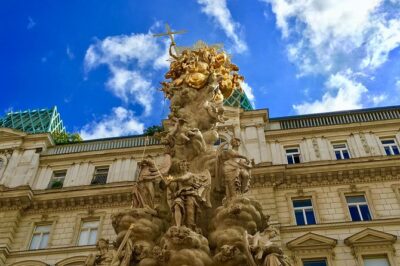
The Pestsäule, or Plague Column, brings the route back to an earlier crisis. This Baroque monument uses sculpture and religious imagery to express Vienna’s recovery from plague and the Counter-Reformation’s effort to shape public belief.
It is a short five-minute stop, but it helps broaden the walk beyond WWII. Vienna has faced repeated upheaval, and each era used public art to explain suffering, authority, and recovery in its own language.
The final stop is St. Stephen’s Cathedral, the Gothic heart of central Vienna. Its roof and tower are among the city’s most recognizable sights, but the tour focuses on its wartime damage. In April 1945, parts of the cathedral burned after looters set fire to nearby shops. The disaster came at the end of a war that had already inflicted enormous damage on the city.
You will spend about 10 minutes here. The experience does not include cathedral admission, tower access, or a detailed interior tour. Still, ending at St. Stephen’s makes sense. The cathedral connects medieval Vienna with the modern city, and its wartime scars remind you that famous landmarks are not separate from political violence.
Three hours, a private guide, and the real value
The price is $342.40 per group of up to 10 people. For one person, that is expensive. For two, it is still a premium. For a full group of 8 to 10, the cost becomes much more reasonable, especially compared with booking several separate private services.
You are paying mainly for the guide’s time, route planning, hotel pickup, and the ability to shape the experience around your interests. The main sights on the route are public spaces, so admission savings are not the point. The value comes from the connections between them.
The walk begins at 9:30 a.m. or 2 p.m. Hotel, vacation rental, train station, and selected cruise-pier pickup are offered. Hotel drop-off is not included, and public transport fares are extra. If you start at a train station or pier, confirm the exact meeting point in advance, particularly for the Handelskai location used by A-Rosa passengers.
You need moderate physical fitness. Expect several hours of walking, standing, stairs or uneven surfaces in places, and a tram ride. Wear practical shoes and dress for Vienna’s weather. One account describes getting very wet on a rainy day, a useful reminder that much of the experience happens outdoors.
The booking pattern suggests many people reserve around 47 days ahead. That does not mean you must book that early, but it is sensible if you need a particular afternoon, guide, or pickup arrangement. Confirmation is sent within 48 hours, subject to availability.
Free cancellation is available until 24 hours before the start time. Changes or cancellations inside that window are not accepted for a refund. Service animals are allowed, while pets may not be permitted in some places on the route.
Who will get the most from this walk?
I would choose this experience if you are visiting Vienna for the first time, have only a day or two, or want the city’s 20th-century story placed beside its imperial sights. It also suits families or friends who want a private pace and a guide who can respond to questions.
It is particularly helpful after arriving from Bratislava by train or during a cruise stop, since the pickup arrangements and compact route make the morning or afternoon count. Walter’s ability to explain public transport is a bonus if Vienna’s subway and tram network feels confusing.
I would not choose it as your only Vienna experience if you want long interior visits at the Belvedere, Hofburg museums, or St. Stephen’s Cathedral. Nor is it the best fit if you prefer a slow architectural walk with little discussion of war, dictatorship, and the Holocaust.
The strongest qualities are clear: guides such as Walter and Brigitte are praised for warmth, humor, local suggestions, and the ability to adjust the route. The one caution is that personal style can vary by guide. One booking account describes a poor phone exchange before the tour, so use written confirmation and clearly identify your booking when arranging details.
Should you book it?
Book this private walk if you want Vienna explained as a living political city, not just a collection of palaces. The sequence from Belvedere to Schwarzenbergplatz, Heldenplatz, Judenplatz, and St. Stephen’s gives you a strong framework for exploring on your own afterward.
The price makes the most sense for a group, and the three-hour length works best as an orientation rather than a complete day of sightseeing. For a first visit, a short stay, or a group that values flexible guiding and serious historical context, this is a thoughtful choice. If museums and interiors are your priority, use it as a starting point and reserve separate time for the buildings themselves.
FAQ
How long does the Vienna history walk last?
The experience lasts approximately three hours.
What time does the tour start?
The available start times are 9:30 a.m. and 2 p.m.
Is hotel pickup included?
Yes. Pickup is offered from hotels and vacation rentals in Vienna, as well as Vienna Central Station, Vienna West Station, and the Reichsbrücke pier. Other meeting points may be arranged.
Is hotel drop-off included?
No. Hotel drop-off is not included.
Is the tour private?
Yes. Only your group participates, with up to 10 people.
What language is offered?
The tour is offered in English.
Are admission tickets included?
The listed stops have no admission charge, but the experience does not include entry to attractions such as the Belvedere museum, the Hofburg interiors, or paid areas of St. Stephen’s Cathedral.
Does the tour use public transportation?
Yes. The route includes a short tram ride, and the guide can help you navigate Vienna’s public transport. Fares to and from attractions are not included.
Can I cancel for a full refund?
Yes, if you cancel at least 24 hours before the local start time. Cancellations or changes made less than 24 hours before the experience are not accepted for a refund.
Just added around Vienna
- Ottakringer Brewery tour★ 4.0 · 6 reviews
- New Hofburg Palace Tour House of Habsburg★ 4.5 · 5 reviews
- Private Van & Walk Tour – One Perfect Day in Vienna★ 5.0 · 21 reviews
- True Crime mobile puzzle rally Vienna★ 4.0 · 3 reviews
- Vienna Naschmarket Food Tasting Tour★ 4.0 · 30 reviews
- Vienna Nightlife Experience: Food, Wine, Cocktails & Vibes★ 5.0 · 119 reviews
- Naschmarkt Food Tour★ 4.0 · 14 reviews
- Myth Mozart★ 4.0 · 80 reviews
Historical Tours, compared.
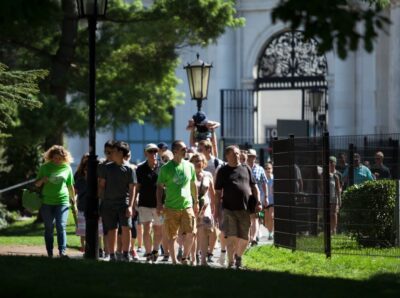
Vienna Historic Center Small Group Walking Tour
Read our review →
Skip-the-Line Schonbrunn Palace Guided Tour and Vienna Historical City Tour
Read our review →
Vienna Mozart Concert in Historical Costumes at the Musikverein
Read our review →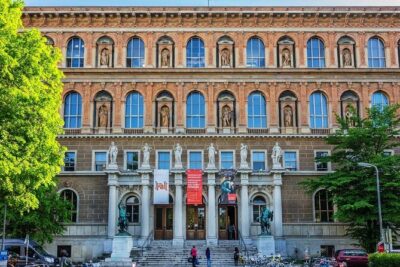
Browse the lists this tour appears in