
Reviewed · WALKING TOURS
Private Vienna Evening Walk — Orientation for Your First Night
Vienna reveals its best opening chapter on foot: palace courtyards, grand squares, Gothic stonework, and café-lined streets all sit close together in the historic center. This private evening walk helps you get oriented before you tackle museums, concerts, and day trips.
I like the door-to-door pickup within Vienna’s city limits, and I like the way guides such as Brigitte, Walter, and Hannes adjust the route to your interests. The chance to step inside St. Stephen’s Cathedral is another strong point.
The main consideration is cost. At $319.30 for up to 10 people, it can be a good deal for a family or group, but it is a serious outlay for one or two people. The walk also requires moderate fitness and includes no food, drinks, or transport.
Key points at a glance
- Private route from your accommodation: Meet your licensed Austria Guide at a hotel, vacation rental, or other city-center lodging.
- A useful first-night overview: In about 2 hours and 30 minutes, you see major sights before deciding where to return later.
- Personal guides with flexible styles: Brigitte, Walter, and Hannes are named guides associated with this experience, and the route can shift with your interests.
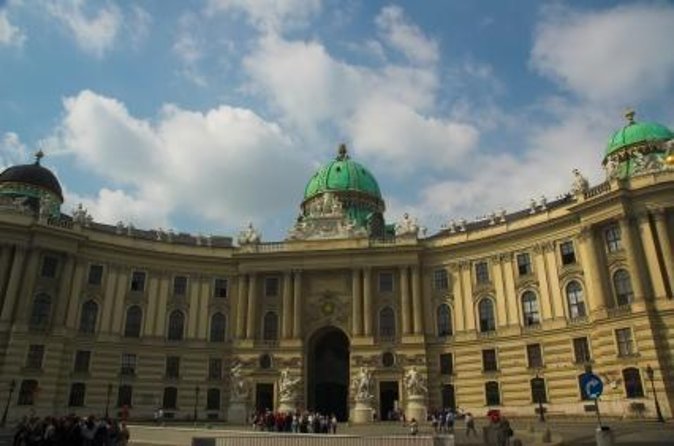
- Imperial Vienna in one walk: Explore Heldenplatz, the Hofburg courtyards, the People’s Garden, and nearby grand promenades.
- A Gothic finish: The walk usually reaches St. Stephen’s Cathedral, often open until late.
- Good practical advice: Guides can suggest further activities and restaurants, and may walk you to a local restaurant at the end.
Why this works well on your first evening
A first night in Vienna can feel oddly grand and slightly confusing. The streets are orderly, the buildings are huge, and many landmarks sit behind formal names that take time to sort out. This walk gives you a mental map before you begin spending serious time inside museums and palaces.
You are not simply ticking off landmarks from a vehicle. You move through the center with a private guide who can pause when you have a question or change the emphasis if you care more about architecture, music, politics, or café life. That flexibility matters in a small private group.
The timing is also sensible. The walk is designed as an introduction rather than a full historical tour, so you get a broad sweep instead of a long lecture at one site. One group covered churches, Mozart’s former apartment building, the Hofburg, the Opera House, the Plague Column, and several squares in 2.5 hours.
That pace means you should not expect detailed interior visits at every stop. Think of this as your first orientation, with enough information to help you choose what deserves a longer visit later.
A few more Vienna trips to weigh up
- Vienna: Guided Walking Tour of City Center Highlights
★ 4.7 · 4,989 reviews - Vienna: Vienna Central Cemetery Guided Walking Tour
★ 4.8 · 3,307 reviews - Vienna: Guided Walking Tour of City Highlights & Hidden Gems
★ 4.9 · 2,180 reviews
Rathausplatz and Vienna’s public stage
Rathausplatz is an easy place to begin understanding Vienna’s civic life. The City Hall forms a dramatic backdrop for seasonal events, including summer film nights, Christmas markets, and a large outdoor ice rink. Your stop here lasts about 10 minutes, with no admission charge.
The square shows how Vienna turns formal architecture into public space. It is grand, but not only for looking at. Depending on the season, the square may be used for food stalls, performances, films, or skating.
From here, the walk moves toward the Vienna Opera House and Café Landtmann. The opera is Austria’s most prestigious stage, while Café Landtmann has long been tied to Vienna’s political and cultural world. It is also associated with Sigmund Freud, who favored the café.
You may not enter either place on this short walk, so the value is in the setting and the explanation. Your guide can help you understand how opera, coffeehouses, and public life fit together in Vienna. If you want a performance, café stop, or interior visit later, this is a useful moment to ask for advice.
The People’s Garden and Heldenplatz
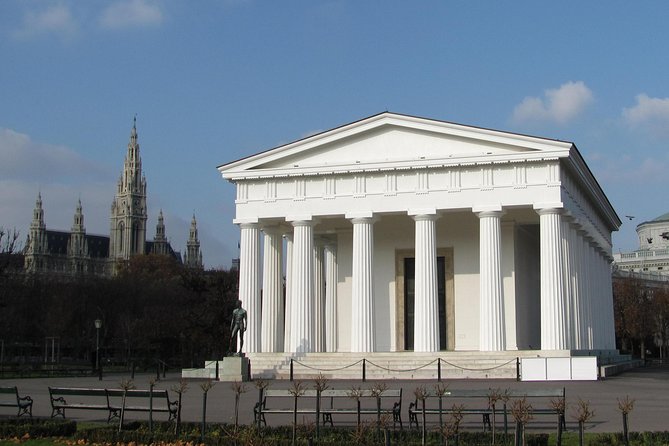
The People’s Garden offers a welcome pause from the formal squares. Its rose garden sits beside the classical Theseus Temple, creating a quiet pocket near the Hofburg. It is a good reminder that central Vienna is not all ceremonial stone and palace walls.
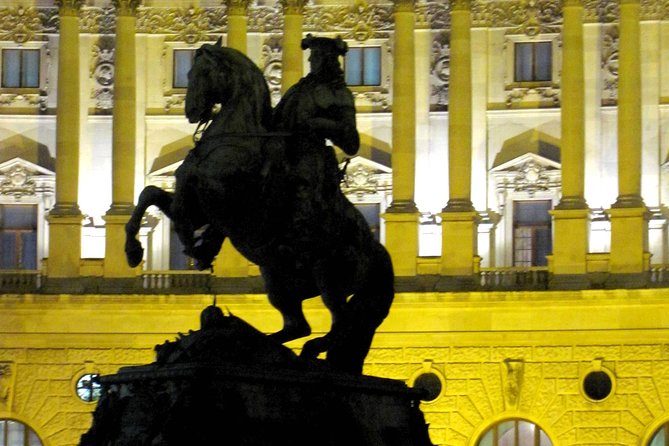
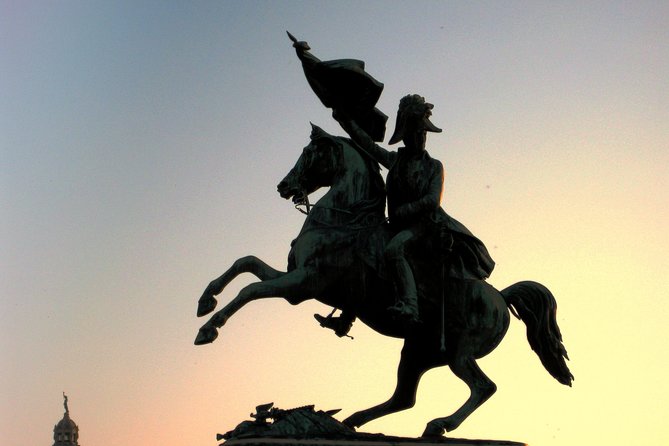
Next comes Heldenplatz, or Heroes’ Square. Here, palace façades and equestrian statues create one of the city’s most imposing open spaces. The square also carries a painful modern memory: Adolf Hitler used the balcony of the Hofburg for his 1938 announcement of Austria’s Anschluss to Nazi Germany.
That history deserves a careful explanation, and a private guide can set the event in context without turning the walk into a long academic session. I appreciate that the route does not treat Vienna’s imperial image as the whole story. The city’s 20th-century past is part of what you need to understand, too.
The stop lasts about 15 minutes and is free. Bring your attention here. Heldenplatz is visually impressive, but its historical meaning is more serious than its grand appearance first suggests.
Walking the Hofburg’s eight courtyards
The Hofburg is not one simple palace building. It grew over centuries into a collection of courtyards, wings, museums, and state rooms. The walk takes you through its courtyards, a practical way to grasp the scale of the former imperial center without committing to a full museum visit.
The complex includes the Spanish Riding School, major museums, and the State Hall of the Austrian National Library. The tour does not include admission to those attractions, so you will see the exterior spaces and learn what lies beyond them.
This is one of the most useful parts of the walk for planning the rest of your stay. You can decide if you want to return for the Spanish Riding School, visit a museum, or see the library’s famous State Hall. The guide can also help you fit those choices into your schedule.
The listed Hofburg stop takes about 15 minutes. That is enough for orientation, not enough for a full imperial story. If you want every room, ruler, and decorative detail, book a dedicated palace visit separately.
Same Alps, a completely different kind of day:
- Vienna: Vivaldi’s Four Seasons Concert in Karlskirche
★ 4.7 · 14,951 reviews - Vienna: Spanish Riding School Training
★ 3.9 · 9,281 reviews - Vienna: Skip-the-cashier-desk-line Giant Ferris Wheel Ride
★ 4.5 · 7,859 reviews - Vienna: Schönbrunn Palace & Gardens Skip-the-Line Tour
★ 4.7 · 7,739 reviews
From elegant promenades to the Golden Quarter
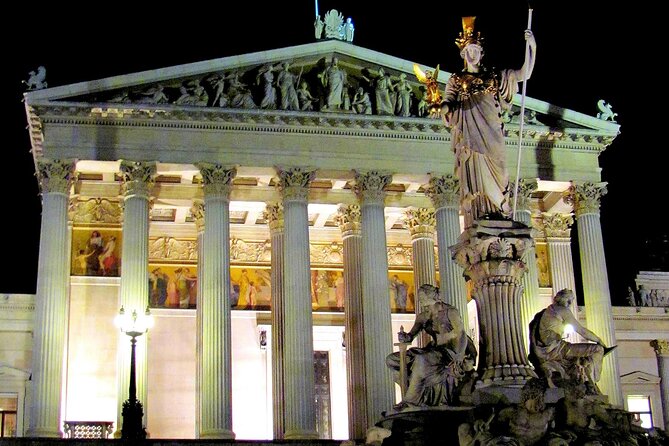
After the Hofburg, the route continues along two of Vienna’s prominent promenades. You pass refined façades, luxury shops, grand hotels, and classic café settings. This stretch shows present-day Vienna alongside its imperial architecture.
The Golden Quarter adds a more modern note. It is the city’s luxury shopping district, with high-end brands, polished hotels, and upscale restaurants. You may not be shopping, but the area helps you see how Vienna’s center has changed while keeping its old architectural character.
I find this contrast useful. A good introduction should show more than one version of a city. Here, the route moves from royal courtyards to contemporary luxury without requiring a taxi or a separate excursion.
Because this is a walking tour, comfortable shoes matter. The listing calls for moderate physical fitness, and the route covers several central districts. Public transportation may be used when useful, but transport is not included in the price.
The Plague Column and St. Peter’s area
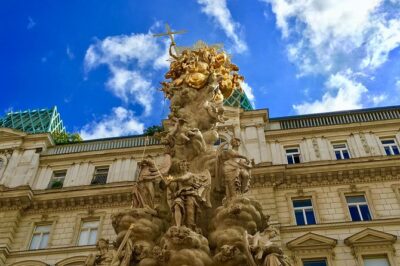
The Pestsäule, or Plague Column, is one of Vienna’s most striking Baroque monuments. It commemorates the city’s survival after the plague and expresses the religious faith of its time. The stop lasts around 10 minutes and is free.
The monument is easy to admire quickly, but its crowded design rewards a few minutes of explanation. Your guide can point out the symbolism and place it within Vienna’s long experience of disease, danger, and recovery.
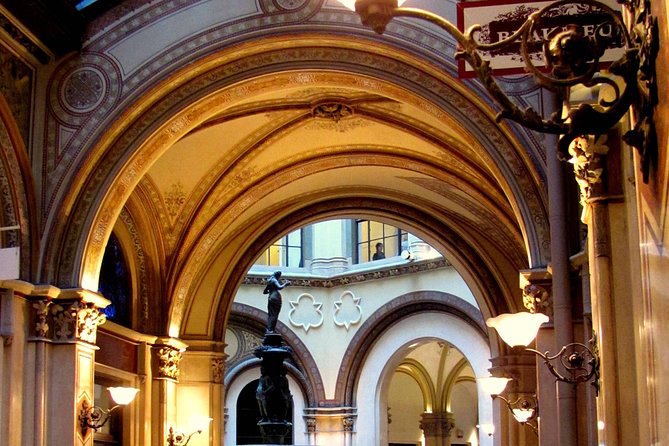
The route may also include St. Peter’s Church, the Franciscan Church, the Minoritenkirche, Freyung Square, Minoritenplatz, and the COVID-19 memorial. These details are not guaranteed as fixed stops because the route can change according to your meeting point, mobility, and interests.
That flexibility is both a benefit and a limitation. You may see more churches and lesser-known corners if you are interested in religious art or local history. If you have your heart set on a precise sequence, tell the guide at the start.
Finishing at St. Stephen’s Cathedral
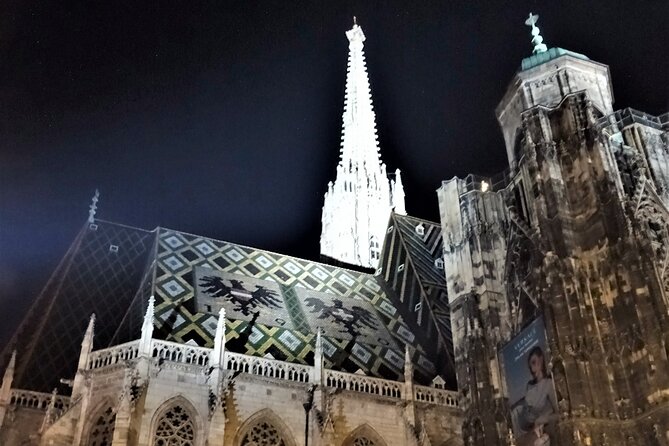
Stephansplatz provides the natural climax. St. Stephen’s Cathedral is Vienna’s defining Gothic church, with detailed stonework, a huge roof, and a lively square outside. The planned stop lasts about 10 minutes, and the cathedral is usually open until late.
The interior visit is an important feature for a first evening. Seeing the cathedral from the inside gives the walk a sense of completion, although opening conditions can affect what is possible. Since the tour operates in all weather, your guide may need to adjust the route if rain or cold changes the pace.
Stephansplatz also offers a practical meeting option. If you prefer not to arrange pickup, the suggested meeting point is in front of Café Aida at Stephansplatz, Singerstrasse 1, in Vienna’s 1010 district.
You finish in one of the city’s most useful areas for the rest of the evening. From here, you can continue on your own, ask for a restaurant recommendation, or follow the guide to a suitable local restaurant. One group was walked to a restaurant after the tour, though this should be treated as a helpful possibility rather than a guaranteed inclusion.
What the guides add
The strongest part of this experience is the guide. Brigitte is described as warm, friendly, and good at offering practical suggestions for later activities and restaurants. Walter is praised for clear English, punctual hotel pickup, and his ability to listen and adapt the walk.
Hannes also leads this opening-evening format. A small group described him as engaging and able to cover a surprising number of major sights in limited time. These individual names matter because a private walk depends heavily on the person leading it.
You can improve the experience by stating your priorities before the walk begins. Tell the guide if you care most about Mozart, imperial politics, churches, coffeehouses, 20th-century history, restaurants, or general orientation. The provider specifically notes that the route varies because guides meet you at your accommodation and respond to your interests and mobility.
English is the offered language. If you need a slower pace, more seating pauses, or extra time at the cathedral, raise that when arranging the start.
Price, group size, and practical value
The price is $319.30 per group for up to 10 people. That makes the math much better for a family, corporate group, or party of friends. Ten people would share the cost at roughly $32 per person, while two people would pay about $160 each.
You are paying for privacy, a licensed Austria Guide, a flexible start, and pickup within Vienna’s city limits. You are not paying for admissions, meals, drinks, or transportation. Since the principal sights on the route are viewed from public spaces, the lack of included admission is not surprising.
For a couple on a tight budget, this is harder to justify than a public walking tour. For a larger group arriving late in the day, the private format can save planning time and prevent the common first-night mistake of wandering without understanding where anything is.
The experience is booked an average of 25 days ahead, so I would not leave it until the last minute if your schedule is fixed. Confirmation is sent within 48 hours, subject to availability.
Pickup applies to accommodations within Vienna’s city limits. You can also arrange a central meeting point. The experience runs in all weather, so wear shoes suited to pavement and dress for the forecast.
Who should book this walk?
I would recommend it most strongly to first-time visitors who want a clear city introduction without joining a large group. It also suits families and friends who want to share one guide, ask plenty of questions, and set their own pace.
It is particularly useful if you arrive with only a few full days. In one short walk, you can identify the Hofburg, Heldenplatz, the Opera House, the Plague Column, and St. Stephen’s Cathedral. That leaves the following days for focused visits rather than basic orientation.
It may be less suitable if you want extensive interior access, a meal included, or a very slow architectural tour. The route covers a lot of ground, and its purpose is to introduce Vienna rather than cover every monument in depth.
Free cancellation is available up to 24 hours before the start time. Changes or cancellations made inside that window are not accepted for a refund.
My booking advice
Book this walk if you value a private guide, are traveling with a group, or want your first evening to do more than fill time before dinner. Ask for the interests you care about and confirm the meeting point, especially if your lodging is outside the city limits.
For one or two people, compare the cost with a group tour before paying. If the price works for your party, this is a practical way to meet guides such as Brigitte, Walter, or Hannes, see the core of central Vienna, and finish with useful advice for the rest of your stay.
FAQ
How long does the Vienna evening walk last?
The experience lasts approximately 2 hours and 30 minutes.
How much does the private tour cost?
The price is $319.30 per group, with up to 10 people included.
Where does pickup take place?
Pickup is offered at your accommodation within Vienna’s city limits, including hotels and vacation rentals. You can also arrange a central meeting point, such as in front of Café Aida at Stephansplatz.
Is St. Stephen’s Cathedral included?
The route includes a stop at St. Stephen’s Cathedral, and the plan is usually to step inside when it is open. The listed stop lasts about 10 minutes.
Is transportation included?
No. Transportation is not included, although public transportation may be used when useful.
What happens if the weather is bad?
The tour operates in all weather conditions. You should dress appropriately and wear comfortable shoes, since the experience requires a moderate level of physical fitness.
Just added around Vienna
- Ottakringer Brewery tour★ 4.0 · 6 reviews
- New Hofburg Palace Tour House of Habsburg★ 4.5 · 5 reviews
- Private Van & Walk Tour – One Perfect Day in Vienna★ 5.0 · 21 reviews
- True Crime mobile puzzle rally Vienna★ 4.0 · 3 reviews
- Vienna Naschmarket Food Tasting Tour★ 4.0 · 30 reviews
- Vienna Nightlife Experience: Food, Wine, Cocktails & Vibes★ 5.0 · 119 reviews
- Myth Mozart★ 4.0 · 80 reviews
- ( Night Tour ) With Private Guide + wine or prosecco★ 4.0 · 12 reviews
Walking Tours, compared.
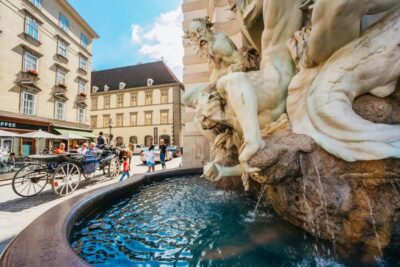
Guided Walking Tour of City Center Highlights
Read our review →
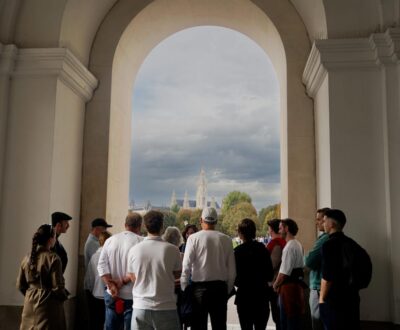
Guided Walking Tour of City Highlights & Hidden Gems
Read our review →
Vienna Historic Center Small Group Walking Tour
Read our review →
Browse the lists this tour appears in