
Reviewed · HISTORICAL TOURS
World War II History Vienna Old Town Private Walking Tour
Vienna’s grand center can look untouched until your guide points out the marks left by dictatorship, war, and Nazi terror. This two-hour private walk begins at the former Gestapo headquarters site and connects WWI, Hitler’s annexation of Austria, the Holocaust, bombing, and liberation.
I like the clear route through major Old Town sights, and I like the chance to ask questions without being tied to a large public group. Guides including Peter, Sanda, Alexander, and Frau Heuberger have earned strong praise for their patience and personal approach. The drawback is the price: at $214 per person, this is a serious spend for only two hours, especially for a small party.
Key points at a glance
- Begin at Morzinplatz: The tour starts at the memorial to victims of Nazi terror, beside the former Hotel Metropol site used by the Gestapo.
- Follow Austria’s difficult timeline: You examine the causes and results of WWI and WWII, including Franz Ferdinand’s assassination, Austrofascism, and the annexation of Austria.
- Connect monuments with memory: The route includes Holocaust remembrance sites, Hofburg, Heldenplatz, Burggarten, and the Monument Against War and Fascism.
- Ask for a tailored history lesson: This is a private tour, so you can focus on military history, Jewish life, Nazi rule, political propaganda, or the city’s wartime destruction.
- Choose from many languages: Tours are offered in English, German, Italian, French, Spanish, Russian, Polish, Chinese, Japanese, Croatian, Portuguese, and Arabic.
- Expect a true walking tour: Comfortable shoes matter, and summer heat can make shaded pauses especially welcome.
Starting at Morzinplatz and the former Gestapo headquarters
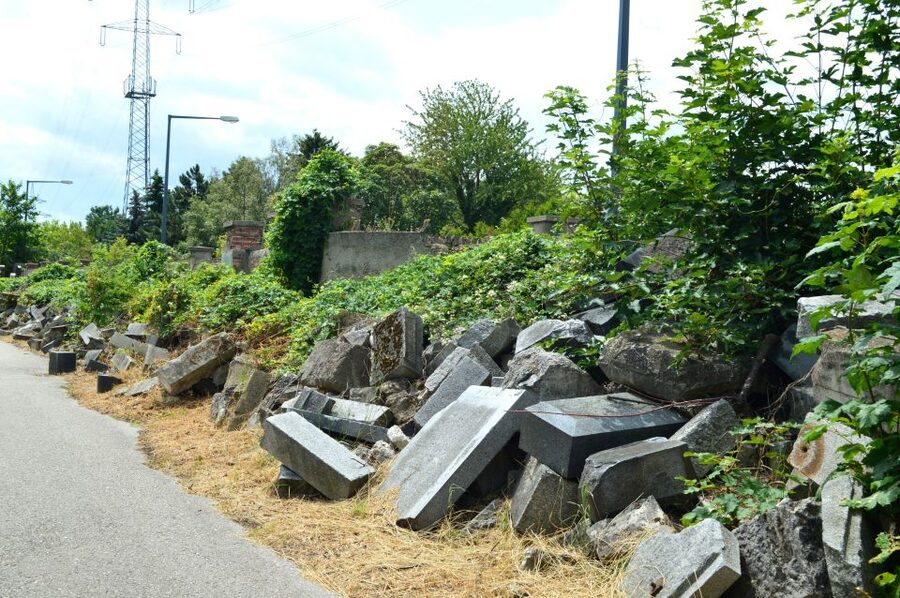
Meet your guide in front of the Denkmal der Opfer des Faschismus at Morzinplatz 4 in Vienna’s first district. This is a useful starting point because the tour opens with the machinery of Nazi rule in Vienna, not with a general sightseeing introduction.
The memorial honors victims of Nazi terror. Nearby stood Hotel Metropol, which was used as the Gestapo headquarters in Vienna from 1939. That location gives the first part of the walk a direct sense of place. You are not simply hearing about repression in an abstract way. You are learning about it beside the site where the regime organized persecution.
Your guide sets out the larger story, beginning with the assassination of Franz Ferdinand and the events that led to WWI. From there, the discussion moves through the war’s consequences, Austria’s political changes, Austrofascism, and the rise of National Socialism.
This broad time frame matters. A short WWII tour can easily reduce the subject to Hitler and the 1945 bombing. Here, you get help connecting the earlier crisis to what followed. You examine causes, political shifts, and consequences rather than collecting isolated dates.
A few more Vienna trips to weigh up
- Vienna: Time Travel and Magic Vienna History Tour
★ 4.6 · 3,879 reviews - Vienna: World War II Historical Walking Tour
★ 4.8 · 1,772 reviews - Vienna Historic Center Small Group Walking Tour
★ 5.0 · 1,746 reviews
From Franz Ferdinand to Austria’s annexation
The first part of the route is about cause and effect. The assassination of Franz Ferdinand is treated as the opening point for understanding WWI, then the guide explains how the postwar period shaped Austria’s later path.
You should expect a spoken history lesson supported by the streets and buildings around you. The tour does not promise museum interiors or extended visits inside monuments. Its value comes from having a guide explain what you are seeing and how the pieces fit together.
The story then reaches Adolf Hitler and the annexation of Austria. Hitler’s Austrian background is part of the discussion, along with Austrian Nazis such as Ernst Kaltenbrunner. That focus is important because it avoids presenting the Nazi period as something imposed on Austria by outsiders alone.
The guide also addresses political propaganda and daily life in German-occupied Austria. Those details can make the period easier to understand. Large events such as annexation and war affect ordinary routines, public speech, work, families, and personal safety. Ask your guide to spend more time on this side of the story if it interests you.
Holocaust remembrance in the Old Town
As you continue through the Innere Stadt, the tour turns toward the fate of Vienna’s Jewish citizens. You pass the Holocaust Memorial and Remembrance Stones, which place individual and communal loss within the Old Town itself.
These stops are among the most important parts of the experience. Vienna’s historic center is filled with celebrated architecture, but the remembrance sites ask you to look at the city through another lens. Your guide can explain the persecution of Jewish residents and the way Nazi rule changed life in Vienna.
The tour format works well here because the guide can adjust the pace and answer questions. In a standard group outing, you may have to move on when the schedule says so. With a private guide, you can pause for clarification or ask for more context about a particular memorial.
Still, remember that two hours passes quickly. The walk covers WWI, WWII, the Holocaust, Nazi figures, political history, architecture, bombing, and liberation. You will receive a guided overview, not an exhaustive study of Vienna’s Jewish history. If that is your main interest, tell the guide at the beginning so the route and commentary can reflect it.
Hofburg, Heldenplatz, and imperial memory
The route includes Hofburg, Vienna’s imperial palace complex, viewed from outside. You also see the Memorial Crypt dedicated to WWI and WWII victims in Heldenplatz, along with the monument to Emperor Franz Joseph I in Burggarten.
Hofburg gives the tour a strong contrast. The palace represents imperial Vienna, while the nearby wartime memorials point to the collapse and violence of the modern European order. Your guide can use this setting to explain how Austria’s imperial past, postwar politics, dictatorship, and annexation overlap.
Because Hofburg is an exterior stop, do not book this tour expecting palace rooms or an indoor palace visit. You see the complex as part of the walking route and hear its historical connection to the city around it.
Heldenplatz is especially useful for discussing public power and political symbolism. The tour description identifies a Memorial Crypt there for victims of WWI and WWII. Your guide also discusses propaganda, so this section should appeal to anyone interested in how public spaces can carry political meaning.
Burggarten adds another layer. The monument to Franz Joseph I recalls the old monarchy, while the surrounding route keeps moving toward the wars and dictatorships that followed. I like this contrast because it prevents the tour from treating WWII as a disconnected episode.
Same Alps, a completely different kind of day:
- Vienna: Vivaldi’s Four Seasons Concert in Karlskirche
★ 4.7 · 14,951 reviews - Vienna: Spanish Riding School Training
★ 3.9 · 9,281 reviews - Vienna: Skip-the-cashier-desk-line Giant Ferris Wheel Ride
★ 4.5 · 7,859 reviews - Vienna: Schönbrunn Palace & Gardens Skip-the-Line Tour
★ 4.7 · 7,739 reviews
St. Stephen’s Cathedral and the wartime city
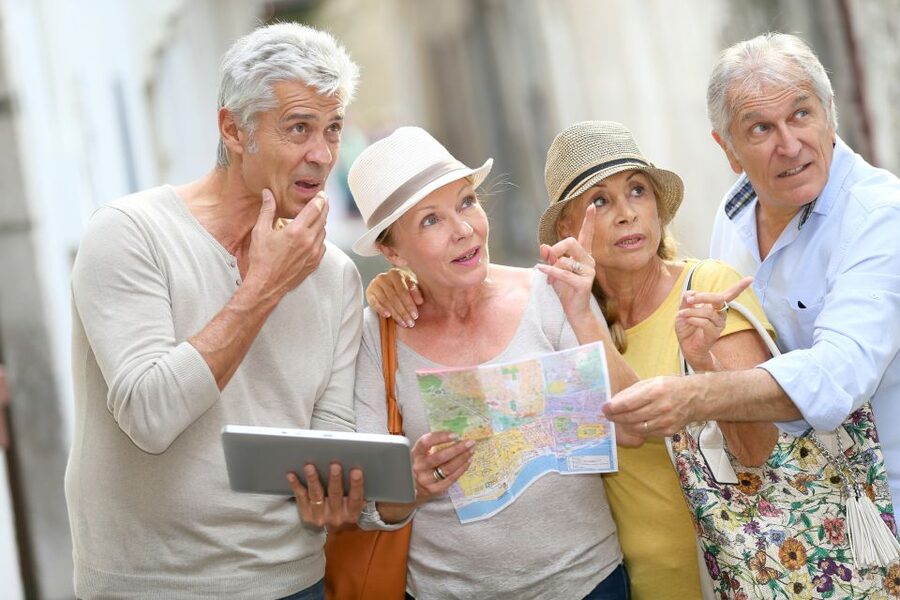
St. Stephen’s Cathedral is included among the Old Town sights connected with the route. The cathedral is one of Vienna’s best-known landmarks, but on this tour the main point is not simply its architecture. It becomes part of a walk through a city that experienced dictatorship, bombing, and liberation.
The supplied information does not promise an interior visit, so plan to see the cathedral as a sightseeing stop on the walking route rather than as a dedicated church tour. Your guide may use the area to explain how wartime events touched the historic center.
This is one reason the tour suits people who want history tied to familiar sights. You can spend the day admiring Vienna’s imperial facades and then return to the same places with a better sense of what happened there during the 20th century.
Ending near the Vienna State Opera
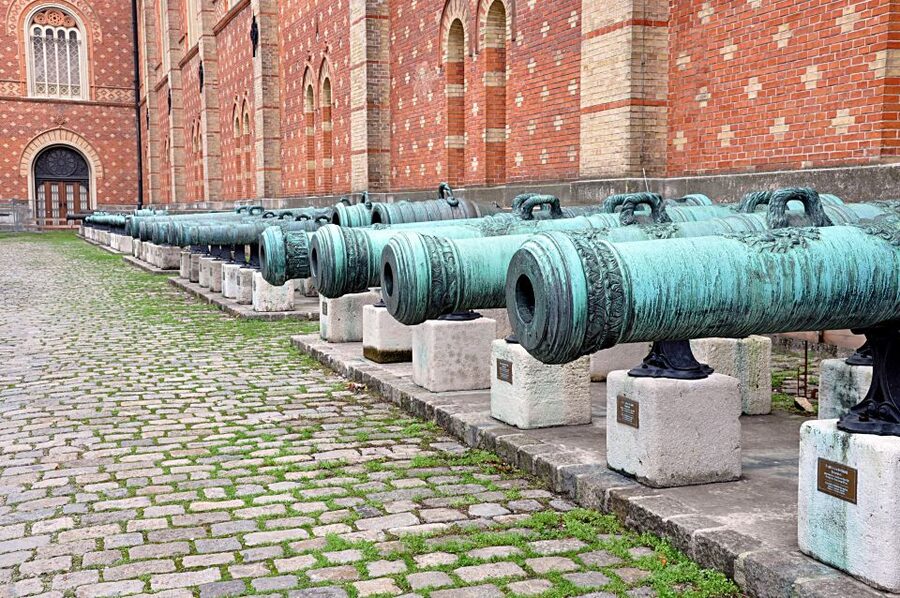
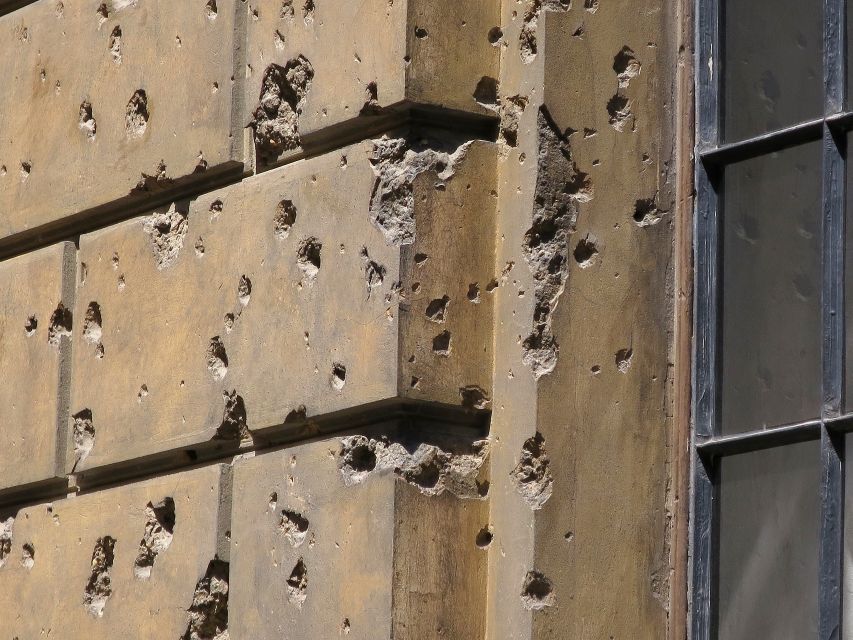
The walk ends at the Monument Against War and Fascism near the Vienna State Opera. The opera house was heavily damaged in the 1945 bombing, making this a fitting final stop.
The monument gives the tour a direct closing point. You begin with Nazi terror and the Gestapo site, move through persecution and wartime politics, and finish with a reminder of destruction and opposition to war and fascism.
A final stop near the State Opera also places you in a central part of Vienna, surrounded by major sights and transport connections. The tour does not include transport, meals, or museum admission, so you are free to continue sightseeing afterward.
What a private guide changes
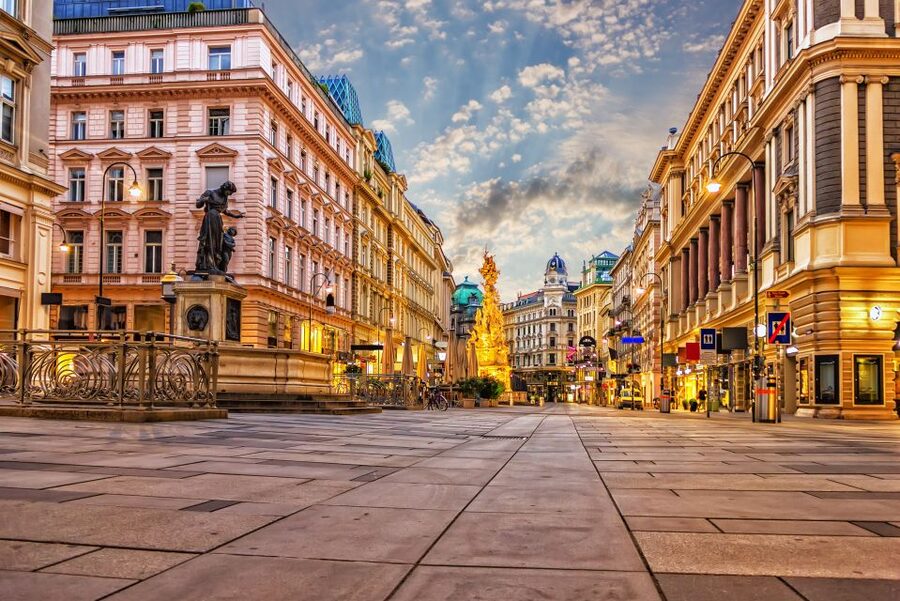
The private format is the main reason to consider this tour instead of a cheaper group walk. You have a guide fluent in your selected language and a route designed around WWII, WWI, and the Holocaust.
The stated limit is one to 25 people per guide. That is a wide range. A couple or family may receive a more personal conversation, while a group of 20 or more will feel less intimate even with a private booking. Groups larger than 25 require additional guides and cost more.
The guide quality appears to be a strong point. Peter was praised for giving detailed explanations and answering questions patiently, including during a tour with a two-year-old child. Sanda was described as very professional, and Alexander received a short but clear endorsement. Frau Heuberger adjusted a tour to individual interests and balanced commentary with breaks during intense heat.
Those details offer useful guidance. If you are traveling with a young child, tell the guide in advance and build in pauses. If you visit during hot weather, bring water and expect the comfort of the group to affect the pace. The tour is private, but it remains a walking tour through the city.
Price, duration, and overall value
At $214 per person, this is not a budget activity. The price makes the most sense for a couple, family, or small group that values a private guide and wants a focused history walk in a chosen language.
For one person, the cost is harder to justify. You are paying for two hours, and there are no listed admissions or transport services. The value comes from interpretation, route planning, and the ability to ask questions.
For a family or group splitting the cost of a private booking, the calculation may look better. You also avoid spending time trying to identify wartime sites on your own. The guide points out architectural traces and memorials that you could easily pass without noticing.
The 4.8 rating from nine completed ratings is encouraging, though the sample is small. The comments consistently point to clear explanations, professional guiding, patience, and flexibility. That does not guarantee which guide you will receive, so treat the named guides as examples rather than a promise.
Free cancellation is available up to 24 hours before the tour, and you can reserve now and pay later. Check the starting time and read the email sent the day before, since it contains important tour information.
Who should book this Vienna history walk
I would recommend this tour to you if you want a serious introduction to Vienna’s wartime past while staying in the Old Town. It works particularly well for first-time visitors who want to combine famous sights with a more difficult chapter of Austrian history.
It is also a good fit if you have a specific interest in:
- Hitler and Austrian Nazi leaders
- The Holocaust in Vienna
- Austrofascism and political propaganda
- The causes and effects of WWI and WWII
- Wartime damage and the 1945 liberation of Vienna
- Memorials and public remembrance
Families may appreciate the private setting, especially because the guide can adapt the pace. The positive experience with a two-year-old shows that patience is possible, though the walking format still requires realistic expectations.
You may want something else if you prefer indoor museums, extensive site visits, or a long military-history lecture. This is a compact route with exterior sightseeing and live commentary. It gives you a strong framework, but you will not see every wartime location in Vienna in two hours.
Should you book it?
Book this walk if you want personalized historical context in a central Vienna setting and are willing to pay for a private guide. The strongest features are the carefully chosen starting point at Morzinplatz, the Holocaust and Nazi remembrance stops, and the chance to connect Vienna’s imperial sights with its 20th-century disasters.
The main caution is cost. At $214 per person, the tour is best shared with a small group or chosen for a special interest in the subject. Wear comfortable shoes, dress for the weather, and tell your guide what you most want to understand. Done that way, two hours can give you a useful, sobering map of Vienna’s wartime past.
FAQ
How long is the World War II History Vienna Old Town Private Walking Tour?
The tour lasts two hours.
Where does the tour meet?
Meet your guide in front of the Memorial to the Victims of Nazi Terror at Morzinplatz 4, 1010 Vienna.
Where does the walking tour finish?
The route ends at the Monument Against War and Fascism near the Vienna State Opera.
Is this a private tour?
Yes. It is offered as a private group tour with one guide for groups of one to 25 people.
What languages are available?
The tour is available in English, German, Italian, French, Spanish, Russian, Polish, Chinese, Japanese, Croatian, Portuguese, and Arabic.
Does the tour include entry to Hofburg?
No interior admission is listed. Hofburg is seen from the outside as part of the walking route.
Which wartime sites are included?
The route includes Morzinplatz and the former Hotel Metropol Gestapo headquarters site, Holocaust remembrance locations, Remembrance Stones, Hofburg, the Memorial Crypt in Heldenplatz, Burggarten, St. Stephen’s Cathedral, and the Monument Against War and Fascism.
What should I wear?
Wear comfortable walking shoes and dress appropriately for the weather.
Can I cancel the tour for a full refund?
Yes. You can cancel up to 24 hours in advance for a full refund.
Just added around Vienna
- From Krems: Wachau Valley River Cruise on the Danube★ 4.6 · 95 reviews
- Vienna: Winery and Wine Tasting Tour with a Wine Expert★ 5.0 · 5 reviews
- Vienna: Wine Tasting E-Bike Tour★ 4.9 · 46 reviews
- Vienna: Wine Tasting at Schönbrunn Palace★ 4.3 · 71 reviews
- Vienna: Wine Tasting Tour★ 4.8 · 61 reviews
- Vienna: Wiener Schnitzel and Strudel Cooking Class★ 4.9 · 126 reviews
- Vienna Urban Art Tour: Explore a different side of Vienna!★ 3.8 · 14 reviews
- Vienna: Unforgettable Private City Tour★ 5.0 · 7 reviews
Historical Tours, compared.
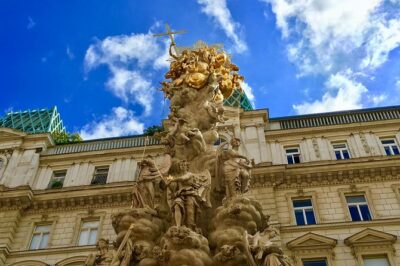
Vienna Historic Center Small Group Walking Tour
Read our review →
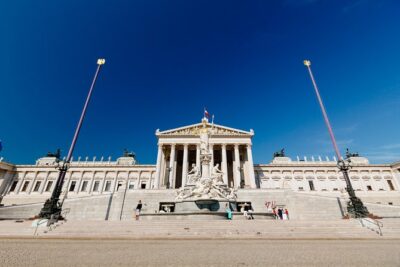
Skip-the-Line Schonbrunn Palace Guided Tour and Vienna Historical City Tour
Read our review →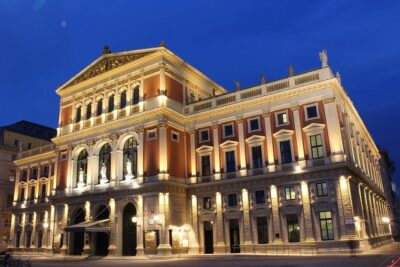
Vienna Mozart Concert in Historical Costumes at the Musikverein
Read our review →
Browse the lists this tour appears in