
Reviewed · WALKING TOURS
Vienna: Private Jewish Walking Tour
Vienna’s Jewish story is not a side note. It runs through the city’s cafés, universities, palaces, music, medicine, and darkest years. This private Jewish walking tour follows that story from Salomon, described as Austria’s first Jewish person, through the intellectual flowering of the early 1900s and on to the Holocaust and today’s community.
I like two things right away. First, the tour links famous places to people and ideas, so Café Landtmann becomes more than a grand coffee stop. Second, a private group lets the guide adjust the pace and answer your questions. The main consideration is the 150-minute walking format: it covers a lot, but it cannot give every site a long visit, and the Seitenstettengasse Synagogue is viewed from outside only.
Key points at a glance
- Follow Jewish Vienna across many centuries: The route connects Salomon, medieval Jewish life, the 1900s, the Holocaust, and the present day.
- See major central landmarks: Expect Judenplatz, Palais Ephrussi, Joseph’s Square, the University of Vienna, Vienna State Opera, and the Memorial against War and Fascism.
- Pause at Freud’s favorite café: Café Landtmann adds a personal link to Vienna’s famous intellectual and artistic circles.
- Private groups up to 20 people: You do not share the walk with an open public group, and the guide can respond to your interests.
- Meet at a clear central landmark: Find the guide at Helmut-Zilk-Platz by the Memorial against War and Fascism, marked by a red and white striped umbrella.
Why Jewish Vienna deserves a dedicated walk
Vienna can be easy to read as a city of imperial palaces, classical music, coffeehouses, and grand boulevards. That picture is incomplete without the Jewish community that helped shape its cultural and intellectual life.
This tour gives you a way to connect those subjects. You hear about artists, doctors, scientists, and thinkers who contributed to Vienna around 1900, then confront the periods when Jewish people were expelled or pushed out of city life. The movement between achievement and persecution is central to the experience.
I find that approach more useful than a tour focused only on monuments. A building such as Palais Ephrussi tells you something about wealth and status, while Judenplatz opens questions about medieval Jewish life, removal, memory, and the city’s responsibility to remember.
The tour also reaches beyond the past. Its story continues to the present-day Jewish community, making clear that Jewish Vienna is not only a historical subject. That balance matters if you want a tour that treats the community as a living part of Vienna rather than a vanished chapter.
A few more Vienna trips to weigh up
- Vienna: Guided Walking Tour of City Center Highlights
★ 4.7 · 4,989 reviews - Vienna: Vienna Central Cemetery Guided Walking Tour
★ 4.8 · 3,307 reviews - Vienna: Guided Walking Tour of City Highlights & Hidden Gems
★ 4.9 · 2,180 reviews
Starting at Helmut-Zilk-Platz
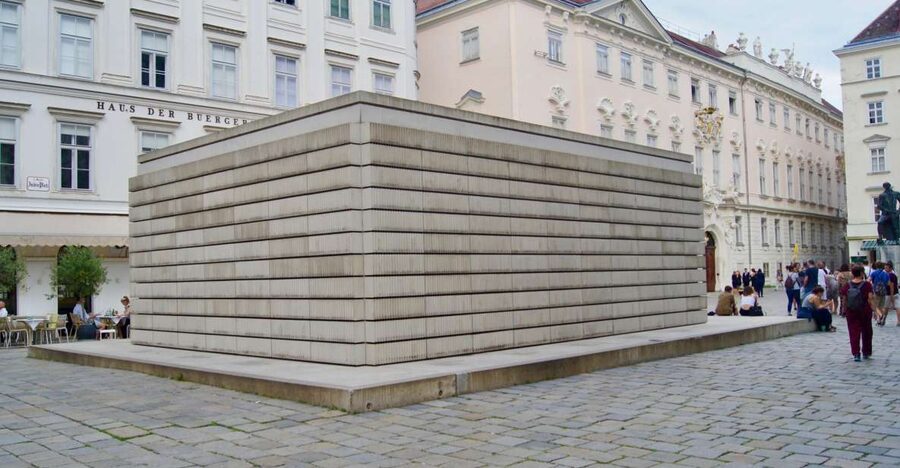
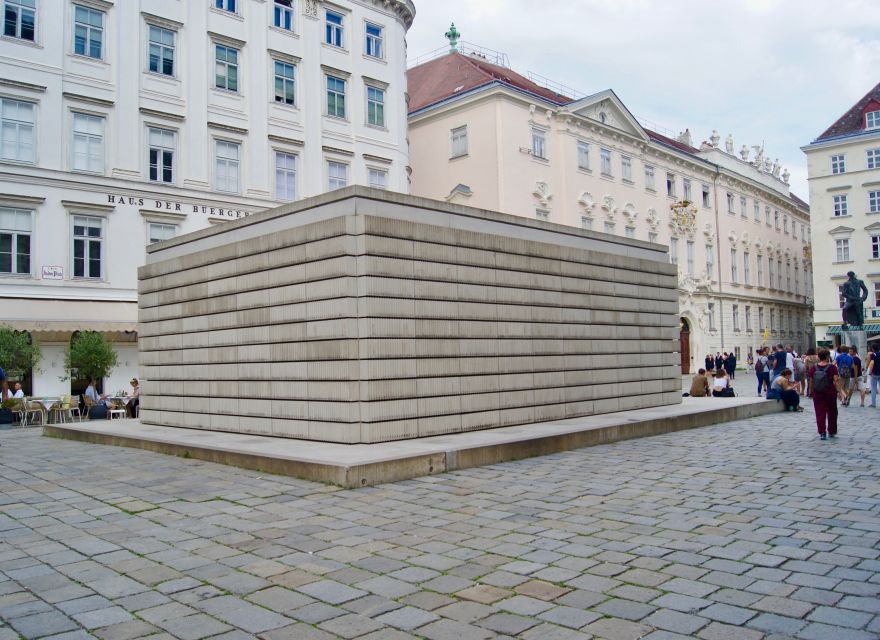
The walk begins at Helmut-Zilk-Platz, in front of the Memorial against War and Fascism. This is a fitting meeting point because the memorial immediately places modern Vienna’s difficult past in view.
Look for the guide holding a red and white striped umbrella. That small detail matters in a busy city center, especially if your group arrives at different times or you are trying to meet after hotel pickup.
The memorial is not simply a backdrop for the start. It helps establish the tone of the walk. Vienna’s Jewish story includes creativity and success, but also expulsion, violence, and the Holocaust. Beginning beside a memorial to war and fascism signals that the tour will not smooth over the painful parts.
Hotel pickup and drop-off are included within Vienna’s inner city. That can be handy if you are staying centrally and prefer not to find the meeting point on foot. Still, the listed starting point is useful to know, since you may be directed there depending on your pickup arrangement.
Salomon and the earliest Jewish story
One of the tour’s opening subjects is Salomon, described as the first Jewish person in Austria. This gives the guide a human starting point rather than beginning with an abstract timeline.
A good guide can use Salomon’s story to frame the larger question: how did Jewish life take root in Austria, and how did its place in Vienna change over time? You are not just collecting names and dates. You are following the changing relationship between Jewish residents, city authorities, religious institutions, and the wider population.
The early section also helps you read later stops. When you reach central squares and historic buildings, you have a better sense of the communities that once lived, worked, worshipped, and traded here. The value is in the connections between sites, not in any single facade.
Because the tour lasts two and a half hours, expect an overview with selected stories rather than a full academic treatment of every period. If you already know Vienna’s Jewish history well, use the private format to ask for more detail on the periods that interest you most.
Judenplatz and the weight of place
Judenplatz is one of the most important stops on the route. Its name alone points to the former Jewish quarter, but the square carries several layers of memory and loss.
Here, the guide can help you understand how Jewish life was part of medieval Vienna and how that community was later banished. The physical setting makes the subject immediate. You are standing in a central public space, not reading about an isolated event in a museum display.
Judenplatz is also valuable because it encourages you to notice what is missing. Historic city centers often preserve palaces and churches more clearly than the homes and institutions of communities that were expelled. A guided explanation helps fill in that gap.
Allow yourself time to listen rather than rushing for photographs. The tour’s subject is serious, and this stop may feel quieter and more reflective than the grander imperial sights later in the walk.
Same Alps, a completely different kind of day:
- Vienna: Vivaldi’s Four Seasons Concert in Karlskirche
★ 4.7 · 14,951 reviews - Vienna: Spanish Riding School Training
★ 3.9 · 9,281 reviews - Vienna: Skip-the-cashier-desk-line Giant Ferris Wheel Ride
★ 4.5 · 7,859 reviews - Vienna: Schönbrunn Palace & Gardens Skip-the-Line Tour
★ 4.7 · 7,739 reviews
The Seitenstettengasse Synagogue, seen from outside
The Seitenstettengasse Synagogue is included as an exterior stop only. That distinction is important when deciding what this experience can provide.
Seeing the synagogue from the street gives you a physical connection to Vienna’s Jewish community and its continuing religious presence. The guide can place the building within the story of Jewish Vienna, helping you understand why it matters beyond its architecture.
You should not book this tour expecting an interior synagogue visit. The outside-only format keeps the walk moving, but it also means you will not receive a full architectural viewing from inside or a worship-space visit as part of this experience.
For many people, the exterior stop will still be worthwhile because it links past events to present-day Jewish life. It is one of the moments when the tour shifts from historical memory toward the city as it exists now.
Coffee, Freud, and Vienna around 1900
Café Landtmann adds a lighter but meaningful change of pace. It was Sigmund Freud’s favorite coffee house, and its inclusion connects the Jewish story to Vienna’s famous café culture.
You may already know Café Landtmann as an elegant Viennese institution. The tour gives it another layer. It becomes a place associated with the conversations, professional networks, and intellectual habits that helped make Vienna around 1900 such an important center for ideas.
The point is not merely that Freud drank coffee there. The stop helps you picture how doctors, artists, writers, and scientists participated in the city’s public life. It also reinforces one of the tour’s main themes: Jewish contributions to Vienna were woven into ordinary urban spaces, not confined to religious buildings.
The café is treated as a stop on a walking route, not necessarily as a scheduled coffee break. If you want to sit down for a drink, ask your guide whether the timing allows it. A private tour gives you a better chance of discussing that preference than a large group walk would.
The University of Vienna and the intellectual city
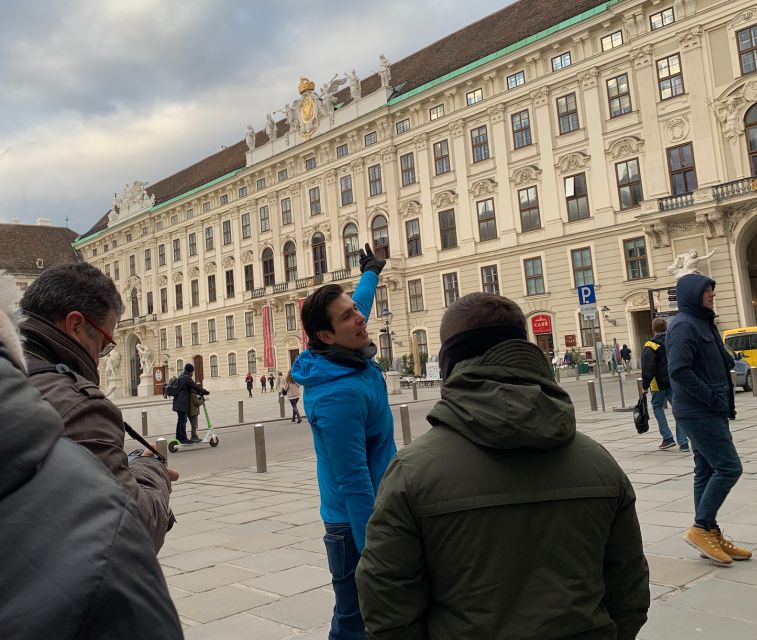
The University of Vienna represents another side of the early 1900s story. The tour uses it to discuss the doctors, scientists, and thinkers who shaped Viennese culture and public life.
This part should appeal to you if your interests run toward medicine, psychology, science, or the history of ideas. It also shows why a Jewish Vienna tour is not just a religious heritage walk. The subject reaches into education, research, professional life, and the wider identity of the city.
The university setting can also prompt difficult questions about who was allowed to study, teach, or hold public standing at different points in history. The supplied details do not promise a specific focus on university admission or individual faculty members, so your guide’s exact emphasis may vary. Ask questions if those subjects matter to you.
Palais Ephrussi and the social world of Vienna
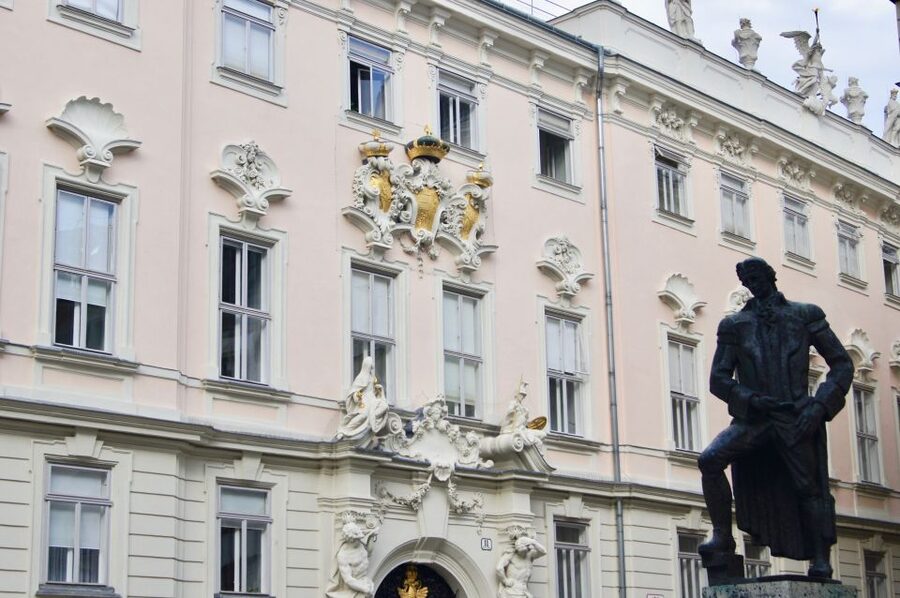
Palais Ephrussi offers a look at the wealth and social reach of one prominent Jewish family. Its grand exterior helps explain how Jewish residents could occupy an important place in Vienna’s economic and cultural life before persecution changed everything.
A palace can be easy to admire without thinking about the people connected to it. A guide turns the building into a story about family, status, business, and belonging. You begin to see Jewish Viennese life as varied, including powerful families, professionals, religious communities, and ordinary residents.
The stop also fits the tour’s larger contrast. Vienna’s elegant streets preserve signs of success, while the city’s history includes expulsion, theft, and murder. Holding both realities together gives the walk its emotional force.
Since the tour is conducted on foot and the itinerary includes many central sights, Palais Ephrussi is primarily a contextual stop. Do not expect a long interior tour based on the information provided.
Joseph’s Square, the opera, and the wider city
Joseph’s Square and the Vienna State Opera broaden the route beyond specifically Jewish landmarks. These places show the grand public stage on which Jewish Viennese life unfolded.
The Vienna State Opera is a useful reminder that Jewish contributions to Vienna’s arts and culture were part of the city’s wider story. Joseph’s Square places you among the monumental buildings and imperial spaces that attract most first-time visitors.
This mix is one of the tour’s best features. You learn about Jewish history while also getting your bearings in central Vienna. If this is your first visit, the walk can function as both a heritage tour and an introduction to the city center.
The tradeoff is time. A 150-minute route with many stops will give you explanations at each place, but not a long guided visit inside every landmark. Think of the walk as a connected introduction, then return later to the sites you want to explore in depth.
The Holocaust and the missing community
The Holocaust is not treated as a footnote. It forms one of the darker periods in the tour’s story, alongside the earlier banishments from Vienna.
This section requires attention. You will be asked to understand not only the scale of the crime but also the destruction of a community that had helped shape the city’s professional, artistic, and intellectual life. The earlier stops make this loss more concrete because you have already encountered the places linked to Jewish Vienna.
The Memorial against War and Fascism provides a serious visual anchor for that part of the discussion. It is particularly effective as the starting point, where you encounter the memorial before hearing the full arc of the story.
Expect the guide’s style to affect this portion of the walk. The available guide languages are English and German, and past bookings have included guides named Lisa, Dr. Reinhard Travnicek, and Horlando. Lisa is described as friendly, engaging, and able to connect past and present, while Dr. Travnicek is noted for his broad historical knowledge and open manner. Horlando is described as clear and able to answer questions. Guide assignment can vary, so treat these names as examples rather than a guarantee.
A private format that earns its price
The cost is $530 per group of up to 20 people. That is a steep price for one or two people, but the calculation changes with a larger private party.
At the maximum group size, the cost works out to $26.50 per person. For four people, it is $132.50 each, and for two people, it is $265 each. The private arrangement is most compelling for families, couples traveling with friends, or groups that want a custom pace and direct access to the guide.
You are paying for more than a standard city walk. The price includes a private guide, a 150-minute route, inner-city hotel pickup and drop-off, and a subject that benefits from discussion. A public Jewish history walk may cost less, but it may not give you the same flexibility to ask questions or combine Jewish history with selected general Vienna sights.
The value is weaker for a solo visitor or a pair on a tight budget. In that case, you should compare the price with other Jewish heritage options in Vienna before booking. The strongest case for this experience is a group that will use the private format fully.
Pace, language, and practical comfort
The tour lasts 150 minutes, or two and a half hours. That is long enough to build a clear historical arc without taking up an entire day, though you should expect steady movement between central locations.
Comfortable walking shoes are sensible because the experience is a walking tour. The information provided does not specify the distance, number of stairs, or scheduled rest breaks, so ask ahead if those details affect your planning.
The tour is wheelchair accessible. That is useful, but central historic streets and individual building exteriors can still vary in ease of movement. Confirm any specific needs when booking rather than relying only on the general accessibility label.
English and German are available. Since this is a private group, you may be able to shape the discussion by telling the guide whether you prefer more focus on architecture, intellectual history, religious life, the Holocaust, or modern Vienna.
Cancellation is free up to 24 hours before the start, and you can reserve now and pay later. Those terms help if your Vienna schedule is still shifting.
Who will get the most from this walk
I would recommend this tour to you if you want Jewish history tied to the broader city rather than presented as a separate subject. It suits first-time visitors who want central Vienna landmarks explained through a less familiar lens.
It is also a strong choice for families and private groups with different interests. One person can ask about Freud, another about architecture, and another about the Holocaust or present-day Jewish life. The guide can respond without needing to keep an anonymous public group moving.
History-minded visitors should appreciate the chronological sweep. Art, science, medicine, coffeehouse culture, imperial Vienna, persecution, and memory all appear in the same walk.
You may want another option if you need an interior synagogue visit, a museum-heavy experience, or a very low-cost tour. The synagogue is viewed from outside, and the route is designed around streets and landmarks rather than extended indoor visits.
Should you book the Vienna Jewish Walking Tour?
Book it if you are traveling with a group and want a serious, human account of Vienna’s Jewish past and present. The strongest elements are the private format, the wide range of central landmarks, the link between Jewish life and Vienna’s intellectual culture, and the willingness of guides such as Lisa, Dr. Reinhard Travnicek, and Horlando to explain and answer questions.
Before you commit, be clear about the limits. The price is high for a small party, the walk covers many sites in 150 minutes, and the Seitenstettengasse Synagogue is exterior only.
For the right group, I think the tour offers a thoughtful way to see central Vienna. You leave with more than a list of monuments. You understand how Jewish people helped shape the city, how that life was damaged and destroyed, and why its memory still belongs at the heart of Vienna.
FAQ
Where does the tour begin?
The meeting point is Helmut-Zilk-Platz in front of the Memorial against War and Fascism in Vienna.
How will I recognize the guide?
The guide will be holding a red and white striped umbrella.
How long does the walking tour last?
The tour lasts 150 minutes, or two and a half hours.
Where does the tour finish?
The tour finishes in central Vienna at 1010 Vienna, Austria.
Is hotel pickup and drop-off included?
Yes. Hotel pickup and drop-off are included for hotels within Vienna’s inner city.
Is the tour private?
Yes. It is a private group experience for up to 20 people.
Which languages are available?
The live tour guide is available in English and German.
Is the tour wheelchair accessible?
Yes. The activity is listed as wheelchair accessible.
Can I visit the Seitenstettengasse Synagogue inside?
No. The synagogue is included as an outside viewing stop only.
What is the cancellation policy?
You can cancel up to 24 hours in advance for a full refund.
Can I reserve without paying immediately?
Yes. The reserve-now, pay-later option lets you book without paying at the time of reservation.
Just added around Vienna
- World War II History Vienna Old Town Private Walking Tour★ 4.8 · 9 reviews
- From Krems: Wachau Valley River Cruise on the Danube★ 4.6 · 95 reviews
- Vienna: Winery and Wine Tasting Tour with a Wine Expert★ 5.0 · 5 reviews
- Vienna: Wine Tasting E-Bike Tour★ 4.9 · 46 reviews
- Vienna: Wine Tasting at Schönbrunn Palace★ 4.3 · 71 reviews
- Vienna: Wine Tasting Tour★ 4.8 · 61 reviews
- Vienna: Wiener Schnitzel and Strudel Cooking Class★ 4.9 · 126 reviews
- Vienna Urban Art Tour: Explore a different side of Vienna!★ 3.8 · 14 reviews
Walking Tours, compared.
Guided Walking Tour of City Center Highlights
Read our review →
Guided Walking Tour of City Highlights & Hidden Gems
Read our review →
Vienna Historic Center Small Group Walking Tour
Read our review →
Browse the lists this tour appears in