
Reviewed · WALKING TOURS
Vienna: Hidden Secrets and Local Stories Walking Tour
Vienna’s old center is more than grand facades and palace squares. This two-hour walk slips into narrow lanes, courtyards, and overlooked corners where local legends, odd house names, and the real story of Mozart bring the city to life. Guides such as Herbert and Wolfgang keep the pace lively with questions, humor, and plenty of useful context.
I like the way the tour pairs major sights, especially St. Stephen’s Cathedral, with small places you could easily pass without noticing. I also like the small-group format, which makes it easier to ask questions and chat with the guide. The main consideration is the walking itself: the tour runs in all weather and is not suitable for children under 12, wheelchair users, or people with mobility impairments.
Key points to know before you book
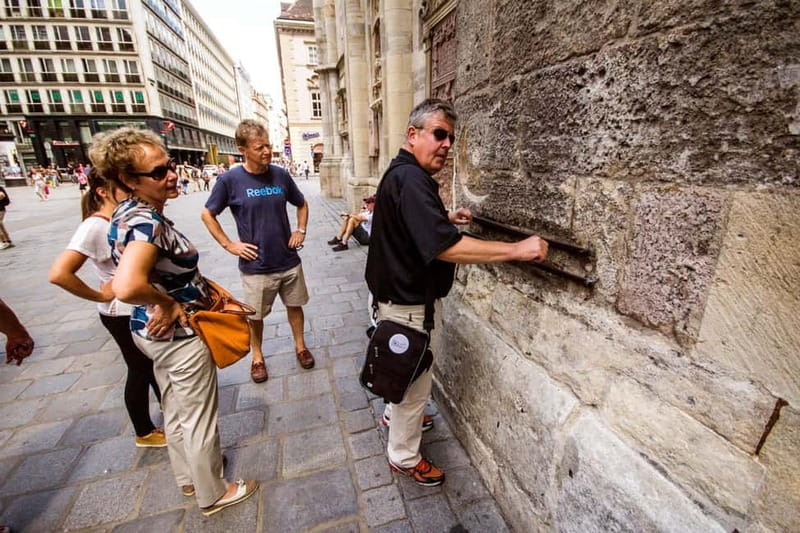
- Vienna’s side streets take center stage: Walk through Ballgasse, Blutgasse, Domgasse, and old courtyards that many visitors miss.
- Mozart’s Vienna gets a fact check: Visit his final residence and separate the composer’s real life from later stories.
- The route mixes famous and lesser-known sights: Expect St. Stephen’s Cathedral, the Franciscan Church, Palais Neupauer-Breuner, and the Jesuit Church.
- Guides make or break this walk: Herbert and Wolfgang are noted for humor, clear explanations, and an easy conversational style.
- Small groups suit curious walkers: The format allows questions and gives the tour a more personal feel.
- Plan for practical limits: Bring comfortable shoes and weather protection, but leave large bags behind.
Why this Vienna walk feels different
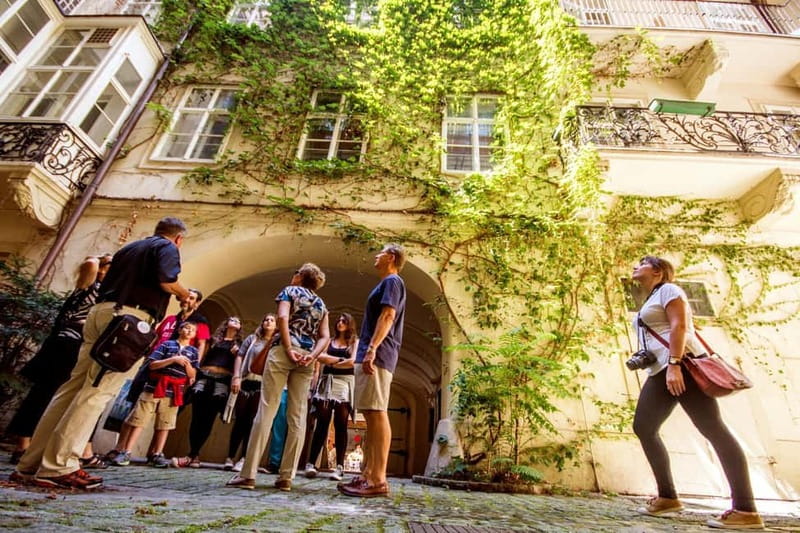
Many city-center tours follow the grandest streets and stop at the famous facades. This one uses those sights as anchors, then turns into the less obvious parts of the old town. You see the postcard Vienna, but you also get the cramped lanes, old courtyards, church details, and unusual stories that help explain how the center fits together.
The tour focuses on real, amusing, and fictional stories. That mix matters. Vienna has a long habit of polishing its legends, and a good guide can show you where the entertaining tale ends and the solid fact begins. The experience is not only a list of dates and buildings. It is a way to understand why certain corners gained their names and why local stories still cling to them.
I would use this tour early in a Vienna visit. It gives you a useful mental map of the historic center and points out places you can return to later. It also offers practical local advice, including information about traditional Viennese food.
The tour costs $33 per person. For two hours with a certified guide and a small group, that is a fair price if you want more than a quick orientation. You are paying for interpretation, not entry tickets to a major museum or palace. If you prefer to wander alone with a guidebook, you can cover many of these streets for free, but you will miss much of the local storytelling and the explanation that ties the stops together.
A few more Vienna trips to weigh up
- Vienna: Guided Walking Tour of City Center Highlights
★ 4.7 · 4,989 reviews - Vienna: Vienna Central Cemetery Guided Walking Tour
★ 4.8 · 3,307 reviews - Vienna: Guided Walking Tour of City Highlights & Hidden Gems
★ 4.9 · 2,180 reviews
Starting near Stephansplatz
The meeting point can vary according to the option you book, with the listed starting location at a Bankomat. Check the exact meeting details before setting out, especially if you are coming from another part of Vienna. The walk ends at the meeting point area, with the listed end point near Dr.-Karl-Lueger-Platz 3.
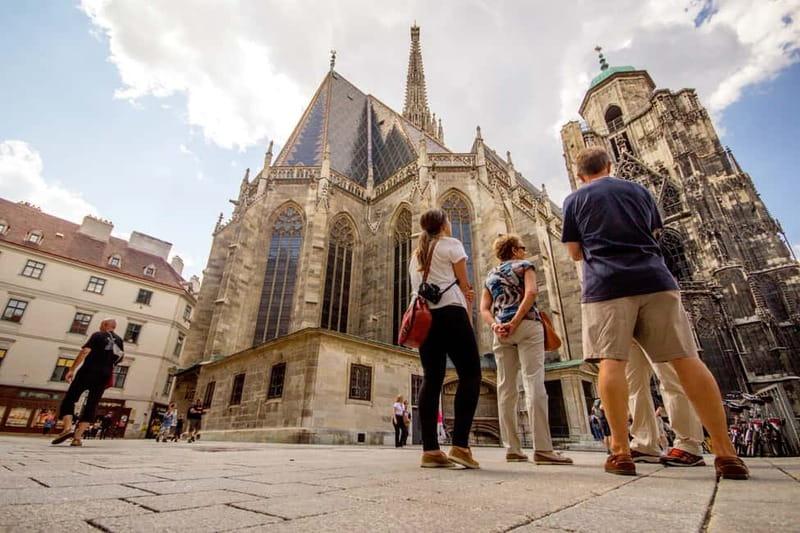
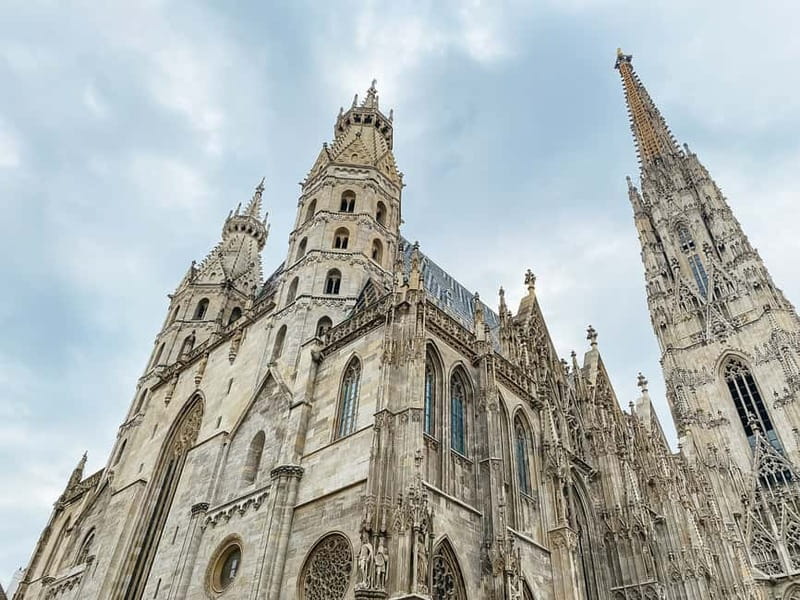
From there, the route heads into Vienna’s historic center. The first major reference point is St. Stephen’s Cathedral, or Stephansdom, whose patterned roof and tall tower make it one of the easiest places in the city to recognize. The guide uses the cathedral to set the scene, explaining its place in Vienna and drawing your attention to details you might otherwise photograph and walk past.
This is a good opening stop because the cathedral is familiar even to first-time visitors. The drawback is that the surrounding square can be busy, and the guide may need to gather the group carefully before moving on. Stay close and listen for the meeting instructions.
The tour is conducted in German or English. It is led by a certified guide and described as a native-speaker experience, so confirm your preferred language when booking.
From cathedral grandeur to small lanes
After Stephansplatz, the walk becomes more intimate. You move through parts of the historic center where streets narrow and the grand public face of Vienna gives way to courtyards and older residential corners.
The route includes Domgasse and Blutgasse. Their names alone invite a story, and this is where the tour’s approach works best. Rather than simply telling you that a lane is old, the guide explains the legends and claims attached to it, while also correcting false information when needed.
Blutgasse is especially useful for showing how Vienna’s old center can feel like a maze. A short distance from the main square, you can find quieter passages and irregular corners that are easy to overlook. The walk does not promise a secret entrance or an exclusive access point, so keep expectations sensible. Its value comes from the guide’s explanation of what you are seeing.
The small group helps here. With around ten people in one reported group, the experience can feel more like a conversation than a speech. That also makes it easier to hear in narrow streets and ask about details that catch your eye.
Palais Neupauer-Breuner and the city’s grand side
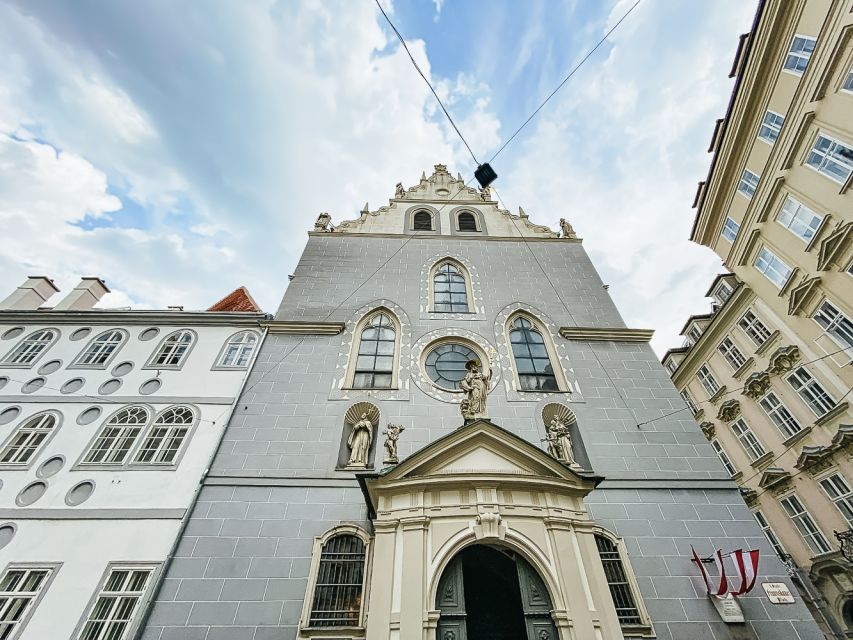
Palais Neupauer-Breuner brings the route back to Vienna’s elegant architectural face. A city palace is more than a pretty exterior. It points to the wealth, social order, and urban ambitions that shaped the center.
You will not spend the entire tour inside grand buildings. This is primarily a walking and storytelling experience, and the itinerary lists the palace as a guided stop rather than an interior visit. That distinction matters if you are hoping to tour lavish rooms. The reward is the street-level context, as the guide connects the building to the surrounding old town.
The walk also includes the Deutsches Haus, another reminder that Vienna’s center is packed with layers of institutions, residences, churches, and old civic life. You get a better sense of how close together these places are. Vienna can seem spread out when you look at a map, but this part of town rewards slow walking and close attention.
Same Alps, a completely different kind of day:
- Vienna: Vivaldi’s Four Seasons Concert in Karlskirche
★ 4.7 · 14,951 reviews - Vienna: Spanish Riding School Training
★ 3.9 · 9,281 reviews - Vienna: Skip-the-cashier-desk-line Giant Ferris Wheel Ride
★ 4.5 · 7,859 reviews - Vienna: Schönbrunn Palace & Gardens Skip-the-Line Tour
★ 4.7 · 7,739 reviews
Mozart’s final residence, without the polished legend
Mozart’s final residence is one of the tour’s strongest stops. The focus is not just on seeing a famous address, but on learning what is known about his life and correcting popular misunderstandings.
That makes the stop useful even if you already know the broad outline of Mozart’s story. Famous figures often become simplified into a few dramatic facts. A live guide can give you a more measured picture, separating documented details from later embellishment.
The residence is in Domgasse, close to the cathedral area. You should not assume this walking tour includes admission to the Mozart residence unless your booking details say so. The supplied information presents it as a stop for discussion and viewing, not as a separate museum visit.
I like this part of the route because it shows how a famous name fits into an ordinary city street. Mozart is not treated as a floating symbol of Vienna. His final home is part of the same tight network of lanes, churches, and houses you are walking through.
Ballgasse and the Franciscan Church
Ballgasse offers another change of mood. It is one of the narrow streets that gives the old center its particular character, with a scale very different from the open space around Stephansplatz.
The guide uses places such as Ballgasse to tell smaller local stories. These can be amusing or fictional, but they are still useful because they reveal how a city remembers itself. You get a sense of the stories people attach to buildings and street corners, even when the tale should not be taken as literal fact.
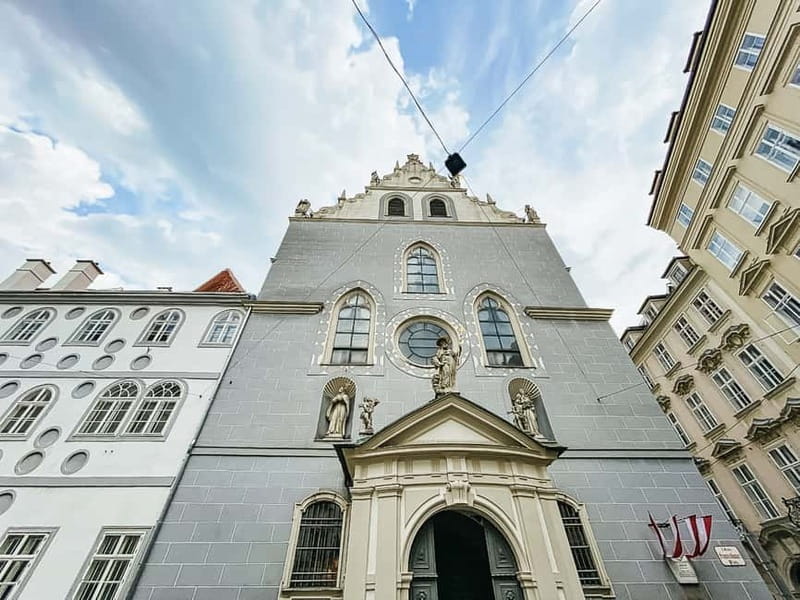
The Franciscan Church and Monastery add a more serious note. Churches in Vienna can be easy to treat as decorative stops, but the guide helps place the Franciscan complex within the old city. Look for the contrast between the church’s religious purpose and the tightly packed streets around it.
The stop is also practical for anyone interested in traditional Viennese church interiors and urban details. The information provided does not promise a special interior visit or service access, so think of it as an explained exterior and neighborhood stop unless told otherwise.
The old university district and Jesuit Church
Later, the route reaches the old university district and the Jesuit Church. This section widens the story beyond aristocratic palaces and famous composers. Universities, churches, and the old city wall all show how Vienna grew as a place of learning, religion, defense, and government.
The Jesuit Church is a particularly worthwhile visual pause. Even from the outside, it helps you see how much architectural variety is compressed into the center. The guide’s job here is to connect the building to the district around it rather than leave you with a single date and a quick photograph.
The old city wall gives another layer of context. Modern Vienna has absorbed much of its former defensive edge, so it is not always obvious where the older boundary once mattered. A walking guide can point out traces and explain the change in a way a rapid tram ride cannot.
This is also where the tour can feel dense. In two hours, you cover many names and several historical themes. If you want long pauses inside every church or palace, this pace may feel brisk. If you like a broad, well-connected introduction, it works better.
Food, odd house names, and local detail
The tour includes discussion of traditional Viennese cuisine and the house known as Where the cow plays on the board. That unusual name is exactly the sort of detail that gives the walk personality.
Do not expect a food tasting based on the information provided. Instead, you get cultural context about Vienna’s cooking and the meanings or stories attached to a particular house. I find these details valuable because they keep the tour from becoming a parade of monumental buildings.
A city becomes easier to remember through odd details. You may forget a string of architectural terms, but a strange house name or a story about a courtyard can help you place yourself later. These moments also give you something to look for when you return to the center on your own.
The guide’s humor matters here. Herbert is known for quizzing the group and keeping the tone light. Wolfgang is also described as entertaining and easy to follow. The exact guide is not guaranteed, but the tour is designed around a live local voice rather than an audio recording.
What the small-group format adds
A small group is one of the clearest advantages of this experience. The walk is not built for a large crowd moving behind a flag. With fewer people, the guide can react to questions, keep everyone together in narrow lanes, and speak in a more natural way.
Herbert’s style includes questions along the route, so you are not expected to simply stand and absorb information. That can make the tour more engaging, though some people prefer a quiet, uninterrupted lecture. The format suits you if you enjoy conversation and do not mind being asked to think along the way.
Rain does not automatically cancel the walk. The tour operates in all weather, and the guide can still keep the experience enjoyable when conditions turn wet. You should bring suitable clothing and shoes rather than count on perfect Vienna sunshine.
Leave large luggage and big bags behind. Audio recording is not allowed. The walk is not suitable for children under 12, people with mobility impairments, or wheelchair users. The supplied details do not give a precise distance or step count, so anyone with walking concerns should ask before booking.
Is this Part 1?
This experience continues from a Part 1 tour by the same operator. You do not need to have taken Part 1 first, so you can book this walk as a separate introduction to Vienna’s old center.
That is helpful if your schedule does not match the earlier tour or if you simply want this route’s focus on courtyards, legends, Mozart, and side streets. The wording suggests some connection between the two walks, but you should not expect that this tour repeats every major introduction from Part 1.
If you have already taken Part 1, this route should offer additional corners and stories rather than act as a strict prerequisite. If you have not, the guide still covers enough of the central sights to make the walk understandable on its own.
Who will enjoy this walk most?
I would choose this tour for a first or second day in Vienna, especially if you want a lively orientation rather than a formal art-history lecture. It suits adults and families with older children who can manage two hours of walking and enjoy stories with a bit of humor.
It is also a good fit if you have already seen the cathedral and main squares but feel you have not yet understood the streets between them. The route gives those smaller spaces a purpose.
You may want a different experience if you need step-free access, want to bring a large suitcase, or prefer a private tour with a fixed pace. The walk is in a small group, not a private booking, and its strength is the guide’s storytelling across many stops rather than extended time at one monument.
Should you book the Vienna Hidden Secrets and Local Stories walk?
Book it if you want Vienna explained through side streets, local legends, and corrected myths, not just through famous facades. At $33, the price is reasonable for a certified local guide, two hours of focused walking, and a small group that lets you ask questions.
I would be especially inclined to book with an early place in your itinerary. The cathedral, Mozart’s residence, Ballgasse, Blutgasse, churches, old university district, and city wall give you plenty of orientation for later independent walks.
Skip it if you need an accessible route, dislike walking in rain, or want admission and extended time inside museums and historic rooms. For everyone else, this is a practical way to find the Vienna that sits just beyond the main square, with Herbert, Wolfgang, or another German- or English-speaking guide helping you sort the facts from the good stories.
FAQ
How long does the tour last?
The walking tour lasts two hours.
How much does the tour cost?
The listed price is $33 per person.
Which languages are available?
The tour is conducted in German and English.
Who leads the tour?
A certified tourist guide and native speaker leads the walk. Guides named in the available information include Herbert and Wolfgang.
Where does the tour start?
The meeting point may vary depending on the option booked. The listed starting location is a Bankomat, so check your booking details for the exact point.
Where does the tour end?
The activity ends back at the meeting point. The listed drop-off location is near Dr.-Karl-Lueger-Platz 3, 1010 Vienna.
Does the tour include St. Stephen’s Cathedral?
Yes. St. Stephen’s Cathedral is a guided stop on the route.
Will the tour visit Mozart’s final residence?
The route includes Mozart’s final residence and explains the truth behind aspects of his life. The provided information does not state that admission to the residence is included.
Can I bring large luggage?
No. Luggage and large bags are not allowed on the tour. Audio recording is also not allowed.
Is the tour suitable for children or wheelchair users?
The tour is not suitable for children under 12, people with mobility impairments, or wheelchair users.
Does the tour run in bad weather?
Yes. The tour takes place in all weather conditions, so bring clothing and shoes suited to the forecast.
Can I cancel for a refund?
You can cancel up to 24 hours in advance for a full refund. The reserve-now, pay-later option lets you book without paying at the time of reservation.
Just added around Vienna
- Ottakringer Brewery tour★ 4.0 · 6 reviews
- New Hofburg Palace Tour House of Habsburg★ 4.5 · 5 reviews
- Private Van & Walk Tour – One Perfect Day in Vienna★ 5.0 · 21 reviews
- True Crime mobile puzzle rally Vienna★ 4.0 · 3 reviews
- Vienna Naschmarket Food Tasting Tour★ 4.0 · 30 reviews
- Vienna Nightlife Experience: Food, Wine, Cocktails & Vibes★ 5.0 · 119 reviews
- Myth Mozart★ 4.0 · 80 reviews
- ( Night Tour ) With Private Guide + wine or prosecco★ 4.0 · 12 reviews
Walking Tours, compared.
Guided Walking Tour of City Center Highlights
Read our review →
Guided Walking Tour of City Highlights & Hidden Gems
Read our review →
Vienna Historic Center Small Group Walking Tour
Read our review →
Browse the lists this tour appears in