
Reviewed · WALKING TOURS
Vienna at First Glance a Private Walking Tour for First Timers
Vienna reveals itself quickly on this private three-hour introduction, which links Belvedere Palace, the Ringstrasse, Hofburg, Graben, and St. Stephen’s Cathedral in one well-planned sweep. Guides such as Sabine, Brigitte, Walter, and Alexander bring imperial politics, Art Nouveau, modern Austrian life, food, and local habits into the same conversation.
I like the front-door pickup, since you avoid hunting for an unfamiliar meeting point. I also like the practical public-transport lesson, which can turn the rest of your stay from a map-reading exercise into easy independent sightseeing. The main drawback is that the tour stays outdoors, so major interiors and museum collections are not part of the three-hour plan.
Key points at a glance
- Start at your own doorstep: Pickup is offered at hotels, vacation homes, and the Handelskai 265 city pier.
- See Vienna’s essential center fast: The route covers Belvedere, the Ringstrasse, Rathausplatz, Hofburg, Graben, Kohlmarkt, and Stephansdom.
- Learn the tram and metro system: Public transportation may be used when useful, though tickets are not included.
- Get a flexible private guide: Your group alone participates, with room to adjust the pace and topics.
- Expect history with personality: Guides including Walter, Brigitte, Sabine, and Alexander are praised for humor, clear explanations, and useful advice.
- Plan your next days better: The cathedral finish leaves you in a central spot for your own sightseeing.
Why this is a smart first morning in Vienna
Vienna can feel almost too polished at first. Grand buildings line broad streets, the former Habsburg court seems to appear around every corner, and the city’s museums, palaces, cafés, and concert halls compete for your attention. This tour gives you a framework before the details begin to blur together.
The route is not simply a three-hour march past famous façades. It explains how Vienna grew from a medieval city into the center of a major empire, how the Ringstrasse reshaped the old fortifications, and how later artistic movements challenged imperial formality. You also get a look at present-day Vienna through food suggestions, restaurant advice, and help with public transportation.
I would book it early in a Vienna stay, ideally on your first full day. That timing lets you use the guide’s recommendations for the rest of your visit. The experience is offered in the morning or afternoon, so it can fit around an arrival day, a museum visit, or an evening performance.
The private format matters most for families and mixed-interest groups. One couple may want Habsburg history, another person may care more about architecture, and children may need a snack stop or a change in pace. The guide can respond to those needs without holding up a larger group.
A few more Vienna trips to weigh up
- Vienna: Guided Walking Tour of City Center Highlights
★ 4.7 · 4,989 reviews - Vienna: Vienna Central Cemetery Guided Walking Tour
★ 4.8 · 3,307 reviews - Vienna: Guided Walking Tour of City Highlights & Hidden Gems
★ 4.9 · 2,180 reviews
Belvedere Hill begins the city story
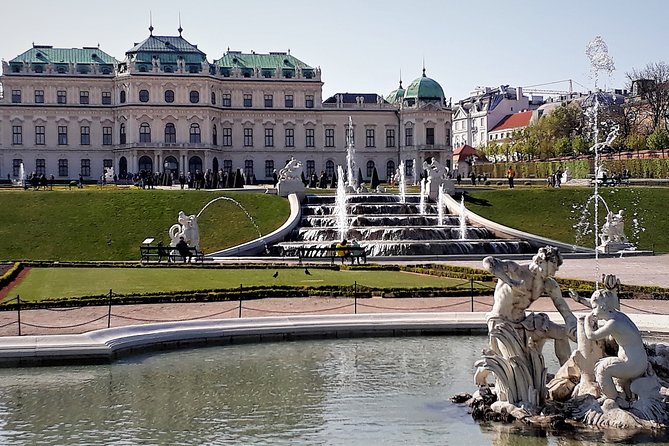
The first stop is Upper Belvedere Palace, where you get one of Vienna’s best broad views from Belvedere Hill. The palace complex is a grand Baroque composition, and its placement helps you see how carefully Vienna’s imperial image was arranged.
You spend about 20 minutes here, with no admission ticket included for the stop. That wording matters: you see the exterior setting and panorama, but this tour does not take you through the museum galleries inside Upper Belvedere. If you want to see Gustav Klimt’s The Kiss or the palace collection, plan a separate visit and allow extra time.
As an opening stop, Belvedere works well because it gives you visual orientation. You begin with a sense of Vienna’s scale, then move toward the formal center of the city. It is also a good moment to ask your guide how the palace, court, and later city developed around one another.
The Ringstrasse turns architecture into a timeline
The next section uses Vienna’s public transportation system for a scenic ride along the Ringstrasse. The route passes the Soviet Monument, Vienna State Opera, Museum Quarter, and Parliament, a sequence often described as the city’s Golden Mile of imperial architecture.
You have roughly 20 minutes for this part. Rather than examining one building in detail, you see how the boulevard works as a whole. The Ringstrasse is Vienna’s great architectural stage, with public buildings designed to express power, culture, learning, and civic government.
The Soviet Monument adds a reminder that Vienna’s story did not end with the Habsburgs. The State Opera points to the city’s musical identity, the Museum Quarter to its artistic life, and Parliament to its political role. The value here is comparison. You see several major institutions close together and learn how to recognize their different purposes and styles.
Public transport is an important part of the experience, but the fare is not included. You should budget separately for any tram, metro, or other local transport used during the tour. The practical lesson can be as useful as the sightseeing. Guides have helped people learn how to buy tickets, understand lines, and move around with more confidence later in the trip.
Rathausplatz, Parliament, and Volksgarten show Vienna’s public face
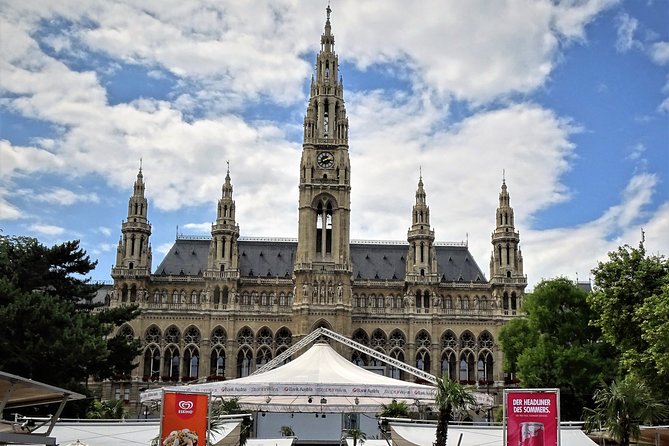
At Rathausplatz, the tour pauses for about 15 minutes. Vienna’s City Hall, the University, Burgtheater, and Café Landtmann frame the square, creating one of the city’s most impressive civic settings.
The square changes with the calendar. The summer Film & Food Festival brings outdoor activity, while the Christmas market becomes one of Vienna’s largest seasonal events. Your guide can explain what gives the square its role in city life, not just point out the buildings.
Parliament follows, with about 10 minutes devoted to its 19th-century historicist design. The building borrows from classical forms to make modern government look connected to ancient democracy. You do not go inside as part of this tour, but the exterior is worth understanding rather than treating as a quick photo stop.
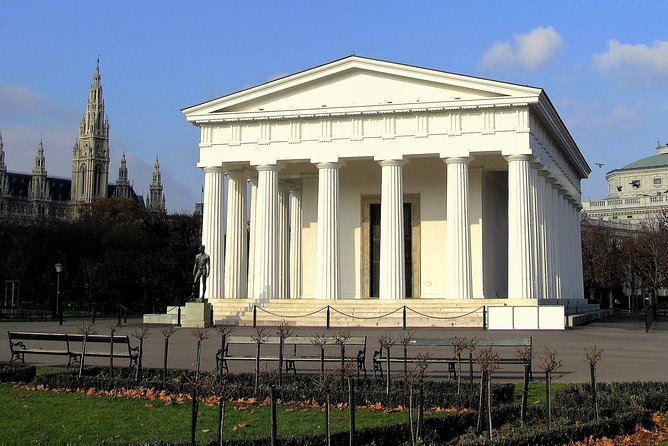
The route then reaches Volksgarten for another 10-minute pause. Its formal garden layout and Theseus Temple offer a calmer contrast to the heavy civic buildings nearby. This is a useful place to notice Vienna’s fondness for planned spaces, symmetry, monuments, and gardens within the city center.
The pace should feel active but not frantic. Several stops are short, and the tour is designed to give you context rather than long visits at each site. If you prefer to study one building for half an hour, you may find the schedule too broad.
Same Alps, a completely different kind of day:
- Vienna: Vivaldi’s Four Seasons Concert in Karlskirche
★ 4.7 · 14,951 reviews - Vienna: Spanish Riding School Training
★ 3.9 · 9,281 reviews - Vienna: Skip-the-cashier-desk-line Giant Ferris Wheel Ride
★ 4.5 · 7,859 reviews - Vienna: Schönbrunn Palace & Gardens Skip-the-Line Tour
★ 4.7 · 7,739 reviews
Heldenplatz and Hofburg carry the weight of empire
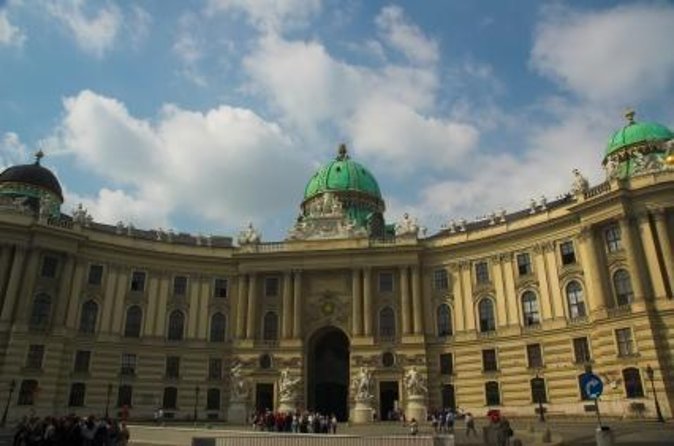
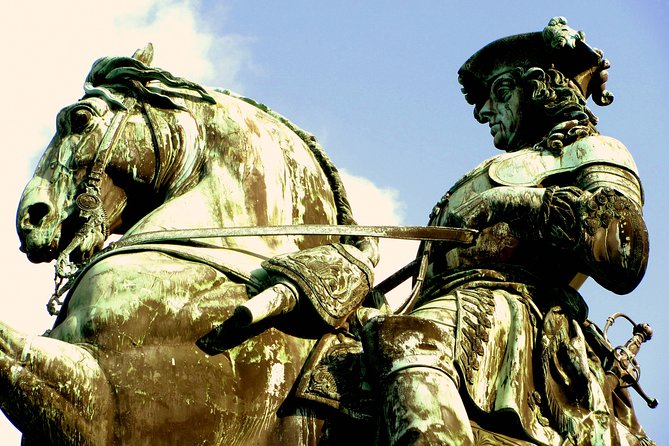
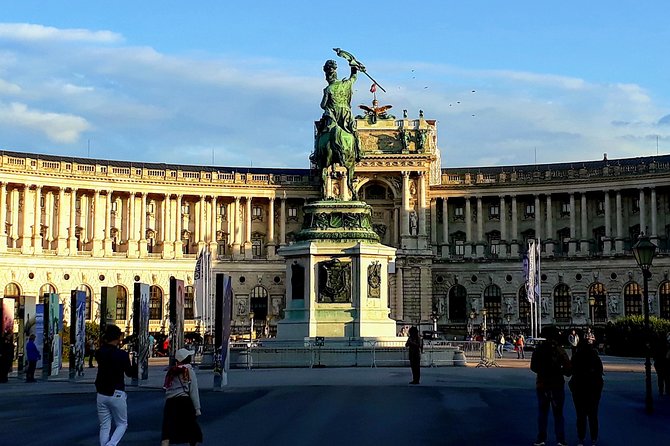
Heldenplatz is one of the most loaded public spaces in Vienna. The newest Hofburg wing frames the square, while two large equestrian statues provide its most recognizable visual markers. The guide also points out the balcony connected with the infamous 1938 event, when Adolf Hitler announced Austria’s annexation into Nazi Germany.
That detail gives the square a difficult but necessary place in Vienna’s story. Imperial ceremony, political spectacle, and the darker chapters of the 20th century all meet here. A good guide can explain the setting without turning the stop into a list of dates.
From Heldenplatz, you enter the world of the Hofburg, the former Habsburg center of power. The complex reflects roughly 650 years of dynastic rule, and you spend about 20 minutes walking through its exterior spaces and passages. The comparison with the Vatican concerns continuity of institutional history, not size or appearance.
The Hofburg can be confusing on your own because it is not one simple palace. It is a collection of wings, courtyards, museums, chapels, offices, and ceremonial rooms built and altered over many centuries. The guide’s role here is to help you read the layers, understand who used the spaces, and decide which interior attractions deserve your return.
Admission to the Hofburg interiors is not included. You may wish to come back for the Imperial Apartments, the Sisi Museum, or the Austrian National Library, but the supplied tour details do not promise entry to any of them. Treat this section as an orientation walk.
Goldenes Quartier reveals modern Vienna beside old traditions
The Goldenes Quartier is Vienna’s luxury shopping district, filled with international brands and polished storefronts. That might sound less essential than a palace, but it helps you see how the old center functions today.
The tour spends about 10 minutes here and also introduces the Schwarze Kameel, a long-standing local meeting place dating to the early 1900s. This contrast is the point: global fashion sits beside an established Viennese institution with its own place in the city’s social life.
Your guide may also offer food and café suggestions in this area. Advice like this can be more useful than another monument, especially if you want to choose a restaurant without relying only on places close to your hotel. The advice is personal and guide-dependent, so ask directly about your preferences, budget, and the kind of meal you want.
Graben and Kohlmarkt lead you toward the cathedral
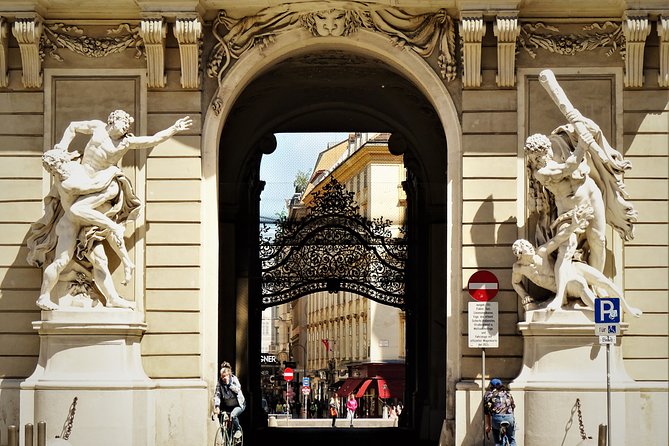
Graben and Kohlmarkt are elegant pedestrian streets linking the Hofburg with St. Stephen’s Cathedral. They are good places to see how Vienna’s ceremonial center transitions into its commercial heart.
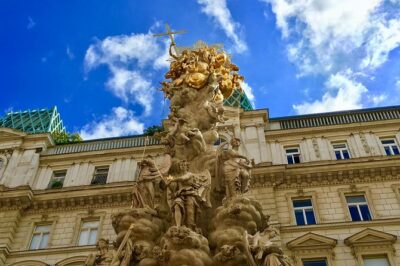
The Plague Column is the visual star of Graben. This Baroque monument is crowded with symbolic figures and religious references, and the guide shows you how to read the imagery rather than reducing it to a single date or caption. You spend around 20 minutes in this area, enough for an explanation and a look at the surrounding streets.
Kohlmarkt continues the polished feel, but the route does not ignore the fact that these streets are working parts of modern Vienna. Shops, cafés, traffic patterns, and old façades all share the same space. I find this sort of walk useful because it connects the postcard city with the place people use every day.
Stephansdom is the finish, not an interior tour
The final stop is Stephansdom, Vienna’s spiritual and visual center. The guide explains how to interpret the cathedral’s stonework, stories, and messages, then leaves you there so you can explore the interior independently.
The listed time is about 15 minutes, and admission is not included. This is one of the clearest limitations of the tour. You see the cathedral and receive an introduction, but you will need to arrange and pay for interior access separately if you want to go inside.
The finish is still practical. You are left in the middle of the city, close to Graben, Kohlmarkt, shopping streets, cafés, and other central sights. You can continue exploring, stop for lunch, or use the guide’s suggestions for the afternoon.
The guides make the format work
The strongest part of this experience is the guiding style. Brigitte is praised for clear explanations of the Habsburg era, help with transportation, restaurant recommendations, and even arranging a reservation in one case. Sabine is noted for meeting people at their accommodation, explaining train tickets and routes, and suggesting a restaurant that became a memorable meal.
Walter’s approach leans toward humor, modern Austrian life, food, and a large store of historical detail. Alexander is described as informative, entertaining, and flexible. Annelie is associated with a calm pace and clear explanations. Brigitte can also guide in Spanish as well as English.
The operator does not promise a specific guide in the supplied details, so you should not book on the assumption that one named person will lead your walk. The names do show the range of personalities and strengths available. You can expect an Austria Guide, with the exact match subject to availability.
The private setting lets you ask questions freely. It also allows the guide to adjust the route or spend more time on subjects that matter to you, within the fixed three-hour limit. That flexibility is especially helpful if you have children, older family members, or people with different interests.
What the $344.67 group price really buys
The price is $344.67 for a private group of up to 10 people. For one or two people, that is a substantial cost compared with a shared walking tour. For a family or group of friends, the per-person price becomes more reasonable, particularly because everyone receives the guide’s attention.
You are paying for more than a list of sights. The fee covers a professional Austria Guide from your hotel, vacation home, train station, or city pier, plus a private route that mixes walking and public transportation. It also buys the chance to ask practical questions about Vienna for the rest of your stay.
Public-transport tickets and paid interiors are extra. Keep that in mind when comparing the total cost with other tours. The tour offers no admission to Upper Belvedere, Hofburg, or Stephansdom, so it works best as a city orientation rather than a package of entry tickets.
The 4.9 rating from 131 reviews and 98 percent recommendation rate suggest a strong record, but value still depends on your style. If you want a compact overview and personal guidance, the price can make sense. If you want long interior visits or a slow architectural study, spend the money on a smaller number of focused experiences instead.
Practical details before you book
Pickup is offered at hotels and vacation homes in town, as well as the Handelskai 265 city pier. Other meeting points can be arranged. Confirmation arrives within 48 hours, subject to availability.
The tour requires a moderate level of physical fitness. You will walk, stand, and use public transportation when useful. Wear comfortable shoes and plan for weather, since the main sights are viewed outside and the experience runs in the morning or afternoon.
Service animals are allowed, but pets are not permitted in certain areas visited. The activity is private, with only your own group participating.
Free cancellation is available if you cancel at least 24 hours before the start time. Changes or cancellations inside that window are not accepted for a refund, and the cut-off follows Vienna’s local time.
Who will get the most from this Vienna walk
I would recommend this tour to first-time visitors who want orientation before choosing museums and palaces. It is also a strong fit for families, since the guide can adjust the pace and handle interruptions more easily than a large group tour.
It suits history fans, too, especially if you want the Habsburg period, the Ringstrasse, political change, and modern Austria in one conversation. Food-minded visitors can ask for café, dessert, and restaurant ideas, while independent explorers will value the transit lesson.
I would not choose it as your only Vienna activity if you want extensive time inside museums. The itinerary touches many major places but does not include admission. Think of it as a well-informed first look that helps you spend the next few days wisely.
Should you book Vienna at First Glance?
Book it if you want a private city orientation with real practical value, especially at the beginning of your stay. The doorstep pickup, guide flexibility, transport advice, and broad route save you time and reduce the usual first-day confusion.
Skip it if you prefer a specialist tour focused on one palace, one museum, or detailed interior access. For everyone else, this is a sensible way to meet Vienna: begin with the Belvedere view, follow the imperial Ringstrasse, face the complicated history of Heldenplatz, and finish at Stephansdom with the city laid out in your mind.
FAQ
How long is the Vienna at First Glance tour?
The tour lasts approximately three hours and is offered as a morning or afternoon experience.
Is the tour private?
Yes. Only your own group participates, with a maximum group size of 10 people.
Where does pickup take place?
Pickup is offered at hotels and vacation homes in town, as well as the Handelskai 265 city pier. Other meeting points can be arranged.
Is public transportation included?
No. Public transportation may be used when useful, but transportation costs are not included in the tour price.
Does the tour include palace or cathedral admission?
No. The itinerary views the main sights from outside. Admission to Stephansdom is not included, and the tour does not include interior admission to Belvedere or Hofburg.
What level of fitness is required?
You should have a moderate level of physical fitness for walking, standing, and using public transportation during the tour.
What is the cancellation policy?
You can cancel at least 24 hours before the local start time for a full refund. Cancellations or changes made less than 24 hours before the experience are not accepted for a refund.
Just added around Vienna
- World War II History Vienna Old Town Private Walking Tour★ 4.8 · 9 reviews
- From Krems: Wachau Valley River Cruise on the Danube★ 4.6 · 95 reviews
- Vienna: Winery and Wine Tasting Tour with a Wine Expert★ 5.0 · 5 reviews
- Vienna: Wine Tasting E-Bike Tour★ 4.9 · 46 reviews
- Vienna: Wine Tasting at Schönbrunn Palace★ 4.3 · 71 reviews
- Vienna: Wine Tasting Tour★ 4.8 · 61 reviews
- Vienna: Wiener Schnitzel and Strudel Cooking Class★ 4.9 · 126 reviews
- Vienna Urban Art Tour: Explore a different side of Vienna!★ 3.8 · 14 reviews
Walking Tours, compared.
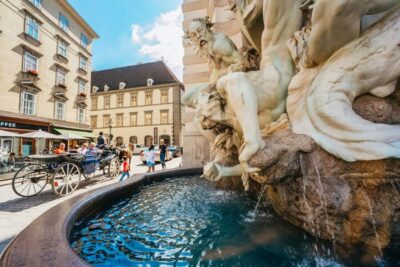
Guided Walking Tour of City Center Highlights
Read our review →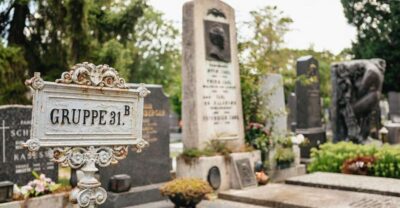
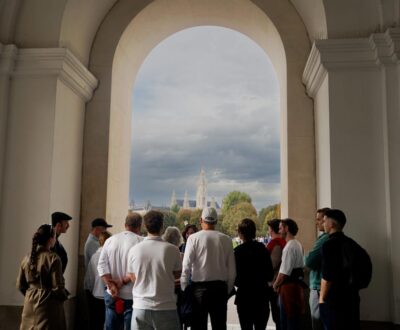
Guided Walking Tour of City Highlights & Hidden Gems
Read our review →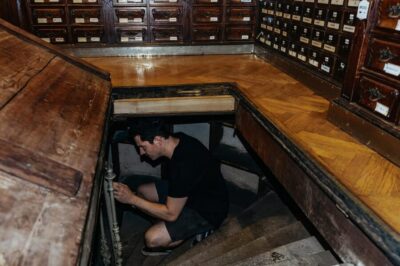
Vienna Historic Center Small Group Walking Tour
Read our review →
Browse the lists this tour appears in