
Reviewed · HISTORICAL TOURS
Time Travel-Magic Vienna History Tour Ticket
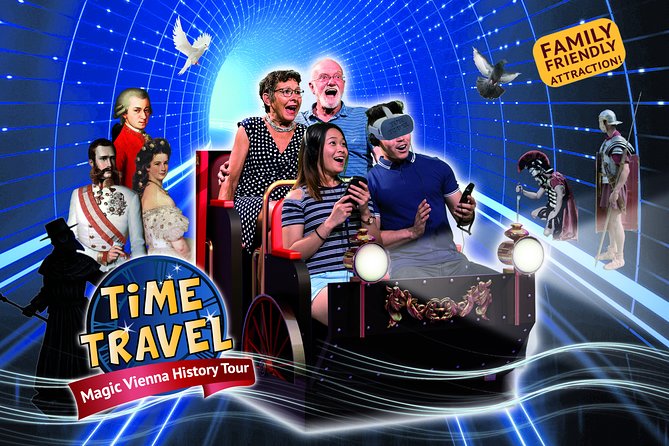
Vienna’s past arrives as a fast-moving stage show rather than a standard walking tour. In the old vaults of the Michaelerkloster, you pass from Roman Vindobona to the Habsburg court, a plague pit, the music of Mozart and Strauss, a WWII air raid shelter, and a virtual ride through the city.
I like the mix of 5D film, VR, animatronics, wax figures, and live effects, since each room teaches history in a different way. I also like the short one-hour format, which gives you a useful first look at Vienna without taking half a day.
The main caution is that this is a playful overview, not a serious history seminar. Some scenes are simple, and the experience works best for families, first-time visitors, and anyone who learns better through sights and sounds than through dates and long explanations.
Key points to know before you book
- Roman Vindobona to modern Vienna: The show moves quickly through major periods, including Roman, medieval, Habsburg, musical, and 20th-century Vienna.
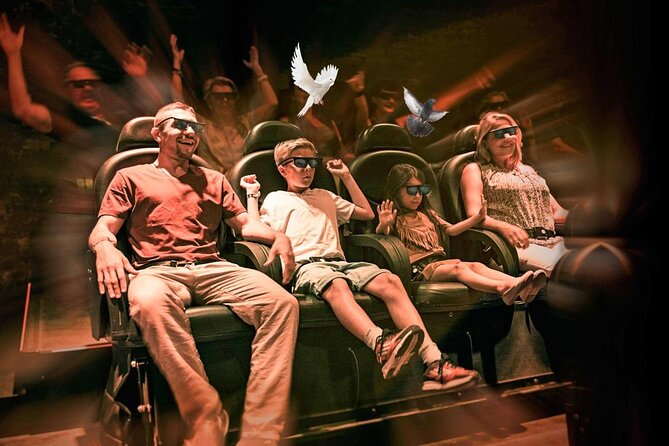
- Many forms of technology: Expect a 5D cinema, virtual reality, animatronics, projections, audio commentary, and simulated rides.
- English audio is available: The German presentation is translated through headphones into English and nine other languages.
- A useful rainy-day activity: The entire experience takes place indoors in the historic Michaelerkloster vaults.
- Best for a broad introduction: You get a lively outline of Vienna’s past, but not detailed treatment of every event.
- Small-group setting: The maximum group size is 32 people, though noise from poorly supervised children can affect the audio portions.
A history show beneath the Michaelerkloster
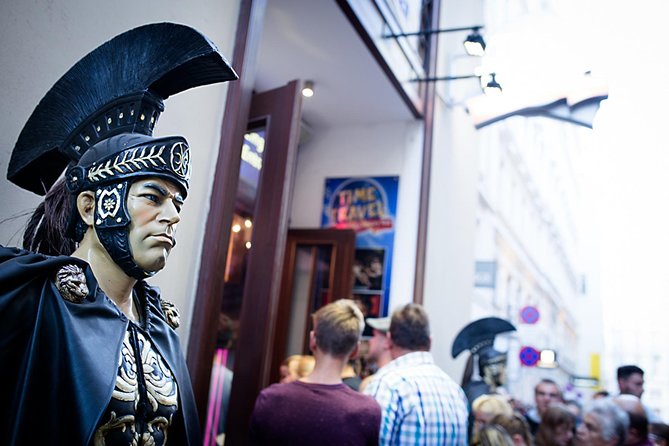
Time Travel Vienna begins in the historic vaults of the 400-year-old Michaelerkloster. That setting gives the experience some atmosphere before the technology even starts. You are not simply watching a film in a modern theater. You move through a series of staged rooms and presentations built into an old central Vienna site.
The format is guided and carefully timed. The live presentation is in German, while headphones provide simultaneous translation in English, Spanish, Italian, French, Japanese, Chinese, Russian, Hungarian, Polish, and Czech. This makes the attraction practical for international visitors, though you should expect to follow the audio through your headset rather than listen to a full English-speaking guide.
The show lasts about one hour. One account describes it as closer to an hour and a half, but the stated duration is approximately one hour, so I would plan on that and leave extra time only if your schedule is flexible.
The presentation moves from one station to another. You are not walking across Vienna, and you do not get the same physical sense of streets, squares, and buildings that a city tour provides. Instead, the attraction compresses centuries into a single indoor visit.
That compression is both the strength and the weakness. You get a quick framework for the city’s past, but individual events are treated in broad strokes. I would use it to prepare for sightseeing, not to replace a visit to Vienna’s palaces, churches, museums, and memorials.
A few more Vienna trips to weigh up
- Vienna: Time Travel and Magic Vienna History Tour
★ 4.6 · 3,879 reviews - Vienna: World War II Historical Walking Tour
★ 4.8 · 1,772 reviews - Vienna Historic Center Small Group Walking Tour
★ 5.0 · 1,746 reviews
Roman Vindobona sets the starting point
The journey begins with Roman Vienna, when the settlement of Vindobona occupied the area. The show uses visual effects and staged scenes to make this distant period easier to picture than it would be from a paragraph in a guidebook.
This section is valuable if you have little background in Vienna’s earliest history. You get a sense that the city did not begin with the Habsburgs or the grand Ringstrasse. It developed from an older Roman military settlement, and that first chapter helps place the later city in context.
Do not expect an archaeological lecture. The information is delivered quickly and theatrically. You may leave with a general idea of Roman Vienna rather than a long list of dates, buildings, or military details.
That approach suits children and adults who want a clear introduction. If you already know Vienna’s Roman story well, this portion may feel basic. Still, it provides a useful opening because the show then builds toward the medieval and imperial city.
Medieval Vienna and the plague pit
The medieval scenes turn darker. You follow Vienna into the era of plague, including a visit to a plague pit. The special effects help create a stronger emotional response than a conventional display case would, but the attraction keeps the information moving rather than lingering on grim detail.
This is one of the sections parents should consider before booking. The experience is not presented as a horror attraction, yet the plague and air raid scenes can feel intense for younger children. A 15-year-old who was worried about the darker material still found the overall experience enjoyable, but sensitivity varies.
For older children, the medieval section can make history feel immediate. The plague is no longer just a date in a textbook. You get a staged impression of how frightening and disruptive it was for people living in the city.
The drawback is brevity. Vienna’s medieval development involved much more than disease and hardship, but the show has many centuries to cover. This stop gives you an atmospheric glimpse, not a detailed account of medieval urban life.
The Habsburgs in a quick royal tour
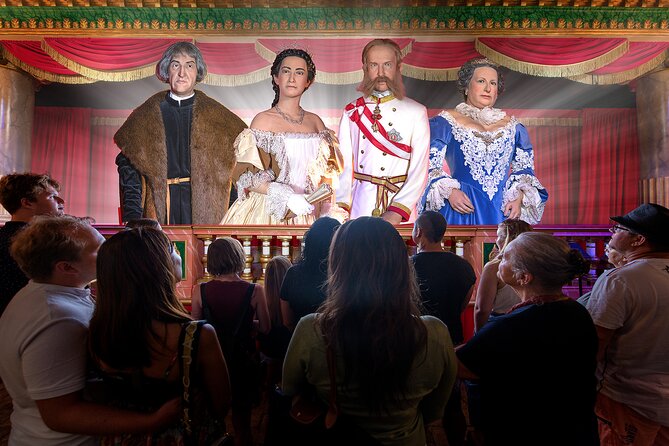
The Habsburg period receives more attention because it is central to Vienna’s identity. You follow in the footsteps of the emperors and see how the ruling dynasty shaped the city.
The presentation is designed to make imperial history accessible. Instead of asking you to remember a long family tree, it gives you visual scenes, characters, and dramatic settings. Wax figures and animatronic elements add a physical presence to the royal story.
I find this useful before visiting Hofburg Palace or Schönbrunn Palace. The show cannot explain every emperor, marriage, war, and political change, but it gives you a starting point. Afterward, those grand buildings have a clearer connection to the people who used them.
At the same time, keep your expectations in check. The Habsburg story is simplified for speed and entertainment. If you want serious detail about Maria Theresa, Franz Joseph, Sisi, or the end of the monarchy, you will need a palace visit or a proper history tour.
Same Alps, a completely different kind of day:
- Vienna: Vivaldi’s Four Seasons Concert in Karlskirche
★ 4.7 · 14,951 reviews - Vienna: Spanish Riding School Training
★ 3.9 · 9,281 reviews - Vienna: Skip-the-cashier-desk-line Giant Ferris Wheel Ride
★ 4.5 · 7,859 reviews - Vienna: Schönbrunn Palace & Gardens Skip-the-Line Tour
★ 4.7 · 7,739 reviews
Mozart, Strauss, and Vienna’s musical identity
Vienna’s musical past gets its own lively section. You meet representations of Mozart and Strauss and ride a spinning waltz car through the city’s musical heritage.
The ride is one of the attraction’s most distinctive touches. It turns a cultural subject into a physical experience, which is especially helpful for children and teenagers who may not be eager to sit through a standard music history talk.
You will not hear a full concert or receive a detailed account of Vienna’s musical institutions. Instead, the show connects famous composers with the city’s image as a center of classical music and the waltz.
This is a good example of the attraction’s overall method. It takes a familiar subject, adds motion and visual effects, and gives you a memorable outline. The trade-off is that famous names receive more attention than the wider social and artistic story behind them.
The air raid shelter and wartime Vienna
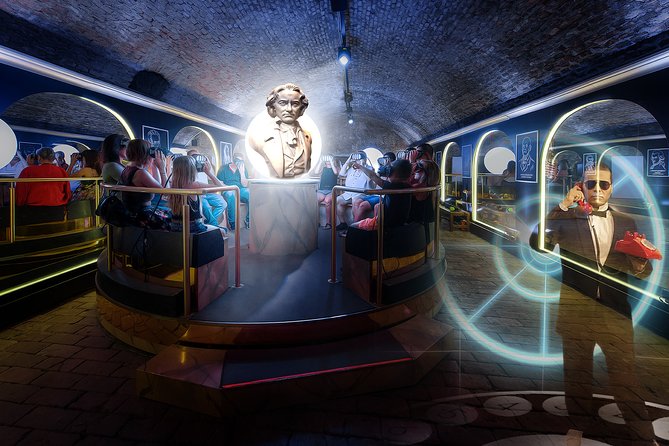
The WWII portion takes place in an original air raid shelter. The scene is meant to give you a physical sense of what an air raid was like, and the effects can be thought-provoking.
This is among the more serious parts of the show. The attraction’s tone is often light, but the shelter reminds you that Vienna’s past includes fear, destruction, and political trauma, not only palaces and music.
The wartime segment is brief. If WWII is your main reason for visiting, you may find it too limited, especially since some of Vienna’s 20th-century history receives only a quick treatment. One assessment found that the attraction could have covered more of the Second World War.
Still, the inclusion of an actual air raid shelter gives this section weight. It is not just a cartoon version of history. You get a short, sensory reminder of how war affected people in the city.
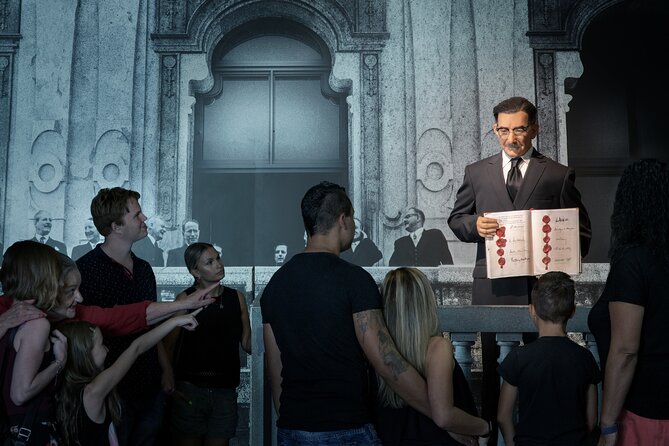
The show also reaches the postwar period with Leopold Figl’s famous declaration that Austria was free. That moment helps bring the story toward modern Austria, even though the political background is presented simply.
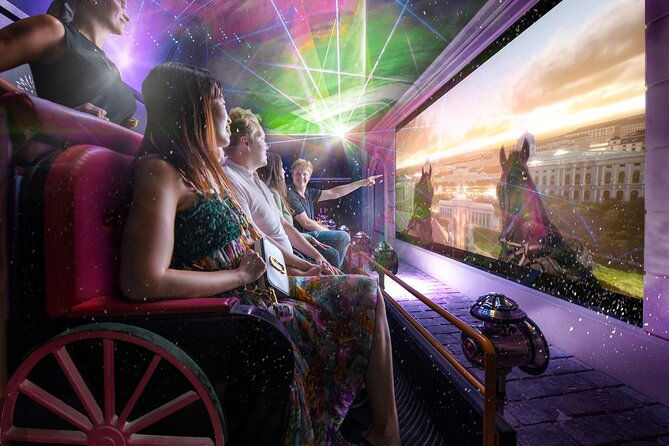
Virtual Vienna from a fiaker
Near the end, a magical carriage ride brings you back toward the present. The virtual fiaker ride shows major Vienna landmarks as you travel through a computer-created version of the city.
This is not the same as riding in a real horse-drawn carriage. It is a simulated attraction, using visual effects to give you a broad look at Vienna without leaving the building. For someone arriving in the city for the first time, this can help you recognize the importance of the central landmarks before seeing them in person.
The virtual ride also makes sense as a bridge between history and present-day sightseeing. You have just moved through Roman, medieval, imperial, musical, and wartime Vienna. Now you see how those layers fit into the city you are about to explore.
Do not use this as a substitute for walking around Vienna. A virtual view cannot show you the scale, street life, stonework, or quiet corners of the real city. Think of it as a preview and orientation tool.
Why the technology works, and where it does not
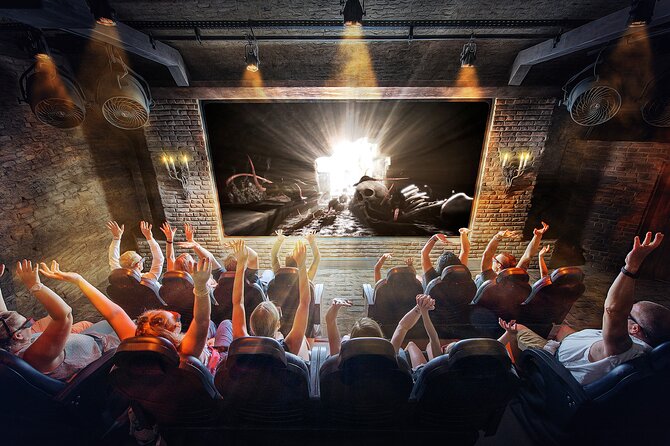
The attraction’s strongest feature is variety. A short film gives way to a staged scene, then VR, wax figures, robotics, headphones, or a simulated ride. That change of pace keeps the hour moving.
The 5D cinema receives particular attention because it adds physical sensations to the visuals. The virtual reality segment also helps turn abstract history into something you can see around you. These effects are not subtle museum interpretation, but they make the material easier to remember.
The attraction is also useful for mixed-age groups. Adults can pick up a quick outline of Vienna, while children have enough movement and spectacle to stay involved. Several activities are suitable for families, and the presentation avoids overwhelming you with long lectures.
The limits are clear. The technology sometimes takes priority over historical detail. If you already know Austrian history, you may find the explanations too simple. One useful way to approach the show is to treat it as an introduction with theatrical tools, not as the final word on Vienna.
Audio quality and group behavior also matter. Because much of the information comes through headphones, a noisy group can make it hard to follow the translation or enjoy the atmosphere. A group of six uncontrolled children once disrupted the audio experience for others, so choosing a quieter session may improve your visit if you have a choice.
Is $27.76 a fair price?
At $27.76 per person, this is not the cheapest one-hour activity in Vienna. You are paying for a multimedia production, several different rooms, special effects, staff, and a central indoor attraction rather than for a simple guided walk.
The value depends on what you want. If you are looking for detailed history, the price may feel high for a short overview. A museum ticket or walking tour may give you more depth, though not the same mix of rides, VR, and staged effects.
For a family, the price is easier to justify because the show serves several purposes at once. It provides entertainment, introduces major periods of Austrian history, and gives children a reason to stay engaged. For a first visit, it can also help you decide which real sites deserve more of your time.
I would see the ticket as good value for a rainy afternoon, a break from palaces and churches, or a family activity that adults can enjoy too. It is less compelling if you have only a few hours in Vienna and prefer authentic buildings, art, and live local experiences.
The attraction is commonly booked about 10 days ahead, so reserving early is sensible during busy periods. Confirmation is provided at booking, and the venue is near public transportation. No hotel pickup, food, or drinks are included, so plan it as one stop within a larger day in central Vienna.
Who should book Time Travel Vienna?
I would recommend it most strongly to families with school-age children and teenagers. The hands-on format gives younger visitors a way to meet Vienna’s past without asking them to stand quietly in front of labels for hours.
First-time visitors also benefit. If the Habsburgs, Vindobona, Mozart, and postwar Austria are all new to you, the show gives you a basic map of the city’s story. You can then visit the Hofburg, Schönbrunn, museums, and memorials with more context.
It can work well for adults, too, especially if you enjoy theatrical attractions or want a light indoor activity. Some adults will appreciate the clever use of technology, while others may find the presentation too simple or artificial.
I would be cautious about booking it for very young children who may be frightened by the plague or air raid scenes. Animals are not allowed inside Time Travel Vienna, so you will need to make other arrangements for pets.
The group limit is 32 people, which keeps the experience from becoming a huge crowd. Still, the format involves shared rooms, headphones, and timed presentations, so the quality of your visit partly depends on how quiet and attentive the group is.
Practical timing and cancellation advice
The mobile ticket makes entry simple, and the attraction is offered in English through translated audio rather than an English live presentation. The German commentary is translated at the same time through headphones, so make sure you select and use the English audio option before the show begins.
Because the activity lasts about an hour, it fits neatly between central Vienna sightseeing stops. You might schedule it before visiting the Hofburg, or use it as an indoor pause after walking around the historic center.
Give yourself enough time to arrive at the listed start time. Changes made through a booking platform can cause problems if the venue does not receive the updated reservation, so check that any time change is confirmed directly in the final booking details. The stated cancellation policy allows a full refund when you cancel at least 24 hours before the start time. Cancellations or changes within 24 hours are not accepted for a refund.
My verdict on the Vienna history show
Book Time Travel Vienna if you want a brisk, entertaining introduction to the city with VR, a 5D cinema, animatronics, music, and simulated rides. It is especially useful for families, first-time visitors, and anyone who wants history presented with motion and humor.
Skip it if your priority is detailed scholarship, long time in authentic historic spaces, or a serious account of WWII and the Habsburg era. The show simplifies major subjects and covers them quickly.
For most people, I would place it early in a Vienna visit. Use the hour to get your bearings, then follow it with the real places it introduces. The palaces, streets, churches, and museums will provide the depth that this lively underground show cannot.
FAQ
How long does Time Travel Vienna last?
The experience lasts approximately one hour. Some visits may run a little longer, but you should plan around the stated one-hour duration.
Is an English tour available?
English audio translation is available through headphones. The live presentation is in German and is translated at the same time into English and nine other languages.
What languages are available?
Audio guides are available in English, Spanish, Italian, French, Japanese, Chinese, Russian, Hungarian, Polish, and Czech.
What does the ticket include?
The ticket includes admission to Time Travel Vienna, including the history show, special effects, virtual reality, the 5D cinema, animatronics, and the virtual fiaker ride. Food, drinks, and hotel transportation are not included.
Are animals allowed inside Time Travel Vienna?
No. Animals are not allowed at Time Travel Vienna.
Can I cancel for a full refund?
Yes. You can receive a full refund if you cancel at least 24 hours before the experience start time. Cancellations or changes made less than 24 hours before the start time are not accepted for a refund.
Just added around Vienna
- Ottakringer Brewery tour★ 4.0 · 6 reviews
- New Hofburg Palace Tour House of Habsburg★ 4.5 · 5 reviews
- Private Van & Walk Tour – One Perfect Day in Vienna★ 5.0 · 21 reviews
- True Crime mobile puzzle rally Vienna★ 4.0 · 3 reviews
- Vienna Naschmarket Food Tasting Tour★ 4.0 · 30 reviews
- Vienna Nightlife Experience: Food, Wine, Cocktails & Vibes★ 5.0 · 119 reviews
- Myth Mozart★ 4.0 · 80 reviews
- ( Night Tour ) With Private Guide + wine or prosecco★ 4.0 · 12 reviews
Historical Tours, compared.
Vienna Historic Center Small Group Walking Tour
Read our review →
Skip-the-Line Schonbrunn Palace Guided Tour and Vienna Historical City Tour
Read our review →
Vienna Mozart Concert in Historical Costumes at the Musikverein
Read our review →
Browse the lists this tour appears in