
Reviewed · HISTORICAL TOURS
Private tour of historical Vienna with Jan
Vienna reveals itself best on foot, where an imperial courtyard, a baroque church, and a coffeehouse can appear within a few minutes of one another. Jan Kepinski’s private walk ties those sights together with stories about Habsburg rulers, wartime Vienna, architecture, food, and daily life. I especially like the stop at Conditorei Sluka, a classic coffeehouse with an Art Nouveau interior, and the way the tour finishes at Naschmarkt, useful for lunch and further exploring.
I also like the private format. You can ask questions, adjust the pace, and focus on what matters to your group instead of keeping up with a large crowd. Jan is praised for clear English, lively storytelling, and practical help, including advice on restaurants, cafés, public transit, and places to visit later.
The main consideration is scope. This is a walking orientation tour, not a series of long museum visits. Most sights are viewed from outside or through palace courtyards, and coffee, cake, and gratuities are not listed as included. If you want detailed interior tours of the Hofburg or museums, you will need separate tickets and time.
Key points to know before booking
- A private walk for up to 10 people: The $432.53 group price can make sense for families and small groups who want one guide dedicated to them.
- Jan Kepinski leads in English: He is a state-licensed guide known for clear explanations, humor, and strong knowledge of history, art, and architecture.
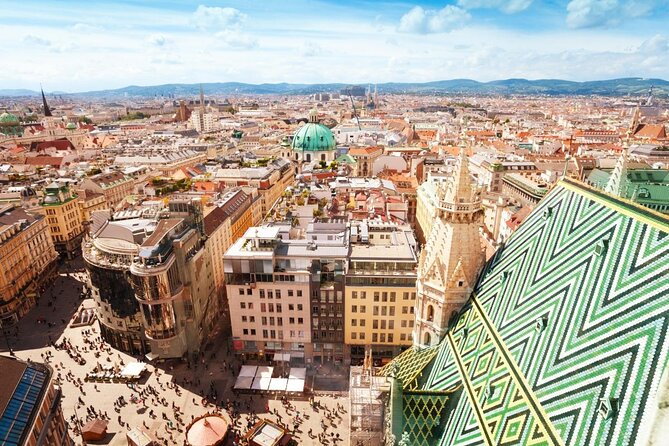
- The route covers Vienna’s essential center: You see Hofburg, Heldenplatz, Maria Theresien Square, St. Stephen’s Cathedral, Graben, Kohlmarkt, and more.
- Coffeehouse culture is part of the plan: The break at Conditorei Sluka adds a distinctly Viennese pause to the historical walk.
- The finish at Naschmarkt is practical: You end near one of Vienna’s best-known open-air food markets, with an easy chance to continue your day.
- The tour is best early in your stay: Jan provides city orientation and recommendations that can help shape the rest of your visit.
Why this private Vienna walk works well on a first day
I see this tour as a city primer rather than a single-attraction visit. In two to three hours, you move through the old town, the former imperial center, the museum district, a park, shopping streets, and several major churches. That variety helps you understand how Vienna fits together before you return to its museums, palaces, and cafés on your own.
The private setup matters most for families and groups with different interests. You can ask why a building looks the way it does, pause for a photograph, or steer the conversation toward music, architecture, politics, food, or the Habsburg family. Jan has also adjusted tours to suit individual interests and energy levels.
The route begins at Stephansplatz, an easy central meeting point. It ends at Naschmarkt in the 6th district, so you are not simply returned to where you started. You finish with a useful next stop for food, browsing, or onward exploration.
Jan’s style, based on the experience details and guest feedback, is story-led rather than lecture-heavy. He explains not just what a building is, but why Vienna changed over time. That approach is useful in a city where grand façades can otherwise blur together.
A few more Vienna trips to weigh up
- Vienna: Time Travel and Magic Vienna History Tour
★ 4.6 · 3,879 reviews - Vienna: World War II Historical Walking Tour
★ 4.8 · 1,772 reviews - Vienna Historic Center Small Group Walking Tour
★ 5.0 · 1,746 reviews
Stephansplatz and the old town’s essential orientation
The first section explores Vienna’s historic center for about 45 minutes. You get an introduction to the city’s political, cultural, and architectural story while also learning about eating and shopping in the center.
This is where Jan’s local advice can be most useful. The old town is compact, but it contains many choices, from formal cafés and luxury shops to less obvious places for a quick bite. You can use this first section to ask where to return later and which areas fit your budget and interests.
The walk is not only about famous names. It gives you a sense of how Vienna functions as a city today, including the qualities that have made it a highly livable European capital. That balance between grand history and ordinary city life is one of the tour’s better features.
Because the stop is free, you are not paying extra admission just to get oriented. The tradeoff is that the route focuses on explanation and exterior views rather than extended time inside paid attractions.
Hofburg courtyards and the Habsburg story
The Hofburg receives about 30 minutes. This former imperial palace is not one tidy building, but a collection of wings and structures added under different rulers and in different periods.
That patchwork makes the palace a good place to discuss the Habsburg dynasty. You see the outer courtyards while Jan explains how the family shaped Austria and much of Europe. The courtyards also help you read the palace as a working center of power rather than just a pretty façade.
I would pay close attention to the changes in style. The Hofburg’s various sections reflect changing tastes, political needs, and the growth of imperial government. A guide who explains those layers can turn a large complex into a readable story.
The tour does not include extended entry into the palace museums or imperial apartments. If those interiors are high on your list, plan a separate visit. This stop gives you the background to make that later visit more rewarding.
Heldenplatz and Maria Theresien Square
Heldenplatz takes about 15 minutes and offers some of Vienna’s grandest architectural views. The square is tied to the military and political story of the Austrian Empire, while the nearby National Library palace adds a powerful sense of scale.
This is a place where a short explanation can prevent a shallow photo stop. Jan discusses the figures connected with Austria’s imperial past and helps you see why the square was designed to impress. I would use this pause to look across the open space at the buildings rather than focusing only on individual statues.
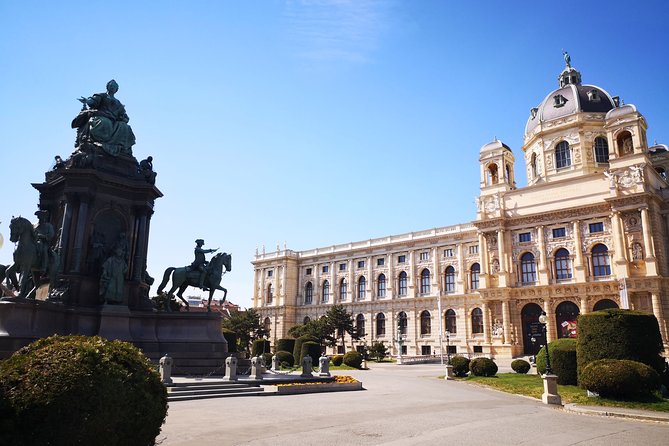
The route then reaches Maria Theresien Square, another 15-minute stop. Two large museums face each other across the square, the Natural History Museum and the Art History Museum, with a monument to Maria Theresia between them.
Maria Theresia’s rule offers a useful shift in the story. Her period involved modernization, stronger central government, and the growth of a professional bureaucratic class. You get a look at the ruler behind those changes rather than treating her statue as just another imperial monument.
The twin museums are important choices for later in your visit. The walking tour does not replace time inside them, but it shows you how they fit into Vienna’s larger imperial plan.
Same Alps, a completely different kind of day:
- Vienna: Vivaldi’s Four Seasons Concert in Karlskirche
★ 4.7 · 14,951 reviews - Vienna: Spanish Riding School Training
★ 3.9 · 9,281 reviews - Vienna: Skip-the-cashier-desk-line Giant Ferris Wheel Ride
★ 4.5 · 7,859 reviews - Vienna: Schönbrunn Palace & Gardens Skip-the-Line Tour
★ 4.7 · 7,739 reviews
A coffeehouse pause at Conditorei Sluka
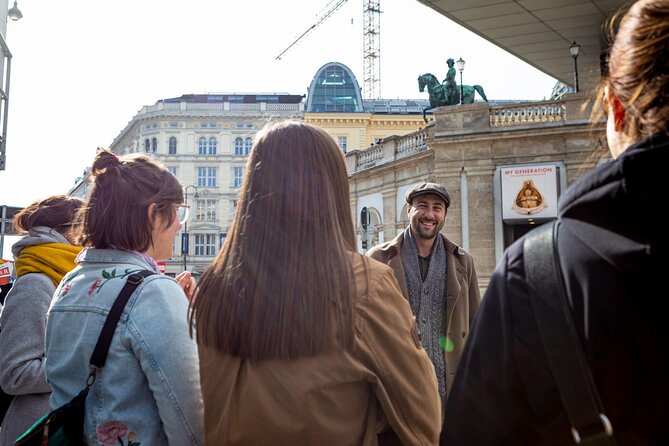
After the large squares and formal palace spaces, the stop at Conditorei Sluka gives the tour a welcome change of pace. You have about 30 minutes for coffeehouse culture in a traditional Viennese setting with an end-of-the-century Art Nouveau interior.
This is one of the tour’s most appealing details. Vienna’s cafés are not merely places to grab a drink. They are part of the city’s social and cultural identity, and a pause over coffee and cake gives you a small taste of that tradition.
The tour information does not list food or drinks as included, so you should expect to pay separately for anything you order. That is a minor cost, but it is worth knowing when comparing the total price with a tour that includes refreshments.
Jan has also taken families to a bakery when a child needed food and helped arrange a café seat at the end of a walk. Those details suggest a guide who pays attention to practical needs, not just historical facts. Still, specific café arrangements can vary, so treat the break as a planned stop rather than a guaranteed menu or reservation.
St. Stephen’s Cathedral and the city’s spiritual center
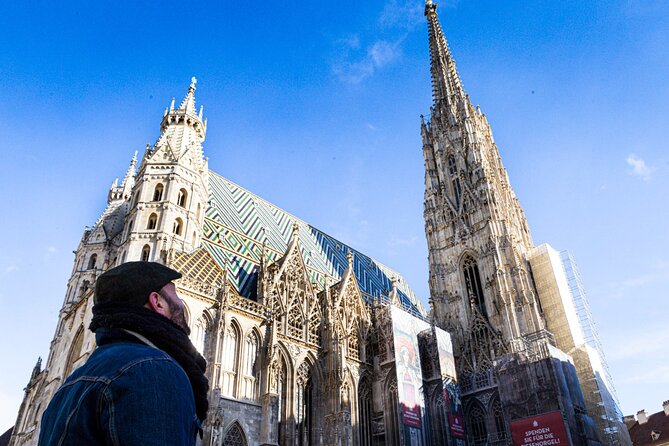
St. Stephen’s Cathedral receives about 10 minutes. That sounds brief, but the cathedral is a powerful anchor for the route. It is both the spiritual center and the geographical heart of Vienna.
The building developed over many decades and combines different architectural styles. Jan also discusses its postwar reconstruction, including the cooperative effort to rebuild after a period that left Austria divided and damaged.
A short stop can work well if you want a clear introduction before exploring the cathedral more fully. It is less suitable if you want detailed time inside, a long look at the artwork, or a climb for city views. You can return independently if the building captures your interest.
The cathedral also appears in Jan’s storytelling through small details and suggested ways to look more closely. One particularly useful feature of his approach is that he encourages you to notice things you could easily miss when walking through the busy center.
The Jesuit Church and Austrian baroque style
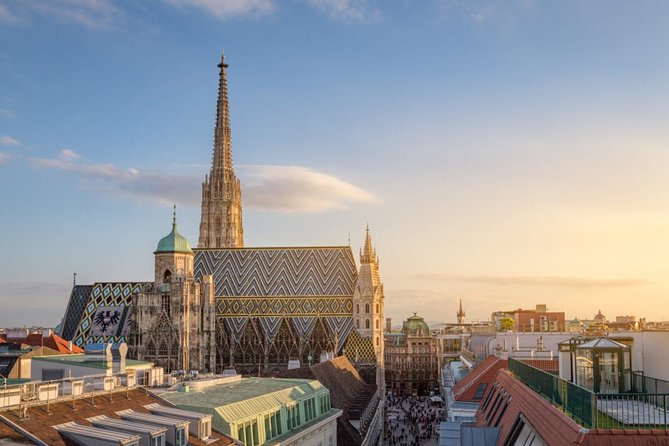
The Church of the Jesuits is another short stop, about 10 minutes, but it may be one of the most rewarding for anyone interested in decorative art. It is described as one of Vienna’s finest baroque churches and one of the least visited.
That combination makes it a welcome contrast to the better-known cathedral. Inside, Austrian baroque can be flamboyant, theatrical, and full of visual movement. Even a short introduction helps you recognize how different this style is from the more restrained architecture found elsewhere on the route.
Since the stop is brief, you should not expect a full art-history lesson or a long period for quiet viewing. But I like the choice of including a less obvious church. It gives the walk a sense of discovery without requiring you to leave central Vienna.
Stadtpark and the Ringstrasse’s greener side
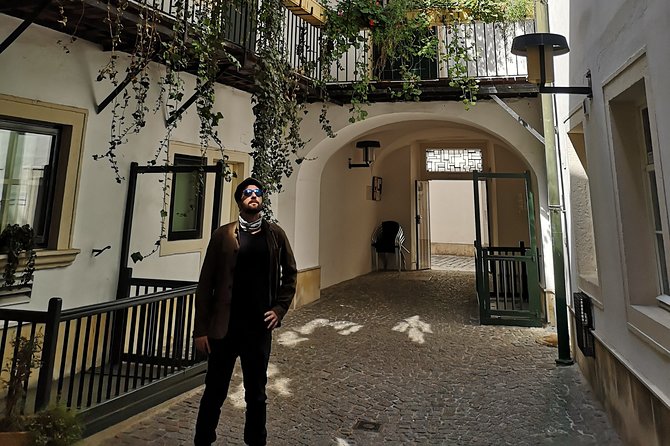
The 15-minute visit to Stadtpark provides a break from stone, traffic, and narrow old-town streets. The park follows the southern part of the Ringstrasse, Vienna’s grand boulevard, and honors painters, musicians, and politicians linked with the city’s golden age.
This pause has practical value. A two to three hour walk through central Vienna can feel dense, especially for children or anyone adjusting after a long journey. A green space gives you a chance to slow down while Jan continues the story of the city’s cultural life.
I also like the route’s rhythm here. You move from imperial courtyards to open squares, then to a café, churches, shopping streets, and a park. It prevents the experience from becoming a nonstop parade of palace façades.
The park is not the main reason to book the tour, but it helps make the pacing more comfortable. If you want a tour packed only with major monuments, this stop may feel less essential. If you appreciate a more human pace, it is a sensible inclusion.
Graben, Kohlmarkt, and the route to Naschmarkt
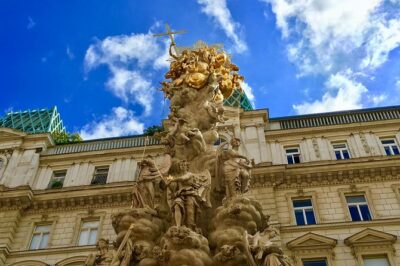
The walk includes about 10 minutes on Graben and Kohlmarkt, Vienna’s high-end shopping streets. Luxury brands and coffeehouses dominate these streets, but Graben also carries a major historical marker in the form of its baroque plague column.
The column commemorates survival after a devastating plague at the end of the 17th century. Jan can use it to connect religious art, public memory, and the fears of an earlier Vienna. I would look closely at the column’s crowded decoration, especially after hearing why it was created.
Kohlmarkt and Graben are also useful for orientation. You learn where the grand shopping streets run and how they connect to the old town. If you plan to shop, you can return later with a better sense of the area.
The tour ends at Naschmarkt, a famous open-air food market. The supplied details do not promise a market tasting, but the location is convenient. You can continue with lunch or explore the surrounding district after saying goodbye to Jan.
What Jan adds beyond the route
The strongest part of this experience is not simply the number of sights. It is Jan’s ability to link them. His explanations cover history, architecture, art, and the reasons Vienna looks and works as it does today.
His English is described as excellent, which matters when a tour depends on stories and detail. The experience also allows questions throughout. That can be especially helpful when you are traveling with children, older family members, or people with very different interests.
Jan has helped visitors find subway stations and purchase weekly passes, offered bakery stops for hungry children, and suggested cafés and restaurants for later. Those services are not presented as formal inclusions, so I would not book the tour expecting transit assistance on demand. But they show the practical value of having a local guide at the beginning of your stay.
He also personalizes stories. One family received suggestions connected with a late parent’s interest in Vienna, including the idea of sponsoring a rose in his memory at Volksgarten. That kind of personal attention is unusual in a standard group walk.
Price, pace, and who gets the best value
The price is $432.53 per group of up to 10 people. For one or two people, that is a serious expense. For a family or small group sharing the full cost, the value improves considerably, especially when you want a private English-language guide.
The tour lasts about two to three hours. That is enough time for a strong orientation, but not enough for long interior visits at several attractions. I would book it for context, storytelling, and local advice, then reserve separate time for the Hofburg interiors, the museums, or a fuller cathedral visit.
The route is most useful at the start of your stay. Many people schedule it on their first day, and that makes sense. You can learn where the main areas are, ask about food and shopping, and use Jan’s suggestions to plan the following days.
The tour is booked an average of 62 days ahead, so advance planning is sensible, particularly if you want a certain date or are visiting during a busy season. Confirmation is provided within 48 hours, subject to availability.
Pickup is offered, though the listed meeting point is Stephansplatz. If pickup matters to you, confirm the exact arrangement when booking. The tour is near public transportation, service animals are allowed, and most people can participate.
Free cancellation is available up to 24 hours before the start time. Cancellations or changes inside that window are not accepted for a refund.
Should you book Historical Vienna with Jan?
I would choose this tour if you want a private introduction to Vienna that mixes major sights with useful local advice. It suits families, couples, and small groups who prefer conversation and flexibility over a fixed large-group schedule.
Book it early in your stay, and use the final stop at Naschmarkt to continue your afternoon. Expect a walking tour with exterior views, palace courtyards, short church visits, and a coffeehouse pause, not a package of museum admissions.
If your main goal is to spend hours inside the Hofburg, museums, or St. Stephen’s Cathedral, choose a more focused attraction tour instead. But if you want Vienna’s history to make sense, while also learning where to eat, shop, and go next, Jan’s private walk offers strong value for a group that can share the cost.
FAQ
Where does the tour start?
The tour starts at Stephansplatz, 1010 Wien, Austria.
Where does the tour end?
The tour ends at Naschmarkt, 1060 Wien, Austria, near the famous open-air food market.
How long does the tour last?
The tour lasts approximately two to three hours.
Is the tour private?
Yes. Only your group participates, with a maximum group size of 10 people.
What language is the tour offered in?
The tour is offered in English and led by Jan Kepinski, a qualified, state-licensed guide.
Are attraction admission tickets included?
The listed stops have no admission charge as part of the walking route. The tour focuses on the historic center, exterior sights, and Hofburg courtyards rather than extended visits inside paid attractions.
Is cancellation free?
You can cancel up to 24 hours before the experience starts for a full refund. Cancellations or changes made less than 24 hours before the start time are not accepted for a refund.
Just added around Vienna
- World War II History Vienna Old Town Private Walking Tour★ 4.8 · 9 reviews
- From Krems: Wachau Valley River Cruise on the Danube★ 4.6 · 95 reviews
- Vienna: Winery and Wine Tasting Tour with a Wine Expert★ 5.0 · 5 reviews
- Vienna: Wine Tasting Tour★ 4.8 · 61 reviews
- Vienna: Wine Tasting E-Bike Tour★ 4.9 · 46 reviews
- Vienna: Wine Tasting at Schönbrunn Palace★ 4.3 · 71 reviews
- Vienna: Wiener Schnitzel and Strudel Cooking Class★ 4.9 · 126 reviews
- Vienna Urban Art Tour: Explore a different side of Vienna!★ 3.8 · 14 reviews
Historical Tours, compared.
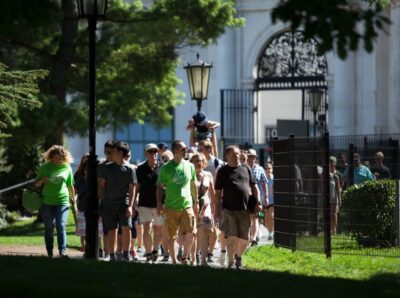
Vienna Historic Center Small Group Walking Tour
Read our review →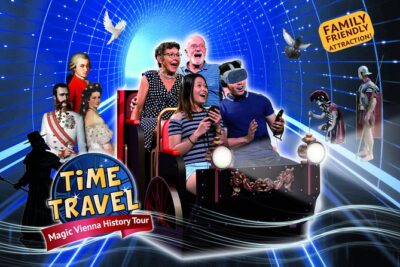
Skip-the-Line Schonbrunn Palace Guided Tour and Vienna Historical City Tour
Read our review →
Vienna Mozart Concert in Historical Costumes at the Musikverein
Read our review →
Browse the lists this tour appears in