
Reviewed · WALKING TOURS
An Introduction to Vienna Walking Tour
Vienna gives you grand palaces, solemn memorials, ornate churches, and coffeehouse corners within an easy central walk. This tour makes sense of that mix, linking the Hofburg, Stephansdom, Secession, and Ringstrasse through stories about emperors, artists, musicians, war, and ordinary Viennese life.
I like the small size, capped at eight people, and the fact that the guide is an historian rather than someone simply reciting dates. I also like the practical advice woven into the walk, from quieter cafés for Sacher torte to good places for schnitzel and sausages. The drawback is clear: at $181.02 per person, this is expensive for a walking tour, especially if your group does not value personal attention and detailed history.
What makes this Vienna walk worth considering

- A compact route through central Vienna: You see imperial squares, major churches, museums, shopping streets, and the Ringstrasse in about two and a half hours.
- A group capped at eight people: The guide can answer questions and adjust the pace more easily than on a large city walk.
- History beyond the Habsburgs: Expect discussion of Klimt, Mahler, Adolf Loos, plague, war, architecture, and daily life.
- Strong guide personalities: Guides such as Katarina, Annelie, Ilse, Wolfgang, Christina, and Angelika have led sessions, with a clear focus on storytelling and conversation.
- Useful first-day orientation: The route helps you decide which palaces, museums, cafés, and neighborhoods deserve more of your own time.
- A premium price: The cost buys a very small group and an academically minded guide, not admission tickets, food, transport, or hotel pickup.
Starting at Café Hawelka and the Hofburg
The meeting point is Café Hawelka on Dorotheergasse, a fitting place to begin. Vienna’s café culture is part of the city’s identity, and starting near one of its best-known cafés puts you in the historic center from the first step.
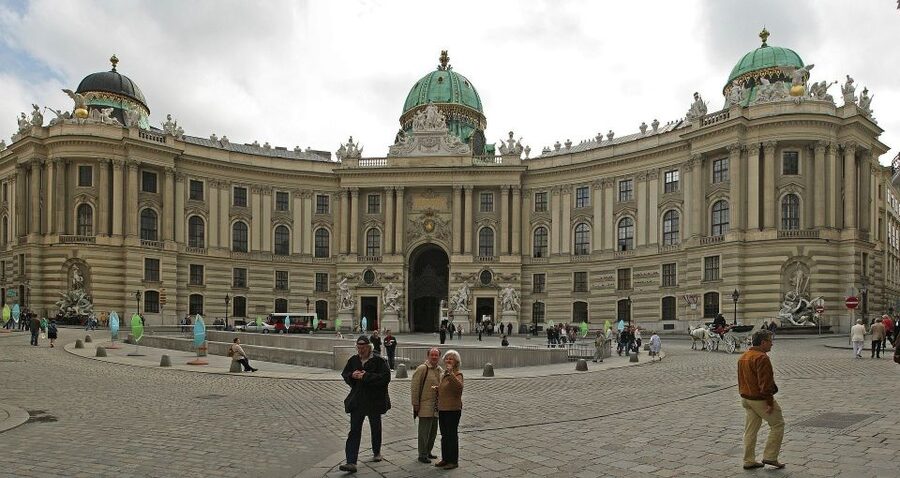
From there, the walk begins at Michaelerplatz. The Hofburg fills much of the square, and it is the right place to start understanding Vienna. This was the Habsburg imperial palace and the seat of power from the 13th century onward. You are not simply looking at a single palace. You are looking at a sprawling collection of buildings shaped by centuries of rulers, changing tastes, and political needs.
A good guide can use the Hofburg to explain how Vienna worked as the center of a large empire. The emphasis is not only on Maria Theresa, emperors, and court ceremony. The stories also reach into family politics, religion, architecture, and the way imperial power shaped the city around it.
This is where guides such as Wolfgang, Katarina, Ilse, and Annelie have earned especially strong praise for making history easy to follow. Katarina is known for small historical details and clear storytelling. Annelie has also brought music into the walk, using Mozart and Haydn to add a sense of the city’s cultural life. These touches are not guaranteed, since guide assignments vary, but they show the kind of personal approach this company aims for.
A few more Vienna trips to weigh up
- Vienna: Guided Walking Tour of City Center Highlights
★ 4.7 · 4,989 reviews - Vienna: Vienna Central Cemetery Guided Walking Tour
★ 4.8 · 3,307 reviews - Vienna: Guided Walking Tour of City Highlights & Hidden Gems
★ 4.9 · 2,180 reviews
Loos House and Vienna’s changing taste
Near the Hofburg, you pass the green and gray Loos House, designed by Adolf Loos. Its plain exterior caused a stir in a city accustomed to elaborate decoration. That contrast makes the building useful as a quick lesson in Vienna’s changing architectural taste.
Vienna is often pictured as a city of baroque curves, gilded interiors, and imperial display. Loos helps you see another side: a city testing modern ideas and arguing over what buildings should look like. The stop is brief, but it gives the walk a welcome turn away from palace history.
This part is most useful if you want architecture explained in plain language. You will see how one building can reflect a broader cultural shift without needing an art-history degree. The guide’s commentary matters here because the building itself may not immediately explain why it is important.
Ringstrasse: the imperial city turned outward
The walk continues along the Ringstrasse, the grand boulevard built in the mid-19th century. It replaced the old city walls and opened space for public buildings, monuments, palaces, and luxury hotels.
The Ringstrasse shows Vienna presenting itself as a modern imperial capital. The route is not just a pretty avenue. It reflects a period when the city was reshaped to project wealth, order, culture, and political strength.
You pass hotels established inside former palaces, a reminder that Vienna’s grand architecture has long been adapted for new purposes. A guide can help you read the street as a political statement, not just a line of impressive façades.
The walk does not include interior visits or admission tickets. That is important. You are getting orientation and interpretation from the street, not a palace tour or museum visit. If you want to go inside the Hofburg, a museum, or another building afterward, the guide’s suggestions can help you choose.
Maria-Theresien-Platz and Vienna’s museum quarter
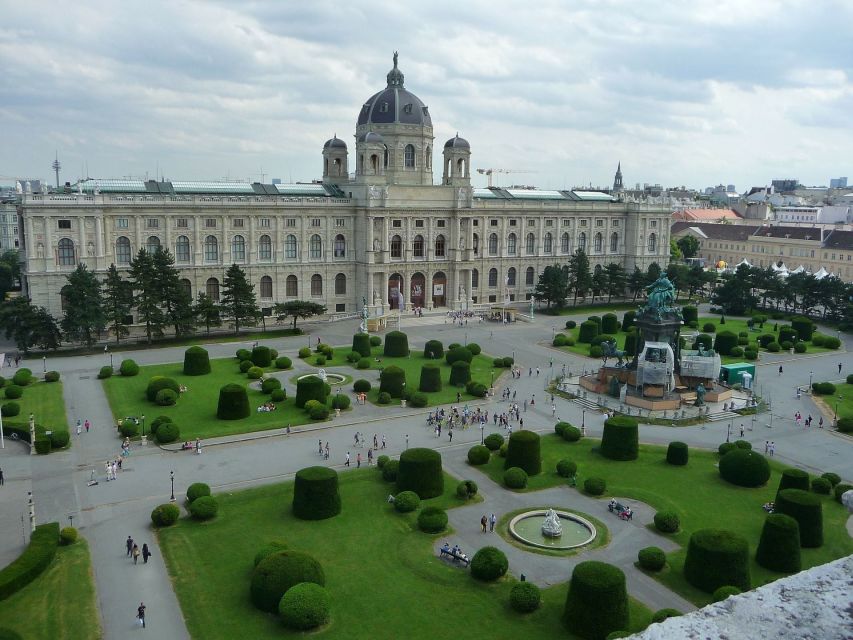
Maria-Theresien-Platz has the city’s largest concentration of museums. Even from the outside, the square gives you a sense of Vienna’s investment in art, science, imperial collecting, and public culture.
It is also a useful planning stop. You can ask which museums fit your interests and how to organize the rest of your day. A guide who knows your preferences can point you toward art, imperial history, music, or other subjects, though the tour itself remains a walking overview.
The square helps balance the palace story. Vienna is not only about rulers and grand residences. It is also about the institutions that preserve art, ideas, and memory. If this is your first visit, that context can keep you from treating every building as a separate sight with no connection to the others.
Same Alps, a completely different kind of day:
- Vienna: Vivaldi’s Four Seasons Concert in Karlskirche
★ 4.7 · 14,951 reviews - Vienna: Spanish Riding School Training
★ 3.9 · 9,281 reviews - Vienna: Skip-the-cashier-desk-line Giant Ferris Wheel Ride
★ 4.5 · 7,859 reviews - Vienna: Schönbrunn Palace & Gardens Skip-the-Line Tour
★ 4.7 · 7,739 reviews
Secession, Klimt, and Mahler
The Secession building brings you into Vienna around the turn of the 20th century, when artists and thinkers were pushing against old rules. Its distinctive design is tied to the Vienna Secession movement and to figures including Gustav Klimt and Gustav Mahler.
This is one of the most appealing stops for visitors interested in art and music. The story shifts from imperial tradition to avant-garde Vienna, showing how the city could be both deeply conservative and eager to experiment.
The tour does not promise an interior visit to the Secession. You should think of this as an exterior stop with cultural context. That is still valuable, since the building acts as a clear marker of Vienna’s artistic rebellion.
I especially like this section because it prevents the tour from becoming a parade of Habsburg names. You see the city wrestling with modernity, artistic freedom, and new ideas about public life.
Stephansdom, the city’s central symbol
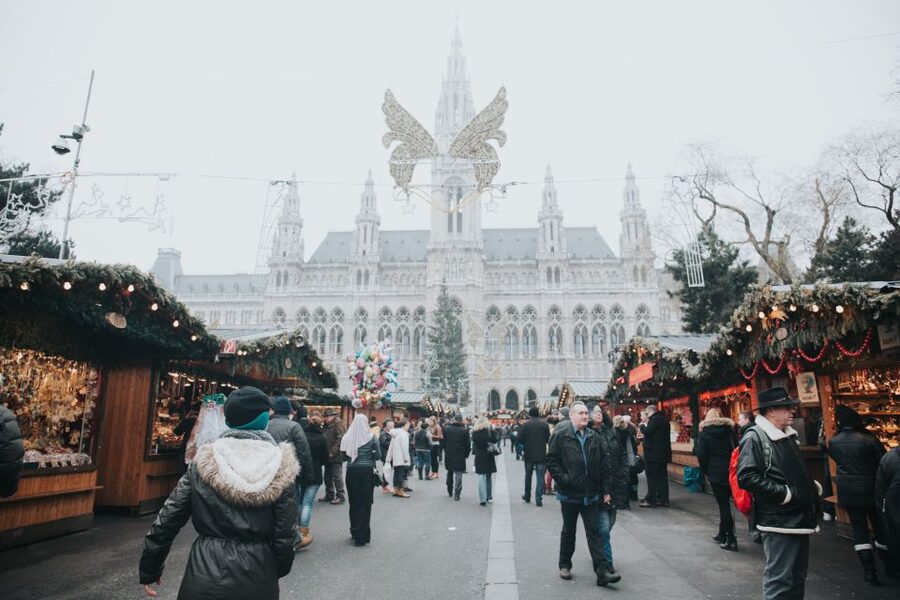
Stephansdom is Austria’s national architectural icon and one of the defining sights of Vienna. Its scale and details make it a natural focal point in the old city.
The guide explains the cathedral as part of Vienna’s long civic and religious story, not merely as a beautiful church to photograph. Its position in the center also helps you understand how the old city is arranged around major landmarks.
The stop is primarily an outside visit within the walking route. If you want a detailed interior visit, tower climb, or additional church history, plan separate time. The value here is the explanation and orientation, especially if you are seeing Stephansdom early in your stay.
Several people have found this tour especially useful on their first day because it gives names and meaning to the buildings they will keep passing afterward. That is a sound strategy. Vienna rewards wandering, but wandering is better when you know what you are looking at.
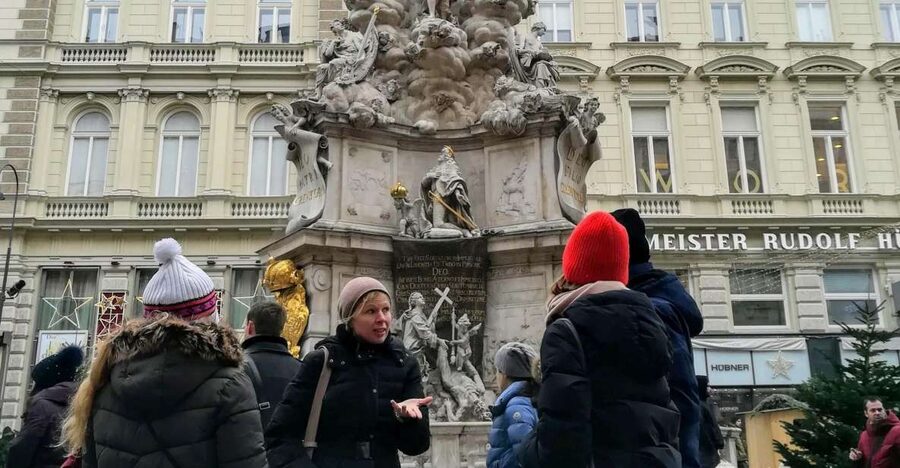
Kohlmarkt, Graben, and the plague column
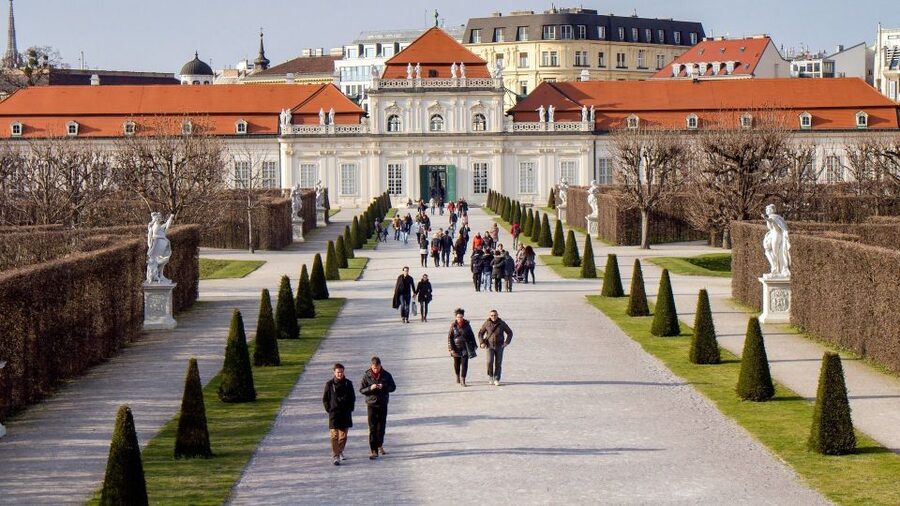
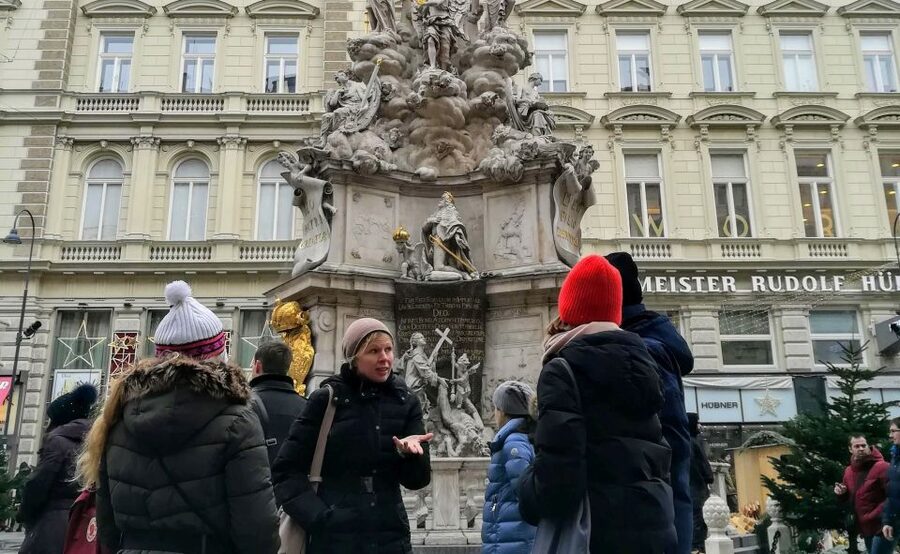
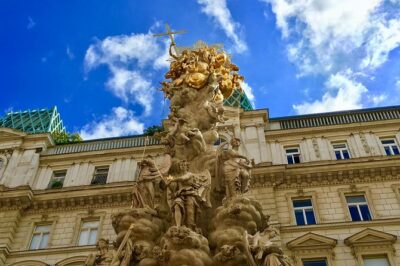
Kohlmarkt and the Graben form one of central Vienna’s most fashionable shopping areas. The streets are polished and busy, but the route also brings in a darker chapter through the plague column, which commemorates the 17th-century outbreak of bubonic plague.
That contrast is typical of Vienna. Opulent shopping streets can sit beside reminders of disease, death, war, and religious devotion. A good guide keeps the tone balanced, allowing the difficult parts of the past to remain difficult rather than turning everything into a decorative anecdote.
The Graben also shows how Vienna works as a living city. You see old ceremonial spaces used for modern shopping and everyday movement. The tour gives you a useful framework, but you will want to return later if you wish to browse shops, pause for coffee, or look more closely at the column.
Naschmarkt and local food advice
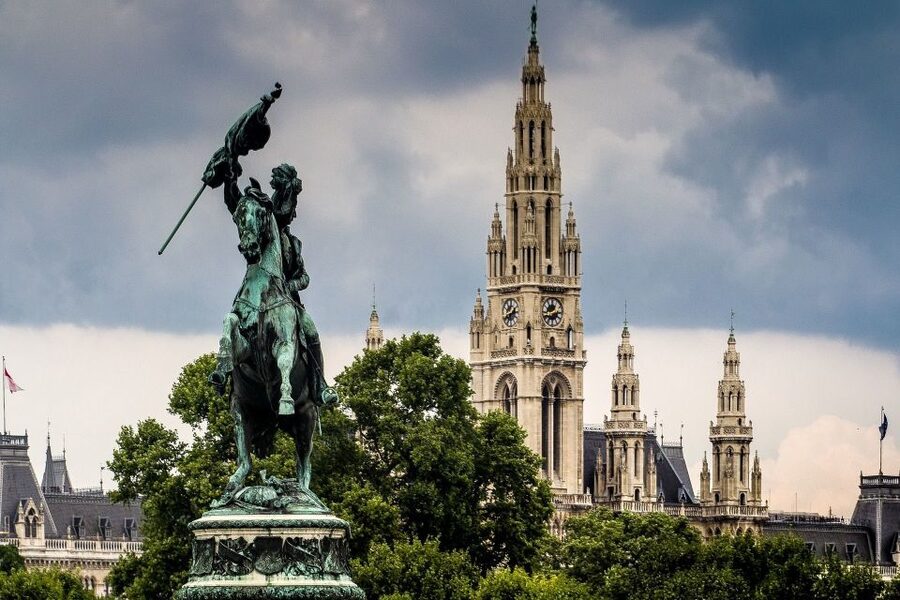
The route passes the Naschmarkt, Vienna’s traditional food market. It is a colorful place where people meet, shop, and eat, and it gives you a break from imperial façades.
Food and drinks are not included, so do not expect a market tasting as part of the advertised experience. The guide may offer food suggestions, and past sessions have included advice on schnitzel, sausages, cafés, and alternatives to the crowded Sacher Hotel.
One guide even added a Viennese snack that was not the sort of thing you would find in an ordinary guidebook. Another suggested places for Sacher torte where you could avoid the famous hotel’s lines. These extras depend on the guide and the day, but they show why a small group can be useful: you can ask practical questions and get answers suited to your plans.
Use the Naschmarkt as a neighborhood marker rather than assuming it is a full market tour. The main purpose is to place Vienna’s food culture within the city walk.
The history you may not expect
The strongest part of this experience is the range of subjects. You get the Habsburg dynasty and its 700 years of influence, but you also hear about architecture, music, art, daily life, war, and painful memorials.
Some guides have discussed wartime destruction, including civilian deaths connected with bombing and damage to the Opera House and an underground shelter. That material can be sobering. If you prefer a light sightseeing walk with little difficult history, this may feel heavier than expected.
There are also memorable stories from earlier centuries, including the kidnapping of Richard the Lionheart. Such anecdotes can make a city’s past easier to remember, especially when they connect a person or event to the streets in front of you.
The best sessions appear to leave room for questions. Ilse, Katarina, Christina, Wolfgang, and Annelie have been praised for explaining clearly, adjusting the route or emphasis, and speaking patiently when needed. One guide slowed down for a participant who spoke only some English. That kind of flexibility is hard to get in a large group.
How much personal attention do you get?
The booking limit is six people, while the activity itself allows up to eight. That is still a small group by city-tour standards.
You may end up with a private walk if no one else books your time slot. Several past sessions turned into tours for only one couple or one person. That can be a major benefit: you can ask more questions, pause when something interests you, and get restaurant or museum advice tailored to your stay.
But you should not book on the assumption that you will have a private guide. The safe expectation is a small group of up to eight. The guide’s ability to speak with you directly is the main reason to consider the price.
At $181.02 per person, the cost is high for 2 hours and 30 minutes on foot. You are paying for the guide’s time, the small group, and a history-focused approach. You are not paying for meals, drinks, entry tickets, or hotel transport.
For a budget-minded visitor who only wants the main sights named and photographed, a cheaper large-group walk may be better. For you, the price makes more sense if you care about context, questions, local suggestions, and a slower conversation.
When to book and how to prepare
The tour is often booked about 53 days ahead, so reserve early if your schedule is fixed. Confirmation arrives at booking, and the activity is offered in English.
Wear comfortable shoes. The experience is a continuous city walk, with no indication that transport, hotel pickup, or drop-off is included. Bring water and dress for the weather. One session continued through cold, rain, and wind, but poor weather will still affect how enjoyable the route feels.
Start at Café Hawelka on Dorotheergasse 6. The listed end point is Vienna, Austria, so ask your guide where the walk finishes if you need to reach a timed reservation afterward.
I would book it for the first day or two of a Vienna stay. You will gain a map of the central sights, then use the rest of your visit to return to the places that caught your attention.
Who should book this experience?
This walk suits you if:
- You want a serious introduction to Vienna before exploring alone.
- You enjoy history, architecture, art, or music.
- You prefer a small group to a microphone-led crowd.
- You want restaurant, café, and sightseeing advice from a local guide.
- You have only a short time in Vienna and need the center explained quickly.
- You like asking questions rather than simply following a fixed script.
It may not suit you if you want extensive interior visits, food tastings, or a low-cost introduction. It also may not be the best choice if you already know central Vienna well and mainly want entry to attractions.
The advertised duration is about two and a half hours, while some descriptions from past sessions refer to three hours. Allow a little flexibility rather than scheduling a tight appointment immediately afterward.
Free cancellation is available up to 24 hours before the start time. After that, the amount paid is not refunded, and late changes are not accepted.
Should you book the Vienna walking tour?
I would book this if you value the guide more than the checklist. The route covers the essentials, but the real benefit is the connection between them: Habsburg power at the Hofburg, modern architecture at Loos House, artistic change at the Secession, civic identity at Stephansdom, and everyday Vienna at the Naschmarkt and cafés.
The $181.02 price needs an honest look. It is a premium charge for a short walk, and one person felt a cheaper large-group tour would have been better value. That is a fair objection.
Still, if you want a small group, an historian guide, and the freedom to ask detailed questions, the cost can be justified. Book it early in your stay, ask for a guide such as Katarina, Annelie, Ilse, or Wolfgang if requests are accepted, and treat the walk as your orientation to the city rather than your complete Vienna sightseeing program.
FAQ
How long is the Vienna walking tour?
The tour lasts approximately 2 hours and 30 minutes. Some past tour descriptions refer to three hours, so leave a little extra time in your schedule.
What sights does the tour cover?
The route includes Michaelerplatz and the Hofburg, the Ringstrasse, Loos House, Maria-Theresien-Platz, the Secession building, Stephansdom, Naschmarkt, Kohlmarkt, and the Graben.
Where does the tour begin?
It begins at Café Hawelka, Dorotheergasse 6, 1010 Vienna, Austria.
Where does the tour end?
The listed end point is Vienna, Austria. The experience information does not give a more specific final address.
How large is the tour group?
A booking can include a maximum of six people, and the activity has a maximum of eight participants.
Is food included?
No. Food and drinks are not included unless specifically stated. The guide may offer suggestions for cafés, schnitzel, sausages, and Viennese sweets.
Is hotel pickup included?
No. Hotel pickup and drop-off are not included.
Can I cancel for a full refund?
Yes, if you cancel at least 24 hours before the experience start time. Cancellations or changes made less than 24 hours before the start time are not accepted for a refund.
Just added around Vienna
- World War II History Vienna Old Town Private Walking Tour★ 4.8 · 9 reviews
- From Krems: Wachau Valley River Cruise on the Danube★ 4.6 · 95 reviews
- Vienna: Winery and Wine Tasting Tour with a Wine Expert★ 5.0 · 5 reviews
- Vienna: Wine Tasting E-Bike Tour★ 4.9 · 46 reviews
- Vienna: Wine Tasting at Schönbrunn Palace★ 4.3 · 71 reviews
- Vienna: Wine Tasting Tour★ 4.8 · 61 reviews
- Vienna: Wiener Schnitzel and Strudel Cooking Class★ 4.9 · 126 reviews
- Vienna Urban Art Tour: Explore a different side of Vienna!★ 3.8 · 14 reviews
Walking Tours, compared.
Guided Walking Tour of City Center Highlights
Read our review →
Guided Walking Tour of City Highlights & Hidden Gems
Read our review →
Vienna Historic Center Small Group Walking Tour
Read our review →
Browse the lists this tour appears in