
Reviewed · WALKING TOURS
Vienna Art Nouveau Walking Tour
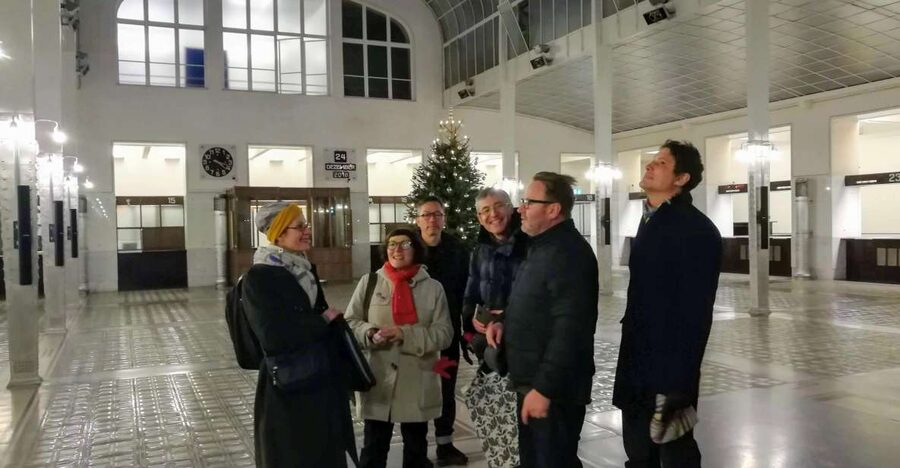
Vienna’s Art Nouveau is not confined to a museum. It lines the streets, frames metro entrances, decorates apartment buildings, and even reaches a small station built for the emperor. This walking tour connects those pieces through Otto Wagner’s work and the Vienna around 1900. I especially like the small group limit of eight and the way the tour uses public transport as part of the lesson. You get close to the buildings, then see how the city’s metro system helped shape modern Vienna.
I also like the visit to the Secession building, with the option to see Klimt’s Beethoven Frieze, and the practical feel of the route. Guides including Jan, Suzanne, Ilse, Angelina, and Wolfgang Augsten have been praised for adapting the discussion to the group and offering useful suggestions for the rest of your stay. The main drawback is the price, $180.04 per person, before some admission fees. Cold or rainy weather can also make this a demanding walk, though one guide has arranged a car transfer in poor conditions.
Key points to know before you book
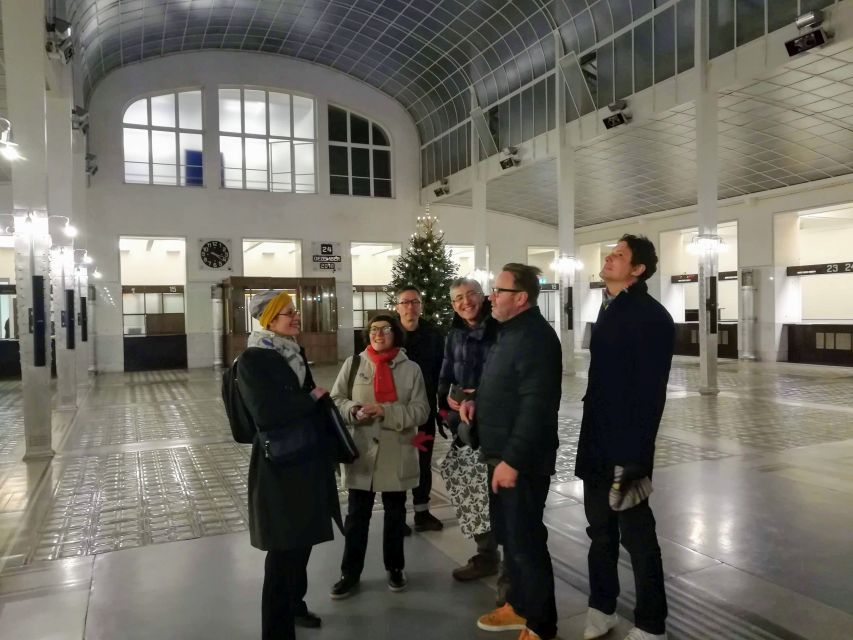
- Otto Wagner’s metro design is the main thread: You see how transport, engineering, politics, and decoration came together in Vienna around 1900.
- The Secession building adds a major art stop: You can pay extra to see Gustave Klimt’s Beethoven Frieze when the building is open.
- The imperial station gives the tour a memorable finish: Wagner adapted a generally bourgeois style for an emperor at Schönbrunn.
- The group is capped at eight people: That leaves room for questions and makes it easier for the guide to adjust the pace.
- You use the metro during the tour: Bring or buy a valid transit ticket, since the tour fee does not cover transport.
- Some entrance costs are extra: The Otto Wagner Pavilion and Secession House may require separate payment.
Why Vienna’s Art Nouveau works best as a walking story
The strongest feature of this experience is its structure. You are not simply shown a collection of attractive buildings. You follow a line from Otto Wagner’s early metro work to the Secession movement, then see how Art Nouveau could serve both private apartment owners and the imperial court.
That makes the tour useful even if you know little about Jugendstil, the German-speaking form of Art Nouveau. Your guide explains the shapes, materials, colors, and symbols you are looking at, then places them in the political and cultural life of Vienna at the turn of the 20th century.
I like this approach because the city becomes easier to read after the walk. A curved line, a metal detail, a floral pattern, or a particular building material no longer looks like random decoration. You begin to recognize the choices made by Wagner and other artists who wanted a new style for a changing city.
The experience lasts about two and a half hours, though the description also refers to a three-hour walk. Allow at least three hours in your schedule so you are not rushing to a meal, museum, or train afterward.
A few more Vienna trips to weigh up
- Vienna: Guided Walking Tour of City Center Highlights
★ 4.7 · 4,989 reviews - Vienna: Vienna Central Cemetery Guided Walking Tour
★ 4.8 · 3,307 reviews - Vienna: Guided Walking Tour of City Highlights & Hidden Gems
★ 4.9 · 2,180 reviews
Karlsplatz and Otto Wagner’s elegant starting point
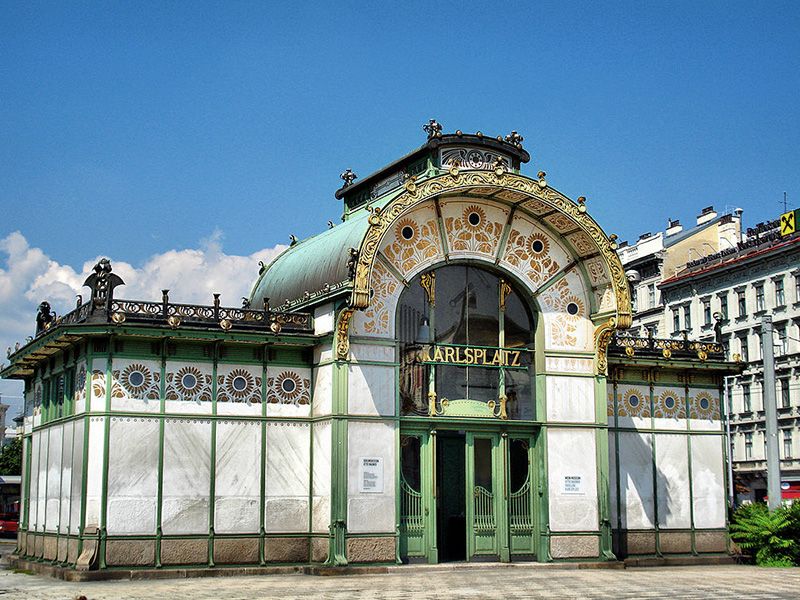
The tour begins at Operngasse 7 in central Vienna and moves toward the Otto Wagner Pavilion at Karlsplatz. This small pavilion is one of the most recognizable examples of Wagner’s metro architecture, with a design that feels far more refined than the practical word metro might suggest.
From the outside, it has the polished, decorative quality associated with Viennese Art Nouveau. Inside, when the museum is open, the small Wagner Museum gives you a useful introduction to the architect and his work. The guide uses this first stop to explain the ideas that will return throughout the walk.
From April through October, the pavilion museum may be open. Admission is not included during this period, with the stated fee of €5 for general admission and €4 for seniors, students, Vienna Card holders, and people with disabilities. The pavilion itself is still an important part of the route even if you do not enter.
This is a good opening because you start with one compact building rather than a large museum full of competing displays. You can focus on how Wagner treated a transport structure as part of the city’s public image.
Stadtpark station and the engineering behind the decoration
The route continues to Stadtpark, where you see the best-preserved original metro station still in use. This stop adds something important: it shows that Art Nouveau was not only about surface beauty.
The station is tied to the rerouting of the Wien River. When the city railway was built, the waterway had to be redirected, and the new channel had to fit into the developing city. The adjoining artificial riverbed is one of the most interesting details on the tour because it links design with a real engineering problem.
Your guide can use this spot to show how a city project affected streets, water, transport, and public architecture at once. That broader view helps explain why Wagner’s work matters. He was not simply designing isolated buildings. He was helping shape how Vienna moved and how its new infrastructure looked.
Stadtpark is also a good place to pause and compare the station with the pavilion at Karlsplatz. You begin to see repeated design ideas, but you can also notice how each site responds to its setting. The tour’s value lies in these comparisons. Without a guide, you might photograph the station and walk on. With the design context, the details have a clearer purpose.
Secession House and the birth of Viennese Jugendstil
The walk toward Kettenbrücke brings you to the Secession building, the best-known symbol of Vienna’s Jugendstil movement. Its famous dome of gilded laurel leaves gives the building an unmistakable profile, but the real importance lies in what the building represented.
The Secession artists wanted a break from established artistic institutions and older rules. The building became a statement about artistic independence as well as a place for exhibitions. Your guide explains the movement’s ideas, then points out the materials and symbols favored by its artists.
If you visit Tuesday through Sunday, you can pay extra to enter Secession House and see Klimt’s Beethoven Frieze. The listed admission is €9.50 for adults and €6 for students and seniors, with the guide helping you pay. This fee is not part of the tour price, so add it to your budget if the artwork is a priority.
I consider this an important choice point. If your main interest is architecture, you may be satisfied with the exterior and the guide’s explanation. If you care about Klimt or Vienna’s modern art movement, the interior adds a major work and makes the stop much more substantial.
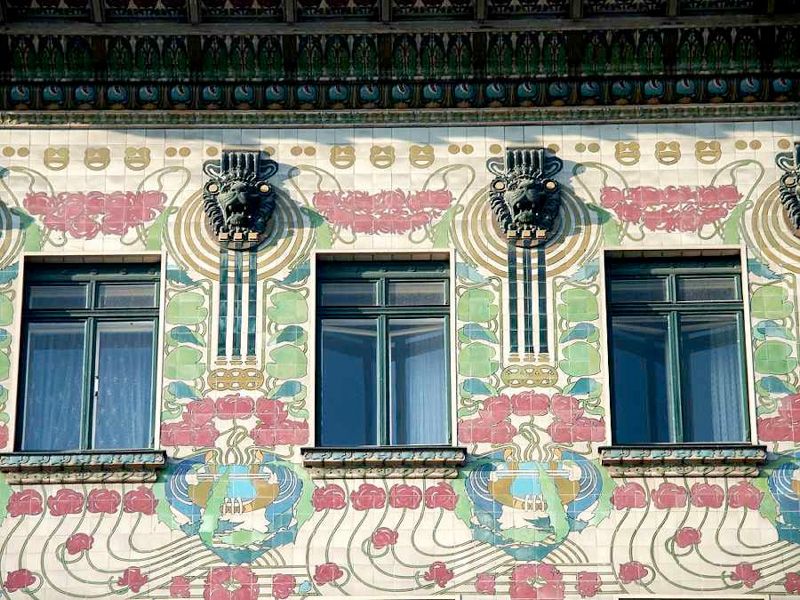
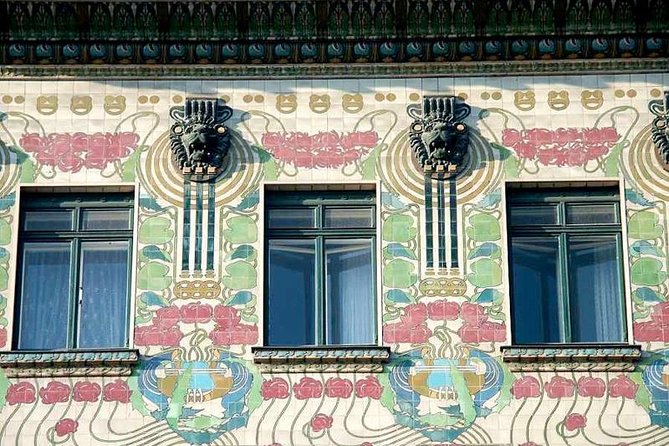
The tour also takes you past two attractive apartment buildings by Otto Wagner. These buildings help show how Art Nouveau entered everyday urban life. The style was not reserved for grand public monuments. It could also shape the homes and facades of the growing middle class.
Same Alps, a completely different kind of day:
- Vienna: Vivaldi’s Four Seasons Concert in Karlskirche
★ 4.7 · 14,951 reviews - Vienna: Spanish Riding School Training
★ 3.9 · 9,281 reviews - Vienna: Skip-the-cashier-desk-line Giant Ferris Wheel Ride
★ 4.5 · 7,859 reviews - Vienna: Schönbrunn Palace & Gardens Skip-the-Line Tour
★ 4.7 · 7,739 reviews
Kettenbrücke and the transition from walking to riding
At Kettenbrücke station, the tour moves from street-level architecture into Vienna’s transport system. You take the metro for the final stop, so this is more than a change in scenery. It shows how the original stations worked as a connected system.
A valid metro ticket is not included in the tour price. If you already have a Vienna transport pass, it can be useful here. One past guest had a day pass and found that it worked well for the ride and helped with getting around Vienna afterward.
This practical element is one of the tour’s quiet strengths. You learn where the stations are, how the U4 line fits into the city, and how to use public transport with more confidence. The guide can also adjust the amount of walking when conditions or group needs call for it.
Do not expect a long, free-form stroll with frequent café stops. The route has a clear purpose and covers several sites in a limited time. Wear comfortable shoes, and bring protection from rain or cold. The walk is mainly outdoors, even though the metro ride provides a short break.
The imperial station near Schönbrunn
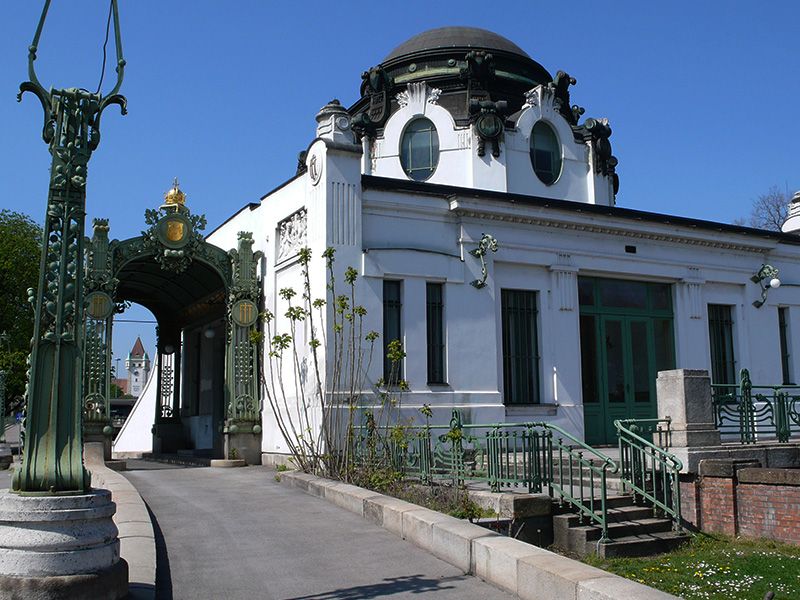
The final station is the tour’s most unusual stop. Built outside Schönbrunn Palace for the emperor’s private use, it was not simply a convenient transport shelter. Its placement and purpose carried political meaning.
Vienna’s metro system had critics, and the emperor’s support helped give the project credibility. A station reserved for imperial use made that support visible. It also gave Wagner a chance to adapt his modern, largely middle-class Art Nouveau language for an imperial setting.
At this small station, you can review the design ideas introduced earlier in the morning. The decorative elements are still connected to Wagner’s broader metro work, but the building has a more formal and grand character. That contrast gives the tour a satisfying final chapter.
I like ending here because it keeps the focus on how architecture communicates power. The station is not only attractive. It tells you who was expected to use it, who paid attention to it, and how a new public transport project was presented to Vienna’s ruling class.
The final stop also makes the tour feel less like a standard art walk. You have seen a museum pavilion, an active station, a modern art building, apartment houses, and an imperial structure. Together, they show the range of Art Nouveau in Vienna.
What the guides add to the experience
The tour depends heavily on the guide, and the guide roster has included Jan, Stephan, Stefan, Angelina, Suzanne, Ilse, and Wolfgang Augsten. Their backgrounds and styles may differ, but the experience calls for more than pointing out facades. You need someone who can explain art, city planning, transport, and Austrian culture without turning the walk into a lecture.
Suzanne, for example, has been especially effective at connecting Otto Wagner, the city under construction, the Secession, and Vienna around 1900. Jan has been praised for his enthusiasm about Vienna and art. Ilse has been described as flexible and entertaining, while Wolfgang Augsten has led groups through Vienna’s architectural story with a personal touch.
The small group size matters here. With no more than eight people per booking, you have a better chance to ask about a symbol, a building detail, or a place you want to see later. One guide adjusted the tour for a private group, and another offered restaurant and sightseeing suggestions for the rest of the stay.
The quality of the experience will still depend on the guide assigned to your date. That is true of any walking tour. The consistently high rating of 4.9 from 21 ratings and the 95 percent recommendation rate suggest strong satisfaction, but I would book this for the subject itself rather than assume every guide will deliver the exact same style.
Price, extra fees, and what you receive
At $180.04 per person, this is an expensive two-and-a-half-hour walking tour. You are paying for a specialist-led experience, a small group capped at eight, and a carefully linked route rather than a general city orientation.
The price makes the most sense for someone with a real interest in art, architecture, urban planning, or Vienna around 1900. If you only want a quick introduction to the city’s main sights, a less costly general walking tour will likely give you more coverage.
Plan for possible additional costs:
- The Otto Wagner Pavilion museum costs €5 for general admission or €4 for eligible reduced-admission visitors when open from April through October.
- Secession House costs €9.50 for adults and €6 for students and seniors from Tuesday through Sunday.
- Food and drinks are not included.
- Hotel pickup and drop-off are not included.
- Metro transport is not listed as included, so you need your own valid ticket.
The value improves if you ask questions, take notes, and use the tour as a framework for exploring more of Vienna independently. The guides can help you understand the public transport system and suggest places to eat or visit. That practical advice can make the tour more useful than a simple two-hour talk about buildings.
Weather, pacing, and who should book
This is an outdoor walking tour, so weather matters. A cold, rainy day can make the route less pleasant, even if the art remains interesting. One guide offered a car ride during poor weather, but you should not treat that as a guaranteed feature.
Most people can take part, and the activity is near public transportation. Still, you should be comfortable walking between stops and using the metro for the final section. The pace is likely to include regular stops for explanations, but the tour is not designed as a seated museum visit.
I would recommend it to:
- Art and architecture enthusiasts who want more than surface-level sightseeing.
- Repeat visitors to Vienna who have already seen the major imperial sights.
- First-time visitors who want to understand how the city’s modern identity developed.
- Anyone interested in Klimt, Secession artists, or Otto Wagner.
- People who appreciate a small group and the chance to ask detailed questions.
I would think twice if you dislike walking in uncertain weather, have little interest in architecture, or want a tour packed with major palace interiors. The focus is specific, and that is both its strength and its limitation.
Should you book the Vienna Art Nouveau Walking Tour?
Book it if Otto Wagner, Klimt, Jugendstil, and city design sound more appealing than a standard highlights tour. The route has a clear arc, the small group allows personal attention, and the imperial metro station gives the experience an unusual finish.
Before booking, check the day of the week and season if you want to enter Secession House or the Otto Wagner Pavilion. Budget for those admission fees and metro transport. For the best experience, choose a day when you can walk comfortably and leave room afterward to explore more of Vienna’s early modern architecture.
At $180.04, this is not a casual bargain. It is a specialist tour for readers who want to understand why Vienna looks the way it does. If that is your interest, the combination of public transport, art, engineering, and imperial politics makes this a smart and memorable way to spend an afternoon.
FAQ
How long is the Vienna Art Nouveau Walking Tour?
The tour lasts approximately two and a half hours. The overview also describes it as a three-hour walking tour, so allow about three hours in your schedule.
Where does the tour begin?
The meeting point is Operngasse 7, 1010 Wien, Austria.
Where does the tour end?
The tour ends in Vienna, Austria. The exact final point is associated with the route’s last metro stop near Schönbrunn.
Is the tour offered in English?
Yes. The tour is offered in English.
How many people can join the tour?
The maximum is eight travelers per booking and eight participants for the activity.
Is transportation included?
The tour includes a metro ride from Kettenbrücke station to the final station, but public transport costs are not listed as included. You should have a valid metro ticket or pass.
Are entrance fees included?
No. The Otto Wagner Pavilion museum and Secession House may require separate admission fees. The guide can help you pay for entry to Secession House.
Can I cancel for a full refund?
Yes. You can cancel at least 24 hours before the experience starts for a full refund. Cancellations or changes made less than 24 hours before the start time are not accepted for a refund.
Just added around Vienna
- World War II History Vienna Old Town Private Walking Tour★ 4.8 · 9 reviews
- From Krems: Wachau Valley River Cruise on the Danube★ 4.6 · 95 reviews
- Vienna: Winery and Wine Tasting Tour with a Wine Expert★ 5.0 · 5 reviews
- Vienna: Wine Tasting E-Bike Tour★ 4.9 · 46 reviews
- Vienna: Wine Tasting at Schönbrunn Palace★ 4.3 · 71 reviews
- Vienna: Wine Tasting Tour★ 4.8 · 61 reviews
- Vienna: Wiener Schnitzel and Strudel Cooking Class★ 4.9 · 126 reviews
- Vienna: Unforgettable Private City Tour★ 5.0 · 7 reviews
Walking Tours, compared.
Guided Walking Tour of City Center Highlights
Read our review →
Guided Walking Tour of City Highlights & Hidden Gems
Read our review →
Vienna Historic Center Small Group Walking Tour
Read our review →
Browse the lists this tour appears in