
Reviewed · WALKING TOURS
Private Vienna Walking Tour with Private Local Guide
Vienna’s grand center is made for walking, and this private tour strings together the city’s biggest sights in a compact two-hour route. You’ll move from St. Stephen’s Cathedral to the Hofburg, Heldenplatz, elegant Graben and Kohlmarkt, the opera district, and Karlsplatz, with a local guide adding stories along the way. Nicoleta has been praised for her personal knowledge of Vienna, her affection for the city, and her photography.
I like two things here: the private format, which lets you ask questions and set the pace, and the route itself, which gives you a useful first look at Vienna’s imperial, musical, and commercial center. The main concern is reliability and guide consistency. One booking had no guide arrive after a long wait, and another visitor found the guide’s qualifications and timing unclear. At $219.51 per person, that is a serious issue.
Key points at a glance
- A two-hour private introduction: You explore with only your own group, not a large shared party.
- Vienna’s essential central sights: The route links St. Stephen’s Cathedral, the Hofburg, Heldenplatz, Graben, the Opera, and Karlsplatz.
- A guide makes the difference: Nicoleta earned especially warm praise for her stories, local knowledge, and photography.
- Mostly an outdoor walk: Several stops involve viewing squares, streets, courtyards, and building exteriors rather than extended indoor visits.
- A high price for a short tour: The cost may make sense for a group sharing the private booking, but it is steep for one person.
- Confirm the arrangements carefully: The guide, meeting point, phone contact, and exact end point deserve attention before you set out.
A fast look at Vienna’s imperial center
This tour is built as an orientation walk, not a full museum visit. In two hours, you get the broad shape of central Vienna: the cathedral at the heart of the old town, the former Habsburg court, a grand political square, luxury shopping streets, musical landmarks, and a final stop near Karlsplatz.
That design can work well on your first day. I like a short city walk when it helps me understand how the pieces fit together before I choose which palace, church, or museum deserves more time. You can also ask your guide for restaurant, museum, and sightseeing suggestions at the end.
The private setup is the strongest feature on paper. You can ask why the Habsburgs mattered, how Vienna’s music tradition developed, or which building deserves a second look. A shared group often moves at one pace, while a private walk should allow more flexibility for questions and photographs.
Still, two hours goes quickly. The listed timing gives roughly 15 minutes at St. Stephen’s Cathedral, 15 minutes at the Hofburg, 30 minutes at Heldenplatz, 30 minutes around Graben and Kohlmarkt, 15 minutes near the Mozart Statue and Opera, and 15 minutes at Karlsplatz. Walking between stops takes part of that time, so you should expect an overview rather than detailed visits.
A few more Vienna trips to weigh up
- Vienna: Guided Walking Tour of City Center Highlights
★ 4.7 · 4,989 reviews - Vienna: Vienna Central Cemetery Guided Walking Tour
★ 4.8 · 3,307 reviews - Vienna: Guided Walking Tour of City Highlights & Hidden Gems
★ 4.9 · 2,180 reviews
Starting near Mozarthaus on Domgasse
The meeting point is listed at Wien Museum Mozart apartment, Mozarthaus, Domgasse 5, 1010 Vienna. This is a useful location because it puts you right in the old center, close to St. Stephen’s Cathedral and the pedestrian streets around it.
You should confirm the exact meeting instructions before the tour. The itinerary begins with St. Stephen’s Cathedral, while the meeting point is Mozarthaus, and the details also mention passing Mozart’s former residence later in the walk. That is not necessarily a problem, but it can create confusion if you are expecting the guide at the cathedral itself.
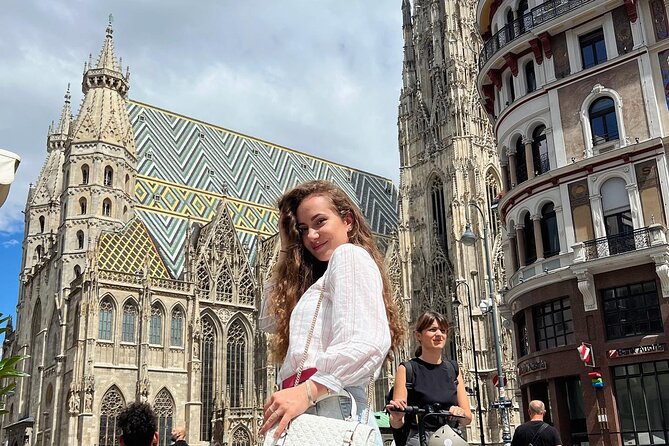
The cathedral is one of the best possible places to begin a Vienna orientation. Its roof and tower make it easy to recognize, and its setting helps you understand the old town’s scale. The tour allows about 15 minutes here, enough for an exterior look, a few photographs, and an introduction to the area.
Admission is listed as free for this stop. The information does not promise an extended interior visit, tower climb, or special access, so I would treat this as a guided look at the cathedral and its surroundings. If you want serious time inside, plan a separate visit.
Walking through the Hofburg courtyards
From the cathedral area, the route continues to the Hofburg, the former residence of the Habsburg dynasty. This is where the tour shifts from city-center orientation to imperial Vienna.
The Hofburg is not one tidy palace. It is a large collection of courtyards, wings, and former court buildings. A local guide can help you read the place as more than a series of impressive façades. The useful questions are practical ones: how the imperial household shaped the city, how the emperors influenced public life, and why the palace grew in stages.
The planned stop is about 15 minutes. That is enough for the grand courtyards and a short explanation, but not enough for the palace museums or interior collections. Admission is not included for this stop. You should not expect the tour fee to cover entry into the Hofburg’s paid attractions.
I like this portion because it gives context to the rest of the walk. After seeing the Hofburg, the formal streets and ceremonial squares make more sense. You begin to see Vienna not just as a collection of pretty buildings, but as a former seat of power with a carefully arranged public face.
Heldenplatz and the weight of public space
Heldenplatz, beside the Hofburg, receives the longest single stop at about 30 minutes. That extra time is sensible. This is not simply a place to cross on the way to the next sight. It has major political meaning, and the square’s setting connects imperial ceremony with modern Austrian history.
The guide is meant to explain the square’s political role and its relationship to the Hofburg. This is one place where good storytelling matters more than a list of dates. You want to understand how the space was used, what its monuments represent, and why public squares can carry memories far beyond their architecture.
Admission is free. You can expect an outdoor stop, so weather matters. The tour’s leisurely wording suggests time for photographs and questions, but the schedule remains tight. If you like political history, this may be the most rewarding part of the walk. If you mainly want interiors, you may find the half hour better spent at a museum on another day.
Same Alps, a completely different kind of day:
- Vienna: Vivaldi’s Four Seasons Concert in Karlskirche
★ 4.7 · 14,951 reviews - Vienna: Spanish Riding School Training
★ 3.9 · 9,281 reviews - Vienna: Skip-the-cashier-desk-line Giant Ferris Wheel Ride
★ 4.5 · 7,859 reviews - Vienna: Schönbrunn Palace & Gardens Skip-the-Line Tour
★ 4.7 · 7,739 reviews
Graben and Kohlmarkt, Vienna’s polished shopping streets
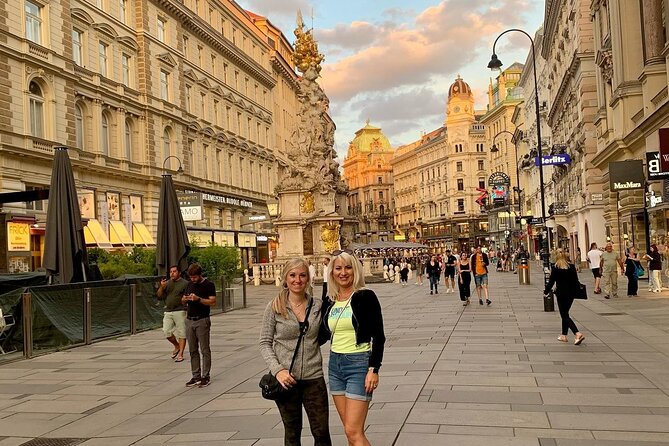
The route then turns toward Graben and Kohlmarkt, two of the city center’s best-known shopping streets. The walk here is less about buying something and more about reading Vienna’s public style: decorative façades, grand storefronts, jewelry shops, and the polished setting around the old town.
The planned time is about 30 minutes, which gives you room to stroll rather than simply stop for a quick photograph. I like this part because it shows how Vienna’s ceremonial center remains part of daily city life. You see shoppers, cafés, architecture, and expensive boutiques in the same short stretch.
The listing marks admission as included for this stop, but no paid attraction or specific interior entry is identified. Treat it as part of the walking route, not as a shopping credit or museum visit. The high-end stores may be interesting to look at, but this is not the place to expect budget shopping.
A private guide can add value here by pointing out details you might miss while walking alone. The tour description also promises small detours to lesser-known corners, courtyards, and cafés. Since no exact detours are named, you should ask your guide what is possible on your date rather than assume a particular café or courtyard is guaranteed.
Mozart, the State Opera, and Vienna’s music story
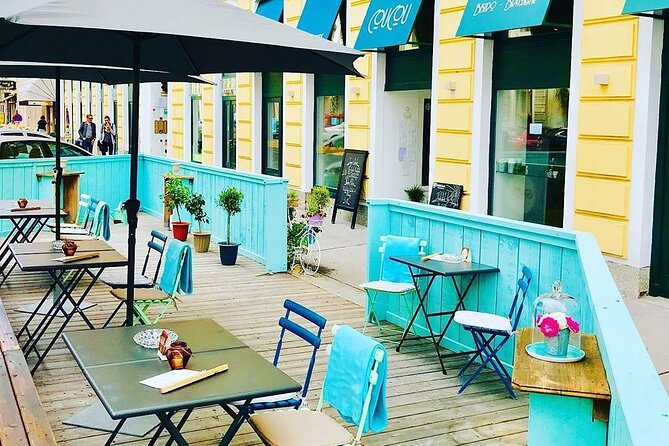
The next section connects Mozart with the Vienna State Opera. You pass Mozart’s former residence, then continue toward the Opera, one of the city’s best-known music buildings. The stop is listed at about 15 minutes, so the focus is on orientation and stories, not an opera performance or interior tour.
This is a natural part of a Vienna walk. Music is central to the city’s identity, and the route lets you connect a composer’s former home with the grand institution that represents Vienna’s later operatic tradition. A strong guide can make that transition feel human by explaining how musicians lived and worked in the city.
Nicoleta received the warmest praise among the named guides. Her appeal seems to come from more than basic facts. She is a long-time Vienna resident, and her personal stories and photography were specifically appreciated. If you are assigned Nicoleta, you may get the more personal style the tour promises.
The guide situation is not uniform, though. Violeta was described as kind enough to bring water and snacks, but the visitor felt she lacked a proper guiding license and had misunderstood the tour length. That does not prove every guide will have the same problem, but it does give you a practical question to ask before the walk: Who is the guide, and how long is the booked tour?
Finishing at Karlsplatz
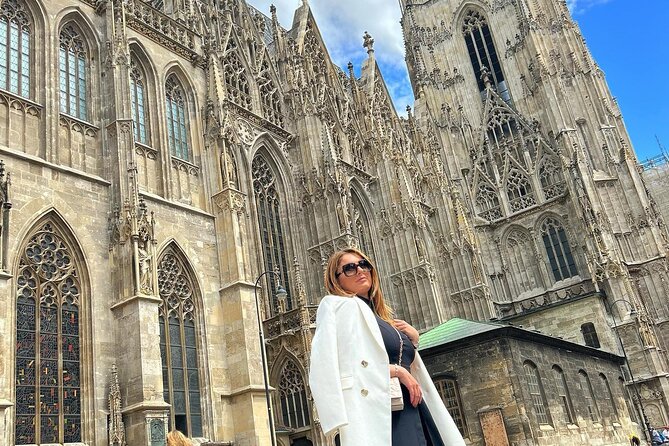
The walk ends at Karlsplatz, another important Vienna square. This is not the same location as the start, so you should plan your next move from Karlsplatz rather than assume you will return to Domgasse.
Ending here is useful. Karlsplatz puts you near more sights and transport connections, and the guide is expected to suggest nearby restaurants, museums, and attractions. The tour does not list a specific restaurant or museum as part of the experience, so consider these recommendations a final planning conversation rather than an included activity.
The scheduled time is about 15 minutes. I would use it well. Ask the guide where to spend the rest of your afternoon, which attractions need advance planning, and which nearby places suit your budget. A private walk earns its keep partly through this sort of practical local advice.
What the $219.51 price really buys
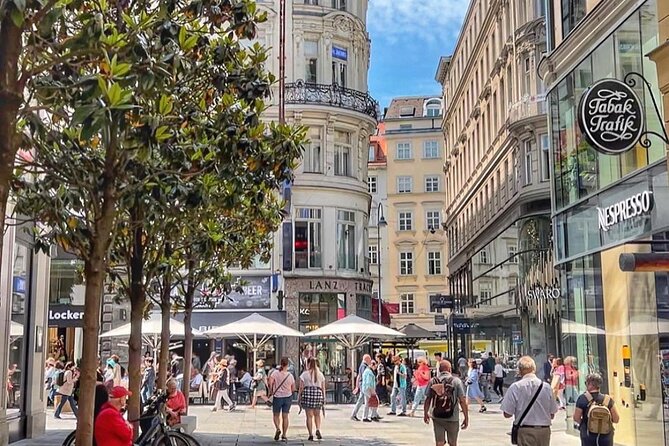
At $219.51 per person, this is an expensive two-hour walk. The price is easier to understand if you are booking for a small group and can use the group discount. If you are alone or traveling as a couple, the cost is harder to justify unless private attention is your top priority.
You are paying for a guide reserved for your group, not for a long list of paid admissions. St. Stephen’s Cathedral, Heldenplatz, and Karlsplatz are listed as free stops. The Hofburg does not include admission, and the Graben and Kohlmarkt entry note does not identify a separate attraction.
For comparison within your own trip budget, ask what you value most. If you want a quick city framework, personal questions, and help choosing your next sights, a private walk can be useful. If you mainly want to see Vienna’s interiors, the same money may feel better spent on separate admission tickets and a self-guided route.
The two-hour length also affects value. It is long enough to cover the central landmarks without tiring you out, but too short for substantial time inside the Hofburg or Opera. I would book it as a first look, not as your main Vienna history experience.
The private format and guide quality
A private tour is only as good as the person leading it. The best account connected with this experience describes Nicoleta as someone with extensive knowledge of Vienna and a real affection for the city. Her personal stories reportedly made the sights easier to understand, while her photography added another personal touch.
That is the ideal version of this tour. You get a local voice, a chance to ask questions, and perhaps a few small details you would not find in a basic guidebook. The promise of quiet courtyards and tucked-away cafés also fits a private format better than a large group.
But you should take the guide assignment seriously. One experience ended with nobody arriving after about 40 minutes of waiting, and the listed phone number was not available. Messages also went unanswered. Another guide issue involved a five-hour expectation for a tour understood by the visitor to be two and a half hours, along with concerns about licensing.
Because of those reports, I would confirm the guide’s name, the start time, the tour length, and a working contact method before the day arrives. Save the confirmation details on your phone. If the guide does not appear, do not wait indefinitely without trying the available contact channels.
Who will get the most from this walk
I think this tour suits you best if:
- You are visiting Vienna for the first time and want the center explained quickly.
- You prefer a private conversation to a large group.
- You want a local person to suggest what to do after the walk.
- You enjoy architecture, imperial stories, political squares, and music history.
- You have only a short window in central Vienna.
- You are sharing the cost with enough people to make the private rate more reasonable.
I would be more cautious if you want a formal licensed guide, guaranteed operator communication, or detailed indoor visits. The available information does not promise entry to the Hofburg, the Opera, or a full cathedral tour.
Families and mixed-interest groups may appreciate the short length and flexible questions. People who already know central Vienna may find the route familiar unless the guide adds worthwhile local detours. The experience is also less attractive if you dislike luxury shopping streets or prefer quieter residential neighborhoods.
Simple ways to prepare
Wear shoes suited to city walking. The route covers several central streets and squares, and some of the scheduled time is spent moving between stops.
Arrive early at Mozarthaus, Domgasse 5, and make sure you know the guide’s name. Since the route ends somewhere else, keep your afternoon plans flexible until Karlsplatz.
Bring questions. A private walk gives you a better chance to shape the conversation. Ask about the Habsburgs at the Hofburg, the political meaning of Heldenplatz, Mozart’s connection to Vienna, and what to visit after Karlsplatz.
Do not assume admission is covered. The only clearly stated paid-entry note is not tied to a named indoor attraction, while Hofburg admission is specifically not included. Confirm what you will see inside, if anything, before booking.
The booking confirmation is issued at the time of booking, and most people can participate. The experience is non-refundable and cannot be changed after booking, so the date deserves careful checking.
Should you book this Vienna walking tour?
I would book it only after confirming the guide and contact details. The route is well chosen, the private setup can produce a much better conversation than a standard group walk, and Nicoleta sounds like the kind of guide who can bring Vienna to life with personal stories.
The price is the sticking point. At $219.51 per person for about two hours, you need to value private attention and local recommendations highly, or share the cost with a group. You are not buying a full palace or museum tour.
My call: book if you want a short, private orientation and can verify the arrangements in advance. Skip it if reliability, formal guide credentials, and guaranteed indoor access matter more to you than flexibility. For this price, clear communication is not a luxury. It is part of the service.
FAQ
How long is the Private Vienna Walking Tour?
The tour lasts approximately two hours.
Is this a private activity?
Yes. Only your own group participates in the tour.
Where does the tour start?
The listed meeting point is Wien Museum Mozart apartment, Mozarthaus, Domgasse 5, 1010 Vienna, Austria.
Where does the tour end?
The tour ends at a different location from the starting point, at Karlsplatz.
What sights are included in the route?
The route includes St. Stephen’s Cathedral, the Hofburg, Heldenplatz, Graben, Kohlmarkt, the Mozart Statue area, the Vienna State Opera area, and Karlsplatz.
Is admission to the Hofburg included?
No. Admission to the Hofburg is listed as not included.
Can the tour be canceled or changed for a refund?
No. The experience is non-refundable and cannot be changed for any reason after booking.
Just added around Vienna
- World War II History Vienna Old Town Private Walking Tour★ 4.8 · 9 reviews
- From Krems: Wachau Valley River Cruise on the Danube★ 4.6 · 95 reviews
- Vienna: Winery and Wine Tasting Tour with a Wine Expert★ 5.0 · 5 reviews
- Vienna: Wine Tasting Tour★ 4.8 · 61 reviews
- Vienna: Wine Tasting E-Bike Tour★ 4.9 · 46 reviews
- Vienna: Wine Tasting at Schönbrunn Palace★ 4.3 · 71 reviews
- Vienna: Wiener Schnitzel and Strudel Cooking Class★ 4.9 · 126 reviews
- Vienna Urban Art Tour: Explore a different side of Vienna!★ 3.8 · 14 reviews
Walking Tours, compared.
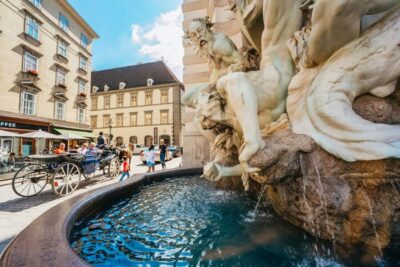
Guided Walking Tour of City Center Highlights
Read our review →
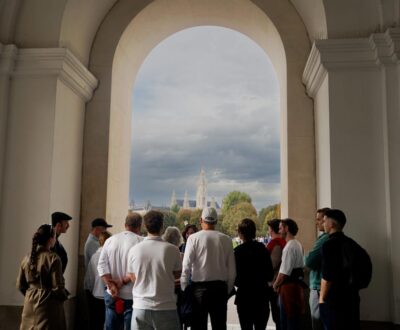
Guided Walking Tour of City Highlights & Hidden Gems
Read our review →
Vienna Historic Center Small Group Walking Tour
Read our review →
Browse the lists this tour appears in