
Reviewed · WALKING TOURS
Introducing Vienna Walking Tour: The Capital of the Habsburgs
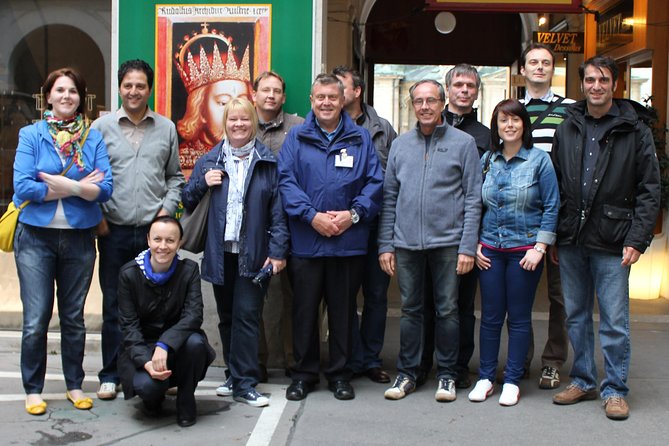
Vienna’s imperial center packs a remarkable amount into a short walk. This two-hour tour traces the Habsburg story from medieval ruins and St. Michael’s Church to the Hofburg, Hero’s Square, Joseph’s Square, the Albertina, the opera, and St. Stephen’s Cathedral. The guide’s stories are the main attraction, especially when Herbert Stojaspal brings old photographs and local knowledge to the streets.
I like the small limit of 15 people, which gives you a better chance to hear, ask questions, and keep up than on a large city tour. I also like the finish near St. Stephen’s Cathedral, where a stop at a Lindt chocolate shop leaves you in a useful spot for further exploring, shopping, or lunch.
The main consideration is pace. You cover many famous sights in about two hours, so this is an orientation walk rather than a series of long interior visits. You’ll see and discuss a lot, but you may need to return later for photographs or museum time. Also check that you select the English departure carefully when booking.
Key points to know before you book
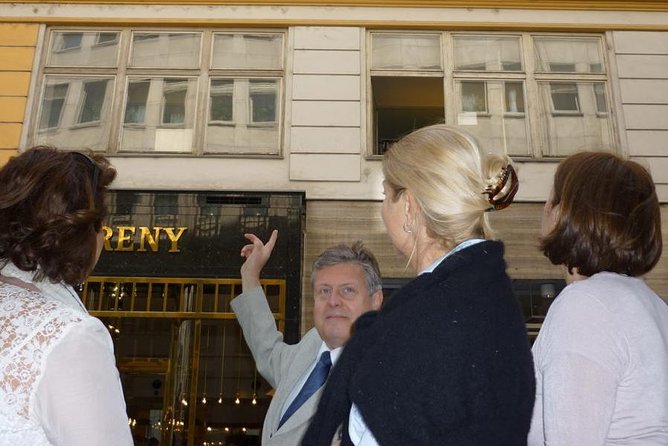
- A compact Habsburg route: The walk connects major sights in Vienna’s central district without requiring a bus or other transport.
- A guide-led history lesson: Herbert Stojaspal is Viennese, and guides such as Dorothea focus on imperial history, architecture, war, politics, and modern city life.
- Small-group setting: The maximum is 15 people, with group discounts available.
- A useful first-day activity: You get basic orientation, restaurant suggestions, museum ideas, and a clearer plan for the rest of your stay.
- English-language booking matters: The tour is offered in English, but the operator also runs German tours on some days, so confirm the language on your ticket.
- Good value at $35.07: For two hours with a certified guide and no extra entry charges, the price is fair for a central Vienna introduction.
Why this two-hour walk works so well in Vienna
Vienna can seem easy to understand at first glance. The old center is compact, the grand buildings line up neatly, and St. Stephen’s Cathedral gives you a natural point of reference. Yet the city’s story is layered. Medieval church power, Habsburg rule, imperial ceremony, modern government, Nazi-era memory, music, and chocolate all meet within a fairly small area.
That is why I see this as a strong first-day tour. You are not simply checking off buildings. You are learning how the buildings relate to one another and why Vienna developed around the Hofburg and the inner city.
The route is also physically manageable. The terrain is flat, and the walk is described as easy enough for a broad range of ages. You should still wear comfortable shoes and dress for the forecast. The tour runs in all weather, and cold wind can make a morning or evening walk feel much harsher than the distance suggests.
The group size matters, too. With no more than 15 people, you can usually stay close to the guide and ask questions without turning the walk into a private tour. The experience is sociable, but not so large that the guide becomes a distant voice at the front.
A few more Vienna trips to weigh up
- Vienna: Guided Walking Tour of City Center Highlights
★ 4.7 · 4,989 reviews - Vienna: Vienna Central Cemetery Guided Walking Tour
★ 4.8 · 3,307 reviews - Vienna: Guided Walking Tour of City Highlights & Hidden Gems
★ 4.9 · 2,180 reviews
Starting at Michaelerplatz and St. Michael’s Church
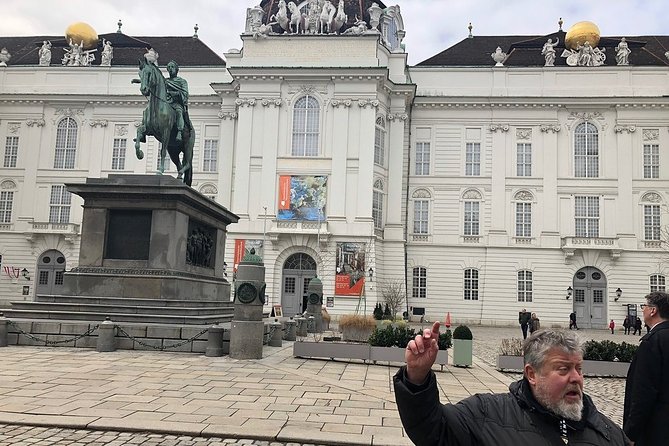
The meeting point is Michaelerplatz 3, in front of St. Michael’s Church. This is an excellent place to begin because the square gives you an immediate look at Vienna’s layered past.
The church area includes Roman and medieval remains, so the first stop sets up one of the tour’s central themes: Vienna is not just an imperial showcase. It was built, rebuilt, and reshaped over many centuries. You begin with archaeology and religion before moving into the Habsburg court.
Michaelerplatz is also close to the Hofburg, so the route gets to the city’s political and ceremonial core quickly. Arrive with the meeting address saved on your phone. The tour includes a mobile ticket, and central Vienna has many similar-looking streets and entrances.
The Spanish Riding School and its famous white stallions
One stop focuses on the white stallions associated with Vienna’s Spanish Riding School. You receive detailed information about the horses and the institution rather than simply passing a grand building with no explanation.
This is a useful touch because the horses are part of Vienna’s living imperial image. The subject connects court ceremony, training, tradition, and public performance. You should not expect a full riding demonstration as part of this walking tour. The value is the guide’s explanation of what you are seeing and why it matters.
If you already plan to attend a performance or visit the riding school separately, this introduction can help you understand it better. If you do not, you still get one of Vienna’s most recognizable cultural symbols without paying for an additional ticket during the walk.
The Hofburg: 12th-century residence of the Habsburgs
The route then turns to the Hofburg, the former residence of the Habsburg dynasty. The palace complex is central to the tour’s theme, and the guide uses it to explain how Vienna grew as a seat of power.
The useful part is the connection between architecture and government. The Hofburg was not simply a private home. It was a working center for a ruling family whose reach shaped Austria and much of Europe. As you walk through this area, the scale of the buildings helps explain the importance of court ceremony and administration.
Do not confuse this walking tour with a palace admission tour. The listed experience includes a professional certified guide, but not museum or palace entry. You will learn from the outside and from the surrounding squares, then decide which interior collections deserve your time later.
Same Alps, a completely different kind of day:
- Vienna: Vivaldi’s Four Seasons Concert in Karlskirche
★ 4.7 · 14,951 reviews - Vienna: Spanish Riding School Training
★ 3.9 · 9,281 reviews - Vienna: Skip-the-cashier-desk-line Giant Ferris Wheel Ride
★ 4.5 · 7,859 reviews - Vienna: Schönbrunn Palace & Gardens Skip-the-Line Tour
★ 4.7 · 7,739 reviews
Hero’s Square and Austria’s government system
Hero’s Square, or Heldenplatz, gives the guide a broad outdoor setting for explaining Austrian government and political history. The name itself becomes a talking point, and the square’s ceremonial scale makes more sense once you understand how it was used.
This part is especially useful if you are new to Austria. Vienna’s imperial buildings can blur together after a while, but the explanation of government systems gives the route a practical framework. You are not just looking at palaces. You are learning how authority worked, how it was displayed, and how Austria functions today.
The square is also one of the places where the guide may use historical photographs to show how the city looked in earlier periods. That comparison helps you notice changes that are easy to miss when you only see the present-day streets.
Imperial objects and the Holy Roman Empire
The tour discusses remarkable objects linked with European history, including the Holy Lance, associated with the spear used to pierce Jesus, and the crown of the Holy Roman Empire.
The important point is not simply that these objects are unusual. They show how religion, ceremony, political legitimacy, and imperial power were tied together. A crown could be a symbol of authority far beyond its physical materials, while a sacred relic could carry enormous meaning for rulers and subjects.
Because the tour is only two hours, this section serves as an introduction rather than a museum visit. If these objects catch your interest, you can use the guide’s explanation to decide where to spend more time afterward. The walk helps you separate the truly significant collections from the many grand façades competing for attention.
Joseph’s Square and Maria Theresa’s reign
Joseph’s Square offers another chance to move from buildings to personalities. Here, you learn about Maria Theresa’s reign and the secrets and political pressures surrounding her rule.
This is one of the stronger history-focused parts of the route because a ruler’s story can make an abstract dynasty easier to understand. Maria Theresa’s reign gives the guide a way to discuss power, succession, court life, and the demands placed on a monarch.
You should expect storytelling rather than a long stop inside a museum. The square is part of the public setting, so listen closely and leave room for the guide to point out details that are easy to overlook. The best guides on this route are reported to be patient with questions, and that matters here because Maria Theresa’s era can quickly raise more questions than a short tour can answer.
The Albertina and its enormous drawing collection
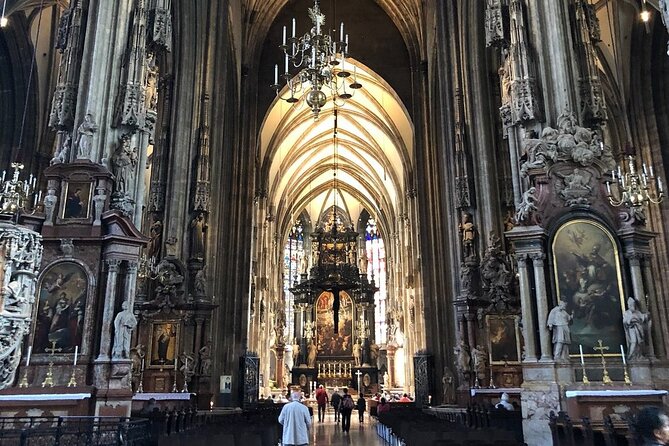
The walk reaches the former residence of Albert and Maria Christina, now home to the Albertina. The focus here is the institution’s drawing collection, described as the largest in the world.
This is a good example of the tour’s range. It is not only about emperors and palaces. Art, collecting, aristocratic residence, and museum culture all form part of Vienna’s identity.
The Albertina is worth noting for a later visit if you enjoy works on paper or want a more focused museum experience. The walking tour gives you the context and location, but admission is not included. You can mark it on your map and return when you have enough time to explore properly.
Remembering war, fascism, and Nazi-era Austria
Near the center, you encounter the monument officially called Monument Against War and Fascism. Its purpose is to remember victims of war, including those affected by Nazi rule in Austria.
This stop changes the tone of the walk. Until this point, much of the route centers on imperial power, ceremony, and cultural achievement. The monument forces a look at the damage caused by war and fascism and at the human cost behind political history.
I appreciate this inclusion because it keeps the tour from presenting Vienna as an unbroken imperial fairy tale. The city’s past includes difficult chapters, and a useful introduction should make space for them. Give this stop your attention. It is more reflective than the palace squares and may be brief, but it adds moral weight to the route.
Vienna State Opera and the three-euro ticket tip
The opera house brings the tour into Vienna’s musical life. You learn that the program changes daily and that the cheapest tickets can cost as little as three euros.
That is a practical tip, especially if you assumed opera was always an expensive, formal evening out. You may not get the exact performance you want, and ticket availability can vary, but the information gives you another affordable way to experience Vienna’s culture.
The opera also works well as a landmark because it links the imperial center with the city’s continuing cultural life. Ask the guide for current advice if you are interested in attending. The tour itself does not include an opera ticket.
Finishing at St. Stephen’s Cathedral and the Lindt shop
The walk ends at the Lindt Chocolate Boutique at Stephansplatz 8A, near St. Stephen’s Cathedral and Jasomirgottstraße. The nearest subway station is Stephansplatz, served by U1 and U4, with the Stephansplatz exit taking you to the area.
Ending here is smart. St. Stephen’s is one of the easiest places in Vienna to use as a base for the next part of your day. You can continue around the central streets, visit the cathedral on your own, or use the U-Bahn to reach another district.
The chocolate shop provides a simple final treat, but it is not a food tour. Food and drinks are not included, so think of the stop as a convenient endpoint rather than a tasting experience.
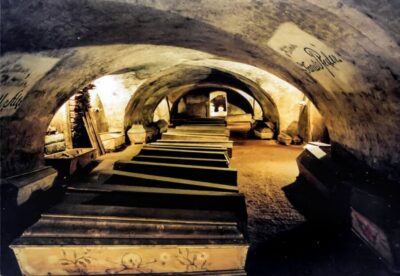
If you want interior time at St. Stephen’s Cathedral, the tour gives you the location but not a full cathedral visit. One sensible plan is to continue inside after the walk, then consider the catacombs independently if they fit your schedule.
How much history can fit into $35.07?
At $35.07 per person, this is fairly priced for a two-hour guided walk in central Vienna. You receive a certified guide, a compact route through some of the city’s most important areas, and practical suggestions for museums, restaurants, food, and later activities.
The value depends on how you use it. If you want long photo stops, detailed interior tours, or a slow architectural study, this may feel hurried. If you want a clear framework before exploring on your own, the price makes good sense.
The strongest value comes from the guide. Herbert Stojaspal is Viennese and is known for combining dates and facts with humor, local stories, older photographs, and current recommendations. Dorothea also leads some departures. The guide can turn a list of imperial buildings into a connected story, which is hard to get from a map alone.
Group discounts may reduce the cost for larger bookings. Since the experience is often reserved about 30 days ahead, I would not leave it until the last moment if the timing matters to you.
Who should book this Vienna walking tour?
I would choose this tour for a first visit, especially on your first full day. You get your bearings quickly, learn which museums and buildings deserve a closer look, and receive suggestions for places to eat and things to do.
It also suits people who enjoy history but do not want an academic lecture. The tone appears to be lively, humorous, and conversational, with enough detail to satisfy serious questions without making every stop feel like a textbook.
Families with older children may manage well, but the activity is not recommended for younger children. Anyone who wants a private pace should look elsewhere, since this is a shared group walk with up to 15 people.
Pay close attention to the language when booking. The operator runs German tours as well as English tours, and the experience is not designed as a dual-language walk. The selected language should be printed on your ticket, so check it before the tour day.
Free cancellation is available if you cancel at least 24 hours before the start time. Changes or cancellations made inside that period are not accepted for a refund. Hotel pickup and drop-off are not included, but both meeting and ending points are in central Vienna and close to public transport.
Should you book it?
Book this tour if you want a clear, lively introduction to Vienna’s imperial center and prefer learning through stories rather than wandering alone with a guidebook. It is especially useful at the start of a visit, when the Hofburg, Albertina, opera, and cathedral can otherwise feel like disconnected sights.
Skip it if you want extensive time inside each attraction or a quiet, photography-first walk. For most visitors seeking orientation, history, local advice, and a manageable price, this two-hour route is a sensible way to begin Vienna.
FAQ
How long is the Vienna walking tour?
The tour lasts approximately two hours.
What is the price?
The listed price is $35.07 per person. Group discounts are available.
Is the tour offered in English?
Yes. English is one of the listed tour languages. Check your ticket carefully because the operator also runs German-language departures.
How many people can join the tour?
The maximum group size is 15 people.
Where does the tour start?
The meeting point is St. Michael’s Church at Michaelerplatz 3, 1010 Vienna, Austria.
Where does the tour end?
The tour ends at the Lindt Chocolate Boutique, Stephansplatz 8A, near St. Stephen’s Cathedral.
Is hotel pickup included?
No. Hotel pickup and drop-off are not included.
Are food and drinks included?
No. Food and drinks are not included. The tour finishes near a Lindt chocolate shop.
Does the tour operate in bad weather?
Yes. The tour operates in all weather conditions. You should dress appropriately, since the entire experience takes place outdoors on foot.
Just added around Vienna
- Ottakringer Brewery tour★ 4.0 · 6 reviews
- New Hofburg Palace Tour House of Habsburg★ 4.5 · 5 reviews
- Private Van & Walk Tour – One Perfect Day in Vienna★ 5.0 · 21 reviews
- True Crime mobile puzzle rally Vienna★ 4.0 · 3 reviews
- Vienna Naschmarket Food Tasting Tour★ 4.0 · 30 reviews
- Vienna Nightlife Experience: Food, Wine, Cocktails & Vibes★ 5.0 · 119 reviews
- Myth Mozart★ 4.0 · 80 reviews
- ( Night Tour ) With Private Guide + wine or prosecco★ 4.0 · 12 reviews
Walking Tours, compared.
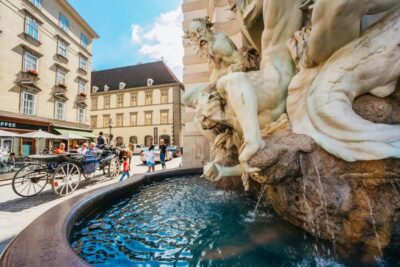
Guided Walking Tour of City Center Highlights
Read our review →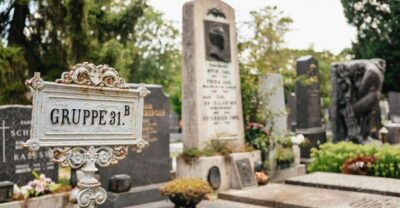
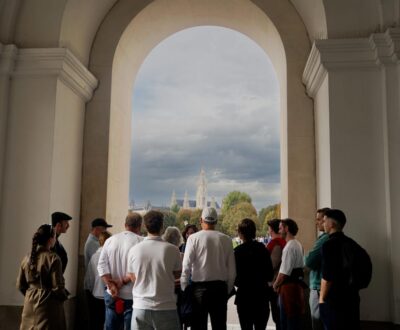
Guided Walking Tour of City Highlights & Hidden Gems
Read our review →
Vienna Historic Center Small Group Walking Tour
Read our review →
Browse the lists this tour appears in