
Reviewed · WALKING TOURS
Private Hidden Vienna Walk — Stories Behind Quiet Corners
Vienna’s grand center is easy to admire, but its best stories often hide behind plain doorways and quiet lanes. This private walk links the city’s famous sights with places such as Schönlaterngasse’s Basilisk House, the Sala Terrena where Mozart played, and a secret rooftop with city views.
I like the personal format, which lets Walter, Brigitte, Sabine, Hannes, or Daniela adjust the route to your interests. I also like the mix of architecture, music, Jewish history, cafés, and local tips rather than a march from one postcard sight to the next.
The main caution is simple: this is a real walking tour, averaging about 8,000 steps in three hours. If stairs, distance, or a brisk pace are difficult, explain that clearly before booking and consider a shorter or less demanding option.
Key points at a glance
- A private route for up to 10 people: Your group has the guide to itself, so questions and route changes are much easier than on a large city tour.
- Quiet corners beside major sights: You see the Jesuit Church, St. Stephen’s Cathedral, Judenplatz, and Rathausplatz while also exploring smaller lanes and overlooked buildings.
- A rooftop viewpoint: The walk includes access to a secret rooftop for a different view of Vienna’s old center.
- Music woven into the streets: Mozart’s 1781 connection to the Teutonic Order’s house anchors the musical side of the tour, with Beethoven also included in the city stories.
- Pickup at your Vienna address: The guide can meet you at a hotel, restaurant, train station, or other location within Vienna. Cruise passengers can arrange pickup at the Handelskai pier.
- Best for a second look: The route is especially useful if you have more than one day in Vienna or have already seen the main imperial sights.
Why this walk feels different from a standard Vienna tour
A first visit to Vienna usually brings you to St. Stephen’s Cathedral, the Hofburg, the Opera, and perhaps Schönbrunn Palace. Those places deserve your time. But once you have seen the grand façades, the city becomes more interesting when you notice the smaller clues around them.
That is the purpose of this three-hour walk. It uses the central district as a stage for stories about religion, music, architecture, Jewish life, cafés, aristocratic families, and everyday Vienna. You are not simply checking off buildings. You are learning why a church looks the way it does, what a strange mural means, and how a narrow lane fits into the city’s past.
The private format matters here. Before the walk, you can explain if you are a first-time visitor, returning after an earlier trip, interested in architecture, traveling with children, or hoping to avoid crowded routes. Guides have adjusted walks for first-time visitors, repeat visitors, families, and people who had already seen many of Vienna’s major sights.
The guide team includes Walter, Brigitte, Sabine, Hannes, and Daniela. The experience can therefore feel different depending on who leads it, but the strongest pattern is a conversational approach with room for questions. Walter is noted for humor and broad knowledge of Vienna, while Brigitte and Sabine are often praised for adapting the route. Daniela guides in English, Spanish, and German.
A few more Vienna trips to weigh up
- Vienna: Guided Walking Tour of City Center Highlights
★ 4.7 · 4,989 reviews - Vienna: Vienna Central Cemetery Guided Walking Tour
★ 4.8 · 3,307 reviews - Vienna: Guided Walking Tour of City Highlights & Hidden Gems
★ 4.9 · 2,180 reviews
Starting at Stubentor and reading Vienna’s old defenses
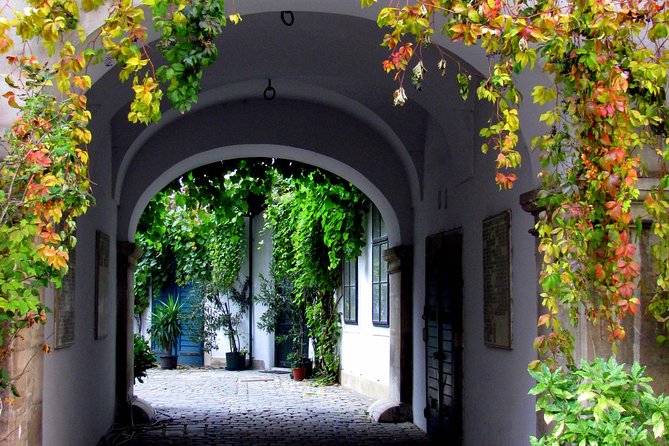
The walk begins at Stubentor U, one of Vienna’s eastern gates. This is a useful starting point because it gives you a sense of the scale of the city’s former defenses before you enter the tighter streets of the old center.
You will spend about 10 minutes here. There is no admission charge, and the value comes from the explanation rather than from a formal museum visit. The guide helps you picture how massive Vienna’s walls once were and how the eastern approach shaped movement into the city.
This opening also helps you understand the city’s compact layout. Most of the route is in or near the historic center, but compact does not mean effortless. You will be on your feet for much of the three hours, with pauses at churches, squares, and buildings.
The Jesuit Church and Vienna’s theatrical Baroque style
The Church of the Jesuits is one of the most rewarding early stops. It may not have the instant fame of St. Stephen’s Cathedral, but its architecture and decoration give you a chance to examine how Baroque churches communicate ideas through space, color, and ornament.
The guide’s job here is to help you decipher the spiritual concept behind the design. That makes this more than a quick glance inside a church. You are encouraged to look at how decoration directs attention and how the building creates a particular emotional effect.
You spend roughly 10 minutes here. That is enough for a focused explanation, though it is not a long church visit. If you want extended time for quiet reflection or photography, tell your guide early. Private tours are flexible, but three hours still requires choices.
Schönlaterngasse, the basilisk legend, and a famous schnitzel address
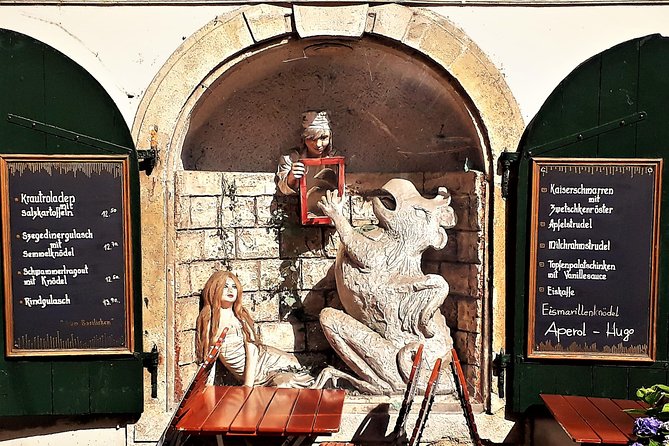
One of the walk’s more unusual moments comes on Schönlaterngasse, where a mural illustrates the legend of the Vienna basilisk. The story gives you a welcome change of pace from imperial palaces and church domes.
The mural is also a reminder that Vienna’s character is not limited to grand official buildings. Small lanes can preserve odd local tales, painted details, and traces of older city life. This is the sort of place you might pass without noticing if you were following only the main boulevard.
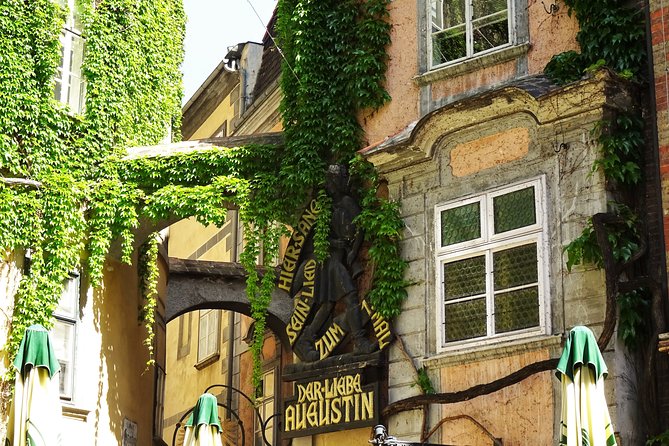
The route also points out the home of Vienna’s most famous schnitzel since 1905. The information provided does not include a tasting or meal, so think of this as a food-history stop rather than a restaurant booking. It is a good place to ask your guide for practical advice about eating in Vienna, especially since guides have offered restaurant, coffeehouse, and bakery suggestions during these walks.
Same Alps, a completely different kind of day:
- Vienna: Vivaldi’s Four Seasons Concert in Karlskirche
★ 4.7 · 14,951 reviews - Vienna: Spanish Riding School Training
★ 3.9 · 9,281 reviews - Vienna: Skip-the-cashier-desk-line Giant Ferris Wheel Ride
★ 4.5 · 7,859 reviews - Vienna: Schönbrunn Palace & Gardens Skip-the-Line Tour
★ 4.7 · 7,739 reviews
Mozart at the Sala Terrena in the Teutonic Order’s house
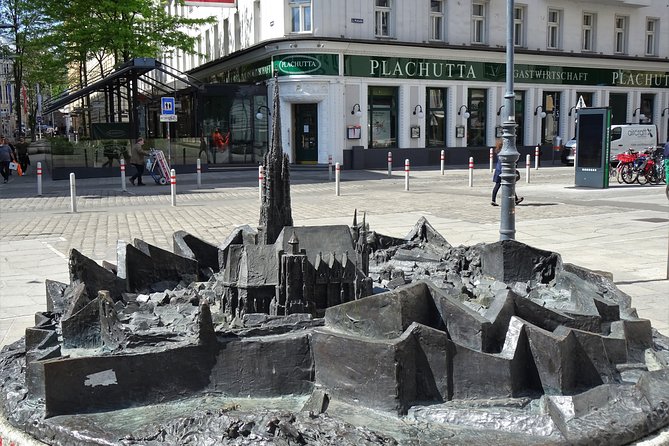
The Sala Terrena in the Deutschordenshaus adds a strong musical note to the route. Mozart played here while living in the house of the Teutonic Order in 1781.
That detail works well because it places Mozart in an actual room and neighborhood rather than treating him as a name attached to a generic concert advertisement. You get a sense of Vienna as a working city for musicians, not only as the polished imperial capital seen in later paintings and tourist brochures.
The stop lasts about 10 minutes and carries no separate admission charge. The tour also includes stories about Beethoven’s life in Vienna, so you can expect the musical discussion to reach beyond Mozart. If classical music is a main reason for your visit, say so before the walk. The private structure makes it easier for the guide to give that topic more space.
St. Stephen’s Cathedral, with time for the outside and inside

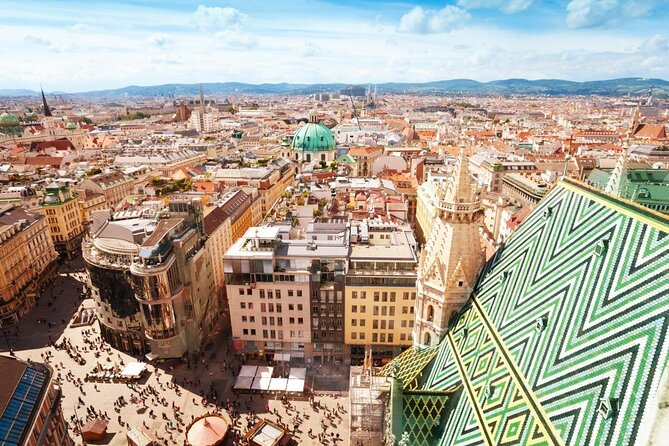
St. Stephen’s Cathedral is the central landmark of the walk, and the guide approaches it from the outside first. You will learn how to read details on the cathedral’s exterior, then have time to look inside.
The planned stop is about 15 minutes. That is enough for an introduction and a short look around, but it is not a substitute for a full cathedral visit. If you want to study the interior, sit quietly, or explore at length, you may need to return later on your own.
This is one place where expectations matter. A private walk can bring the cathedral to life, but the schedule also includes several other stops. In one difficult experience, a group with serious mobility limits found the pace and distance too demanding and did not have enough time inside St. Stephen’s. The lesson is practical: tell the guide about mobility needs before the day, and be clear if a longer cathedral visit matters more than the rest of the route.
Judenplatz and the Holocaust Memorial
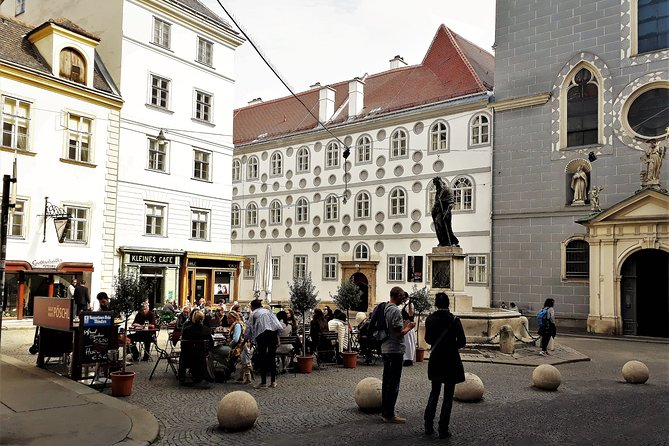
Judenplatz is one of Vienna’s most atmospheric squares, and the Holocaust Memorial gives the walk a more serious turn. The square carries a story stretching across 700 years of Jewish life in Vienna, including the painful destruction and persecution that shaped the city.
The stop takes about 10 minutes. That is brief for such a weighty subject, but the guide can give you the setting and key context before you continue. You may want to return later if you wish to spend more time with the memorial or visit related sites independently.
This part of the route adds needed balance. Vienna is often presented through music, palaces, coffeehouses, and elegant streets. Judenplatz makes clear that the city’s past also includes exclusion, violence, and loss. A good guide handles that contrast with care, and the private format gives you space to ask questions without holding up a large group.
Café Central, Ferstel Passage, and an odd political footnote
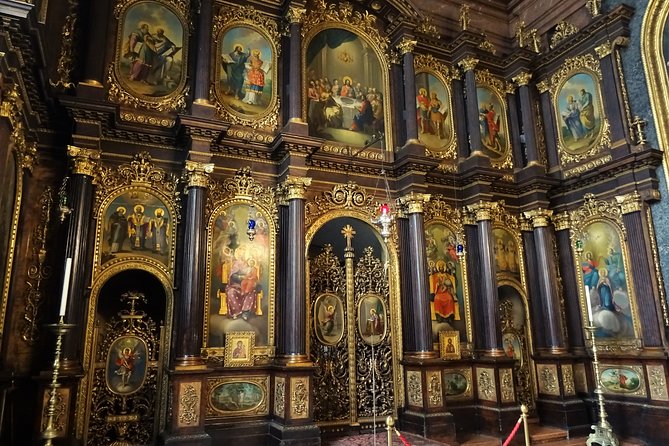
The walk then reaches Café Central and the Ferstel Passage. These are attractive places to see, but the guide also uses them to tell a less polished story about the people who once moved through Vienna.
You will hear about where Trotsky and Stalin did not become friends. The wording itself hints at the tour’s style: history is presented through memorable human details rather than only dates and dynasties.
The passage and café area also offer a useful pause from open squares. You can ask about coffeehouse customs, food, and places to return after the tour. Café recommendations are one of the practical strengths of a local guide, especially if you want to experience Vienna beyond the standard sightseeing list.
Palais Daun-Kinsky and the city of aristocratic power
Palais Daun-Kinsky introduces Vienna’s grander Baroque side. Count Wirich Philipp von Daun commissioned the palace, with construction beginning in 1713 under architect Johann Lucas von Hildebrandt.
The building also connects to Prince Józef Poniatowski, a Polish general and Marshal of France, who was born there on May 7, 1763. Details like this show how Vienna’s buildings were tied to political networks reaching far beyond Austria.
You spend about 10 minutes at the palace, again without a separate admission charge. The stop is best understood as an exterior and neighborhood explanation rather than an extended palace tour. The guide helps you read the building as part of the city’s aristocratic setting, then keeps the walk moving.
Rathausplatz and Café Landtmann
The final listed stop is Rathausplatz, beside Vienna’s grand city hall. Nearby Café Landtmann is linked with Sigmund Freud as a favorite, giving the route one last connection between famous people and ordinary city spaces.
The square gives you a broad architectural finish after the narrow lanes and intimate courtyards earlier in the walk. By this point, you have moved through religious, musical, Jewish, aristocratic, and café-centered stories, all within a manageable area of central Vienna.
The route may also include a secret rooftop viewpoint, one of the tour’s main promised features. The exact rooftop is not specified, so ask about access and timing when you book. Its appeal is clear: after looking up at Vienna’s façades, you get a chance to look across the city from above.
What $344.80 means for your group
The price is $344.80 for a private group of up to 10 people. For one or two people, that is a substantial spend. For a family or group of friends, the per-person cost becomes more reasonable, particularly if you value a private guide and pickup rather than joining a large scheduled group.
At six people, the cost works out to about $57 per person. At ten, it is about $34 per person. You are paying for the guide’s time, route planning, local interpretation, and the ability to ask questions throughout the walk.
There is no transport between attractions included, but the route is designed as a walking experience through central Vienna. Pickup is offered from a hotel, restaurant, train station, or another agreed location in Vienna. Cruise passengers can arrange to meet at the A-Rosa pier at Handelskai 265, though reaching the pier itself can add extra walking.
I see the best value for a group of four or more, repeat visitors, or anyone who wants a personal introduction to Vienna’s less obvious corners. If you are alone and mainly want a quick checklist of major sights, a group tour or shorter orientation walk may cost less.
Pace, planning, and who should book
You need moderate physical fitness for this experience. The stated average is about 8,000 steps, and the route includes city streets, church visits, and movement between several districts and squares.
You can choose a morning or afternoon departure. Morning is useful if you want to spend the rest of the day returning to places you discover. Afternoon may work better if you arrive late or prefer to begin after your first independent sightseeing.
Send clear expectations before the tour. Tell the provider if you have already seen St. Stephen’s, if you want more music or Jewish history, if you are traveling with children, or if avoiding crowds is important. Also explain any need for frequent rests, fewer stairs, or a shorter route. The private format allows changes, but it cannot turn a three-hour walking tour into a low-mobility outing.
Service animals are allowed, while pets are not permitted in certain areas visited. The route is near public transportation. Confirmation is normally sent within 48 hours, subject to availability, and free cancellation is available up to 24 hours before the start time.
Should you book the Hidden Vienna Walk?
Book it if you have more than one day in Vienna, enjoy stories attached to specific buildings, or want a guide who can adjust the route to your interests. The combination of the Jesuit Church, Basilisk House, Mozart’s Sala Terrena, Judenplatz, Palais Daun-Kinsky, and a rooftop view gives you a more layered picture of the city than a standard landmark circuit.
I would be especially keen to book this for a small group that has already seen Schönbrunn or the Hofburg and wants a quieter look at central Vienna. The guides also provide useful suggestions for restaurants, coffeehouses, bakeries, and later stops.
Skip it if you need a seated tour, have serious walking limitations, or want a long interior visit at St. Stephen’s Cathedral. For everyone else, the private price is easiest to justify when shared among several people, and the 4.9 rating from 137 ratings, with 98 percent recommending it, supports the view that the guide’s personal touch is the main reason to go.
FAQ
How long is the Private Hidden Vienna Walk?
The tour lasts approximately three hours.
How much does the private tour cost?
The price is $344.80 per group, with up to 10 people included.
Is pickup available?
Yes. The guide can meet you at a hotel, restaurant, train station, or another agreed location within Vienna. A-Rosa cruise passengers can meet at the Handelskai 265 pier.
Is the tour offered in English?
Yes. The tour is offered in English. Daniela, one of the guides, also guides in Spanish and German.
Which sights are included?
The route includes Stubentor, the Church of the Jesuits, Schönlaterngasse and its basilisk mural, the Sala Terrena in the Deutschordenshaus, St. Stephen’s Cathedral, Judenplatz and its Holocaust Memorial, Café Central, Ferstel Passage, Palais Daun-Kinsky, and Rathausplatz. It also includes a secret rooftop viewpoint.
Is this tour suitable for people with limited mobility?
The tour requires a moderate level of physical fitness and averages about 8,000 steps. If stairs or long walking are difficult, explain your needs before booking so the provider can advise you.
Can I cancel for a refund?
Yes. You can cancel at least 24 hours before the start time for a full refund. Cancellations or changes made less than 24 hours before the experience are not accepted for a refund.
Just added around Vienna
- Ottakringer Brewery tour★ 4.0 · 6 reviews
- New Hofburg Palace Tour House of Habsburg★ 4.5 · 5 reviews
- Private Van & Walk Tour – One Perfect Day in Vienna★ 5.0 · 21 reviews
- True Crime mobile puzzle rally Vienna★ 4.0 · 3 reviews
- Vienna Naschmarket Food Tasting Tour★ 4.0 · 30 reviews
- Vienna Nightlife Experience: Food, Wine, Cocktails & Vibes★ 5.0 · 119 reviews
- Myth Mozart★ 4.0 · 80 reviews
- ( Night Tour ) With Private Guide + wine or prosecco★ 4.0 · 12 reviews
Walking Tours, compared.
Guided Walking Tour of City Center Highlights
Read our review →
Guided Walking Tour of City Highlights & Hidden Gems
Read our review →
Vienna Historic Center Small Group Walking Tour
Read our review →
Browse the lists this tour appears in