
Reviewed · HISTORICAL TOURS
Wilhering Abbey: Discover 875 years of history!
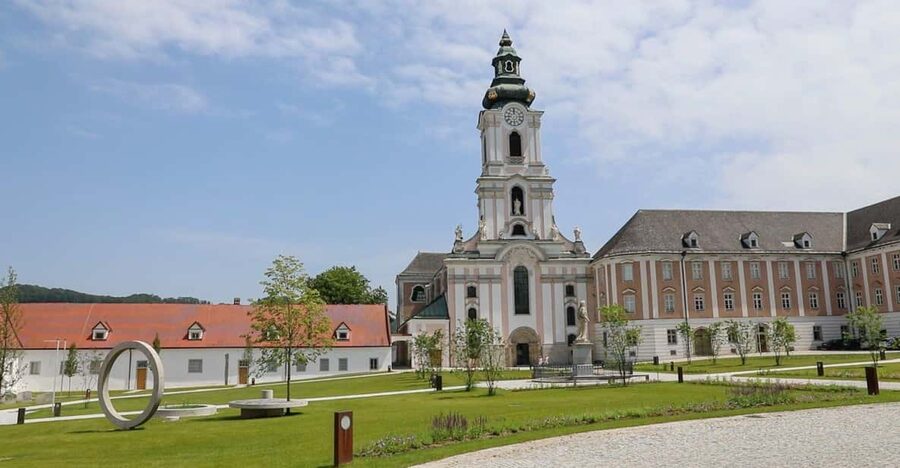
Wilhering Abbey packs 875 years of Cistercian history into seven museum rooms, then gives you something even better: space to slow down. The church, cloister, courtyard, and park are freely accessible, so the visit feels less like a quick museum stop and more like a small abbey complex to explore at your own pace.
I like the museum’s two-level approach, which gives you a quick overview or extra detail when a subject catches your attention. I also like the combination of fine rococo decoration and ordinary abbey life, followed by coffee and cake in the Stiftshof courtyard. The main drawback is the short 30-minute validity period for the paid museum admission, so check opening hours and keep your visit focused.
Key points at a glance
- Seven themed rooms: Follow Wilhering Abbey’s past, Cistercian spirituality, ora et labora, and important abbey figures.
- A remarkable rococo church: Admission to the museum includes access to the church, cloister, courtyard, and park.
- A calm place to pause: The site is designed for rest, reflection, and quiet time rather than a rushed checklist.
- Abbey Café treats: Buy self-service cakes, coffee, drinks, and snacks from regional suppliers.
- A small but useful museum price: At $7 per person, the admission is easy to add to an Upper Austria day trip.
- Accessible visit: The experience is wheelchair accessible, though the museum is only open during stated opening hours.
Why Wilhering Abbey makes a good short stop
Wilhering Abbey is a good choice when you want history without giving half a day to a large museum. The paid portion lasts 30 minutes from first activation, which makes the experience easy to fit between other Upper Austria plans.
That short duration does not mean the whole abbey visit must end after half an hour. The ticket covers the museum, while the collegiate church, cloister, courtyard, and park are freely accessible. You can therefore treat the museum as the structured part of your visit, then spend more time in the open areas if the setting appeals to you.
I find that arrangement useful. You get a clear introduction to the abbey, but you are not forced into a long guided program or a fixed sequence through the entire site. It also lets you choose your emphasis: art and architecture, Cistercian life, quiet reflection, or a coffee break.
A few more Austria trips to weigh up
- Vienna: Time Travel and Magic Vienna History Tour
★ 4.6 · 3,879 reviews - Vienna: World War II Historical Walking Tour
★ 4.8 · 1,772 reviews - Vienna Historic Center Small Group Walking Tour
★ 5.0 · 1,746 reviews
Seven rooms that connect abbey life and spirituality
The museum is arranged around seven exhibition rooms and seven themes. Each room can work on its own, but the subjects connect as you move through the museum.
The central focus is Wilhering Abbey itself and the way it developed over 875 years. Alongside the institutional story, the museum explains Cistercian spirituality and the order’s familiar motto, ora et labora, meaning prayer and work.
That pairing matters. The abbey is not presented only as an old building or a collection of beautiful objects. You are also given a sense of the values that shaped daily life here. The museum places the abbey’s history beside the religious discipline and working habits of the Cistercians.
Important personalities from the abbey receive special attention as well. The supplied information does not identify individual guides, so you should not expect a named guide-led presentation as part of the admission. Instead, the exhibition is designed to let you move through the themes and choose how much information you want.
The museum’s layout suits different kinds of visitors. If you have only 30 minutes, the overview material helps you understand the main idea of each room without reading every panel. If a particular subject catches your attention, you can spend longer on the related details.
This is especially helpful for families and mixed-interest groups. Younger visitors can use the interactive elements, while adults can read further into the history and spiritual themes. The interactions give children something active to do, though the information provided does not specify the number or type of activities.
The museum’s two levels of information
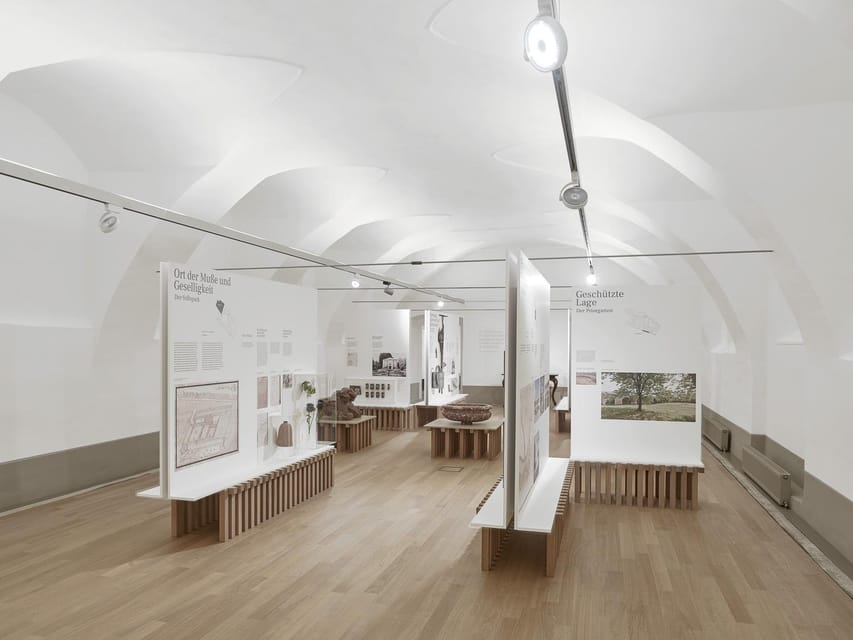
The museum makes a sensible choice by offering information at two levels. Each room provides an accessible summary first. From there, you can pursue individual topics in greater detail.
I like this format because it respects your time. Small museums sometimes place too much information in front of you, turning a simple visit into a reading assignment. Here, you can get your bearings quickly and then decide how much attention to give each theme.
The approach also works well if you are visiting with someone who has different interests. One person can focus on Cistercian practice, another on Wilhering’s past, and a child can look for the interactive features. You are not required to absorb every detail for the visit to feel worthwhile.
The museum’s themes flow into each other rather than forming seven unrelated displays. That connection should help you understand why the abbey’s buildings, religious life, work traditions, and personalities belong in the same story.
Plan your museum time before you enter. Since the admission is valid for 30 minutes from first activation, you will get more from it if you avoid spending too long at the entrance or café before starting. Afterward, you can return to the free areas without using the museum time.
The rococo collegiate church
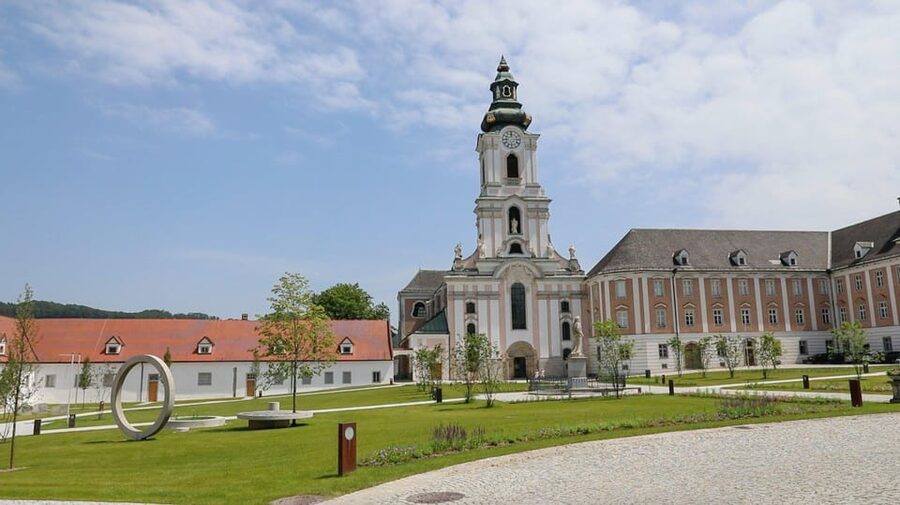
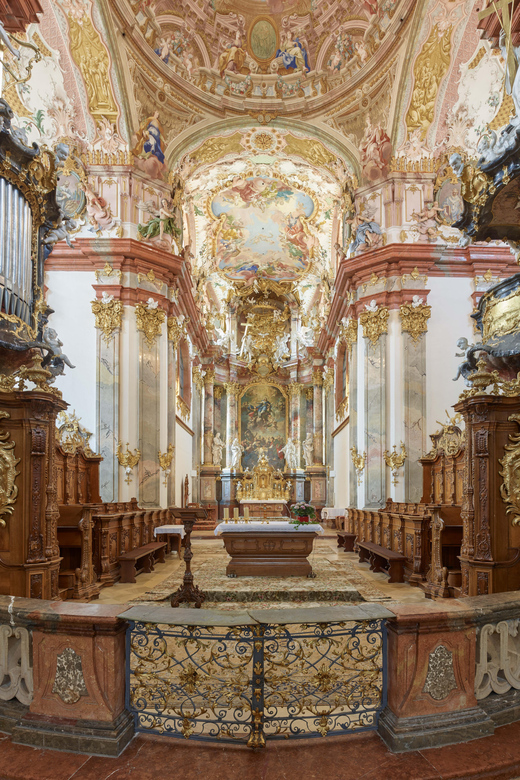
The collegiate church is one of the main reasons to visit Wilhering. The abbey describes its interior as one of Europe’s finest examples of rococo church decoration, and it provides a visual contrast to the museum’s historical displays.
Rococo interiors reward a slower look. Instead of trying to photograph everything at once, give yourself time to take in the overall effect, then notice smaller details. The available information does not identify particular altarpieces, artists, or decorative features, so I would not arrive expecting a detailed art-history tour. The value here is the church interior as a complete space.
The church is freely accessible, which improves the price calculation. Even if you only spend 30 minutes in the museum, you can still visit the church without paying another admission fee.
This is also the part of the experience most likely to appeal to people who are less interested in museum panels. You can see the decorative side of the abbey, enjoy a quiet interior, and then decide if the museum’s historical themes deserve more of your time.
Same Alps, a completely different kind of day:
- Vienna: Vivaldi’s Four Seasons Concert in Karlskirche
★ 4.7 · 14,951 reviews - Vienna: Spanish Riding School Training
★ 3.9 · 9,281 reviews - Vienna: Skip-the-cashier-desk-line Giant Ferris Wheel Ride
★ 4.5 · 7,859 reviews - Vienna: Schönbrunn Palace & Gardens Skip-the-Line Tour
★ 4.7 · 7,739 reviews
Cloister, courtyard, and park
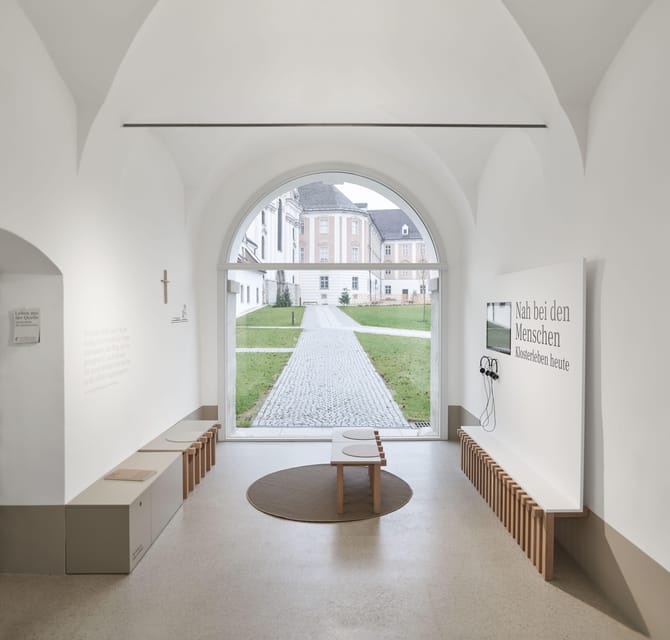
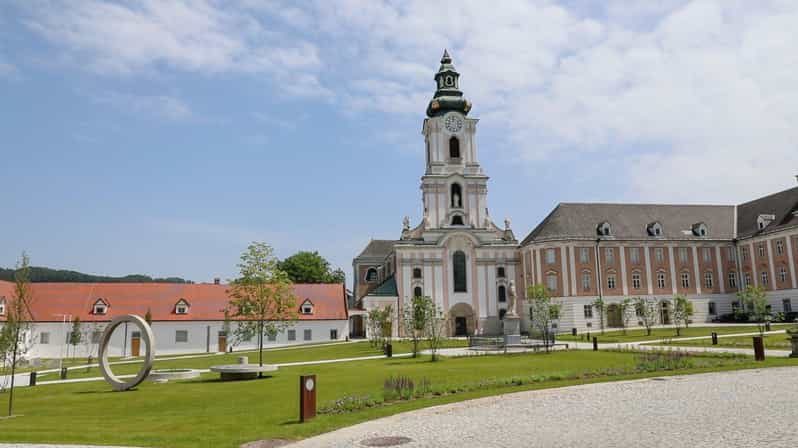
The cloister, abbey courtyard, and park are also free to enter. These areas give you room to pause after the museum and church, and they help explain the abbey as a working place rather than a single decorated room.
The cloister offers the most direct sense of monastic design. Its purpose is not only visual. A cloister creates a protected route between parts of the complex and supports the quiet rhythm associated with monastic life.
The courtyard adds a more open and social setting. It is linked to the Abbey Café, where you can order self-service cakes, coffee, drinks, and abbey snacks. The café favors regional suppliers, so this is a practical place to add a local food stop without leaving the complex.
The park provides another option for a slower finish. The supplied information does not describe its size, plantings, or walking routes, so I would treat it as a pleasant extension of the visit rather than plan a long park excursion around it.
Together, these free spaces give Wilhering Abbey more value than the museum ticket alone suggests. You can see the main church, walk through the cloister, sit in the courtyard, and visit the park without paying separate fees.
Coffee, cake, and the former farm buildings
The abbey gate is located in the former farm area of the complex. This is where you find the café, shop, Benedict Hall, and museum entrance.
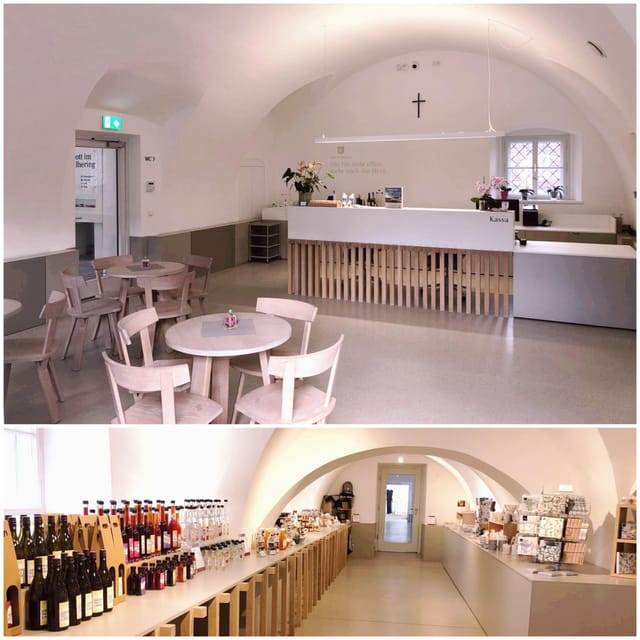
The café serves self-service cakes, coffee, drinks, and abbey snacks. That setup is worth knowing before you arrive. It is casual rather than a formal dining experience, and it works best as a refreshment stop before or after the museum.
I would save time for the courtyard. The Stiftshof setting gives your visit a social finish after the quieter church and cloister. A coffee and cake stop can also make the abbey more comfortable for a family group, since not everyone has to spend the entire visit reading or standing indoors.
The Monastery Store sells abbey products, including wine from leased vineyards near Krems. That detail gives the shop a clear local connection. You may find it useful for a small regional purchase, though the available information does not provide a full product list or prices.
What $7 gets you
At $7 per person, Wilhering Abbey offers good value for a short cultural stop. The price includes admission to the seven-room museum, and the church, cloister, courtyard, and park are free.
The value is strongest if you use the entire complex. A visitor who enters only the museum and leaves after 30 minutes receives a compact history experience. A visitor who adds the rococo church, cloister, courtyard, park, café, and shop gets a fuller visit without extra admission costs.
The ticket is less compelling if your schedule allows only a few minutes. The museum’s 30-minute validity means you should be prepared to start promptly, and you need to visit during opening hours. Check the abbey’s official website before setting out, since the museum cannot be visited outside those hours.
The 4.6 rating from five recorded ratings suggests a well-received experience, though the sample is small. One verified German-language rating from May 2024 praised the fascinating story, impressive complex, and very friendly staff. That matches the practical strengths of the visit: clear historical content, attractive buildings, and a welcoming café and entrance area.
Who should visit Wilhering Abbey?
I would recommend Wilhering Abbey to anyone already exploring Upper Austria who wants a manageable history stop with strong architecture. It suits visitors who prefer a compact museum to a long, formal tour.
It is also a good match for people interested in religious history. The Cistercian focus gives the museum a clear subject, and the ora et labora theme connects belief with daily work.
Families may appreciate the interactive elements for younger visitors. The two-level text system also helps groups with different attention spans, although the information does not specify the age range of the activities.
Art-minded visitors should make time for the collegiate church. The rococo interior is the visual centerpiece, while the museum supplies the historical setting around it.
I would be more cautious if you need a fully guided experience with a named specialist explaining every room. No guide names or guided-tour format are provided. This visit appears better suited to independent exploration, supported by exhibition text and interactions.
Practical timing and arrival advice
The museum entrance is in the monastery gate or in the monastery café. Staff in the café can direct you, so you do not need to guess where to begin.
Start at the museum if you want to use the 30-minute admission efficiently. Then visit the church and cloister, walk through the courtyard and park, and finish with the café or shop.
You can cancel up to 24 hours in advance for a full refund, and the reserve-now, pay-later option keeps your plans flexible. These policies are useful if you are arranging a changing day around Upper Austria, but the key practical point remains the opening schedule.
The experience is wheelchair accessible. Because no further access details are supplied, you may still want to ask staff about the specific route through the museum if you need precise information about surfaces, entrances, or facilities.
Should you book Wilhering Abbey?
Book it if you want a low-cost, compact abbey visit with more than one thing to see. The museum gives you structure, the church supplies visual impact, and the courtyard café makes the stop easy to enjoy without rushing straight back to the road.
I would especially choose it for a half-day plan that includes several Upper Austrian sights. At $7, it is not a major financial commitment, and the free church, cloister, courtyard, and park improve the overall value.
Skip it only if the museum is closed during your visit or if you want a long guided tour with extensive art commentary. Otherwise, Wilhering Abbey offers a calm, well-priced look at Cistercian life, a superb rococo church, and a pleasant place to rest.
FAQ
How much does admission to Wilhering Abbey cost?
Admission costs $7 per person.
How long is the museum admission valid?
The museum admission is valid for 30 minutes from first activation.
What does the admission include?
It includes admission to the Museum of Wilhering Abbey. The church, cloister, abbey courtyard, and abbey park are freely accessible.
Where do I enter the museum?
The museum entrance is in the monastery gate or in the monastery café. Staff in the monastery café can help you find the entrance.
Is Wilhering Abbey wheelchair accessible?
Yes, the activity is wheelchair accessible.
Can I visit the museum at any time?
No. The museum can only be visited during its opening hours. Check the official Wilhering Abbey website before your visit.
Is there a café at the abbey?
Yes. The Abbey Café offers self-service cakes, coffee, drinks, and abbey snacks, with a preference for regional suppliers.
Can I cancel my booking for a refund?
Yes. You can cancel up to 24 hours in advance for a full refund. You can also reserve now and pay later.
Just added around Austria
- Ottakringer Brewery tour★ 4.0 · 6 reviews
- New Hofburg Palace Tour House of Habsburg★ 4.5 · 5 reviews
- Private Van & Walk Tour – One Perfect Day in Vienna★ 5.0 · 21 reviews
- True Crime mobile puzzle rally Vienna★ 4.0 · 3 reviews
- Vienna Naschmarket Food Tasting Tour★ 4.0 · 30 reviews
- Vienna Nightlife Experience: Food, Wine, Cocktails & Vibes★ 5.0 · 119 reviews
- Naschmarkt Food Tour★ 4.0 · 14 reviews
- Myth Mozart★ 4.0 · 80 reviews
Historical Tours, compared.
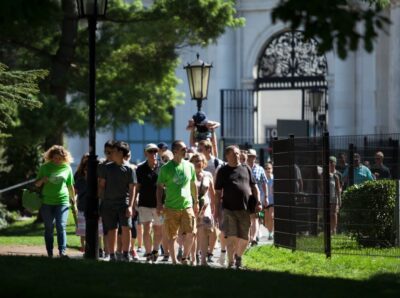
Vienna Historic Center Small Group Walking Tour
Read our review →

Skip-the-Line Schonbrunn Palace Guided Tour and Vienna Historical City Tour
Read our review →
Vienna Mozart Concert in Historical Costumes at the Musikverein
Read our review →
Browse the lists this tour appears in