

Reviewed · WALKING TOURS
Salzburg Introduction Walking Tour
Salzburg’s story is much larger than Mozart, and this 150-minute walking tour makes that clear. You move from Mirabell Gardens through the old town, linking Gothic churches, Baroque squares, salt wealth, local customs, medical advances, and the city’s musical past.
I like the focus on a historian-led discussion rather than a quick photo stop at each landmark. I also like the small-group or private format, plus the personal touch offered by Liza, a Salzburg native who has answered questions from children and adults alike. The main caution is price: at $176 per person, this is a serious investment for a walk, and admission to the Mozart residence is not included.
Key points to know before you book
- Salzburg beyond Mozart: The tour explains how salt commerce, religion, architecture, medicine, and music shaped the city.
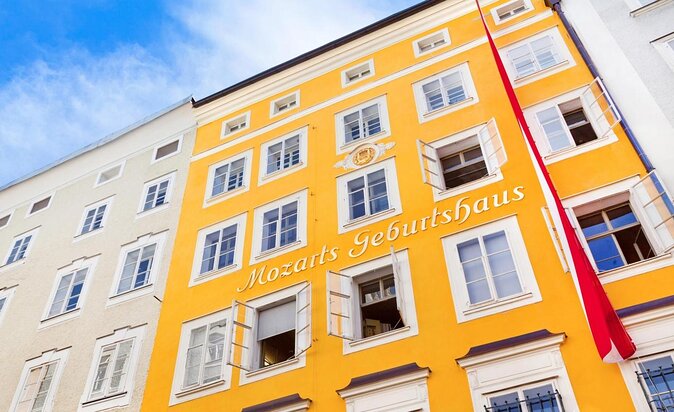
- A full old-town route: You visit Mirabell Gardens, Mozart’s birthplace, Alter Markt, Residenzplatz, Domplatz, and St Peter’s Abbey.
- A discussion, not just a march: The format allows time for questions about buildings, squares, customs, and local life.
- Strong guide credentials: Guides may be professors, doctoral students, historians, journalists, art critics, or published authors.
- Liza brings local roots: Her experience as a Salzburg native makes her especially useful for questions about the city today.
- Premium pricing: The $176 fee can make sense for a private or small group, but less so if you only want a quick orientation.
Why Salzburg rewards a guided walk
Salzburg’s center is compact, but it is not simple. A church may reflect medieval power, a palace may point to an archbishop’s ambitions, and a plain-looking street may owe its shape to trade from centuries ago. Without context, you can see a handsome square and miss the argument it makes about who controlled the city.
That is the real value of this experience. You are not simply collecting Salzburg’s famous sights. You are hearing how the city grew around religion, salt, court life, music, and commerce. The guide also introduces local customs, which can help the old town feel less like a stage set and more like a living place.
The city center has been on the UNESCO World Heritage List since 1997. That designation matters here because so many historic elements remain close together. In two and a half hours, you can connect gardens, market streets, grand squares, churches, and Mozart sites without spending the day crossing town.
I would choose this tour early in a Salzburg visit. It gives you a map in your head. Later, when you return to a church or square on your own, the details have somewhere to land.
A few more Salzburg trips to weigh up
- Salzburg 2.5-Hour Walking Tour: Mozart, Old Town & More
★ 4.2 · 987 reviews - Salzburg: Old Town, Mozart, & Mirabell Gardens Walking Tour
★ 4.8 · 461 reviews - Salzburg Oldtown: Sightseeing Walking Tour with Licensed Local Guide
★ 5.0 · 392 reviews
Starting at Linzergasse 39
The walk begins outside Coffeehouse Salzburg at Linzergasse 39. This meeting point places you near one of the routes into the historic center and gives the guide a practical place to gather a private party or small group.
Arrive ready to walk for 150 minutes. The experience is built around moving through the center, stopping for explanations, and continuing on to the next site. You will get the most from it if you treat it as an introduction to Salzburg rather than as a series of formal indoor visits.
The English-speaking guides are presented as academics and working writers, including professors, doctoral students, historians, journalists, art critics, and published authors. That range suggests a discussion-led experience rather than a memorized script. Still, guide assignments can differ, so the individual personality and specialty of your guide will shape the walk.
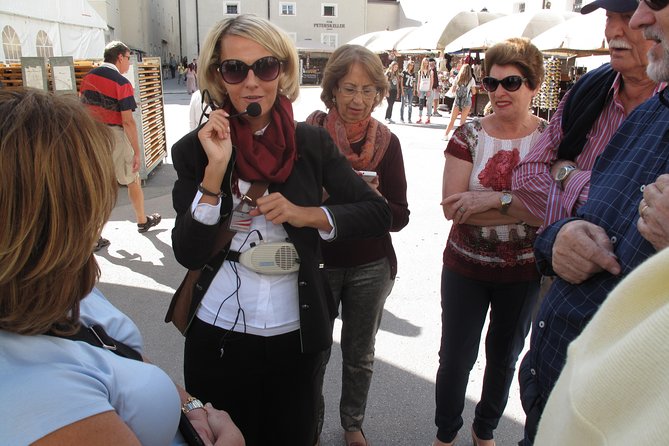
A particularly strong guide to request, if available, is Liza. She is from Salzburg and has led groups through the whole old town while stopping to explain the story behind squares, churches, shops, and buildings. Her ability to handle questions from both young and older members of a group is useful if you are traveling with family.
Mirabell Gardens and Salzburg’s grand opening
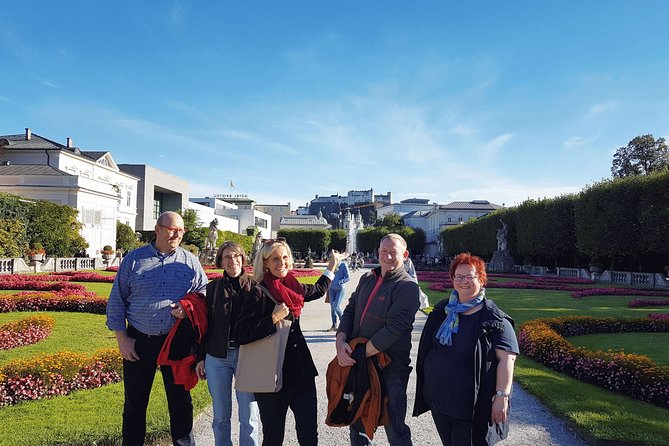
Mirabell Gardens is an inviting first major stop. Its formal design gives you an immediate look at the ordered beauty associated with Salzburg’s Baroque age. Here, the guide can establish the connection between the city’s public spaces, its powerful church leaders, and its taste for controlled symmetry.
The garden also makes a good opening because it lets you see Salzburg outdoors before the route tightens into the old town. You get a sense of the city’s scale and its relationship with the surrounding Alpine setting, though the walk remains focused on architecture and history rather than a scenic countryside outing.
The guided stop is valuable because gardens can be easy to treat as decoration. With context, you can read them as statements of power and style. Pay attention to how the formal space contrasts with the older streets you encounter later.
The supplied details do not promise a long garden visit or a special seasonal program. If flowers are your main reason for coming, keep expectations measured. This is one part of a larger historical route, not a garden-only tour.
Mozart’s birthplace and the limits of the ticket
Mozart is Salzburg’s most famous name, and the route includes Mozart Geburtshaus, or Mozart’s birthplace. This is the obvious music stop, but the tour places Mozart within a broader story about the city’s musical heritage rather than treating him as the whole story.
That approach suits Salzburg. You can learn why music became so closely tied to the city and how its cultural identity grew around performance, church life, and court tradition. The guide can also help separate the modern image of Mozart from the older city that shaped his early life.
There is an important cost detail here. Admission to the Mozart residence is not included. The walk can explain the site from outside, but you should budget separately if you want to enter the residence connected with Mozart. Check the current admission arrangements when planning, since the tour price alone does not cover that ticket.
For a first visit, I like having the guide explain the importance of the building before deciding how much time to spend inside. If you are a serious Mozart fan, the extra admission may be worthwhile. If your interest is casual, the outdoor explanation may be enough, especially when the rest of the route offers so much architecture.
Same Alps, a completely different kind of day:
- The Original Sound of Music Tour in Salzburg
★ 4.5 · 6,129 reviews - Salzburg: Original Sound of Music Tour
★ 4.8 · 5,059 reviews - From Salzburg: Half-Day Tour to Hallstatt
★ 4.6 · 3,596 reviews - Salzburg: Mozart Concert at Mirabell Palace
★ 4.8 · 3,498 reviews
Alter Markt, where the city feels close to daily life
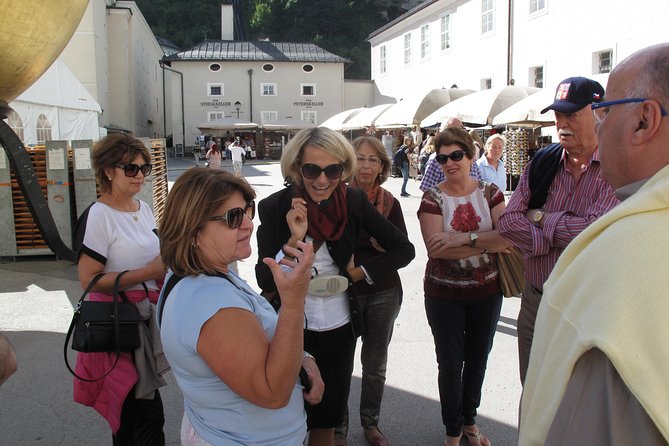
Alter Markt gives the tour a change of scale. After the formal setting of Mirabell Gardens and the fame of Mozart’s birthplace, this historic market area brings you closer to the practical city of shops, commerce, and ordinary movement.
The guide’s job here is to point out what you might otherwise pass without a second thought. A shopfront, street line, or old building can reveal how Salzburg functioned as a trading center. The discussion of medieval salt commerce is especially useful because salt was not a minor footnote. It helped shape the wealth and influence that later appeared in grand religious and civic buildings.
I would use this stop to ask questions about local customs and how the old center is used today. The activity specifically includes an introduction to local ways of life, and a market square is a natural place to connect past and present.
Do not expect a large market tour or a shopping session. The emphasis is interpretation. You are learning how to look at the square, not receiving a list of stores.
Residenzplatz and the power of Baroque Salzburg
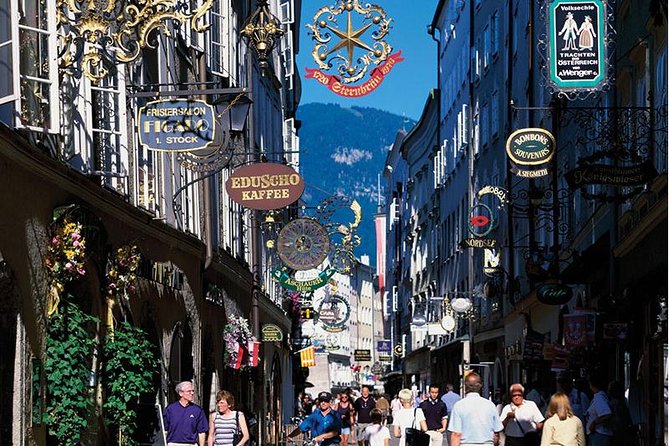
Residenzplatz is one of the clearest places to understand Salzburg’s Baroque character. The scale is deliberate. This is architecture meant to impress, and the guide can explain how religious and political authority shaped the city’s appearance.
The stop also helps you see why Salzburg’s center earned its UNESCO status. The buildings are not isolated attractions. Their arrangement creates a unified historic setting, with squares and facades working together to project order and power.
This is where the tour’s focus on spirited discussion should pay off. A good guide can move beyond dates and names to explain what the square was meant to communicate. You may find yourself looking at the space less as a postcard and more as a carefully built public message.
The drawback is that large squares can be crowded or noisy at times, and the supplied details do not promise a specific quiet period. Stay close enough to hear the guide, especially if your party joins a larger small group.
Domplatz and the Gothic to Baroque transition
Domplatz brings you to the center of Salzburg’s religious identity. The cathedral square is a natural place to discuss the city’s powerful ecclesiastical past and the way Gothic and Baroque styles appear across the old town.
The tour promises both Gothic and Baroque architecture, and this area lets you compare those styles in a concentrated setting. Rather than presenting architecture as a vocabulary test, the guide can show how different periods left their mark on the same city.
This is also a strong stop for understanding Salzburg as more than a music destination. The cathedral and surrounding spaces point to centuries of church authority, ceremony, and public life. The city’s religious buildings were not background scenery. They helped organize the city and its sense of identity.
If you have a special interest in interiors, ask the guide how much of the discussion concerns the outside of the buildings. The listed route confirms guided stops at Domplatz and other sites, but it does not promise interior entry to every landmark.
St Peter’s Abbey and the oldest layer of the route
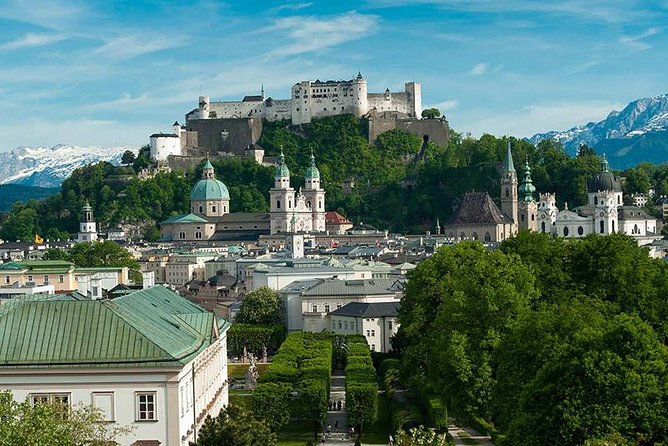
St Peter’s Abbey provides a fitting final historic stop. It brings together faith, learning, music, and Salzburg’s long institutional life. The abbey helps keep the tour from ending with a single celebrity story. Mozart matters here, but he is one chapter in a much longer account.
The guide can place the abbey beside the cathedral and the surrounding squares, showing how religious institutions shaped the center. Its presence also adds another layer to the architectural discussion, especially when you compare older forms with the later Baroque style seen elsewhere on the walk.
I appreciate this ending because it leaves you with a sense of continuity. The route begins with a formal garden and passes through markets, royal or ecclesiastical spaces, and music-related sites before reaching an institution tied to Salzburg’s long spiritual and cultural life.
As with the other stops, the information provided does not guarantee a special interior visit or a performance. Think of St Peter’s Abbey as a guided historical and architectural stop, not a concert experience.
What the guide adds to the experience
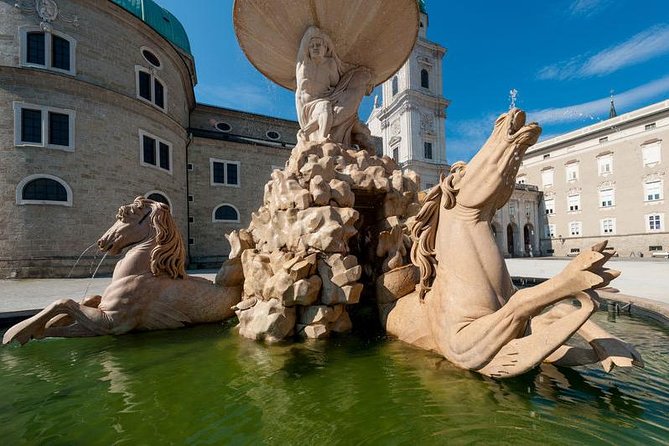
The strongest feature is the chance to ask questions while the city is directly in front of you. One detailed account describes Liza meeting a group exactly as promised, walking through all of the old town, and pausing regularly to explain the history behind squares, churches, shops, and buildings.
That rhythm sounds right for Salzburg. You walk, stop, listen, look around, and ask. It is far more useful than trying to remember a long speech while keeping up with a group.
The guide profile is also unusually academic for a standard city walk. Professors, doctoral students, historians, journalists, art critics, and published authors bring different strengths. A historian may frame the city through politics and trade, while an art critic may focus more on form and style. The activity does not guarantee a particular profession, so book this for the quality of the discussion rather than a promised lecture by a specific scholar.
The available rating is 4.9 from nine ratings, with repeated praise for punctuality, friendliness, enthusiasm, and clear explanations. One concern in the feedback was that a guide did not have the advertised historian background, making the price feel too high for that participant. That is a fair warning: guide quality matters greatly when the price is premium.
Is $176 per person a fair price?
At $176 per person, this is not a budget orientation walk. The value depends heavily on the format. For a private party or genuinely small group, you are paying for focused attention, questions, and a guide who can adjust the conversation to your interests.
The price is harder to justify if you are placed in a larger group and mainly receive a standard route through the center. Salzburg has many public squares and churches that you can see without paying a premium. The reason to choose this experience is the interpretation, not access to a long list of included attractions.
The fee also excludes the Mozart residence admission. Add that cost only if you plan to enter. If your main goal is a broad introduction to the old town, you may prefer to spend the full budget on this guided walk and explore the interiors independently. If Mozart is your top priority, remember that the tour itself does not cover everything connected with his birthplace.
Free cancellation up to 24 hours before the start and the reserve-now, pay-later option reduce the financial risk of booking early. Confirmation is sent within 48 hours, subject to availability. Those policies are helpful, but they do not change the basic question: do you value expert conversation enough to pay $176?
Who should book this Salzburg walk?
I would recommend it to first-time visitors who want a strong historical framework before exploring alone. It is also a good fit for families and mixed-age groups, since the guide can stop for questions and adjust explanations to the people in front of them.
Music lovers will appreciate the Mozart and musical heritage material, but the walk is not only for Mozart fans. You will get more from it if you want to understand Salzburg’s salt trade, religious power, medical developments, local customs, and Gothic and Baroque buildings as connected parts of the city.
The private or small-group choice suits travelers who dislike large tours or who have a particular interest in architecture, church history, or music. Ask questions early. The route includes several subjects, and your guide can spend more time on the themes that matter most to you.
I would hesitate if you want a low-cost, fast introduction or if you plan to spend most of your time inside museums. This is a walking and discussion experience, with the Mozart residence ticket separate and no promise of extensive indoor sightseeing.
Final call: a premium walk with real substance
Book this Salzburg Introduction Walking Tour if you want to understand how the city became more than Mozart’s birthplace. The route covers the essential historic center, and the best guides bring the squares and buildings into one clear story about salt, faith, music, power, and daily life.
The strongest reason to book is the guide-led conversation, especially if you can secure Liza or another guide with a strong Salzburg background. The main reason to pause is the $176 price, which asks you to value personal explanation over simple sightseeing.
For a private or small group seeking a thoughtful first look at Salzburg, I think the cost can be justified. For a casual visitor counting every euro, see the old town on your own and spend selectively on the sites you most want to enter.
FAQ
Where does the Salzburg Introduction Walking Tour start?
The meeting point is outside Coffeehouse Salzburg at Linzergasse 39.
How long does the walking tour last?
The tour lasts 150 minutes, or two and a half hours.
What language is the tour offered in?
The live tour guide conducts the experience in English.
Which Salzburg sights are included on the route?
The route includes Mirabell Gardens, Mozart Geburtshaus, Alter Markt, Residenzplatz, Domplatz, and St Peter’s Abbey.
Is admission to the Mozart residence included?
No. The Mozart residence admission ticket is not included in the tour price.
Can I cancel the booking or pay later?
You can cancel up to 24 hours in advance for a full refund, and the reserve-now, pay-later option lets you book without paying immediately.
Just added around Salzburg
- Private Werfen Ice Cave and Golling Waterfall from Salzburg★ 5.0 · 15 reviews
- Zell am See Alpine Village Private Day Trip from Salzburg★ 5.0 · 3 reviews
- Viator Exclusive: ‘The Sound of Music’ Private Tour★ 5.0 · 28 reviews
- Private transfer from Salzburg to Vienna, 2 hours for sightseeing★ 4.5 · 7 reviews
- Werfen World’s Largest Ice Caves and Golling Waterfalls Tour★ 4.5 · 7 reviews
- Musical Salzburg: Follow the Trail of the Beloved Movie★ 5.0 · 5 reviews
- Private Transfer from Salzburg to Munich with 2 hours for sightseeing★ 5.0 · 8 reviews
- Private Austrian Food Tasting Tour in Salzburg’s Old Town★ 4.5 · 3 reviews
Walking Tours, compared.
Guided Walking Tour of City Center Highlights
Read our review →
Guided Walking Tour of City Highlights & Hidden Gems
Read our review →
Vienna Historic Center Small Group Walking Tour
Read our review →
Browse the lists this tour appears in