
Reviewed · BELVEDERE PALACE AND KLIMT TOURS
Private Klimt & Vienna Art Walk — From Baroque to Secession
Vienna’s artistic story comes into focus when you connect Klimt’s Kiss at the Belvedere with the Beethoven Frieze at the Secession Building. This private walk makes that link while also showing you Baroque gardens, a grand church, an Art Nouveau metro station, and the city’s old imperial swagger.
I like the private format, which lets your guide adjust the pace and answer questions without a crowd to manage. I also like the pickup service and the clever route, which uses Vienna’s sights to explain how the city changed from Prince Eugene’s Baroque age to Klimt’s rebellious 1900s.
The main caution is simple: four hours on foot can be tiring, and museum admission and public transportation are not part of the price. Guide Walter is praised for his art and historical knowledge, but his personal political views and old-fashioned humor may not suit everyone.
Key points to know before booking
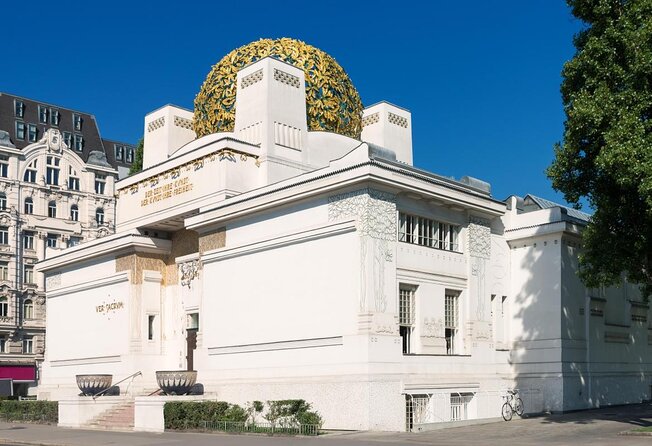
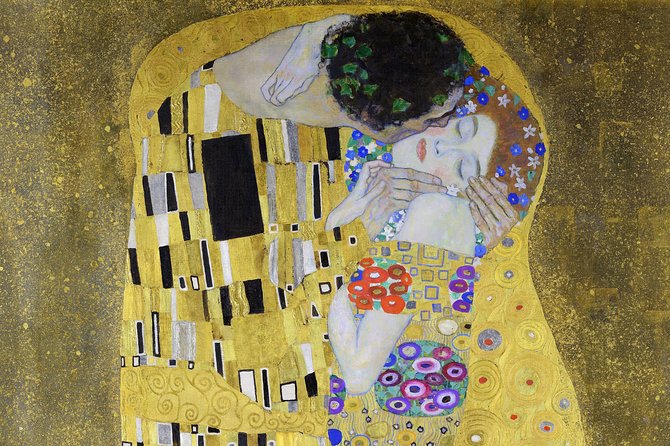
- Klimt’s two famous kisses: See The Kiss at the Belvedere and the final kiss in the Beethoven Frieze at the Secession Building.
- A private group of up to eight: You get personal guiding rather than a large scheduled crowd.
- Hotel and station pickup: Meet at your hotel, vacation rental, Reichsbrücke pier, Vienna Hauptbahnhof, or Vienna West station.
- Baroque to Art Nouveau in one route: The tour connects palace gardens, Karlskirche, Karlsplatz, Musikverein, and Naschmarkt.
- Museum tickets cost extra: Admission to the Upper Belvedere and Secession Building is not included, despite the skip-the-line service.
- A demanding half-day walk: You need a moderate fitness level, with some public transportation used along the way.
Why Klimt makes this Vienna walk worth considering
Gustav Klimt is the headline, but this is not just a painting tour. The route uses Klimt as a doorway into Vienna around 1900, when artists pushed against old institutions and the city was changing fast.
At the Belvedere, you meet Klimt through The Kiss, his gold-toned portrait of a couple wrapped in patterned robes. At the Secession Building, you see the Beethoven Frieze, a long symbolic work made for an exhibition celebrating Beethoven. Its final scene, a kiss offered to the world, gives the tour its artistic bridge.
That pairing matters. At the Belvedere, Klimt’s art is part of a major imperial palace collection. At the Secession, his work was tied to artists who broke from Vienna’s established fine-art institution. You are not simply checking off two Klimt sights. You are seeing two different settings for his work and two sides of Vienna’s artistic identity.
The guide also places Klimt among his circle and explains his life, friendships, and artistic choices. That extra context can change the way you look at the paintings. The gold surface is easy to admire, but the symbols, patterns, and setting give you more to think about.
More Belvedere Palace and Klimt Tours in Vienna:
- Entry Ticket Upper Belvedere, Klimt’s Kiss & Permanent Collection
★ 4.5 · 831 reviews - Vienna: Lower Belvedere Entry Ticket & Temporary Exhibitions
★ 4.1 · 275 reviews - Vienna: Belvedere Palace Skip-the-Line Tour
★ 4.9 · 197 reviews
Starting at the Belvedere Palace
The tour begins at the Belvedere, one of Vienna’s great Baroque palace complexes. Wrought-iron gates open toward formal gardens, with the Upper Belvedere positioned to make the approach feel grand.
The palace was built for Prince Eugene of Savoy, a military commander and collector whose residence borrowed ideas from Versailles. The scale is smaller than Versailles, but the message is similar: power should be seen from a distance before you even enter the building.
Your guide first uses the grounds to explain the three levels of the gardens. The design plays with height, perspective, and visual tricks. As you move downhill, the palace changes in relation to you, and the gardens become part of the lesson rather than a mere photo stop.
Inside the Upper Belvedere, the focus is Klimt’s The Kiss. The visit is listed at about 40 minutes, giving you time to see the painting and learn about its place in the Austrian Gallery. Since the museum admission is not included, budget for that separately.
The skip-the-line feature is useful here. The Belvedere is one of Vienna’s most popular art stops, and the wait can affect a tightly planned morning. Still, skip-the-line access does not mean free entry. You need to confirm how the admission process works when booking and allow for the separate ticket cost.
The palace itself deserves attention. Do not let Klimt swallow the entire visit. The building, ceremonial rooms, gardens, and views down toward Vienna explain why this site was made to impress. The guide’s job here is especially helpful because the architecture and garden plan make more sense when someone points out the intended visual sequence.
From palace splendor to Vienna’s political edges
After the Belvedere, the route moves toward the city center and brings in several places that are easy to pass without understanding.
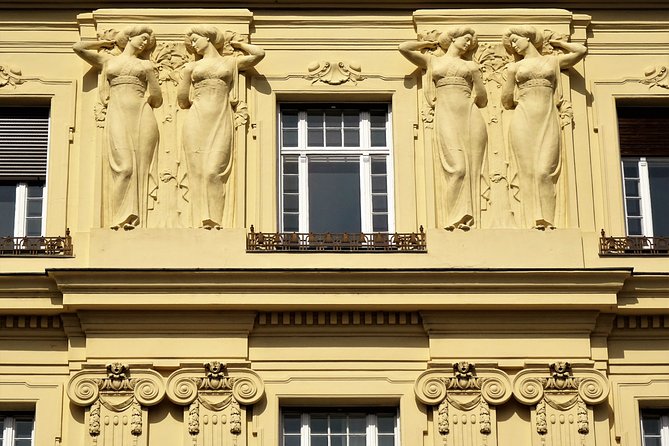
At Schwarzenbergplatz, the Soviet Memorial anchors a square surrounded by buildings from Vienna’s rapid growth in the late 1800s. This is a good pause for seeing how the city holds different periods side by side. Imperial ambition, commercial expansion, war, and postwar memory all appear within a short walk.
The memorial can also lead into modern political discussion. Walter, one of the guides associated with the tour, is willing to share personal views. That can make a private tour feel more conversational, but it also means the tone may sometimes move beyond straightforward art history.
One poor experience specifically objected to political comments about NATO and Soviet-era Austria. The guide’s response made clear that personal opinions are part of the company’s private-tour approach. I would treat that as a real consideration. If you prefer a guide who sticks closely to neutral facts, ask about guiding style before you book. If you enjoy discussion and competing viewpoints, you may find this part more engaging.
Karlskirche and the Otto Wagner metro station
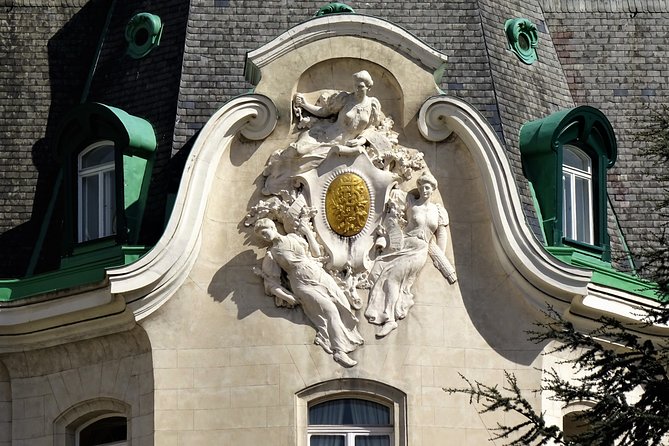
The route then contrasts two very different periods of Vienna’s architectural glory.
Karlskirche introduces you to the Baroque at full volume. Its scale and decoration were meant to impress, and the church helps explain the confidence of 18th-century Austria. You do not need to be an architecture specialist to see the difference between this theatrical style and the cleaner lines that appear later in the tour.
At Karlsplatz, the Otto Wagner metro station shifts the mood. Built around 1900, it represents Vienna’s Art Nouveau period. The station is practical, but it is also carefully designed, showing how even everyday public infrastructure could carry artistic ambition.
This pairing is one of the smartest parts of the route. You see Vienna move from a church built for ceremony to a transport station built for a modern city. The change is not just decorative. It reflects a different idea of how people lived, moved, and used public space.
Public transportation is used during the tour, but the fare is not included. You should carry a little extra for that cost. The guide explains the transit system and uses the ride as part of the city lesson, rather than treating it as dead time.
A few more Vienna trips to weigh up
- Vienna: Guided Walking Tour of City Center Highlights
★ 4.7 · 4,989 reviews - Vienna: Vienna Central Cemetery Guided Walking Tour
★ 4.8 · 3,307 reviews - Vienna: Guided Walking Tour of City Highlights & Hidden Gems
★ 4.9 · 2,180 reviews - Vienna: Viennese Underworld Guided Walking Tour
★ 4.7 · 1,865 reviews
The Musikverein and Vienna’s musical identity
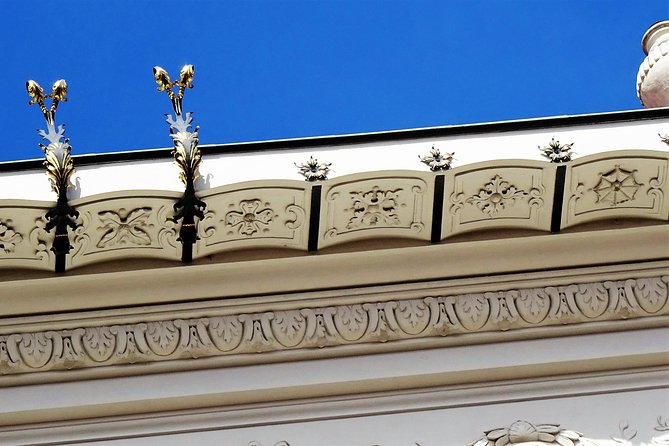
The Wiener Musikverein is the home of the Vienna Philharmonic. Its Great Hall, also called the Golden Hall, is regarded for its acoustics and is one of the city’s leading concert spaces.
The tour does not promise a concert or an interior performance visit, so think of this as an exterior and cultural stop rather than a concert experience. Its place in the route makes sense because Klimt and the Secession artists were deeply tied to Vienna’s music, art, and intellectual life around 1900.
This is also where the tour broadens beyond painting. Vienna’s creative history is not kept in separate boxes. Music, architecture, painting, psychology, and public debate all crossed paths in the city at the turn of the century.
Entering the Secession Building
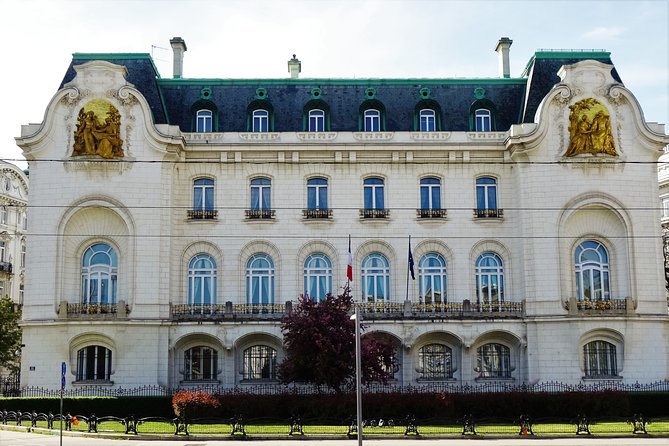
The Secession Building is the clearest architectural statement on the tour. Its unusual form was created by artists who broke away from Vienna’s established art institution. The building itself acts like a declaration: new art needs a new home.
Inside, the Beethoven Frieze gives you the second major Klimt encounter. The work was made directly on the walls with light materials for an exhibition celebrating Beethoven. It was intended as a temporary installation, but it became one of Klimt’s best-known works.
The frieze follows a symbolic journey and ends with a kiss to the world. That final image connects neatly to The Kiss at the Belvedere, but the works feel different because their settings and purposes differ. One is a famous museum painting in a palace collection. The other was designed for an exhibition and works across a long wall as part of a larger idea.
The Secession admission is also extra. The tour includes skip-the-line service, but you should not read that as admission included in the $372.47 group price.
A 30-minute visit is enough for a focused introduction, especially after the Belvedere. It is not a long independent museum session. If you want to study every detail in silence, you may want to return on your own.
Finishing at Naschmarkt
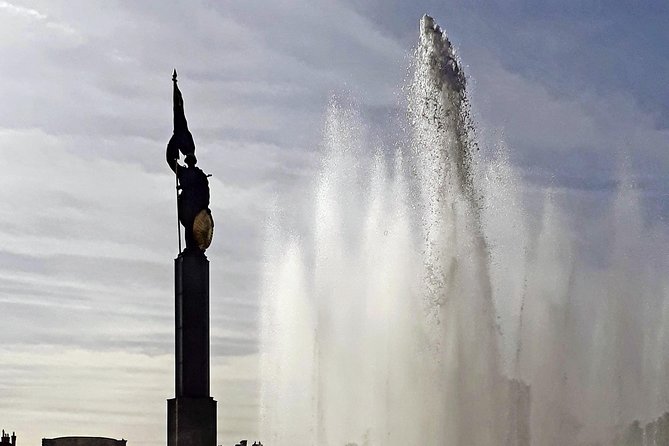
The walk ends around Naschmarkt, which gives the tour a useful change of pace. The market in its current form dates to 1915 and combines food stalls with an international eating scene.
This is a practical endpoint. You can stop for an outdoor meal or a snack after the art and architecture, though food is not included. It also leaves you near a part of Vienna that feels more everyday than the palace grounds and grand concert buildings.
Naschmarkt is described as being in a transitional stage, so do not expect a frozen-in-time picture of an old market. That is part of its value. It gives you a glimpse of contemporary city life after a morning or afternoon spent looking backward.
How the private format affects the experience
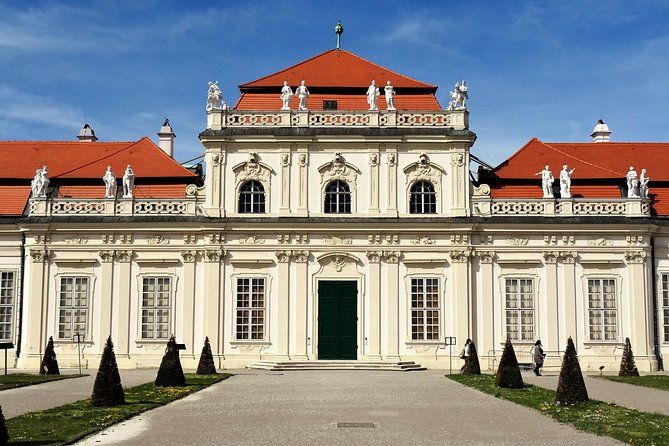
The tour costs $372.47 per group of up to eight people. For one or two people, that is a serious expense. For a full group, the per-person cost becomes much more reasonable, particularly because the fee covers a licensed Austria Guide and private service from your pickup point.
Pickup is available at hotels and vacation rentals in Vienna, as well as the Reichsbrücke pier, Vienna Hauptbahnhof, and Vienna West station. Other meeting points can be arranged. This saves you the trouble of finding a central meeting point, which is useful if you have just arrived by train or are staying outside the inner center.
The private format also lets the guide adjust the pace. One group had a slower walker, and the guide adapted the morning. Another account described the pace as slow and the guide as more of a lecturer than an interactive host. Those two points can both be true. The walk is not designed as a fast checklist, but a slower pace may frustrate you if you have limited time or want to cover ground quickly.
You should expect a moderate level of physical activity. One person ended the tour early after about two hours because of sore feet following another walking tour that morning. Plan this as your main walking activity for the half-day, and wear comfortable shoes.
Choosing between Walter and the tour’s guiding style
Walter receives strong praise for explaining art, history, and the reasons behind the buildings. He is also described as willing to stop at a local pub for a beer, adding a relaxed art and pleasure note to the day. Wolfgang is also named as a guide and is praised for his art and historical background.
The company encourages guides to share personal opinions. This can produce a lively conversation about Austria’s past and present, but it may not be right for every group. Walter’s humor has also been described as dated, including jokes some people found unnecessary.
You can make a better choice by contacting the provider before booking and asking which guide is available. Tell them if you want a strictly academic tour, a lively discussion, a slower pace, or a stronger focus on Klimt. Since this is a private activity, that conversation may help shape the experience.
Morning or afternoon: which departure works better?
The tour begins at 9:30 or 14:00. The morning option gives you a full afternoon afterward for more museums, shopping, or a meal around Naschmarkt. It may also suit you if you want to reach the Belvedere before the day feels crowded.
The afternoon departure can work well if you arrive late, prefer a slower start, or want to spend the morning elsewhere. Keep an eye on museum hours and seasonal schedules when selecting it, since the tour relies on access to both the Upper Belvedere and the Secession Building.
The tour lasts about four hours, although some descriptions refer to a three-hour version. Allow the full half-day rather than scheduling a tight appointment immediately afterward.
Who should book this Vienna art walk?
I would choose this tour if you want Klimt with context. It suits someone who would rather understand why the paintings matter than simply take a quick photo and move on.
It is also a good fit for first-time visitors who want many major sights in one outing. You get the Belvedere, Schwarzenbergplatz, Karlskirche, Karlsplatz, the Musikverein, the Secession Building, and Naschmarkt without having to design the route yourself.
The tour is less suitable if you dislike walking, want long quiet museum visits, or prefer guides to avoid politics and personal commentary. It may also be poor value for a solo visitor, since the group price is fixed rather than charged per person.
Free cancellation is available until 24 hours before the start time. Confirmation arrives within 48 hours, subject to availability. Service animals are allowed, but pets are not permitted in certain areas, and public transportation, admission, and personal expenses remain your responsibility.
Should you book it?
Book this private Klimt and Vienna art walk if you are sharing the cost with several people and want a guide-led introduction to Vienna’s art around 1900. The connection between The Kiss and the Beethoven Frieze is strong, and the route adds Baroque gardens, Karlskirche, Otto Wagner’s station, and the Musikverein without feeling limited to one painter.
Think twice if your priority is low cost, a fast pace, or strictly neutral commentary. For the right group, this is a thoughtful and efficient way to connect Vienna’s palace age with its Art Nouveau revolt. For others, buying museum tickets independently and visiting the sights at your own speed may be the better deal.
FAQ
How long does the Private Klimt and Vienna Art Walk last?
The experience lasts approximately four hours. Some descriptions refer to a three-hour version, so you should allow a full half-day in your schedule.
What time does the tour start?
You can choose a 9:30 morning departure or a 14:00 afternoon departure.
Where can the guide meet me?
Pickup is available at hotels and vacation rentals in Vienna, the Reichsbrücke pier, Vienna Hauptbahnhof, and Vienna West station. Other meeting points can be arranged.
Is this a private tour?
Yes. Only your group participates, with a maximum group size of eight people.
Are museum admissions included?
No. Admission to the Upper Belvedere and the Secession Building is not included in the group price.
Does the tour include skip-the-line access?
Yes, skip-the-line service is included. You still pay the separate museum admission fees.
Is public transportation included?
No. Public transportation is used during the route, but fares are not included.
What fitness level is needed?
A moderate level of physical fitness is recommended. The experience includes substantial walking, so comfortable shoes are important.
Are service animals allowed?
Yes, service animals are allowed. Pets are not permitted in certain areas visited during the tour.
Can I cancel for a full refund?
Yes, you can cancel up to 24 hours before the experience start time for a full refund. Cancellations or changes made less than 24 hours before the start time are not accepted for a refund.
Just added around Vienna
- Ottakringer Brewery tour★ 4.0 · 6 reviews
- New Hofburg Palace Tour House of Habsburg★ 4.5 · 5 reviews
- Private Van & Walk Tour – One Perfect Day in Vienna★ 5.0 · 21 reviews
- True Crime mobile puzzle rally Vienna★ 4.0 · 3 reviews
- Vienna Naschmarket Food Tasting Tour★ 4.0 · 30 reviews
- Vienna Nightlife Experience: Food, Wine, Cocktails & Vibes★ 5.0 · 119 reviews
- Myth Mozart★ 4.0 · 80 reviews
- ( Night Tour ) With Private Guide + wine or prosecco★ 4.0 · 12 reviews
Belvedere Palace and Klimt Tours, compared.
Entry Ticket Upper Belvedere, Klimt’s Kiss & Permanent Collection
Read our review →
Lower Belvedere Entry Ticket & Temporary Exhibitions
Read our review →
Skip-the-line Upper Belvedere Tickets and Guided Tour Vienna
Read our review →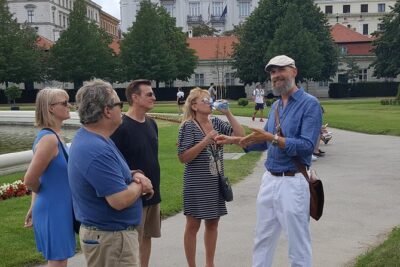
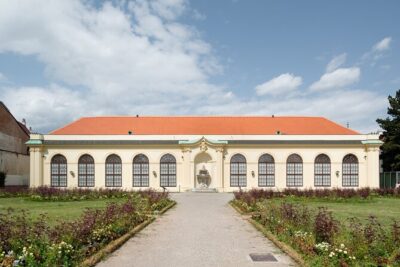
Entry Ticket Lower Belvedere with Orangery & Palace Stables
Read our review →
Best of Vienna Pass: Schönbrunn, Belvedere, Big Bus & Cruise
Read our review →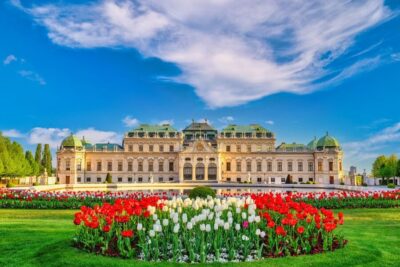
Belvedere Palace: Tour with Skip-the-Line/Transfer Options
Read our review →Browse the lists this tour appears in