
Reviewed · WALKING TOURS
Private Walking Tour of Salzburg
Salzburg reveals itself quickly on foot, and this private two-hour walk gives you the basic map before you spend time and money on the city’s museums, fortress, and concerts. You move from Mozart and Mirabell across the river and into the old town, ending beside the cathedral in Mozartplatz.
I like the route’s wide historical sweep and the fact that you can ask your own questions instead of keeping pace with a large group. I also like the practical timing: book it near the start of your stay, then return to the places that catch your eye. The main consideration is that two hours is enough for an introduction, not enough for long visits inside every sight.
Key points to know before booking
- A private group of up to 15: You get a guide’s attention for your own party, with no unrelated group setting the pace.
- Twelve central stops: The route links Mozart sites, Mirabell Garden, the Salzach River, Getreidegasse, the cathedral, and the main old-town squares.
- A strong first-day activity: The walk helps you decide which sights deserve a longer visit later.
- Several brief interior visits: The group enters the University Church and Salzburg Cathedral when access is available.
- Practical guide commentary: Leo, Johannes, Sonja, and Cristian are among the guides associated with the experience, with an approach that mixes facts, stories, humor, and recommendations.
- A fixed two-hour format: At $263.67 per group, the value improves when several people share the cost.
Why this works well as your Salzburg orientation
Salzburg can feel like a small city, but its sights are spread across several connected areas. Mirabell lies on the east side of the river. The famous old-town lanes, cathedral, former archbishop’s residence, and fortress views sit across the Salzach. This walk connects those pieces in a sensible order.
I like the way the route gives you more than a series of pretty façades. You hear how Mozart fits into Salzburg’s identity, how the archbishops shaped the city, why the festival matters, and how the university and canal system fit into the modern town.
The guides also appear to bring different personalities to the walk. Leo is associated with interactive questions, humor, recommendations, and, on some walks, even a song. Johannes is described as entertaining and good at using back streets and alleyways to give the route more character. Sonja has been praised for warmth, enthusiasm, and personal attention, while Cristian has also led Salzburg walks.
You should not expect the same person every time, and the exact storytelling style may vary. That is part of the normal tradeoff with a guide-led experience. The dependable feature is the route and the private format, not a guaranteed individual guide.
A few more Salzburg trips to weigh up
- Salzburg 2.5-Hour Walking Tour: Mozart, Old Town & More
★ 4.2 · 987 reviews - Salzburg: Old Town, Mozart, & Mirabell Gardens Walking Tour
★ 4.8 · 461 reviews - Salzburg Oldtown: Sightseeing Walking Tour with Licensed Local Guide
★ 5.0 · 392 reviews
Starting at the Spirit of Mozart and Mozart Residence
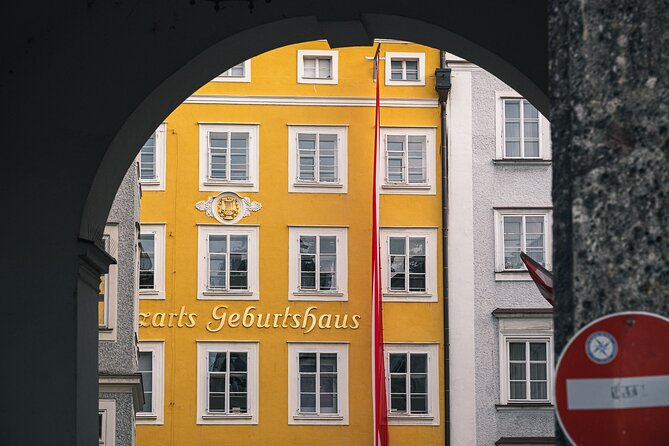
The meeting point is the Spirit of Mozart, at Imbergstraße 33A, with an 11 a.m. start. From there, the walk begins near the river and heads toward the Mozart Residence, also called Mozart Wohnhaus.
This is the home where Mozart lived from age 17. You discuss the building from across the square rather than taking a full interior visit. That short stop is useful because it places Mozart in an actual Salzburg address instead of treating him as a name attached to every other shop and statue.
The five-minute pause is deliberately brief. If you want to see the residence inside, you will need to return on your own and allow extra time. The guide’s role here is to give you the setting and context, then keep the route moving.
Mirabell Garden and the first city views
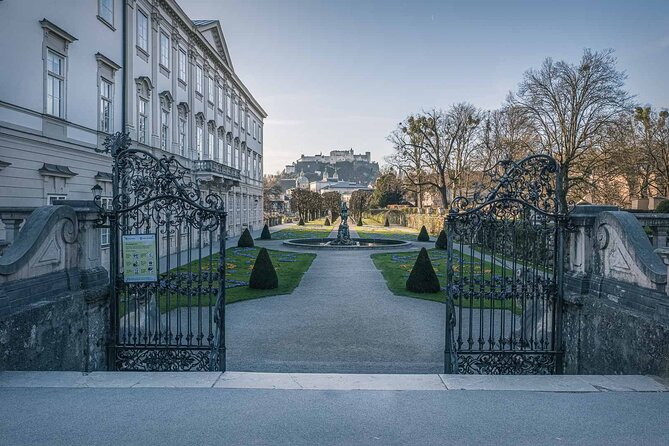
The next stop is Schloss Mirabell and Mirabell Garden, about a 15-minute visit. You get an overview of what the palace and garden meant in Salzburg’s past and what they are used for today.
This is one of the places where the short format works both for and against you. A quick explanation helps you understand the garden before returning independently, but 15 minutes is not enough to explore its paths, sculptures, planting, and views in detail.
I would treat this as a preview, not a garden tour. If Mirabell interests you, come back later when you are not listening for the group to move on. That advice applies to several stops on this route.
Crossing the Salzach on Makartsteg
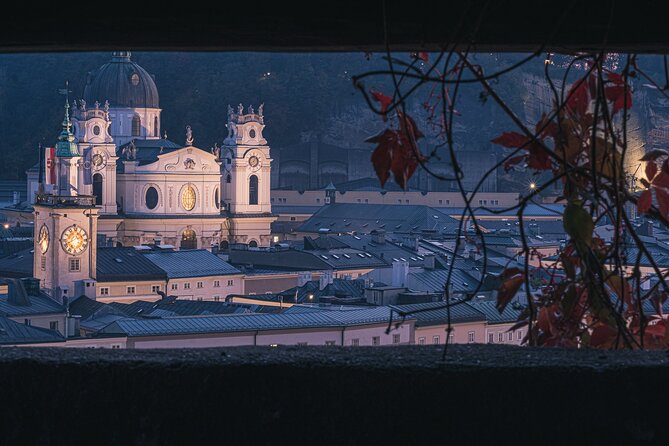
The walk then reaches Makartsteg, Salzburg’s love-lock bridge. You talk about the locks, the bridge, the Salzach River, and the buildings lining the water.
This is a good connecting stop because it shifts the focus from individual monuments to the shape of the city. From the bridge, you can understand how Salzburg’s newer and older sides relate to one another.
The five-minute timing means this is mainly a viewpoint and explanation stop. You will have time to cross and look around, but not to linger for extended photos or river watching.
Same Alps, a completely different kind of day:
- The Original Sound of Music Tour in Salzburg
★ 4.5 · 6,129 reviews - Salzburg: Original Sound of Music Tour
★ 4.8 · 5,059 reviews - From Salzburg: Half-Day Tour to Hallstatt
★ 4.6 · 3,596 reviews - Salzburg: Mozart Concert at Mirabell Palace
★ 4.8 · 3,498 reviews
Getreidegasse and Mozart’s birthplace
After crossing the river, you enter Getreidegasse, Salzburg’s best-known shopping street. The route follows it toward Mozart’s birthplace.
The appeal here is the street itself. Its narrow passage, traditional signboards, and tightly packed façades give you a strong sense of old Salzburg, even when the shops are busy. The tour helps you notice the street as part of the city’s story rather than simply a route to Mozart’s museum.
The stop lasts about 10 minutes. You do not get a full visit to Mozart’s birthplace during this walk, so plan a separate return if you want to see the rooms and exhibits. The guide can help you understand why the address matters before you decide if the admission is worthwhile for your schedule.
University Church and the Furtwängler garden
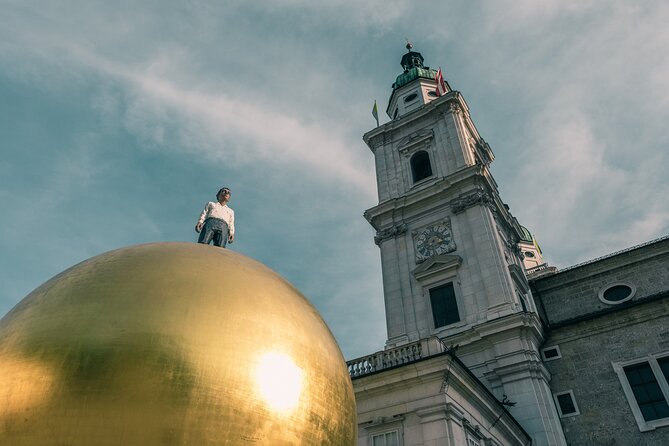
The University Church, or Universitätskirche, is scheduled for about five minutes. It was the last historic building in Salzburg, according to the tour description, and it is no longer used as a church. The group can enter when it is open.
That conditional access matters. A church may be closed for a reason outside the guide’s control, so treat the interior visit as possible rather than guaranteed.
Nearby, Wilhelm-Furtwängler-Garten adds a different layer to the walk. The garden was once part of a monastery and is now connected with Salzburg University. Here, the guide discusses the university, modern art, and Salzburg’s canal system before the group continues to the concert hall.
This is a small but useful change of subject. Salzburg is often presented only through Mozart, baroque churches, and the archbishops. The university and modern art discussion shows that the city has a present-day side as well.
The Grosses Festspielhaus and Salzburg Festival
The Grosses Festspielhaus is the route’s main stop for music and performance. You hear about the Salzburg Festival, described as one of the world’s most prestigious classical music festivals, and the concert hall where much of the summer program takes place.
The festival runs for six weeks in summer, with concerts and opera forming a major part of the city’s cultural life. Even if you are not attending a performance, this stop explains why Salzburg can feel much more than a Mozart-themed sightseeing destination.
The visit lasts around 10 minutes and is mainly an exterior discussion. You should not assume that a concert or opera visit is included. If you are considering a performance, use the guide’s advice to understand the area and then check the separate event arrangements yourself.
Saint Peter’s Abbey and Salzburg’s beginnings

Saint Peter’s Abbey, or Erzabtei Stift St. Peter Salzburg, is where Salzburg was founded in 696. It is also the oldest monastery in the German-speaking region.
The tour visits the monastery yard but does not enter the church or the cemetery. That restriction is tied to the fact that the monastery and church remain active, and guided group visits are not allowed there.
This is an important distinction for planning. Saint Peter’s cemetery is one of Salzburg’s memorable places, but this experience is not the way to explore it in detail. The guide instead gives you the background and points out what you can return to later.
The five-minute stop may sound short, but the site carries a large amount of history. A good explanation here can make a later independent visit more meaningful, particularly if you want time to look closely at the cemetery, church, or monastery setting.
Salzburg Cathedral and the heart of the old town
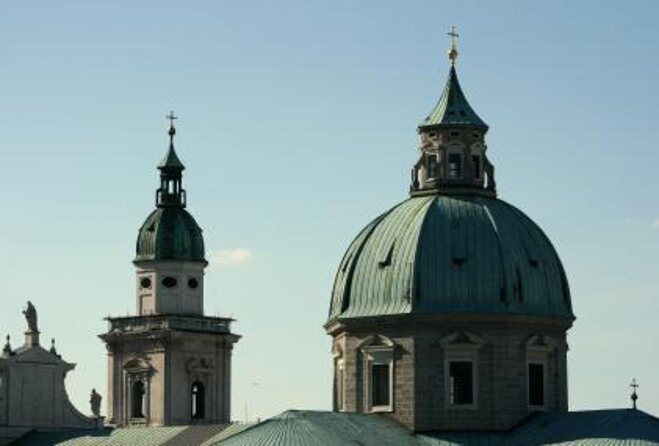
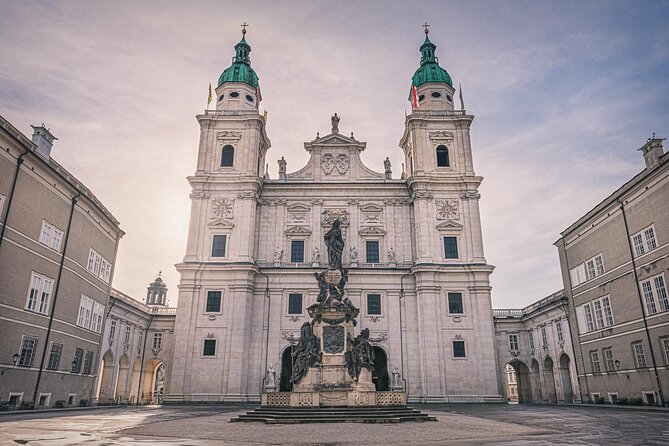
The Salzburg Cathedral is the route’s most substantial church visit, with about 10 minutes scheduled inside. It is described as Salzburg’s most significant church and one of the few where guided tours are allowed.
This is where the earlier pieces begin to fit together. The cathedral, archbishop’s residence, major squares, monastery, and fortress views all sit close together, showing how religious and political power shaped the old town.
Ten minutes is enough for a focused explanation and a look around, but it is not a slow architectural study. If you want to examine every chapel, artwork, or detail, return later. The advantage of entering with the guide is that you receive a clear starting point instead of wandering through without context.
Kapitelplatz, the fortress view, and the oldest bakery
Kapitelplatz offers a view toward Hohensalzburg Fortress, along with more modern art and the oldest bakery in Salzburg. The five-minute stop is short, but it places several recognizable features in one frame.
The fortress view is especially useful for orientation. You see how the stronghold rises above the old town, and you can decide if a separate visit belongs in your plans. The tour does not include a fortress ascent or admission, so you will need to arrange that independently.
The reference to the bakery adds a small everyday detail to the route. It is the sort of practical landmark that helps you recognize where you are after the walk ends.
Residenzplatz and Mozartplatz
Residenzplatz is the main square and the center of the old town. Its name comes from the archbishop’s residence, which was located here historically.
This is one of the best places to pause and understand Salzburg’s old-town layout. From here, you are close to the cathedral, fortress views, museums, shopping lanes, and tourist information.
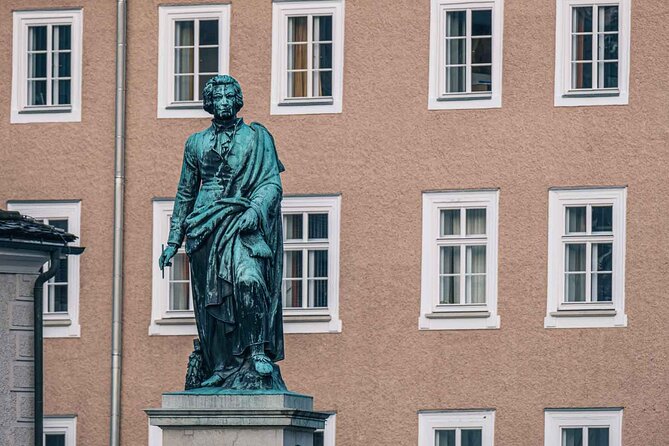
The final stop is Mozartplatz, where the Mozart statue was erected in the 19th century. This square marks the beginning of the Mozart cult in Salzburg, and the guide uses the statue to discuss some of the mystery surrounding Mozart.
That final subject gives the walk a fitting finish. You begin with Mozart’s former home and end with the public image created around him generations later. It also leaves you in a useful place for the rest of your day.
What the two-hour pace feels like
The route includes 12 stops in roughly two hours. That means some explanations may be only five minutes long, while Mirabell Garden, the concert hall, the cathedral, and Mozartplatz receive slightly more time.
I would think of this as a moving introduction rather than a relaxed sightseeing session. You will walk between locations, stop for short talks, and enter a few buildings when access allows. Comfortable shoes are sensible, though no special equipment is listed.
The private setup makes the pace easier to manage. With your own party and guide, you can ask questions that match your interests. A family may want more Mozart stories, a music lover may focus on the festival, and a history-minded group may prefer the archbishops, monastery, and cathedral.
The group limit is up to 15 people. For a large family or several friends, that can be good value because the $263.67 price is charged per group rather than per person. For one or two people, the cost is much higher per head than a public walking tour. You are paying for privacy and attention, not just the route.
Guide style and the value of local advice
The strongest feature of this experience is the guide’s role in making Salzburg understandable and usable. The tour is not just a procession past buildings. It is designed to give you tips for the rest of your stay.
That can include deciding which places deserve a return visit, understanding the main squares, and learning where important sights sit in relation to one another. The practical value grows if you take the tour on your first day, when you still need to plan the rest of your time.
The guide names connected with the experience include Sonja, Leo, Johannes, and Cristian. The feedback associated with these walks repeatedly highlights humor, warmth, interactive questions, clear explanations, and useful recommendations. Leo is particularly associated with an engaging style that can include singing, while Johannes is linked with stories and a route through lanes and back streets.
You should still allow for individual differences. A private tour gives you a better chance to shape the conversation, but it does not turn a two-hour walk into a private museum visit.
Practical details and small limitations
The tour starts at 11 a.m. near the Spirit of Mozart and ends at Mozartplatz beside Salzburg Cathedral and Residenzplatz. Tourist information is located nearby, and it takes about five minutes to return to the starting area near Staatsbrücke.
The experience uses a mobile ticket, and confirmation is sent within 48 hours of booking, subject to availability. It is near public transportation, service animals are allowed, and most participants can take part.
Free cancellation is available up to 24 hours before the start time for a full refund. Cancellations or changes made less than 24 hours before the start are not accepted for a refund.
The route includes public spaces and active religious buildings, so access can change. The University Church may be closed, and Saint Peter’s church and cemetery are not part of the guided entry. These are not major faults, but they are useful points to know before you book.
Who should book this Salzburg walk?
I would choose this tour for a first visit, a short stay, or a group that wants a clear introduction without spending half a day on one museum. It also suits families because the guide can keep the conversation flexible, and service animals are allowed.
It works well for people who like history but do not want a lecture. The mix of Mozart, church history, music, architecture, modern art, and everyday city details keeps the subject matter changing.
I would be more cautious if your main goal is extended time inside Salzburg’s sights. The route only gives you a short look at each place, and several important stops are discussed from outside. In that case, use this as your orientation, then reserve separate time for Mirabell Garden, Mozart’s birthplace, Saint Peter’s, the fortress, and the cathedral.
Should you book the Private Walking Tour of Salzburg?
Book it if you want a fast, personal introduction to Salzburg and can schedule it early in your visit. The route covers an impressive amount of ground, and the private format makes the $263.67 group price easier to justify for a family or larger party.
Skip it if you prefer to explore independently, want long interior visits, or are traveling alone and find the per-person cost too high. For most groups seeking bearings, local stories, and a practical plan for the rest of their stay, this is a sensible first walk.
FAQ
Where does the tour start?
It starts at Spirit of Mozart, Imbergstraße 33A, 5020 Salzburg, Austria.
Where does the tour end?
The tour ends at Mozartplatz, beside Salzburg Cathedral and Residenzplatz in Salzburg’s old town.
What time does the tour start?
The scheduled start time is 11 a.m.
How long is the walking tour?
The tour lasts approximately two hours.
Is the tour private?
Yes. Only your own group participates, with a maximum group size of 15 people.
Can I cancel for a full refund?
Yes. You can cancel at least 24 hours before the local start time for a full refund. Changes or cancellations made less than 24 hours before the start are not accepted for a refund.
Just added around Salzburg
- Private Werfen Ice Cave and Golling Waterfall from Salzburg★ 5.0 · 15 reviews
- Zell am See Alpine Village Private Day Trip from Salzburg★ 5.0 · 3 reviews
- Viator Exclusive: ‘The Sound of Music’ Private Tour★ 5.0 · 28 reviews
- Private transfer from Salzburg to Vienna, 2 hours for sightseeing★ 4.5 · 7 reviews
- Werfen World’s Largest Ice Caves and Golling Waterfalls Tour★ 4.5 · 7 reviews
- Musical Salzburg: Follow the Trail of the Beloved Movie★ 5.0 · 5 reviews
- Private Transfer from Salzburg to Munich with 2 hours for sightseeing★ 5.0 · 8 reviews
- Private Austrian Food Tasting Tour in Salzburg’s Old Town★ 4.5 · 3 reviews
Walking Tours, compared.
Guided Walking Tour of City Center Highlights
Read our review →
Guided Walking Tour of City Highlights & Hidden Gems
Read our review →
Vienna Historic Center Small Group Walking Tour
Read our review →
Browse the lists this tour appears in