
Reviewed · WALKING TOURS
Nuns and Nazis Walking Tour in Salzburg
Salzburg’s prettiest film locations sit beside reminders of one of Europe’s darkest periods. This tour connects the two without pretending they are the same story, moving from The Sound of Music and the Trapp family to the Anschluss, forced labor, Jewish families, book burning, and Nazi rule. Leo’s family connection to World War II gives the walk a personal thread.
I like the way the tour uses familiar places to explain less familiar history, especially the Stolpersteine on Linzergasse and the stories tied to Residenzplatz. I also like that it ends at Nonnberg Abbey, where you can continue toward Hohensalzburg Fortress. The main drawback is the pace: two hours or more on foot, often with a serious subject at the center, may feel long if you want only movie trivia.
Key points to know before you go
- Two stories in one walk: Connect The Sound of Music with Salzburg’s World War II past rather than treating the film as a stand-alone attraction.
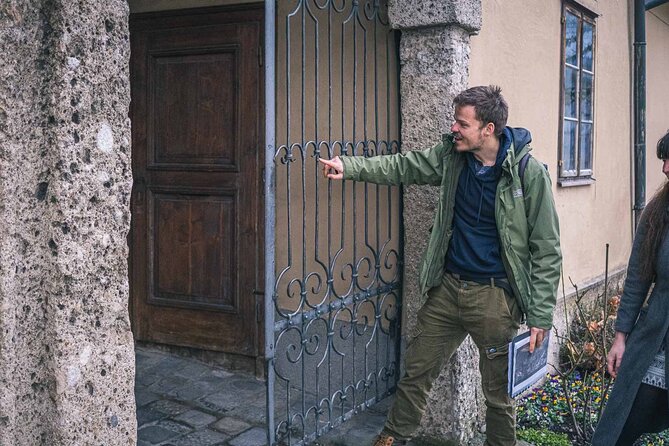
- Guide Leo leads the tour: His family history is influenced by World War II, adding a personal angle to the historical material.
- Nine central Salzburg stops: The route includes Mirabell Gardens, Linzergasse, the Festspielhaus, Residenzplatz, and Nonnberg Abbey.
- A walking tour with free admission: The listed stops do not require an admission ticket, but you should be ready to walk for about 2 to 2.25 hours.
- A useful final stop: Nonnberg Abbey offers a view toward the Alps and a footpath connection toward Hohensalzburg Fortress.
- Best for curious film fans: Rewatching The Sound of Music before you go will help you recognize brief locations and understand the Trapp family references.
Why the nuns and Nazis theme works in Salzburg
Salzburg is often sold through music, baroque squares, Alpine views, and The Sound of Music. That cheerful image can hide how much of the city’s modern story was shaped by World War II. This walk puts both sides on the same route.
The title is blunt, but the subject is not handled as a gimmick. The tour uses the Trapp family and the film as an entry point, then moves into the Nazi takeover of Austria, the lives of Jewish families, forced labor, prisoners of war, and the one book burning held in Salzburg during the war.
That balance is the tour’s main strength. You get recognizable film settings, but you also pause at places where ordinary people lived, worked, escaped, or failed to escape. The result should suit you if you want more than a string of movie photo stops.
Guide Leo is central to the experience. The tour description connects his family history to World War II, and the feedback about his guiding repeatedly points to his cheerful manner, personal insight, and clear passion for Salzburg and the subject. That combination matters here. A tour about Nazi rule can become either dry or heavy-handed, so an engaging guide helps keep the walk human.
Still, you should know what you are booking. This is not a general introduction to Salzburg, and it is not a pure Sound of Music tour. The operator positions the standard Free Walking Tour as the broad city overview, while this experience focuses on World War II, the Trapp family, and the film. If you have only one short visit, you may want a general orientation first.
A few more Salzburg trips to weigh up
- Salzburg 2.5-Hour Walking Tour: Mozart, Old Town & More
★ 4.2 · 987 reviews - Salzburg: Old Town, Mozart, & Mirabell Gardens Walking Tour
★ 4.8 · 461 reviews - Salzburg Oldtown: Sightseeing Walking Tour with Licensed Local Guide
★ 5.0 · 392 reviews
Mirabell Gardens sets the film scene
The tour begins at Kurgarten, at Rainerstraße 2, at 3 p.m. From there, you cross Schloss Mirabell and Mirabell Gardens, spending about 15 minutes at a place many people recognize from The Sound of Music.
This is an easy opening because the gardens provide an immediate visual link to the film. It gives you a reason to look at the setting differently, rather than simply checking off a famous location. The formal paths and well-known filming spots also make a pleasant start before the tour turns toward more difficult history.
The stop is outdoors and free, but do not mistake the attractive opening for the tone of the whole walk. The tour soon shifts from movie memory to political and social history.
Makartplatz and the changing names of Salzburg
The next stop is Makartplatz, where you spend about 10 minutes. The square was renamed several times before, during, and after World War II, and its buildings reflect parts of that changing period.
Place names can seem like small details, but they reveal who held power and how public memory changes. Here, Leo uses the square to show that political control was not only visible in speeches or uniforms. It also appeared in the names assigned to familiar public spaces.
This is a useful early history stop because it keeps you in the city center while shifting your attention away from the film. You are still walking through attractive Salzburg, but the guide is asking you to read the streets as evidence of political change.
Linzergasse and the first Stolpersteine
At Linzergasse, the route enters a former neighborhood of ordinary residents. The stop lasts about 10 minutes and introduces the Stolpersteine, the small memorial stones set into the pavement for victims of the Nazi regime.
This may be one of the most affecting parts of the walk because the memorials are placed at street level, among the normal movement of a neighborhood. They point to individual people rather than presenting the period only through major events and famous names.
The focus on common people is important. You hear about what happened to residents of Salzburg, not only about political leaders, military decisions, or the Trapp family. If you want a World War II tour that keeps local lives in view, this stop gives the experience real weight.
You should be prepared to pause and listen closely. The information is not designed as light entertainment, and the subject may feel especially direct when connected to specific addresses and families.
Same Alps, a completely different kind of day:
- The Original Sound of Music Tour in Salzburg
★ 4.5 · 6,129 reviews - Salzburg: Original Sound of Music Tour
★ 4.8 · 5,059 reviews - From Salzburg: Half-Day Tour to Hallstatt
★ 4.6 · 3,596 reviews - Salzburg: Mozart Concert at Mirabell Palace
★ 4.8 · 3,498 reviews
Steingasse brings an uncertain wartime story
The walk continues to Steingasse for roughly 10 minutes. Here, Leo tells an urban legend about a special trace of World War II in Salzburg and leaves you to decide how much of it you believe.
That is a nice change of pace. Historical tours sometimes present every detail with the same level of certainty, but this stop separates documented history from local storytelling. You can enjoy the story while keeping your judgment switched on.
The tour information does not identify the legend in advance, so I would not book this stop expecting a single major sight. Its value lies in the way it shows how wartime memory can mix with rumor and folklore.
Staatsbrücke and the cost of construction
At Staatsbrücke, Salzburg’s main old-town bridge, the subject turns to prisoners of war and forced laborers. Hundreds worked against their will on the construction of the bridge during World War II, and you spend about 10 minutes hearing about that labor.
This is the kind of stop that changes how you see an everyday structure. A bridge may look like a simple route across the river, but its construction can also reflect coercion, exploitation, and wartime power.
The stop is short, yet it gives the tour a strong local focus. You are not just hearing about the war as something that happened elsewhere. You are looking at a part of Salzburg connected to people forced to work there.
Alter Markt and the choices facing Jewish families
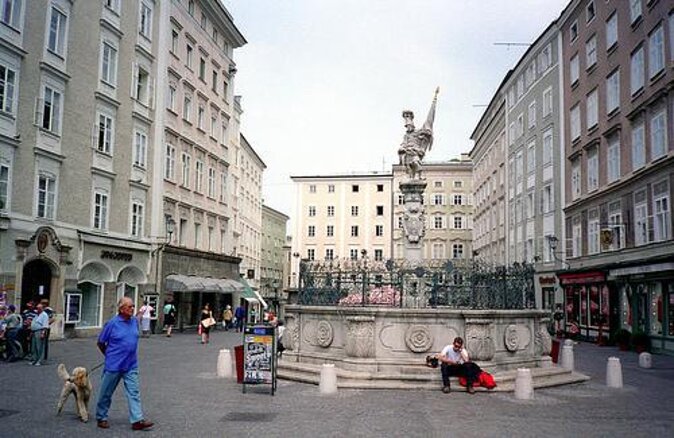
At Alter Markt, the Old Market square, Leo tells more stories about ordinary people, including a Jewish family and the choices they faced before the Nazis took over Salzburg. The stop lasts about 10 minutes.
The key point here is personal uncertainty. Some people escaped, while others did not, and the tour uses one family’s story to show how difficult those decisions could be. This helps you understand the period through human choices rather than only through dates.
Alter Markt is also a good setting for this part of the walk because it is a central public square. You are surrounded by the normal life of Salzburg while considering how quickly public life could change for people targeted by the regime.
Grosses Festspielhaus connects the Trapp family to reality
The Grosses Festspielhaus receives about 15 minutes. In The Sound of Music, the building appears during the concert near the end of the film, before the Trapp family leaves Salzburg. The tour adds a useful correction: the family really did perform there.
That distinction between movie version and historical fact is one of the most valuable parts of the experience. Film changes locations, timing, and events to create a clear story. Learning what the Trapp family actually did helps you enjoy the movie while keeping it separate from the record.
For film fans, this is likely one of the most rewarding stops. You get the location, the concert connection, and a chance to sort out which parts belong to the real family and which belong to the screenplay.
The stop also reinforces the tour’s larger idea. The Trapp story is not simply a charming musical tale. It unfolded during a period of political pressure and danger, which makes the family’s departure part of the World War II story rather than a separate Hollywood subplot.
Residenzplatz explains the Nazi takeover
Residenzplatz is the longest stop, at about 20 minutes. Here, Leo covers the Anschluss, the Nazi takeover of Austria, more about the Trapp family and the making of the film, and Salzburg’s only book burning during World War II.
This is the historical center of the walk. The square gives you room to connect several threads: the political takeover, public reactions, the family story, and the way film later represented the period.
The book burning is especially important because it makes repression visible in a public setting. Burning books is not only an attack on printed pages. It is a public statement about which ideas, writers, and identities the authorities want to erase.
You also get more background on the Trapp family here, which should help prevent the movie from taking over the historical discussion. If you have watched the film many times, you will probably enjoy the extra context. If you have not seen it, you can still follow the World War II material.
Nonnberg Abbey closes the route on a quieter note
The final walk leads to Stift Nonnberg, or Nonnberg Abbey, with about 20 minutes at the site. It is linked to The Sound of Music, but it is also identified as the oldest women’s monastery in the world.
This ending works well because it shifts the mood. After the political history and wartime stories of the old town, the abbey offers a quieter setting and a view toward the Alps. You receive the last set of film facts here, but the location also has importance beyond the movie.
The tour ends at Nonnberggasse 8, not back at the starting point. That is useful to plan around. From the abbey, you can continue along the footpath toward Hohensalzburg Fortress, making the end point practical if you want to keep sightseeing.
The route is not described as difficult, but you should have moderate physical fitness. You will be walking through the center for more than two hours, and the tour can run closer to three hours in practice. One review specifically noted a duration of more than two hours, while another described an approximately three-hour experience. Build in extra time rather than scheduling a tight appointment afterward.
How much value do you get for $20.64?
At $20.64 per person, the tour offers solid value if you want a guided interpretation rather than paid entry to an attraction. The stops themselves are free, so you are paying for Leo’s commentary, route planning, research, and the way the separate stories are tied together.
That distinction matters. You could walk past Mirabell Gardens, Staatsbrücke, Residenzplatz, and Nonnberg Abbey on your own. You would not automatically know about the forced labor connected to the bridge, the book burning, the changing names of Makartplatz, or the local families affected by Nazi rule.
The group is limited to 25 people. That is not an intimate private walk, but it is small enough to be more manageable than a large city tour. The mobile ticket is convenient, and confirmation is sent within 48 hours of booking if space is available.
The tour is offered by Free Walking Tour Salzburg, but this experience has a stated price of $20.64. Free cancellation is available if you cancel at least 24 hours before the 3 p.m. start time. Changes or cancellations made later are not accepted for a refund.
Who will get the most from this walk?
I would choose this tour if you have a real interest in World War II and want to see how that history appears in Salzburg’s streets. It also suits The Sound of Music fans who want to separate the real Trapp family from the movie’s polished version.
You will get the most from it if you watch or rewatch The Sound of Music first. Several locations appear only briefly, and the film references may pass quickly if the story is not fresh in your mind.
This walk may be less suitable if you want a broad introduction to Salzburg’s art, architecture, music, and general history. It also may not suit you if you prefer a quick tour with little serious discussion. The subject includes persecution, forced labor, escape, and people who did not escape.
Rain and cold can also affect the experience. One tour took place on a rainy, cold day and still lasted more than two hours, so dress for outdoor conditions. Service animals are allowed, and the starting point is near public transportation, but the supplied details do not specify full wheelchair access or the exact surfaces along the route.
Should you book the Nuns and Nazis Walking Tour?
Book it if you want a thoughtful World War II walk with a strong Salzburg connection, especially if the Trapp family and The Sound of Music are part of your interest. Leo’s personal link to the period, the Stolpersteine, the bridge’s forced labor history, and the book-burning story give the tour more substance than a standard film-location stroll.
Skip it if you want only cheerful movie locations or a general city overview. For everyone else, $20.64 is a fair price for two hours or more of guided context, and the finish at Nonnberg Abbey lets you continue naturally toward the fortress.
FAQ
Where does the Nuns and Nazis Walking Tour start?
The tour starts at Kurgarten, Rainerstraße 2, 5020 Salzburg, Austria.
What time does the tour begin?
The stated start time is 3 p.m.
Where does the tour end?
The tour ends at Nonnberg Abbey, at Nonnberggasse 8, 5020 Salzburg. From there, you can continue along the footpath toward Hohensalzburg Fortress.
How long does the tour last?
The listed duration is approximately two hours to two hours and 15 minutes. The tour may run longer, with reports of more than two hours and approximately three hours.
What places are included?
The route includes Schloss Mirabell and Mirabell Gardens, Makartplatz, Linzergasse, Steingasse, Staatsbrücke, Alter Markt, Grosses Festspielhaus, Residenzplatz, and Stift Nonnberg.
How many people can join?
The tour has a maximum of 25 participants.
Can I cancel for a full refund?
Yes. You can cancel at least 24 hours before the local start time for a full refund. Cancellations or changes made less than 24 hours before the tour are not accepted for a refund.
Just added around Salzburg
- Private Werfen Ice Cave and Golling Waterfall from Salzburg★ 5.0 · 15 reviews
- Zell am See Alpine Village Private Day Trip from Salzburg★ 5.0 · 3 reviews
- Viator Exclusive: ‘The Sound of Music’ Private Tour★ 5.0 · 28 reviews
- Private transfer from Salzburg to Vienna, 2 hours for sightseeing★ 4.5 · 7 reviews
- Werfen World’s Largest Ice Caves and Golling Waterfalls Tour★ 4.5 · 7 reviews
- Musical Salzburg: Follow the Trail of the Beloved Movie★ 5.0 · 5 reviews
- Private Transfer from Salzburg to Munich with 2 hours for sightseeing★ 5.0 · 8 reviews
- Private Austrian Food Tasting Tour in Salzburg’s Old Town★ 4.5 · 3 reviews
Walking Tours, compared.
Guided Walking Tour of City Center Highlights
Read our review →
Guided Walking Tour of City Highlights & Hidden Gems
Read our review →
Vienna Historic Center Small Group Walking Tour
Read our review →
Browse the lists this tour appears in