
Reviewed · WALKING TOURS
Salzburg 2.5-Hour Walking Tour: Mozart, Old Town & More
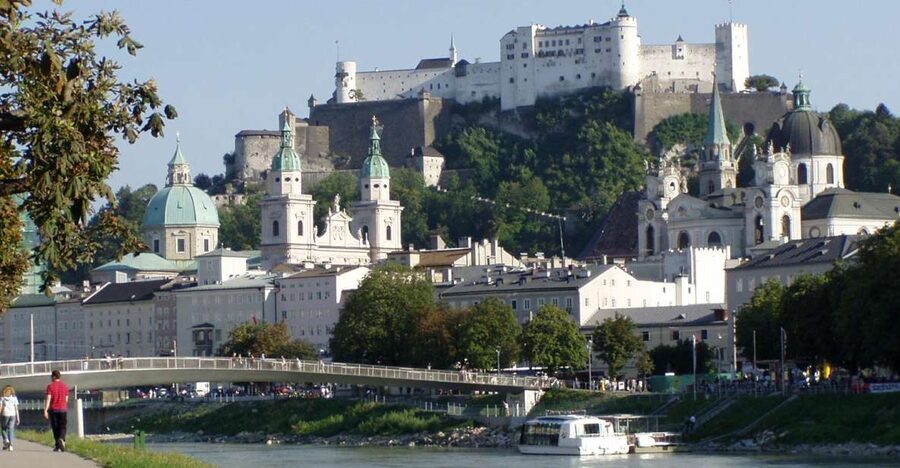
Salzburg reveals its best secrets on foot, and this 2.5-hour tour follows a smart route from Mirabell Palace across the river into the Old Town. You’ll move from baroque gardens and Mozart connections to narrow lanes, church interiors, Getreidegasse, and a possible view from Mönchsberg Hill.
I like the clear introduction to Salzburg’s layout and the way the route joins the New Town to the Old Town instead of treating them as separate sights. I also like the human touch: guides such as Junko and June have added songs inside churches, local food suggestions, photo tips, and useful ideas for the rest of your stay.
The one caution is that the opening at Mirabell Palace can feel slow if you already know the palace and gardens. The tour becomes more varied after crossing the river, and the Mönchsberg elevator costs an extra €4 if you choose the optional viewpoint.
Key points to know before you book
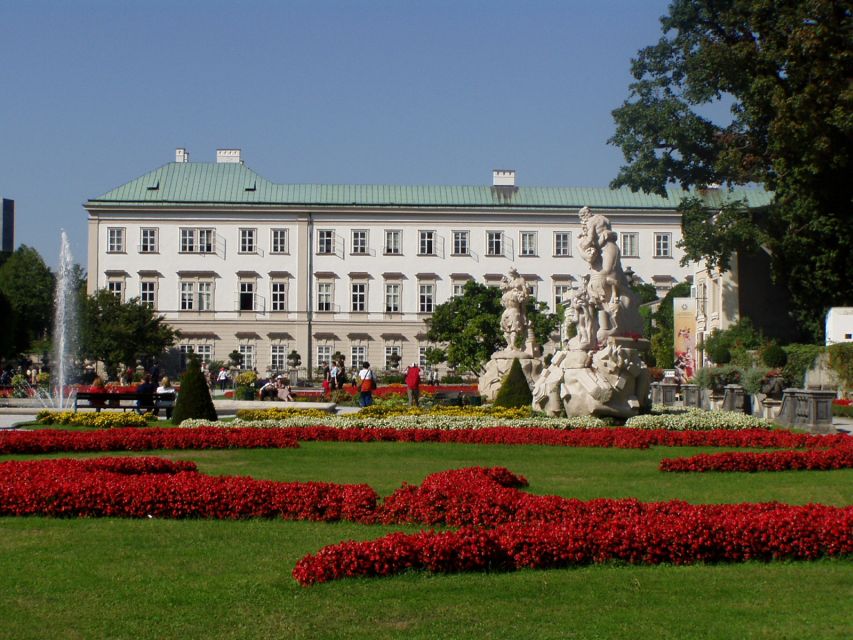
- Start at Mirabell Palace: Meet street-side at the main entrance on Mirabellplatz 4, not inside the palace grounds.
- Cross Salzburg on foot: The route links the New Town, Makartsteg bridge, and Old Town in one easy-to-follow walk.
- Mozart is part of the story: See the Mozart Residence at Makartplatz and Mozart’s Birthplace on Getreidegasse.
- Churches and squares add variety: The walk includes one or two churches, historic squares, medieval apartments, and baroque buildings.
- A memorable guide can shape the tour: Junko and June have been praised for storytelling, local advice, and singing in churches.
- Mönchsberg is optional: The final panorama requires a €4 elevator fee per person, and the extra 30 minutes with the guide is free.
Why this Salzburg walking route works
Salzburg’s center is compact, but it is not simple. The river divides the New Town from the Old Town, and the city’s story stretches from medieval church power to baroque ambition, Mozart, and modern tourism.
This tour gives you a useful first look without making you choose between the major themes. You get architecture, music, religion, city history, and the streets that make Salzburg so photogenic. I would take it early in a visit, ideally on your first day or evening, so the rest of the city becomes easier to read.
The walk lasts 150 minutes, with a possible extra 30 minutes at no added guide cost. That is enough time to see the main center without turning the experience into an exhausting full-day march. You should still wear comfortable shoes, since the route uses city streets and pedestrian lanes rather than a vehicle.
The tour is offered in English or German. Your guide may vary, with Junko, June, Melody, Christine, Julia, Aisleen, and Annabell among the guides praised for this experience. Several guides have been described as warm, flexible, and able to adjust the pace or emphasis to the group.
A few more Salzburg trips to weigh up
- Salzburg: Old Town, Mozart, & Mirabell Gardens Walking Tour
★ 4.8 · 461 reviews - Salzburg Oldtown: Sightseeing Walking Tour with Licensed Local Guide
★ 5.0 · 392 reviews - Salzburg Old Town Walking Tour, Mozart, Mirabell Gardens
★ 4.5 · 201 reviews
Starting at Mirabell Palace and Makartplatz
The meeting point is in front of the main entrance of Schloss Mirabell at Mirabellplatz 4. Pay attention to the instruction to meet on the street side. That small detail matters in a busy square, especially if you arrive by taxi or are trying to locate the group among the palace entrances.
Mirabell Palace gives the tour a dramatic opening. It was built under the rule of Prince Archbishop Wolf Dietrich von Reitenau for Salome Alt and their 15 children. That is not a dry architectural footnote. It immediately shows how Salzburg’s prince archbishops mixed political authority, religious power, personal wealth, and grand building projects.
The palace and its setting also help you understand Salzburg’s baroque character. You can expect the guide to use the area as a starting point for the city’s wider story rather than rushing straight to Mozart.
This first section is one part of the tour where the pace may feel measured. One person found the beginning slow before the group moved away from Mirabell. If you have already spent a long morning in the palace gardens, you may be eager for the Old Town sooner. Still, the opening provides useful context, and it helps first-time visitors get oriented.
At nearby Makartplatz, you see the Mozart Residence. This is one of the tour’s strongest early stops because it adds a second Mozart address before you reach the more famous birthplace. The two sites help place Mozart within Salzburg itself, not just as a name attached to souvenir shops and concert posters.
Crossing the Makartsteg into the Old Town
The walk continues through Salzburg’s New Town before crossing the Makartsteg. The bridge is more than a convenient crossing. It gives you a clean sense of the city’s geography, with the river separating the modern side from the tightly packed historic center.
This transition is one of the route’s practical strengths. Instead of meeting inside the Old Town and seeing only the postcard center, you watch Salzburg change as you walk. The New Town, the river, and the Old Town become parts of one connected place.
The route also gives your guide room to explain present-day Salzburg alongside older events. Past groups have valued answers about daily life, local customs, Austrian history, and the city’s famous figures. Some guides have also brought in Sound of Music references, which can be useful if you know the film but do not want a tour devoted only to movie locations.
The bridge and nearby streets are good places for photos, though the group may pause only briefly. If photography matters to you, tell the guide early. June has been especially praised for pointing out good photo spots and offering to take pictures.
Getreidegasse and Mozart’s birthplace
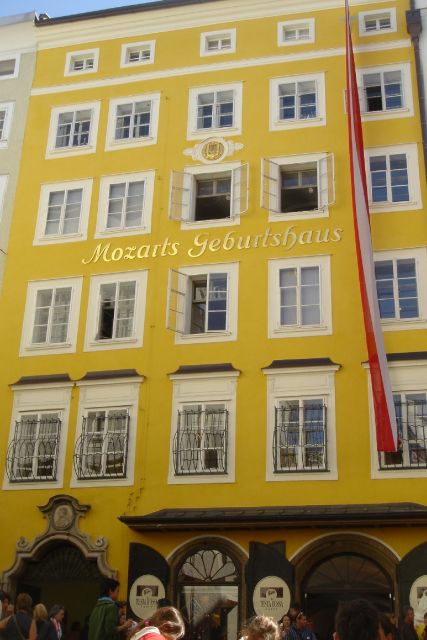
Once across the river, the tour reaches Getreidegasse, Salzburg’s best-known shopping street. Its appeal is not only the shops. Look up at the wrought-iron trade signs projecting over the lane. These signs give the street a distinctive visual style and make even ordinary storefronts part of the city’s historic character.
The lane can be busy, so keep close to your guide and expect a walking pace shaped by other pedestrians. The reward is a strong sense of Salzburg’s old commercial center, where narrow building fronts and decorative signs create a very different mood from the open space around Mirabell.
Mozart’s Birthplace is on Getreidegasse. This tour visits the location from the outside as part of the street walk. It does not include a stated admission to the museum, so plan separately if you want to go indoors.
That distinction matters. If your main goal is Mozart’s life and music, this tour gives you the setting and the basic story, but it is not a substitute for a dedicated Mozart museum visit or concert. If you want a first orientation, the stop works well. You can then decide if the interior collection deserves more of your time.
Same Alps, a completely different kind of day:
- The Original Sound of Music Tour in Salzburg
★ 4.5 · 6,129 reviews - Salzburg: Original Sound of Music Tour
★ 4.8 · 5,059 reviews - From Salzburg: Half-Day Tour to Hallstatt
★ 4.6 · 3,596 reviews - Salzburg: Mozart Concert at Mirabell Palace
★ 4.8 · 3,498 reviews
Churches, squares, and Salzburg’s changing styles
The Old Town section is where the tour gains depth. You walk among buildings that range from medieval apartments to baroque churches. That change in style is easy to miss on your own, especially when you are focused on taking pictures. A guide can point out how the city developed over several centuries instead of presenting every building as simply old.
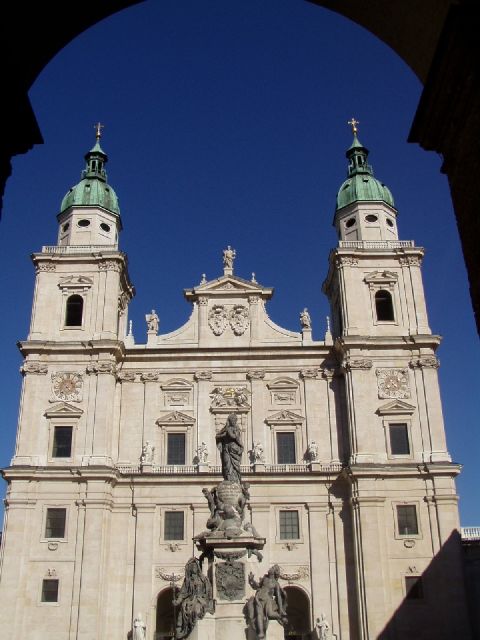
One or two churches are included, depending on the route and conditions. These interiors provide a welcome pause from the streets and show the religious power that shaped Salzburg. The city’s churches are not just decorative stops. They help explain why the prince archbishops could commission such grand buildings and why the center feels so monumental for a city of its size.
Several guides have added a musical moment inside a church. Junko and June are especially associated with singing, including Ave Maria. This is not something I would treat as a guaranteed part of every departure, since the guide can vary, but it can be a lovely surprise when it happens. The acoustics and setting make the moment feel connected to Salzburg rather than tacked onto the tour.
The stories can also reach beyond Mozart. Guides have brought up Sound of Music sites, Christian Doppler, political history, and the role of Salzburg’s archbishops. That variety suits you if you want more than a list of famous buildings.
The tour is also flexible in a useful way. One guide adjusted the route when the weather changed, while others tailored the conversation to the group’s interests. Do not expect a private tour simply because the guide is adaptable, but feel free to ask questions. The best value here comes from turning a general walk into a conversation about what you actually care about.
The optional Mönchsberg viewpoint
The planned finish is a panoramic view from Mönchsberg Hill, reached by elevator. The elevator fee is not included and costs €4 per person. The extra viewpoint is optional, so you can finish without paying it if you prefer to remain at street level.
For many people, the view is worth considering. After two hours among lanes, churches, and enclosed squares, looking back over Salzburg gives you a better sense of how the city fits together. It also provides a natural ending to a route that begins at Mirabell and crosses toward the Old Town.
Because the tour information allows an additional 30 minutes for free, ask your guide how the final section will work on your departure. The published duration is 150 minutes, but some groups have spent longer with the guide. That extra time can help if you have questions or want more explanation, but do not build a tight train or dinner reservation around the exact finish.
The viewpoint section is less useful if you have already visited Mönchsberg or plan to take another paid attraction there. In that case, you can skip the elevator and use the tour’s final moments for questions and recommendations.
What the guide adds to the experience
The guide is the main reason to choose this walk over simply following a map. Salzburg’s streets are easy enough to walk, but the connections between Mozart, the archbishops, the churches, the city’s scientists, and the Sound of Music are harder to piece together.
Junko and June have received particularly strong praise for clear English, patience, storytelling, and enthusiasm. Their singing has become a memorable part of some departures. Melody has also been praised for covering a lot of ground while explaining Salzburg’s culture and past.
Other named guides include Christine, Julia, Aisleen, and Annabell. The experience is therefore not built around one single guide, and the tone may vary. That is worth keeping in mind if you have heard about a particular guide’s musical performance and are hoping for the same touch.
The strongest guide style here seems to be personal rather than scripted. Guides have suggested restaurants, photo locations, and places to visit afterward. One guide even helped a visitor who was feeling unwell by buying a remedy. You should not book expecting personal errands, but it shows the sort of attentive service this experience can provide.
Price, pace, and who gets the best value
At $53 per person, this is not the cheapest way to walk around Salzburg. You are paying for a live guide, a planned route, historical explanation, and the chance to ask questions in real time.
I think the price makes the most sense for a first visit, a short stay, or a busy itinerary. In 150 minutes, you can cover both sides of the river and see the central sights without spending half your day working out the route. The value is also stronger if you use the tour to plan the rest of your visit.
It is less compelling if you prefer to read signs at your own speed, stop often, or spend a long time inside museums. You will pass Mozart’s Birthplace but do not receive an included museum visit. You will see churches, but the route is not a specialist art or architecture course.
The walking level should suit most people who are comfortable strolling through a city center, but wear proper shoes. Large bags and luggage are not allowed, so leave those at your accommodation or make another arrangement before meeting the group. Assistance dogs are allowed, but other pets are not.
You need a passport or identity card, and a copy is accepted. The booking offers cancellation up to 24 hours before the start for a full refund, plus a reserve-now, pay-later option. Those terms are useful if your Salzburg schedule is still moving around.
My take: book it for orientation, not specialization
Book this tour if you want a friendly, story-led introduction to Salzburg that covers the main Old Town sights without taking all day. It is especially helpful on your first day, when the city still feels like a collection of beautiful but disconnected buildings.
I would choose it if you care about Mozart, churches, local history, city layout, and practical suggestions for later. The possible church singing, especially with guides such as Junko or June, can add a memorable musical touch.
Skip it if you want a dedicated Sound of Music tour, a full Mozart museum visit, or a quiet self-guided walk. You will see the relevant streets and hear some related stories, but the tour’s real purpose is broader: it gives you Salzburg’s basic shape, major characters, and a useful plan for what to explore next.
FAQ
Where does the Salzburg walking tour meet?
Meet street-side in front of the main entrance of Schloss Mirabell at Mirabellplatz 4, 5020 Salzburg. The meeting point is not inside the palace.
How long does the tour last?
The scheduled walking tour lasts 150 minutes, or 2.5 hours. An additional 30 minutes with the guide may be available at no extra cost.
Which languages are offered?
The tour is offered in English and German.
Does the tour visit Mozart’s Birthplace?
The route reaches Mozart’s Birthplace on Getreidegasse. The provided details do not state that museum admission is included.
Is the Mönchsberg elevator included?
No. The optional elevator ride to Mönchsberg Hill costs €4 per person.
Does the tour include churches?
The route includes a visit to one or two Salzburg churches. Some guides may also sing inside a church, but this is not stated as a guaranteed feature of every tour.
What should I bring?
Bring comfortable shoes and a passport or identity card. A copy of the document is accepted.
Can I bring luggage or a pet?
Large bags and luggage are not allowed. Pets are not allowed, but assistance dogs are permitted.
Just added around Salzburg
- Private Werfen Ice Cave and Golling Waterfall from Salzburg★ 5.0 · 15 reviews
- Zell am See Alpine Village Private Day Trip from Salzburg★ 5.0 · 3 reviews
- Private transfer from Salzburg to Vienna, 2 hours for sightseeing★ 4.5 · 7 reviews
- Werfen World’s Largest Ice Caves and Golling Waterfalls Tour★ 4.5 · 7 reviews
- Viator Exclusive: ‘The Sound of Music’ Private Tour★ 5.0 · 28 reviews
- Musical Salzburg: Follow the Trail of the Beloved Movie★ 5.0 · 5 reviews
- Private Transfer from Salzburg to Munich with 2 hours for sightseeing★ 5.0 · 8 reviews
- Private Austrian Food Tasting Tour in Salzburg’s Old Town★ 4.5 · 3 reviews
Walking Tours, compared.
Guided Walking Tour of City Center Highlights
Read our review →
Guided Walking Tour of City Highlights & Hidden Gems
Read our review →
Vienna Historic Center Small Group Walking Tour
Read our review →
Browse the lists this tour appears in