
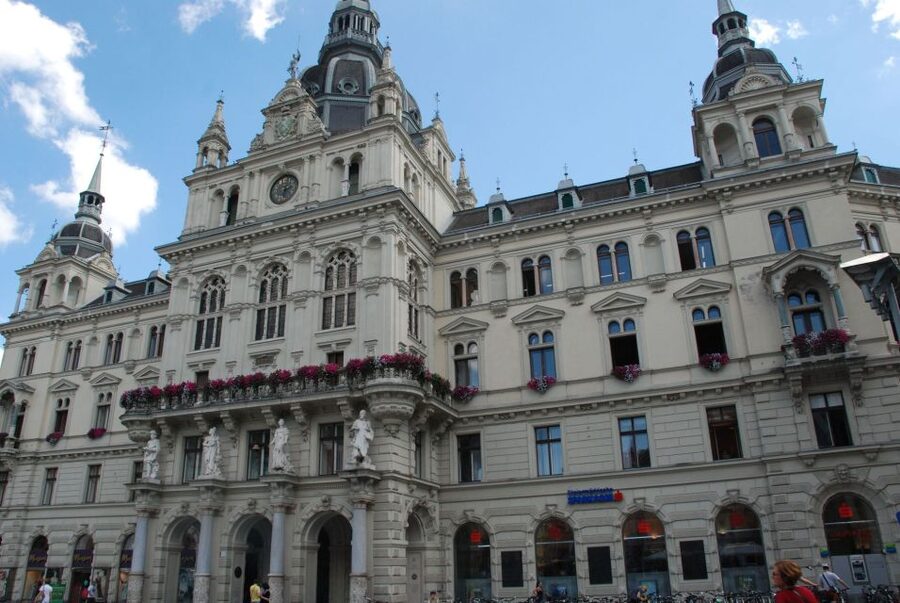
Reviewed · WALKING TOURS
Graz Private Walking Tour
Graz puts imperial history, Slavic roots, Renaissance architecture, and modern art within a compact city center. This private walk takes you from a view of Schlossberg hill to the bold Kunsthaus, showing how the city moved from medieval trading town to Habsburg residence and UNESCO-listed old town.
I like the private format, which lets your group ask questions and follow your interests, and I like the mix of old and new. You get the Landhaushof’s graceful Renaissance courtyard beside the blob-like Kunsthaus, not just a parade of old façades. The main consideration is time: 90 minutes passes quickly, and entrance fees are not included.
For a group of 15, the $289 price works out to about $19 per person. For one or two people, it is a much bigger spend than a shared walk, so the value depends on how much you want personal attention and a guide who can respond to your questions.
Key points at a glance
- Schlossberg viewpoint: Begin with a look over Graz and a reminder of its medieval origins.
- Habsburg and Styrian politics: Learn why Graz mattered as an imperial residence and how the Styrian Diet shaped the city.
- Hauptplatz details: See the Town Hall, Luegg House, White House, Eagle Pharmacy, Palais Sturgkh, and Archduke Johann’s fountain.
- Landhaushof courtyard: Admire the city’s first Renaissance courtyard, a highlight for architecture fans.
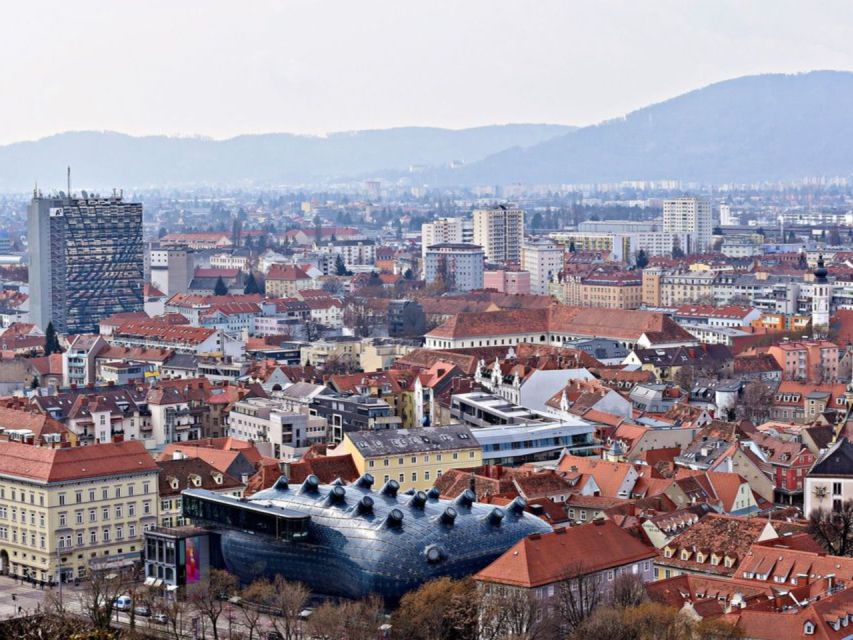
- Kunsthaus contrast: Finish in the 21st century with Graz’s unusual modern exhibition building.
- Private 90-minute format: A good fit for a group that wants a focused introduction in English or German.
Starting at Schlossberg and Graz’s Slavic roots
The tour begins beside the fountain in the middle of Hauptplatz, at Hauptpl. 1, 8010 Graz. This central meeting point puts you in the heart of the old town, with the square’s grand buildings close at hand.
The opening view toward Schlossberg hill gives the walk a useful sense of place. The hill recalls the Middle Ages, when Graz was home to Slavic merchants and traders. The city’s name is linked to an old Slavic word meaning small city, a detail that adds a local layer to the grander Habsburg story.
I like beginning with this wider frame. Graz is not presented as an imperial stage that appeared fully formed. You first get a sense of its earlier roots, then see how trade, religion, government, and royal power shaped what came later.
The Schlossberg view is also a practical orientation point. In a short tour, you need landmarks that help you understand the city’s layout. The hill does that quickly, even if this walk does not include an entrance visit or a full climb.
A few more Graz trips to weigh up
- Graz: Old Town Highlights Private Walking Tour
★ 4.6 · 16 reviews - Graz Private Walking Tour With A Professional Guide
★ 5.0 · 5 reviews - Graz Old Town Highlights Private Walking Tour
★ 5.0 · 4 reviews
Hauptplatz and the city’s public face
Hauptplatz is dominated today by the Town Hall. It is an ideal place to discuss Graz as a political center, especially its role as a Habsburg residence and the influence of the Styrian Diet.
The Styrian Diet was the region’s historic assembly, and its presence helps explain why Graz has more than a collection of handsome buildings. The city was a place where religious, political, and imperial interests met. Your guide connects those themes to the streets and façades around you rather than treating history as a list of dates.
Look closely at the buildings around the square. The 17th-century Luegg House is known for its stucco façade, which gives the building a decorative presence that can be easy to miss if you only glance across the square.
You will also see the five-story White House, with its sandstone relief of the Virgin Mary. That religious detail helps show how faith was part of the city’s public architecture, not something confined to churches.
The 16th-century Eagle Pharmacy adds another practical piece of urban history. Along with the 14th-century Palais Sturgkh, it shows how different periods sit side by side in Graz. You are not walking through a single carefully preserved era. You are reading layers of commerce, government, religion, and domestic life.
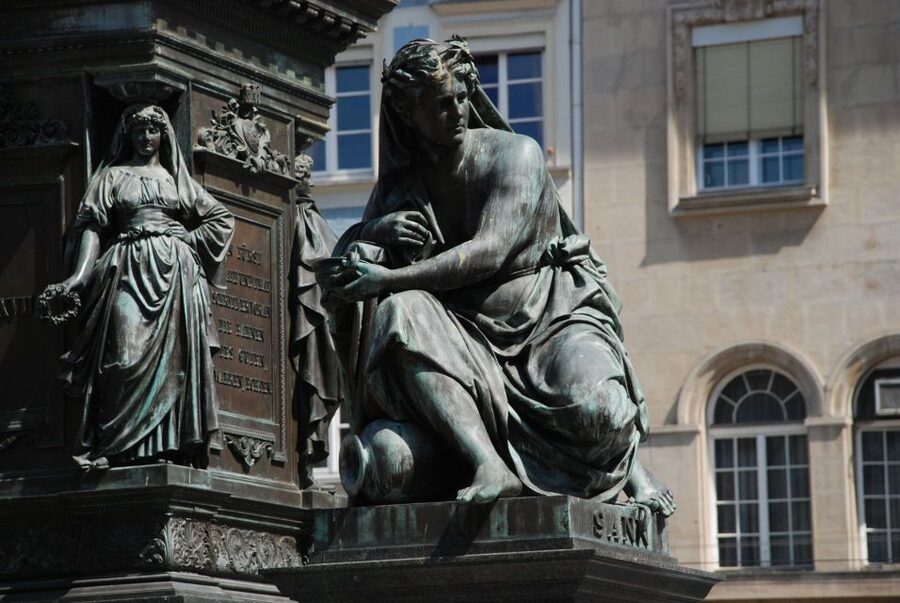
The fountain and statue of Archduke Johann date from 1878. His presence brings the Habsburg connection into the square in a direct way, while the surrounding buildings provide the setting for a broader story about Graz’s political importance.
Habsburg Graz and the Styrian Diet
Graz’s imperial connection is one of the main reasons to choose this walk over a simple stroll through the old town. The city mattered as a residence of the Habsburg dynasty, and the tour uses architecture to explain that role.
You can expect the guide to place local politics beside imperial power. The Styrian Diet influenced the region, while the Habsburgs gave Graz a wider role within the monarchy. That combination shaped the city’s buildings and its cultural life.
This is especially useful if you know Vienna’s imperial story but want to understand how Habsburg influence looked outside the capital. Graz offers a smaller-scale setting, where the political past is easier to connect to individual streets and courtyards.
The tour also touches on religious and political background. That matters because the city’s architectural character was not created by aesthetics alone. Decorative façades, public statues, courtyards, and religious images all reflect the people and institutions that held power.
Since the walk lasts only 90 minutes, you should expect a clear introduction rather than a full course in Styrian history. If you enjoy asking questions, the private group format gives you a better chance to focus on the parts that interest you most.
Landhaushof and the Renaissance courtyard
The Landhaushof is one of the strongest stops for anyone who likes architecture. Its Renaissance courtyard is described as the first of its kind in Graz, and it offers a calmer, more enclosed view of the city’s design than the open Hauptplatz.
I like courtyards because they reveal how a building works from the inside. A grand façade can suggest power, but a courtyard shows proportion, rhythm, and daily movement. At the Landhaushof, the Renaissance influence becomes easier to appreciate without the distraction of traffic and the wider square.
This stop also adds variety to the route. The walk is not just a sequence of public squares. You move between open civic space and more intimate architecture, which helps the old town feel like a real district rather than a museum display.
The Landhaushof is part of the larger story of Graz’s imperial and political past. Its setting connects architecture with government, giving the Styrian Diet and civic institutions a physical presence.
You should plan to admire the courtyard from the outside unless your guide confirms access during your visit. Entrance fees are not included, and the experience is primarily a walking tour rather than a ticketed interior tour.
Same Alps, a completely different kind of day:
- Kunsthaus Graz Museum Entrance Ticket
★ 3.5 · 19 reviews - Universalmuseum Joanneum Pass in Graz
★ 4.0 · 14 reviews - Fun & mobile scavenger hunt through Graz
★ 4.5 · 12 reviews - Graz city tours
★ 3.5 · 9 reviews
Graz’s UNESCO old town on foot
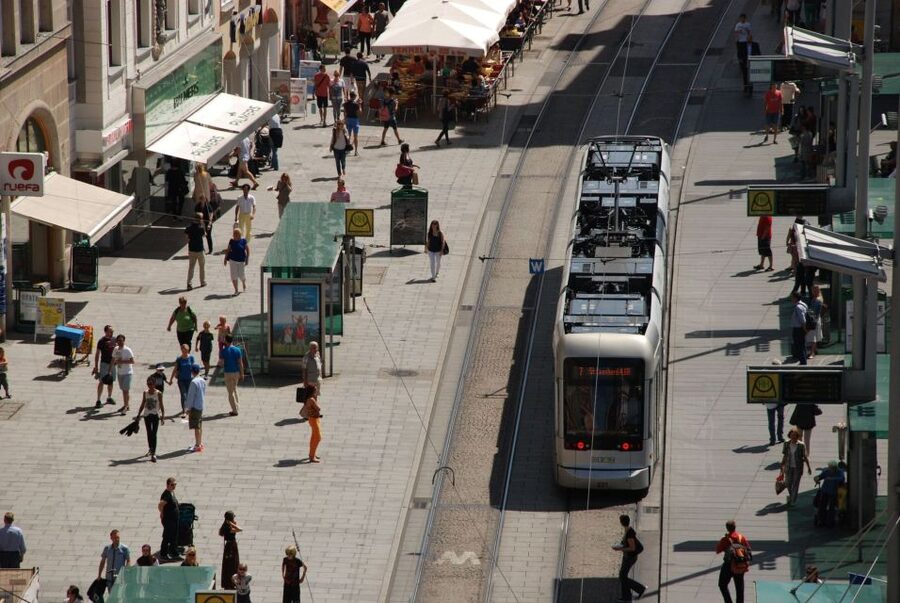
Graz’s old town has been a UNESCO World Heritage site since 1999. The designation reflects the area’s preservation and its unusual mixture of architectural periods.
You will move through romantic alleys and streets shaped by the imperial era. The appeal is not one single monument. It is the way the district holds together as a whole, with older buildings, public spaces, religious touches, and later additions appearing within a compact area.
A private walk is useful here because the details are easy to pass without context. Luegg House, the White House, Eagle Pharmacy, Palais Sturgkh, and the Archduke Johann monument each belong to a different part of Graz’s story. A guide can connect them instead of leaving you to guess why they matter.
The old town is also a good match for travelers who prefer walking to formal museum visits. You get a sense of the city’s scale and atmosphere while moving between major points. The tradeoff is that you will not spend long inside any one place.
Comfortable shoes are essential. The tour is only 90 minutes, but the route covers historic streets and alleys, and you will get more from it if you are not distracted by sore feet.
From Renaissance forms to the Kunsthaus
The Kunsthaus provides the sharpest change of mood on the tour. After the old town’s historic façades and Renaissance courtyard, you return to the 21st century at Graz’s newest exhibition place.
Its blob-like ultramodern architecture is deliberately different from the surrounding historic district. That contrast is one of the most interesting things about Graz. The city does not treat its old buildings as a reason to reject modern design. Instead, the Kunsthaus adds another chapter to the city’s architectural identity.
Graz is known by several modern labels, including UNESCO City of Design, City of Human Rights, and Culinary Capital City of Austria. The Kunsthaus helps explain the design title better than a slogan can. It gives the city a bold contemporary landmark alongside its imperial and medieval buildings.
The experience does not include entrance fees, so you should not assume that the walk includes an exhibition visit inside the Kunsthaus. The value is in seeing the building and understanding its place in the city’s modern cultural scene.
For many people, this final contrast will be more memorable than another ornate façade. It gives the tour a clean shape: medieval origins, Habsburg power, Renaissance civic architecture, then modern art and design.
What the private format changes
This is a private group tour for up to 15 people, with a live guide in English or German. Your group is not combined with strangers, which makes the experience easier to tailor than a standard shared walk.
If you are traveling with family or friends, $289 can be reasonable when divided among a larger group. At the maximum size, it comes to about $19 per person. For a couple, however, the same price is a serious expense for a 90-minute introduction.
The strongest reason to pay for the private format is not simply comfort. It is the chance to ask about the parts of Graz that catch your attention. One verified booking specifically praised guide Leo for interesting stories and useful suggestions for the rest of the day. That points to a practical benefit: a good guide can help you turn a short orientation walk into a plan for exploring beyond the tour.
Another verified booking noted that the guide adapted to the group’s wishes and provided plenty of local insight. That is exactly where a private tour can earn its price. You are paying for attention and flexibility, not for admission to a major attraction.
Still, you should keep your expectations in check. Ninety minutes is enough to understand Graz’s main themes, but not enough for every alley, interior, museum, or historical debate. If you want an exhaustive architectural survey, you will need more time after the tour.
Timing, language, and what to bring
The duration is fixed at 90 minutes, while starting times depend on availability. Check the time options before booking, especially if you have a train, meal reservation, or another activity planned afterward.
English and German are available. The guide accompanies your group only, which is helpful if language questions or local history discussions are important to you.
Bring comfortable shoes. The practical advice is simple, but it matters on a walking route through a historic center.
Entrance fees are not included. The supplied details do not identify a required paid stop, so treat the tour as an exterior-focused city walk unless your guide tells you otherwise.
The booking terms are flexible: you can reserve now and pay later, and cancellation is free up to 24 hours in advance for a full refund. That is useful when your plans in Graz may change.
Who will get the most from this Graz walk
I would recommend this tour to you if you want a well-organized first look at Graz and care about the story behind its buildings. It suits first-time visitors, small groups, families with shared interests, and anyone who wants to connect Habsburg politics with local architecture.
It is also a good choice if you like cities that mix old and new. The route gives you medieval and imperial associations, Renaissance civic design, religious details, and the Kunsthaus’s modern shape in a single outing.
You may want something else if you mainly want interior visits, museum time, or a long architectural study. The tour does not include entrance fees, and its 90-minute length favors breadth over extended stops.
The $289 price makes the most sense for a larger private group. If you are alone or traveling as a couple, compare that cost with a shared walking tour, then decide how much personal attention is worth to you.
Should you book the Graz Private Walking Tour?
Book it if you want a focused introduction with a clear historical arc. You will see the main square, important façades, the Landhaushof, the UNESCO-listed old town, and the Kunsthaus while learning why Graz mattered to the Habsburgs and the Styrian Diet.
The best reason to choose it is the private guide. Leo’s practical suggestions and story-led approach are especially useful if you want help planning the rest of your day. Just remember that 90 minutes goes fast, and the tour does not cover entrance fees.
For a group of friends or family members, the cost can be fair. For one or two people, book only if a private, tailored walk is more valuable to you than a lower-cost shared option.
FAQ
Where does the Graz Private Walking Tour meet?
The meeting point is next to the fountain in the middle of the square at Hauptpl. 1, 8010 Graz, Austria.
How long does the tour last?
The walking tour lasts 90 minutes.
Is the tour private?
Yes. It is a private group experience for up to 15 people.
Which languages are available?
The live guide can conduct the tour in English or German.
Are entrance fees included?
No. Entrance fees are not included in the tour price.
What should I bring?
Bring comfortable shoes for walking through Graz’s historic center.
Can I cancel for a full refund?
Yes. You can cancel up to 24 hours in advance for a full refund. You can also reserve now and pay later.
Just added around Graz
- Graz city tours★ 3.5 · 9 reviews
- Graz Private Walking Tour With A Professional Guide★ 5.0 · 5 reviews
- Graz Scavenger Hunt and Sights Self Guided Tour★ 4.0 · 9 reviews
- Explore Graz in 60 minutes with a Local★ 5.0 · 7 reviews
- Graz Old Town Highlights Private Walking Tour★ 5.0 · 4 reviews
- Graz Funicular Ride and Schlossberg Picnic Experience★ 5.0 · 5 reviews
- Private Photoshoot Walk Old Town of Graz★ 3.0 · 3 reviews
- Graz: Funicular Ride & Schlossberg Picnic Experience★ 4.8 · 4 reviews
Walking Tours, compared.
Guided Walking Tour of City Center Highlights
Read our review →
Guided Walking Tour of City Highlights & Hidden Gems
Read our review →
Vienna Historic Center Small Group Walking Tour
Read our review →
Browse the lists this tour appears in