Reviewed · TICKETS
Vienna: Tickets to Haus der Musik
Haus der Musik turns Vienna’s musical story into something you can touch, hear, and play with. You move from Haydn, Mozart, Beethoven, Schubert, Strauss, Mahler, and Schönberg to sound experiments, instruments, and a virtual performance with the Vienna Philharmonic. The conducting challenge and the Mozart Namadeus game are the big crowd-pleasers.
I like the way the museum works for both serious classical-music fans and people who cannot tell a symphony from a kazoo. I also like the freedom to spend two hours on the interactive displays or four hours reading documents and studying composer details. The possible drawback is simple: there is a lot to take in, so a quick visit will leave plenty unseen.
Key points to know before you go
- Four floors with different musical themes: Move from Vienna’s major composers to orchestra history, sound science, and hands-on experiments.
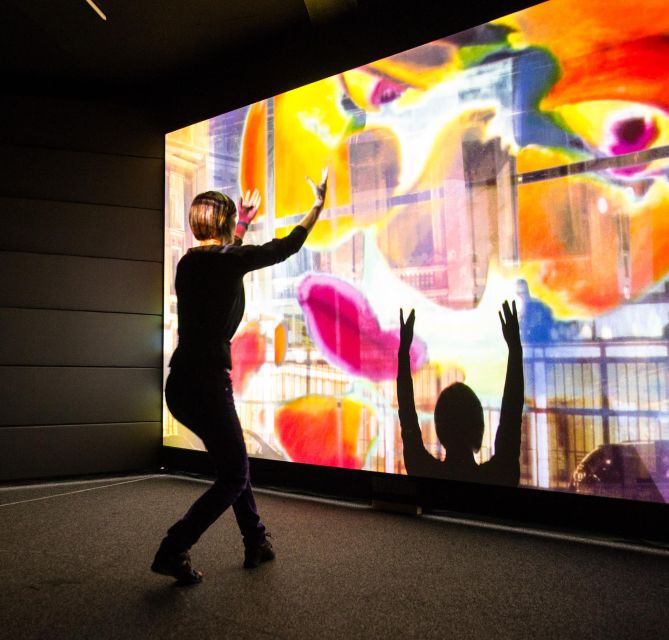
- Conduct the Vienna Philharmonic: Test your timing and gestures against a virtual orchestra.
- Create music through play: Roll dice to build a waltz and use the Namadeus game to hear your name turned into a Mozart-style composition.
- A strong family choice: Children can press, move, listen, and experiment, while adults can read about music, science, and Vienna.
- Central location: Haus der Musik is at Seilerstätte 30 in Vienna’s first district, making it easy to fit into a day of sightseeing.
- Allow more than a quick stop: The museum can fill a couple of hours, and careful readers may want four hours or more.
Entering Haus der Musik at Seilerstätte 30
Haus der Musik occupies the former Palais of Archduke Charles, right in central Vienna. The building has a useful connection to the city’s musical life: Otto Nicolai, founder of the Vienna Philharmonic Orchestra, lived here when he established the orchestra in 1842.
That background gives the museum a sense of place before you even reach the exhibits. This is not simply a collection of instruments in a quiet hall. The building itself connects to the orchestra whose sound you will meet later in the museum.
Admission costs $22 per person and is valid for one day from first activation. For Vienna, that is a fair price if you plan to use the interactive floors rather than rush through them. The value improves for families, curious adults, and anyone looking for an indoor activity that can occupy a rainy afternoon.
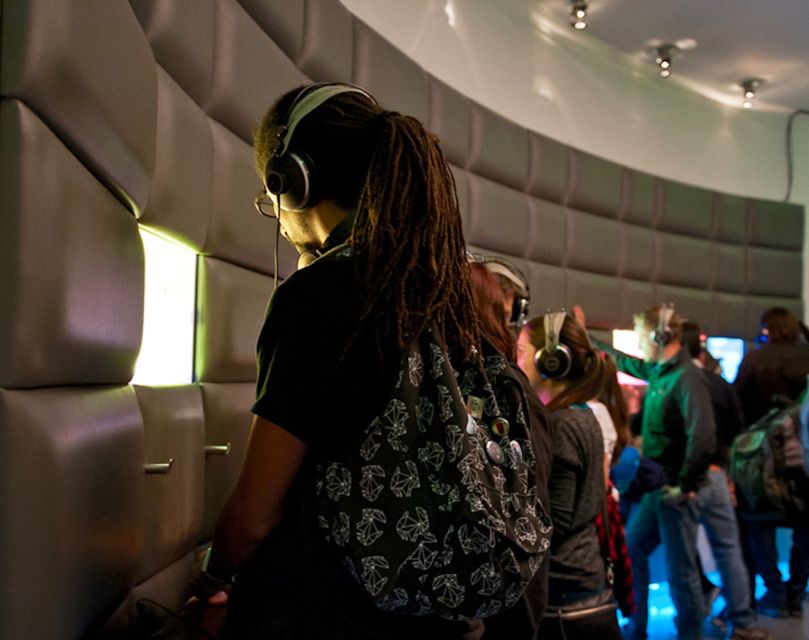
You receive a museum map, and a free smartphone guide is available in eight languages. A children’s app is available in two languages. Bring headphones if you want to use the audio features comfortably, especially when the museum is busy.
A few more Vienna trips to weigh up
- Vienna: Classic Ensemble Vienna in St. Peter’s Church Ticket
★ 4.7 · 4,819 reviews - Vienna Kunsthistorisches Museum Day Admission Ticket
★ 4.6 · 3,690 reviews - Vienna: Tickets for Mozarthaus Vienna with Audio Guide
★ 4.2 · 2,344 reviews
The Vienna Philharmonic Museum and the story of the orchestra
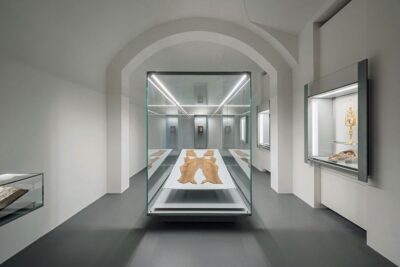
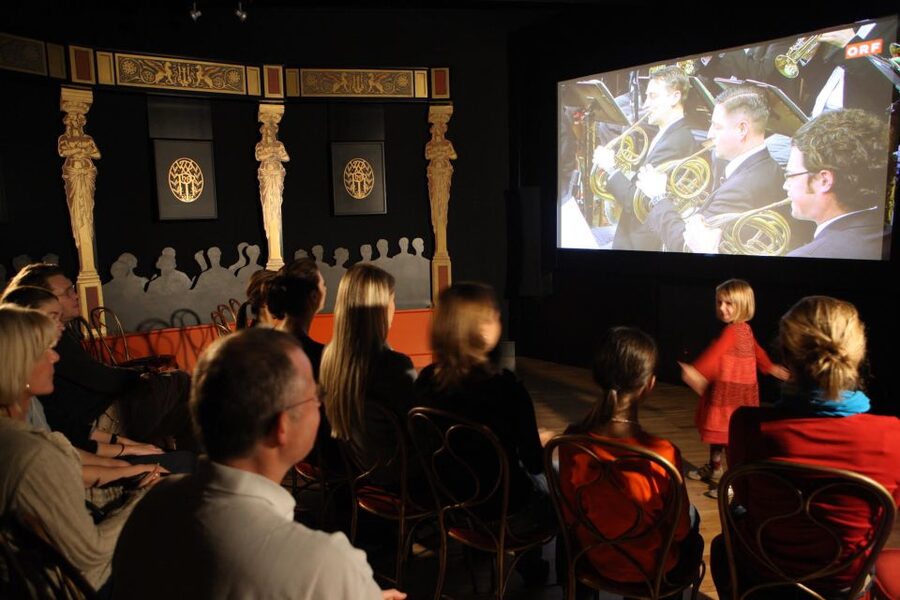
One section focuses on the Vienna Philharmonic Orchestra and its long story. You can see documents and personal mementos connected with the orchestra, along with material linked to Otto Nicolai and the ensemble’s beginnings.
This part is less about pressing buttons and more about context. It helps explain why Vienna became such an important center for classical music and why the Vienna Philharmonic carries such weight in the city’s cultural life.
You can also listen to the orchestra’s famous New Year’s Concert in HD quality. That is a good pause between the hands-on exhibits. The concert is one of Vienna’s best-known musical traditions, and hearing it inside a museum devoted to the city’s sound gives the experience a clear local focus.
If your main interest is archival material, costumes, and historic documents, take your time here. If you are visiting with young children, this may be the section where you move fastest. The museum wisely places more active displays elsewhere, so every member of your group can find a comfortable pace.
Meeting Haydn, Mozart, Beethoven, Schubert, Strauss, Mahler, and Schönberg
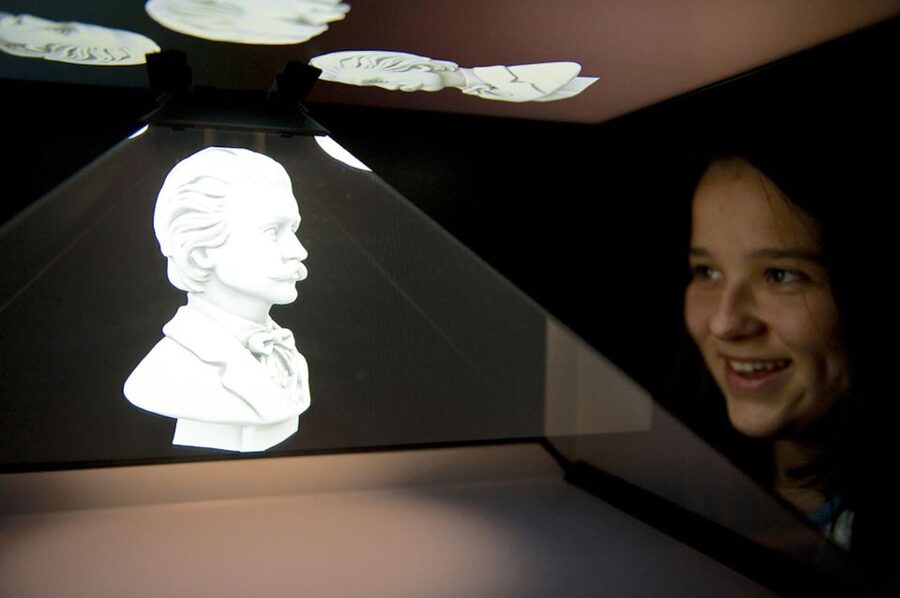
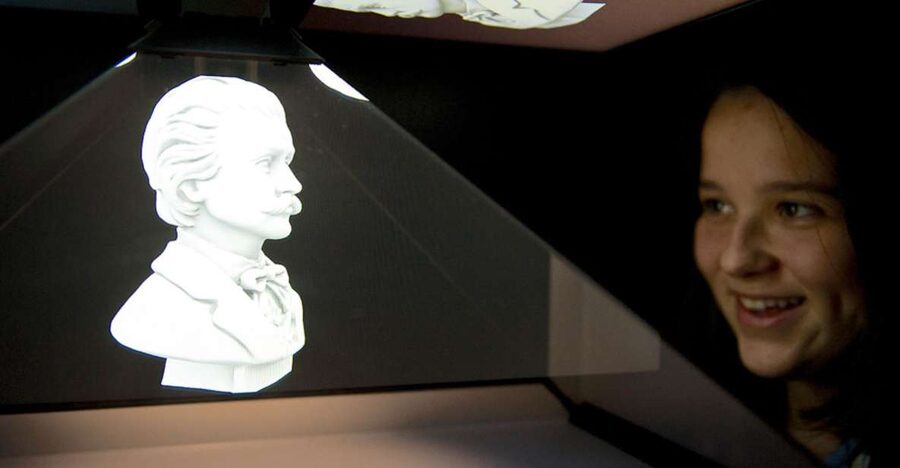
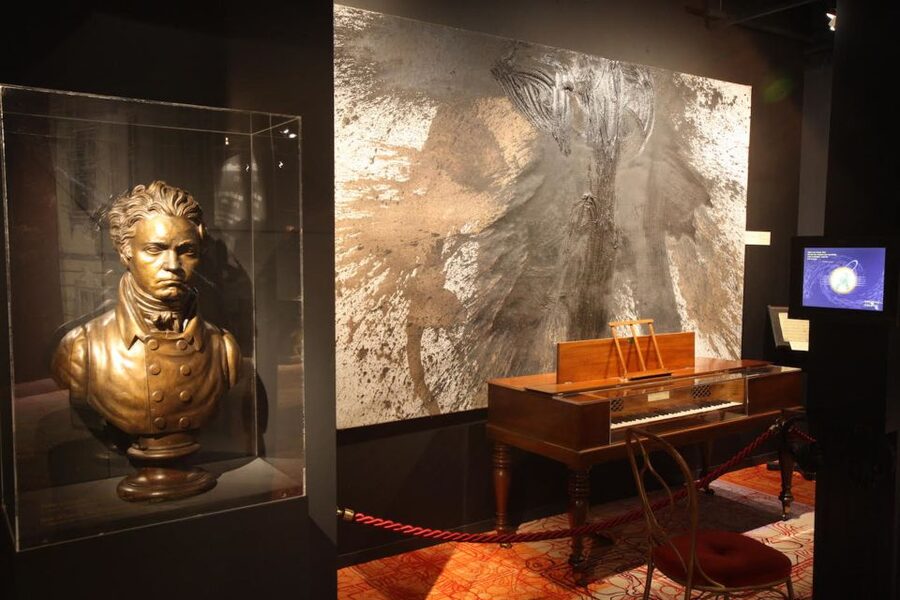
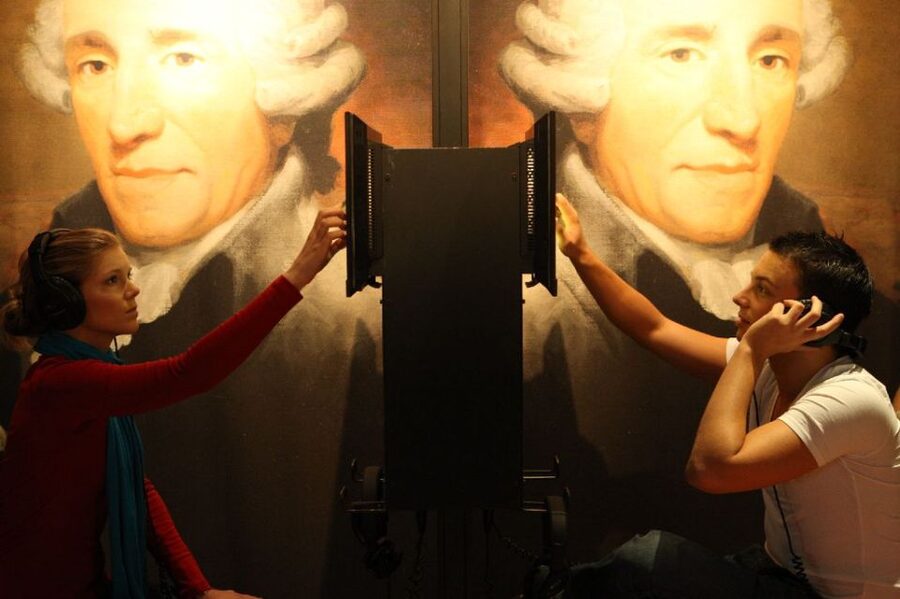
A major level introduces the great composers associated with Vienna and the Wiener Klassik, or Viennese Classical period. Haydn, Mozart, Beethoven, Schubert, Strauss, Mahler, and Schönberg are presented through documents, models, costumes, personal items, and modern displays.
The value here is the setting around the music. You are not just given a list of famous names and dates. The exhibits place each composer in a contemporary environment, helping you connect the work with the people and the city behind it.
Mozart’s room receives special attention and can be one of the strongest stops for anyone visiting with a particular interest in his life and work. You might find this part more rewarding if you read the written material instead of treating it as a passageway to the next game.
The presentation also avoids making classical music feel like homework. A child may start with a costume or model, while an adult reads about a composition or personal object nearby. That shared format is one reason the museum suits mixed-age groups so well.
The amount of information can be a drawback for visitors on a tight schedule. Each composer has enough material to slow you down, and the four floors are larger than the entrance suggests. Pick two or three composers for a closer look, then skim the rest if your time is limited.
The sound laboratory: physics you can hear
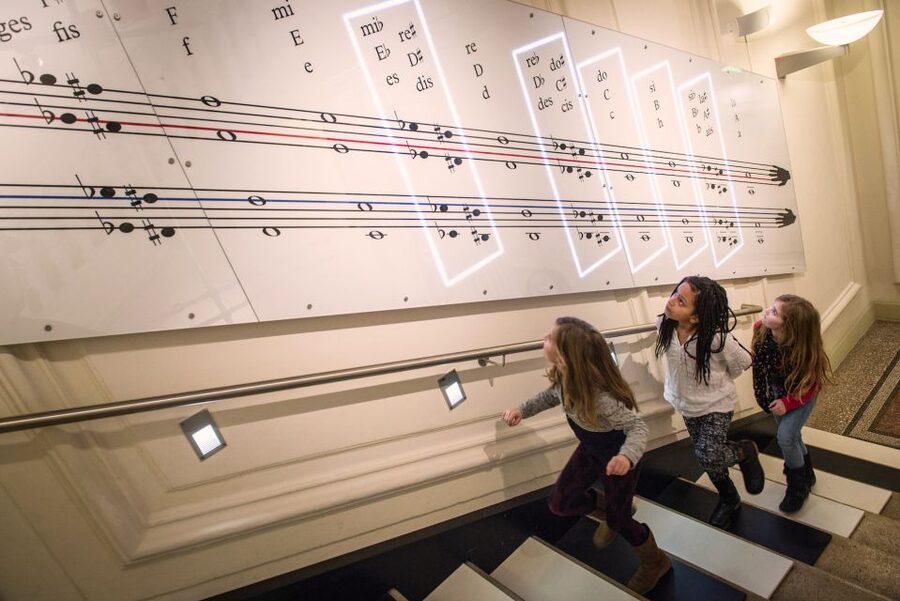
Haus der Musik also explores the science of sound, noise, hearing, and musical instruments. This section broadens the visit beyond classical music and gives non-musicians a solid reason to come.
The exhibits let you experiment with sound rather than simply read about it. You can test ideas through interactive displays and instruments, then connect what you hear with the physical principles behind it.
I like this balance because it gives the museum more range. You can enjoy music without knowing the difference between a concerto and a sonata, and you can approach the displays as a science activity instead of a cultural lesson.
Families should allow extra time here. Children can make discoveries through trial and error, while adults can follow the information about sound and hearing. The exhibits also give teachers and arts-focused visitors useful material to consider, since music is presented through both creative and scientific angles.
The only caution is that interactive exhibits can take time when several people want to use the same station. Visit with patience, and do not plan an overly tight schedule around the museum.
Same Alps, a completely different kind of day:
- Vienna: Vivaldi’s Four Seasons Concert in Karlskirche
★ 4.7 · 14,951 reviews - Vienna: Spanish Riding School Training
★ 3.9 · 9,281 reviews - Vienna: Skip-the-cashier-desk-line Giant Ferris Wheel Ride
★ 4.5 · 7,859 reviews - Vienna: Schönbrunn Palace & Gardens Skip-the-Line Tour
★ 4.7 · 7,739 reviews
Conducting the Vienna Philharmonic
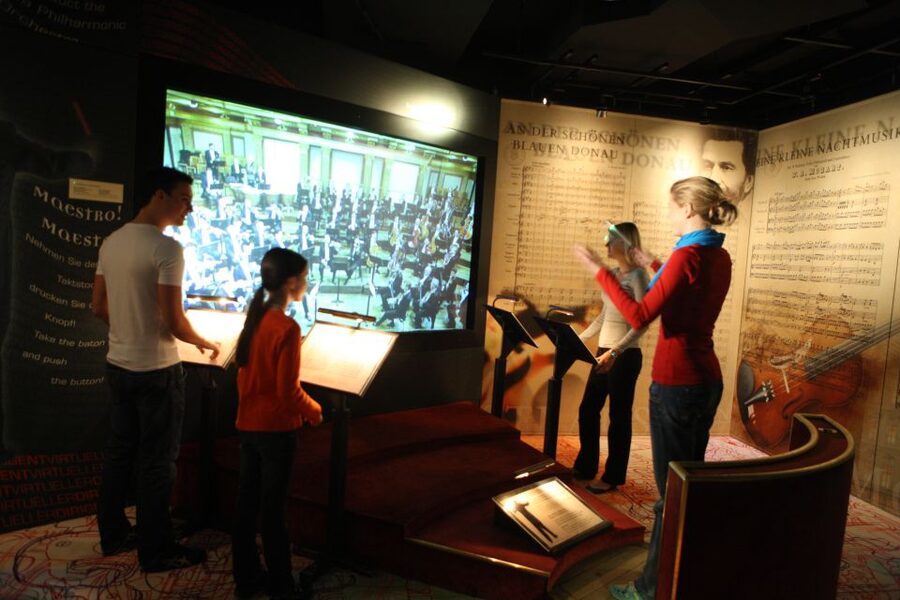
The virtual conducting activity is one of the most memorable features. You step into the role of conductor and face a digital performance by the Vienna Philharmonic.
The challenge is not just a video to watch. Your movements and timing affect the experience, so you get a playful sense of how much control, rhythm, and attention a conductor needs. It is entertaining even if you have no musical training.
This display works especially well for couples and families because people naturally take turns. One person conducts while the others watch the result. It also gives classical music a human, physical element, instead of leaving it as something distant and formal.
Do not expect a full professional conducting lesson. The point is participation and fun, not technical training. Still, it is an effective way to make the orchestra feel less mysterious and to show how performance depends on more than simply reading notes.
Namadeus and the dice-made waltz
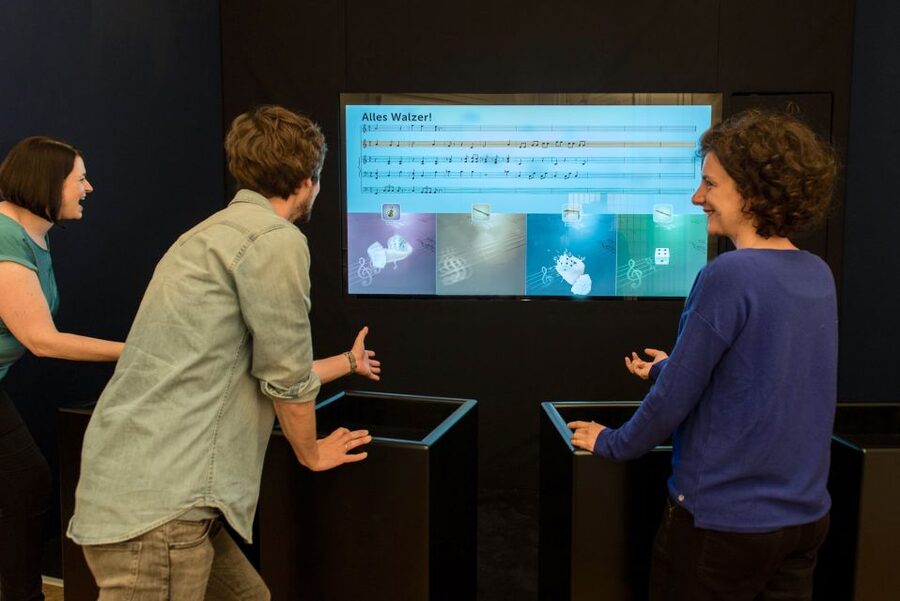
Two lighter activities add humor to the visit. With the Namadeus game, you can hear your own name as an original Mozart-style composition. It is a clever way to connect a familiar personal detail with the sound world of an eighteenth-century composer.
A certificate for Namadeus is not included, so check the additional cost if you want a printed keepsake. The game itself is part of the admission experience, but the certificate is an extra.
You can also compose your own waltz with a throw of the dice. This captures something important about Haus der Musik: you do not need to arrive with musical skills. The museum lets chance, rhythm, and simple choices do some of the work.
These activities are short, playful, and easy to fit between the more serious displays. They are also useful when a group has different interests. A music enthusiast can study Mahler, while a child creates a waltz and an adult tries the conducting challenge.
Temporary exhibitions in the inner courtyard
Along with the permanent floors, Haus der Musik presents temporary exhibitions in the inner courtyard. Their subjects can focus on famous musicians or music-history themes such as Viennese Modernism.
Because these displays change, the exact subject is not fixed. Check the current program if a temporary exhibition is important to your decision. The changing material gives repeat visitors a reason to return, while first-time visitors can treat it as an added bonus rather than the main purpose of the visit.
The courtyard setting also breaks up the climb through the museum. After the composer displays and sound experiments, a temporary show can offer a different pace and a fresh subject.
How much time should you allow?
The official ticket is valid for one day, but most people will use the museum as a half-day activity rather than remain from opening to closing. A focused visit can take a couple of hours. If you read the historical material, try many interactive displays, and spend time with the orchestra exhibits, four hours is realistic.
I would allow at least two hours if you are making a special trip. Less than that may feel rushed, especially if children want to repeat the interactive activities.
The museum works well on a rainy day, during a break from outdoor sightseeing, or as part of a central Vienna walking route. There are no transfers included, so you make your own way to Seilerstätte 30. Food and drinks are also not included, which is easy to manage because the museum sits in the city center.
Use the map at the entrance to plan your route. The free floor plans are available in the same languages at the ticket office, and the smartphone guide gives you another way to choose how much information you want.
Accessibility and practical details
Haus der Musik is wheelchair accessible. The main and side entrances have step-free access, automatic sliding doors, and wheelchair-accessible elevators. Wheelchair-accessible toilets are located in the inner courtyard and on the top floor.
A person accompanying a visitor with a visual impairment or a wheelchair enters free of charge. Children under three also enter free, and guide dogs are permitted.
The coat check is included, which is handy in colder months. Headphones are the main item to bring, especially if you want to use the audio content or smartphone guide without disturbing others.
The free e-guide is available in eight languages, and the children’s app is available in two. This helps families and international visitors choose material at a comfortable reading level, though you should have your own smartphone available for the guide.
Who will enjoy this museum most?
I would recommend Haus der Musik to classical-music fans, families, science-minded visitors, and anyone who wants more than a display case and a paragraph of text. You can approach the museum through composers, the orchestra, sound physics, or simple games.
It is also a good choice for adults who think music museums may feel dry. The interactive sections give the visit energy, while the historical floors provide enough substance for visitors who enjoy reading.
Very young children can take part, though their attention may center on the hands-on displays rather than the composer material. Older children and teenagers may get the most from the conducting challenge, sound experiments, and Namadeus game.
A visitor seeking a formal concert should choose an actual performance instead. Haus der Musik is a museum with musical listening experiences, not a substitute for a seat in a concert hall.
Is the $22 ticket good value?
At $22, the ticket is not a bargain if you plan only a short walk through the composer rooms. It becomes good value when you use the museum as a substantial activity and try the interactive exhibits across the four floors.
The strongest value comes from the range. One ticket covers orchestra history, major Viennese composers, sound science, instruments, the virtual conductor, the New Year’s Concert, and creative games. That variety means a family does not need to agree on one narrow subject.
The one-day validity also gives you flexibility. You can activate the ticket when it fits your schedule, though most people will likely complete the visit in one stretch.
Should you book Haus der Musik?
Book it if you want an active museum with enough depth for adults and enough play for children. The conducting challenge, sound laboratory, Mozart display, and waltz game give the visit memorable hooks, while the composer rooms and orchestra documents add real substance.
Skip it if you want only a traditional art museum or a live concert. Otherwise, $22 buys a useful few hours in central Vienna, particularly on a wet day or when your group includes both music lovers and reluctant museum-goers.
FAQ
Where is Haus der Musik located?
Haus der Musik is at Seilerstätte 30, 1010 Vienna, in the heart of the city.
How long is the ticket valid?
The ticket is valid for one day from first activation.
What is included with admission?
Admission, a museum map, coat check, and a free smartphone guide in eight languages are included. A children’s app is available in two languages.
Are food and drinks included?
No. Food and drinks are not included in the admission price.
Do I need to bring headphones?
Yes. Headphones are listed as an important item to bring, particularly for the audio and smartphone-guide features.
Can I conduct the Vienna Philharmonic?
Yes. The museum has an interactive activity where you test your conducting skills with the Vienna Philharmonic Orchestra.
Can I hear the Vienna Philharmonic’s New Year’s Concert?
Yes. The museum offers the Vienna Philharmonic’s New Year’s Concert in HD quality.
Is the Namadeus certificate included?
No. The Namadeus certificate is not included with admission.
Are children under three admitted free?
Yes. Children under three receive free admission.
Is the museum wheelchair accessible?
Yes. The main and side entrances have step-free access, automatic sliding doors, and automatic doors. Wheelchair-accessible elevators and toilets are available, and guide dogs are permitted.
Just added around Vienna
- Ottakringer Brewery tour★ 4.0 · 6 reviews
- New Hofburg Palace Tour House of Habsburg★ 4.5 · 5 reviews
- Private Van & Walk Tour – One Perfect Day in Vienna★ 5.0 · 21 reviews
- True Crime mobile puzzle rally Vienna★ 4.0 · 3 reviews
- Vienna Naschmarket Food Tasting Tour★ 4.0 · 30 reviews
- Vienna Nightlife Experience: Food, Wine, Cocktails & Vibes★ 5.0 · 119 reviews
- Myth Mozart★ 4.0 · 80 reviews
- ( Night Tour ) With Private Guide + wine or prosecco★ 4.0 · 12 reviews
Tickets, compared.
Classic Ensemble Vienna in St. Peter’s Church Ticket
Read our review →
Vienna Kunsthistorisches Museum Day Admission Ticket
Read our review →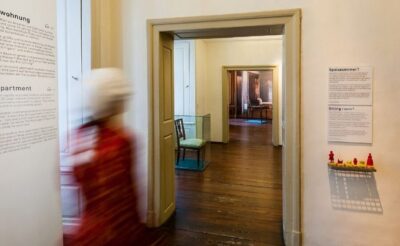
Tickets for Mozarthaus Vienna with Audio Guide
Read our review →
Skip-the-Line Entrance Ticket to the Danube Tower
Read our review →