
Reviewed · SELF-GUIDED TOURS
Vienna Spy Mission: Self-Guided Espionage Adventure
Vienna’s grand center becomes your game board on this self-guided spy mission. You follow clues from Rathaus to Karlskirche, solving 15 puzzles along the way while picking up short facts about some of the city’s best-known sights. I like the very low $7.14 price and the chance to set your own start time. I also like that the route works well for a private group, not a mixed tour with strangers.
The main catch is that this is a phone-based game, not a guided walk. GPS tracking can be confusing for children in the city center, so bring patience, keep your phone charged, and expect to do some problem-solving without a guide standing nearby.
Key points at a glance
- Fifteen puzzles on a central Vienna route: Clues lead you between major sights rather than keeping you in one small area.
- Start at Rathaus and finish at Karlskirche: The route connects Vienna’s grand civic, royal, religious, and cultural landmarks.
- A private group activity: Your family, friends, or colleagues play together without other participants joining your session.
- Pause and resume when you like: You can fit the game around meals, museum visits, or a changing sightseeing plan.
- Mobile access with offline flexibility: The quest is designed for phone use and can be played even without a connection.
- A low-cost introduction to the city center: At $7.14 per person, the value comes from the route and the group entertainment, not from museum admission or a live guide.
How the Vienna spy mission works
This experience turns a walk through central Vienna into a sequence of small missions. You receive a mobile access code, then use your phone to follow clues, answer riddles, and solve challenges at each location.
The advertised playing time is about 1 hour and 20 minutes. That is a reasonable target if you keep moving and solve the puzzles without long breaks. You should allow extra time if your group includes young children, if you stop for photos, or if you want to look closely at the buildings along the way.
I see the format as part walking tour, part scavenger hunt. You are not simply shown a sight and handed a long explanation. Instead, the game gives you a reason to look around, spot details, and discuss the next move with your group.
There is no live guide. That keeps the cost low and gives you privacy, but it also means the app must do the work. If you want a polished, flowing story told by a person, choose a conventional guided walk. If you like puzzles and want control over the pace, this format makes more sense.
The route is available from 5:00 AM to 9:00 PM, Monday through Sunday, during the stated operating period. An early start may offer quieter streets, while a later start lets you combine the game with a full day of sightseeing. Keep in mind that some sights may be closed or less active at the edges of those hours, even though the outdoor route itself is available.
A few more Vienna trips to weigh up
- Vienna: Tickets for Mozarthaus Vienna with Audio Guide
★ 4.2 · 2,344 reviews - Vienna: New Hofburg Palace Audio-Guided Tour & Entry Ticket
★ 4.1 · 566 reviews - Vienna: Schlumberger Wine Cellar Guided or Self-Guided Tour
★ 4.8 · 285 reviews
Rathaus: a strong starting point for the mission
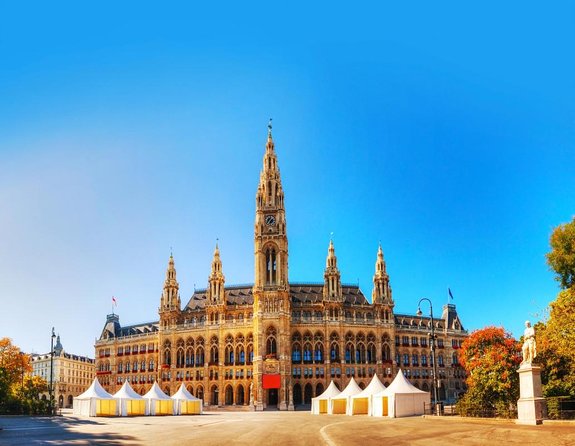
The game begins at Rathaus, Vienna’s grand city hall. You reach this first stop by following an opening clue and solving a puzzle. Once there, the game gives you the next instructions and adds information about the building.
Rathaus works well as a starting point because it immediately gives the route a sense of scale. You begin among imposing civic architecture rather than in a quiet side street. The stop itself is listed as about five minutes, with no admission charge.
Do not expect a full visit inside the building as part of the activity. The value here is the exterior setting, the opening challenge, and the way the game gets your group working together from the first few minutes.
This first puzzle also sets the tone. You need to read carefully, inspect your surroundings, and agree on an answer. For a family, that can be a good way to get children looking up from the phone. For adults, it gives the walk a clear purpose beyond following a guide through the city.
Burgtheater and the first stretch of Vienna’s grand center
From Rathaus, the clues take you toward Burgtheater. The stop is planned for about five minutes, and admission is not included.
Burgtheater is one of the city’s major cultural landmarks, so this part of the route keeps the focus on Vienna’s monumental center. The puzzle gives you a short task at the site, followed by information to help carry the story forward.
The short timing matters. You are not being asked to spend an hour at each attraction. Instead, the experience uses each stop as a checkpoint. That makes the game easy to fit between other plans, but it also means the cultural information will be brief.
If Burgtheater interests you as a theater or architectural site, treat this as an introduction rather than a full visit. You would need a separate ticket and separate time for any interior experience. The same basic rule applies to other paid attractions along the route.
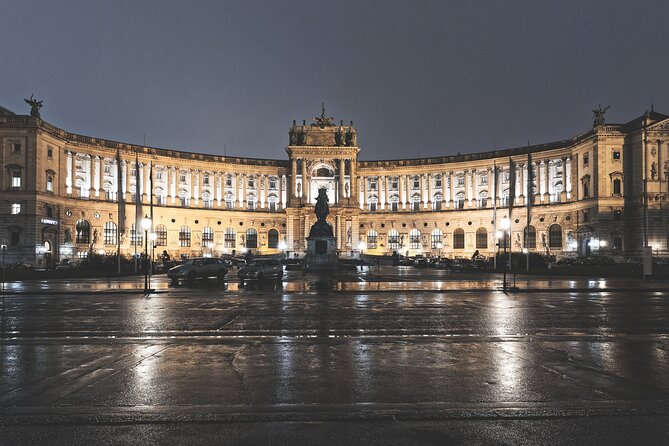
The Hofburg: royal setting, short game stop
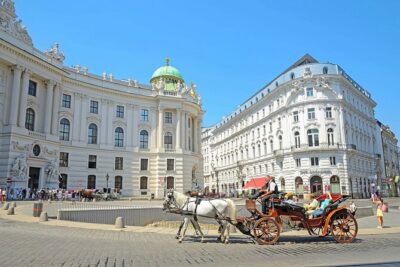
The route continues to the Hofburg, with roughly 10 minutes assigned to this stop. The game again leads you there through a clue, asks you to solve a challenge, and then provides directions for the next section.
The Hofburg gives the mission one of its most memorable settings. It is a large imperial complex in the heart of Vienna, and its many buildings and courtyards can make a good backdrop for a spy story. The game format suits the location because you are moving through an area associated with power, ceremony, and government.
The listed admission is not included. You should not read that as a promise of an indoor tour. The stop is best understood as an outdoor point on the route, with the puzzle and location doing most of the work.
I would give yourself a little extra time here if you enjoy architecture or want photos. The official stop time is short, but the Hofburg is too large to appreciate in a rushed glance. You can pause the game, look around, then resume when ready.
Same Alps, a completely different kind of day:
- Vienna: Vivaldi’s Four Seasons Concert in Karlskirche
★ 4.7 · 14,951 reviews - Vienna: Spanish Riding School Training
★ 3.9 · 9,281 reviews - Vienna: Skip-the-cashier-desk-line Giant Ferris Wheel Ride
★ 4.5 · 7,859 reviews - Vienna: Schönbrunn Palace & Gardens Skip-the-Line Tour
★ 4.7 · 7,739 reviews
Column of Pest and the shift toward the city’s old heart
The next named stop is the Column of Pest, planned for about five minutes and free to visit. As with the other checkpoints, a clue leads you there, and the puzzle tells you what to do next.
This stop adds a different kind of visual interest to the route. Instead of a huge palace or theater, you get a prominent monument in the historic center. The change helps keep the walk from feeling like a series of similar grand façades.
The game’s short facts can give the monument context, but do not expect a long historical lecture. If you want a detailed explanation of the plague column and its place in Vienna’s story, you will need a separate guidebook or tour. The mission’s job is to make you notice the site and connect it to the next challenge.
For groups, this is also the sort of stop where one person may spot a detail first while another works out the answer. That shared effort is a major part of the appeal.
St. Stephen’s Cathedral: the route’s most obvious landmark
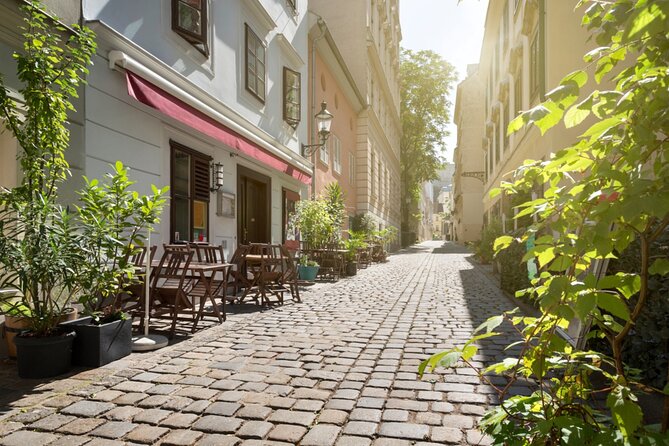
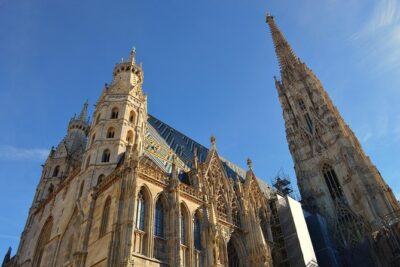
St. Stephen’s Cathedral is one of the clearest highlights. The stop takes about 10 minutes and is listed as free. The clue brings you to the cathedral, where you solve another puzzle and receive the next directions.
The cathedral gives the experience a strong visual center. Its distinctive roof and enormous Gothic form are hard to miss, and the surrounding streets put you in the middle of Vienna’s old center. Even if you have already planned to see it, arriving as part of a mission changes the way you approach it.
Again, the activity does not include a live explanation or an admission ticket for interior areas. You should think of the stop as a chance to see the cathedral from the outside, complete a challenge, and decide if you want to return later for a fuller visit.
This is one place where the GPS issue may matter. Dense central streets and large buildings can make phone positioning less exact. If the app seems unsure, stop in a safe spot, check the clue carefully, and use the visible landmark rather than relying only on the moving location marker.
Albertina: art, palace architecture, and a brief puzzle
The route then moves to Albertina, with about five minutes assigned to the stop. Admission is not included.
Albertina is a useful addition because it brings art into a route otherwise shaped by civic and royal buildings. The location also gives you another view of Vienna’s central architecture and connects naturally with the walk toward the opera district.
The short stop is enough for the challenge, but not for a museum visit. If you want to see Albertina’s exhibitions, plan that as a separate activity and allow much more time. The spy mission can help you locate the museum and add a playful reason to pause there, but it is not a substitute for admission or an art tour.
I like this kind of pairing. You can play the game in the morning, note the places that catch your interest, then return to one or two of them later with more time.
Vienna State Opera: a final major-city checkpoint
The Vienna State Opera is another five-minute stop. The app sends you there through a clue, then uses the setting for another puzzle before directing you onward. Admission is not included.
The opera house adds a grand cultural finish to the central portion of the route. It also gives you a practical marker for understanding how the sights fit together. Rathaus, Hofburg, St. Stephen’s Cathedral, Albertina, and the opera are not isolated attractions. This game links them into one walk.
As at Burgtheater, the stop does not include a performance, interior tour, or ticket. If you have an evening at the opera planned, you could use the game earlier in the day to get familiar with the area. Do not expect the puzzle to explain the full story of the building or its program.
The five-minute estimate is useful for planning, but your group may linger. Vienna’s center is full of places to stop for coffee, snacks, and photos, and the game can be paused to make room for those breaks.
Karlskirche: a clear finish at Karlsplatz
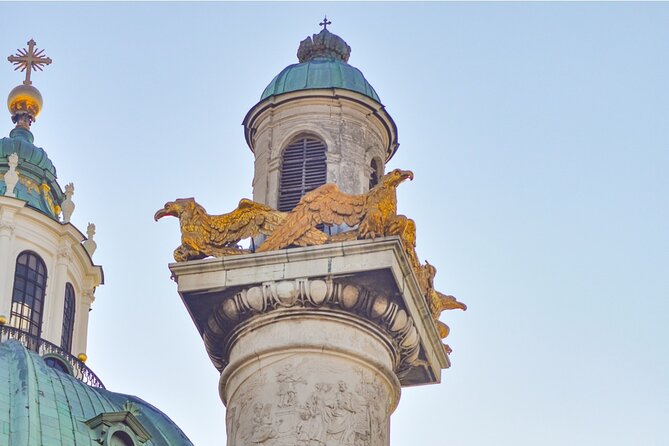
The final named stop is Karlskirche, at Karlsplatz 10. The activity ends here after another clue and puzzle, with about five minutes assigned to the church. Admission is free.
Ending at Karlskirche gives the route a satisfying change of scene. You finish away from the first civic buildings and palace sites, at one of Vienna’s most recognizable church settings. It also makes the endpoint easy to identify: Karlsplatz is a major city-center location.
The end point is useful for the rest of your day. You can stop the game here and continue sightseeing, take public transportation, or plan a meal nearby. The activity does not include a return to Rathaus, so make sure you understand that this is a point-to-point walk.
The itinerary includes a few unnamed puzzle sections between the major stops. That means the experience is not simply eight clues with long stretches of walking. There are additional challenges along the way, adding up to 15 puzzles in total.
What $7.14 buys you
At $7.14 per person, this is inexpensive for a private activity in central Vienna. The price covers the mobile access code, the 15 puzzle challenges, the storyline, and the ability to pause and resume. It does not cover a guide, museum tickets, transport, food, or other personal costs.
The best value comes when several people play together. A family or group of friends can share the same task, compare answers, and turn a normal sightseeing walk into a joint activity. Group discounts may improve the price further.
The value is less clear if you are traveling alone or if you mainly want detailed historical interpretation. A low-cost puzzle cannot provide the depth, flexibility of questions, or personal stories that a good local guide can offer.
Still, the route covers a lot of central Vienna for very little money. You are paying for a structured way to see the city, not for entry into its major attractions. That distinction is important when comparing this with a museum pass or guided walking tour.
Using your phone without letting it run the day
You receive a mobile access code at booking confirmation. The game is offered in English, and the experience can be played even without a connection, which is useful if your data service is limited or unreliable.
I would prepare before leaving:
- Charge the phone fully.
- Make sure every player knows which phone will control the game.
- Read each clue carefully before walking on.
- Pause at safe spots rather than trying to solve puzzles while crossing streets.
- Keep the route open as a shared group task instead of letting one person do all the work.
The GPS tracking can be a weak point, especially for children. Central Vienna has large buildings, crowded streets, and many similar-looking passages. If the tracking feels unclear, rely on the written clue and the landmark in front of you. The game is designed to continue without a constant connection, but that does not remove every phone or navigation problem.
Because this is a private activity, you can set the pace. You can stop for a snack, take a museum break, or pause when someone in your group needs rest. That flexibility is more useful than it may sound on a full day in Vienna.
Who will enjoy this most
This mission suits families with school-age children, friends who like riddles, and small work teams looking for a shared activity. It gives everyone a role, and the private format removes the pressure of keeping up with strangers.
It also works for first-time visitors who want a simple route through major central sights. You will see Rathaus, Burgtheater, Hofburg, the Column of Pest, St. Stephen’s Cathedral, Albertina, the State Opera, and Karlskirche in one connected outing.
You may prefer a different activity if you want a deep explanation of Vienna’s architecture, imperial past, museums, or music culture. The app provides storyline content and facts, but the experience is built around solving puzzles. You need to enjoy the game itself for the walk to feel worthwhile.
The route is accessible to most participants, is near public transportation, and allows service animals. It is also private, so your group can make decisions without coordinating with a larger party.
Booking, timing, and cancellation details
You can book for any day within the stated operating period, from Monday through Sunday. The advertised hours are 5:00 AM to 9:00 PM, and confirmation is provided at the time of booking.
Free cancellation is available if you cancel at least 24 hours before the local start time. Within 24 hours, you do not receive a refund, and changes made that late are not accepted.
No admission tickets are included for places where an entry fee may apply. The listed free stops are Rathaus, the Column of Pest, St. Stephen’s Cathedral, and Karlskirche. For Burgtheater, Hofburg, Albertina, and Vienna State Opera, admission is not included.
Should you book the Vienna Spy Mission?
I would book this for a family or friend group that wants a low-cost, playful way to walk through central Vienna. The route covers an impressive set of landmarks, the private format is convenient, and the ability to pause or play offline gives you control that a fixed walking tour cannot.
I would skip it if your main goal is expert commentary or indoor visits. You will need another tour, guidebook, or museum ticket for that.
At $7.14 per person, the decision is easy for puzzle-loving groups. Just treat it as a self-guided city game with historical stops, not as a full guided tour. Keep your expectations clear, allow more than 80 minutes if you want photos or breaks, and be ready to help the app when GPS gets fuzzy.
FAQ
Where does the Vienna Spy Mission start?
The experience starts at Rathaus in Vienna, Austria.
Where does the activity end?
The activity ends at Karlskirche, Karlsplatz 10, 1040 Wien, Austria.
How long does the experience take?
The estimated duration is about 1 hour and 20 minutes.
How many puzzles are included?
The experience includes 15 puzzle challenges.
What language is the activity offered in?
The activity is offered in English.
Is there a live tour guide?
No. This is a self-guided activity using a mobile access code.
Can I pause and resume the game?
Yes. The experience allows you to pause and resume whenever you like.
Can I play without an internet connection?
Yes. The game can be played even without a connection.
Is this a private activity?
Yes. Only your group participates.
What is the cancellation policy?
You can cancel for a full refund up to 24 hours before the experience start time. Cancellations or changes made within 24 hours are not refunded or accepted.
Just added around Vienna
- World War II History Vienna Old Town Private Walking Tour★ 4.8 · 9 reviews
- From Krems: Wachau Valley River Cruise on the Danube★ 4.6 · 95 reviews
- Vienna: Winery and Wine Tasting Tour with a Wine Expert★ 5.0 · 5 reviews
- Vienna: Wine Tasting E-Bike Tour★ 4.9 · 46 reviews
- Vienna: Wine Tasting at Schönbrunn Palace★ 4.3 · 71 reviews
- Vienna: Wine Tasting Tour★ 4.8 · 61 reviews
- Vienna: Wiener Schnitzel and Strudel Cooking Class★ 4.9 · 126 reviews
- Vienna Urban Art Tour: Explore a different side of Vienna!★ 3.8 · 14 reviews
Self-Guided Tours, compared.
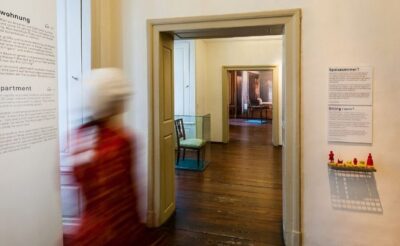
Tickets for Mozarthaus Vienna with Audio Guide
Read our review →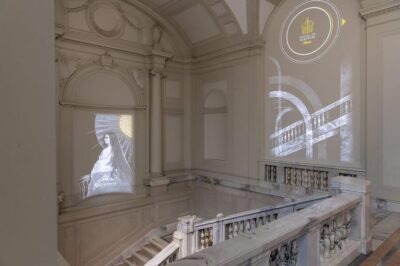
New Hofburg Palace Audio-Guided Tour & Entry Ticket
Read our review →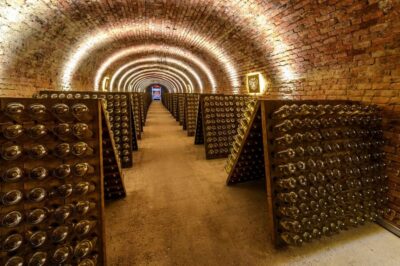
Schlumberger Wine Cellar Guided or Self-Guided Tour
Read our review →
Vienna Walking Tour with Audioguide on Your Smartphone
Read our review →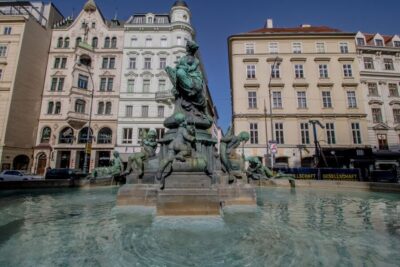
Browse the lists this tour appears in