Reviewed · TICKETS
Vienna House of Music Entrance Ticket
Vienna’s House of Music turns sound into something you can touch, shape, and play with. You can listen to the Vienna Philharmonic’s famous New Year’s Eve concert, create a sound creature in the Sonotopia Universe, and test your timing as a virtual conductor. It is more playful than a standard music museum.
I like the mix of serious musical history and hands-on experiments. I also like that children can take part without leaving adults with nothing to do. The main drawback is time: a quick 90-minute visit may feel rushed, especially when the interactive stations are busy in the afternoon.
Key things to know before you go
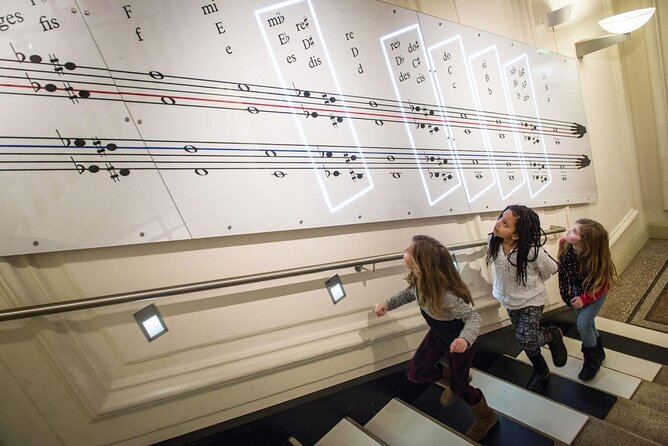
- Conduct a virtual orchestra: Wave a baton along with a Vienna Philharmonic performance and receive feedback on your conducting.
- Make a sound creature: The new Virtual Reality Sound Lab lets you create your own creature in the Sonotopia Universe.
- Meet Vienna’s great composers: Explore displays devoted to Mozart, Beethoven, Schubert, Mahler, and the Strauss family.
- Hear the science of sound: Interactive stations show how sound works, including how animals and an unborn baby may experience noise and music.
- Plan 90 minutes to two hours: You can move quickly, but the hands-on exhibits reward a slower visit.
- Use the free museum guide: Download the HdM Museums Guide for your smartphone, available in eight languages, with a family version in German and English.
Why the House of Music is different from a standard museum
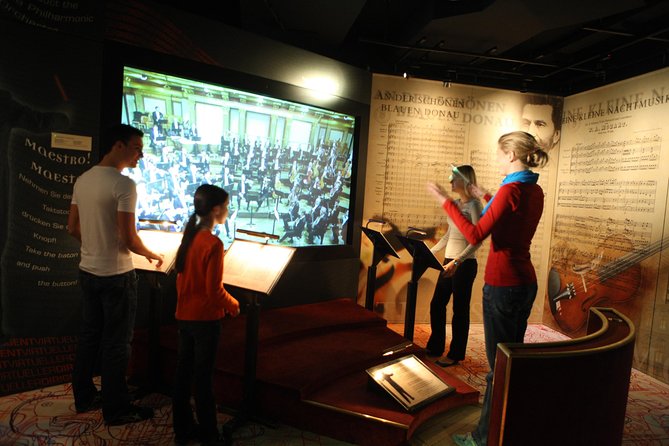
Vienna is full of grand concert halls, composer apartments, and formal museum rooms. The House of Music takes another route. It presents classical music through buttons, screens, movement, recorded sound, and playful experiments.
That makes it a useful stop when you want more than framed portraits and glass cases. The museum still gives proper attention to major composers and the Vienna Philharmonic, but it asks you to participate. You are not simply reading about music. You are testing rhythm, shaping sounds, and seeing how your own movements affect what you hear.
I especially like this balance. A child can enjoy the gadgets without already knowing who Mahler was, while an adult can spend time with composer material and musical archives. The museum also works well for mixed-age families because everyone can choose a different level of involvement.
The experience is self-guided. No tour guide is included, so you decide how long to stay at each station. English is offered, and the free smartphone guide adds support in eight languages. If you are visiting with children, the family version is available in German and English.
A few more Vienna trips to weigh up
- Vienna: Classic Ensemble Vienna in St. Peter’s Church Ticket
★ 4.7 · 4,819 reviews - Vienna Kunsthistorisches Museum Day Admission Ticket
★ 4.6 · 3,690 reviews - Vienna: Tickets for Mozarthaus Vienna with Audio Guide
★ 4.2 · 2,344 reviews
Start with the Vienna Philharmonic archives
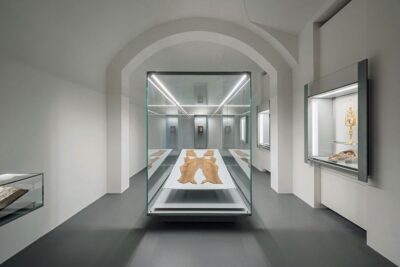
The museum’s early sections connect the House of Music to Vienna’s powerful classical tradition. One important area presents the historical archives of the Vienna Philharmonic, one of the city’s best-known musical institutions.
You can listen to the orchestra’s famous New Year’s Eve concert here. That detail gives the museum a strong sense of place. Vienna’s New Year concert is not an abstract piece of musical trivia. It is part of the city’s public identity, and hearing it within an exhibition about the orchestra helps connect the music to Vienna itself.
This section suits adults who want more context about the institution and its performances. It also gives you a calmer start before the more active exhibits upstairs. If you are mainly interested in hands-on displays, you may move through the archives quickly. If you enjoy orchestral music, allow extra time for listening.
Because the ticket lets you explore at leisure, you do not need to follow a fixed group schedule. That is helpful if one person wants to listen while another heads for the interactive stations.
Sonotopia Universe and the science of sound
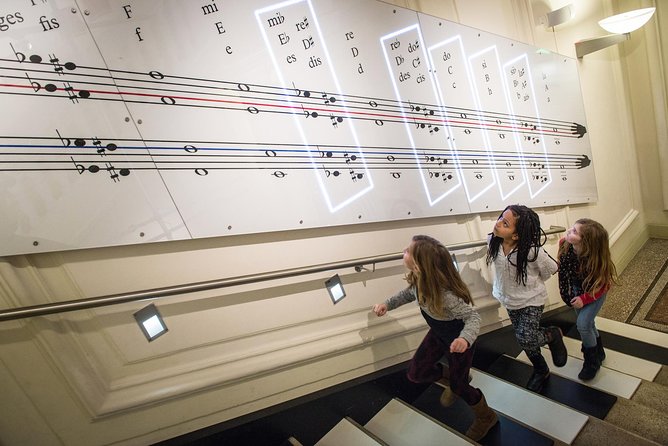
The second floor brings the museum’s most playful ideas together in the new Sonotopia Universe. Here, sound is treated as a physical and creative subject rather than only a form of music.
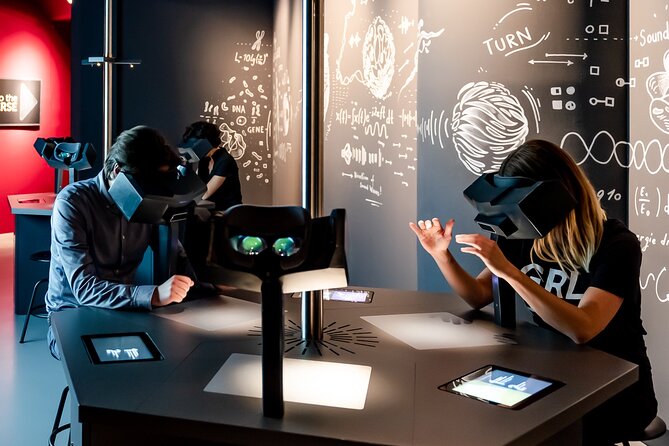
The Virtual Reality Sound Lab is a major draw. You can create your own sound creature, an activity that gives the idea of sound a visual and imaginative form. It is a good example of what makes this museum family-friendly: the exhibit begins with a simple invitation to play, then encourages you to think about how sound can be built and changed.
You will also find interactive stations focused on the physics of sound. These displays help explain how sound travels and how living beings experience it. One activity looks at the way animals or a fetus may hear noise and music. That subject gives the museum an educational edge without turning the visit into a classroom lecture.
I like this floor for first-time visitors who are unsure how much they care about classical music. You do not need a background in composition to enjoy experiments about hearing and sound. At the same time, the displays provide enough substance to keep the visit from feeling like a room of simple arcade games.
The main practical point is to allow time for each station. If the museum is busy, you may need to wait for an activity or return to it later. Afternoon crowds can make the interactive exhibits less relaxed, so morning is the smarter choice when your schedule allows.
Composer rooms for Mozart, Beethoven, Schubert, Mahler, and Strauss
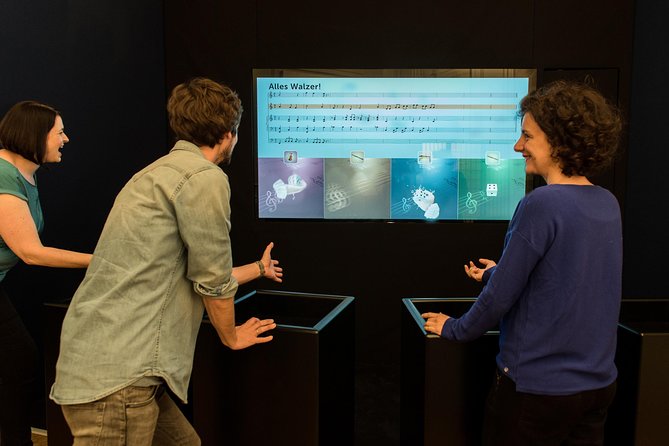
The third floor shifts attention from the mechanics of sound to the people who shaped Vienna’s musical reputation. Displays cover Beethoven, Mozart, Schubert, Mahler, and the Strauss family, with information about their lives in Vienna and the music they created.
This section gives the visit its traditional museum content. You can learn about the composers, see how their work connects with the city, and then return to a hands-on exhibit downstairs or upstairs. The composer rooms are not isolated from the rest of the museum. They form a bridge between historical information and active experimentation.
Mozart’s area may be the favorite for visitors who come with a particular composer in mind. The displays are designed with more than one way to learn, so you might read, listen, and interact rather than rely on text alone.
I would not plan the entire visit around composer biographies, however. The House of Music is not simply a museum of Mozart or Beethoven. Its strength comes from placing those figures beside exhibits about hearing, sound design, orchestras, and musical performance.
That mix also makes the museum useful before a classical concert. A visit can give you a little background before hearing Mozart, Vivaldi, or another composer in one of Vienna’s concert venues. It is not a substitute for a concert, but it can make the music feel less distant.
Same Alps, a completely different kind of day:
- Vienna: Vivaldi’s Four Seasons Concert in Karlskirche
★ 4.7 · 14,951 reviews - Vienna: Spanish Riding School Training
★ 3.9 · 9,281 reviews - Vienna: Skip-the-cashier-desk-line Giant Ferris Wheel Ride
★ 4.5 · 7,859 reviews - Vienna: Schönbrunn Palace & Gardens Skip-the-Line Tour
★ 4.7 · 7,739 reviews
The virtual conductor test on the fourth floor
The virtual conductor exhibit is the museum’s natural finale. You pick up a baton and conduct along with a video of the Vienna Philharmonic. The display then gives you feedback on your attempt.
This is more than a photo opportunity. It asks you to keep time and respond to an orchestra, which can be harder than it looks. Even if your performance is not ready for the Musikverein, the activity gives you a better sense of the conductor’s role.
The exhibit works for adults and children, and it is a good shared activity for couples or families. You can take turns, compare results, and learn quickly that waving a baton with confidence is not the same as controlling an orchestra.
Another interactive activity lets you use hand movements to create a musical motif displayed on the ceiling. It has a social quality that suits the House of Music well, since both adults and children can take part. This is one of the exhibits where the museum feels particularly inventive without losing its musical purpose.
Allow extra time on the fourth floor if conducting appeals to you. A short visit can become much longer when you decide to try the activity again.
How long should you allow?
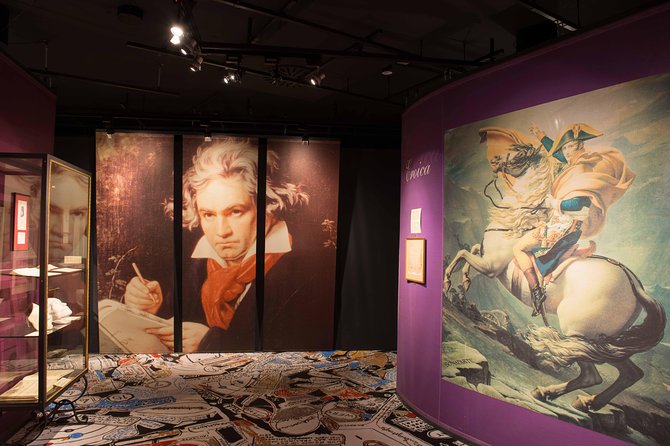
The stated visit time is about 90 minutes to two hours. I consider two hours the better target if you want to try the interactive displays, spend time with the composer rooms, and listen to archive recordings.
A 90-minute visit can work if you focus on highlights. You might begin with the sound experiments, visit one or two composer areas, and finish with the virtual conductor. That plan gives you the main flavor of the museum, but you will not have time to linger everywhere.
Families should allow the full two hours. Children often need more time at an exhibit than adults expect, particularly when a station responds to movement or produces a visible result. The museum is easy to enjoy at a quick pace, but its best features encourage repeat attempts.
Morning is the practical choice if you want a quieter visit. The museum is open daily from 10 a.m. to 10 p.m. during the stated regular period. On December 24, the listed hours are 10 a.m. to 6 p.m., while December 25 through December 31 are listed as 10 a.m. to 10 p.m. Check the hours for your exact date before setting your plans.
Is the $22.93 ticket good value?
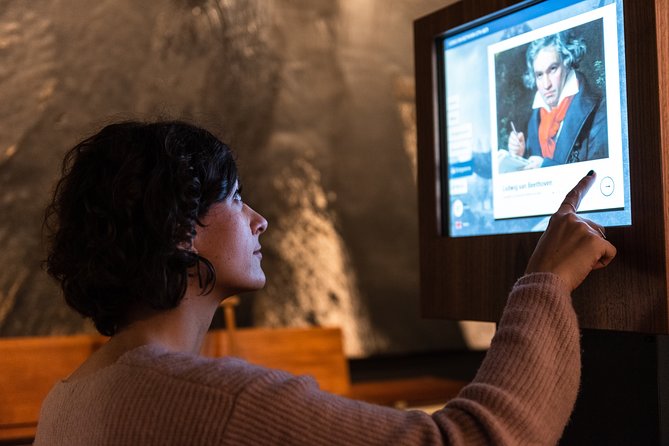
At $22.93 per person, this is not a throwaway museum stop. The value depends on how actively you use it.
If you only walk through the composer rooms and leave after an hour, the price may feel high compared with a small traditional museum. But if you spend close to two hours using the sound stations, visiting the archives, trying the VR Sound Lab, and conducting the virtual orchestra, the ticket pays for a substantial indoor activity.
The self-guided format also helps. You are not paying for a fixed tour that ends before you are ready. You can set your own pace, pause for a longer listening session, or move quickly through material that does not interest you.
I think the ticket makes the most sense for families, music lovers, and anyone looking for an indoor attraction that is more active than a gallery. It is also a sensible choice before a concert because the composer rooms and Philharmonic material provide useful context.
The museum is less compelling for someone who wants a quiet, specialist archive or a formal scholarly presentation. Its approach is accessible and technology-focused. That is the point, but it will not suit every taste.
Getting there and planning your visit
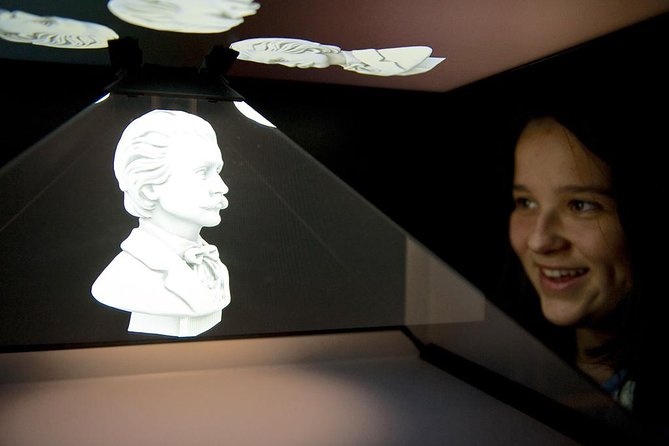
The House of Music is in central Vienna and near public transportation. Hotel pickup and drop-off are not included, so you make your own way to the museum. Since the attraction is centrally located, it can fit into a day of sightseeing without requiring a separate excursion.
The ticket is an admission ticket, not a guided tour. Download the HdM Museums Guide before or during your visit if you want extra help. It is offered in eight languages, and the family version is available in German and English.
Service animals are allowed, and most people can take part. The supplied information does not give detailed measurements for every exhibit or a full accessibility guide, so contact the House of Music if you need specific arrangements.
Food and drinks are not included. Plan to eat before or after your visit rather than expecting a museum meal as part of the ticket.
Who will enjoy this most?
I would recommend the House of Music to parents who want a cultural stop that children can actually use. The activities give younger visitors a reason to stay engaged, while the composer rooms and Philharmonic archives give adults plenty of substance.
It also suits couples and solo visitors who like music but do not want to commit to a concert lasting an entire evening. You can spend 90 minutes here, or stay close to two hours if the exhibits catch your attention.
Classical music newcomers are welcome. You do not need to identify every composer or understand orchestral theory to enjoy the museum. The sound experiments provide an easy entry point, and the historical displays add depth as you go.
Serious classical music fans will find worthwhile material in the archives and composer areas, though the museum’s playful technology may feel more important than its scholarly detail. Think of it as an introduction and an experience, not a specialist research collection.
Cancellation and booking flexibility
You receive confirmation at booking, and free cancellation is available up to 24 hours before the experience start time for a full refund. Cancellations or changes made less than 24 hours before the start time are not accepted for a refund. The cut-off follows local Vienna time.
The experience is booked, on average, 21 days ahead. That does not mean you must plan three weeks in advance, but it suggests that reserving early can help if your Vienna dates are fixed, particularly during busy periods.
Should you book the House of Music?
Book it if you want a hands-on museum that explains music through sound, movement, technology, and Vienna’s composers. The virtual conductor, VR sound creature, Philharmonic archives, and composer displays give you several distinct reasons to visit.
I would book a morning slot when possible, especially if you are bringing children or want time at the interactive stations. Allow two hours rather than trying to squeeze the museum into a rushed gap.
Skip it if you are seeking only original manuscripts, a quiet historical collection, or a guided lecture. For most visitors, though, the $22.93 admission offers good value because it combines education with genuine play. It is one of Vienna’s better choices when you want culture that invites you to participate.
FAQ
How long does a visit to the House of Music take?
Plan for approximately 90 minutes to two hours. You can see the main areas in less time, but the interactive stations and virtual conductor exhibit are worth extra time.
Is a guide included with the ticket?
No guide is included. You can download the free HdM Museums Guide to your smartphone. It is available in eight languages, with a family version in German and English.
Is the House of Music available in English?
Yes. The experience is offered in English, and the smartphone museum guide is available in eight languages.
What composers are covered at the museum?
The composer displays include Beethoven, Mozart, Schubert, Mahler, and the Strauss family. They cover the musicians’ lives in Vienna and the music they created.
What are the museum’s opening hours?
The listed regular hours are 10 a.m. to 10 p.m., Monday through Sunday. On December 24, the listed hours are 10 a.m. to 6 p.m. December 25 through December 31 are listed as 10 a.m. to 10 p.m.
Can I cancel the ticket for a refund?
Yes. You can cancel up to 24 hours before the experience start time for a full refund. Changes or cancellations made less than 24 hours before the start time are not accepted for a refund.
Just added around Vienna
- Ottakringer Brewery tour★ 4.0 · 6 reviews
- New Hofburg Palace Tour House of Habsburg★ 4.5 · 5 reviews
- Private Van & Walk Tour – One Perfect Day in Vienna★ 5.0 · 21 reviews
- True Crime mobile puzzle rally Vienna★ 4.0 · 3 reviews
- Vienna Naschmarket Food Tasting Tour★ 4.0 · 30 reviews
- Vienna Nightlife Experience: Food, Wine, Cocktails & Vibes★ 5.0 · 119 reviews
- Myth Mozart★ 4.0 · 80 reviews
- ( Night Tour ) With Private Guide + wine or prosecco★ 4.0 · 12 reviews
Tickets, compared.

Classic Ensemble Vienna in St. Peter’s Church Ticket
Read our review →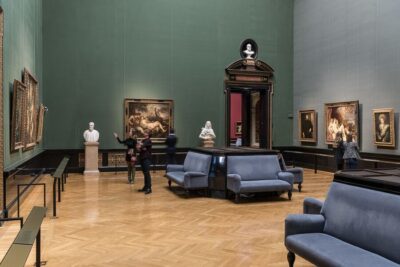
Vienna Kunsthistorisches Museum Day Admission Ticket
Read our review →
Tickets for Mozarthaus Vienna with Audio Guide
Read our review →
Skip-the-Line Entrance Ticket to the Danube Tower
Read our review →