
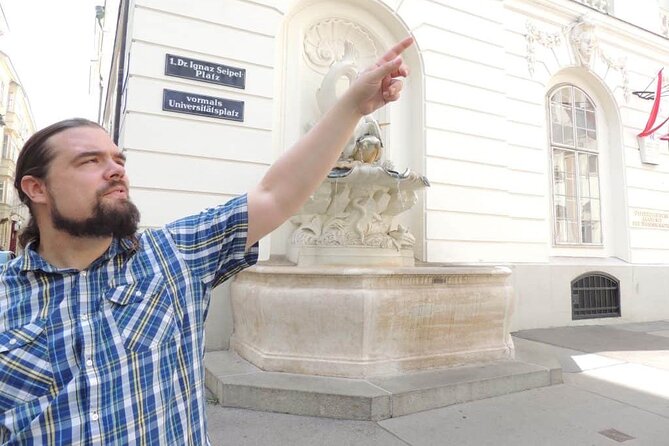
Reviewed · CITY TOURS
Terrible crimes in Vienna, hidden secrets of the inner city
Vienna’s polished streets hide stories of murder, torture, espionage, and political violence. This offbeat walk takes you from the Capuchin monastery to St. Stephen’s Cathedral, showing how crime and punishment shaped the city behind its grand facades. I like the way guide Ben connects each case to its time period, and I like that the route visits old walls and overlooked corners you could easily miss.
The tour also gives you a fresh way to read Vienna’s center. The Jaroszynski murder, the Lucona insurance conspiracy, Colonel Redl’s spy scandal, and the 1848 lynching of a war minister reveal a city far less tidy than its imperial image. The main drawback is the subject matter: several stories involve brutal killings, torture, executions, and dismemberment, so this is better for adults and mature teens than young children.
Key points to know before booking
- Fourteen crime sites in about two hours: The walk covers a large section of Vienna’s first district, from Albertina to Rauhensteingasse.
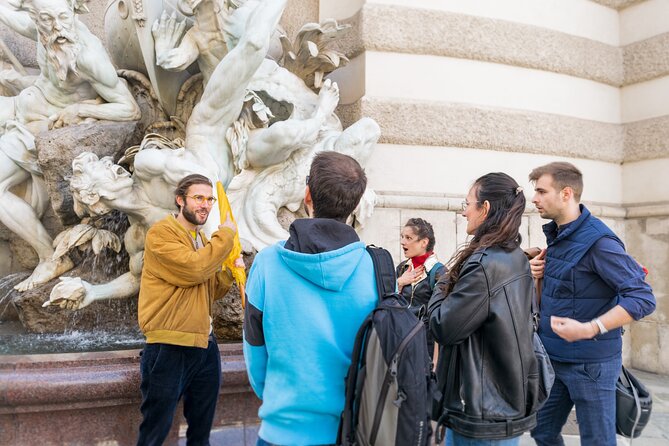
- Guide Ben leads the storytelling: He has researched the cases himself and adds linking stories between the main stops.
- The city becomes part of the evidence: Palaces, fountains, former hotels, church sites, old walls, and narrow streets all carry a story.
- The cases span centuries: You move from medieval punishment and witch trials to 19th-century murder and 20th-century espionage.
- A complimentary smartphone audio guide is included: Bring a charged phone if you want to use it.
- The price is $46.13 per person: That is a fair rate if you value focused storytelling and unusual city history, though the walk does not include paid admissions.
Why Vienna’s dark side makes a good walking tour
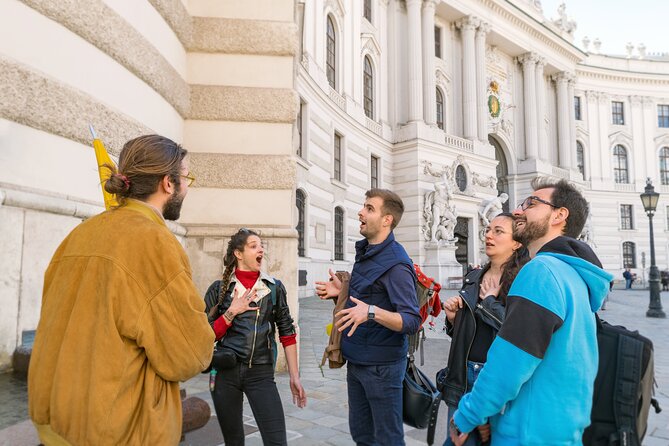
I like this tour because it does not treat crime as a string of isolated shock stories. The cases show how Vienna handled fear, jealousy, debt, political unrest, religious pressure, and public punishment at different points in its past.
You begin at Helmut-Zilk-Platz, beside the Albertina, and end at Rauhensteingasse. That makes the route useful beyond the stories themselves. You cross a large part of the inner city, moving through streets and squares that many first-time visitors pass without knowing what once happened there.
The route is also a lesson in scale. Vienna’s center is compact, but 14 stops in two hours means the pace must be steady. You will spend roughly five to 15 minutes at each location, with short walks between them. The supplied timing for the individual stops adds up to more than two hours, so treat the duration as approximate and expect the guide to adjust the length of each explanation.
The tour is offered in English and accepts a maximum of 20 people. That is small enough for a better chance of hearing the guide, though it is not the same as a private walk. One booking response describes a private tour, but the stated group limit is 20, so you should not assume a private experience unless your booking specifically confirms it.
A few more Vienna trips to weigh up
- Vienna: Guided Walking Tour of City Center Highlights
★ 4.7 · 4,989 reviews - Vienna: City Cruise with Optional Lunch
★ 3.4 · 3,982 reviews - Vienna: City Cruise
★ 3.3 · 2,978 reviews
Capuchin monastery and the dungeons at Tegetthoffstraße
The first stop, at Tegetthoffstraße 2, introduces one of the tour’s oddest stories. Father Innocentius discovered a dungeon beneath the Capuchin monastery where monks had sometimes been locked away for years or even decades.
The reasons for confinement could be startlingly minor. Unauthorized afternoon walks and one reported abuse of a monastery official were among the alleged causes. Father Innocentius brought the dungeon to Emperor Joseph II, who ordered it closed and sent the priest to Lviv for his own safety.
His later life sounds like a separate adventure. He became Protestant, joined the Freemasons, and advised the tsar. I like this opening because it sets the tone: the walk is not only about bloodshed. It is also about institutions, secrecy, and people who challenged authority.
Trattnerhof and a ruined actress
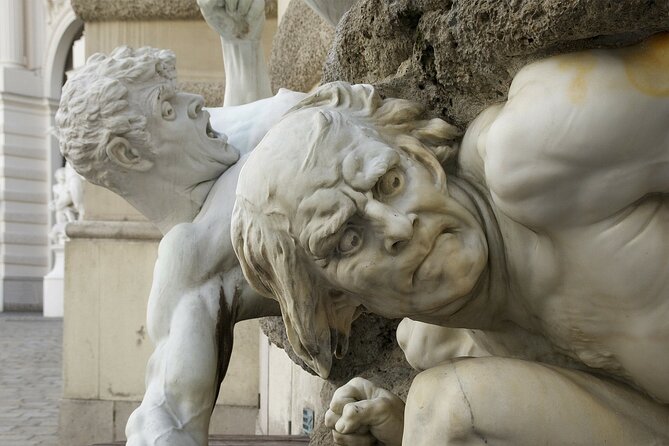
At Trattnerhof, you hear about the Jaroszynski murder case and its connection to actress Therese Krones. Krones had little to do with the crime, yet her association with the case damaged her career.
The public story blamed her expensive tastes. The more grounded explanation was that Jaroszynski was addicted to gambling and deeply in debt. This is a useful reminder that famous crimes often gather convenient rumors around them, especially when a well-known woman can be made part of the tale.
For you, this stop adds a social angle to the tour. It shows how reputation could be destroyed without a person being responsible for the crime itself.
Palais Bathory and the blood countess legend
At Augustinerstraße 12, the former Palais Bathory, the subject shifts to Elisabeth Bathory. She is remembered as the blood countess, accused of murdering more than 600 young women and bathing in their blood to preserve her youth.
The story has long been treated as one of Europe’s most frightening serial-killer legends. It has also been challenged as the result of a violent political plot against a powerful countess. The tour presents that uncertainty as part of the attraction.
That makes the stop more interesting than a simple tale of evil. You are asked to consider how accusations were used against a noblewoman and how a legend grows over time. The palace setting helps connect private crime with aristocratic power.
Same Alps, a completely different kind of day:
- Vienna: Vivaldi’s Four Seasons Concert in Karlskirche
★ 4.7 · 14,951 reviews - Vienna: Spanish Riding School Training
★ 3.9 · 9,281 reviews - Vienna: Skip-the-cashier-desk-line Giant Ferris Wheel Ride
★ 4.5 · 7,859 reviews - Vienna: Schönbrunn Palace & Gardens Skip-the-Line Tour
★ 4.7 · 7,739 reviews
Graben, Kohlmarkt, and the Lucona affair
Near Graben and Kohlmarkt, the story becomes modern. The location is associated with Demel, where Udo Proksch was an authorized signatory in the 1970s. The Lucona affair was planned there.
The scheme involved a heavily overinsured freighter chartered for Asia, with an explosive charge hidden aboard. The result was mass murder and major insurance fraud. The investigation took years because Proksch had contacts in many directions.
This is one of the strongest stops for anyone who thinks crime tours are only about old murders. The case shows how money, influence, and social connections can delay justice. It also gives you a sharp contrast with the medieval and imperial stories earlier in the walk.
Herrengasse and Vienna’s most notorious mass murder
At Ferstel Palace on Herrengasse, you learn about the former house called Zu den Fünf Morden, the site of a notorious medieval mass killing. Five people were murdered, including a seven-year-old child.
The punishment was impalement, chosen because the crime was considered exceptionally terrible. The execution itself lasted a long time because the executioner had little experience with that method.
This is grim material, and the guide does not soften the cruelty of medieval justice. Still, the stop helps explain how public punishment worked. The penalty was meant not only to kill the offender but also to send a message to everyone nearby.
Hotel Klomser and the Colonel Redl spy scandal
Across from Palais Ferstel, the former Hotel Klomser marks the end of Colonel Alfred Redl’s suicide and one of the monarchy’s greatest spy scandals. Redl’s espionage activities damaged the reputation of the army and exposed the weakness of the underfunded Evidenzbureau, the empire’s secret service.
The affair may also have played a role in the tensions that led to the First World War. That claim deserves careful treatment, but the wider point is clear: a spy scandal can reveal weaknesses far beyond one person.
I especially like this stop because it widens the tour from personal crime to state failure. Vienna’s darker past includes not only killers and victims but also institutions that hid mistakes until they became dangerous.
Molker Bastei and the Anna Gaugisch murder
At Molker Bastei, the story concerns Anna Gaugisch, who was dismembered by her boyfriend Raimund Lewisch in 1861. Some body parts were found in the Danube, while others were discovered in the nearby forge.
Lewisch wanted to remove a pregnant woman who had become an inconvenience to him. Before the murder, other blacksmiths had noticed him dissecting a cat, an unsettling warning that did not prevent the later crime.
This stop is among the most graphic. If you dislike detailed accounts of violence, you may find the walk too intense. The location, however, shows how old trades and city spaces could become part of a crime story.
Am Hof and the killing of a war minister
At Am Hof, the tour covers the lynching of Theodor Baillet de Latour during the revolutionary upheavals of 1848. It was one of Vienna’s rare cases of political violence and helped begin the October Revolution, the final and more violent phase of that year’s unrest.
The civil arsenal stood in the same area and was looted during the revolution. That physical connection matters. You are not hearing about unrest in some distant part of town. You are standing where political anger, weapons, and crowd violence met.
This is a valuable history stop even if you are less interested in true crime. It explains how Vienna’s streets became a battleground between public rage and imperial authority.
Hannaken Fountain and a surgeon who created injuries
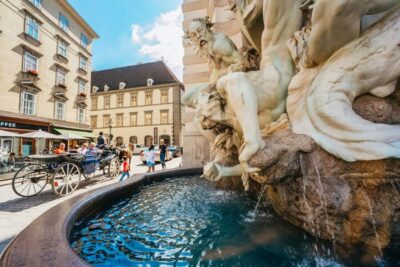
The Hannaken Fountain presents a bizarre case of medical fraud. The Hannaken were a Moravian minority whose members often came to Vienna for work. The fountain shows two men carrying an injured companion to the Hannakenkönig, or Hannaken king.
According to the story, this surgeon created broken bones to improve business. He set traps that caused people to trip, then treated the injuries himself.
The fountain gives the tale a visual anchor. You can look at the sculpture while hearing how a public service could be twisted into personal profit. It is one of the lighter stops in tone, though the idea of deliberately causing injuries remains disturbing.
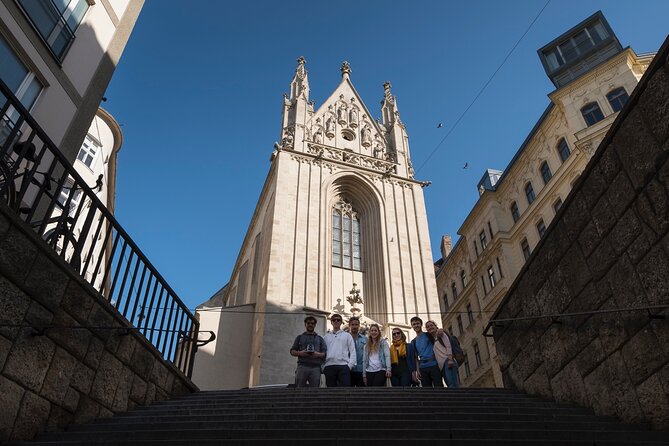
Maria Am Gestade and the last wheeling in Vienna
At Maria Am Gestade, a section of the city wall marks the Zahlheim case and the last use of wheeling in Vienna. This was a brutal death penalty for murderers. The condemned person was broken on a wheel, a punishment that had already disappeared in many countries by that time.
The case is especially striking because it occurred under Joseph II, who generally opposed capital punishment. The facts forced him to make an exception.
This stop lets you compare Vienna’s reforming image with the cruelty of its justice system. It also shows why a city wall matters on a walking tour: the site is not just scenery but a physical reminder of an older legal order.
Hoher Markt and jealousy taken to madness
At Hoher Markt, you hear about Thekla Riener, whom her husband Anton Grünborn tortured with instruments from the courthouse. He believed she had a lover, but the lover did not exist.
His jealousy drove a series of irrational acts and ended with him accidentally killing her. Her parents later became insane.
The case is painful because the violence grew from an imagined betrayal rather than a real one. It is also a reminder that historical crime records often reveal domestic abuse, obsession, and mental collapse in raw form.
St. Stephen’s Cathedral and the baker’s punishment
Near St. Stephen’s Cathedral, the subject changes to the supposed standard bread loaf of medieval Vienna. The legend says the city used it to check whether bakers were selling underweight bread.
The more reliable part of the story is the punishment for bad baking. Bakers could be placed in a cage and dipped into the Danube several times. Similar public punishments existed in English-speaking countries for women involved in disputes.
This is a good pause in the route because it deals with everyday regulation rather than murder. It shows how authorities used humiliation and physical pain to enforce standards, and how easily a practical city rule can become a colorful legend.
Steffl and Vienna’s witch trial
At Steffl, the former Malefizspitzbubenhaus once held the executioner’s apartment and a dungeon. It was also where the Plainacher was imprisoned and tortured.
She was accused of bewitching her epileptic granddaughter and summoning demons. Vienna did not commonly conduct witch persecutions, but public pressure pushed the city judge to act.
This story is useful because it complicates the idea that witch trials were equally common everywhere. Here, the unusual case appears tied to fear and pressure rather than a routine city policy.
Himmelpfortgasse and a medieval family feud
At Himmelpfortgasse, the former Himmelpfort monastery recalls a woman walled in during 1319 because she refused to give up the man she loved. Her father opposed the relationship and forced her into monastic life.
The situation resembles a Viennese version of Romeo and Juliet, with rival families and children caught between them. When the mayor’s son asked for Anna’s hand, her father chose confinement over agreement.
This is a short stop, but it ends the story portion on a human note. Not every crime here is a public massacre. Some are private acts of control carried out under the cover of family honor.
Price, pace, and practical value
At $46.13 per person, I consider this a reasonable price for a two-hour specialist walk in central Vienna. You are paying for research, structure, and a guide who can turn ordinary addresses into connected stories. All stops are viewed from public locations, so there are no admission costs to add.
The value depends on your interests. If you already plan to visit the Vienna Crime Museum, this walk would pair well with it. The museum can give you objects and displays, while the walk places crime stories in the streets where the city developed.
The complimentary smartphone audio guide is another useful feature, though the live guide is the main reason to book. I would bring a charged phone and headphones if you want to use the audio material, but the supplied details do not explain exactly when or how it is used.
The meeting point is Helmut-Zilk-Platz at Albertinaplatz 2-3 in the first district. The walk ends at Rauhensteingasse, also in the first district. The starting area is near public transportation, and most people can participate. Since the activity requires good weather, carry rain protection or check the conditions before setting out.
Free cancellation is available if you cancel at least 24 hours before the start time. A cancellation inside that period is not refundable. If poor weather or too few bookings cause the operator to cancel, you are offered another date or experience, or a full refund.
Who should book this Vienna crime walk?
I would choose this tour if you enjoy true crime, unusual history, old city architecture, or stories about how governments punish people. It is also a smart choice for someone who has already seen Vienna’s palaces and wants a different way to understand the first district.
Guide Ben is named in the tour material and is described as doing his own research, telling connecting stories between the main sites, and adding material beyond the headline cases. That matters because the route includes many short stops. Good transitions keep the walk from feeling like a list of unrelated crimes.
I would skip it for very young children or anyone who wants a light sightseeing stroll. Murder, torture, executions, rape-related violence, dismemberment, and witch-trial accusations are part of the content. The walk also requires attention while moving through the city, so it is not a relaxed café-and-palace tour.
Should you book it?
Book this walk if you want Vienna beyond its imperial shine. Its best feature is the way crime stories reveal the city’s social and political changes, from monastery discipline and medieval punishment to gambling debt, insurance fraud, espionage, and revolution.
The $46.13 price is easiest to justify if you enjoy guided storytelling and plan to explore the inner city anyway. You will not enter major paid attractions, but you will gain an unusual route through places you might otherwise pass without a second thought.
If the subject matter suits you, I think this is a memorable two-hour addition to a Vienna visit. If you prefer art, music, or cheerful café history, choose another walking tour.
FAQ
Where does the tour start?
It starts at Helmut-Zilk-Platz, Albertinaplatz 2-3, 1010 Vienna, Austria.
Where does the tour end?
The walk ends at Rauhensteingasse in Vienna’s first district.
How long does the experience last?
The stated duration is approximately two hours.
What language is the tour offered in?
The tour is offered in English.
Is an audio guide included?
Yes. A complimentary smartphone audio guide is included.
How many people can join the tour?
The tour has a maximum group size of 20 people.
Can I cancel for a refund?
You can cancel at least 24 hours before the experience for a full refund. Cancellations made less than 24 hours before the start time are not refunded.
Just added around Vienna
- World War II History Vienna Old Town Private Walking Tour★ 4.8 · 9 reviews
- From Krems: Wachau Valley River Cruise on the Danube★ 4.6 · 95 reviews
- Vienna: Winery and Wine Tasting Tour with a Wine Expert★ 5.0 · 5 reviews
- Vienna: Wine Tasting E-Bike Tour★ 4.9 · 46 reviews
- Vienna: Wine Tasting at Schönbrunn Palace★ 4.3 · 71 reviews
- Vienna: Wine Tasting Tour★ 4.8 · 61 reviews
- Vienna: Wiener Schnitzel and Strudel Cooking Class★ 4.9 · 126 reviews
- Vienna: Concert by the Vienna Baroque Orchestra★ 4.6 · 56 reviews
City Tours, compared.
Guided Walking Tour of City Center Highlights
Read our review →
Guided Walking Tour of City Highlights & Hidden Gems
Read our review →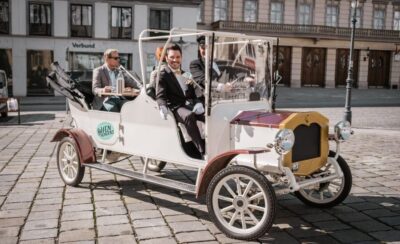
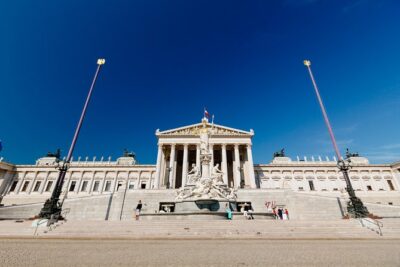
Skip-the-Line Schonbrunn Palace Guided Tour and Vienna Historical City Tour
Read our review →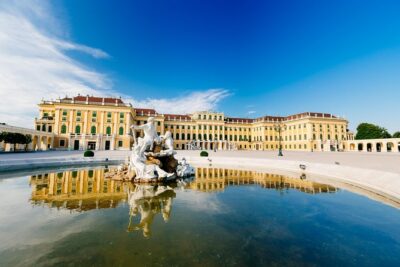
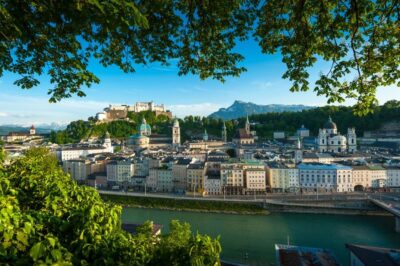
Browse the lists this tour appears in