Reviewed · TICKETS
Mozarthaus Vienna Admission Ticket
Mozart wrote some of his finest music in the Vienna apartment preserved at Mozarthaus Vienna. From 1784 to 1787, he lived here with his family, composed The Marriage of Figaro, and wrote three of his six Haydn Quartets. The apartment is the heart of the visit, since it is the largest and most elegant home Mozart ever occupied and the only one still intact.
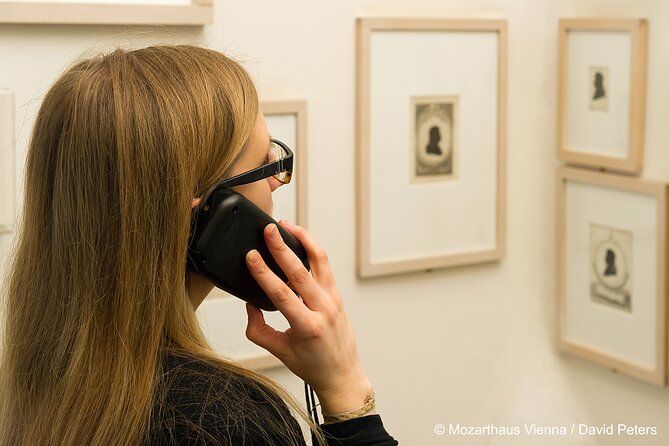
I like the clear three-floor layout and the freedom to move at your own pace. I also like the audio guide, offered in 13 languages for adults and 8 for children, because it gives the rooms and documents a useful human story. The main caution is that this is not a fully furnished time capsule. There are few original objects, with copies, reconstructions, and modern displays doing much of the work.
Key points to know before you go
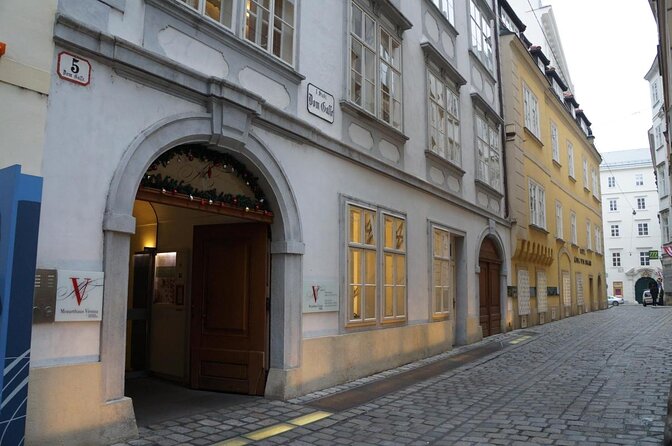
- Mozart’s 1784 to 1787 apartment: See the rooms where he lived during a major period of creative success.
- Three floors of context: The exhibition covers Mozart’s personal life, social world, colleagues, and operatic partnerships.
- Self-guided audio tour: Listen in your choice of 13 adult languages or 8 children’s languages.
- Near St. Stephen’s Cathedral: The museum is close to one of Vienna’s easiest central landmarks to find.
- Plan on one to two hours: You can move quickly in about an hour, but music lovers may want the full two.
- Good value for focused interest: At $19.27 per person, the ticket makes the most sense if Mozart or classical music is already part of your Vienna plans.
Why Mozart’s Vienna apartment matters
Mozart’s Vienna years were not simply another stop in a short touring career. They were the period when his work, social life, and professional ambitions came together. He lived at Mozarthaus from 1784 to 1787, when he was an established composer working in one of Europe’s great musical capitals.
The apartment gives you a physical link to that period. You are not just looking at a portrait or a case of manuscripts. You are walking through the one Mozart residence that remains intact, at least in terms of the building and its surviving layout. That distinction matters because many historic composer homes are later reconstructions or places associated with a brief visit.
This was also Mozart’s largest, most elegant, and most expensive apartment. That detail helps correct the familiar image of Mozart as a struggling genius in cramped rooms. He could live well in Vienna when his career was going well, and the apartment reflects that more successful chapter.
At the same time, you should set your expectations carefully. The rooms do not appear as a fully restored set from Mozart’s day, with every chair and instrument in its original position. Some period furniture and reproductions help establish the setting, but the museum relies heavily on written material, audio, images, and modern exhibition design.
A few more Vienna trips to weigh up
- Vienna: Classic Ensemble Vienna in St. Peter’s Church Ticket
★ 4.7 · 4,819 reviews - Vienna Kunsthistorisches Museum Day Admission Ticket
★ 4.6 · 3,690 reviews - Vienna: Tickets for Mozarthaus Vienna with Audio Guide
★ 4.2 · 2,344 reviews
The first floor: Mozart’s actual apartment
Begin with the first floor, where Mozart’s apartment forms the main attraction. This is the part I would prioritize if your time is short. It connects the composer’s daily surroundings with the major works he produced there.
The apartment is especially meaningful because Mozart composed more music in this home than anywhere else. The Marriage of Figaro is the obvious highlight, but the three Haydn Quartets add another layer. You are seeing the setting connected to both opera and chamber music, two different sides of Mozart’s work.
The rooms are not presented as a perfect theatrical recreation, and that can disappoint anyone expecting a polished period interior. Still, the building itself gives the visit weight. You can pause by the windows, consider the city Mozart saw, and picture this as a working home rather than a shrine assembled only for modern visitors.
Photography restrictions may apply inside the Mozart House, so check the rules before taking out your phone. That can be mildly frustrating if you want a visual record, but it also keeps the rooms from becoming a quick photo stop.
The audio guide is particularly useful here. It adds facts about the home, Mozart’s family life, and the work connected to each period. You do not need to bring your own headphones, which makes the visit simpler.
The second floor: da Ponte, Haydn, and musical partnerships
The second floor shifts attention from Mozart’s home life to his professional circle in Vienna. This section looks at his main musical and composing colleagues, with special attention to Lorenzo da Ponte.
Da Ponte wrote the librettos for The Marriage of Figaro and Don Giovanni, two of Mozart’s best-known operas. Seeing their partnership explained in the same museum as Mozart’s apartment helps you understand that great opera was a team effort. Mozart supplied the music, but the drama depended on words, structure, characters, and a working relationship with the librettist.
I find this floor useful for anyone who knows the famous operas but has not thought much about how they came together. It gives the music a practical setting. Mozart was not creating in isolation. He was exchanging ideas, working with colleagues, and responding to the artistic and social world around him.
The exhibition also provides material on other musical connections in Vienna. This broadens the visit beyond a single-room portrait of genius. If you are mainly interested in the apartment, you can move through this floor fairly quickly. If you enjoy musical history, it may be one of the more rewarding parts of the building.
The third floor: Mozart’s personal and social world
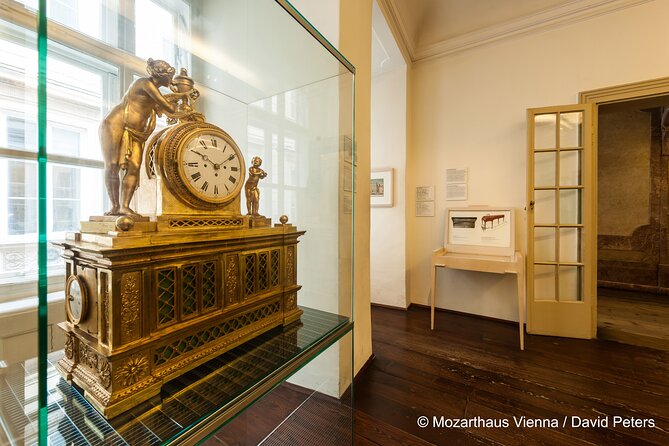
The third floor examines Mozart’s personal and social situation in Vienna. It is the most contextual section, helping you understand the life around the music.
This floor is useful because a composer’s work can feel remote when it is separated from ordinary life. Mozart’s Vienna years involved family, professional pressures, social connections, and the demands of making a living. The displays frame his creative achievement within that larger setting.
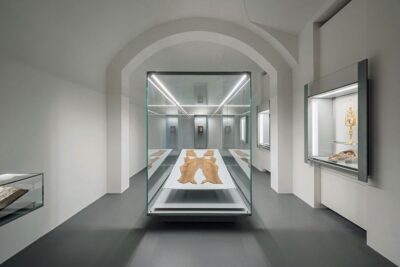
You may find more copies of documents and reproductions than original personal possessions. One of the strongest visual details is the presentation of original manuscript material, including part of Mozart’s Requiem. Even a small surviving fragment can make the music feel less abstract, especially when you have already seen the rooms where he worked.
The amount of reading varies by display. The audio guide keeps the material moving and lets you decide how long to spend with each section. I would allow about an hour for a brisk visit through all three floors, but two hours is more comfortable if you listen closely and stop for manuscripts, performance clips, and explanations.
Same Alps, a completely different kind of day:
- Vienna: Vivaldi’s Four Seasons Concert in Karlskirche
★ 4.7 · 14,951 reviews - Vienna: Spanish Riding School Training
★ 3.9 · 9,281 reviews - Vienna: Skip-the-cashier-desk-line Giant Ferris Wheel Ride
★ 4.5 · 7,859 reviews - Vienna: Schönbrunn Palace & Gardens Skip-the-Line Tour
★ 4.7 · 7,739 reviews
The audio guide makes the museum easier to follow
A self-guided museum can either give you welcome freedom or leave you wandering without a clear thread. Here, the audio guide helps tie the floors together.
Adult commentary is available in 13 languages, and children’s commentary in 8 languages. English is included, so English-speaking visitors can book without worrying about a language barrier. The guide also lets you set your own pace. You can pause, skip sections, or spend more time in the apartment than in the background galleries.
That flexibility is one reason the visit works for mixed groups. A serious Mozart fan can listen to every stop, while someone with only a general interest in classical music can focus on the apartment and the major works.
The guide also helps with the museum’s main weakness: the lack of a large collection of original household objects. When the furniture is sparse, a strong explanation becomes important. The narration supplies the social and musical context that the rooms alone cannot provide.
Original material, copies, and modern displays
The museum is strongest as a place connected to Mozart’s life, not as a large collection of personal belongings. You may see original manuscripts or parts of manuscripts, but many documents shown in the exhibition are copies.
That is not unusual for a historic home. Fragile papers cannot always remain on permanent display, and a house that survives does not necessarily preserve its original furniture. Still, it affects the visit. If you want to see Mozart’s own possessions, you may find the collection thin.
The modern exhibition approach has benefits. Performance clips, contemporary presentation, and visual material make the music easier to connect with. One especially appealing feature is the use of clips from major performances, including Metropolitan Opera material according to the information available for the experience.
For me, the right way to approach Mozarthaus is as a combination of historic rooms and interpretive museum. You are getting the place, the story, and selected musical evidence. You are not getting a complete reconstruction of an eighteenth-century apartment.
Timing, location, and the best way to fit it into Vienna
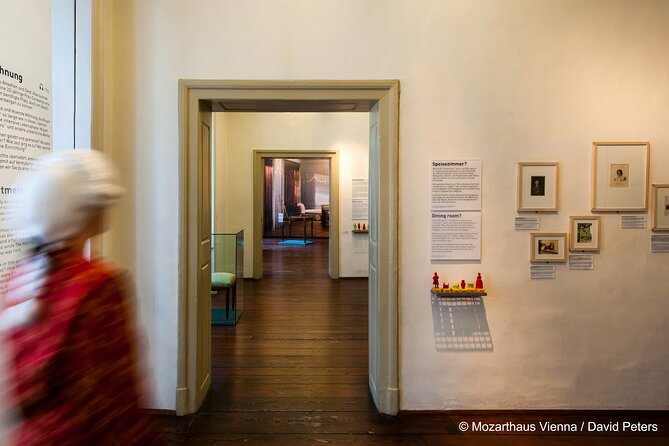
Mozarthaus Vienna is near St. Stephen’s Cathedral, making it easy to add to a central Vienna walking day. The cathedral area is one of the simplest places to orient yourself, and the museum’s location lets you pair music history with the city’s major historic center.
Opening hours are 10 a.m. to 7 p.m. every day. That broad schedule gives you useful flexibility. You can go in the morning, use it as a midday indoor stop, or visit later in the afternoon.
The listed duration is about one to two hours. I would allow two hours if you care about Mozart, opera, or original manuscripts. One hour can work if you listen selectively and focus on the apartment.
The experience is offered as an admission visit rather than a guided walking tour. There is no hotel pickup or drop-off, and food and drinks are not included. You make your own way to the museum, which is sensible here because the site is central and the visit is independent.
The booking information lists a maximum of 10 participants, although the museum format means your time inside is still largely self-directed. Confirmation is sent at booking, and the ticket is mobile, so you can keep it on your phone.
Is $19.27 a fair price?
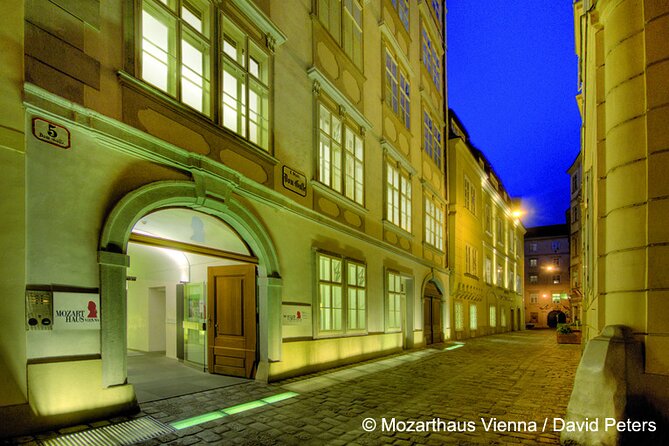
At $19.27 per person, the ticket is a reasonable buy for a Mozart fan. The price covers entry to three floors, the historic apartment, and the audio guide. You are paying for a focused museum experience rather than a long guided tour or a full concert evening.
The value is less certain if your interest in classical music is mild. The museum does not offer food, drinks, or transportation, and the visit can feel short if you move quickly. Since some displays use copies and the rooms are not fully furnished, you may prefer to spend your money elsewhere if you mainly want grand interiors or a large collection of original objects.
I would compare the ticket with your wider Vienna plans. If you are already visiting St. Stephen’s Cathedral and want a nearby indoor attraction, Mozarthaus fits neatly into the day. If you have little connection to Mozart’s music, the $19.27 may be better spent on an experience with a broader appeal.
Who will enjoy Mozarthaus most?
I would recommend this museum first to people who already listen to Mozart or want a closer look at the life behind the operas. It is especially good for you if The Marriage of Figaro, Don Giovanni, chamber music, or the Requiem are more than familiar titles.
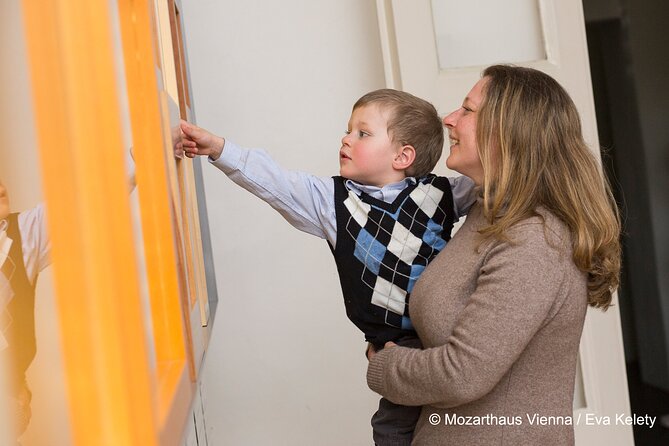
Families can also make good use of the visit because the audio guide includes children’s languages. The ability to move at your own speed helps when different people in your group have different levels of interest.
The museum may not satisfy you if you expect a house filled with Mozart’s original belongings. It is also not the best choice if you want a live concert as the main event. An opera singer has been an added touch on some occasions, and the musical presentation can include performance clips, but the core product is the museum admission and audio tour.
The overall rating is 3.2 out of 5 from 139 reviews, which signals a mixed experience rather than a sure hit for everyone. The praise centers on the apartment, the audio guide, the manuscripts, and the feeling of being close to a major composer’s working life. The criticism focuses on organization, ticket recognition at the entrance, and the small number of original objects.
Practical booking advice
I would book ahead if Mozarthaus is important to your schedule. The experience is booked an average of 33 days in advance, suggesting that many people arrange it well before arriving in Vienna.
Keep your mobile ticket ready at the entrance. One ticket holder had a short delay while staff checked the booking, so allowing a few extra minutes is sensible. This does not change the visit itself, but it is a useful reason not to schedule the museum immediately before a concert or timed attraction.
Free cancellation is available until 24 hours before the scheduled start time. Changes or cancellations made within 24 hours are not accepted for a refund, and the cut-off follows local Vienna time.
Service animals are allowed, public transportation is nearby, and most people can participate. The museum is open daily from 10 a.m. to 7 p.m. through the stated 2024 to 2026 operating periods.
Should you book Mozarthaus Vienna?
Book it if you want to see Mozart’s Vienna home and understand the setting behind The Marriage of Figaro. The apartment, the three-floor layout, the audio guide, and the manuscript material make this a worthwhile stop for music lovers, especially at $19.27.
Skip it if you want a fully restored period home with original furniture in every room. Mozarthaus works best when you value place, documents, music, and interpretation more than a large collection of objects.
My practical choice would be to reserve it for a day near St. Stephen’s Cathedral and allow two hours. Listen carefully on the first floor, give the da Ponte material a fair chance, and treat the modern displays as part of the story rather than expecting a preserved private home frozen in time.
FAQ
Where is Mozarthaus Vienna located?
Mozarthaus Vienna is in central Vienna, near St. Stephen’s Cathedral.
How much does admission cost?
The listed price is $19.27 per person.
How long does the visit take?
The visit takes approximately one to two hours, depending on how closely you use the audio guide and examine the displays.
What are the opening hours?
Mozarthaus Vienna is open Monday through Sunday from 10 a.m. to 7 p.m.
Is the ticket mobile?
Yes. A mobile ticket is included with the admission booking.
Is an audio guide included?
Yes. An audio guide is available in 13 languages for adults and 8 languages for children.
Is English available?
Yes. The experience is offered in English, and English is available through the audio guide.
What part of the museum is Mozart’s apartment?
Mozart’s apartment is on the first floor. He lived there with his family from 1784 to 1787.
Are food and drinks included?
No. Food and drinks are not included.
Can I cancel for a refund?
Yes. You can cancel up to 24 hours before the experience start time for a full refund. Cancellations or changes made less than 24 hours before the start time are not accepted for a refund.
Just added around Vienna
- Ottakringer Brewery tour★ 4.0 · 6 reviews
- New Hofburg Palace Tour House of Habsburg★ 4.5 · 5 reviews
- Private Van & Walk Tour – One Perfect Day in Vienna★ 5.0 · 21 reviews
- True Crime mobile puzzle rally Vienna★ 4.0 · 3 reviews
- Vienna Naschmarket Food Tasting Tour★ 4.0 · 30 reviews
- Vienna Nightlife Experience: Food, Wine, Cocktails & Vibes★ 5.0 · 119 reviews
- Myth Mozart★ 4.0 · 80 reviews
- ( Night Tour ) With Private Guide + wine or prosecco★ 4.0 · 12 reviews
Tickets, compared.
Classic Ensemble Vienna in St. Peter’s Church Ticket
Read our review →
Vienna Kunsthistorisches Museum Day Admission Ticket
Read our review →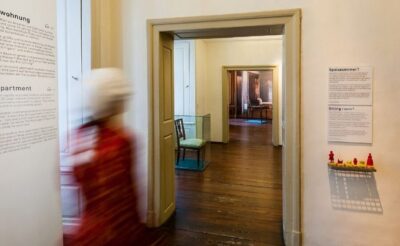
Tickets for Mozarthaus Vienna with Audio Guide
Read our review →
Skip-the-Line Entrance Ticket to the Danube Tower
Read our review →