Reviewed · TICKETS
Forchtenstein Castle Entrance Ticket
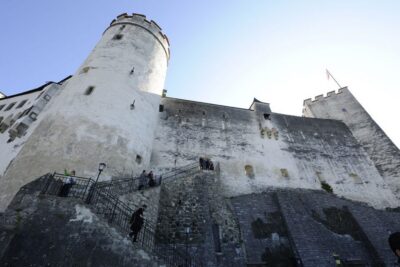
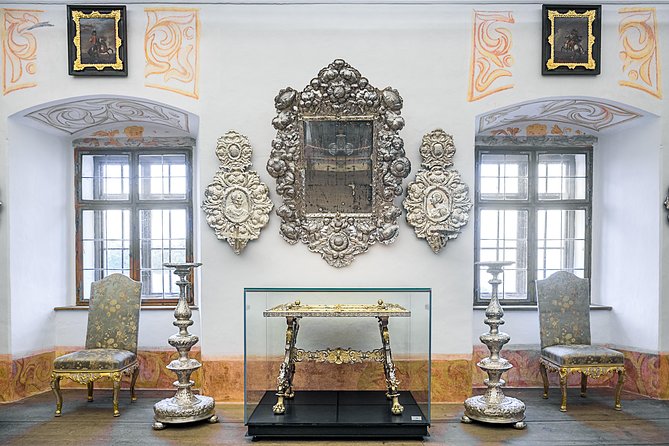
Forchtenstein Castle is a rugged hilltop stronghold with an unexpectedly grand interior: its rooms hold Esterházy family portraits, military treasures, and one of Europe’s largest private armouries. The most curious display places the family’s ancestors beside figures such as Attila the Hun, Charlemagne, and Vlad the Impaler.
I like the freedom to move through the castle at your own pace, and I like the contrast between the severe fortress outside and the lavish collections within. The views over Burgenland add real appeal, especially if you are making the roughly one-hour trip from Vienna.
The main caution is that the indoor displays may feel repetitive if portrait galleries are not your thing. Some past visitors also found the explanations and self-guided format less engaging than expected, so this works best for visitors who enjoy looking closely rather than needing a constantly moving tour.
Key points to know before you go
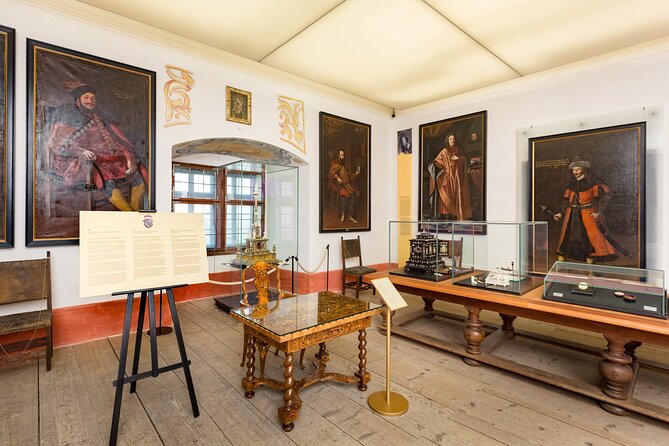
- Seventeenth-century portrait gallery: See full-size portraits of Esterházy princes alongside famous figures from European history.
- Large private armoury: Weapons, saddles, and military objects cover more than four centuries of the castle’s defensive past.
- Huge courtyard murals: The inner courtyard contains some of the largest secco murals north of the Alps.
- Flexible visit: You can explore without a fixed route and spend more time in the rooms that interest you.
- Hilltop setting: The castle offers broad views over the surrounding Burgenland countryside.
- Best for a short cultural stop: Allow about 1 to 2 hours, then consider the castle restaurant or nearby sights.
A fortress filled with family treasure
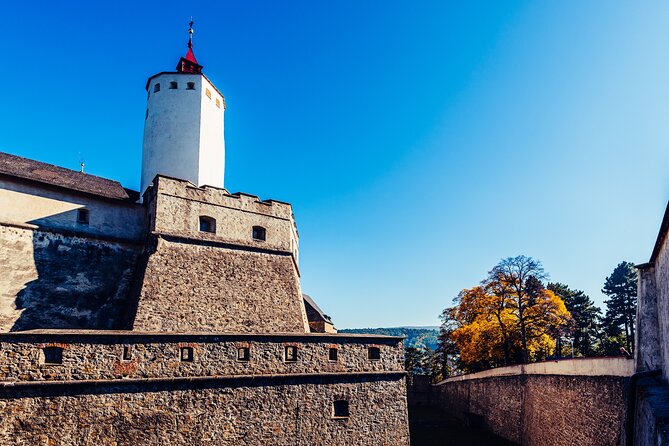
Forchtenstein Castle gives you two experiences at once. From the outside, it feels like a military stronghold built to control the surrounding countryside. Inside, it becomes a record of aristocratic ambition, family memory, military power, and collecting.
The castle is tied to the Esterházy family, one of the most important noble families connected with the region. Their collections are the reason to come. You are not simply walking through empty rooms or admiring a pretty facade. The rooms hold portraits, weapons, saddles, paintings, and objects gathered over generations.
I find that contrast especially useful when deciding how to spend your time. If you want a polished palace with elegant gardens, this is not quite that experience. If you want to see how a powerful family presented itself through art and military objects, Forchtenstein makes a stronger case.
The ticket costs $22.11 per person, which is a fair but not trivial price for a visit lasting about 1 to 2 hours. The value improves if you enjoy museums, military history, or aristocratic collections. It is less convincing if you mainly want a quick castle photo and a panoramic view.
A few more Vienna trips to weigh up
- Vienna: Classic Ensemble Vienna in St. Peter’s Church Ticket
★ 4.7 · 4,819 reviews - Vienna Kunsthistorisches Museum Day Admission Ticket
★ 4.6 · 3,690 reviews - Vienna: Tickets for Mozarthaus Vienna with Audio Guide
★ 4.2 · 2,344 reviews
The courtyard murals make the first impression
Your visit begins in the inner courtyard, where the largest secco murals north of the Alps provide the first major surprise. Secco painting is applied to dry plaster rather than wet plaster, and these large works give the courtyard a decorative scale that you may not expect from a defensive castle.
This is a good place to pause before moving indoors. The courtyard helps you read the building: thick walls, enclosed spaces, and a layout shaped by defense. The murals then add a very different note, showing how the castle was also a stage for family power and display.
The courtyard is more than a passageway. It sets up the central theme of Forchtenstein. The fortress protected the Esterházy family and their possessions, but it also displayed those possessions to anyone allowed inside.
The views are another reason to take your time here or near the outer parts of the castle. Forchtenstein sits above the surrounding countryside, and the wide outlook is one of the most consistently appealing parts of the visit. If the indoor collection begins to feel crowded with similar objects, step back outside and give your eyes a change of pace.
The chapel and oratory start the indoor route
The castle visit continues with the oratory and chapel on the first floor. These rooms show the religious side of the Esterházy world, but they also help explain how the castle functioned as a lived-in residence rather than only a defensive building.
The chapel is a useful early stop because it changes the rhythm of the visit. After the rough, military character of the fortress and courtyard, you move into spaces shaped by worship, ceremony, and private devotion.
Do not rush through these rooms simply because the armoury and portrait collections sound more dramatic. The chapel and oratory provide context for the family displays upstairs. The castle was built around more than weapons and walls. It was also a place where an aristocratic family prayed, hosted, represented itself, and preserved its status.
The amount of information provided can vary in usefulness. Some visitors have found the explanations clear and educational, while others have found the audio material too basic. I would approach the displays with curiosity, but I would not count on every explanation offering a detailed art-history lesson.
Four centuries of weapons inside a private armoury
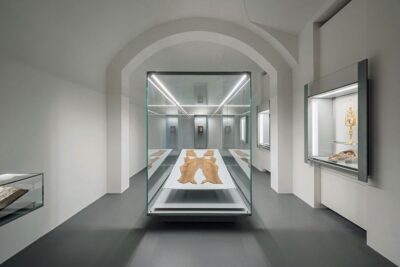
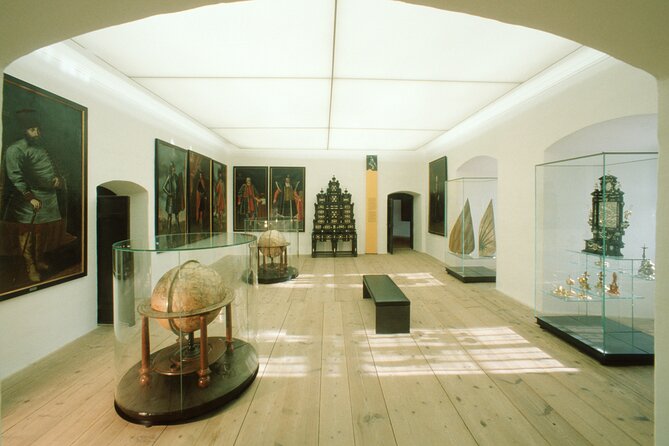
The armoury is one of the strongest reasons to visit Forchtenstein. It covers over four hundred years of military history and is described as one of Europe’s largest private armouries.
That scale matters. You are not looking at a single ceremonial sword or a few suits of armor placed around an otherwise empty room. The collection presents military equipment as part of a long family tradition. Weapons and saddles help show how noble identity was tied to defense, service, status, and control.
The displays should appeal to more than specialists. Even if you do not know the difference between different weapons, you can still see how technology and taste changed across the centuries. Practical objects sit beside items that were designed to signal rank and wealth.
This section may be the most satisfying part of the castle for families and visitors who prefer objects with a clear purpose. Weapons are easier to read than a long sequence of formal portraits. You can see their shape, weight, and decoration, then connect them to the castle’s role as a fortified home.
At the same time, the armoury is not presented as a modern military museum with a highly interactive approach. Expect a traditional collection displayed within historic rooms. If you want a fast, story-led presentation, the experience may feel quiet. If you like examining old objects at your own speed, the slower format works well.
Same Alps, a completely different kind of day:
- Vienna: Vivaldi’s Four Seasons Concert in Karlskirche
★ 4.7 · 14,951 reviews - Vienna: Spanish Riding School Training
★ 3.9 · 9,281 reviews - Vienna: Skip-the-cashier-desk-line Giant Ferris Wheel Ride
★ 4.5 · 7,859 reviews - Vienna: Schönbrunn Palace & Gardens Skip-the-Line Tour
★ 4.7 · 7,739 reviews
The Esterházy portraits tell a carefully shaped story
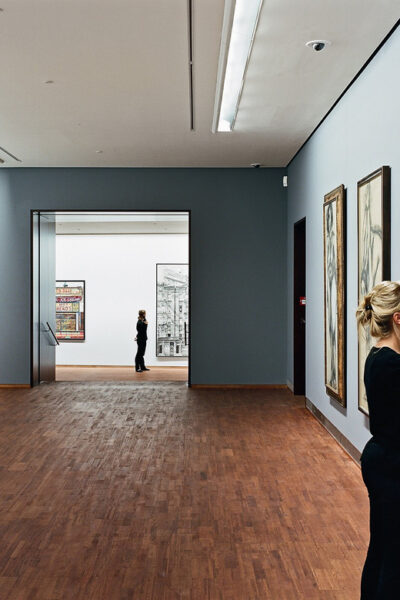
The second floor contains the main portrait collection, including full-size images of Esterházy princes and other major figures. This is the heart of Forchtenstein’s identity as an art collection.
The portraits do not merely show faces. They present a version of family history. Clothing, posture, armor, jewelry, and setting all communicate rank. The gallery asks you to look at how noble families wanted to be remembered.
Some portraits are linked to famous historical figures, including Attila the Hun, Charlemagne, and Vlad the Impaler, also known as Dracula. The portrait of Vlad is a particular curiosity and gives the gallery an extra hook for visitors who might not normally spend much time with aristocratic portraiture.
I would not expect every painting to be a masterpiece. The pleasure comes from the scale and the story the group creates. One portrait can seem ordinary. Dozens of portraits arranged as a family record create a stronger impression of lineage and power.
That is also where the main drawback appears. If you do not enjoy repeated formal portraits, the gallery may start to blur together. The collection is historically interesting, but the presentation may not always make the differences between works easy to grasp. Take your time with the portraits that catch your eye rather than trying to study every canvas.
A self-guided visit gives you control
The ticket allows you to explore the castle at your own pace, with no fixed itinerary. That flexibility is valuable in a collection this varied.
You can spend longer in the armoury, move quickly through portraits, pause in the chapel, or return to a room that seemed less interesting at first. You do not have to keep up with a group or wait for a guide to finish a speech.
The trade-off is that you are responsible for creating your own structure. Some past visitors found the self-guided presentation less clear than it could be, especially when the explanations felt basic. I would suggest giving yourself a simple plan: start with the courtyard, follow the chapel and oratory route, focus on the armoury, then decide how much time you want for the portrait rooms.
There are also two guided tour options associated with the castle, according to the information available for the visit. The ticket described here is an admission ticket rather than a named guided tour, and no guide name is provided. If you strongly prefer a live explanation, check the available tour choices before booking instead of assuming a guide is included.
How long should you allow?
The stated duration is about 1 to 2 hours. That is enough for a solid visit, but your timing depends on how carefully you examine the objects.
An hour may cover the major rooms at a brisk pace. Two hours gives you time for the murals, chapel, armoury, portrait gallery, and views without feeling hurried. If you are passionate about military collections or family portraiture, you may want to use the full allowance.
The visit is also easy to fit into a wider day because it has a clear beginning and end. You do not need to commit to a half-day guided program. The castle restaurant can provide a convenient pause afterward, and one past account considered the meal the high point of an otherwise disappointing indoor visit.
That comment is worth taking seriously, but not as a reason to skip the castle. It tells you to keep your expectations balanced. Forchtenstein is a historic collection in a preserved fortress, not a theatrical attraction built around constant entertainment.
Planning your visit from Vienna
Forchtenstein is in Burgenland, at Burggasse, 7212 Forchtenstein, Austria. The setting is roughly one hour from Vienna, based on the practical descriptions available for the visit, so you should treat it as an outing rather than a central Vienna attraction.
The ticket lets you choose a date and time that suits your schedule, and booking ahead helps protect your admission. The experience is booked, on average, 95 days in advance, which suggests that planning ahead is sensible during popular periods.
Opening hours vary by season:
- From April 1 through May 31, the castle is open Tuesday through Sunday, 10:00 a.m. to 5:00 p.m.
- From June 1 through August 31, it is open daily, 10:00 a.m. to 5:00 p.m.
- From September 1 through October 31, it is open Tuesday through Sunday, 10:00 a.m. to 5:00 p.m.
The seasonal schedule matters if you are planning a Monday visit in spring or autumn. Check your selected date carefully, since daily opening applies only during June, July, and August.
Parking may require patience. The available information notes that spaces are limited, so do not assume you will find a large, effortless parking area immediately beside the castle. The ticket confirmation arrives at booking, and service animals are allowed. Most people can take part, although the information does not provide detailed accessibility specifications.
Free cancellation is available until 24 hours before the scheduled start time. Changes or cancellations made less than 24 hours ahead are not accepted for a refund.
Is the $22.11 ticket good value?
At $22.11, the ticket is not a bargain-basement admission, but it can be good value if you are already interested in castles, weapons, or European court culture.
You are paying for access to a preserved fortress, a large private armoury, major portrait galleries, the courtyard murals, the chapel, and the views. That is a substantial collection for a 1 to 2 hour visit.
The calculation changes if you have a Burgenland-Card. The available information says that admission can be free with this card, so check your eligibility before purchasing a separate ticket. That could make the castle an easy addition to a regional sightseeing day.
I would not buy the ticket only for the portraits of famous figures. The best value comes from seeing the whole group of displays together. The castle, courtyard, military collection, aristocratic paintings, and countryside views create a fuller experience than any one object alone.
The rating supplied for the experience is 3.5 out of 5 from eight ratings. That moderate score matches the practical picture: the building and setting are strong, but the indoor presentation will not suit everyone. Some people appreciate the careful preservation and clear explanations. Others find the displays repetitive, the audio guide too simple, or the ticket desk slow.
Who will enjoy Forchtenstein Castle most?
I would recommend this visit to you if you like historic buildings that still contain their original collections. It is particularly suitable for:
- Castle and fortress fans who want more than an exterior photo.
- Military-history enthusiasts interested in weapons, saddles, and long-term collections.
- Art lovers who enjoy portrait galleries and family symbolism.
- Families with older children who may respond well to armor, weapons, and the Dracula connection.
- Visitors with a flexible day near Vienna who want a regional outing rather than another city museum.
- Anyone holding a Burgenland-Card, since the admission may be included.
I would be more cautious if you need a highly polished, interactive museum or a detailed live lecture with every room explained. You may find the repeated portraits and traditional labels slow going.
Should you book the Forchtenstein Castle ticket?
Book it if you want to see a serious aristocratic collection in an authentic fortress, and if a roughly one-hour trip from Vienna fits your plans. The armoury, courtyard murals, hilltop views, and unusual historical portraits give the visit plenty of substance.
Skip it if your main goal is a quick, dramatic castle interior with a fast-moving story. The galleries can feel repetitive, and the self-guided format requires you to make your own connections.
For the best experience, allow the full two hours, check the seasonal opening day, reserve in advance, and consider using a Burgenland-Card if you have one. Forchtenstein is not a perfect crowd-pleaser, but for the right visitor it offers a rare look at how a powerful family preserved and displayed its own past.
FAQ
Where is Forchtenstein Castle located?
Forchtenstein Castle is at Burggasse, 7212 Forchtenstein, Austria. It is described as about one hour from Vienna.
How long does a visit to Forchtenstein Castle take?
The expected visit lasts approximately 1 to 2 hours.
What can I see inside the castle?
You can see the inner courtyard murals, the oratory, the chapel, a large private armoury, weapons, saddles, Esterházy family portraits, and other art collections.
Does the ticket include admission?
Yes. Admission to Forchtenstein Castle is included with the ticket.
Can I visit the castle without following a fixed tour?
Yes. You can explore the galleries at your own pace without a fixed itinerary.
What are the castle’s opening hours?
From April through May and from September through October, the castle is open Tuesday through Sunday from 10:00 a.m. to 5:00 p.m. From June through August, it is open daily from 10:00 a.m. to 5:00 p.m.
Can I cancel the ticket for a refund?
Yes. You can cancel up to 24 hours before the experience starts for a full refund. Cancellations or changes made less than 24 hours before the start time are not accepted.
Just added around Vienna
- Ottakringer Brewery tour★ 4.0 · 6 reviews
- New Hofburg Palace Tour House of Habsburg★ 4.5 · 5 reviews
- Private Van & Walk Tour – One Perfect Day in Vienna★ 5.0 · 21 reviews
- True Crime mobile puzzle rally Vienna★ 4.0 · 3 reviews
- Vienna Naschmarket Food Tasting Tour★ 4.0 · 30 reviews
- Vienna Nightlife Experience: Food, Wine, Cocktails & Vibes★ 5.0 · 119 reviews
- Naschmarkt Food Tour★ 4.0 · 14 reviews
- Myth Mozart★ 4.0 · 80 reviews
Tickets, compared.
Classic Ensemble Vienna in St. Peter’s Church Ticket
Read our review →
Vienna Kunsthistorisches Museum Day Admission Ticket
Read our review →
Tickets for Mozarthaus Vienna with Audio Guide
Read our review →
Skip-the-Line Entrance Ticket to the Danube Tower
Read our review →