
Reviewed · CITY TOURS
Vienna: City Center Guided Walking Tour
Vienna’s grand center is best understood on foot, where imperial courtyards, wedding churches, coffee houses, and music history sit within a few blocks. This 150-minute walk links the city’s biggest sights, from the Hofburg and Spanish Riding School to Lobkowitz Palace, where Beethoven first conducted his Eroica symphony.
I like the small group of no more than 15 and the supplied headsets, which make it easier to follow the guide beside busy streets. I also like the route’s range: you get palaces and monuments, but also a rose garden, a former butterfly house, famous cake, and a polished shopping street.
The main drawback is the amount of ground covered in a short time. You will see many places from outside rather than tour their interiors, and one 150-minute walk cannot explain every corner of Vienna’s complex past. A moderate amount of walking is involved, with little help for people with mobility impairments.
Key Points
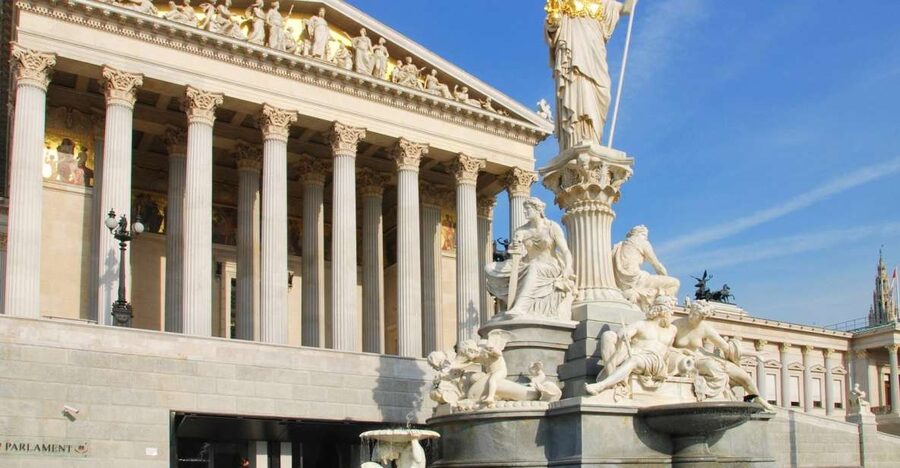
- Imperial Vienna in one walk: See Heroes Square, Hofburg Palace, the emperor’s private garden, and the Augustinerkirche.
- Music history with a real address: Visit Lobkowitz Palace, where Beethoven first conducted his Eroica symphony.
- A guide-led route through the Innere Stadt: Finish near St. Stephen’s Cathedral after passing Graben and Hotel Sacher.
- A useful first-day orientation: The walk helps you decide which museums, churches, cafés, and streets deserve more time later.
- Comfortable listening: Headsets let you hear the English-speaking guide without crowding around.
- Plan for the weather: The walk goes ahead in all conditions, and luggage or large bags are not allowed.
Why This Vienna Walk Works Best on Your First Day
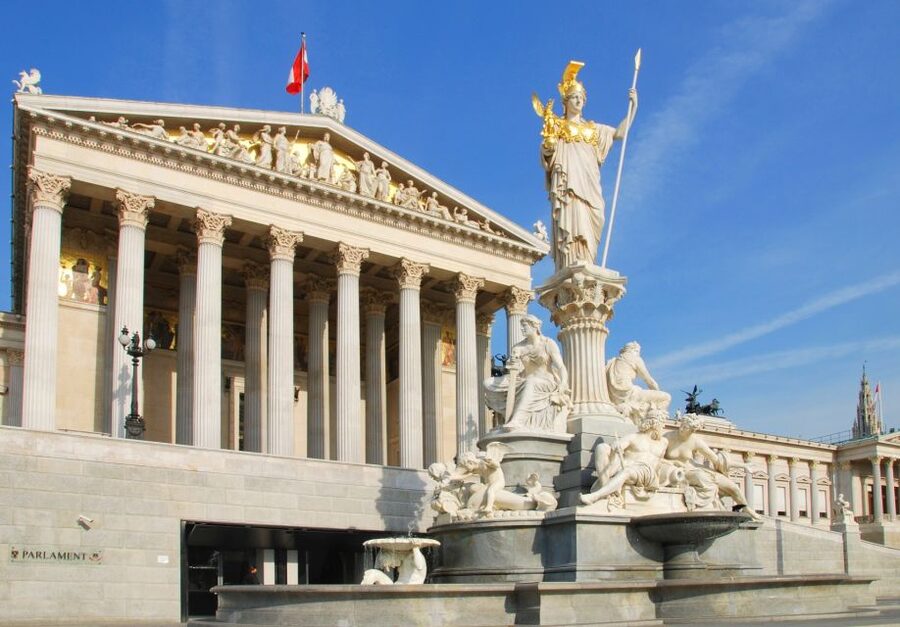
This is a good opening look at Vienna because it gives you a clear mental map before you spend time inside its museums. You begin between the Kunsthistorisches Museum and the Naturhistorisches Museum, then follow the Ring Road and enter the historic center.
I like that the route does not treat Vienna as one long parade of royal buildings. It connects power, art, music, religion, food, gardens, and daily city life. You may finish with a long list of places to revisit, which is exactly what a first city walk should do.
The pace is designed for sightseeing rather than a fitness test. Still, the route covers a lot, and the group stops often to hear explanations. A comment from one participant described the pace as relaxed but occasionally rushed because there was so much to cover. That is a fair way to think about it: you will get a strong overview, not a slow study of each monument.
The guides make a large difference. Dace is praised for mixing humor, local perspective, historical facts, personal stories, and practical café and restaurant suggestions. Alex adjusted the route’s pauses on a hot day, seeking shade and allowing time to refill water bottles. Those details matter because a city walk is much better when the guide pays attention to the people in front of them.
A few more Vienna trips to weigh up
- Vienna: Guided Walking Tour of City Center Highlights
★ 4.7 · 4,989 reviews - Vienna: Vienna Central Cemetery Guided Walking Tour
★ 4.8 · 3,307 reviews - Vienna: Guided Walking Tour of City Highlights & Hidden Gems
★ 4.9 · 2,180 reviews
Starting at Maria-Theresien-Platz
Meet by the statue of Empress Maria Theresa on Maria-Theresien-Platz. Use the side toward which the statue faces, and look for a green Vienna City Walking Tour sign. The square sits between the two major museum buildings, so it is easy to identify once you arrive.
The nearest metro station is Volkstheater on the U3 line. Tram stops at Burgring serve lines D, 1, 2, and 71. Give yourself enough time to find the statue and the correct side of the square, especially if you are arriving from a hotel or train connection.
This is a useful starting place for the city’s imperial story. Maria Theresa ruled the Habsburg lands in the 18th century, and her monument sets the tone for the first part of the walk. The nearby museums also show how much Vienna packs into a small area: fine art, natural science, royal power, music, and public ceremony all meet here.
The tour is conducted in English by a licensed local guide. Headsets are included, an especially useful touch when the group is walking near traffic or standing in a broad square. Rather than pressing close to the guide, you can look at the buildings while still hearing the explanation.
Along the Ring Road and Through the Volksgarten
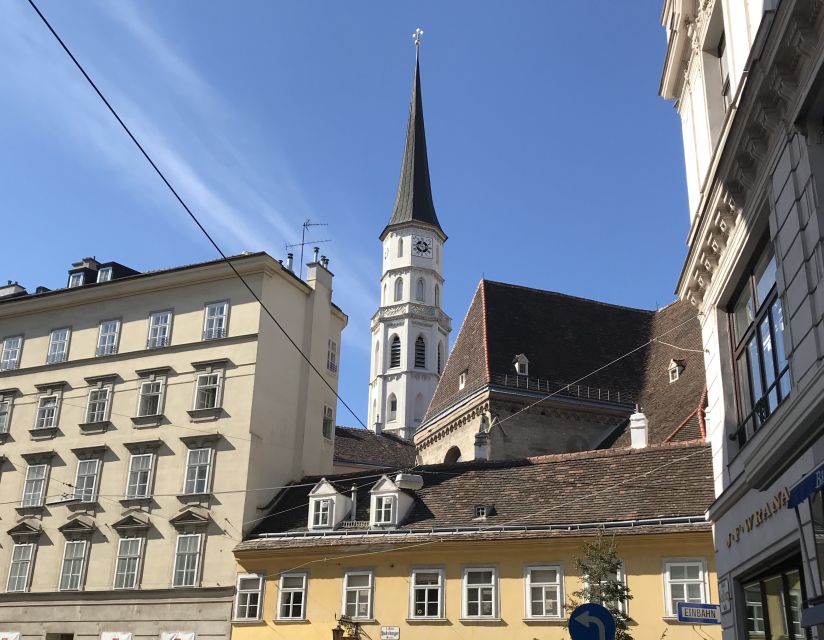
The Ring Road circles the old city center and gives you a sense of Vienna’s grand 19th-century ambitions. Along this part of the route, the scale changes quickly. Wide streets and formal public buildings give way to gardens, palace courtyards, and old lanes.
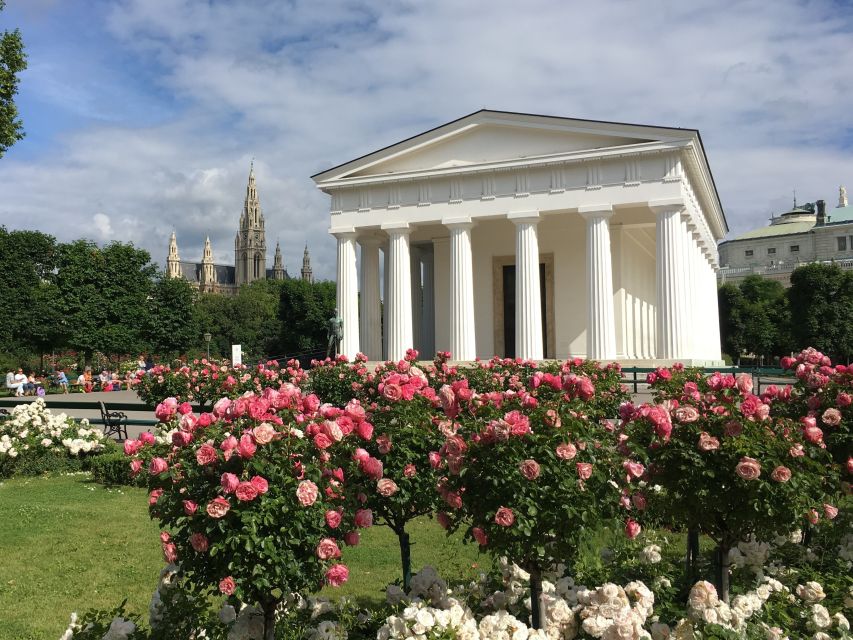
The walk continues through the Volksgarten, known for its rose garden. This green pause helps break up the stone and ceremony of the imperial center. It also gives the guide room to explain Vienna as a city built not only for rulers, but for public life, leisure, and display.
The roses are seasonal, of course, and the look of the garden will change with the weather and time of year. You should not book this as a garden tour. The appeal is the contrast between formal greenery and the heavy architecture around it.
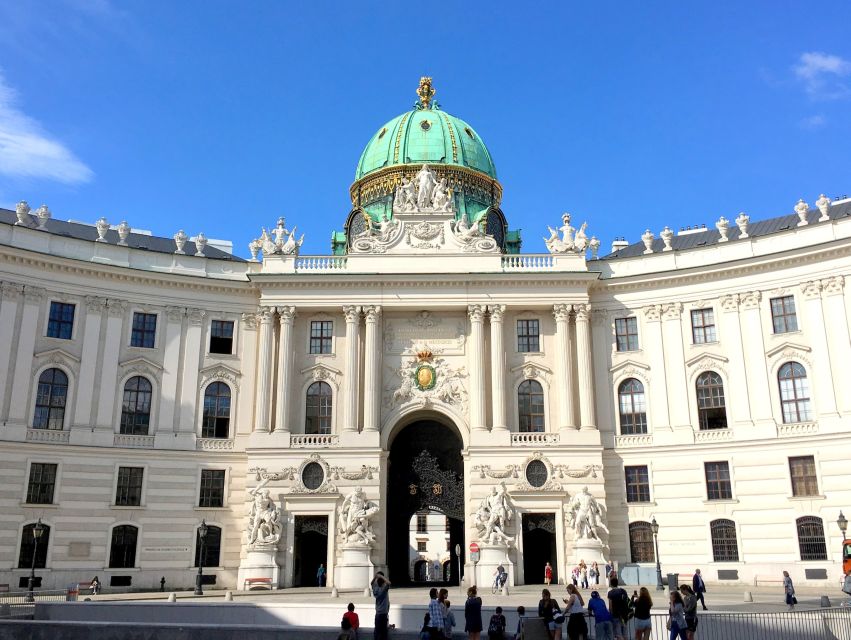
From here, you continue to Heroes Square, or Heldenplatz. It is one of the city’s most important public spaces and leads directly into the Hofburg complex. This is where the tour begins to feel especially grand, with broad open space in front of the former imperial residence.
Hofburg Palace and the Habsburg Story
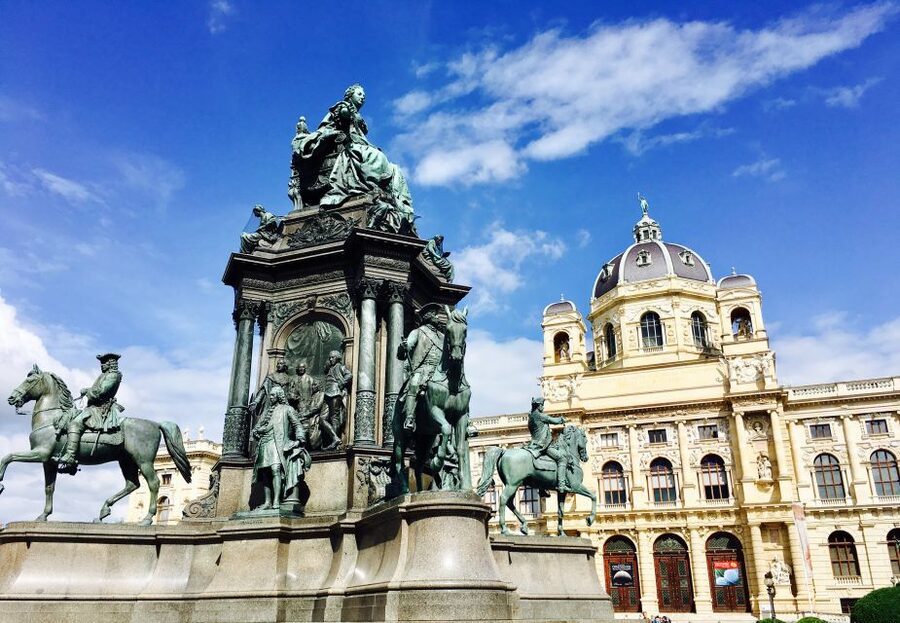
The Hofburg was the center of Habsburg rule, and the tour gives you the outside view along with the political background needed to read the buildings. You will hear about the family, its rulers, and the way imperial power shaped Vienna.
I value this part because it puts later stops into context. The private garden, churches, palace wings, and ceremonial spaces are not isolated sights. They belong to a system built around the Habsburg court, its marriages, religious duties, military power, and public image.
The itinerary includes the emperor’s private garden at the Burggarten and the former butterfly house. This is a more personal side of the palace world. The garden suggests how members of the court used the complex away from official ceremonies, while the butterfly house points to a later and more unusual use of the imperial grounds.
You will not pay an entrance fee as part of this walk, and interior admissions are not included. That distinction is important. If you want to visit palace rooms, museums, or other paid sights after the tour, plan those separately.
Same Alps, a completely different kind of day:
- Vienna: Vivaldi’s Four Seasons Concert in Karlskirche
★ 4.7 · 14,951 reviews - Vienna: Spanish Riding School Training
★ 3.9 · 9,281 reviews - Vienna: Skip-the-cashier-desk-line Giant Ferris Wheel Ride
★ 4.5 · 7,859 reviews - Vienna: Schönbrunn Palace & Gardens Skip-the-Line Tour
★ 4.7 · 7,739 reviews
Augustinerkirche and Imperial Weddings
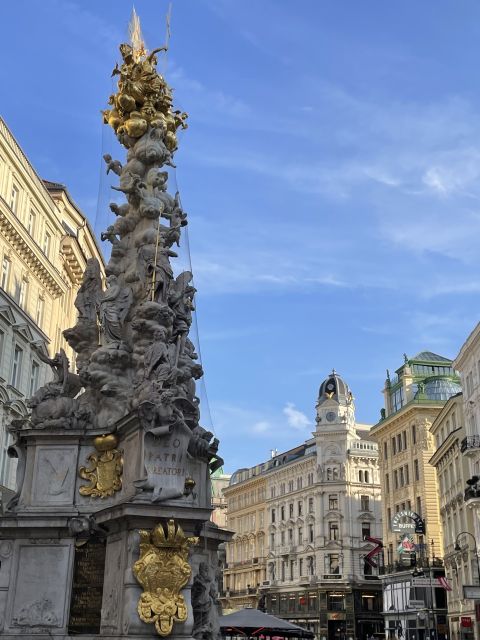
The Augustinerkirche adds a religious and family dimension to the royal story. Many imperial weddings took place here, including Napoleon’s marriage to Princess Marie Louise.
That detail makes the church more than another historic façade. Royal marriages were political arrangements as well as family occasions, and this stop helps show how European power moved through ceremonies, alliances, and dynastic ties.
The church is also a useful reminder that Vienna’s court life was not confined to palaces. Religious buildings, public squares, gardens, and streets all supported the rituals of the monarchy. I like the way this stop broadens the tour beyond famous names and grand rooms.
Since entrance fees are not included, access inside any building can depend on the arrangements of the day. Treat the stop as an exterior and historical visit unless your guide tells you otherwise.
The Spanish Riding School and Lipizzaner Tradition
The Spanish Riding School is one of Vienna’s best-known institutions, and the tour shows you where the famous Lipizzaner horses are based. Even without attending a performance, the sight connects the city to court ceremony, horsemanship, and the long traditions of the imperial household.
This is a place where expectations matter. The walk does not include a riding demonstration, stable visit, or entrance ticket. You are seeing the setting and learning why it matters. If the horses are a main reason for your visit, you will need a separate booking.
Still, the stop fits neatly into the route. The Spanish Riding School sits within the Hofburg area, so it is easy to understand as part of the court complex rather than an unrelated attraction. The guide can also help you place it alongside the palace and nearby streets.
Beethoven at Lobkowitz Palace
The music section of the walk is one of its most appealing features. At Lobkowitz Palace, you learn where Beethoven first conducted his Eroica symphony.
That is a strong example of Vienna’s character. The city’s musical past is not just a list of composers and concert halls. It is attached to specific palaces, churches, apartments, and public spaces. Knowing the exact setting gives the story more weight than hearing Beethoven’s name in a general lecture.
The Eroica symphony also carries a useful story about ambition and changing ideas, though the guide’s treatment will depend on the pace and questions from the group. You should expect a focused stop, not a full Beethoven seminar.
I like that the tour gives music equal billing with imperial buildings. Vienna can easily become all Habsburgs, but Beethoven helps shift the focus to the artists who made the city famous in another way.
Opera, Sacher Torte, and Vienna’s Café Culture
The Vienna State Opera House brings the route back to performance and public life. Its exterior is one of the city’s key sights, and its location makes it a natural bridge between the palace district and the central shopping streets.
Then comes the city’s sweet side. You pass Hotel Sacher, the home of the famous Sacher Torte. This is not a tasting tour, so the price does not include cake or a café stop. But the guide can point out the setting, and you can return later if you want to try the dessert yourself.
Vienna’s coffee houses deserve attention because they are part of the city’s social identity, not simply places to grab caffeine. The route passes several elegant examples, giving you a chance to note which ones appeal to you. Guides such as Dace have also offered café and restaurant suggestions for the rest of the visit.
Do not assume that every coffee house will fit a quick schedule after the walk. If you want the full café experience, set aside time later. The value here is learning where to look and understanding why these interiors matter.
Graben and the Finish at St. Stephen’s Cathedral
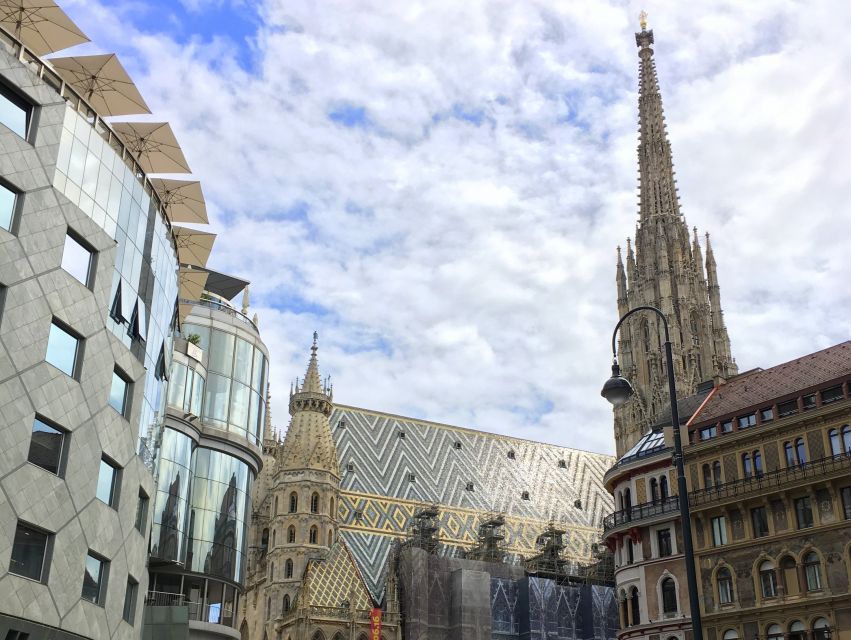
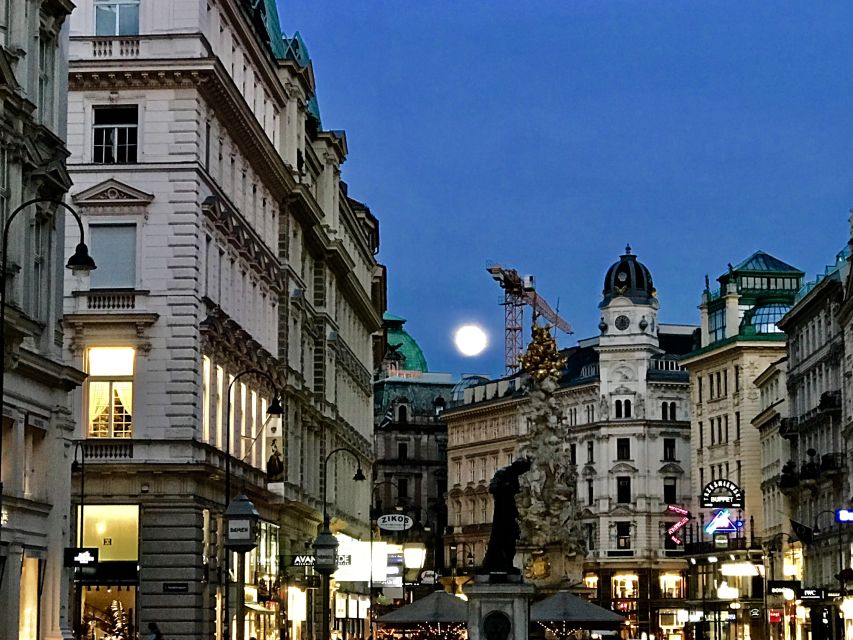
The final stretch takes you along Graben, Vienna’s elegant shopping street. This part of the center shows a different side of the city: polished, commercial, and full of architectural detail.
It is a useful contrast with the palace grounds. The tour moves from imperial ceremony to the everyday center where people shop, meet, eat, and cross town. You also get a better sense of how close the main sights are to one another.
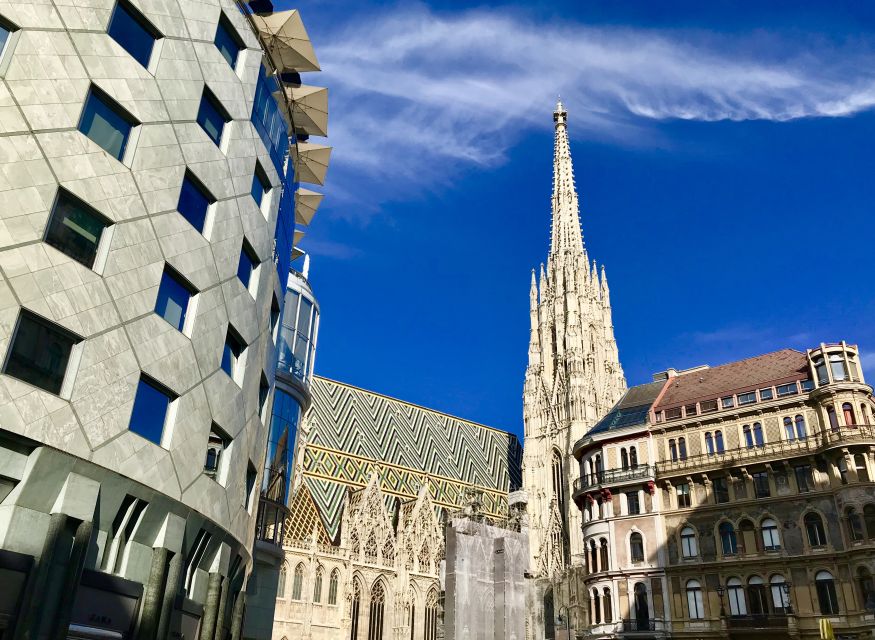
The walk ends beside St. Stephen’s Cathedral. That is a convenient finish, especially if you want to continue exploring on your own. The cathedral is one of Vienna’s defining landmarks, but the tour does not include an entrance ticket, so plan a separate visit if you want to go inside.
Ending here also gives you several choices. You can stay in the center, walk back toward the Hofburg, find a café, or use the nearby streets as a starting point for more sightseeing. For a first afternoon in Vienna, that flexibility is valuable.
What the $74 Price Buys You
At $74 per person, this is not the cheapest way to walk through Vienna. You are paying for a licensed English-speaking guide, a small group, and a carefully linked route through the historic center.
The value depends on how you use the time. If you want a quick orientation, historical context, and practical ideas for the rest of your stay, the price can make sense. You see a long list of major sights without spending your first day working out the city map on your own.
The headsets add real value. They keep the group from bunching tightly around the guide, and they help you keep looking at the architecture while listening. A group capped at 15 is also much easier to manage than a large sightseeing crowd.
The limitation is that no entrance fees are included. You will see the Hofburg, Spanish Riding School, opera house, and cathedral from the route, but interior visits cost extra when available. If you want museum time or a palace tour, add those plans and expenses.
Weather, Walking, and Who Should Book
The tour operates in every weather condition. Wear shoes you can comfortably use for a moderate amount of walking, and dress for the season. Winter can feel colder among the tall buildings than expected, while summer sun can make open squares tiring. Water, shade, and suitable layers are sensible choices.
Large bags and luggage are not allowed. That makes this a poor choice straight from a hotel checkout unless you have somewhere to store your belongings first. Children must be accompanied by an adult, and unaccompanied minors cannot join.
People with mobility impairments may find the route unsuitable. The walk includes streets, squares, gardens, and a moderate distance across the center. Ask before booking if your needs require a slower pace or special route support, because the supplied information does not promise that accommodation.
I would choose this for a first visit, a short stay, or a solo trip when you want an anchor for the city. It also suits anyone who likes architecture and stories but does not want to spend a whole morning inside one museum.
I would skip it if you already know Vienna’s center well, need step-free access, or want detailed interior visits. The route is designed to introduce the city, not replace dedicated tours of the Hofburg, opera, museums, or Spanish Riding School.
Should You Book This Vienna Walking Tour?
Book it if you want a well-paced first look at Vienna’s central sights, with enough history to make the buildings meaningful. The mix of Habsburg power, imperial weddings, Lipizzaner horses, Beethoven, coffee houses, Sacher Torte, Graben, and St. Stephen’s Cathedral gives you a useful cross-section of the city.
The strongest reasons to book are the small group, the headsets, and the local guide’s role in helping you decide what to explore next. Dace’s humor and local suggestions, along with Alex’s care on a hot day, show the kind of personal attention this format can provide.
Just keep your expectations straight. You are buying a guided orientation, not a series of interior admissions. Wear good shoes, leave your large bag behind, and reserve this early in your Vienna stay so you can return to the places that catch your eye.
FAQ
How long does the Vienna City Center Guided Walking Tour last?
The tour lasts 150 minutes, or two and a half hours.
What language is the tour conducted in?
The live tour guide speaks English.
How many people are in the group?
The tour is limited to no more than 15 people.
Where is the meeting point?
Meet by the statue of Empress Maria Theresa on Maria-Theresien-Platz, on the side the statue faces. The statue is between the Kunsthistorisches Museum and the Naturhistorisches Museum.
How do I identify the guide?
The guide will be holding a green Vienna City Walking Tour sign.
What public transportation stops are nearby?
The nearest metro station is Volkstheater on line U3. Nearby tram stops are Burgring, served by lines D, 1, 2, and 71.
Are entrance fees included?
No. Entrance fees are not included in the tour price.
Are headsets provided?
Yes. Headsets are included so you can hear the guide clearly.
Can I cancel for a refund?
Yes. You can cancel up to 24 hours in advance for a full refund. You can also reserve now and pay later.
Just added around Vienna
- Ottakringer Brewery tour★ 4.0 · 6 reviews
- New Hofburg Palace Tour House of Habsburg★ 4.5 · 5 reviews
- Private Van & Walk Tour – One Perfect Day in Vienna★ 5.0 · 21 reviews
- True Crime mobile puzzle rally Vienna★ 4.0 · 3 reviews
- Vienna Naschmarket Food Tasting Tour★ 4.0 · 30 reviews
- Vienna Nightlife Experience: Food, Wine, Cocktails & Vibes★ 5.0 · 119 reviews
- ( Night Tour ) With Private Guide + wine or prosecco★ 4.0 · 12 reviews
- Naschmarkt Food Tour★ 4.0 · 14 reviews
City Tours, compared.
Guided Walking Tour of City Center Highlights
Read our review →
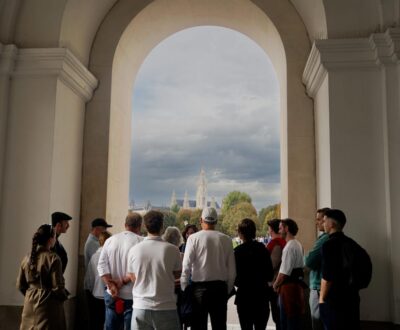
Guided Walking Tour of City Highlights & Hidden Gems
Read our review →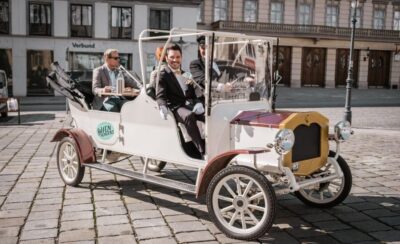

Skip-the-Line Schonbrunn Palace Guided Tour and Vienna Historical City Tour
Read our review →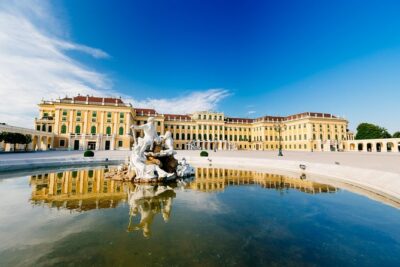

Browse the lists this tour appears in