
Reviewed · MUSEUMS
Vienna: Tickets for Kunst Haus Wien: Museum Hundertwasser
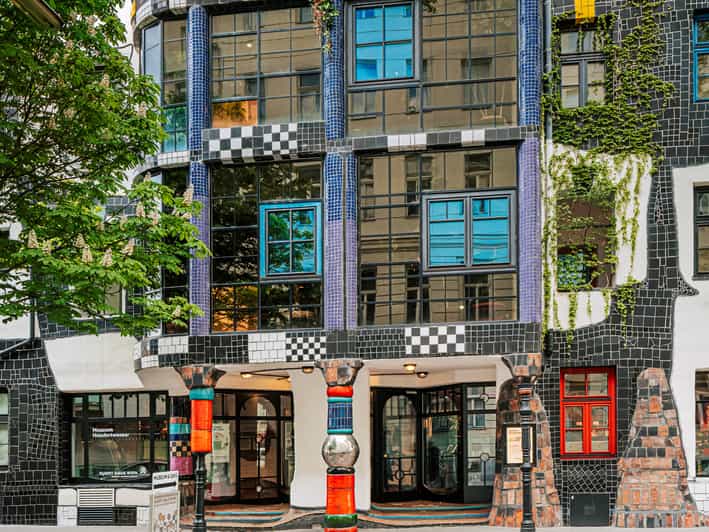
The most interesting thing about KunstHausWien is that the building itself is part of the exhibition. Friedensreich Hundertwasser rejected straight lines, favored organic forms and bold color, and wanted buildings to live in harmony with nature. Here, his ideas appear in paintings, models, architecture, and the museum’s own unusual design.
I like the way the visit connects art with practical questions about city life. I also like the chance to pair the permanent Hundertwasser collection with temporary exhibitions on contemporary art, ecology, sustainability, and urbanity. The main drawback is that some paintings have little information beside them, so the optional 4 EUR audio guide can make the visit much easier to follow.
Key points to know before you go
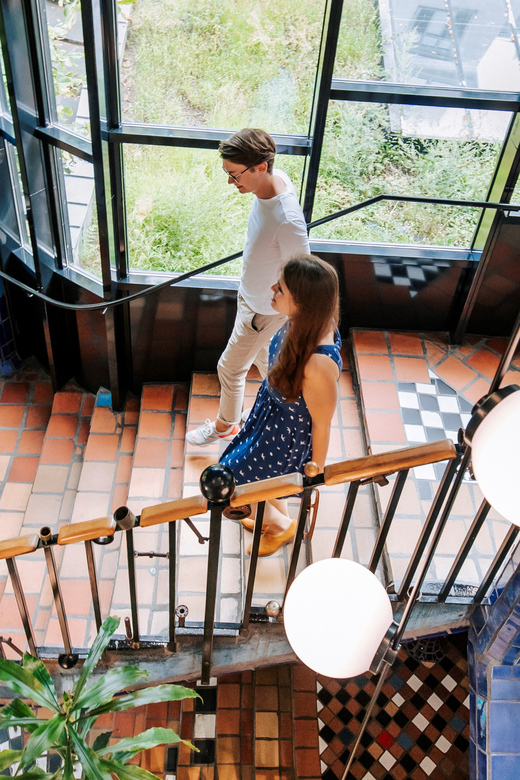
- The building is part of the art: Expect uneven forms, strong colors, and an architectural setting shaped by Hundertwasser’s ideas.
- Four floors offer different subjects: The first two floors focus on Hundertwasser, while the upper floors hold temporary displays.
- Ecology is central: The current garage exhibition links sustainability, urban life, and the natural world.
- The audio guide may be worth the extra cost: It is available in English, French, and German, and costs 4 EUR according to the ticket information.
- Plan a café stop: The green courtyard and Café Friedlich give you a pleasant place to pause after the galleries.
- The location is easy by tram: Radetzkyplatz is the closest stated stop, reached from Schwedenplatz or Landstraße/Wien Mitte.
Why KunstHausWien feels different from a standard museum
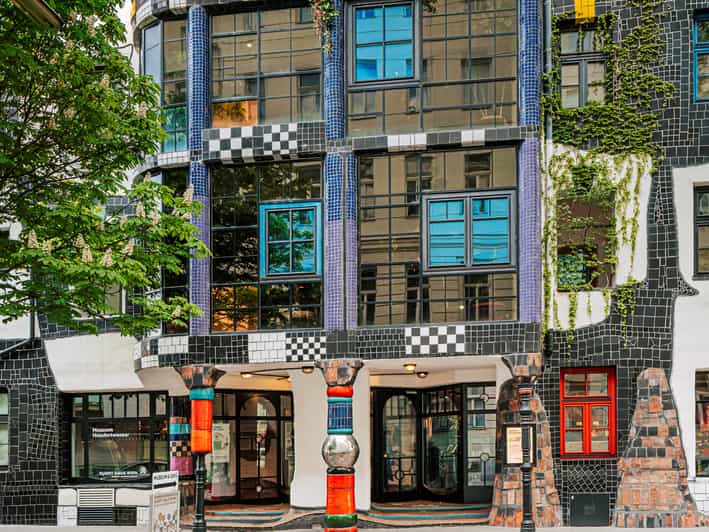
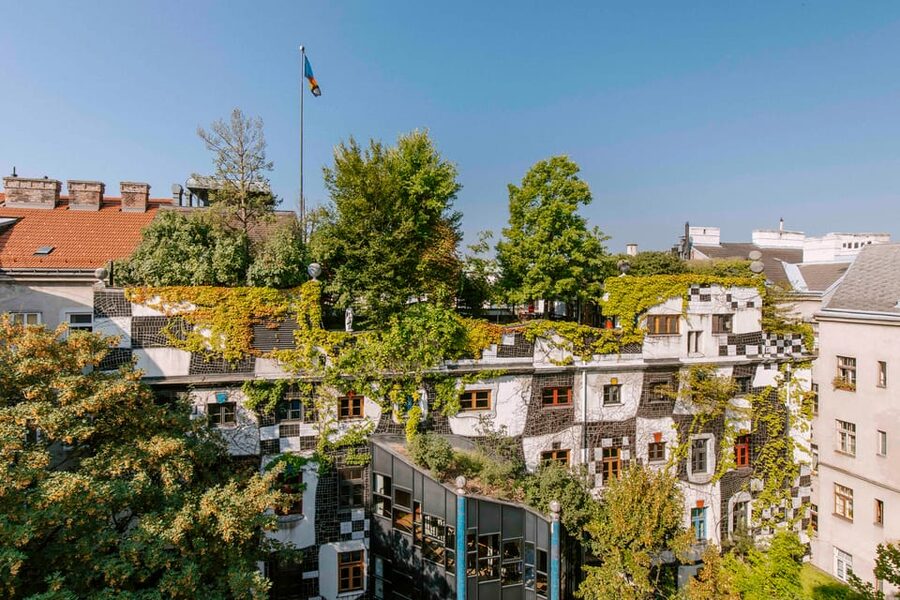
Many art museums ask you to ignore the walls and focus on the pictures. KunstHausWien asks you to look at both. The building’s curved surfaces, irregular details, and strong use of color prepare you for Hundertwasser’s view that architecture should feel closer to nature than to a rigid office block.
That approach makes this a particularly good stop if you are unsure about modern art. You do not need to begin with a long knowledge of Hundertwasser. The setting gives you an immediate idea of his taste and principles, then the galleries add detail.
Hundertwasser was not only a painter. He was also an architect, designer, and environmental campaigner. His work challenged the idea that practical buildings had to be plain, square, and separated from nature. At KunstHausWien, you can trace those ideas from early artistic visions to building models and real architectural projects.
I like that the museum does not treat ecology as a side topic. It is tied to the artist’s central concerns: how people build, how cities use space, and how daily life might include more nature. The result is a visit that can feel cheerful at first, then more thoughtful as you consider what his ideas would mean in your own city.
A few more Vienna trips to weigh up
- Vienna: Skip-the-Line Sisi Museum, Hofburg and Gardens Tour
★ 4.8 · 5,918 reviews - Vienna Kunsthistorisches Museum Day Admission Ticket
★ 4.6 · 3,690 reviews - Tickets for the Albertina Exhibitions
★ 4.7 · 2,126 reviews
The first two floors: Hundertwasser’s art and ideas
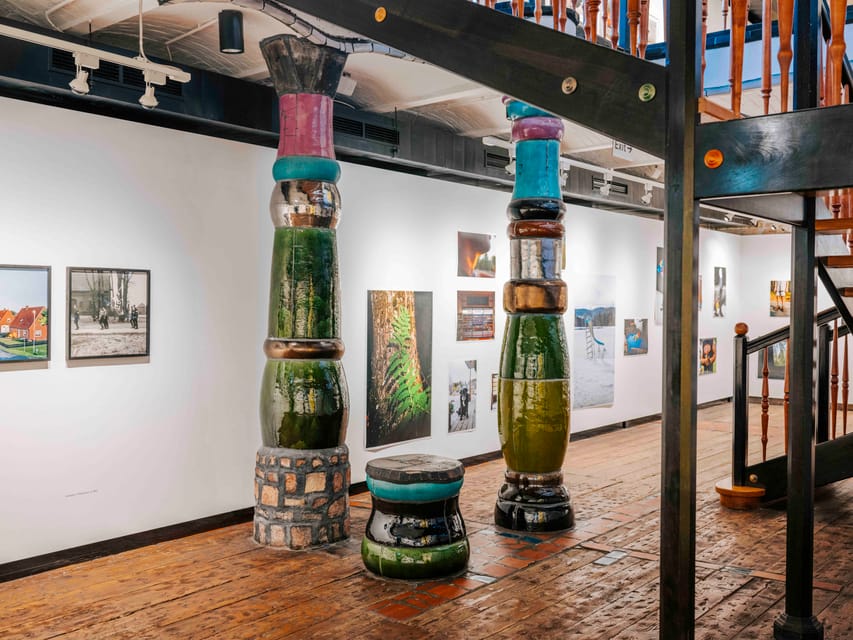
Start with the permanent exhibition on the first two floors. This is the heart of the museum and the part to prioritize if you have limited time. The displays cover Hundertwasser’s work and explain the philosophy behind his art and architecture.
Expect paintings with strong color, unusual shapes, and a clear refusal to follow conventional rules. His work can be playful and instantly appealing, but it is not simply decoration. The pictures reflect his interest in nature, individuality, and a less controlled way of living.
The collection also helps explain the link between his paintings and his buildings. You may begin by looking at an organic form on canvas, then see how a similar idea appears in a building model or architectural feature. This connection is one of the museum’s best qualities. It shows that Hundertwasser’s art was not confined to galleries.
If you have never encountered his work, allow yourself time to adjust. Some images are easy to enjoy on sight, while others need more explanation. Information beside the paintings can be limited, and that is the main reason I would consider paying the extra 4 EUR for the audio guide.
The audio guide is available in English, French, and German. The supplied ticket details describe it as a separate 4 EUR option, so check the exact ticket conditions when booking. If you want to understand the meaning behind the paintings rather than simply admire the color and form, it could be money well spent.
From paintings to building models
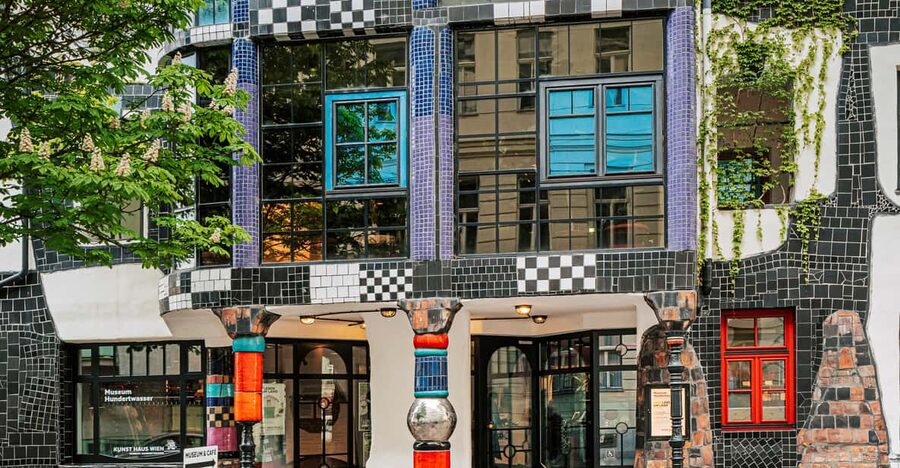
The permanent display moves beyond the artist’s pictures and shows how his beliefs took shape in the built world. Building models are especially useful because they make his architectural thinking easier to grasp.
Hundertwasser’s central challenge was simple to state but difficult to apply: people should live in harmony with nature. He disliked the dominance of straight lines and believed buildings could include more irregular forms, plants, color, and personal expression.
At the museum, you can see how these ideas developed from imaginative visions into practical projects. This gives the visit a useful structure. You are not only looking at finished buildings. You are following the process from an artist’s ideal to an architectural plan and then to an actual place.
I find this section valuable for anyone interested in design, city planning, or environmental ideas. It also works for families and younger visitors because models and unusual buildings are often easier to discuss than abstract art. The museum’s bright style keeps the subject approachable.
Still, do not expect a conventional architecture museum with long technical explanations. The focus is on Hundertwasser’s principles and personality, not on detailed engineering. You come away with a clear sense of his aims, even if you are not given every construction detail.
The upper floors and changing exhibitions
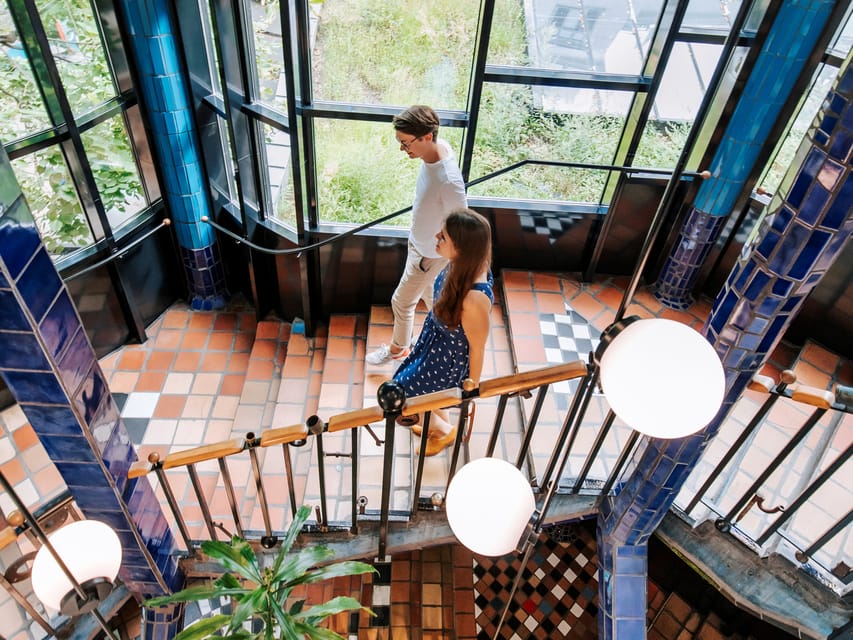
The top two floors hold temporary exhibitions. These displays add a reason to return, since their subject matter changes over time. The admission information includes access to a contemporary art exhibition and the current garage exhibition focused on ecology, sustainability, and urbanity.
This part of the museum broadens the experience beyond one artist. Contemporary art can give you a different visual language after the strong personal style of the permanent collection. The ecology exhibition brings the museum’s environmental concerns into present-day discussion.
Check exactly which ticket option you are selecting. The practical information states that you can visit the permanent exhibition, one special exhibition, or choose a combination ticket for both. The advertised $18 price is good value if it includes the areas you want, but you should confirm the selected combination before payment.
I would make the upper floors a priority if you enjoy current art or want a break from biography and permanent displays. One recent special exhibition was singled out as a highlight, which suggests that the changing program can be more than an afterthought.
The temporary galleries also help answer a useful question: does Hundertwasser’s environmental thinking still matter beyond his own work? Displays about sustainability and urbanity give you a chance to connect his ideas with present concerns rather than leaving them in the past.
Same Alps, a completely different kind of day:
- Vienna: Vivaldi’s Four Seasons Concert in Karlskirche
★ 4.7 · 14,951 reviews - Vienna: Spanish Riding School Training
★ 3.9 · 9,281 reviews - Vienna: Skip-the-cashier-desk-line Giant Ferris Wheel Ride
★ 4.5 · 7,859 reviews - Vienna: Schönbrunn Palace & Gardens Skip-the-Line Tour
★ 4.7 · 7,739 reviews
A calm pause at Café Friedlich
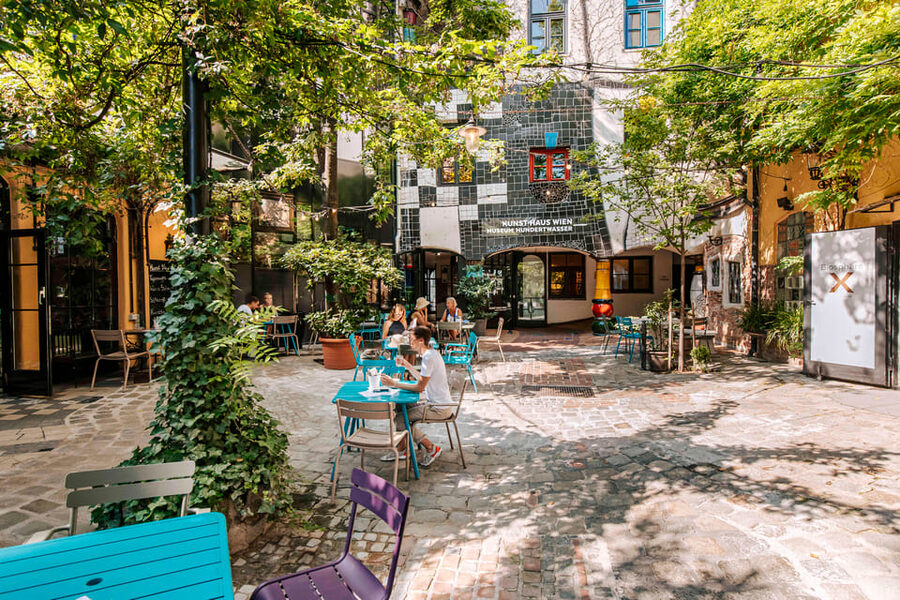
KunstHausWien is not only a gallery visit. The green courtyard and Café Friedlich provide a natural pause, especially if you have already spent hours walking through central Vienna.
The café offers both savory and sweet choices. That makes it useful for more than a quick coffee. You can stop for a light meal, take a break with something sweet, or simply sit in a welcoming setting after the galleries.
I would not build an entire meal plan around it without checking current opening details, but it is a worthwhile part of the visit. The courtyard adds breathing room and reinforces the museum’s connection between art, plants, and daily life.
This stop may also suit a mixed group. Someone keen on Hundertwasser can spend longer in the galleries, while another person can enjoy the café and courtyard without feeling trapped in a museum routine. The relaxed setting makes the visit less demanding than a large classical collection.
Getting there from central Vienna
The museum is served by public transport, with Radetzkyplatz the stated tram stop. From Schwedenplatz, take the U1 or U4, then change to tram line 1 toward Prater Hauptallee and leave at Radetzkyplatz.
From Landstraße/Wien Mitte, reached by the U3 or U4, take tram line O toward Praterstern and get off at Radetzkyplatz. These directions matter because the museum is not positioned directly beside the most famous central sights. Build in a little time for the connection rather than treating it as a quick walk from the Hofburg.
The tram route can also make this a sensible stop when you are already heading toward the Prater area. I like using public transport here because it keeps the visit connected to the rest of Vienna instead of turning it into an isolated taxi stop.
The activity is valid for one day, and starting times depend on availability. Since this is a self-guided museum visit rather than a timed group tour, you can choose a place in your Vienna schedule that matches your energy. I would avoid placing it after an exhausting run through several major museums. The art is more enjoyable when you have enough attention left for the ideas behind it.
How long should you allow?
The ticket is valid for one day, but that does not mean you need a full day inside. The museum is described as a relatively small, distinctive museum, so most people will likely treat it as a focused stop rather than an all-day project.
I would allow enough time for all four floors if the temporary exhibitions interest you, then add a pause at Café Friedlich. Your exact visit length will depend on how much time you spend with the audio guide and how closely you study the art.
If you only have a short window, focus on the first two floors and the building itself. If you have more time, add the upper-floor exhibitions and the ecology display. The museum works well at the end of a busy day because its atmosphere is calm, colorful, and less formal than many of Vienna’s grand institutions.
Families can also manage the visit without committing to a long, silent museum session. The unusual architecture and bold images provide immediate points of interest, while the environmental message gives older children and adults something more serious to discuss.
Is the $18 ticket good value?
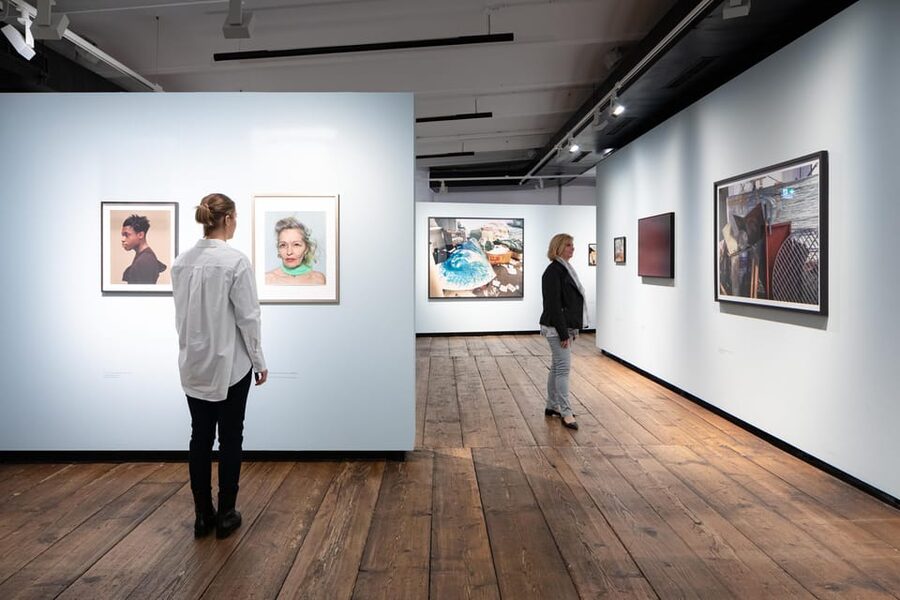
At $18 per person, the ticket is reasonably priced for a Vienna museum visit, especially when it includes the Museum Hundertwasser and access to current contemporary and ecology exhibitions. The value is strongest if you plan to see both the permanent and temporary sections.
The optional audio guide adds 4 EUR. I would see this as a useful extra for first-time visitors who want clear explanations of Hundertwasser’s paintings. If you mainly want to enjoy the building, color, and general atmosphere, you may decide to skip it.
Be careful when comparing prices. One booking issue reported by a senior visitor involved paying more than expected than the stated senior price. That does not change the appeal of the museum, but it is a reminder to check the final amount and ticket category before confirming.
The ticket also allows free cancellation up to 24 hours before the visit, and you can reserve now while paying later. Those terms are useful if your Vienna schedule is still shifting. Wheelchair access is available, which makes the museum practical for more visitors.
What I would not miss
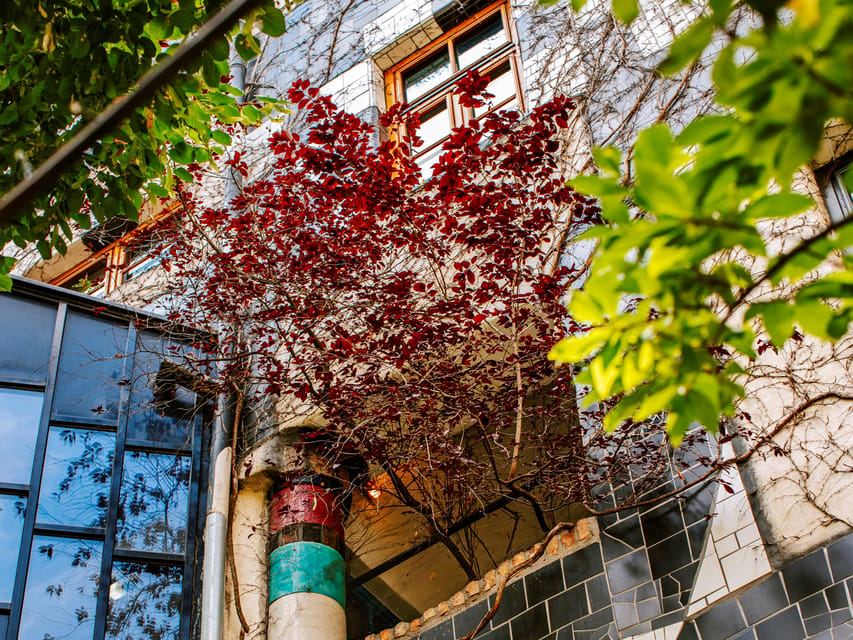
I would begin by looking closely at the building before entering the galleries. Notice the organic feel and the way the architecture rejects the plain, straight-lined style common in city buildings. That first look gives you a key for understanding the art inside.
Next, spend time on the first two floors. Do not rush past the early works and go straight to the most colorful pieces. The permanent exhibition is designed to show how Hundertwasser’s visual ideas and ecological commitments developed.
Then take in the models and practical architectural examples. This is where the artist’s dreams become easier to picture as real places. You may find the models more revealing than a written biography because they show how his ideals affected design.
After that, visit the upper-floor exhibitions if your ticket includes them. The contemporary art and ecology displays offer a useful change of pace and are the best reason to check what is currently showing before you go.
Finish with the courtyard, Café Friedlich, and the shop. The shop has creative souvenirs at relatively approachable prices, making it a good place to find something connected to the museum without assuming every item will be expensive.
Who will enjoy this museum most?
I recommend KunstHausWien to anyone who likes art with a clear point of view. You will get the most from it if you enjoy color, architecture, environmental questions, or artists who refused to stay within one discipline.
It is also a strong choice if you want something different from Vienna’s imperial palaces and grand historic collections. This is not a traditional old-master museum. It feels more personal, eccentric, and connected to modern city life.
Families should find the unusual building and bold art accessible, although the optional audio guide may be more useful for adults who want detailed interpretation. Design students, architecture fans, and people interested in sustainability will have plenty to consider.
I would be less likely to recommend it to someone seeking a large collection with hundreds of artists and a clear chronological survey of European art. KunstHausWien is focused. Its appeal comes from one artist’s ideas, the building that expresses them, and the temporary displays around them.
My verdict: book it if you want art with a purpose
I would book this museum if you want a compact Vienna experience that combines painting, architecture, ecology, and a pleasant café stop. The building is not merely a container for the art, and that makes the visit more memorable than a standard gallery tour.
The best value comes from choosing the combination ticket and seeing the temporary exhibitions as well as the first two floors. Add the audio guide if you want help interpreting the paintings, and check the final ticket price carefully, particularly for discounted categories.
Skip it only if your Vienna plans are already full of museums or if you prefer strictly traditional art. For almost everyone else, KunstHausWien offers a cheerful, thoughtful change of pace, with enough practical detail to keep the visit grounded.
FAQ
Where is KunstHausWien located?
KunstHausWien is in Vienna, Austria. The stated public transport stop is Radetzkyplatz.
How do I reach the museum from Schwedenplatz?
Take the U1 or U4 to Schwedenplatz, then continue on tram line 1 toward Prater Hauptallee and get off at Radetzkyplatz.
How do I reach KunstHausWien from Landstraße/Wien Mitte?
Take the U3 or U4 to Landstraße/Wien Mitte, then take tram line O toward Praterstern and leave at Radetzkyplatz.
How long is the ticket valid?
The ticket is valid for one day. Available starting times depend on the date and current availability.
What does the permanent exhibition cover?
The first two floors house the permanent exhibition about Friedensreich Hundertwasser, including his art, ideas, ecological commitment, architecture, and building models.
Where are the temporary exhibitions?
The temporary exhibitions are on the top two floors. These include contemporary art and the current garage exhibition about ecology, sustainability, and urbanity.
Is the audio guide included?
The information states that an audio guide is available in English, French, and German, while separate ticket information lists it at 4 EUR. Check the exact booking conditions for your ticket.
Is the museum wheelchair accessible?
Yes, KunstHausWien is wheelchair accessible.
Can I cancel my booking?
You can cancel up to 24 hours in advance for a full refund. A reserve-now, pay-later option is also available.
Just added around Vienna
- Ottakringer Brewery tour★ 4.0 · 6 reviews
- New Hofburg Palace Tour House of Habsburg★ 4.5 · 5 reviews
- Private Van & Walk Tour – One Perfect Day in Vienna★ 5.0 · 21 reviews
- True Crime mobile puzzle rally Vienna★ 4.0 · 3 reviews
- Vienna Naschmarket Food Tasting Tour★ 4.0 · 30 reviews
- Vienna Nightlife Experience: Food, Wine, Cocktails & Vibes★ 5.0 · 119 reviews
- Myth Mozart★ 4.0 · 80 reviews
- ( Night Tour ) With Private Guide + wine or prosecco★ 4.0 · 12 reviews
Museums, compared.

Skip-the-Line Sisi Museum, Hofburg and Gardens Tour
Read our review →
Vienna Kunsthistorisches Museum Day Admission Ticket
Read our review →
Chocolate Workshop in Chocolate Museum w/ Tasting
Read our review →
St. Stephen’s Cathedral & Dom Museum Wien Tickets
Read our review →
Browse the lists this tour appears in