
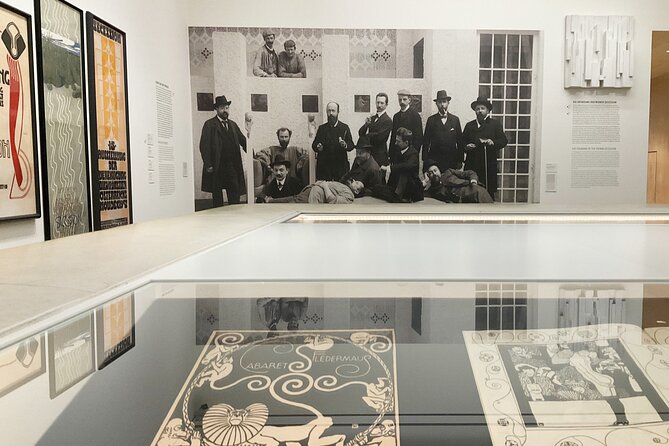
Reviewed · BELVEDERE PALACE AND KLIMT TOURS
Private Tour of Viennese Art in the Leopold Museum: Klimt, Schiele, Kokoschka
Vienna’s Leopold Museum is the place to face the city’s most provocative modern art, especially the unsettling, intimate work of Egon Schiele. This private visit puts an art historian beside you, so the paintings become more than famous names on a wall. You get context for Klimt, Schiele, and Kokoschka, plus room to ask your own questions.
I like two things here: the private format keeps the discussion focused on your group, and the guide links art to the history and science shaping Vienna’s creative world. The strongest praise for the experience centers on how the guide brings both the artists and their work to life. The main drawback is simple: the $378.71 price covers the group of up to six, but museum admission is extra.
Key points before you book
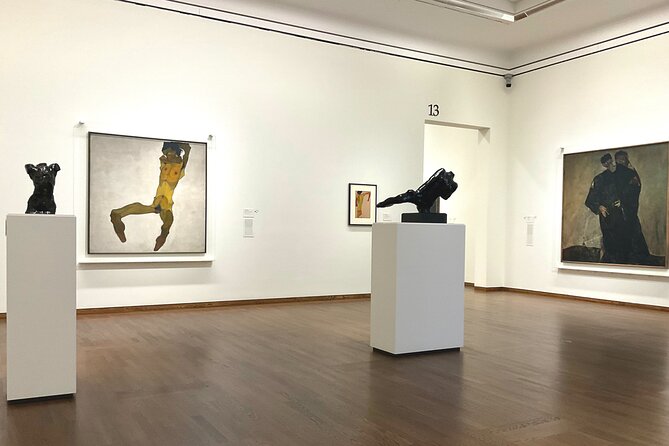
- Schiele takes center stage: The museum has a permanent exhibition devoted to Egon Schiele.
- Private attention: Only your group participates, with a maximum of six people.
- A serious look at difficult art: Schiele’s nudes and exhibitionist works still raise questions about pornography, art, and public taste.
- History and science matter here: The guide explains how wider intellectual changes shaped Vienna’s art scene.
- The setting adds context: The Leopold Museum sits in the MuseumsQuartier, one of Vienna’s major cultural areas.
- The visit is compact: Plan on about 2 hours and 15 minutes, beginning and ending at the museum.
Why the Leopold Museum suits this particular art tour
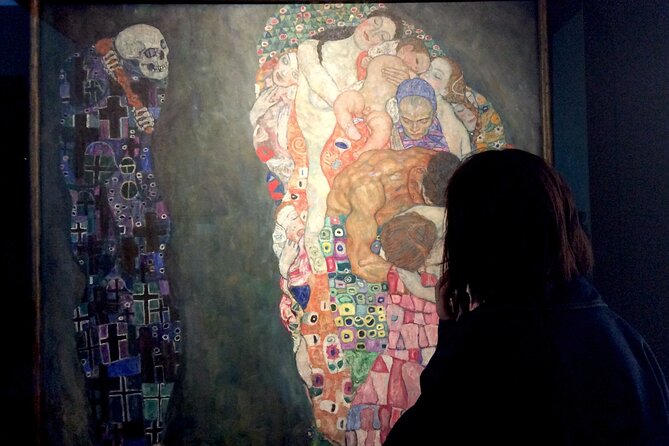
The Leopold Museum is not just a convenient room full of famous Austrian paintings. It is especially useful if you want to understand the pressure these artists put on accepted ideas about beauty, the body, and artistic freedom.
The museum’s permanent Schiele exhibition gives this tour a clear center. Schiele’s work can be hard to process at first glance. His bodies may look exposed, angular, or deliberately confrontational. The point is not simply to decide if you like the pictures. A good guide helps you ask what the artist was testing, what viewers found shocking, and why those questions still feel current.
That makes the tour better suited to curious adults than to anyone seeking a quick parade of pretty pictures. You will spend time with art that may demand a reaction. Sometimes that reaction is admiration. Sometimes it is discomfort. Often it is both.
The experience also places Klimt, Schiele, and Kokoschka within a wider Viennese setting. The stated focus includes the way history and science helped define the city’s art scene. That matters because these painters did not work in a vacuum. Their art reflects arguments about modern life, human nature, and the limits of what could be shown.
More Belvedere Palace and Klimt Tours in Vienna:
- Entry Ticket Upper Belvedere, Klimt’s Kiss & Permanent Collection
★ 4.5 · 831 reviews - Vienna: Lower Belvedere Entry Ticket & Temporary Exhibitions
★ 4.1 · 275 reviews - Vienna: Belvedere Palace Skip-the-Line Tour
★ 4.9 · 197 reviews
What a private art historian changes
A private guide is most useful in a museum where interpretation matters as much as sight lines. You are not simply being told the title and date of a painting. You can pause over a difficult image, ask why it caused controversy, or request more background on one artist rather than another.
The group limit is six. That is small enough for a real conversation, not a lecture delivered to a crowd. If one person in your group wants to focus on Schiele’s drawings while another is more interested in Klimt, the private format gives the guide room to respond.
The guide is described as a professional art historian. No guide name is provided, so you should not book expecting a particular individual. What you can expect is a tour built around interpretation, with the guide helping you connect individual works to the larger intellectual climate of Vienna.
One especially useful aim is to bring the artists and their work to life. That phrase can sound vague, but here it points to a practical benefit. Art history can become a list of names, dates, and styles. A strong explanation gives those facts a human edge. You begin to see why a work was made, why it unsettled people, and why it continues to provoke discussion.
The Leopold Museum: about 2 hours and 14 minutes with Klimt, Schiele, and Kokoschka
Most of your time is spent inside the Leopold Museum, with the planned museum portion lasting about 2 hours and 14 minutes. That is a substantial visit for one collection, but not an exhausting full-day museum marathon.
The emphasis is on three important artists:
- Egon Schiele: The museum’s permanent Schiele display is the clearest reason to choose this tour. His work raises hard questions about the body, sexuality, self-display, and the line between pornography and art.
- Gustav Klimt: Klimt gives you another view of Viennese modern art, with the guide helping place his work beside the more openly confrontational approach of Schiele.
- Oskar Kokoschka: Kokoschka adds a further perspective on the period’s changing ideas about expression and the human subject.
The supplied information does not promise a fixed list of individual paintings. Temporary exhibitions may also be present. That means the exact route through the museum can vary, which is useful if you have already seen some of the better-known works or want the guide to adapt the visit.
The phrase nowness of art is central to the experience. In plain terms, the tour asks why art should speak to its own moment rather than simply copy older models. You can expect the discussion to connect what you see on the walls with the questions that remain alive today.
Schiele’s work is the most likely place for those questions to become personal. Some visitors may find the images bold and honest. Others may find them crude, exposing, or difficult. The tour does not promise to make every work comfortable. Its value is in giving you a framework for understanding why the art still causes strong reactions.
That is also the chief caution. If you prefer art tours that stay light and decorative, this may feel intense. If you enjoy art that argues with you, the difficult material is likely to be the reason you choose it.
Seeing controversial art without rushing past it
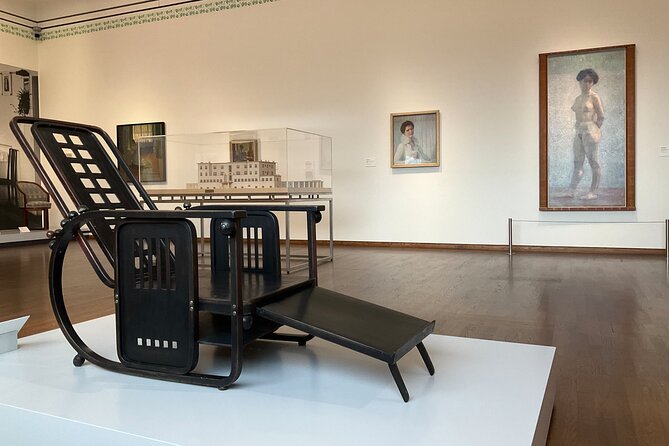
Many museum visits give you only enough time to take a photograph and move on. This experience offers a better chance to stop and consider what makes a work controversial.
Schiele’s exhibitionist pieces are still capable of provoking dubious reactions. The subject is not controversy for its own sake. It is the question of where art ends and pornography begins, and why that boundary changes according to time, culture, and personal judgment.
A private guide can help you separate three different responses:
- What you feel when you first see the work.
- What the artist may have been trying to show or challenge.
- How the work has been judged by audiences over time.
That distinction is useful. You do not have to admire every image to understand its importance. You also do not have to accept a guide’s interpretation without asking questions. The best version of this visit lets you think aloud.
The tour is particularly well suited to people who want more than the standard museum highlights. You may leave with fewer easy answers, but with a clearer sense of why these artists remain part of Vienna’s cultural conversation.
A few more Vienna trips to weigh up
- Vienna: Skip-the-Line Sisi Museum, Hofburg and Gardens Tour
★ 4.8 · 5,918 reviews - Vienna Kunsthistorisches Museum Day Admission Ticket
★ 4.6 · 3,690 reviews - Tickets for the Albertina Exhibitions
★ 4.7 · 2,126 reviews - Vienna: Chocolate Workshop in Chocolate Museum w/ Tasting
★ 4.5 · 1,802 reviews
History and science behind Vienna’s art scene
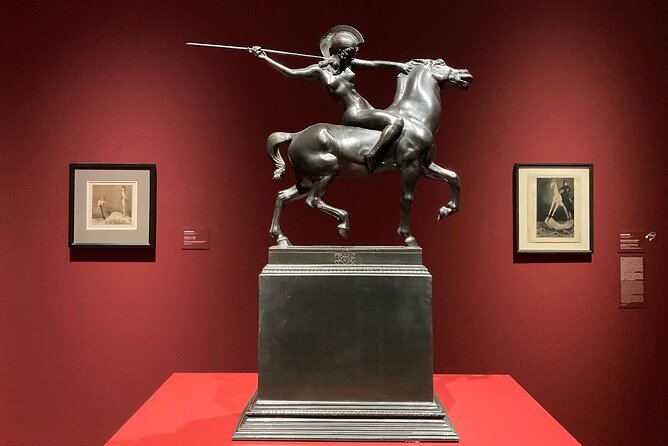
The tour also promises to explain how history and science shaped the art scene. This is an important part of the experience because it keeps the museum from becoming an isolated art lesson.
You can expect the guide to connect artistic change with larger shifts in how people understood the world. The provided details do not specify particular scientific discoveries or historical events, so I would not book this expecting a set lecture on one named subject. Instead, think of this as a broad framework for reading the art.
That framework helps explain why artists began to challenge older ideas. Paintings and drawings can reflect changing beliefs about the body, identity, society, and what counts as acceptable expression. When a guide links those issues to history and science, the works may feel less like strange objects from the past and more like responses to problems that still exist.
This approach also helps with Klimt, Schiele, and Kokoschka as a group. You are not simply comparing three famous Austrian artists. You are looking at different ways artists responded to a changing intellectual climate.
A one-minute move into MuseumsQuartier Wien
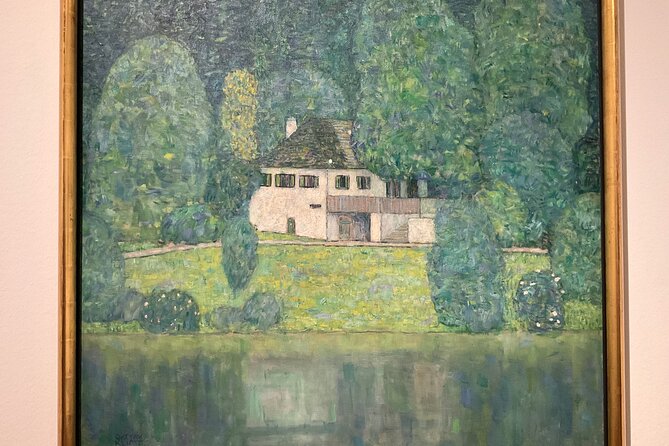
The second stop is MuseumsQuartier Wien, where the Leopold Museum is located. The transfer takes about one minute and does not require a separate admission ticket.
In practical terms, this is not a second sightseeing stop with a long guided walk. It is the setting around the museum, and it gives you a useful sense of place. The Leopold Museum sits in the middle of a major cultural area, so you can continue exploring nearby after the tour if your plans allow.
Because the activity ends back at the meeting point, you do not have to arrange a separate return transfer. That is convenient if you are building a museum day around the visit.
Do not expect the MuseumsQuartier portion to add much time or a second full attraction. Its value is context and location. The real content remains inside the Leopold Museum.
Is $378.71 good value for up to six people?
The listed price is $378.71 per group of up to six. That works out to about $63 per person if you fill every place, before adding museum admission. For two people, the effective cost is about $189 each, again without the entry ticket.
That makes the group size important. This is a good value for five or six people who want an art historian and would otherwise split the cost of a private guide. It is a much bigger spend for one or two people.
I would compare the price to what you want from the visit. If you only need to see Schiele’s work and read the wall labels, a private tour may not be worth it. If you want to discuss difficult art, ask detailed questions, and have the guide shape the visit around your group, the cost becomes easier to defend.
The two-hour-plus duration also helps. You are not paying for a rushed introduction that ends after a few key works. At the same time, it is short enough to fit into a larger day of sightseeing.
Remember to budget for museum admission separately. The guide fee does not include the ticket, and the tour begins at the Leopold Museum, Museumsplatz 1, 1070 Vienna.
Who will get the most from this visit?
I would choose this tour for:
- A small group of friends who already enjoy art and want to discuss it.
- Visitors especially interested in Klimt, Schiele, or Kokoschka.
- People who find controversial art more interesting than comfortable.
- Anyone who wants historical and scientific context rather than a basic visual tour.
- Families or mixed groups where a private guide can adjust the level of explanation.
- Repeat visitors to Vienna who want a more focused museum experience.
I would hesitate if you are looking for a general introduction to all of Austrian art. The focus is narrow, and the Schiele material may dominate the visit.
I would also think twice if your budget is tight. The cost per person changes sharply depending on how many people share the booking, and museum admission is not included.
Practical details that matter on the day
The meeting point is the Leopold Museum at Museumsplatz 1 in Vienna. The activity is offered in English and uses a mobile ticket.
The tour is private, so only your group participates. That gives you more control over questions and pace than a shared group visit. The experience lasts approximately 2 hours and 15 minutes, with the activity ending at the same meeting point.
It is near public transportation, and most people can participate. No special physical requirements are stated, so if you have a concern, confirm the details before booking rather than assuming the museum setup will suit your needs.
Confirmation is provided at booking. Free cancellation is available up to 24 hours before the start time for a full refund. Changes or cancellations made less than 24 hours ahead are not accepted, and the cut-off follows Vienna local time.
Should you book the Leopold Museum art tour?
Book it if you want to understand why Viennese art can be beautiful, strange, and uncomfortable at the same time. The private art historian, small group, and permanent Schiele collection make this more than a quick look at famous names.
I would be especially keen to book with four to six people. At that size, the group price makes more sense, and you still get a personal conversation rather than a crowded lecture.
Skip it if you only want a brief museum visit, dislike provocative nudes, or plan to spend as little as possible. Also check the added admission cost before committing.
For the right audience, this is a focused way to meet Klimt, Schiele, and Kokoschka through the questions their art still raises. You may not agree with every interpretation, but you should come away looking more carefully.
FAQ
Where does the private Leopold Museum tour begin?
It begins at the Leopold Museum, Museumsplatz 1, 1070 Vienna, Austria.
Where does the activity end?
The activity ends back at the meeting point at the Leopold Museum.
How long does the tour last?
The experience lasts approximately 2 hours and 15 minutes. The Leopold Museum portion is listed at about 2 hours and 14 minutes.
Is museum admission included in the price?
No. Museum admission tickets are not included and must be paid for separately.
How many people can join the private tour?
The price covers one private group of up to six people. Only your group participates.
Is the tour offered in English?
Yes. The experience is offered in English.
Can I cancel for a full refund?
Yes, if you cancel at least 24 hours before the experience start time. Cancellations or changes made less than 24 hours before the start time are not accepted or refunded.
Just added around Vienna
- World War II History Vienna Old Town Private Walking Tour★ 4.8 · 9 reviews
- From Krems: Wachau Valley River Cruise on the Danube★ 4.6 · 95 reviews
- Vienna: Winery and Wine Tasting Tour with a Wine Expert★ 5.0 · 5 reviews
- Vienna: Wine Tasting E-Bike Tour★ 4.9 · 46 reviews
- Vienna: Wine Tasting at Schönbrunn Palace★ 4.3 · 71 reviews
- Vienna: Wine Tasting Tour★ 4.8 · 61 reviews
- Vienna: Wiener Schnitzel and Strudel Cooking Class★ 4.9 · 126 reviews
- Vienna Urban Art Tour: Explore a different side of Vienna!★ 3.8 · 14 reviews
Belvedere Palace and Klimt Tours, compared.
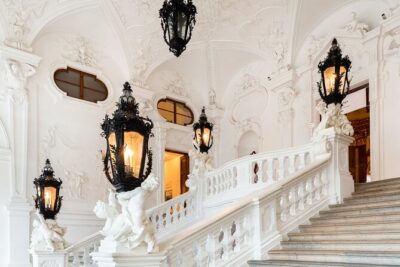
Entry Ticket Upper Belvedere, Klimt’s Kiss & Permanent Collection
Read our review →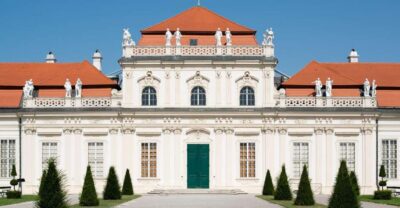
Lower Belvedere Entry Ticket & Temporary Exhibitions
Read our review →
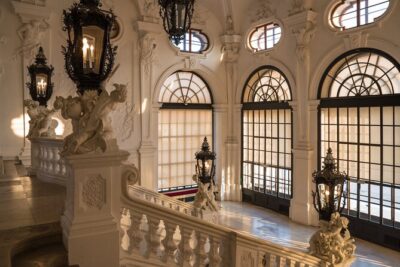
Skip-the-line Upper Belvedere Tickets and Guided Tour Vienna
Read our review →
Schönbrunn, Belvedere, Big Bus, Giant Wheel & Cruise
Read our review →
Skip-the-line Upper Belvedere Tickets and Guided Tour Vienna
Read our review →
Klimt Villa (Gustav Klimt Atelier & Museum) Ticket
Read our review →Browse the lists this tour appears in