
Reviewed · CITY TOURS
Vienna Hop On Hop Off City Tour
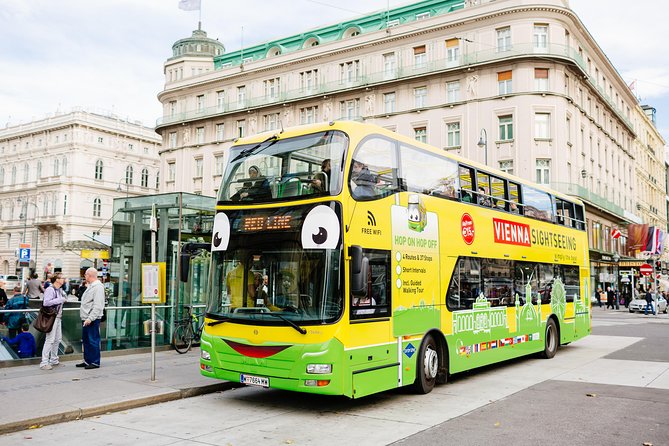
Vienna’s hop-on hop-off bus is most useful when you want a quick look at a large city without wrestling with its tram map on day one. The routes reach Schönbrunn Palace, Belvedere, the Danube, Prater, and the vineyards above the city, so you can set your own pace instead of following a fixed walking tour. The self-guided music tour is a nice extra for anyone drawn to Mozart, Beethoven, Schubert, and Strauss.
I especially like the choice of 24, 48, or 72 hours, and the broad route network. The audio commentary comes in 19 languages, including Korean, Polish, and Serbian, and the buses are often described as clean and comfortable enough for a city overview. The catch is waiting time: some departures can be 40 to 60 minutes apart, and one reported wait reached an hour.
Key points to know before boarding
- The ticket begins on first use: Your 24, 48, or 72-hour period starts when you board at your first stop.
- Schönbrunn and Belvedere are covered: The yellow route links several major palaces and Vienna Central Station.
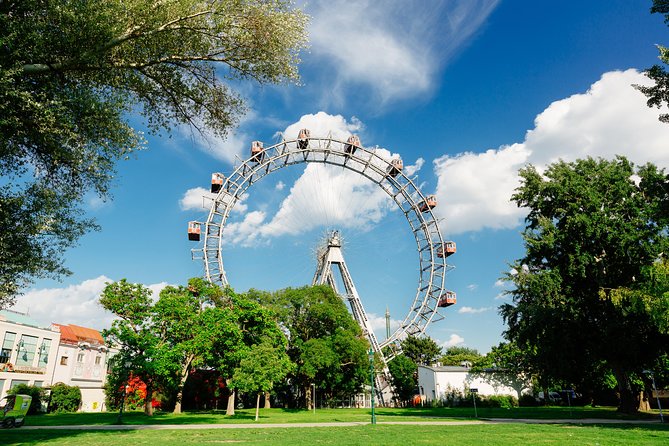
- The Danube route takes you farther out: Stops include the Giant Ferris Wheel, Danube Tower, Alte Donau, and Vienna International Centre.
- Cobenzl gives you a hilltop outing: The green route reaches Cobenzl Aussicht and Himmelstraße, not just central Vienna.
- Audio is included, not a live guiding service: Commentary is available in 19 languages, though sound and timing may vary by bus.
- Waiting is the main risk: Plan around the timetable rather than assuming another bus will arrive in a few minutes.
What this Vienna bus tour really gives you

A standard ride takes about two hours, but the pass itself lasts much longer. You can ride one full circuit to understand Vienna’s shape, then use the buses as transport between major sights during the rest of your pass.
That distinction matters. If you only stay aboard for one loop, this is mainly a sightseeing sampler. If you hop off at Schönbrunn, Belvedere, Prater, and one central museum, the pass becomes a practical way to connect places that are spread across the city.
The tour is not a small-group walk with a guide answering questions as you go. It is a recorded audio tour on a large sightseeing bus. That keeps the price at $42.13 per person and lets you choose your own stops, but it also means you need to follow the route map and pay attention to where you get off.
The booking information lists English as the offered tour language, while the onboard audio is available in 19 languages. Check the language selection when you book or board, especially if you need a specific option.
A few more Vienna trips to weigh up
- Vienna: Guided Walking Tour of City Center Highlights
★ 4.7 · 4,989 reviews - Vienna: City Cruise with Optional Lunch
★ 3.4 · 3,982 reviews - Vienna: City Cruise
★ 3.3 · 2,978 reviews
The red route through central Vienna
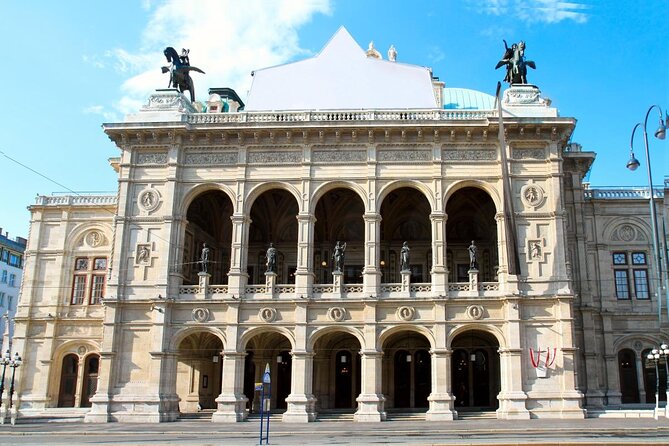
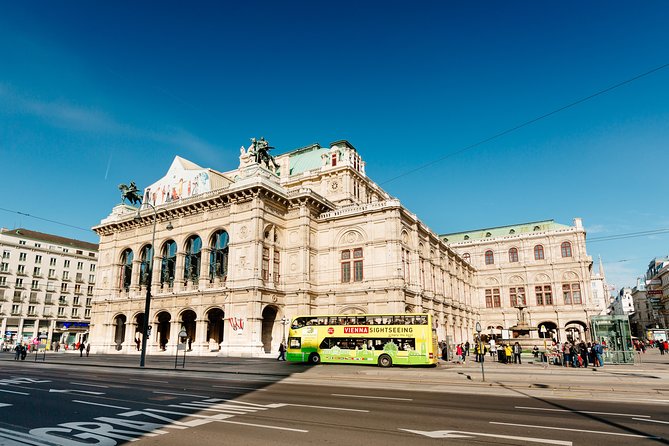
The central route begins and ends at the Vienna State Opera, a useful starting point near the historic center. From here, the bus heads toward the Kunsthistorisches Museum, one of Vienna’s major art museums, then along Mariahilfer Straße, a main shopping street.
Rathaus brings you near Vienna’s grand city hall, while Liebenberg-Denkmal and the Votive Church place you close to the university district and the Ringstrasse. The Sigmund Freud Museum is another central stop, useful if you want to connect the bus ride with Vienna’s intellectual and cultural past.
The route continues to Morzinplatz, Schwedenplatz, the Museum of Applied Arts, and Stadtpark before returning to the opera. Stadtpark is particularly easy to pair with a short walk, since it offers a change from museums and formal avenues.
This is the best route for your first orientation ride. You can see how the Ringstrasse area, the canal, shopping district, museums, and central parks fit together. I would not use it as a substitute for walking through the old center, though. The bus gives you a useful overview, but the most rewarding central streets are experienced at pavement level.
The yellow route to Schönbrunn and Belvedere
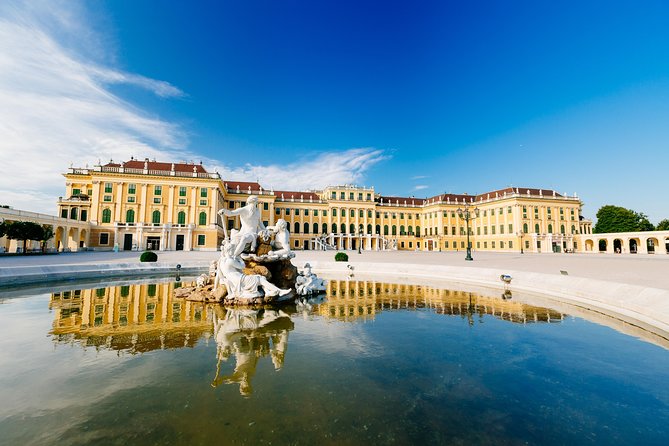
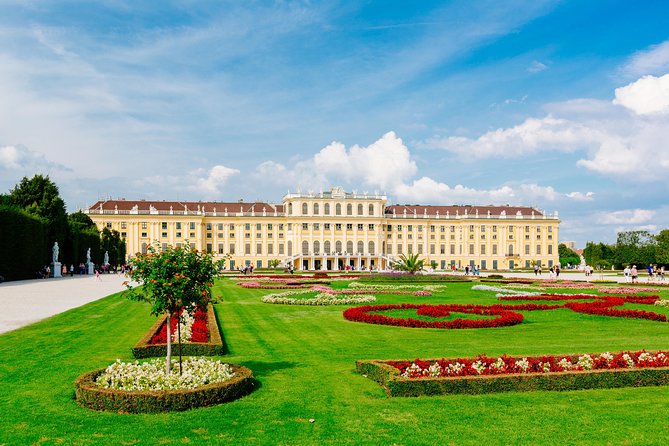
The yellow route is the practical choice when you want to reach Vienna’s two major palace stops in one sightseeing plan. It starts at the Vienna State Opera and goes to Wien Westbahnhof, Schönbrunn Palace, Vienna Central Station, Belvedere 21, Belvedere Palace, and Schwarzenbergplatz.
Schönbrunn is the major stop here. You can visit the palace interiors and grounds separately, so allow plenty of time if you plan to get off. The grounds are extensive, and a quick bus stop does not give the palace justice.
Belvedere offers a different experience. The palace complex is known for its art collection and formal gardens, while nearby Belvedere 21 provides a modern art contrast. Having both on one route makes this line useful for combining old Vienna with newer cultural spaces.
Vienna Central Station is also on this route, which can help if you are arriving or departing by rail. One practical warning: a bus may not stop automatically just because you are waiting at a stop. Make your intention clear and watch the route carefully. A reported incident involved a bus passing Vienna Central Station, followed by an unpleasant exchange with staff.
The blue route to Prater and the Danube
The longest-looking route on the schedule heads east from the Museum of Applied Arts and Stadtpark. It reaches the Johann Strauss monument, then passes the opera, the Kunsthistorisches Museum, MuseumsQuartier, City Hall, Liebenberg-Denkmal, the Freud Museum, the Votive Church, Morzinplatz, and Schwedenplatz before continuing toward the Danube.
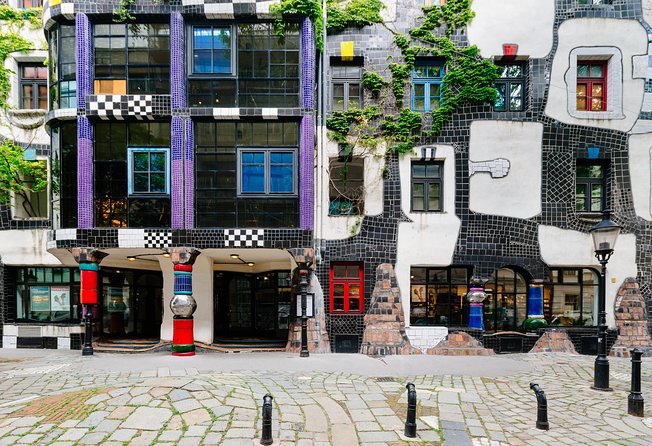
The outer section includes Kunst Haus Wien, the Viennese Giant Ferris Wheel, the DDSG Blue Danube Schiffahrt area, Danube Tower, Alte Donau, Vienna International Centre, Reichsbrücke, Praterstern, Taborstraße, and Schwedenbrücke.
This line shows a side of Vienna you might otherwise skip. The Giant Ferris Wheel and Prater are classic leisure sights, while the Danube Tower offers a high viewpoint over the city. The Vienna International Centre and Reichsbrücke give you a sense of the city beyond the imperial center.
The drawback is time. If you remain on the bus for the complete outer route, you may spend a large part of your sightseeing day seated. That can still be worthwhile on a first visit, especially if you want an overview or need a break from walking, but I would choose one or two stops rather than trying to cover every stop in one ride.
Same Alps, a completely different kind of day:
- Vienna: Vivaldi’s Four Seasons Concert in Karlskirche
★ 4.7 · 14,951 reviews - Vienna: Spanish Riding School Training
★ 3.9 · 9,281 reviews - Vienna: Skip-the-cashier-desk-line Giant Ferris Wheel Ride
★ 4.5 · 7,859 reviews - Vienna: Schönbrunn Palace & Gardens Skip-the-Line Tour
★ 4.7 · 7,739 reviews
The green route up to Cobenzl
The green route starts at the Votive Church and heads toward Gartenpalais Liechtenstein, Sandgasse, Cobenzlgasse, Cobenzl Aussicht, Himmelstraße, and Spittelau before returning to the Votive Church.
This is the route to choose for a different view of Vienna. Cobenzl Aussicht is a hilltop viewpoint, and Himmelstraße takes you toward the city’s higher, greener edge. The route is less about famous palace interiors and more about seeing Vienna from above and reaching areas outside the normal central circuit.
One important detail is easy to miss: the green line is included with the 24, 48, and 72-hour tickets. It is not simply an unrelated add-on requiring a different booking. If you have time for the hill route, use it. One of the strongest positive impressions from this tour comes from the ride up into the hills.
The route may be less useful if your visit is very short and your priority is only the State Opera, Hofburg area, museums, and Schönbrunn. With a 24-hour ticket, you need to choose between breadth and depth.
Audio commentary, maps, and the music walk
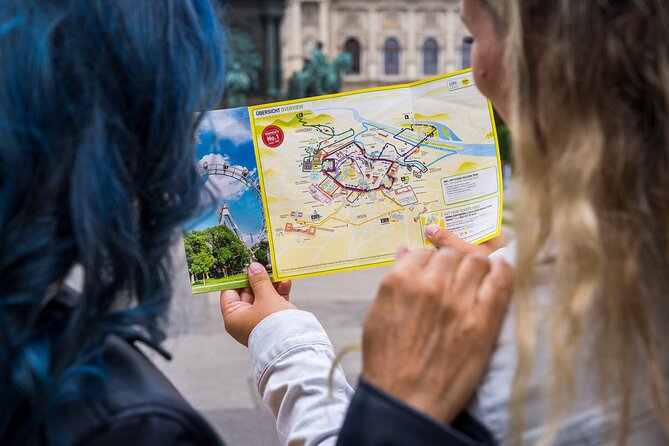
The recorded commentary gives you background as the bus passes each sight. It is available in 19 languages, with Korean, Polish, and Serbian listed among the newer additions. For a first circuit, this is enough to put names and landmarks into context.
It is not always perfectly synchronized with the view outside. Some passengers have found the narration hard to hear, especially when other people are talking. Headphone ports have also been reported as unreliable on some buses, and advertised Wi-Fi did not always work.
I suggest treating the audio as helpful background rather than the sole reason to take the tour. If a section falls out of sync, look at the route map and enjoy the city view. If your seat’s headphone socket fails, move seats early rather than waiting until the bus fills.
The included music history audio tour adds genuine value for classical music fans. It points you toward places linked with Beethoven, Schubert, Strauss, and Mozart. It is self-guided, so you can use it independently of the bus schedule, at the hour and pace that suit you.
How the price works as a sightseeing investment
At $42.13 per person, the 24-hour pass is not a bargain if you only ride once. A single two-hour loop gives you an overview, but you are paying for the ability to board again and use the network as city transport.
The value improves with a 48-hour or 72-hour option if you plan to visit sights across several routes. You could use one day for the central and yellow routes, then reserve another period for the Danube and Cobenzl lines. The longer passes also give you more freedom to wait for a preferred bus or abandon a crowded departure.
The best comparison is not with a walking tour. Compare it with the time and effort of connecting Schönbrunn, Belvedere, Prater, and the Danube by other means. If you want to see all of those areas and prefer a simple sightseeing vehicle, the pass can pay for itself in convenience.
If your plans center on the compact old town, a walking tour and regular public transport may suit you better. The bus is most useful for distance and orientation, not for every short central journey.
Waiting times and the ticket exchange
This is where you need a little patience. Some departures have been described as punctual and frequent enough, while other rides involved waits of 30 minutes, 40 to 60 minutes, or even longer. Service can differ by route and time of day.
Do not build a tight schedule around a bus arriving exactly when you reach a stop. If you have a timed palace admission or train to catch, leave a generous cushion. The pass gives you flexibility, but only if you do not spend your entire day watching the road.
The voucher exchange can also be confusing. Redemption has been limited to two locations, and finding the correct office or kiosk has caused frustration. Some machines have had trouble reading barcodes, creating a slow start.
Read the redemption instructions before you leave your hotel. If you are already at a stop, do not assume the driver can always exchange a voucher for the active ticket. This small piece of planning can save you a long walk and a queue.
Comfort, staff, and what to expect onboard
The buses are often clean, and several rides have been praised for careful driving and pleasant staff. Seats can feel uncomfortable on a long circuit, especially if you stay aboard for the outer Danube route or the full hill circuit.
Air conditioning has not always been strong. In winter, one serious complaint involved cigarette smoke inside a bus, which is especially concerning for anyone with asthma. If the air feels poor, move seats or leave at the next suitable stop rather than forcing yourself through the whole circuit.
Driver interaction is inconsistent. Some drivers are described as careful and helpful, while others have been criticized for being distracted, unhelpful, or unable to answer questions in English. You should know your stop before boarding and use the map rather than depending on the driver for detailed directions.
The experience works best when you see it as a self-guided transport service with audio, not as a personal guide who will reorganize your day for you.
Who should book the Vienna hop-on hop-off tour
I would recommend this for a first visit when you want to cover far-flung sights without planning every tram and train connection. It also suits families, older visitors, and anyone who wants a seated overview before choosing which museums and palaces deserve more time.
It is a good match for you if:
- You want to see Schönbrunn, Belvedere, Prater, and the Danube in one trip.
- You like choosing your own stops.
- You value audio in a language other than English.
- You plan to use the pass for at least one full day.
- You are comfortable checking maps and allowing for delays.
I would be cautious if you dislike recorded commentary, need exact departure times, or have only a few hours in Vienna. In those cases, waiting for the next bus can eat up too much of your limited time.
Should you book it?
Book it if you want a broad first look at Vienna and will use the bus on more than one route. The yellow line to Schönbrunn and Belvedere, plus the hill ride to Cobenzl, gives the pass more range than a simple central loop.
Choose 48 or 72 hours when your schedule allows several palace, museum, Danube, and hill stops. Choose 24 hours only if you are disciplined about your priorities and accept that long waits may force changes.
The experience earns its price through coverage and flexibility, not flawless service. Keep the map handy, confirm where to redeem your voucher, protect your schedule with extra time, and treat the audio as an aid. Used that way, it can be a sensible introduction to Vienna rather than a complete substitute for exploring the city on foot.
FAQ
How much does the Vienna Hop On Hop Off City Tour cost?
The listed price is $42.13 per person. The final value depends on how often you use the bus and which ticket duration you choose.
How long does the tour last?
A complete ride is approximately two hours. Your ticket remains valid for 24, 48, or 72 hours after you first board, depending on the option selected.
Where can I board the bus?
You can begin at any stop on the itinerary. Stops include the Vienna State Opera, Schönbrunn Palace, Belvedere Palace, Schwedenplatz, the Museum of Applied Arts, and other locations.
Which languages are available?
The onboard audio commentary is available in 19 languages. Korean, Polish, and Serbian are listed as new language options. The tour itself is offered in English.
Is there a live guide on the bus?
The commentary is recorded audio rather than a live guided presentation. You should use the route map and audio system to follow the sights.
Does the ticket include the green line to Cobenzl?
Yes. The green line is included with the 24-hour, 48-hour, and 72-hour tickets.
Is the music history tour included?
Yes. The price includes audio files for a self-guided music history tour connected with Mozart, Beethoven, Schubert, and Strauss.
Is hotel pickup included?
No. Hotel pickup and drop-off are not included. You must reach one of the listed bus stops yourself.
Can I cancel the tour?
You can cancel for a full refund if you do so at least 24 hours before the experience start time. Cancellations or changes made within 24 hours are not accepted for a refund.
Just added around Vienna
- Ottakringer Brewery tour★ 4.0 · 6 reviews
- New Hofburg Palace Tour House of Habsburg★ 4.5 · 5 reviews
- Private Van & Walk Tour – One Perfect Day in Vienna★ 5.0 · 21 reviews
- True Crime mobile puzzle rally Vienna★ 4.0 · 3 reviews
- Vienna Naschmarket Food Tasting Tour★ 4.0 · 30 reviews
- Vienna Nightlife Experience: Food, Wine, Cocktails & Vibes★ 5.0 · 119 reviews
- Myth Mozart★ 4.0 · 80 reviews
- ( Night Tour ) With Private Guide + wine or prosecco★ 4.0 · 12 reviews
City Tours, compared.
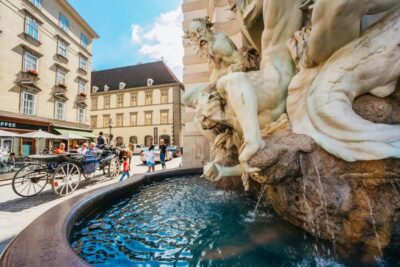
Guided Walking Tour of City Center Highlights
Read our review →
Guided Walking Tour of City Highlights & Hidden Gems
Read our review →

Skip-the-Line Schonbrunn Palace Guided Tour and Vienna Historical City Tour
Read our review →
Browse the lists this tour appears in