Reviewed · VIENNA TOURS
What do Mozart and Henry Ford have in common? – The freemason in Vienna
Vienna’s Freemasonry story begins with an intriguing question: what links Mozart, Henry Ford, Goethe, George Washington, Puccini, and several other famous names? This private walk, led by Sandra Blum of Safu, Exklusiv Wien Entdecken, follows that connection through central Vienna, using churches, streets, and monuments as clues. I like the unusual subject and the fact that the tour goes beyond the usual imperial palaces and coffeehouse circuit. I also like the small private format, with five to 25 people sharing the guide’s attention.
The main drawback is that the tour lasts about 1 hour 45 minutes but gives only short scheduled stops at each site. The Albertina portion is an exterior description, and the admission-free stops do not mean you enter every building. If you want a detailed architectural tour or a visit inside Masonic temples, this may feel too brief.
Key points at a glance
- Mozart and Henry Ford share the spotlight: The tour connects famous figures from different eras through Freemasonry.
- Four central Vienna stops: The route includes St. Stephen’s Cathedral, Rauhensteingasse, St. Michael’s Church, and the Albertina exterior.
- Sandra Blum leads the experience: The provider is Safu, Exklusiv Wien Entdecken.
- Private group format: Your party participates on its own, with a minimum of five and a maximum of 25 people.
- Short, focused walking route: The tour takes about 1 hour 45 minutes, making it easy to fit into a day in Vienna.
- No major entrance fees built in: The listed stops are free to view, while the Albertina admission ticket is not included because this tour describes the exterior.
Why Freemasonry gives this Vienna walk a different angle
Vienna can sometimes feel like a city of grand, familiar sights. You see the Habsburg palaces, hear about composers, and admire churches with centuries of public ceremony behind them. This walk asks you to look at those same places through another lens: the presence, symbols, addresses, and personal connections associated with Freemasonry.
That shift is the real reason to book. You are not simply checking off another church or palace. You are listening for links between public Vienna and a private organization that has often been surrounded by rumor, secrecy, and speculation.
The subject also has a broad cast. Mozart is the name most likely to catch your attention, but the tour places him beside Henry Ford, J.W. Goethe, George Washington, Henri Dunant, Giacomo Puccini, G.E. Lessing, and Fritz Muliar. These figures came from different countries, professions, and centuries. The guide’s task is to show what this shared connection means in Vienna rather than treating the names as a random list.
I would approach the walk with curiosity rather than expecting a dramatic conspiracy tale. The description promises traces of a still-existing union of men and addresses connected with the organization. That wording suggests a themed city walk, not entry into secret rooms or proof of wild theories. The strongest experience will come from clear explanation and careful use of the city itself.
Other Vienna days people book alongside this one:
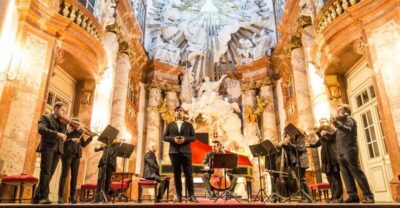
- Vienna: Vivaldi’s Four Seasons Concert in Karlskirche
★ 4.7 · 14,951 reviews - Vienna: Spanish Riding School Training
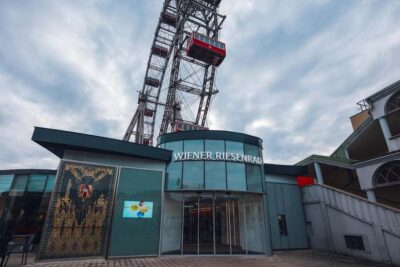
★ 3.9 · 9,281 reviews - Vienna: Skip-the-cashier-desk-line Giant Ferris Wheel Ride
★ 4.5 · 7,859 reviews
Meeting Sandra Blum in Judenplatz
The meeting point is Judenplatz 5 in Vienna’s first district. That puts you in a central part of the city, near public transportation and within the compact core where many major sights are close together.
The booking information identifies Sandra Blum and her company, Safu, Exklusiv Wien Entdecken, as the provider. Since the group is private, the atmosphere should be more direct than on a large shared tour. You can ask questions as the route develops, though the group size can reach 25, so the word private does not always mean a one or two person walk.
The experience uses a mobile ticket. Keep the confirmation easy to reach before you arrive, and allow enough time to find Judenplatz without rushing. The published operating hours are Monday through Friday, from 9 a.m. to 8 p.m., for the stated booking period. The supplied information does not give a meeting-time choice for every booking, so check the confirmed time carefully.
The route ends at Josefsplatz. That is useful for planning because you do not return to the starting point. You can continue sightseeing from the end rather than retracing your steps. Since the walk remains in central Vienna, you can pair it with other nearby stops, but you should not count on a long break during the 1 hour 45 minutes.
St. Stephen’s Cathedral and the Masonic emblem
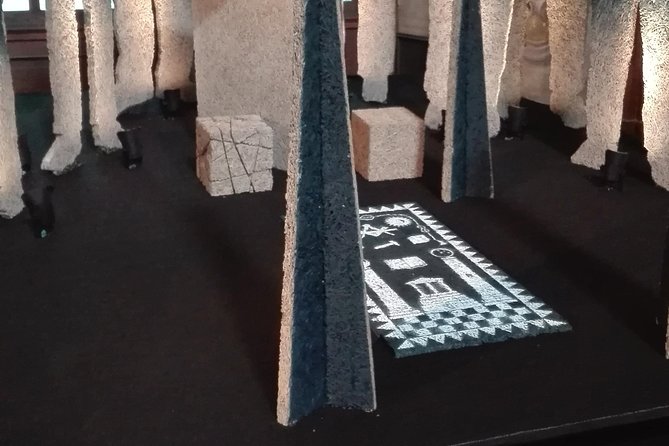
The first stop is St. Stephen’s Cathedral, with about 10 minutes devoted to the emblem from a Freemason perspective. The cathedral is one of Vienna’s most recognizable buildings, so this opening stop gives the theme an immediate public setting.
The interesting part is not simply looking at the cathedral. It is learning how a symbol or architectural detail can take on another meaning when viewed through Masonic ideas. Ten minutes is enough for an introduction, a close look at the relevant feature, and a short explanation. It is not enough for a full cathedral visit, an extended art discussion, or a tour of every symbolic detail.
Admission is listed as free for this stop. That should be read carefully. You are not paying an extra entrance charge for the scheduled viewing, but the information does not promise a complete interior tour or access to every part of the cathedral. If entering St. Stephen’s is important to you, ask what the stop covers when you meet the guide.
I like beginning here because it places a less familiar topic in a place you can easily recognize. You do not need prior knowledge of Freemasonry to follow the opening discussion. The cathedral also helps establish the walk’s method: ordinary city sights may have additional layers when a guide points out particular emblems, associations, or historical links.
Rauhensteingasse, an address with weight
The longest listed stop is Rauhensteingasse, with about 20 minutes set aside. This is described as an important address for the union, so it appears to be the point where the walk shifts from looking at a symbol to discussing the organization’s presence in Vienna.
For me, this is likely the most useful stop for understanding the subject. A street address sounds plain, but it gives the story a physical anchor. Instead of hearing only about famous members, you connect the organization with a real place in the city.
Do not expect a grand public attraction here. The value lies in the explanation. You might find the street itself visually modest compared with St. Stephen’s Cathedral or the Albertina. That contrast is part of the point. Freemasonry is often discussed as something hidden or private, and a normal city address can make the subject feel more concrete.
The 20-minute timing is sensible. It allows Sandra Blum to explain why the address matters, identify its connection with Freemasonry, and take questions. It also gives you a little breathing room in the middle of the walk. If you enjoy local detail, this may be more rewarding than another quick stop for a photograph.
Same Alps, a completely different kind of day:
- Vienna: Schönbrunn Palace & Gardens Skip-the-Line Tour
★ 4.7 · 7,739 reviews - Vienna: Light of Creation Votive Church Immersive Light Show
★ 4.8 · 6,779 reviews - Vienna Spanish Riding School Guided Tour
★ 4.7 · 6,765 reviews - Vienna: Classical Concert in the World-Famous Musikverein
★ 4.6 · 6,673 reviews
St. Michael’s Church and another layer of meaning
The third stop is St. Michael’s Church, with about 10 minutes planned. The church is also related to Freemasonry, though the supplied description does not specify the exact symbol, member, or event you will discuss there.
That missing detail is worth keeping in mind. The stop promises a connection, but you should not book it expecting a complete explanation of the church’s entire design or religious role. Ten minutes points to a focused talk about the Masonic link rather than a broad church tour.
I like the way this stop keeps the subject tied to different types of places. The route does not remain at one address or one kind of monument. You move from a major cathedral to a street connected with the organization, then to another church. This helps you compare how public religious buildings and private associations may overlap in Vienna’s story.
Admission is listed as free. Again, the practical point is to treat the scheduled stop as a guided look and explanation, not as a guaranteed full interior visit. If the church is closed or access is limited at your time, the value of the stop may depend heavily on the guide’s ability to explain the connection from outside.
The Albertina from the outside
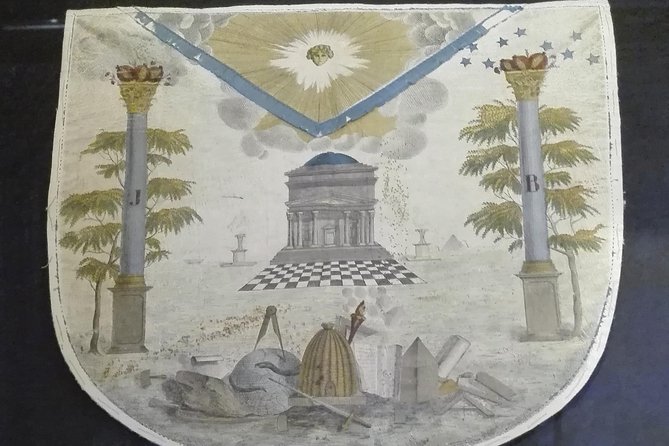
The final listed stop is the Albertina, with about 10 minutes devoted to an exterior description. The wording is clear: this is not an included museum visit.
That distinction matters because the Albertina is the sort of name that can lead you to expect galleries and collections. Here, you are looking at the building and hearing how it relates to the tour’s subject. The admission ticket is not included, and the experience does not promise time inside the museum.
As the last stop, the Albertina provides a convenient finish near Josefsplatz. It also gives the walk a strong visual endpoint. You can continue exploring the area afterward, visit the museum separately if you choose, or simply use the nearby streets to reach your next Vienna sight.
I would not add the Albertina admission cost automatically when comparing this tour with other walks. You only need to budget for entry if you decide to return independently. The tour price covers the guided experience, not a museum visit.
What $49.78 means for the value
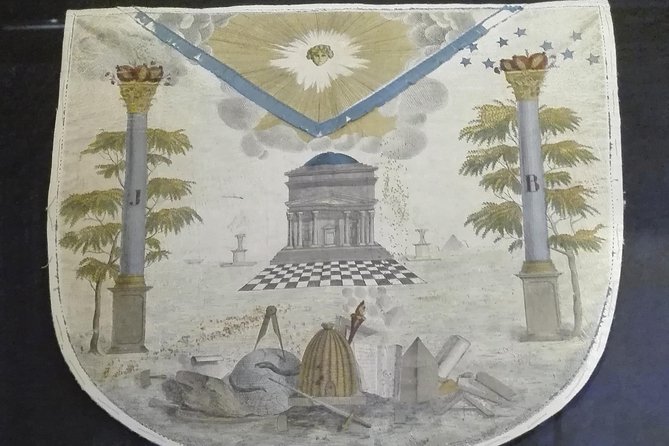
The listed price is $49.78 per person. For a 1 hour 45 minute private walking experience, that price needs to be judged by the size of your group and your interest in the subject.
For a group of five, the cost is easier to justify if everyone genuinely wants a specialized Freemasonry discussion. You are paying for a focused theme, a named guide, and a private format rather than a general introduction to Vienna. For a larger group, the per-person price may feel more attractive, provided all participants are interested.
The value is less convincing if you mainly want access to Vienna’s famous interiors. No major admission package is included, and the Albertina portion is outside only. The tour is strongest as a guided interpretation of places you can see without paying entrance fees.
I would also compare it with the cost of a standard city walk. A broad city tour may cover more sights and give you more basic orientation. This experience gives up breadth for a narrower topic. That is a good trade if you already know central Vienna or want a second walk that reveals a different side of the city.
The private group setup and pace
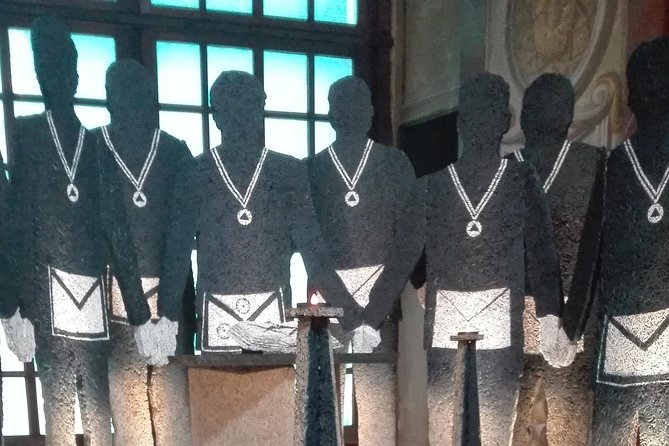
The minimum group size is five, and the maximum is 25. This is a useful detail to check before booking. A party of five or six should be able to ask questions easily. A group near the upper limit may feel more like a small scheduled tour, even though only your group participates.
The pace should be manageable for most people. The route takes place in central Vienna and lasts under two hours. The additional information says most people can participate and notes nearby public transportation. Still, the data does not provide a precise accessibility assessment, details about step-free access, or information about seating during the stops.
Plan for a walking experience rather than a seated lecture. Wear comfortable shoes, keep your mobile confirmation available, and leave room in your schedule for the move between stops. The published stop times add up to 50 minutes, so the remaining time is presumably used for walking and explanations along the way.
The private format is especially useful if your group has a specific interest in Mozart, symbolism, European intellectual life, or the history of fraternal organizations. If only one person in your party cares about the topic, the price may be harder to defend.
What the supplied rating can and cannot tell you
The experience is shown with a 4.3 rating from six reviews. That is a small sample, so I would treat it as a light signal rather than a firm verdict.
There is also a practical problem with the accompanying written comments. They describe unrelated subjects, including a café, lodging, airport assistance, and an airline complaint. They do not assess this Vienna Freemasonry walk, Sandra Blum’s guiding, the four stops, or the value of the price.
So I would not use those comments to judge the experience. The useful facts are the stated route, duration, private group rules, cancellation terms, and the clear distinction between free viewing stops and the Albertina exterior. The 4.3 score may give you some reassurance, but it does not answer the questions that matter most for this particular tour.
Who will get the most from this walk
I would recommend the experience to you if you enjoy a narrow subject and like seeing familiar places in a new context. It should suit people who are curious about Mozart’s associations, famous Freemasons, symbols, old city addresses, and the relationship between public buildings and private groups.
It may also work well as a compact add-on to a Vienna visit. The route begins and ends in the first district, takes less than two hours, and does not require a full day. You can place it between other central Vienna plans, as long as you account for the fixed meeting and ending points.
Families can participate according to the supplied information, but the subject may be better for older children and adults who will enjoy a talk about organizations, symbols, and historical figures. The experience is not described as a children’s tour or a theatrical presentation.
I would skip it if your priority is entering churches, visiting the Albertina galleries, or getting a broad overview of Vienna. You may also want to ask for more detail before booking if you need a fully accessible route, since the published information only says that most people can participate.
Cancellation is free up to 24 hours before the start time. Within 24 hours, the amount paid is not refunded, and changes are not accepted. The experience requires a minimum number of participants, so if that minimum is not reached, you are offered another date or experience, or a full refund.
Should you book the Freemason walk?
Book this tour if the question linking Mozart and Henry Ford catches your attention and you want a short, private walk built around a less common side of Vienna. Its best features are the focused theme, Sandra Blum as the named provider, the central route, and the chance to discuss places such as Rauhensteingasse rather than simply photograph them.
Think twice if you want a museum tour, a grand architectural survey, or guaranteed access inside every church. At $49.78 per person, the value depends on your group size and your appetite for a specialized subject. For curious visitors who have already seen the main Vienna sights, it offers a practical way to look at the city with fresh questions.
FAQ
How long does the Freemason tour last?
The experience lasts approximately 1 hour 45 minutes.
Where does the tour begin?
It begins at Judenplatz 5, 1010 Vienna, Austria.
Where does the tour end?
The tour ends at Josefsplatz in Vienna’s first district.
Which places are included in the route?
The route includes St. Stephen’s Cathedral, Rauhensteingasse, St. Michael’s Church, and the exterior of the Albertina.
Is admission included?
The listed stops at St. Stephen’s Cathedral, Rauhensteingasse, and St. Michael’s Church have no admission ticket listed. The Albertina admission ticket is not included, and the tour describes the building from outside.
How many people can join?
The activity requires a minimum of five people and allows a maximum of 25. It is a private activity for your group only.
Can I cancel for a full refund?
Yes. You can cancel at least 24 hours before the start time for a full refund. Cancellations or changes made within 24 hours are not accepted for a refund.
Just added around Vienna
- World War II History Vienna Old Town Private Walking Tour★ 4.8 · 9 reviews
- From Krems: Wachau Valley River Cruise on the Danube★ 4.6 · 95 reviews
- Vienna: Winery and Wine Tasting Tour with a Wine Expert★ 5.0 · 5 reviews
- Vienna: Wine Tasting E-Bike Tour★ 4.9 · 46 reviews
- Vienna: Wine Tasting at Schönbrunn Palace★ 4.3 · 71 reviews
- Vienna: Wine Tasting Tour★ 4.8 · 61 reviews
- Vienna: Wiener Schnitzel and Strudel Cooking Class★ 4.9 · 126 reviews
- Vienna Urban Art Tour: Explore a different side of Vienna!★ 3.8 · 14 reviews
Vienna Tours, compared.
Vivaldi’s Four Seasons Concert in Karlskirche
Read our review →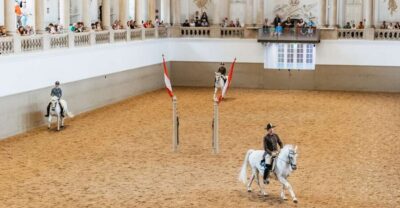
Skip-the-cashier-desk-line Giant Ferris Wheel Ride
Read our review →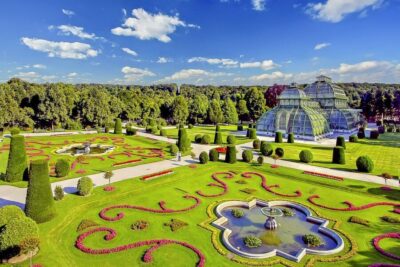
Schönbrunn Palace & Gardens Skip-the-Line Tour
Read our review →
Light of Creation Votive Church Immersive Light Show
Read our review →
Classical Concert in the World-Famous Musikverein
Read our review →