
Reviewed · WINE TOURS
Vienna Woods Wine Tour – Wines, Vines & Good Times!
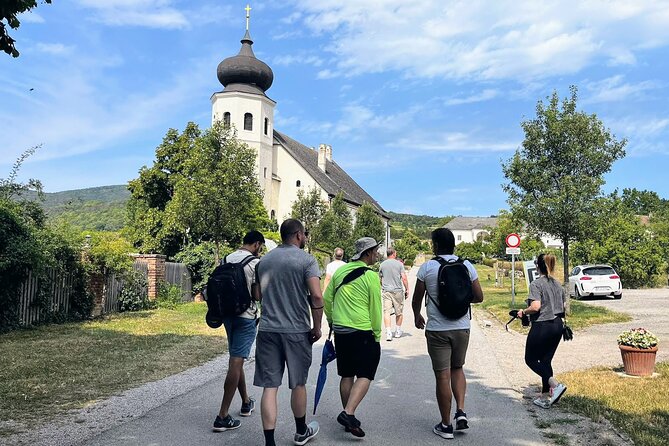
The best part of this day is the change of pace: you leave Vienna by train and soon trade city streets for forest paths, vineyards, and small wine villages. In summer, guide James leads a 9-kilometer hike through Baden, the Vienna Woods, and working vines before a tasting among the rows.
I like the intimate size, capped at 12 people, and the chance to meet winemakers rather than simply sample bottles in a city shop. I also like the seasonal plan: winter replaces the longer hike with an additional tasting. The main caution is the walk, which includes some steep uphill and downhill sections and requires moderate fitness.
Key points to know before booking
- A real countryside day trip: Reach the Vienna Woods and Lower Austria by a short train ride from Wien Mitte.
- Summer means active walking: Expect about 9 kilometers through Baden, forest trails, viewpoints, and vineyards.
- Winter changes the emphasis: Much of the walking moves indoors, with a second wine tasting instead of the summer hike.
- Two very different tasting settings: You may taste outdoors among vines and later with a local producer in Gumpoldskirchen.
- Small groups matter: A maximum of 12 people gives James more time for questions, translation, and pace adjustments.
- Lunch is separate: You eat at a traditional wine tavern, but the meal is not included in the $191.02 price.
Leaving Vienna by train for the Vienna Woods
Meet at Wien Mitte, also called Wien Mitte-Landstraße, for the trip south. The train ride takes about 30 minutes, which makes this a simple way to reach the countryside without arranging a rental car or figuring out regional connections yourself.
The meeting time changes with the season. The stated schedule is 9:10 a.m. from April through October and 9:40 a.m. from November through March. The booking details also show 9:40 a.m., so check the confirmed time carefully before you set out.
That early start is useful. You get a full day outside Vienna and still return to the city with time to freshen up before dinner, a concert, the opera, or a theater performance. The tour lasts about seven to nine hours, so it is a substantial day, not a quick afternoon outing.
The train ride also sets the tone. You are not being driven from one photo stop to another. You travel as locals do, then walk between the towns and vineyards. If you want to see more of Austria than the grand buildings inside Vienna, this is an easy and practical route into the surrounding countryside.
A few more Vienna trips to weigh up
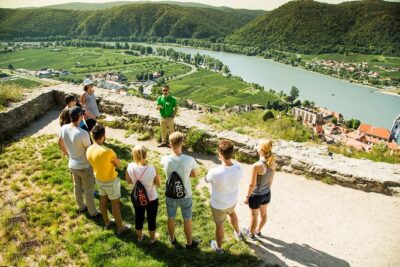
- Wachau Valley Wine Tasting Bike Tour from Vienna
★ 5.0 · 829 reviews - Vienna: Swarovski House Tour with Champagne and Gift
★ 4.7 · 787 reviews - Countryside Half Day Wine Tour near Vienna
★ 5.0 · 545 reviews
Summer in Baden: Beethoven, parks, and forest trails
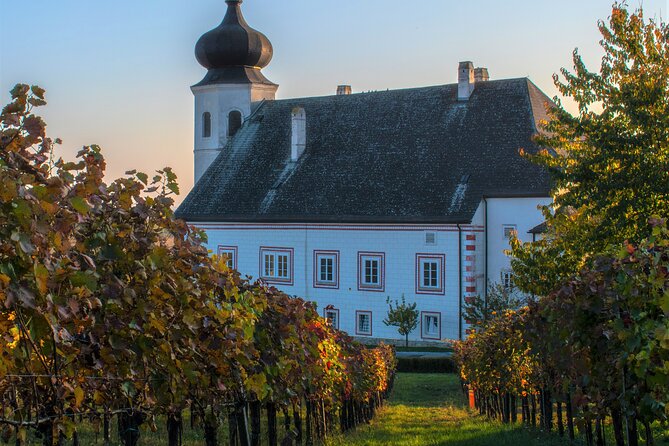
The summer route begins in Baden, a spa town once favored as a country retreat by Beethoven. You walk through the town center and parks before following forest paths toward a high viewpoint over the Vienna basin and the Wienerwald.
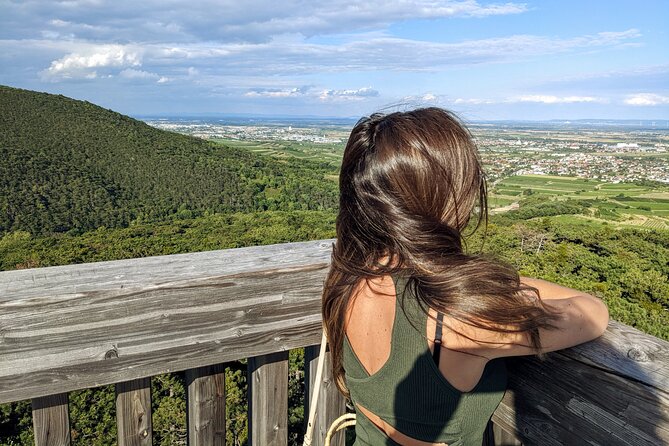
The views are one of the day’s strongest rewards. Several people who have taken the tour describe the countryside as a major highlight, and the route gives you a view that is difficult to get from a passing train or highway. Bring a camera, but do not forget that the best way to enjoy the view is to pause and look around rather than rush through it.
The walking is manageable for people with moderate fitness, and regular breaks are built into the route. Still, do not treat the word hike as decoration. The full walk covers about 9 kilometers, or a little more than five miles, with uphill and downhill sections. Comfortable trainers may work for you in dry conditions, but sturdier hiking shoes are a better choice if the trails are wet or you prefer more support.
The route then enters the vineyards. Walking among actual working vines gives the wine tasting some context. You see the setting where the grapes grow before discussing how the wine is made, rather than treating Austrian wine as an abstract subject.
Summer clothing should be practical. Wear shorts or light trousers, a T-shirt, a hat, and an extra layer or light rain jacket. Carry drinking water, sunscreen, cash, and a fully charged camera. One person ended up with a sunburn, a useful reminder that a pleasant breeze does not protect you from the sun.
The first tasting among the vines
The first tasting takes place outdoors among the vineyard rows in summer. This is a relaxed introduction, especially if you are curious about wine but do not know much about it.
You do not need to arrive with technical wine vocabulary. The tour is designed for all levels, and the small group gives you room to ask basic questions without feeling out of place. James can explain the wines and help with translation at the winery, which is useful when the conversation turns to local production and Austrian terms.
The setting also changes how you taste. Sitting near the vines after walking through the woods makes the connection between place, farming, and wine easier to understand. You may not leave able to identify every grape variety, but you should have a clearer sense of how the region’s vineyards fit into daily life around Vienna.
The outdoor tasting depends on weather, so the summer route is not completely predictable. The operator requires good weather for the activity. If poor conditions force a cancellation, you are offered another date or a full refund.
Gumpoldskirchen and a proper Austrian wine tavern lunch
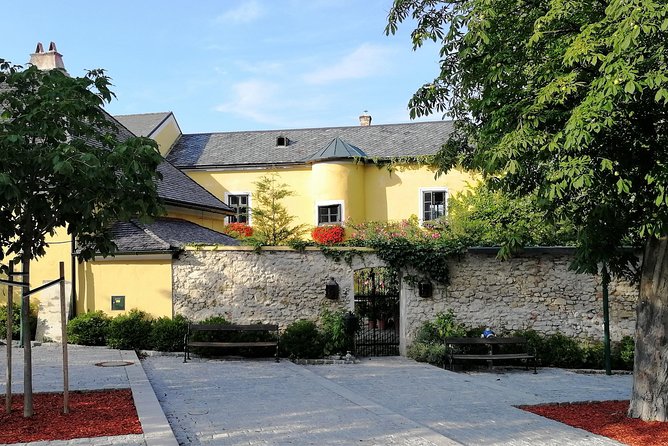
After the summer walk and first tasting, or after the winter program’s opening visit, the tour continues to Gumpoldskirchen. This is a picturesque wine village in the Thermal Region, and it provides the setting for lunch at a traditional Austrian wine tavern.
Lunch is not included, so budget for it separately. That is worth noting when you compare the $191.02 price with other day trips. You are paying for the guide, transportation during the arranged route, extensive tastings, and access to producers, but not for your midday meal.
The tavern stop is more than a practical break. After several hours outside, you will want time to sit, eat, and talk. The day is paced to build an appetite without turning the hike into an endurance test. One account describes the lunch as exceptional, but your experience will depend on the tavern and your own order.
Gumpoldskirchen also feels different from Baden. Baden adds spa-town history, parks, and the forest route. Gumpoldskirchen is more directly tied to wine culture, with village streets, taverns, and producers at the center of the afternoon.
Same Alps, a completely different kind of day:
- Vienna: Vivaldi’s Four Seasons Concert in Karlskirche
★ 4.7 · 14,951 reviews - Vienna: Spanish Riding School Training
★ 3.9 · 9,281 reviews - Vienna: Skip-the-cashier-desk-line Giant Ferris Wheel Ride
★ 4.5 · 7,859 reviews - Vienna: Schönbrunn Palace & Gardens Skip-the-Line Tour
★ 4.7 · 7,739 reviews
Meeting the winemaker in Gumpoldskirchen
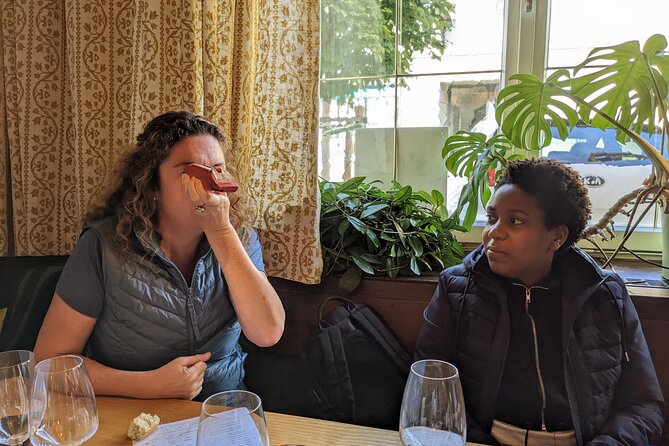
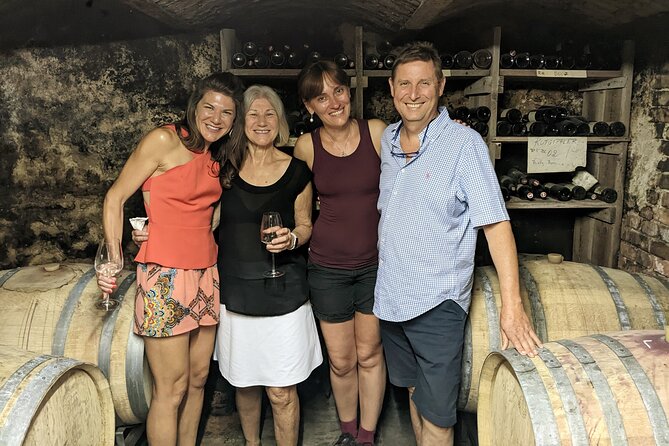
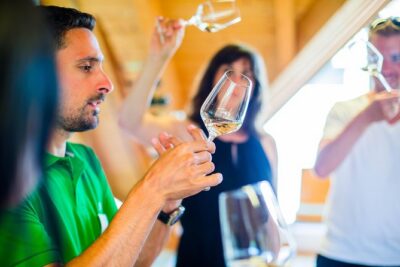
The afternoon tasting is the main wine event. It takes place at one of the village’s established producers and is led by a local winemaker. You can ask how the wine is produced and hear about the practical problems facing vintners today.
That direct contact is a real advantage over a standard tasting room visit. Instead of only hearing polished sales language, you get an opportunity to ask about farming, production, and the choices behind the wines. The exact selection can vary, but the tasting is described as extensive and includes a winery visit and questions with the producer.
Some tastings may take place in a private home or courtyard. That sort of setting can feel personal, but it also means the experience is less formal than a large commercial winery tour. If you want a polished museum-style presentation, this may seem modest. If you want conversation and a closer look at how local producers work, it is a strong fit.
James’s role is important here. He provides live commentary in English and can assist with translation at the winery. His style, based on the available details, is conversational and attentive. He checks that the pace works for the group and makes time for individual questions. The small size helps him do that without turning the day into a speech delivered from the front of a bus.
Winter replaces the hike with more wine
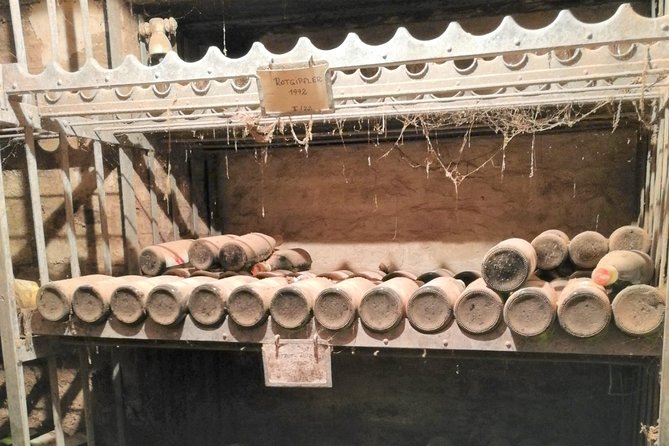
The winter itinerary is not simply the summer tour in cold weather. The train goes directly to the vineyards of the Thermal Region and one of Austria’s oldest winemaking institutions, connected with medieval monastic traditions.
The focus shifts to how religious orders helped develop winemaking, how Austria’s wine culture changed over time, and where it may be headed. You discuss these subjects during the first tasting, giving the visit more depth than a quick sample of local bottles.
Instead of the full forest hike, winter includes a gentle 20-minute walk through flat vineyards between villages. Much of the route takes place indoors, which is welcome in cold or wet weather. You still need to dress warmly and check the forecast. An umbrella may be useful.
A second wine tasting takes the place of the longer summer walk. This makes winter a good option if wine matters more to you than hiking. It also gives the tour a different balance: less scenery on foot, more time for tasting and discussion.
The winter plan is a useful choice for people who want to see the countryside but do not want to commit to five-plus miles of uneven walking. It is not suitable for people with mobility issues, however, since even the gentler route includes walking between villages.
What the $191.02 price gives you
At $191.02 per person, this is not a cheap way to fill a morning. It is priced as a full-day, small-group experience with guided transportation, regional context, winery access, and substantial tastings.
I think the value is strongest if you would otherwise spend money and time arranging your own train tickets, finding a suitable winery, and navigating between Baden, the vineyards, and Gumpoldskirchen. The guide ties the stops together and helps you understand what you are tasting.
The price is less compelling if you mainly want a glass of wine and a short trip outside the city. You also need to pay for lunch, and the summer walk demands the right clothing and energy. This is a full outing with a fixed schedule, not a casual stop at a nearby wine bar.
The maximum group size is 12, with a minimum of four needed for the tour to operate. A smaller group can make a major difference during a tasting. You have a better chance to speak with the winemaker, ask James for help, and adjust the walking pace than you would on a large coach excursion.
Who will enjoy this day most
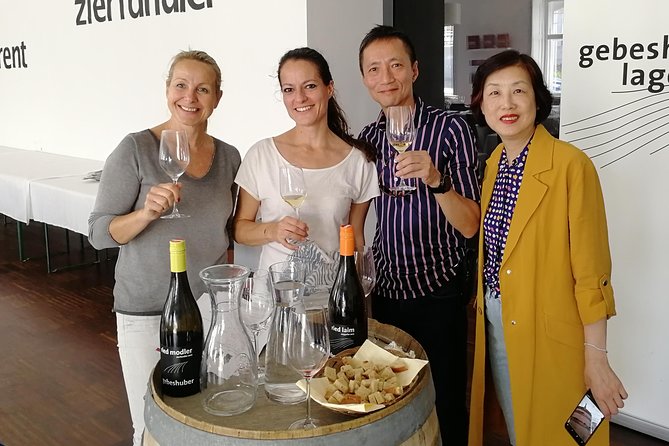
I would choose this tour if you want a mix of Austrian scenery, local food, wine, and light history. It suits couples, families with older teenagers, and small groups of friends who are comfortable spending most of a day together.
The minimum age is 16 on the day of the tour. That makes it unsuitable for families with younger children, even if they would manage the walking.
Wine beginners can enjoy it. You do not need previous tasting experience, and the relaxed format leaves room for simple questions. Wine enthusiasts get more from the direct access to producers and the chance to discuss production with someone who works in the region.
Choose the summer departure if walking through forests and vineyards is part of your ideal day. Choose winter if you prefer indoor tastings and a shorter, flatter outdoor section. In either season, wear comfortable shoes and carry cash for lunch and other personal expenses.
Small details that make the day work better
The tour ends back at Wien Mitte after a short train ride from the wine country. You are not dropped in a distant suburb, and the return time should leave room for an evening booking, though you should still avoid scheduling something that starts immediately after the listed seven to nine hours.
Service animals are allowed, and the meeting point is near public transportation. Confirmation arrives at booking. Free cancellation is available up to 24 hours before the start time, while later cancellations and changes are not accepted.
The operator also requires a minimum of four participants. If that number is not reached, or if poor weather cancels the outing, you can choose another date or receive a full refund.
Should you book the Vienna Woods wine tour?
Book it if you want to pair Vienna with a genuine day in the surrounding wine country, and if a small group, local producers, and a guided walk appeal to you. The strongest reasons are the easy train access, the Baden and Gumpoldskirchen combination, the vineyard setting, and James’s personal approach to guiding and translation.
Think twice if you dislike set schedules, cannot manage moderate walking, or want every cost included. Summer is active and weather-sensitive, while winter is more indoor and wine-focused.
For most people who want an authentic break from Vienna’s grand center, I see this as a well-balanced choice. You get scenery, exercise, food, and serious tasting time without needing to plan the day yourself.
FAQ
Where does the Vienna Woods wine tour begin?
The tour begins at Wien Mitte-Landstraße in Vienna, Austria. The meeting point is Wien Mitte railway station.
What time does the tour start?
The stated seasonal times are 9:10 a.m. from April through October and 9:40 a.m. from November through March. The booking details also list 9:40 a.m., so check your confirmed departure time.
How long does the tour last?
The experience lasts approximately seven to nine hours.
Is lunch included?
No. Lunch is not included. You stop at a traditional Austrian wine tavern in Gumpoldskirchen and should bring cash for the meal.
How much walking is involved in summer?
The summer program includes a guided forest and vineyard hike of about 9 kilometers. It includes some uphill and downhill sections and is intended for people with moderate physical fitness.
Is there a different itinerary in winter?
Yes. The winter route includes more indoor time and a second wine tasting instead of the longer summer hike. There is a gentle 20-minute walk through flat vineyards between villages.
What is the maximum group size?
The tour has a maximum of 12 participants. It requires at least four participants to operate.
What is the minimum age?
Participants must be at least 16 years old on the day of the tour.
Just added around Vienna
- World War II History Vienna Old Town Private Walking Tour★ 4.8 · 9 reviews
- From Krems: Wachau Valley River Cruise on the Danube★ 4.6 · 95 reviews
- Vienna: Winery and Wine Tasting Tour with a Wine Expert★ 5.0 · 5 reviews
- Vienna: Wine Tasting at Schönbrunn Palace★ 4.3 · 71 reviews
- Vienna: Wine Tasting Tour★ 4.8 · 61 reviews
- Vienna: Wine Tasting E-Bike Tour★ 4.9 · 46 reviews
- Vienna: Wiener Schnitzel and Strudel Cooking Class★ 4.9 · 126 reviews
- Vienna Urban Art Tour: Explore a different side of Vienna!★ 3.8 · 14 reviews
Wine Tours, compared.
Wachau Valley Wine Tasting Bike Tour from Vienna
Read our review →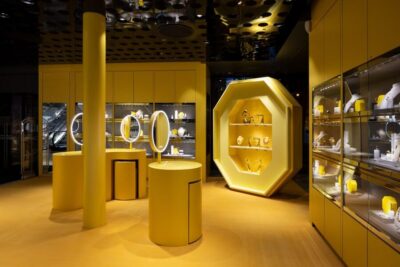
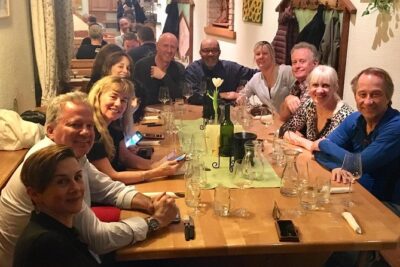
Wachau Valley Small-Group Tour and Wine Tasting from Vienna
Read our review →
Grape Grazing: Wachau Valley Winery Biking Tour
Read our review →
Wine Tasting Experience in a Private Wine Cellar
Read our review →
Browse the lists this tour appears in