Reviewed · TOURS
Vienna Oldtimer Tour (60 min) Incl. bottle of Prosecco
Vienna’s grand center is compact enough to see in an hour, and this private electric vintage car gives you a festive way to cover it. You’ll pass imperial palaces, museums, churches, cafés, and grand squares without committing to a long walking route.
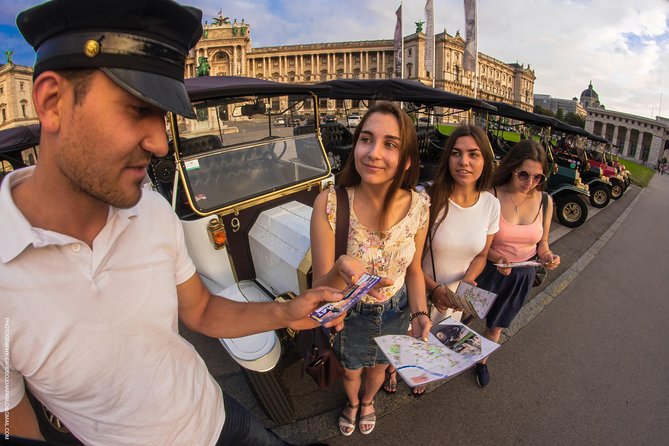
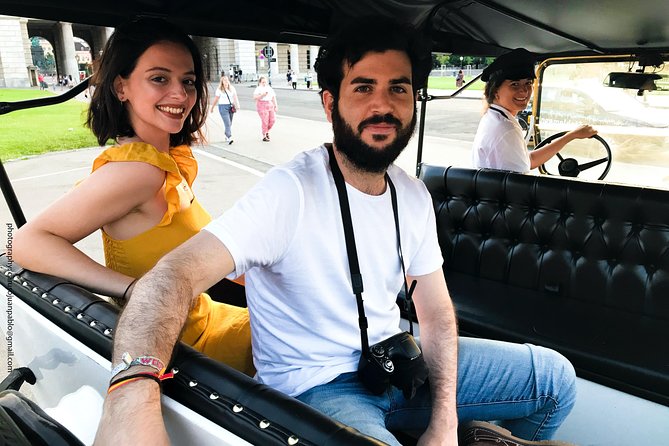
I like the 360-degree open view and the simple party touch of a bottle of Prosecco for the group. I also like that the tour is private, so you can enjoy the ride with your own party rather than sharing the vehicle with strangers.
The main concern is execution. One booking had trouble finding the car and getting a response from the operator, while another found the experience less satisfying when the commentary did not match expectations. Confirm the meeting details before you set out.
Key things to know before booking
- The route covers a remarkable amount in 60 minutes: Hofburg Palace, the Opera, Albertina, Parliament, City Hall, Karlskirche, and many other central sights are included.
- You ride in a vintage-style electric vehicle: It is a more memorable choice than a standard car, while still keeping the tour quiet and compact.
- The experience is private: Only your group participates, which makes the ride suited to couples, families, or a small celebration.
- Prosecco is included for the group: The bottle adds a celebratory note, but it is not one bottle per person.
- The tour begins and ends by the Albertina: The meeting point is Albertinaplatz 2, a useful location near several major sights.
- The short format is both strength and limitation: You can get your bearings quickly, but you will not have time for long stops or detailed visits inside the buildings.
Why this one-hour ride works in Vienna
Vienna can feel confusing on a first visit. The center is full of formal squares, palace wings, museums, churches, cafés, and wide avenues that look similar on a map. In one hour, this ride gives you a broad first look before you decide where to return on foot.
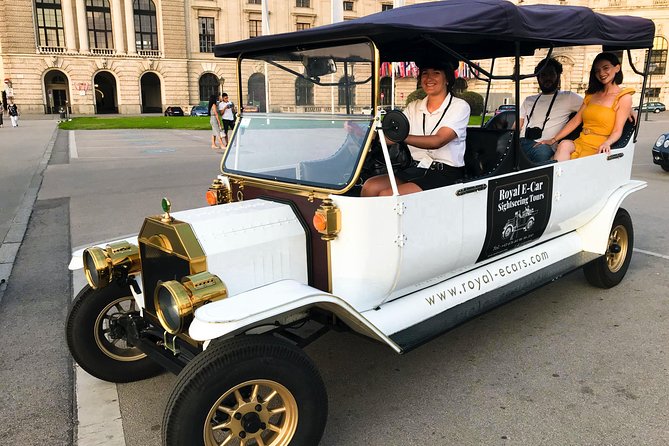
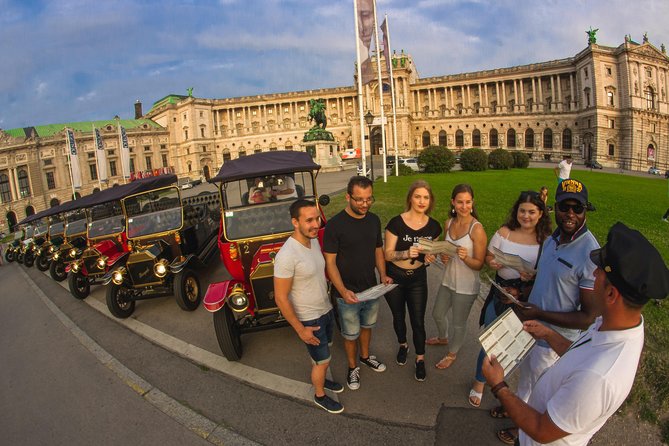
The vehicle is electric and vintage-style, so the experience has more character than a basic transfer. You are not simply moving from one address to another. You are making a slow circuit through the old center, with a clear view of the buildings around you.
That format is especially useful if you have limited time, reduced walking ability, or relatives who tire easily. It also suits a birthday, anniversary, or relaxed first afternoon in Vienna. The included Prosecco gives the outing a small celebration feel, though you should think of it as a shared bottle for the group rather than a full drinks service.
The ride lasts about one hour. That is enough for a sweeping introduction, not enough for serious museum visits, palace interiors, or long historical explanations at every stop. I would treat it as a moving orientation tour, then choose two or three places to explore properly afterward.
Other Vienna days people book alongside this one:
- Vienna: Vivaldi’s Four Seasons Concert in Karlskirche
★ 4.7 · 14,951 reviews - Vienna: Spanish Riding School Training
★ 3.9 · 9,281 reviews - Vienna: Skip-the-cashier-desk-line Giant Ferris Wheel Ride
★ 4.5 · 7,859 reviews
Starting near the Albertina and the Opera
The meeting point is Albertinaplatz 2, beside the Albertina and close to the Vienna State Opera. This is a practical starting place because the area is already central and easy to connect with by public transportation.
You may see the Albertina before the car arrives. The museum occupies part of the former Hofburg complex and is known for its art collection and elevated position above the square. The tour does not include an entrance visit, so think of the Albertina here as a landmark and meeting point.
From there, the route includes the Opera, also called the Staatsoper. Its grand facade and location on the Ringstrasse make it one of Vienna’s easiest buildings to recognize. A short ride past it gives you a useful sense of how the old center connects to the larger ceremonial boulevard.
The car’s open viewing angle matters here. Vienna’s architecture rewards looking upward, since details appear on upper floors, rooflines, statues, and domes. A small enclosed vehicle would make this harder. The electric car gives you a better chance to take in the full height of the buildings as you pass.
Hofburg Palace and Vienna’s imperial center
The Hofburg Palace is one of the main sights on the route. It is not a single palace in the simple sense, but a broad collection of wings and courtyards built and altered over many centuries. From the car, you will see the scale of the former imperial center rather than tour its rooms.
The important point is context. The Hofburg sits at the heart of Vienna’s old town, and several other stops connect directly to it, including the Spanish Riding School, the National Library, the president’s residence, and the Burggarten area. Seeing these landmarks together helps you understand that Vienna’s power center was an entire district, not just one building.
The route also includes the Maria Theresa Monument, placed between the Kunsthistorisches Museum and its matching museum partner across the square. The monument is one of the city’s most impressive outdoor compositions, with the empress high above the square and figures arranged around her base.
The Kunsthistorisches Museum is another outside viewing stop. Its grand classical design is part of the experience, even if you do not go inside. You will need a separate admission and much more time to see its paintings, antiquities, and decorative arts, so do not count on this ride as a museum visit.
Parliament, City Hall, and the northern Ringstrasse
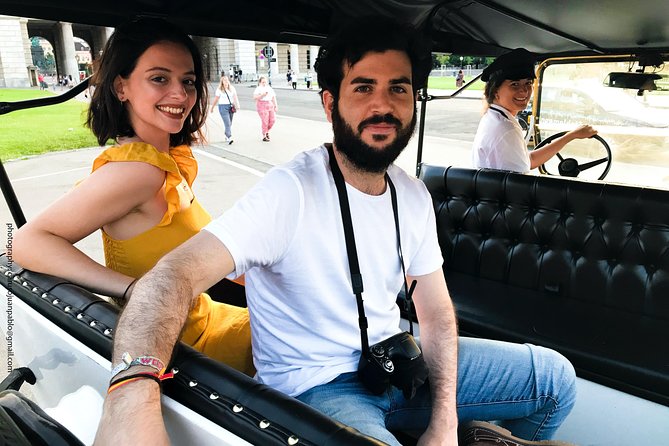
The route continues toward Parliament, the Burgtheater, and Rathaus, or City Hall. These buildings line the Ringstrasse and show Vienna at its most formal and theatrical.
Parliament is notable for its classical design and broad frontage. The Burgtheater, Austria’s national theater, has a similarly grand public presence. Rathaus adds a different note with its tall central tower and Gothic details.
You will likely enjoy this section most if you look beyond the individual buildings. Together, these landmarks show how Vienna expanded and reshaped its center in the nineteenth century. The Ringstrasse was planned as a grand public boulevard, and the buildings were designed to project civic confidence.
The tradeoff is speed. A one-hour circuit can show you the arrangement, but it cannot give you enough time to study architectural details or hear a full explanation of each institution. If your guide provides limited commentary, you may need to use the ride mainly for visual orientation.
The University of Vienna and Votivkirche are also included. The university adds an active academic presence, while Votivkirche brings a tall neo-Gothic church profile to the route. These are good examples of how quickly the city changes from government buildings to religious and academic landmarks.
Same Alps, a completely different kind of day:
- Vienna: Schönbrunn Palace & Gardens Skip-the-Line Tour
★ 4.7 · 7,739 reviews - Vienna: Light of Creation Votive Church Immersive Light Show
★ 4.8 · 6,779 reviews - Vienna Spanish Riding School Guided Tour
★ 4.7 · 6,765 reviews - Vienna: Classical Concert in the World-Famous Musikverein
★ 4.6 · 6,673 reviews
Cafés, churches, and old-town streets
Vienna’s café culture appears through stops and views of Café Central, Café Mozart, and the Schwarzenberg Café. These names matter because cafés are part of the city’s everyday identity, not just convenient places to sit.
Café Central is associated with the grand café tradition near the Hofburg and the old center. Café Mozart sits close to the Albertina and Opera, making it a natural sight at the beginning or end of this ride. Schwarzenberg Café lies farther along the Ringstrasse and offers another view of the city’s formal café style.
The tour does not promise a café visit or reserved table. You should see these places as route landmarks unless your arrangements state otherwise. If you want coffee and cake, plan that as a separate stop before or after the ride.
The route also passes Minoritenkirche and includes Am Hof. Minoritenkirche is known for its church interior and distinctive exterior, while Am Hof is one of the old center’s historic squares. These stops give the ride some variety. You are not looking only at palaces and museums, but also at places shaped by worship, markets, public life, and daily city movement.
The Spanish Riding School and National Library
The Spanish Riding School is one of Vienna’s best-known institutions and is located within the Hofburg complex. The tour gives you a look at its setting, but it does not include a performance or stable visit.
That distinction is important. If you want to see the famous Lipizzaner horses or attend a performance, you will need a separate booking. The car ride helps you locate the school and understand its place within the Hofburg, which can save time when you return on foot.
The National Library is another impressive Hofburg landmark. Its exterior and surrounding spaces are worth seeing, but the interior requires its own admission. The library is a strong example of Vienna’s ceremonial architecture, with a scale that is easy to appreciate from a slow-moving vehicle.
The president’s residence is also listed along the route. You can expect to pass the official district rather than enter it. As with the palace and library, the value here is seeing how closely these important sites are packed together in central Vienna.
From Café Mozart to Karlskirche
After the Opera and Albertina, the route includes Hotel Sacher, the old Moulin Rouge site, the Soviet Memorial, Schwarzenbergplatz, and Karlskirche. This section gives the ride a wider range of visual references.
Hotel Sacher is best known for its connection with the Sachertorte, one of Vienna’s signature cakes. The tour does not include cake or a hotel visit, but the location is easy to combine with the Albertina and Opera if you are planning your own walk afterward.
The old Moulin Rouge site adds a more unusual detail to the route. It is not as internationally familiar as the Hofburg or Opera, but smaller references like this can make a city circuit feel less like a standard checklist.
At Schwarzenbergplatz, the Soviet Memorial provides a reminder that Vienna’s twentieth-century story was not limited to imperial grandeur. The monument is visually distinct, and its presence adds a modern political layer to a route otherwise filled with palaces, museums, and churches.
Karlskirche is a strong final landmark. Its large dome and twin columns make it one of Vienna’s most memorable churches from the outside. The ride does not include entry, but the church is close enough to visit afterward if you want a closer look.
What the private format really gives you
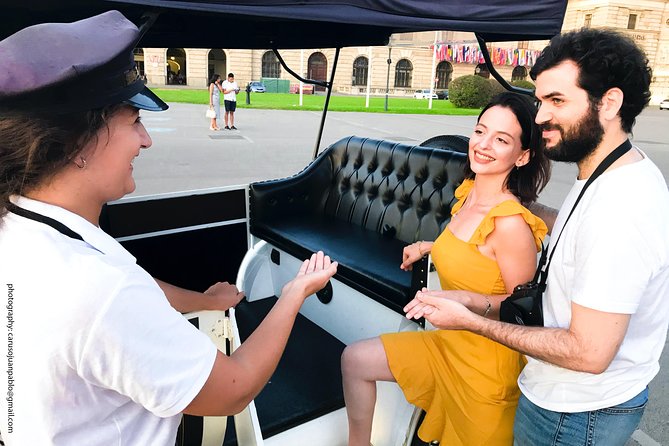
Only your group participates, which is one of the better features of this experience. You do not need to adjust to a large group or spend the hour waiting for people to board a coach.
A private car also makes the ride feel more personal. You can focus on the sights that matter most to you, though the supplied details do not promise a customized route or a specific guide. Do not assume that private means fully tailored unless you confirm that before booking.
The vehicle is a vintage-style electric car rather than a traditional open-air sightseeing bus. That gives you a closer view of street-level details and a more unusual setting for photographs. The compact size also fits the old center better than a large vehicle.
At the same time, the ride’s quality depends heavily on coordination and commentary. One reported problem involved the car not being at the agreed location and the operator not responding. Another account found the concept fun but the execution weak, especially when the ride did not provide the level of information expected.
That does not make every departure unreliable, but it does give you a useful practical step: keep the meeting point, start time, and operator contact details handy, and arrive at Albertinaplatz early. If the car is not immediately visible, contact the operator rather than assuming you are in the wrong place.
Is $46.54 a fair price?
At $46.54 per person, the cost is reasonable if your group values privacy, a distinctive vehicle, and a quick survey of central Vienna. A private one-hour ride can also be good value for a couple or small group celebrating something, since the Prosecco is included for everyone in the vehicle.
The value drops if you are mainly paying for detailed history. The tour covers many sights in a short time, and the supplied information does not identify a particular guide or promise extensive narration. You are paying for the route, the vehicle, the private setting, and the convenience of seeing a lot without walking far.
I would compare this with the cost of a longer walking tour, especially if learning about Vienna is your top aim. A walking tour may offer more explanation, but it will not give you the same festive ride or broad view of the city.
Book this when the occasion and format matter as much as the facts. If you simply want the cheapest way to see the center, other sightseeing options may suit you better.
Who should book the Vienna Oldtimer Tour?
I would recommend this ride for:
- Couples looking for a small celebration in central Vienna
- Families who want to reduce walking during their first look at the city
- First-time visitors with only a short window
- Small groups who prefer a private vehicle
- People who enjoy architecture, squares, and city views more than interior visits
- Anyone wanting to combine sightseeing with a shared bottle of Prosecco
I would be more cautious if you want a detailed academic explanation of every landmark, a guaranteed personalized route, or visits inside the museums and palaces. The hour moves quickly, and several of the most important sights are viewed from outside.
The tour is also less suitable if you need firm, highly polished logistics. The reported meeting problem is worth taking seriously, even though it may not affect every departure. Confirm the details and leave a little time around the booking rather than scheduling an important train or timed admission immediately afterward.
Booking details that matter
You receive confirmation when you book, and the activity accepts mobile tickets. The tour starts at Albertinaplatz 2 and returns to the same meeting point, which makes it easy to continue sightseeing in the Albertina and Opera area afterward.
The activity is near public transportation, and service animals are allowed. Most people can participate, but the supplied information does not describe specific vehicle dimensions, step height, or wheelchair arrangements. If you have mobility needs, ask the operator for those details before paying.
Free cancellation is available if you cancel at least 24 hours before the local start time. Changes or cancellations inside that window are not accepted and are not refunded. Keep that deadline in mind if your Vienna plans are still shifting.
My verdict: a charming orientation ride with a practical warning
I like the idea of seeing Vienna’s old center from a quiet, vintage-style electric car. The route is packed with major landmarks, the private format feels special, and the bottle of Prosecco gives the hour a clear sense of occasion.
I would book it for a relaxed introduction, a special afternoon, or a group that prefers sitting to walking. I would not book it as my only history experience in Vienna, and I would not leave the meeting details to chance.
If you want style, convenience, and a fast city overview, this tour is worth considering. If your priority is reliable logistics and detailed guiding above all else, choose carefully and confirm exactly what commentary and pickup arrangements are included.
FAQ
How long is the Vienna Oldtimer Tour?
The tour lasts approximately one hour.
Where does the tour start?
It starts at Albertinaplatz 2, 1010 Vienna, Austria.
Where does the tour end?
The activity ends back at the meeting point near the Albertina.
Is the tour private?
Yes. Only your group participates in the activity.
What kind of vehicle is used?
The tour uses a vintage-style electric vehicle.
Is Prosecco included?
Yes. One bottle of Prosecco is included for the group.
Which major Vienna sights are included?
The route includes Hofburg Palace, the Maria Theresa Monument, the Kunsthistorisches Museum, Parliament, Burgtheater, City Hall, the University of Vienna, Votivkirche, Café Central, Minoritenkirche, the Spanish Riding School, the National Library, Café Mozart, the State Opera, the Albertina, Hotel Sacher, Schwarzenbergplatz, the Soviet Memorial, and Karlskirche.
Does the tour include entry to the museums or palaces?
The provided details describe exterior views and a city circuit. They do not state that admission to museums, palaces, churches, or other buildings is included.
Is the tour available with a mobile ticket?
Yes. Mobile ticketing is available.
Can I cancel for a full refund?
Yes, if you cancel at least 24 hours before the experience start time. Cancellations within 24 hours are not refunded, and changes during that period are not accepted.
Is the tour near public transportation?
Yes. The meeting point is near public transportation.
Are service animals allowed?
Yes. Service animals are allowed.
Just added around Vienna
- World War II History Vienna Old Town Private Walking Tour★ 4.8 · 9 reviews
- From Krems: Wachau Valley River Cruise on the Danube★ 4.6 · 95 reviews
- Vienna: Winery and Wine Tasting Tour with a Wine Expert★ 5.0 · 5 reviews
- Vienna: Wine Tasting E-Bike Tour★ 4.9 · 46 reviews
- Vienna: Wine Tasting at Schönbrunn Palace★ 4.3 · 71 reviews
- Vienna: Wine Tasting Tour★ 4.8 · 61 reviews
- Vienna: Wiener Schnitzel and Strudel Cooking Class★ 4.9 · 126 reviews
- Vienna Urban Art Tour: Explore a different side of Vienna!★ 3.8 · 14 reviews
Tours, compared.
Schönbrunn Palace & Gardens Skip-the-Line Tour
Read our review →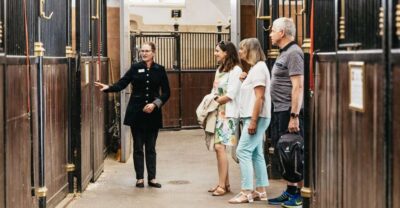
Skip-the-Line Sisi Museum, Hofburg and Gardens Tour
Read our review →
Skip-the-Line Schönbrunn Palace & Gardens Tour
Read our review →
Guided Walking Tour of City Center Highlights
Read our review →