Reviewed · TOURS
Vienna: Old Town Sightseeing Tour in a Vintage-Style E-Car
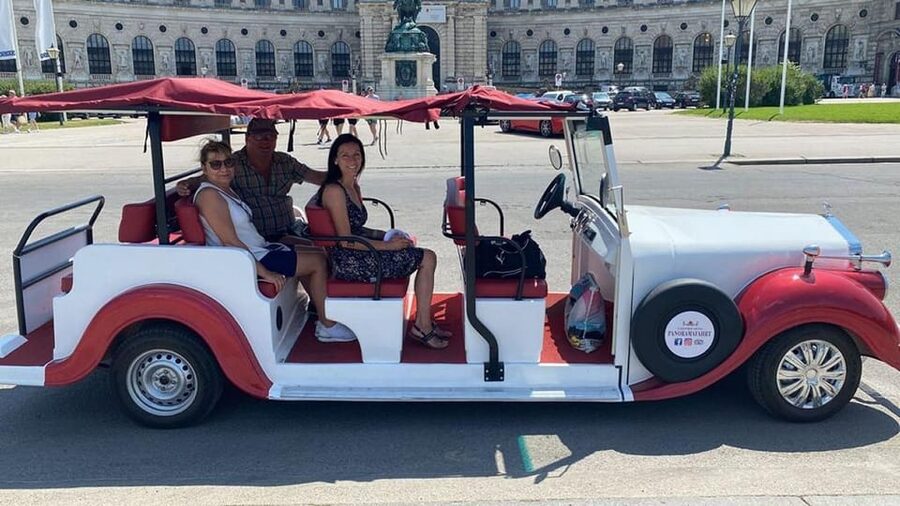
Vienna’s grand center can feel like a lot to cover on foot, especially when you have only a day or two. This one-hour electric-car ride gives you a fast look at the city’s major squares, palaces, churches, museums, and monuments, all from a charming 1920s-style vehicle.
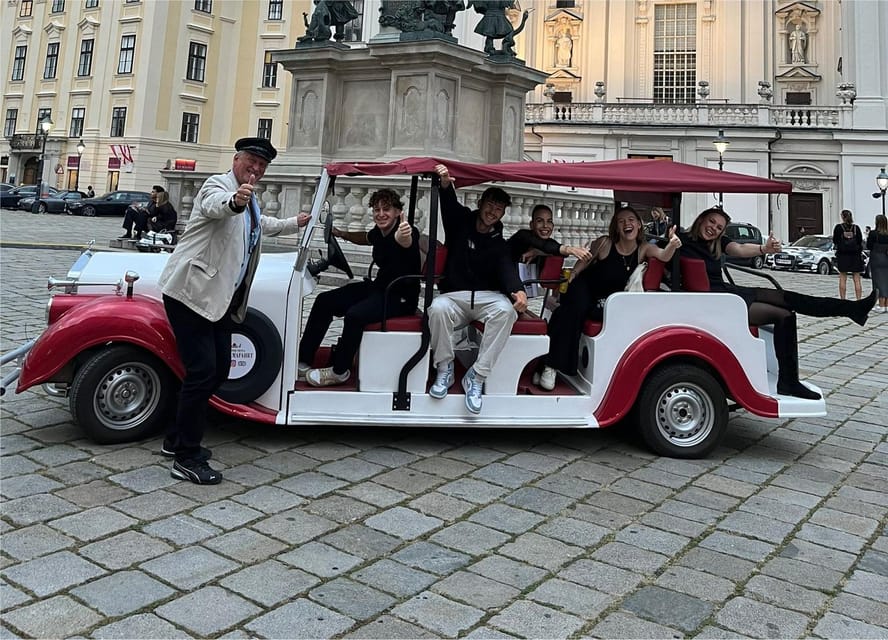
I like two things right away. First, the small group, limited to 10 people, lets the guide speak to you rather than to a crowd. Second, the open sides give you a better sense of the streets than a large sightseeing bus, while the quiet electric motor keeps the ride calm. The main drawback is simple: you see many places but stop at very few, so this works best as an introduction, not as a substitute for visiting Vienna’s museums and palaces.
Key Points Before You Book
- More than 40 sights in 60 minutes: The route covers the central Old Town and several major landmarks beyond it.
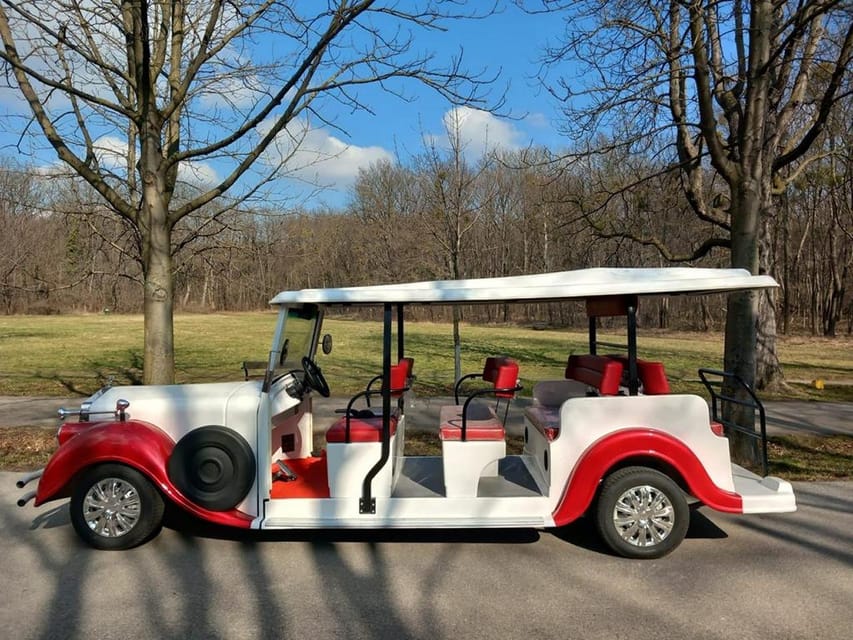
- A small, vintage-style electric car: You get a quieter, more intimate ride than a standard coach tour.
- Guides who add personality: Angelo, Karl, Kurt, Anthony, Hans, Alberto, Amin, and others have been praised for clear commentary, humor, photo help, and restaurant suggestions.
- Open-sided views: You can take pictures as you pass, but a roof and vehicle frame may block some upward views.
- Blankets in cool weather: Several departures have included blankets and fur-style seat coverings, useful in Vienna’s colder months.
- A practical first look at Vienna: Use the route to decide which palaces, churches, museums, and squares deserve more of your time.
Why This Little Electric Car Works So Well
The vehicle is part of the fun. Its old-time styling fits Vienna’s imperial center, where ornate facades, grand ceremonial squares, and horse-drawn traditions are part of the city’s character. At the same time, the electric motor avoids the noise and fumes of a traditional engine.
You meet the car outside the Radisson Blu Style Hotel at Herrengasse 12, in the 1010 district. Look for the vintage-style vehicle rather than a large bus or a conventional taxi. Since transportation to the meeting point is not included, plan your route to Herrengasse yourself.
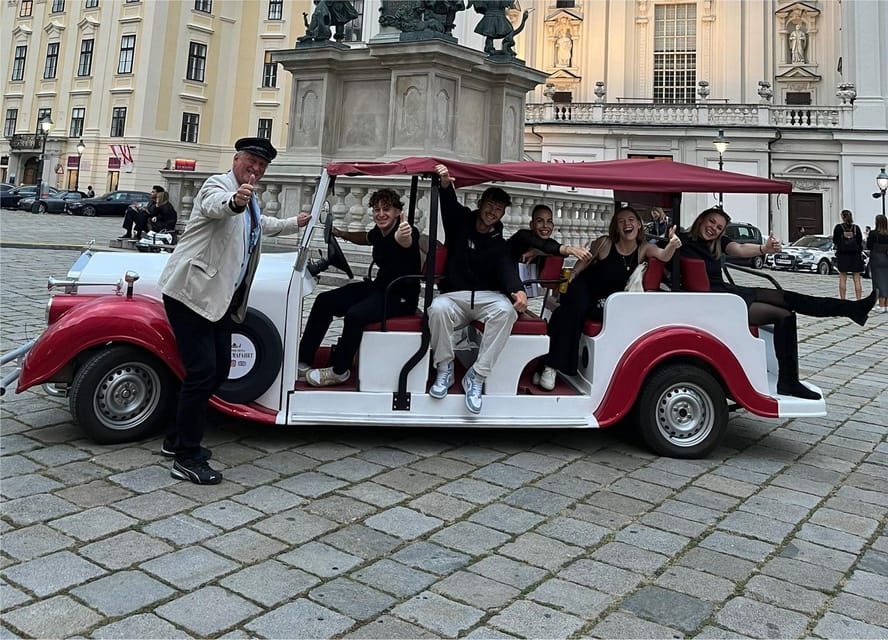
The group size matters. With no more than 10 participants, you can usually hear the guide without straining, and it is easier to ask a quick question. Guides named in the feedback include Angelo, Karl, Kurt, Anthony, Hans, Alberto, Amin, and Lubow. Their strengths vary, but the most praised qualities are clear explanations, warmth, humor, and practical suggestions for cafés, food, and places to visit later.
The commentary is offered in German and English, with both a live guide and an audio guide in those languages. If a mixed-language group joins the ride, the guide may switch between German and English. That can slow the rhythm a little, but it also lets couples and families travel together.
Other Vienna days people book alongside this one:
- Vienna: Vivaldi’s Four Seasons Concert in Karlskirche
★ 4.7 · 14,951 reviews - Vienna: Spanish Riding School Training
★ 3.9 · 9,281 reviews - Vienna: Skip-the-cashier-desk-line Giant Ferris Wheel Ride
★ 4.5 · 7,859 reviews
Freyung, Am Hof, and Vienna’s Medieval Core
The route begins around Freyung, an unusual triangular square surrounded by elegant buildings. It is a good early reminder that Vienna is not only a city of imperial avenues. Its center also preserves irregular medieval streets and old market spaces.
From there, the car passes Am Hof, one of the city’s important historic squares. The scale changes here, with broad facades and a more formal feel. You then see Maria am Gestade, a Gothic church known for its tall, narrow form. From a moving vehicle, the best approach is to look up as the car passes, then note the name so you can return on foot.
Hoher Markt brings you to one of Vienna’s oldest squares. The Anchor Clock, with its moving figures and copper details, is one of the route’s more unusual sights. The car does not turn every landmark into a full stop, so keep your camera ready and listen closely for timing cues.
This opening section is useful because it gives you different versions of old Vienna in quick succession: medieval street patterns, a grand civic square, Gothic church architecture, and an elaborate clock. You begin to see how much variety lies within a compact area.
Stephansplatz and the View of Stephansdom
The approach to Stephansplatz is one of the tour’s big visual moments. Stephansdom, Vienna’s famous Gothic cathedral, dominates the square with its height and patterned roof. From the car, you get a broad street-level impression rather than the close details you would notice while walking around the building.
That distinction is important. The ride helps you understand where the cathedral sits in relation to the surrounding center, but you should return later if you want to study the facade, enter the church, or spend time in the square.
The route continues along Wollzeile, a central street leading away from Stephansplatz. You get a sense of how Vienna’s commercial streets connect the cathedral area with the Ringstrasse and Stadtpark. This is one reason I recommend taking the ride early in your stay. You can mark streets and buildings that you might otherwise miss on a map.
Stadtpark, the Fountain, and Belvedere Views
The car then passes Stadtpark and the Hochstrahlbrunnen fountain. The park offers a change from stone facades and busy squares, while the fountain adds a strong visual point along the route.
You also see the monument honoring soldiers of the Soviet Army. It is a politically charged reminder of Vienna’s twentieth-century past, and its location makes it hard to miss. The guide’s brief explanation helps place the monument within the city rather than treating it as just another decorative structure.
The route continues toward the Baroque Belvedere Palace. You should not expect time to explore the palace gardens or galleries during this one-hour circuit, but the exterior view helps you identify one of Vienna’s major palace complexes. If Gustav Klimt’s paintings or Baroque garden design are high on your list, make a separate visit.
The car also passes the Musikverein, home of the Vienna Philharmonic Orchestra. Its ornate exterior gives the ride another layer of Vienna: this is not only a palace city, but also one of Europe’s great music capitals.
Same Alps, a completely different kind of day:
- Vienna: Schönbrunn Palace & Gardens Skip-the-Line Tour
★ 4.7 · 7,739 reviews - Vienna: Light of Creation Votive Church Immersive Light Show
★ 4.8 · 6,779 reviews - Vienna Spanish Riding School Guided Tour
★ 4.7 · 6,765 reviews - Vienna: Classical Concert in the World-Famous Musikverein
★ 4.6 · 6,673 reviews
Karlsplatz and Vienna’s Many Architecture Styles
The waterside St. Charles’s Church, or Karlskirche, is another memorable sight. Its Baroque shape, large dome, and prominent columns make it easy to recognize from the street. Seeing it alongside the Gothic cathedral and the imperial buildings gives you a quick lesson in Vienna’s changing styles.
Nearby, the tour passes the Art House museum and the Jugendstil-style Karlsplatz Metro Station. Jugendstil is Vienna’s version of Art Nouveau, with decorative lines and a lighter, more modern look than the city’s older Baroque buildings.
This mix is one of the best reasons to choose the car tour. In a single hour, you move from Gothic to Baroque to Jugendstil, with imperial and civic architecture filling the gaps. The pace is quick, but the route makes the contrasts easy to spot.
You also pass the Secession art house, a landmark of Vienna’s modern art movement. Its unusual white building and golden dome look very different from the palaces nearby. The car continues down Kärtnerstrasse, a central shopping street, and past the Sacher Hotel. You can use this stretch to note the location of cafés, shops, and streets for a later walk.
Neuer Markt, Michaelerplatz, and the Imperial Center
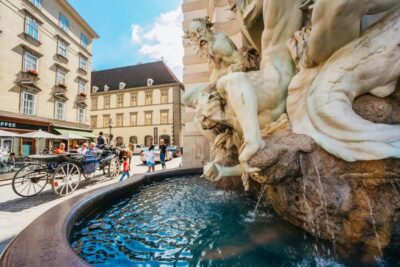
Neuer Markt brings a more intimate square and a chance to see the Donnerbrunnen fountain. The route then reaches Michaelerplatz, whose star-shaped layout opens toward the Hofburg complex.
The Spanish Riding School is nearby. You may not see a performance during this ride, but the guide points out the setting and explains its place in Vienna’s court traditions. The route also includes the Goethedenkmal fountain, another small detail that is easy to miss when you are focused only on the largest buildings.
The Friedrich Schiller monument and the Art History Museum come next. The museum is one of the city’s major art institutions, while its monumental exterior faces a broad square shared with the Natural History Museum. From the car, you get the placement and scale of the buildings, then you can choose which one deserves your time.
The Albertina museum is another highlight. Its position above the city center gives it a striking exterior, and its art collection makes it a useful stop for anyone interested in European painting and graphic art. The tour only provides a passing view, so think of it as a preview.
Hofburg Palace and Heldenplatz
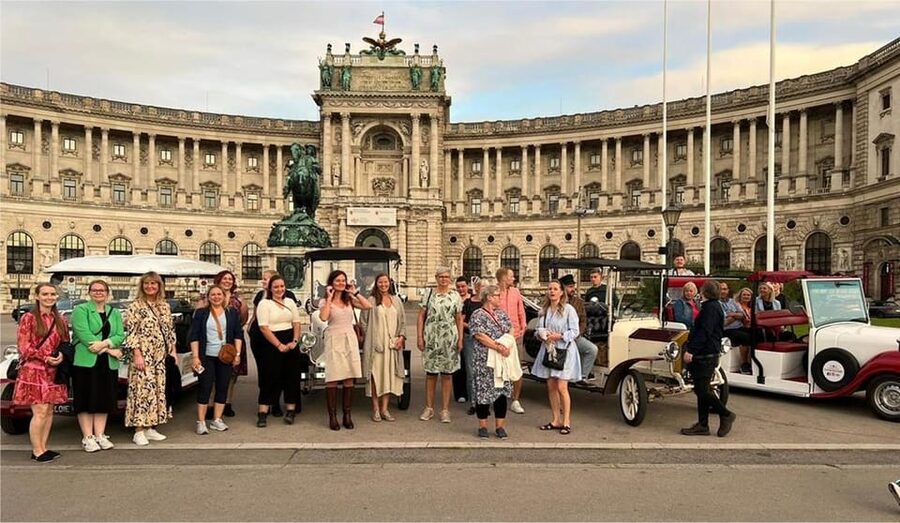
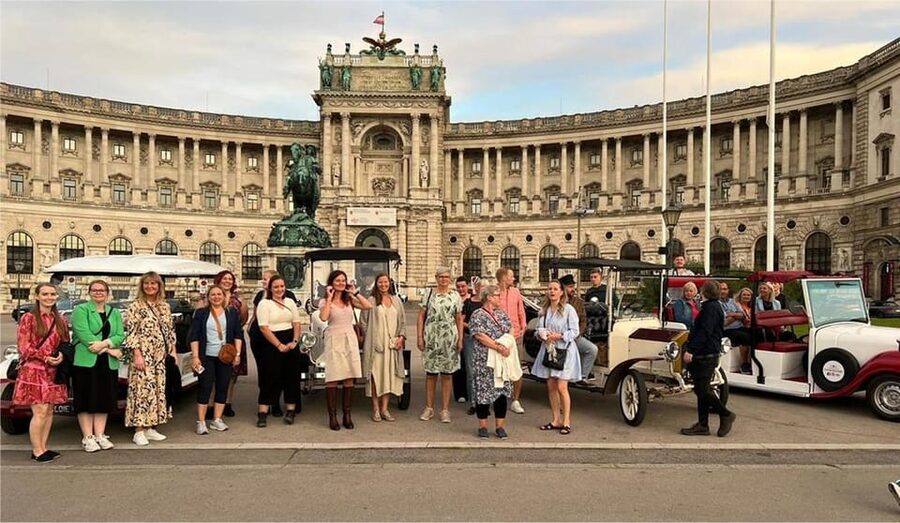
The Hofburg is the grand centerpiece of this part of the route. In Heldenplatz, the palace complex opens into an impressive ceremonial setting, with broad space in front of the buildings and a clear sense of imperial power.
The car also passes the Outer Castle Gate, the National Library, and the Prinz Eugen Hotel. The National Library is especially worth marking down if you enjoy ornate interiors and formal historic spaces. Again, the ride gives you the map in your head. You will know where to return when you are ready to explore slowly.
Minoritenkirche, built in a French Gothic style, offers another change in appearance. Along with the Kaiser Karl monument, the nearby People’s Garden, and Eppstein Palace, it shows how many periods and functions are packed around the Hofburg area.
This is probably the densest part of the tour. You will see important buildings one after another, and the guide’s timing becomes important. A strong guide makes the sequence manageable by explaining what you are seeing without turning every facade into a long lecture.
Parliament, City Hall, and the Ringstrasse
The final part of the route moves past Parliament, the Burgtheater, Vienna City Hall, the University, and the neo-Gothic Votivkirche. These buildings line the Ringstrasse area, where Vienna created a grand ceremonial boulevard after removing its old defensive walls.
The architectural shift is clear. Parliament has a classical look, the Burgtheater projects imperial culture, City Hall uses a dramatic Gothic style, and Votivkirche reaches upward with twin neo-Gothic towers. The University adds another major institutional building to the sequence.
This is where the tour really earns its claim of showing more in less time. Walking between all these sights would take much longer, especially if you stopped to study each one. The tradeoff is that you cannot linger, compare details, or wait for ideal photo conditions.
What the One-Hour Format Really Gives You
At $28 per person, the tour is priced as a short orientation rather than a full guided day. I consider it good value if you want a broad first look at Vienna’s center and would rather not spend your first afternoon studying a map.
The tour is especially useful on arrival day. You can see the general shape of the Old Town, identify the Hofburg and Stephansplatz, note the route to the museums, and pick out areas for dinner or a later walk. Several guides also offer café and food suggestions, which adds practical value beyond the sightseeing list.
Do not book it expecting detailed visits inside palaces, churches, galleries, or museums. You will pass more than 40 attractions, but the car keeps moving. This is a sampler, and its success depends on how you use the information afterward.
The ride also helps if walking long distances is not appealing. You stay seated and cover a large area in a short time. The small group feels more personal than a coach, and the electric vehicle can use streets and routes that suit its size. One point to remember: the open-sided design improves street views, but a roof and vehicle frame can make it difficult to see tall buildings when they are being pointed out.
Comfort, Photos, and Weather
The open sides are excellent for quick pictures. You can capture Stephansdom, the Hofburg, Belvedere, the Albertina, and the city’s many facades without looking through a bus window. Sit where you have the clearest angle, and keep your camera ready because many sights appear only briefly.
The same design leaves you exposed to cool air. In colder weather, blankets and fur-style seat coverings have been provided, and several rides were described as comfortable despite chilly conditions. Still, dress for the weather rather than assuming the blanket will do all the work.
Some people will want more photo stops. The itinerary focuses on continuous sightseeing, and one useful criticism is that there are limited opportunities to get out and frame a landmark properly. If your main goal is architectural photography, use this ride to scout locations, then return on foot.
Guides have also helped take pictures during the ride. That is a small but welcome touch, especially when you are traveling as a couple or family and want everyone in the frame.
Who Should Take This Tour?
I would choose this for a first visit, a short stay, or a rainy or cold day when you still want to see a lot without walking the entire center. It also suits families, older visitors, couples, and anyone who likes history in short, digestible pieces.
It is a good match if you enjoy hearing stories while watching the city pass at street level. The guides are repeatedly praised for humor, friendly conversation, clear information, and useful advice on what to do next. Angelo, Karl, Kurt, Anthony, Hans, Alberto, and Amin are among the guides singled out for making the ride engaging.
You may want something else if you prefer long stops, museum access, or a tightly focused subject such as imperial Vienna, classical music, or modern art. A walking tour will give you more detail in one neighborhood. This electric-car ride gives you breadth.
The maximum group size is 10, but some departures may be much smaller. One couple described having the guide to themselves, while another group traveled with only a few people. A small group can make the commentary feel more conversational, though the exact atmosphere depends on the departure.
Booking Details Worth Knowing
The tour lasts one hour and includes the guide, the vintage-style electric-car ride, and German or English commentary. An audio guide is also included in German and English.
You can cancel up to 24 hours before departure for a full refund, and the reserve-now, pay-later option keeps your plans flexible. Check the available starting times for your date, since the tour schedule is not fixed in the information provided.
The meeting point is outside the Radisson Blu Style Hotel, Herrengasse 12, in Vienna’s 1010 district. Look for the distinctive car. Your own transportation to the meeting point is not included.
A note for anyone traveling with a dog: permission may be possible, but the available information does not establish a general pet policy. Ask the provider before booking rather than relying on a single experience.
Should You Book the Vintage E-Car Ride?
Book it if you want a friendly, fast overview of central Vienna and understand that you are buying orientation, not in-depth sightseeing. At $28, the small group, central route, unusual vehicle, and broad coverage make it a sensible first activity.
I would especially recommend taking it early in your stay, then using the rest of your time to return to Stephansdom, the Hofburg, Belvedere, the museums, or whichever square caught your eye. Skip it if you need frequent stops or detailed interior visits. For most first-time visitors with limited time, it is an enjoyable way to get the city organized in your mind.
FAQ
How long does the Vienna vintage-style electric-car tour last?
The tour lasts one hour.
How much does the tour cost?
The listed price is $28 per person.
Where does the tour meet?
You meet outside the Radisson Blu Style Hotel at Herrengasse 12, 1010 Vienna. Look for the vintage-style electric car.
What languages are available?
The live guide and audio guide are available in German and English.
How many people can join the tour?
The experience is a small-group tour limited to 10 participants.
What sights will I see?
The route passes more than 40 attractions, including Stephansdom, Stephansplatz, Hofburg Palace, Heldenplatz, the Albertina, Belvedere Palace, the Musikverein, Karlskirche, Parliament, City Hall, the Burgtheater, and Votivkirche.
Can I cancel or pay later?
You can cancel up to 24 hours before the tour for a full refund. The reserve-now, pay-later option allows you to book without paying immediately.
Just added around Vienna
- Ottakringer Brewery tour★ 4.0 · 6 reviews
- New Hofburg Palace Tour House of Habsburg★ 4.5 · 5 reviews
- Private Van & Walk Tour – One Perfect Day in Vienna★ 5.0 · 21 reviews
- True Crime mobile puzzle rally Vienna★ 4.0 · 3 reviews
- Vienna Naschmarket Food Tasting Tour★ 4.0 · 30 reviews
- Vienna Nightlife Experience: Food, Wine, Cocktails & Vibes★ 5.0 · 119 reviews
- Myth Mozart★ 4.0 · 80 reviews
- ( Night Tour ) With Private Guide + wine or prosecco★ 4.0 · 12 reviews
Tours, compared.
Schönbrunn Palace & Gardens Skip-the-Line Tour
Read our review →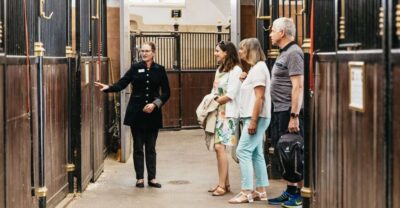

Skip-the-Line Sisi Museum, Hofburg and Gardens Tour
Read our review →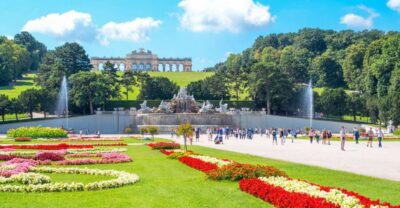
Skip-the-Line Schönbrunn Palace & Gardens Tour
Read our review →
Guided Walking Tour of City Center Highlights
Read our review →