
Reviewed · SCHONBRUNN PALACE TOURS
Vienna: Imperial Carriage Museum in Schönbrunn Palace Ticket
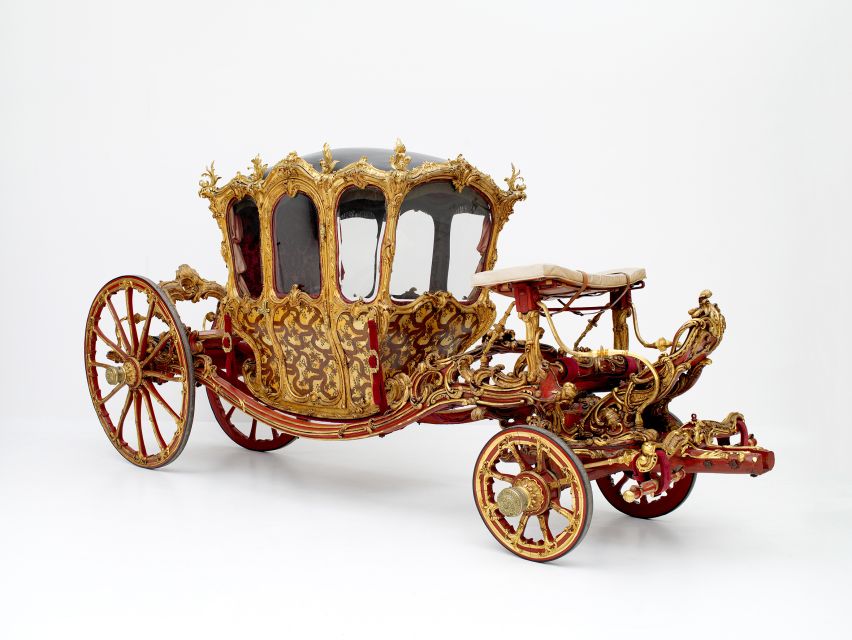
The grand Baroque imperial coach is the star here, but the real pleasure is seeing how wheels, velvet, gilt, and ceremony followed the Habsburgs through daily life and public theater. I like the clear path through famous rulers, and I especially like the Sisi Trail, where carriages share space with personal objects such as Elisabeth’s only surviving saddle and her riding chapel.
I also like the range: you get state coaches, practical traveling vehicles, and small carriages made for royal children. The main catch is practical rather than historical: you need a printed voucher, and one recent booking problem involved a guest spending hours finding somewhere to print and exchange the ticket, so prepare that before you arrive.
Key points to know before you go
- The Baroque imperial coach is the main event: Expect an ornate ceremonial carriage built to project power rather than comfort.
- The Sisi Trail adds personal detail: Empress Elisabeth’s carriages appear alongside original dresses, her only extant saddle, and her riding chapel.
- The collection covers several royal lives: Maria Theresia, Napoleon, Franz Joseph, and the Habsburg children all have a place here.
- The ticket lasts one day: You can visit the museum within the selected validity period, subject to the available starting time.
- An audio guide is optional: It is included only when you book the option that specifically lists it.
- Print your voucher in advance: A printed voucher is required, and the museum ticket may need to be exchanged there.
Why these carriages matter at Schönbrunn
A carriage can look like a large decorated box until you understand its job. In imperial Europe, it was a moving stage. The coach carried a ruler through a city while showing rank, wealth, and control to everyone along the route.
That makes this museum a useful companion to Schönbrunn Palace. The palace shows where the Habsburg court lived and worked. The carriage collection shows how that court moved through the world, from formal ceremonies to long journeys and private family trips.
I find that contrast helpful. A palace room can feel fixed and grand, but a carriage suggests motion. You can picture the careful process behind a royal appearance: the coach, horses, attendants, clothing, route, and public audience all had to work together.
The museum is not only about luxury. Its vehicles also reveal practical needs. A state carriage was built for ceremony. A traveling coach had a different purpose. Children’s carriages tell a smaller, more intimate story about royal family life.
More Schonbrunn Palace Tours in Vienna:
- Vienna: Schönbrunn Palace & Gardens Skip-the-Line Tour
★ 4.7 · 7,739 reviews - Vienna: Skip-the-Line Schönbrunn Palace & Gardens Tour
★ 4.8 · 5,411 reviews - Vienna: Bus & Schönbrunn Palace Skip-the-Line Guided Tour
★ 4.3 · 2,802 reviews
The Baroque imperial coach takes center stage
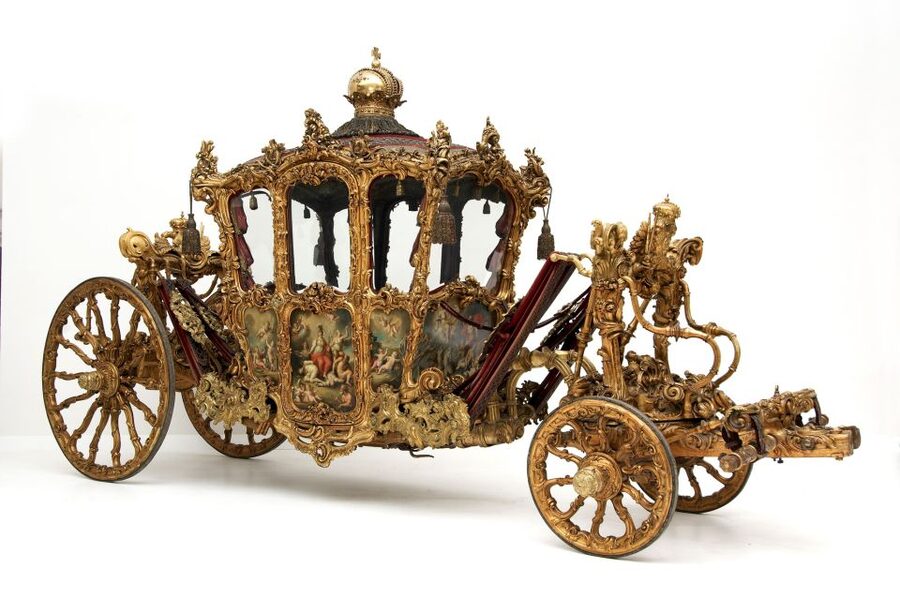
Start with the Baroque imperial coach, the collection’s clear highlight. The description of this vehicle tells you what to expect: a formal coach made for display, with a level of ornament that can make a modern car look wonderfully dull.
This is the carriage to study slowly. Look at its scale, decoration, and ceremonial character. It was not designed to disappear into traffic. It was meant to announce the arrival of someone important before the door even opened.
The coach also gives the collection its visual anchor. After seeing it, the more comfortable traveling coaches make better sense. You begin to compare purpose rather than judging every vehicle by its decoration.
I would not rush through this first section. If you have an audio guide, use it here if you want more help connecting the coach to the people and events associated with it. The guide is available only with the appropriate booking option, so check your ticket details instead of assuming every admission includes one.
Maria Theresia, Napoleon, and Franz Joseph
The museum follows carriages connected with major figures rather than presenting a random collection of vehicles. Maria Theresia, Napoleon, and Franz Joseph each bring a different political and personal setting to the display.
Maria Theresia’s carriage points toward the long Habsburg court tradition. Her place in the collection helps set the tone for the imperial world, where ceremony and family power were closely linked.
Napoleon adds a striking outside connection. Seeing his carriage among Habsburg vehicles reminds you that these objects belonged to a wider European story, not just one Austrian dynasty. The carriage becomes a physical link between rival rulers and changing political fortunes.
Franz Joseph brings the collection closer to the late imperial period. His vehicles help you follow the court into a more recent age, when old ceremony still mattered even as Europe was changing around it.
The museum’s strength is this movement through time. You are not simply looking at beautiful objects. You are following rulers through public appearances, travel, family life, and formal duties.
Following Empress Elisabeth on the Sisi Trail
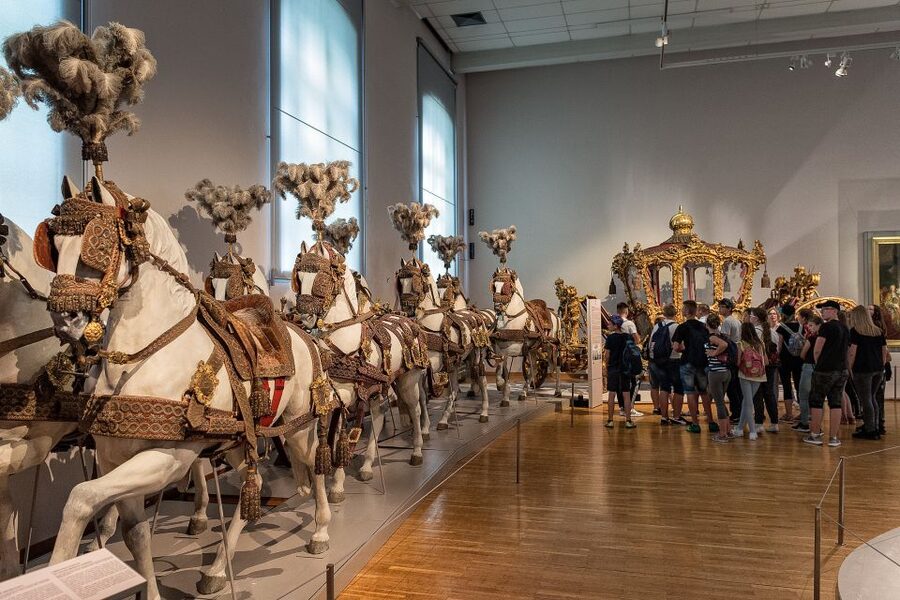
The Sisi Trail is likely to be the most personal part of the museum. It focuses on Empress Elisabeth’s carriages, but it also includes objects that bring her habits and image closer to hand.
Her only extant saddle is an especially useful detail. A carriage tells you how Elisabeth appeared in public, while the saddle points toward her connection with riding. It gives the display a more private edge without pretending that one object can explain an entire person.
Her riding chapel is another unusual item. The name alone suggests how strongly travel and riding were tied to Elisabeth’s life and public image. It is the sort of object that makes the Sisi Trail more than a parade of elegant vehicles.
You will also see sumptuous original dresses. These help connect the carriage interiors with the person who occupied them. Clothing, coach, and ceremony belonged to the same visual world, and seeing them together makes the court’s public image easier to understand.
I like that this section does not rely only on the famous Sisi story. The carriages provide the setting, while the saddle, riding chapel, and dresses offer small clues about the woman behind the official portrait.
Still, keep your expectations in check. This is a carriage museum with a Sisi section, not a full biography of Elisabeth. If you want every chapter of her life, you will need other places in Vienna. Here, the focus remains on transport, dress, court presentation, and the objects connected with her movement through the world.
A few more Vienna trips to weigh up
- Vienna: Skip-the-Line Sisi Museum, Hofburg and Gardens Tour
★ 4.8 · 5,918 reviews - Vienna Kunsthistorisches Museum Day Admission Ticket
★ 4.6 · 3,690 reviews - Tickets for the Albertina Exhibitions
★ 4.7 · 2,126 reviews - Vienna: Chocolate Workshop in Chocolate Museum w/ Tasting
★ 4.5 · 1,802 reviews
State coaches, traveling vehicles, and royal children
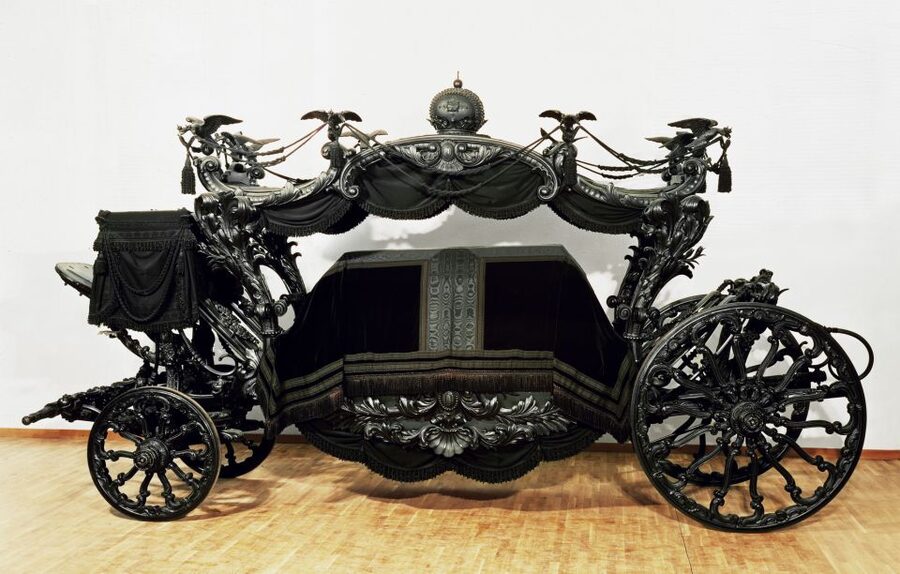
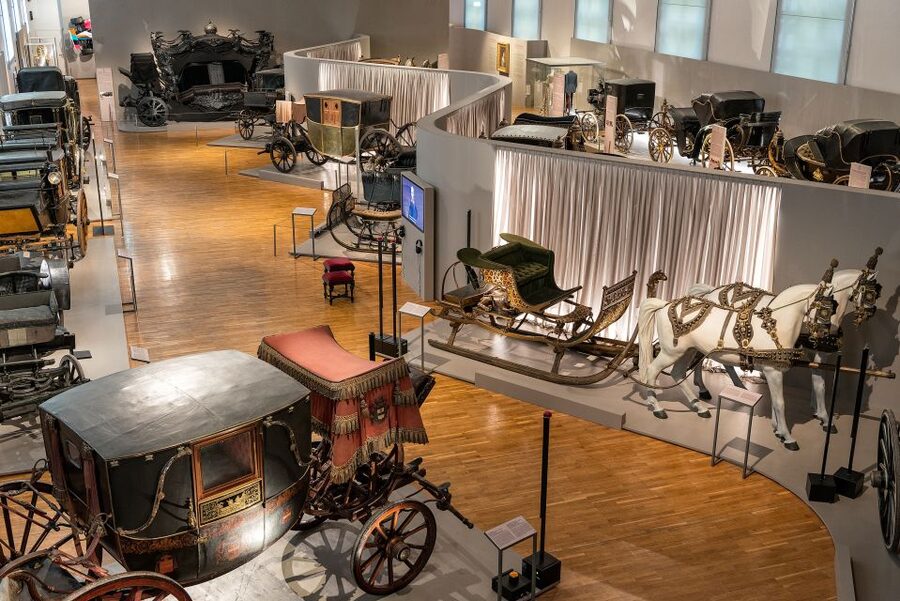
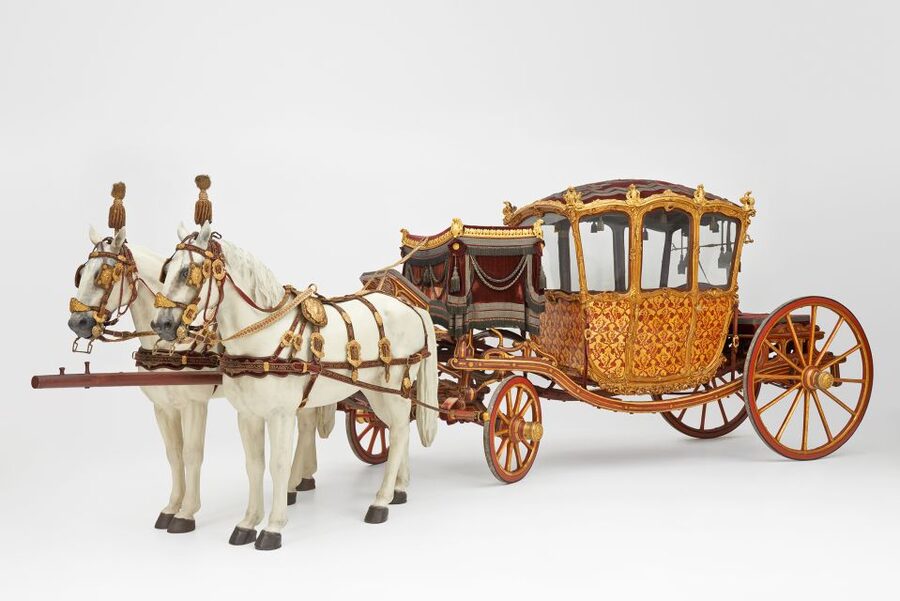
The display becomes more interesting when you compare grand state carriages with the less formal vehicles. State coaches were designed to be seen. Traveling coaches were built around movement and comfort. The difference is easy to understand even if you know little about carriage design.
That practical range gives the museum balance. If every object were a ceremonial coach, the experience could become visually repetitive. The traveling vehicles change the pace and help you think about the ordinary logistics of royal life, even when ordinary meant traveling with an enormous staff and a very expensive vehicle.
Then come the children’s carriages. These are charming, but they are not just decorative miniatures. They show that the Habsburg princes and princesses had their own equipment and routines within the larger machinery of court life.
For families, this may be the easiest part of the museum to enjoy together. Children can respond to the smaller scale, while adults can use it to discuss how royal family life was organized.
The collection works best when you ask a simple question of each object: was this carriage made to impress, to travel, or to serve a child? That question keeps the visit active and prevents the vehicles from blending into one long row of gold trim.
How the one-day ticket works
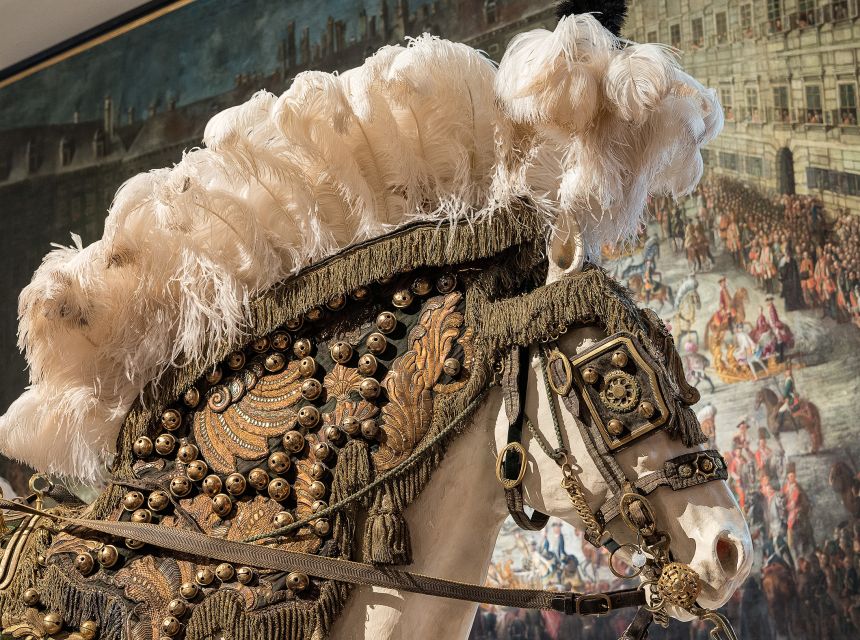
The admission is listed at $14 per person, with a one-day validity. That is a fair price if you are already visiting Schönbrunn Palace and want a focused museum stop without committing to a full guided tour.
The value depends on your interests. If you enjoy royal history, design, transport, or Sisi, the ticket gives you a compact collection with several strong themes. If you have little interest in court life or historic vehicles, the price may feel less convincing because the museum’s subject is narrow.
You do not get a guided tour with the standard admission. You may bring your own guide, and an audio guide is included only when you book that option.
The audio guide can improve the visit, especially if you want names and context without reading every label. One Italian-language user described the Italian audio guide as concise and functional, which is a useful expectation: think clear support, not a long spoken lecture.
The activity is valid for one day, but you should still check the available starting times when booking. The ticket is not presented as an open-ended pass for any date or hour.
The printed voucher warning matters
This is the most important practical point. A printed voucher is required.
That requirement can cause trouble if you arrive with only a phone confirmation. One booking experience involved a visitor spending three hours walking and using public transport to find a place or machine that could print the document, then exchanging it at the museum.
I would print the voucher before leaving home or before the day of your Schönbrunn visit. Do not assume a digital copy will be enough. Also allow time for any required exchange at the museum, since the purchase document may not be the final admission ticket.
This is a small detail with a large effect. The museum itself may be a smooth stop, but a missing printout can turn a short cultural visit into an unwanted Vienna errand.
Guides, groups, and the free-ticket rule
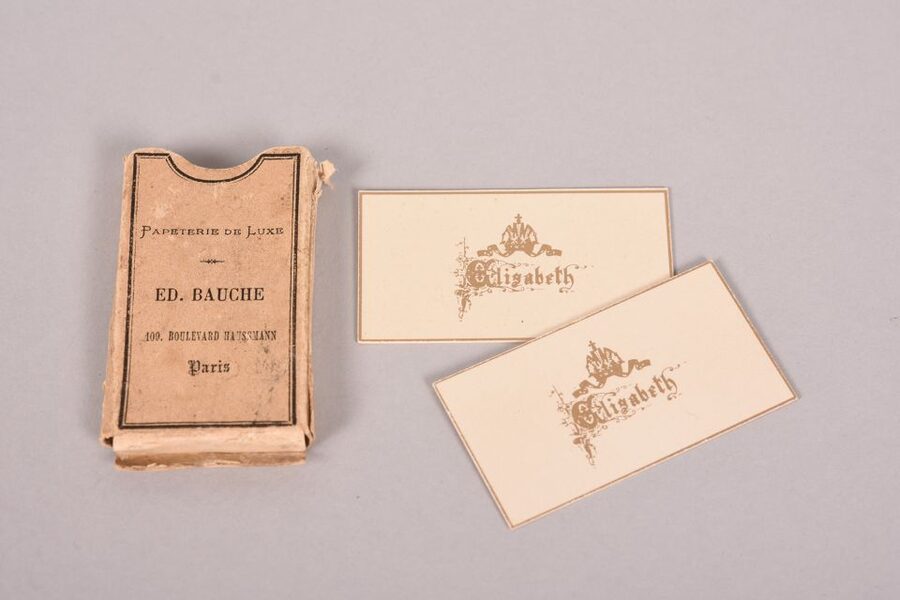
If you are traveling with a guide, the free-entry rule is specific. Only one tour guide per group booking receives a free entrance ticket when that guide accompanies the group to the museum.
A group must have at least 10 people for this rule to apply. If your party has fewer than 10, a guide or accompanying person counts as a paying member.
A state-certified guide has free entrance. This matters most for organized groups, not for a couple or small family booking. If you are arranging a larger visit, check the group size and guide credentials before assuming the guide enters free.
You can also bring your own guide, but the listed experience does not include guided commentary. That leaves you with a choice: pay for the audio guide option, bring a qualified guide, or explore at your own pace.
How much time should you allow?
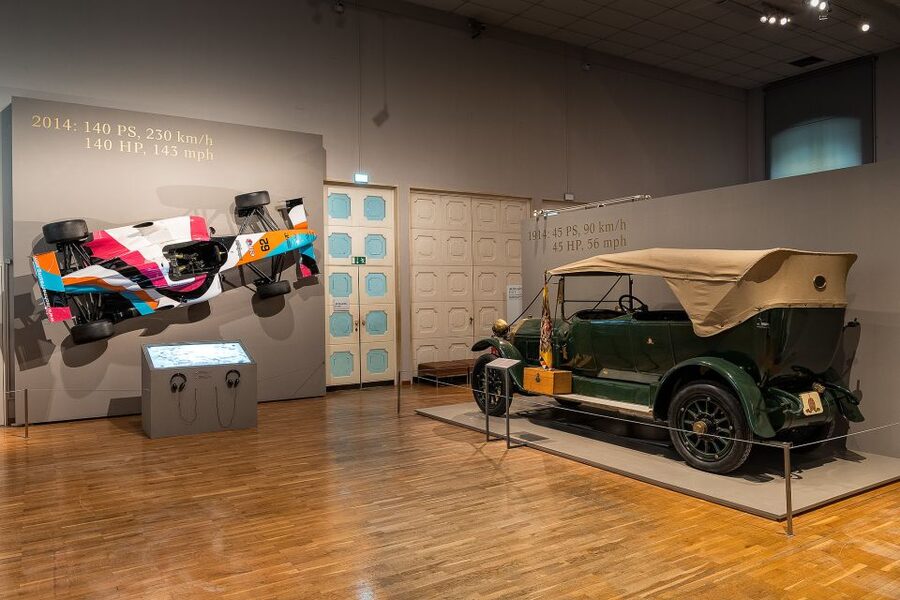
The ticket is valid for one day, but no fixed visit length is given. I would treat the museum as a focused stop rather than a full-day attraction.
Your time will depend on how closely you study the carriages and whether you use the audio guide. The Baroque imperial coach, Sisi Trail, original dresses, saddle, and riding chapel deserve more than a quick glance. The wider collection of state, traveling, and children’s vehicles rewards comparison rather than speed.
Because the museum is at Schönbrunn Palace, it can fit naturally into a larger palace day. Plan the carriage museum around your other Schönbrunn arrangements, and pay attention to the selected starting time.
I would avoid making the museum an afterthought if Sisi is your main reason for coming. The personal objects are among the most distinctive pieces here, and rushing past them would reduce the visit to a look at ornate coaches.
Who will enjoy this museum most?
I recommend it most strongly to you if you like imperial history, historic transport, decorative arts, or Empress Elisabeth. It also suits anyone who wants a shorter, focused museum visit near Schönbrunn rather than another large palace interior.
Families may appreciate the children’s carriages, while design-minded visitors can spend time on the details of the coaches and dresses. An audio guide can help if you want more structure but do not need a live guide.
This is less suitable if you want an interactive attraction, a long guided walk, or a broad survey of Austrian history. The subject is specific, and the experience depends on your willingness to look closely at objects connected with court life.
The museum also works well for repeat visitors to Vienna. You do not need to understand every Habsburg relationship to enjoy the vehicles, and the Sisi Trail gives the collection a recognizable thread.
Should you book the Imperial Carriage Museum?
I would book it if you are already planning time at Schönbrunn and the idea of seeing the actual carriages behind imperial ceremony appeals to you. At $14, it is a reasonable add-on for a compact collection with several standout objects, especially the Baroque coach and Sisi Trail.
Book the audio guide option if you want names and context in your own language. Print the voucher in advance, and do not rely on a phone screen alone.
Skip it if your Vienna schedule is packed with major museums and you have little interest in royal vehicles or Empress Elisabeth. For the right audience, though, this is an unusually direct way to see how the Habsburg court traveled, celebrated, and presented itself.
FAQ
Where is the Imperial Carriage Museum?
The museum is at Schönbrunn Palace in Vienna, Austria.
How much does admission cost?
The listed price is $14 per person.
How long is the ticket valid?
The ticket is valid for one day. Check availability for the starting times offered when you book.
Is a guided tour included?
No. A guided tour is not included, but you may bring your own guide.
Is an audio guide included?
An audio guide is included only when you book the option that specifically includes it.
Do I need a printed voucher?
Yes. A printed voucher is required for this activity.
Can I cancel for a full refund?
Yes. You can cancel up to 24 hours in advance for a full refund.
Can I reserve now and pay later?
Yes. The reserve now and pay later option lets you book your place without paying at the time of booking.
Just added around Vienna
- Ottakringer Brewery tour★ 4.0 · 6 reviews
- New Hofburg Palace Tour House of Habsburg★ 4.5 · 5 reviews
- Private Van & Walk Tour – One Perfect Day in Vienna★ 5.0 · 21 reviews
- True Crime mobile puzzle rally Vienna★ 4.0 · 3 reviews
- Vienna Naschmarket Food Tasting Tour★ 4.0 · 30 reviews
- Vienna Nightlife Experience: Food, Wine, Cocktails & Vibes★ 5.0 · 119 reviews
- Myth Mozart★ 4.0 · 80 reviews
- ( Night Tour ) With Private Guide + wine or prosecco★ 4.0 · 12 reviews
Schonbrunn Palace Tours, compared.
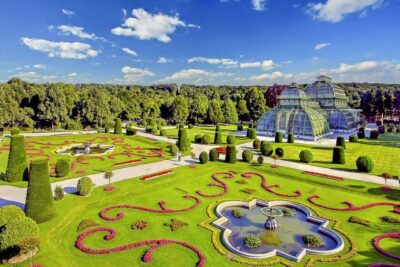
Schönbrunn Palace & Gardens Skip-the-Line Tour
Read our review →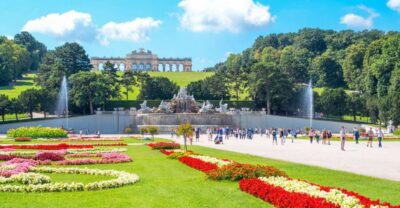
Skip-the-Line Schönbrunn Palace & Gardens Tour
Read our review →
Bus & Schönbrunn Palace Skip-the-Line Guided Tour
Read our review →
Skip the Line Schönbrunn Palace and Gardens Guided Tour
Read our review →
Schönbrunn Palace & Garden Skip-the-Line Guided Tour
Read our review →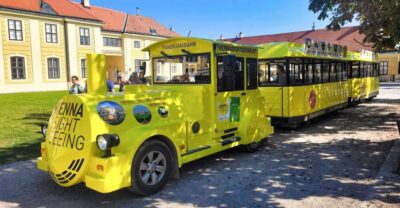
Panorama Train Tickets to explore Schönbrunn Palace
Read our review →
Skip-the-Line Schönbrunn Palace and Gardens Tour
Read our review →Browse the lists this tour appears in