
Reviewed · CYCLING TOURS
Vienna: Guided E-Bike Tour
Vienna’s grand center is easy to admire but tiring to cover on foot. This small-group e-bike tour links Karlsplatz, the Hofburg, Parliament, Stephansplatz, and Belvedere in one brisk circuit, using cycle lanes and quieter streets where possible. You get the sweep of the city without spending the day waiting for trams or retracing your steps.
I like the chance to keep the e-bike for further exploring, with nearby options such as the Prater, Donauinsel, or vineyards around Vienna. I also like the personal scale: the group is limited to six, and guides including Winfried and Tamour have taken time to answer questions and adjust the pace. The main consideration is that you must be comfortable riding in city traffic and accept responsibility for theft, damage, and traffic-rule mistakes.
Key points at a glance
- See Vienna’s central landmarks in one circuit: Karlsplatz, the Opera, Hofburg, Parliament, Rathaus, Stephansplatz, Stadtpark, and Belvedere all fit into the route.
- Ride in a group of no more than six: This gives you a better chance to ask questions and request a slower pace.
- Use a charged electric bike: The motor helps you cover ground without arriving at each stop worn out.
- Extend the outing beyond the guided ride: Ask about keeping the bike for the day and reaching the Prater, Donauinsel, or Grinzing area.
- Expect a history-focused guide: Winfried has been praised for explaining Vienna clearly and suggesting places to visit afterward.
- Know the responsibility involved: You are liable for the bike and must follow Austrian traffic rules.
Why an e-bike works well in central Vienna
Vienna’s main sights are spread across a fairly broad central area. You can walk between many of them, but a walking tour that includes Karlsplatz, the Hofburg, Parliament, Stephansplatz, and Belvedere can become a long day of pavement and pauses.
The e-bike changes the rhythm. You ride between sights, stop for an explanation, then move on before the city center begins to feel repetitive. The electric motor is especially useful on longer stretches and lets you keep up without treating the tour as a workout.
The route also helps with orientation. Instead of seeing isolated buildings, you connect the imperial center around the Hofburg with the Ringstrasse, the cathedral district, and the gardens around Belvedere. That makes this a good first activity in Vienna, particularly if you want a quick sense of how the center fits together.
The group limit of six matters. A guide can see how confidently everyone is riding, answer questions without a crowd forming around one person, and adjust the pace. Winfried has handled the tour gently for riders in their fifties who were new to e-bikes, which is useful if you have never used one before.
A few more Vienna trips to weigh up
- Classic Vienna: 3-Hour Guided Bike Tour
★ 4.7 · 1,846 reviews - Wachau Valley Wine Tasting Bike Tour from Vienna
★ 5.0 · 829 reviews - Vienna City Bike Tour
★ 4.5 · 599 reviews
Starting at Karlsplatz and the grand cultural center
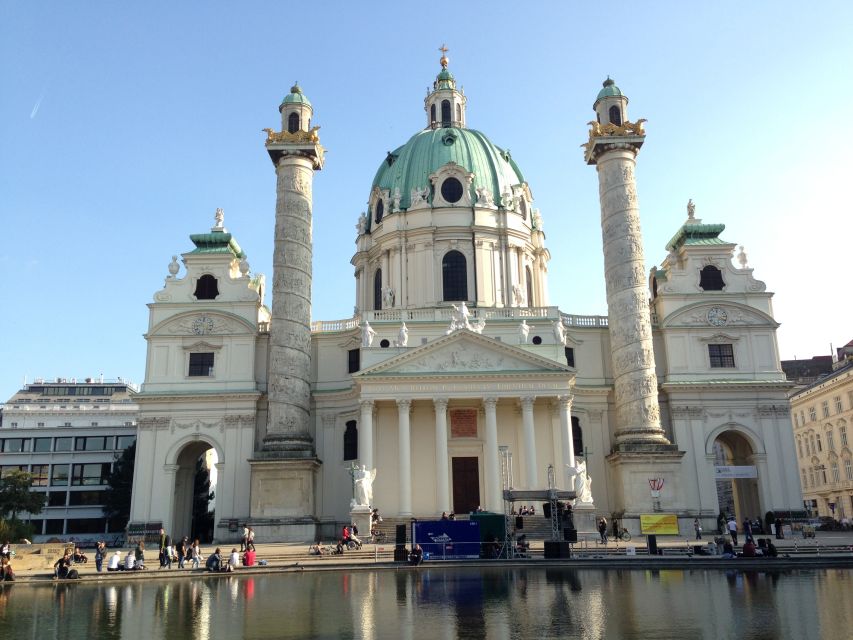
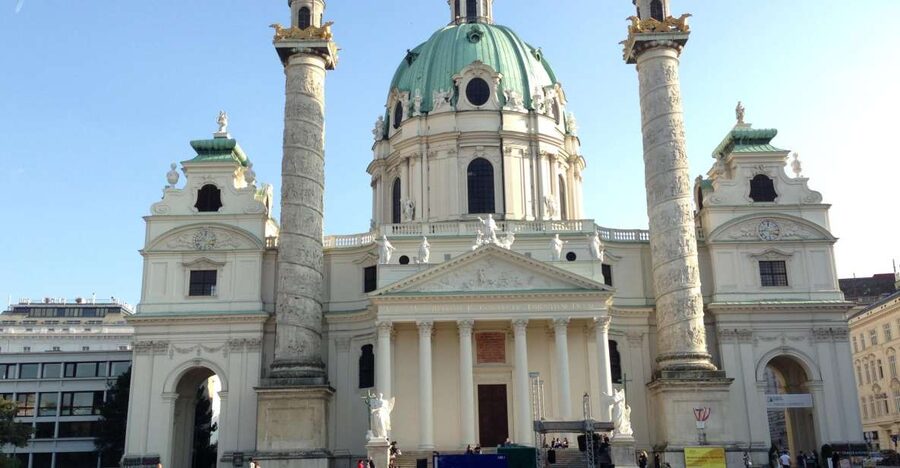
The meeting point is near Karlsplatz, about a two-minute walk from Karlskirche toward Argentinierstrasse. You can also use the U1 underground line to Taubstummengasse, then walk about one minute to Argentinierstrasse 28.
Karlsplatz is a fitting place to begin. Karlskirche gives you an immediate dose of Vienna’s grand architecture, and the square places you close to several major cultural buildings. The practical point is simple: arrive with enough time to find the meeting location, especially if you are unfamiliar with Vienna’s street layout.
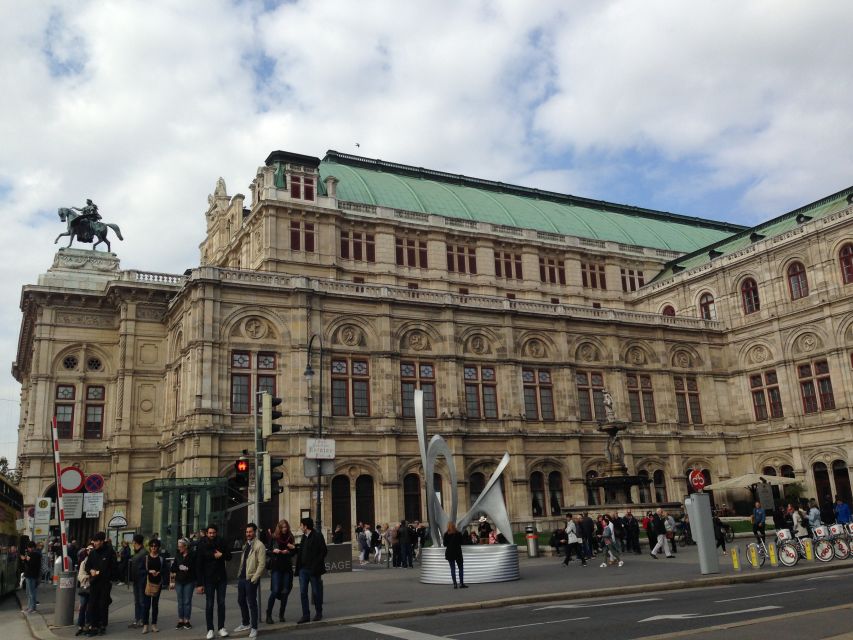
From there, the route passes the Musikvereinshaus and the Vienna State Opera. These are not minor stops. The Musikverein is one of the city’s best-known concert halls, while the Opera anchors the Ringstrasse side of central Vienna.
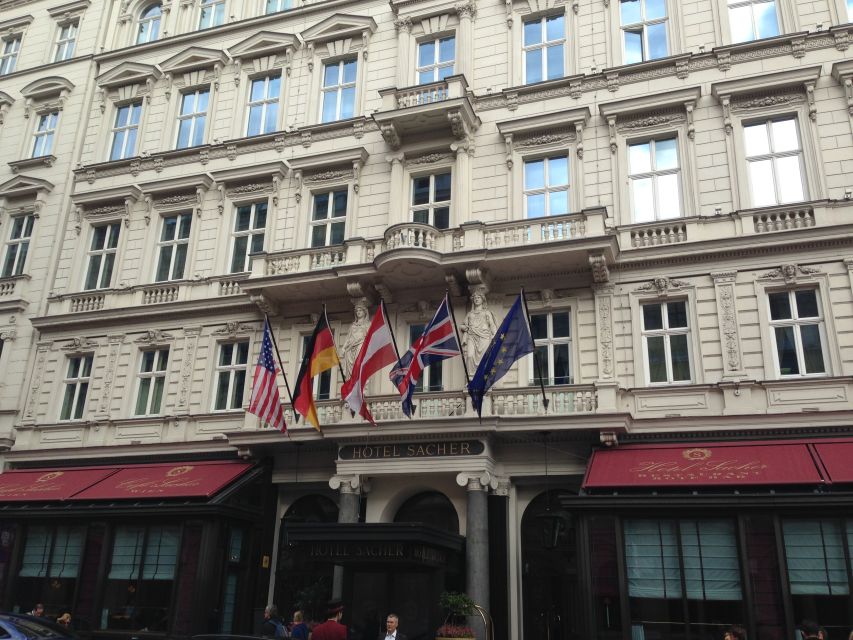
You also pass Hotel Sacher and the Albertina. Hotel Sacher is associated with Vienna’s famous chocolate cake, while the Albertina occupies an important position above the center and is known for its art collection. The guide gives context as you ride, so you are not left trying to identify every ornate facade at speed.
You should not expect long interior visits. Admissions are not included, and the tour is built around seeing the exteriors and learning how the sights relate to one another. If you want to enter the Albertina, the Opera, or another building, plan a separate visit.
The Hofburg and Heldenplatz: Vienna’s imperial stage
The Hofburg is the emotional center of the route. It served as the seat of the Habsburg rulers for centuries and now houses major institutions, museums, and official offices. On an e-bike, you approach a large complex that would be difficult to absorb if you simply hurried past it on foot.
Heldenplatz adds the broad ceremonial setting. Here, you can look toward the museums and get a feel for the formal Vienna often pictured in postcards: open space, monumental buildings, and carefully framed views.
This is one of the better points for questions. Ask about the Habsburgs, the imperial court, or how the Hofburg functions today. A small group gives you a realistic chance to shape the conversation around the parts of Vienna that interest you most.
The drawback is that the center can be busy, and riding near famous sights requires attention. You may stop often, but you will not have the freedom to wander inside each complex. Think of this section as an introduction that helps you decide where to return later.
Parliament, Rathaus, and the Ringstrasse
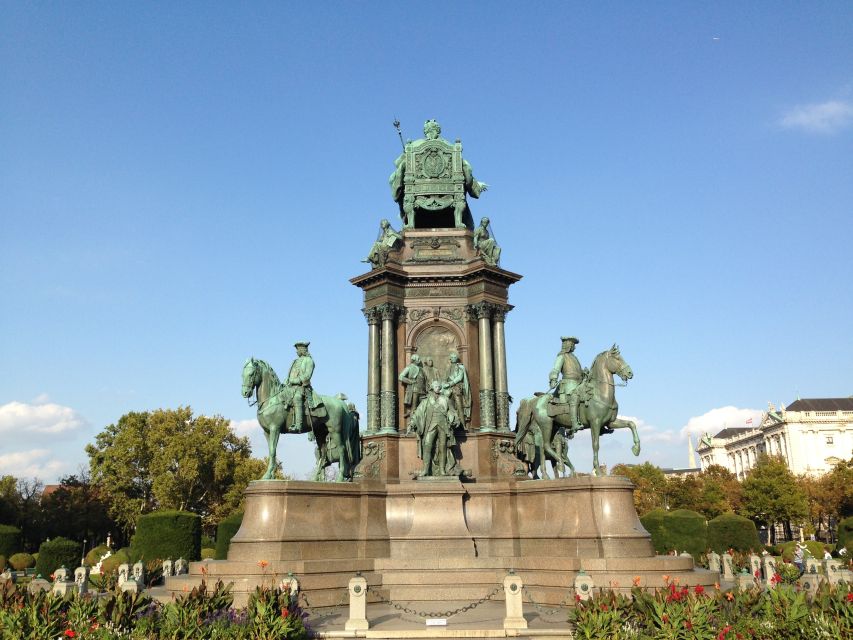
The ride continues to the Austrian Parliament House and Vienna City Hall, known as Rathaus. These buildings represent a different side of the city from the Hofburg: public government, civic ceremony, and the monumental Ringstrasse boulevard.
The Burgtheater follows. Its position opposite Rathaus makes it part of one of Vienna’s most impressive architectural stretches. The route then passes the Stock Exchange, adding another grand building to the sequence.
This is where the e-bike earns its keep. The buildings come one after another, and the motor lets you cover the distance without losing the thread of the tour. You also avoid relying on public transport for short hops, where waiting and transfers can take as much time as the ride itself.
A guide is particularly useful here because the buildings can blur together when seen quickly. The value is not only naming them. It is understanding that Vienna’s Ringstrasse was designed as a grand urban statement, with culture, government, theater, and commerce placed along the same route.
Same Alps, a completely different kind of day:
- Vienna: Vivaldi’s Four Seasons Concert in Karlskirche
★ 4.7 · 14,951 reviews - Vienna: Spanish Riding School Training
★ 3.9 · 9,281 reviews - Vienna: Skip-the-cashier-desk-line Giant Ferris Wheel Ride
★ 4.5 · 7,859 reviews - Vienna: Schönbrunn Palace & Gardens Skip-the-Line Tour
★ 4.7 · 7,739 reviews
Stephansplatz and the heart of old Vienna
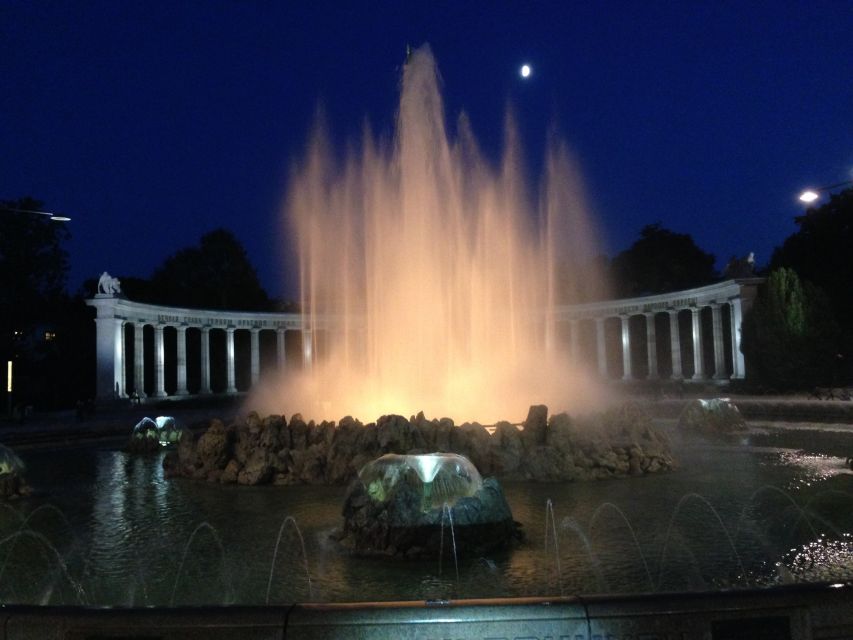
Stephansplatz is the route’s essential central stop. St. Stephen’s Cathedral dominates the square with its patterned roof and tall Gothic tower, and the surrounding lanes lead into Vienna’s oldest shopping and pedestrian areas.
This is a place where you may want to linger. The square can be crowded, so be prepared to walk the bike briefly or follow the guide carefully rather than expecting an uninterrupted ride through every part of the center.
Stephansplatz also gives you a useful contrast. The Ringstrasse sights feel planned and monumental, while the streets around the cathedral feel older, tighter, and more layered. Seeing both in one outing gives you a clearer picture of Vienna than focusing only on palaces.
The tour does not include admission to the cathedral or any other attraction. That keeps the price focused on the guide and bike, but you should budget separately if you want to go inside.
Stadtpark, Schwarzenbergplatz, and Belvedere
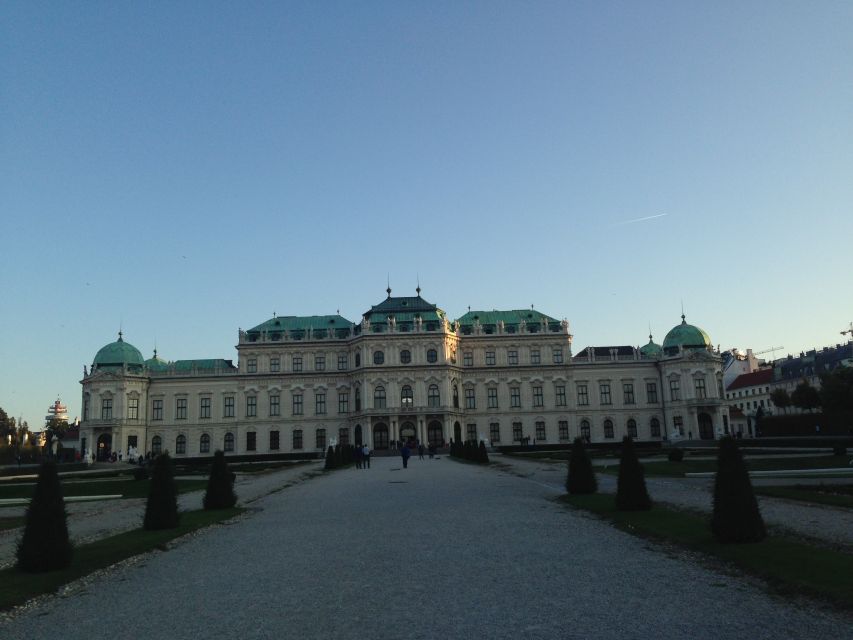
After Stephansplatz, the route heads toward Stadtpark by Schwarzenbergplatz and continues to Belvedere. Stadtpark offers a welcome change from stone facades and ceremonial squares. Schwarzenbergplatz provides another broad urban setting, while Belvedere brings the ride back to palace architecture and landscaped grounds.
Belvedere is one of Vienna’s major sights, but the route is not an indoor museum visit. You will see the setting and receive an introduction, then return toward Karlsplatz. If the palace and its art collection are high on your list, save time for a separate stop.
The return to Karlsplatz closes the loop neatly. You finish where you started rather than being left on the far side of town. That is handy if you have a dinner reservation, another museum planned, or luggage stored near the center.
What the timing and price really mean
The advertised experience lasts 90 minutes, while the guided portion is described as 75 minutes. In practice, the ride can run longer. One outing took close to two hours because the guide did not rush, while another account describes a longer exploration of the city.
You should treat 75 minutes as the planned guided time, not a promise that every group will finish at exactly that point. Ask at the start how much time is available if your day is tightly scheduled.
At $49 per person, the price is fair if you want transportation, a guide, and a useful orientation in one package. It is less compelling if you only want to rent a bike and explore alone, since the main value comes from the route and explanations.
The included-bike wording deserves a quick check when booking. The details describe an e-bike for the day, while the main activity is a 90-minute tour. The practical reading is that you can ask about extending use after the guided ride, but confirm the exact return time, extra conditions, and pickup arrangements before setting off.
Food, drinks, and admissions are not included. That is easy to manage because the ride stays in central Vienna, where you can stop for coffee or lunch afterward.
Keeping the bike for the rest of your day
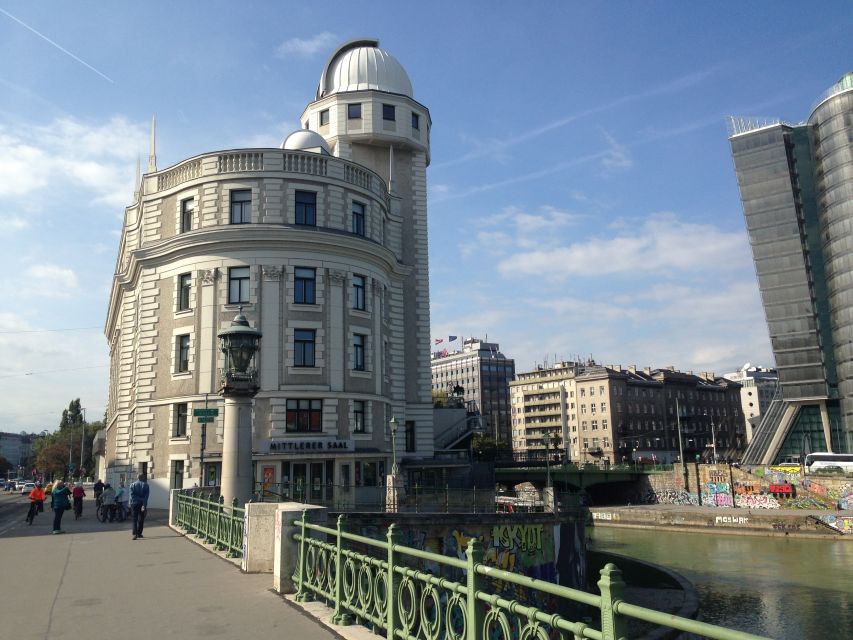
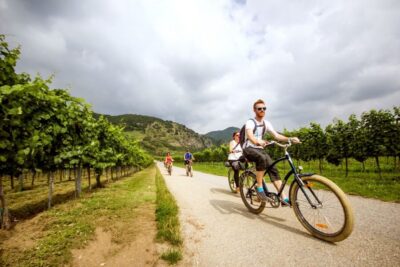
The optional full-day use is one of the most useful features here. Within about 20 minutes, you can reach Donauinsel, the Prater, or vineyards around Vienna, according to the provided information.
Donauinsel gives you a change from the historic center and access to long paths beside the Danube. The Prater offers a different sort of Vienna, with recreation areas and the famous amusement park setting. The vineyards around Vienna, including the direction of Grinzing, are a good choice if you want food, a drink, and a more relaxed outing after the landmarks.
One rider used the bikes to reach Grinzing for beer and food at Figls. Another rode along the canal and around town for several more hours, using only a small part of the battery. Those examples show why an e-bike can be more than a sightseeing prop, but you should still confirm battery condition and return rules before leaving the central area.
You can return the bike at Karlsplatz or at the company headquarters near Schönbrunn. Hotel pickup may also be possible, so ask if that would simplify your plans. The bike remains your responsibility, including theft, damage, and negligence of Austrian traffic rules. Do not treat the extension like a carefree loan.
The riding experience and what to bring
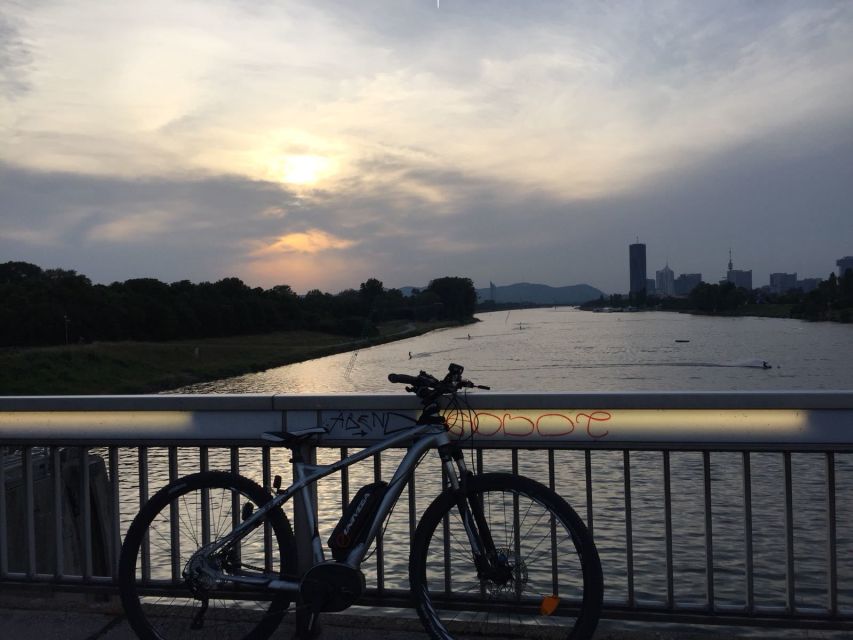
The bikes have been described as charged and in good shape, with enough power for extended city riding. The motor is simple to use, but you still need basic control, awareness, and comfort around other road users.
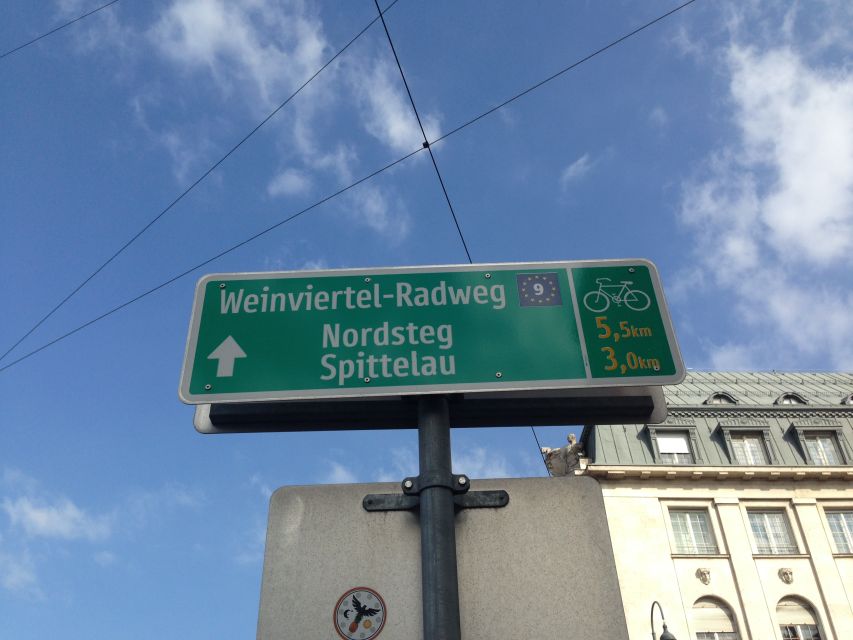
Vienna’s cycle lanes make the route easier than riding constantly in traffic. Still, city riding involves crossings, pedestrians, turns, and changing surfaces. Comfortable shoes are sensible, and sunglasses are listed as recommended items. Bring a passport or identity card as well.
This activity is not suitable for people with mobility impairments. It is also a poor match if you dislike bikes, feel nervous around traffic, or want a purely indoor cultural tour. The guide can set a considerate pace, but an e-bike does not remove the need to ride.
The tour is offered in English and German. Guides such as Winfried have been praised for clear explanations and practical suggestions after the ride, while Tamour has been singled out for providing a large amount of information during a longer outing. Since guide assignments can vary, do not book solely for one named guide unless the operator confirms who will lead your date.
Who should book this Vienna e-bike tour
I would choose this tour for a first or short visit to Vienna, especially if you have only one day to get oriented. It gives you the main central sights quickly and leaves you with a better idea of where to return on foot.
It also suits active couples, families with confident older children, and anyone who finds long walking tours tiring. The small group helps, and the electric assistance makes the distance manageable.
I would skip it if your priority is entering several museums, spending long periods at each palace, or receiving a highly specialized lecture on art or architecture. This is a moving overview, not a museum tour.
Free cancellation up to 24 hours before departure and the option to reserve now and pay later make it easier to fit into a changing schedule. Check the available start times, meeting point, and bike-extension terms before paying.
Should you book it?
Book this Vienna guided e-bike tour if you want a friendly, efficient introduction to the city’s central landmarks and like the idea of continuing on your own afterward. The strongest reasons are the six-person limit, the capable electric bikes, and the route’s mix of imperial buildings, civic architecture, cathedral streets, parks, and Belvedere.
Choose something else if you need guaranteed indoor admissions or prefer to move entirely on foot. For most confident riders, though, $49 buys a useful first look at Vienna and perhaps the means to reach the Danube, Prater, or vineyards later that same day.
FAQ
How long is the Vienna e-bike tour?
The activity is listed as 90 minutes, while the guided portion is described as 75 minutes. The actual outing may last longer if the guide takes extra time.
What sights does the route visit?
The route begins at Karlsplatz and passes the Musikvereinshaus, Vienna State Opera, Hotel Sacher, Albertina, Hofburg, Heldenplatz, Parliament, Rathaus, Burgtheater, Stock Exchange, Stephansplatz, Stadtpark, Schwarzenbergplatz, and Belvedere before returning to Karlsplatz.
What languages are available?
The live guide is available in English and German.
How large is the group?
The tour is limited to six participants.
Can I keep the e-bike after the guided tour?
You can inquire about renting the e-bike for the whole day. Possible destinations include Donauinsel, the Prater, and vineyards around Vienna. Confirm the exact extension terms when booking.
What happens if I need to cancel?
You can cancel up to 24 hours in advance for a full refund. Reserve now and pay later is also available.
Just added around Vienna
- Ottakringer Brewery tour★ 4.0 · 6 reviews
- New Hofburg Palace Tour House of Habsburg★ 4.5 · 5 reviews
- Private Van & Walk Tour – One Perfect Day in Vienna★ 5.0 · 21 reviews
- True Crime mobile puzzle rally Vienna★ 4.0 · 3 reviews
- Vienna Naschmarket Food Tasting Tour★ 4.0 · 30 reviews
- Vienna Nightlife Experience: Food, Wine, Cocktails & Vibes★ 5.0 · 119 reviews
- Myth Mozart★ 4.0 · 80 reviews
- ( Night Tour ) With Private Guide + wine or prosecco★ 4.0 · 12 reviews
Cycling Tours, compared.
Wachau Valley Wine Tasting Bike Tour from Vienna
Read our review →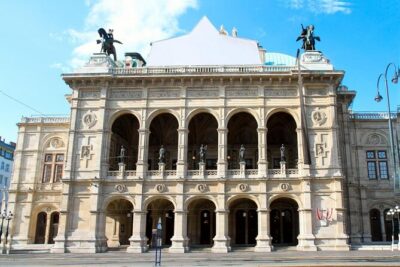
Grape Grazing: Wachau Valley Winery Biking Tour
Read our review →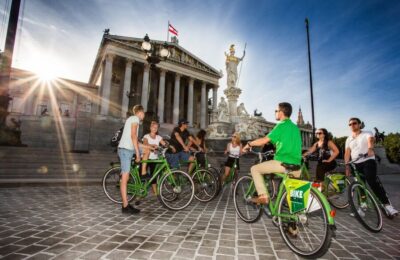
Vienna by Bike 3-Hour All-In-One City Bike Tour in English
Read our review →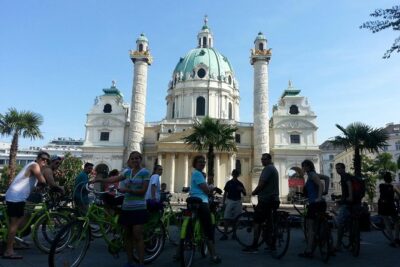

Browse the lists this tour appears in